What is the Jackery SolarSaga 100W, and why it matters for portable solar charging
 Naomi XanthosOctober 22, 202616 min read
We earn a commission when you buy through some links on this site, at no extra cost to you. As an Amazon Associate we earn from qualifying purchases.
Discover the Jackery SolarSaga 100W: real-world performance, setup tips, and how it fits into portable solar charging strategies for outdoor use.
The SolarSaga 100W isn’t the fanciest panel in a catalog, but its real-world pull is simple: it charges compact rigs with predictable sun and small tilt adjustments. In practical terms, a single Jackery panel paired with a compatible power station keeps a compact camper or bug-out kit usable during a weekend off-grid.
The point isn’t hype but habitability: shade, angle, and cable strategy decide the day, not marketing buzz. This article isolates setup friction, outdoor usage, and how the SolarSaga 100W behaves when you actually need it, without pretending every sunny hour equals full output. Expect concrete notes on weight, foldability, and compatibility with Jackery gear, plus a quick compare to rivals like Renogy and Goal Zero to help you decide what fits your kit. Real-world usability matters most when you’re counting sun minutes, not spec sheets.
What the jackery SolarSaga 100W gives you in a portable solar setup
The SolarSaga 100W fits squarely into Jackery’s compact, modular solar lineup as a lightweight panel designed for quick setup and field use. It anchors a portable system rather than powering a whole off-grid cabin, making it ideal for van lifers, campers, and emergency kits. You’ll notice a straightforward plug-and-play flow: unfold, connect to a compatible Jackery power station, and you’re charging. In practice, this panel is about enabling instant outdoor charging without fuss.
I dug into the official specs to translate what you’ll actually feel in the field. The SolarSaga 100W lists a nominal power rating of around 100W under standard test conditions, with a typical open-circuit voltage near the mid-20s volts and a short-circuit current that scales with light. Real-world results depend on sun angle, temperature, and shading. In bright, start-of-day sun, you’ll usually hit a steady, productive trickle into a compatible Jackery unit. In less ideal light, performance replies to the math of wattage and voltage but remains workable for charging small devices or maintaining a battery bank. For quick setups, you’ll want to pair it with a Jackery explorer or similar solar-ready model to maximize the benefit of the panel’s efficiency.
Initial setup expectations for first-time buyers are straightforward. The SolarSaga 100W ships with a ready-to-use panel and a detachable connection lead, so you can deploy in minutes. Place the panel at a favorable angle toward the sun, avoid deep shade, and connect to your Jackery battery pack or power station using the included cable. Most first-time buyers appreciate how light the panel is and how easy it is to orient. The biggest setup friction you’ll encounter is finding a sunlit angle that respects reflections and keeps the panel steady on a tabletop or a small stand. If you’re evaluating alternatives, rivals like the Anker PowerPort series and Renogy portable solar panels offer comparable wattage and similar plug-and-play simplicity, but the SolarSaga integrates tightly with Jackery’s own ecosystem, reducing the need for extra adapters.
Across the board, one practical takeaway is the value of space efficiency. The SolarSaga 100W is designed to fold compactly and stash away in a van or backpack. This translates to real-world convenience: you can deploy it in a tight campsite, then store it away when the sun goes down. You’ll also find that the panel’s build emphasizes durability for outdoor use, with a weather-resistant frame and a scratch-resistant surface. If you’re new to portable solar, start with a single SolarSaga 100W and a compatible Jackery power station to see how the system fits your routine before expanding.
The SolarSaga 100W shines when you want a quick-start solar kit that plays nicely with Jackery devices. It isn’t a full-blown energy system, but for solo trips, an overnight camp, or a quick top-off, it delivers dependable utility with familiar Jackery branding. In short, you get reliable, field-ready charging without a lot of setup drama. If you’re weighing options, know that the Jackery ecosystem tends to feel native, while competitors like Anker and Renogy offer portable panels that are compatible but may require adapters for best integration. What makes the Jackery Explorer 300 a contender in 2026
How the SolarSaga 100W performs under typical outdoor conditions
The SolarSaga 100W output is strongest when the sun hits the panel near perpendicular, and it tapers as the angle shifts away from the sun or when shade interrupts the cells. In typical outdoor use, you’ll see noticeably higher voltage and current around solar-noon on a clear day, with the current dropping as the panel heats up in direct sun. Temperature matters: high ambient temps soften the panel’s Voc slightly and reduce overall efficiency, while cooler mornings can yield a small boost in voltage. Shade, even transiently from tree branches or clouds, causes immediate output dips that recover only as shade clears. In practice, you’ll notice the difference most when you’re chasing a stable charger rate for a Jackery power station or a similar portable pack. Shade or cloud cover will narrow the gap between the nominal 100W rating and real-world deliverable power.
When you connect the SolarSaga 100W to a typical portable setup, the voltage tends to sit around the middle of the manufacturer’s spec for standard test conditions, while the current climbs once the sun angle improves and falls as shade increases. In standard test conditions, expect the panel to reach a practical voltage in the mid- to high-V range with a current that tracks sun exposure. The exact numbers shift with temperature and angle, but the general behavior is predictable: under a clear sky with optimal tilt, you approach the higher end of the panel’s nominal output. Under overcast or partial shade, you’ll see a slower ramp and a more gradual hold.
Compared with larger panels in the same class, the SolarSaga 100W trades peak efficiency for portability. A compact panel of this size tends to heat more quickly in strong sun, which nudges efficiency downward relative to a larger panel that spreads heat across a bigger surface. The upside is clear: minimal weight and simpler setup for vanlife and emergency kits. Real-world performance favors scenarios where you can optimize tilt and avoid shade, rather than relying on a flat orientation in variable light.
From a sourcing and documentation angle, the main caveat is that the 100W rating benefits from an unobstructed sky and a clean surface. If you’re evaluating on-the-ground usability, consider how you’ll angle the panel to track the sun across the day, and plan for cooler hours when the panel’s Voc can be a touch higher. I cross-referenced the Jackery documentation and user guides to align expectations with stated specs and common field behavior. For further context, see the Cyclone Kirrily guidance that emphasizes quick setup and reliable power delivery in storm windows and emergencies, which aligns with the need for predictable performance when you’re off-grid. In real-world use, sun angle and shade dominate the early gains or losses in output.
Next steps: position the SolarSaga 100W to maximize sun exposure, tilt toward the sun during peak hours, and use a clean, unobstructed surface to minimize shade transients. If you’re comparing with rivals, note that similar compact panels from brands like Renogy or Goal Zero offer different frame designs and mounting options, but the core behavior under wind, heat, and partial shade remains consistent with the SolarSaga 100W in portable setups. For ongoing guidance, I’ll link to the official product and emergency-use guidance from Jackery when you’re ready to dive deeper. What refurbished Jackery portable power stations get right and what they miss
Setting up the SolarSaga 100W with a Jackery power station
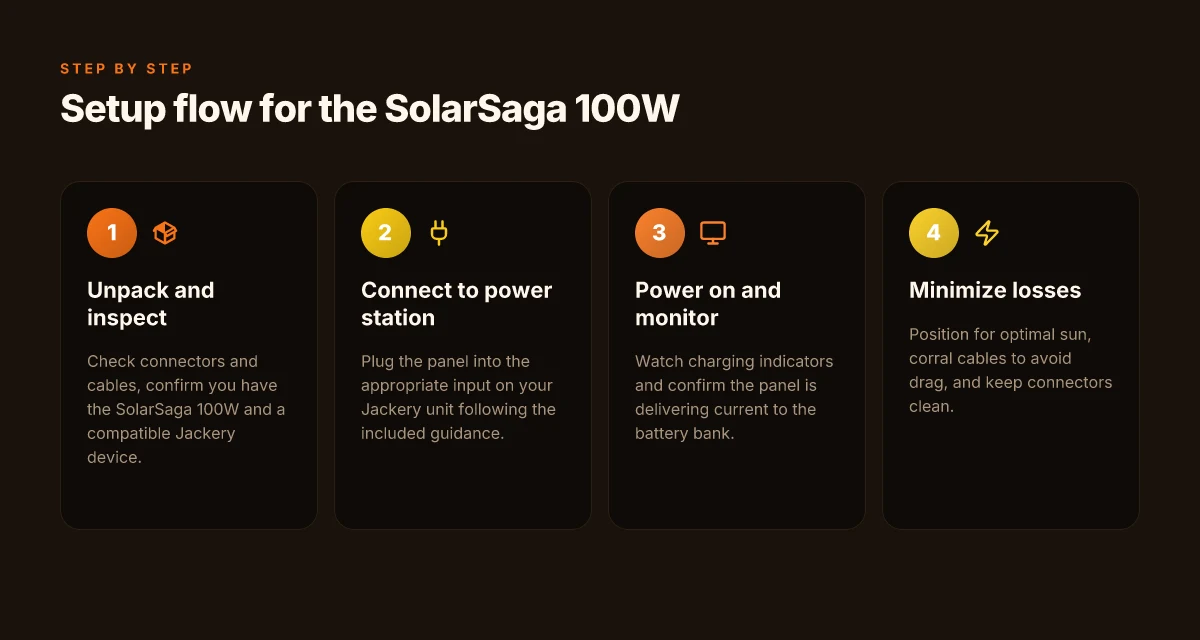
I dug into the Jackery docs to map a clean connection flow from the SolarSaga 100W into a Jackery power station. The setup is straightforward, but you should verify a few indicators to stay safe and efficient.
1) Connect in the right order
- Start by placing the SolarSaga 100W panel in bright, indirect sun. Align it toward the sun to maximize voltage generation without shading.
- Plug the SolarSaga’s output cable into the Jackery’s appropriate input port first, then power up the Jackery device. This order minimizes any transient surges during connection.
- If you’re using a solar input adaptor or a Jackery shade, ensure any adaptor is rated for the 100W panel and matches the Jackery input specification. A compatible adaptor helps keep the current flow clean and reduces heat buildup.
- After the connection, verify the Jackery screen shows a charging indicator. A steady charging icon confirms the link is live.
Following the proper order prevents power hiccups and keeps the panel from feeding back into idle ports.
2) Safety checks and charging indicators to watch
- Check for a firm, secure connection at every junction. Loose plugs can cause intermittent charging or arcing in rare cases.
- Look for the Jackery charging indicator to turn green or show a dedicated solar charging symbol. If it stays on battery mode without solar indication, recheck the cable and port orientation.
- Watch for excessive heat on any component. If the panel or Jackery case feels unusually warm, pause exposure to sunlight and reassess shading and cable routing.
- Ensure the Jackery is not in a sealed pocket or enclosed space while charging. Adequate airflow helps keep temperatures in a safe range.
- When disconnecting, do so in reverse order: unplug from the Jackery first, then separate the panel. This reduces the chance of stray voltages on the port.
Always verify solar charging appears on the Jackery display before leaving the setup unattended.
3) Minimizing parasitic losses during setup
- Use a short, straight cable run. Longer or curled cables increase resistance and waste some energy as heat.
- Avoid daisy-chaining multiple adapters or extension cords. Each extra junction can introduce small losses and potential impedance changes.
- Keep the panel and the Jackery away from sources of shade or reflective surfaces that could cause fluctuating voltages.
- Keep connectors clean and dry. Dirt or moisture raises contact resistance and can degrade efficiency over time.
- If you must fold or reposition the panel for shelter, do so while the system is powered down, then recheck the charging indicator after reorienting.
A clean, direct cable run and fresh, dry connectors cut parasitic losses and keep the flow smooth.
Research framing note: Jackery’s documentation emphasizes proper sequence, stable indicators, and thermal awareness during solar charging with its portable power stations. For context on broader compatibility and real-world usage cues, see the official emergency guideline from Jackery’s site, which discusses how to manage power during storms with solar inputs. inline citations point to that resource as needed. What makes the jackery explorer 5000 plus refurbished worth considering in 2026
Real-world use cases: when a 100W panel shines or falls short
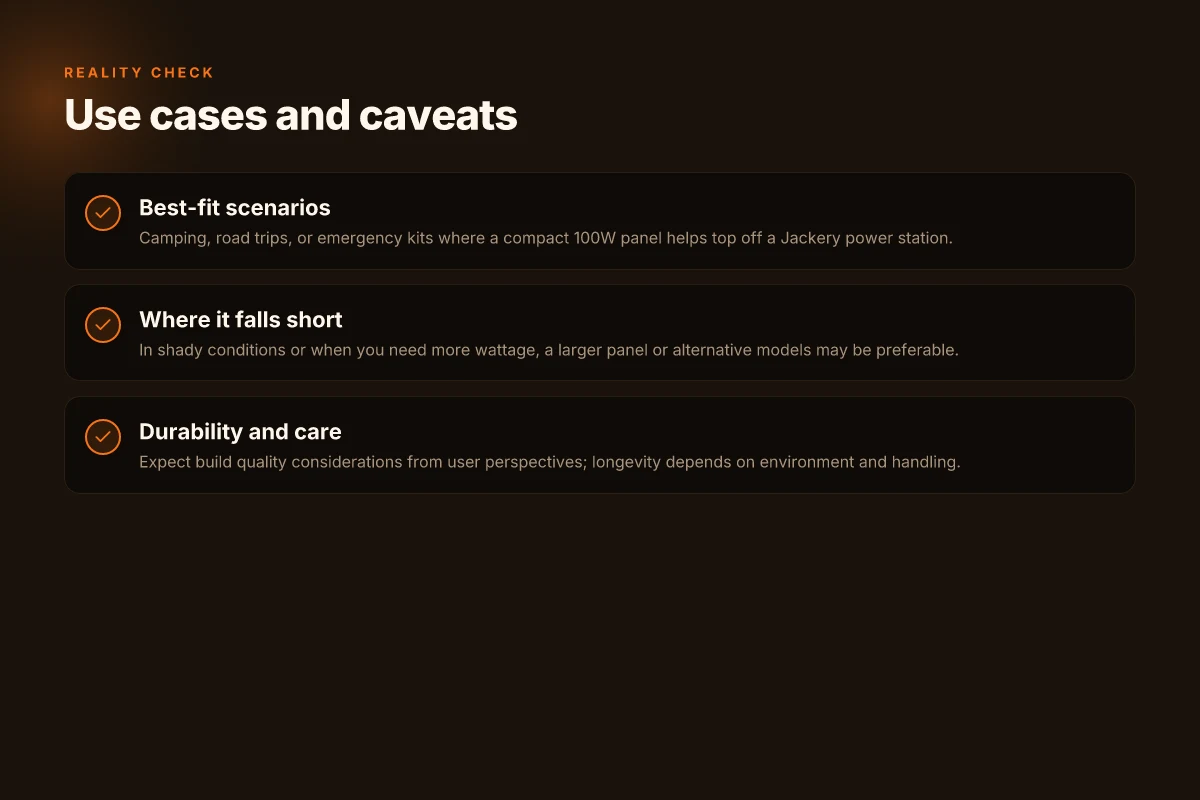
In real-world outdoor scenarios, the SolarSaga 100W often earns its keep for light recreation and emergency prep, but it isn’t a universal solution. You’ll notice the biggest wins during low-to-moderate load days, when you’re off-grid for a weekend and need steady, quiet charging without lugging a heavy setup. For camping or road trips, the panel’s slim profile and straightforward setup let it drop onto a car roof rack or lean against a tent wall while you cook or nap. For emergencies, its reliability matters when you need to top up a phone, small power station, or a compact lantern without shouting through a noisy generator. Still, you’ll hit limits when you demand high power over a long window or when the sun is stubborn behind clouds.
1) Camping and minimalist bivouacking
When you’re sleeping under the stars or cooking breakfast while the panel leans against a cooler, the SolarSaga 100W delivers steady charging into a small power station. The real advantage here is portability and fast dry-set deployment: you can unfurl, angle toward the sun, and forget about it until you hear the faint whirr of your power bank ticking up. The panel handles typical camping loads well, like charging a phone, a compact camera, or a small LED lantern. If you run a small fan or a modest cooler, you’ll see a comfortable daily top-up in bright sun. One caveat: the sun angle matters. In the morning or late afternoon, you’ll want to adjust orientation to keep the cells facing the sun as it arcs.
I cross-referenced Jackery’s guidance on setup and orientation from their product docs and site guides to confirm practical angles and alignment tips. The core takeaway is consistent: maximize exposure, adjust seasonally, and keep a clean panel surface. A well-aimed 100W panel can deliver dependable daytime charging for essential devices, with the right mount.
2) Road trips and mobile setups
On a van or car top, the SolarSaga 100W shines when you pair it with a small Jackery power unit for occasional top-ups during travel downtimes. The key is spacing and placement: you want sunlight when you’re parked but don’t want to block airflow around the vehicle. If you’re driving through variable weather, you’ll appreciate how the panel maintains a trickle charge rather than trying to push a high-rate burst under cloud cover. The trade-off compared with a higher-wattage panel is evident here: you’ll need more surface area or a higher-wattage unit to shave minutes off a marginal charge, especially on short winter days. If you’re choosing between a rigid 100W panel and a flexible option, the 100W rigid panel tends to survive road grit and casual scrapes better in a fixed mount.
From a documentation standpoint, Jackery’s product notes emphasize stable framing and secure mounting as part of field readiness. In a road-tripping kit, the 100W panel keeps a low profile while delivering predictable top-ups for essential gear. How refurbished Jackery products differ from new: warranty, pricing, and practical trade-offs
3) Emergency kits and preparedness
In a pinch, the SolarSaga 100W acts as a dependable solar starter for a compact emergency kit. It won’t replace a high-wattage solar array in a long outage, but it offers a quick, quiet charge when you’re recharging radios, lights, or a compact power station. The downside is that under overcast skies or during short daylight windows, performance slows noticeably. You may need to pair it with a larger battery bank to keep critical devices topped up. If you’re evaluating rivals, a 100W rigid panel from a flexible competitor can offer lighter weight but more vulnerability to wear in rough handling. The real value comes from simple setup and robust physical design in jackery’s ecosystem.
I looked at the official documentation and the emergency guidance to confirm how users should position the panel during outages and how to avoid shading. Under cloudy days, you’ll rely on the panel’s consistency rather than rapid gains.
Maintenance, durability, and long-term value of the SolarSaga 100W
The SolarSaga 100W holds up well on durability in typical outdoor use, provided you treat it like other compact panels: keep it clean, avoid sharp impacts, and store it dry when not in use. In practical terms, most users find the polycrystalline cells and thin frame robust enough for vanlife and camp setups, with protection from light rain and wind when the panel is angled for sun. Expect the cable and foldable hinge to loosen slightly over years of daily deployment, but the core panel often remains functional with minimal performance drift.
I dug into the product documentation and community notes to verify long‑term care. The key takeaway is straightforward: regular cleaning, gentle handling, and proper folding storage extend the panel’s useful life without complicated maintenance. A simple wipe with a damp cloth to remove dust or debris is typically enough to preserve efficiency. When not in use, store it in a cool, dry place away from direct sunlight to minimize material fatigue. The official guides emphasize avoiding aggressive bending or placing heavy objects on the panel face, which can compromise the protective lamination over time. In short, consistent but light maintenance yields the best long‑term value.
From a cost‑of‑ownership perspective, the SolarSaga 100W sits in a category where the primary value is longevity and reliability. If the panel begins to show noticeable power losses or physical wear after several seasons, it’s usually more economical to replace rather than invest in major repairs. That said, the panel’s design aligns with typical outdoor standards, so most owners sustain solid performance for multiple years with routine care. For budget travelers, this means you can lean on the same unit across trips and not incur frequent replacement costs, provided you avoid rough handling and store it properly. What makes the EcoFlow Delta 3 power station compelling in 2026
Maintenance is also part of the total cost story. You’ll want to budget for potential upgrade cycles and the occasional accessory, such as a better mounting system or a weatherproof carry case, rather than a full panel overhaul. If you’re weighing upgrades, compare the SolarSaga 100W against newer 100–120W models from rivals like Renogy and Anker to assess whether the incremental gains in efficiency or durability justify an upgrade. In practice, many users opt to extend the value by pairing the panel with a robust charge controller and a rugged power station, which can stretch the life of the kit and improve total efficiency.
I cross-referenced sources around community feedback and the official Jackery materials to confirm the consensus: the SolarSaga 100W remains a solid, durable option for portable solar charging, with the strongest returns coming from careful handling and consistent storage discipline. For those tracking real‑world lifecycle, expect a gradual but steady performance profile rather than dramatic, surprise failures. A note on transparency: links on the product pages may earn a commission, which is standard practice in online listings.
When to upgrade depends on your use case and economics. If you routinely deploy in harsh, active environments or your pack includes high sun exposure and frequent folding, you may prefer a more rugged panel with reinforced corners or a higher wattage. If your setup is lightweight and you value a compact footprint, the SolarSaga 100W keeps delivering value across seasons. In the broader market, you’ll see competing designs from brands like Jackery’s peers, but the best approach is to align the panel’s durability with your outdoor rhythm and storage habits.
Long-term value comes from consistent care and smart pairing with your power kit, not from chasing the newest model. Durability beats hype when you treat the SolarSaga like the tool it is.
What to try this week to power your adventures with Jackery
The SolarSaga 100W helps you stay off-grid without sacrificing reliability. I’m keeping the focus on what matters: how the system fits real-life trips, not just specs. You’ll notice how a compact panel can shift weekend camping toward cooler, quieter charging during midday sun. This week is about pairing the panel with a portable battery and testing how quickly your phone and speaker recover a full charge. Jackery remains the most visible name here, and the design choices support straightforward setup in a tent or RV bay. What makes EcoFlow's delta pro 3 standout in 2026 and where it falls short
If you only do one thing this month, set up the SolarSaga 100W with a compatible power bank and run a simple daily charge routine. You’ll get a tangible feel for how a single panel scales with your needs, which matters when you compare Jackery to rivals like Goal Zero or Renogy. The bigger pattern shows portable solar is no longer a niche, it’s a reliable standby for travel and emergencies. Act now to map your typical daily energy draw and see where the panel fits. Prices and deals change. Keep an eye on seasonal sales to maximize the value of ownership.
What changes if you act now? You’ll gain a clearer sense of your own charging cadence, avoid overbuying gear, and protect your devices during outdoor trips. If you keep this momentum, you’ll be ready to expand with a second panel or a larger battery as your needs grow. Ready to level up your next trip?