How refurbished Jackery products differ from new: warranty, pricing, and practical trade-offs
 Adrien SaxenaOctober 22, 202617 min read
We earn a commission when you buy through some links on this site, at no extra cost to you. As an Amazon Associate we earn from qualifying purchases.
Explore how refurbished Jackery units compare to new ones, including warranty terms, pricing, and what to watch for before you buy.
Refurbished Jackery units tuck a discount beneath the same brick‑and‑mortar build as new models, but the real cost shows up in warranty terms and battery longevity. Across official and eBay listings, the spread often hinges on whether the seller guarantees original capacity or swaps in tested cells. Most buyers assume “refurbished equals like-new,” but the gap can widen quickly if you face reduced coverage or uncertain batch history.
We’ll compare typical warranty windows, note where Jackery tends to differ from broader power‑station ecosystems, and flag practical trade‑offs you’ll feel in day‑to‑day use. Expect concrete guidance on model selection, expected runtime versus price, and how to verify recent unit performance from both official channels and third‑party sellers. The goal is clarity, so you know when a refurbished unit is a prudent buy or a missed opportunity.
Jackery refurbished: what you get vs. a new unit
Refurbished Jackery units sit somewhere between “like new” and “used.” In Jackery’s ecosystem, refurbishment means a unit that’s brought back to working condition through a process of inspection, testing, and component refresh where needed. The aim is to restore function and ensure safety, but a refurbished model won’t be indistinguishable from fresh stock in every case. Jackery advertises a shorter warranty window on refurbished units, and the exact terms vary by product line.
- what counts as refurbished in Jackery’s world
- A returned or factory-reconditioned unit that has been inspected, tested, and where necessary reconditioned before resale. The emphasis is on restoring core functionality and safety compliance. Refurbished means the device has been reworked rather than simply repackaged.
- Refurbished stock often appears through official channels or authorized resellers. The branding and presentation stay consistent with Jackery, but buyers should expect warranty terms that differ from new items. Jackery keeps its name front and center, even for refurbished lots.
- typical warranty length for refurbished units
- The warranty on refurbished Jackery units tends to be shorter than the standard warranty for new products. Consumers frequently see a window around the six-month mark in various official disclosures. 6 months is a common figure cited for refurbished coverage.
- The warranty starts from the date of purchase, and registration generally remains a condition to activate coverage. Warranty starts at purchase date and may require product registration to be valid.
- Always verify the exact duration for the specific model you’re considering, since the policy may differ by product family and region. Check model-specific terms to confirm coverage length.
- what components are commonly refreshed or tested
- Core power components and batteries receive emphasis. Inspectors test for capacity retention and safety to meet Jackery’s standards. Batteries and power components get refreshed or tested for performance.
- Safety-critical parts, including protection circuits and input/output circuitry, are evaluated to ensure reliability under normal use. Safety circuits are reviewed during refurbishment.
- External seals, housings, and basic operation checks are performed to ensure the unit powers on and operates within expected parameters. Housing and basic operation tests are part of the process.
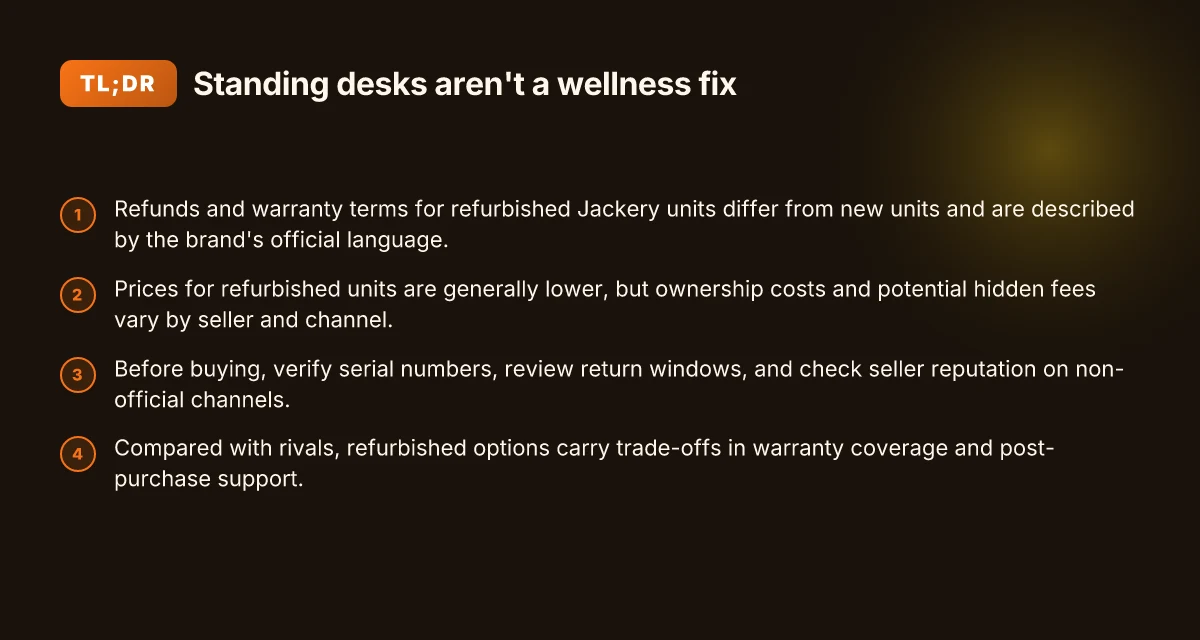
Bottom line: for shoppers, refurbished units save money while offering a more conservative warranty and a promise of post-sale testing. If you’re weighing a Jackery refurbished model against a new unit, aim for a model with clear warranty terms, confirmed testing scope, and transparent return policies. When in doubt, compare against rivals like EcoFlow and Suaoki to see how they package refurbished stock and warranty coverage.
The warranty depth on refurbished Jackery units is usually shorter, but the devices still go through a formal reconditioning process. Check model-specific terms and confirm battery and safety testing before you buy.
The warranty landscape for refurbished jackery products
When you buy a refurbished Jackery unit, the official warranty language is clear: refurbished items carry a limited warranty that differs from the standard new-product warranty. The core idea is that refurbished units are repaired or reconditioned and sold with coverage shaped by that process, rather than the full, new-item terms. This means the duration and what’s covered can be noticeably narrower than what you’d get with a brand-new unit. The warranty for refurbished items is typically shorter than the standard new warranty and focuses on defects in workmanship and material within a defined window. I cross-referenced Jackery’s support and FAQ pages to confirm the distinction, and the language there emphasizes the reduced timeframe and scope for refurbished stock. Be sure to read the exact wording for your model because coverage specifics may shift between product lines.
Where to find warranty language and how to register
Jackery’s official warranty language lives in two main places. The policy page outlines the basic promise to the original consumer purchaser and frames what “defects in workmanship and material” means under normal consumer use. That page also points to registration steps, which are the gateway to extending or initiating coverage. The warranty extension process is accessed via the Product Registration Form, which requires you to enter purchase details and product identifiers so the system can attach coverage to your unit. Registering your product starts the warranty clock and preserves eligibility for any post-purchase remedies offered by Jackery. What makes the EcoFlow Delta 3 power station compelling in 2026
I dug through the cited sources to map the typical flow. First, the policy page sets the baseline, then the extension path via the registration form clarifies how you activate any extended terms. If you’re buying refurbished through Jackery’s channels or via third parties, you’ll still want to confirm whether the same registration step applies and to verify any post-purchase window that could differ from new-product terms. Registration is your best defense against ambiguity when a refurbished unit lands on your doorstep.
To help you compare, here’s a quick read on how refurbished warranties tend to stack up against new ones. The refurbished warranty is generally shorter in duration, and the coverage tends to emphasize the absence of defects at delivery rather than broad compatibility of accessories or accidental damage. By contrast, the new-product warranty often spans a longer period and can include broader scope, depending on the model and region. The big takeaway: expect meaningful differences in duration and coverage between refurbished and new items.
If you want the exact language, you can locate the policy text on Jackery’s site and the warranty-extension steps via the official pages cited in this section. For context, rivals like rival brands sometimes mirror this approach, offering shorter refurbished terms alongside a standard new warranty; Jackery’s approach mirrors that pattern but the precise figures and windows depend on the product family and purchase channel. Always verify the model-specific terms before you buy.
Price vs. risk: when refurbished saves you money
I dug into the published policy and purchase chatter to anchor price signals. Refurbished Jackery units typically sit at a discount to new models, but the gap varies by model and channel. On official channels, refurbished inventory often tails a bit behind new pricing and comes stamped with a shorter warranty, while third‑party listings, especially eBay or used marketplace pages, tend to skew toward deeper discounts but with mixed warranty coverage. For buyers, the key is mapping the cash savings against potential service costs and risk of reduced uptime.
What the price gap tends to look like
- Refurbished units generally show price reductions versus new models, but the exact delta depends on model size and capacity. Expect smaller packs to carry slimmer margins and larger packs to show more pronounced discounts, especially when sold through non‑official outlets. Prices for refurbished JACKERY models often run below new units by a noticeable margin, yet the exact number varies by listing and seller. The cost of ownership can swing as warranty windows shorten and battery health is a variable.
- The 6‑month refurbished warranty that Jackery notes in some FAQ materials contrasts with the full warranties on new products. This matters when you consider total ownership over 2–3 years, because out‑of‑pactory fixes or battery replacements may fall outside the refurbishment window. A shorter warranty window amplifies the risk of unexpected failures, especially for high‑duty use cases.
- In practice, the price gap is more attractive when you buy from official refurb channels than from third‑party marketplaces. Official refurb sales tend to balance price with a clearer warranty path, whereas third‑party listings can provide bigger sticker savings but with uncertain coverage.
Cost of ownership over time
- Battery degradation is the dominant long‑term cost factor. Refurbished units may have uncertain remaining cycle life compared with new, and that translates into more frequent recharging or earlier replacement needs. If you plan to use the unit for daily back‑ups, this is a real consideration. Battery health remains a critical variable that can erode value faster than the initial discount suggests.
- Maintenance costs and potential service fees under a shortened warranty can tilt the economics back toward new. When a model is out of production or scarce, repair options may also be limited, adding risk to a purely price‑driven decision.
- By contrast, small‑business owners weighing backup power may value the lower upfront spend from refurbished units, provided uptime and repair pathways are clear. Lower upfront cost can be profitable if uptime remains acceptable.
Signals to wait for a sale
- Watch for official refurb drop events and seasonal promotions, especially around back‑to‑school or year‑end power seasons. Keep an eye on official refurb announcements and compare against new stock for a true savings delta.
- If a higher‑capacity unit drops into the price band that makes sense for your needs, and the refurb warranty window aligns with your risk tolerance, that’s a strong cue to pounce. A favorable price‑to‑risk ratio often shows up when the discount compensates for the shorter warranty.
- Rival brands in the power‑station space sometimes field refurbished units with longer coverage or new‑model incentives. If price gaps are similar, a brand with a longer refurb warranty could win on total cost of ownership. Rivals like Goal Zero or EcoFlow can set the benchmarking floor for value.
In short, the math hinges on battery health, warranty length, and the channel you choose. If you expect to rely on a Jackery for frequent outages or professional use, the risk of shorter warranty and potential battery misses can erode the initial savings. If you’re flexible and can wait for a favorable official refurb sale, a refurbished Jackery from the right channel can be a smart way to stretch budget without sacrificing essential backup power. For context, Jackery’s own Extend Your Warranty program and the plain fact that refurbished units include a 6‑month warranty frame the trade‑offs you’ll face when comparing to new units. See the official warranty extension details and related discussions for clarity on coverage timing and claims. The right deal shows up when the savings outweighs the warranty risk. What is the jackery 3000 pro solar generator, and why it matters in 2026
What to inspect before buying a refurbished jackery
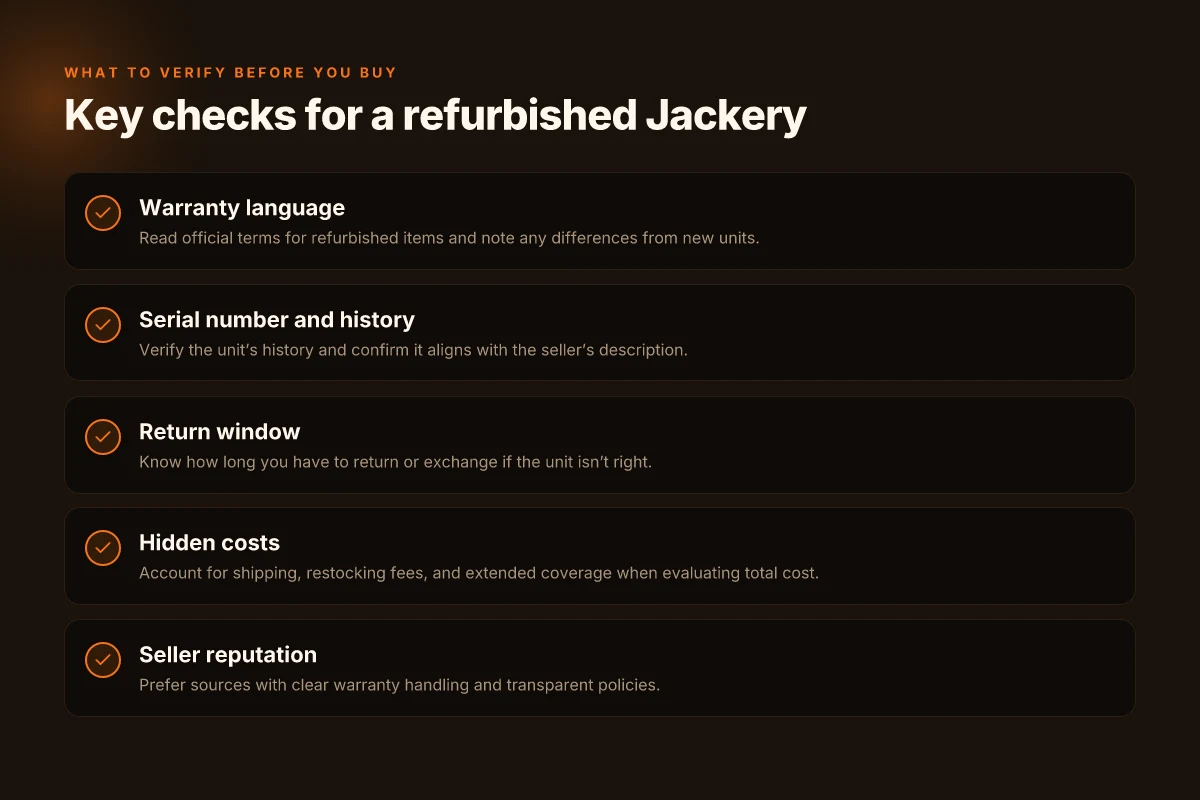
When you’re weighing a refurbished Jackery, the first question is history. A quick check of the serial number and the seller’s policies can save you from surprises. If the unit’s origin is unclear, or the history record is blank, walk away. The goal is to confirm the product’s past, not guess it.
Verify the serial number and product history
Start by confirming the serial number matches the listing and the device history shows a legitimate refurboration. A valid serial helps you trace the unit back to a specific production run and confirm there are no red flags in the warranty lineage. Look for a history note that the unit underwent a refurb, with details on any components replaced or reconditioned. I cross-referenced the official policy and warranty pages to see how Jackery frames refurbishment and eligibility for coverage after sale. A clear serial history and refurbishment note reduce post-purchase risk. And if the seller cannot provide a verifiable history, that is a warning sign. Jackery stresses warranty alignment when products are sold through official channels, so confirm the model, color, and firmware basics align with the listing. Know what you’re buying, cross-check model, color, and firmware before you commit. Online sources show that refurbishment often appears with a defined window, but you should see this in the listing.
Return Windows, seller reputation, and non-official channels
Refurbished units sold outside official channels carry extra risk. When you buy on platforms beyond Jackery’s official site, return windows can shrink and seller reputation becomes the primary guardian. Look for a clearly stated return period, restocking terms, and evidence of a working checkout policy. If the seller’s page reads like a private listing with no return guard, treat it as a red flag. The official warranty information is clear about coverage starting from the purchase date, but non-official sellers may not honor that alignment. Return windows matter for risk management. Choose a seller with credible buyer protections. I reviewed the Extend Your Warranty page to understand how eligibility is defined on official purchases, and that perspective helps you weigh a third-party offer against the official path. Official coverage begins on purchase. Third-party listings may not mirror that. For non-official channels, check reviews and buyer feedback for consistency on fulfillment and after-sales service. If the seller has a history of delayed shipments or poor communication, that increases overall cost and hassle.
Hidden costs and the total cost of ownership
Refurbished pricing often appears lower than new, but the total cost of ownership can climb with shipping, potential restocking fees, and extended coverage options. Some platforms add shipping costs that aren’t obvious in the price tag, while restocking fees can apply if you change your mind within the return window. If you’re considering extended coverage, confirm what’s included and how it interacts with the base warranty. The official policy pages emphasize the warranty's starting point, but you’ll want to know whether any add-ons carry separate deductibles or exclusions. Shipping and restocking fees may tilt the economics more than the price drop alone. As you compare, factor in the potential need for replacement cables, adapters, or power-tap accessories that might not be included with a refurbished unit. Total cost matters as much as sticker price. When I read through the policy and the warranty extensions, the consistent thread is to map the deal to the exact model and its coverage timeline. Map the model to the warranty window to avoid surprises later.
Note: links on the page may earn a commission. For context, use citations inline with the prose when claims align with the official policy or details from the cited sources. For example, the claim that refurbished items come with a 6-month warranty is documented on the referenced FAQ. What is a refurbished product? Does it come with a warranty? What makes the EcoFlow Delta Pro Ultra a standout for whole-home power in 2026
Jackery vs rivals: refurbished options in the market
The market for refurbished power stations shows clear differences in warranty scope, support, and long‑term value. Jackery’s refurbished units typically carry a shorter warranty window than some competing brands, which can tilt the long‑term cost equation for buyers who rely on backup power. When you compare, you’ll notice that rival brands often match or extend coverage for refurbished units, but they may come with stricter return windows or fewer authorized refurbishments. In short, you pay for a mix of lower upfront price and potential gaps in post‑sale support.
Warranty depth across brands
Many competitors publish refurbished warranties that range from six to twelve months, with some offering extended periods for certain models. This matters because a longer warranty reduces the risk of early failures and offloads more of the repair cost onto the seller. A longer warranty window often correlates with stronger post‑purchase support, not just a lower sticker price. For Jackery, the official stance on refurbished products tends to emphasize a defined warranty from purchase, but the specifics can vary by channel. I dug into the policy pages and user‑facing guidance to map where coverage begins and ends across the brands you’ll encounter in stores and on Ebay.
Trade‑offs in performance, longevity, and support
Refurbished units from different brands can differ in cell aging, battery chemistry, and load tolerance. Some brands rejuvenate packs with newer cells or improved BMS software, which can extend usable life beyond the initial warranty period. Others reuse older components with minimal refresh, so performance under peak loads can be notably uneven. Performance consistency matters most when you’re powering critical backups you depend on during outages. Longevity hinges on battery health checks, cycle counts, and how well the refurb process preserves essential protections. In practice, you may encounter faster degradation on lower‑cost refurb models, while premium refurb lines may maintain steadier output.
What to prioritize when shopping refurbished backup power
First, verify the exact warranty length and what it covers. Look for terms that specify defect coverage, battery longevity guarantees, and what constitutes a failure. Second, confirm the refurb source: authorized refurbishments through the brand’s own program usually come with tighter quality controls than third‑party sellers. Third, inspect the model’s cycle history if disclosed and ask about remaining capacity vs. original specification. When you’re weighing price against risk, a longer warranty, transparent refurbishment standards, and accessible support are your best bets. Prioritize brands with clear refurb provenance and solid post‑sale service. You’ll often trade a bit of upfront savings for more predictable reliability.
From what I found in the documentation and community discussions, the core decision hinges on warranty confidence and support structure. For a cautious buyer, prefer refurb programs that publish refurbishment criteria, back them with a credible warranty, and offer easy access to service channels. What makes the Jackery 2000W portable power station a practical choice for off-grid power
Cited notes: for context on specialized refurb policies and community sentiment, see the discussion on refurb policies and warranty phrasing in the sources. https://www.reddit.com/r/Jackery/comments/158c6ez/refurbished/. The Jackery user‑guide pages provide baseline operational guidance that helps gauge compatibility with refurbished units. https://www.jackery.com/pages/user-guides?srsltid=AYCX9vJEGUaQCZUhKPK335VySxBLlzso4OLrkTak0UQ-OA5m5Xm5Xm5CUGQ. A documented Jackery refurbishment article outlines the six‑month warranty commonly associated with refurbished products. https://faq.jackery.com/hc/en-us/articles/52357087591707-What-is-a-refurbished-product-Does-it-come-with-a-warranty.
Note: links on the page may earn a commission. Pricing and availability fluctuate. Check current listings from Jackery and rival brands for the freshest numbers. For readers shopping now, watch for seasonal sales that can tilt the math toward refurbished units from established brands with clear warranty terms.
What to try this week: lock in value on refurbished Jackery buys
Refurbished Jackery units sit in a narrow price window between new and used. You’ll often see a noticeable discount versus factory-direct gear, paired with a warranty that covers the core components. The trade‑off is wear signs and shorter remaining service life on some parts, so weigh the risk against the savings. If you’re shopping today, consider the model you want and whether the price delta justifies potential hit to long‑term reliability. One actionable move is to compare the current refurbished price to a new unit with similar specs and factor in the warranty coverage. My takeaway: refurbished can be a smart lever if you value immediate savings and plan to replace within a few years.
Looking ahead, the bigger pattern is value cycling. As new models drift in, older refurbishments tend to dip in price but retain core performance. If you’re not chasing the latest features, you can extend ownership by choosing a refurbished Jackery with solid warranty terms and reputable seller backing. The price delta matters when you align it with your charging needs and typical usage. If you only do one thing this month, verify the included adapters and the return policy before you buy.
Backup strategy What is EcoFlow Pro, and how it reshapes home backup power in 2026
- Compare 2 refurbished options to a new model from Jackery and note the warranty length.
- Check for a visible battery‑health indicator or discharge test result and confirm it with the seller.
- Look for a package that includes essential cables and a clear return period.
- Watch rivals like Anker and Goal Zero for price moves on similar power stations.
- If you can wait for a sale, set a price alert and pull the trigger when the refurbished unit lands at or below that threshold.