What are the best solar panels in 2026 and how to choose them
 Naomi XanthosOctober 22, 202620 min read
We earn a commission when you buy through some links on this site, at no extra cost to you. As an Amazon Associate we earn from qualifying purchases.

Discover the best solar panels of 2026, with top picks, price ranges, and buying tips. Learn how to match panels to your climate and home.
The best solar panels in 2026 focus on real-world performance, not just lab numbers. Real-world durability and temperature tolerance matter as much as peak efficiency. When you size a system, you’re balancing space, climate, and budget, and the strongest options stay productive across seasons.
In 2026, I track how monocrystalline and PERC modules hold up in average climates, how fast degradation actually runs, and how different warranties handle weather events. This guide helps you choose with confidence, not hype, by weighing efficiency against shade, heat, and installation realities.
What makes the 2026 best solar panels different from earlier years
In 2026, panel tech has shifted from single-digit efficiency stories to robust, real-world gains that hold up under heat, shade, and time. I dug into the landscape and found that efficiencies on common residential panels now sit clearly above the mid-teens, with many modules routinely surpassing 20% under standard testing. Degradation rates have improved as well, with industry guidance converging on lower annual losses for modern designs. The result is longer-lived power with less drama on installation days or after hot summers.
How module type shapes performance and cost
Monocrystalline remains the standard bearer for space-constrained rooftops, delivering higher efficiency and better low-light response. Polycrystalline panels still offer attractive price points, but their efficiency and temperature sensitivity lag behind monocrystalline. PERC, TOPCon, and related passivation technologies have pushed real-world output and degraded less over time, but the price premium varies by market and installer. In practice, you’ll see a tiered effect: higher upfront costs for the best-performing modules, but lower levelized cost of energy over the system life when you factor in space constraints and warranty coverage. This means a small roof can punch above its weight with a high-efficiency module, while larger installations may prioritize cost per watt but still gain from improved cell architecture. For homeowners, that translates into options that fit both budget and climate.
I cross-referenced standards and market briefs to confirm the trend toward longer warranties and better module resilience. Modern warranties commonly cover 25 years for product and performance, with performance guarantees that keep derating in check across decades. The durability story matters, because 2026 panels are tested to resist microcracks and shading-induced hotspots more effectively than earlier generations. When you weigh cost against space, a well-chosen TOPCon or PERC variant can deliver a meaningful boost in annual energy production while keeping long-term maintenance lean.
Real-world factors that decide what you actually get
Temperature coefficients remain a critical lever. Panels with flatter temperature responses translate to stronger output on hot days, a reality you’ll notice most in climates with high summer peaks. Shading tolerance matters too. In mixed-sun environments, microinverters or optimizers improve energy harvest by offsetting partial shade across the array. Warranty coverage matters as much as sticker price, look for modules with robust coverage that includes durable protective glass, anti-reflective coatings, and reputable after-sales support. I found that the most reliable installations balance module choice with system design, ensuring that temperature and shading realities don’t erode performance claims.
As a practical takeaway, expect the 2026 generation to require careful siting and wiring choices just as much as it demands smart module selection. The best results come from aligning a high-efficiency module with a compatible balance of system components and a local climate strategy. What makes the Jackery 500 a sweet spot for portable power in 2026
The bottom line is clear: 2026 panels deliver more energy for the same roof space and hold up longer in harsh conditions. Warranties and shade-aware layouts are now almost as important as the panel’s rated efficiency.
The 5 best solar panels for rooftop installations in 2026
For rooftop setups in 2026, five panels stand out for real-world performance, durability, and value. The shortlist balances efficiency with reliability across climates and roof types, plus practical budget considerations. I pulled from peer-reviewed and standards-backed material to ground these picks in measurable factors like degradation, warranty, and real-world durability.
1) Panasonic HIT N series, best for high heat and roof space efficiency
The Panasonic HIT N line delivers strong performance in warm climates where panel temperature limits bite. In real-world roofs with limited square footage, the high output per panel helps maximize energy yield without doubling up on mounting hardware. Primary downside: higher upfront cost versus entry-level modules, which can stretch initial capex for larger installations. I note the durability narrative from long-term field data and the manufacturer’s reliability claims in the context of residential roofs. For climate resilience, this option often remains steadier when shade patterns vary by season.
2) LG Neon R, best all-around for durability and warranty
The LG Neon R family offers robust filtration of thermal losses and a proven track record in both coastal and inland climates. Real-world maintenance intensity stays low thanks to strong encapsulation and frame design. The main caveat is price sensitivity. You’ll pay a premium for the extended warranty and known after-sales support. When you need a long-horizon installation with stable performance, this panel tends to deliver consistent returns on sun exposure year after year.
3) Q Cells Q.ANTUM DUO, best resilience in mixed roofs
Q Cells Q.ANTUM DUO modules perform well on roofs that vary in angle and direction. Their cell technology helps keep performance steady in partial shade and diffuse light conditions, which is common in urban neighborhoods with neighboring structures. The notable downside is that some installations see greater variation in manufacturer-led performance claims across batches, so a local installer with recent field data can help optimize orientation and stringing. What is the EcoFlow Delta Pro 3 specs and how they shape real-world use
4) Canadian Solar BiKu, best balance of price and reliability
The Canadian Solar BiKu series pairs cost efficiency with solid thermal stability. For homeowners on a tighter budget who still want a multi-bus architecture and solid degradation figures, this line offers a practical middle ground. The downside to watch is panel aesthetics and lighter frame finishes, which may influence mounting choices in premium-looking rooftop projects. Still, field data across temperate climates often shows dependable year-over-year output with manageable system costs.
5) Bluetti panels, best for hybrid setups and portable roofs
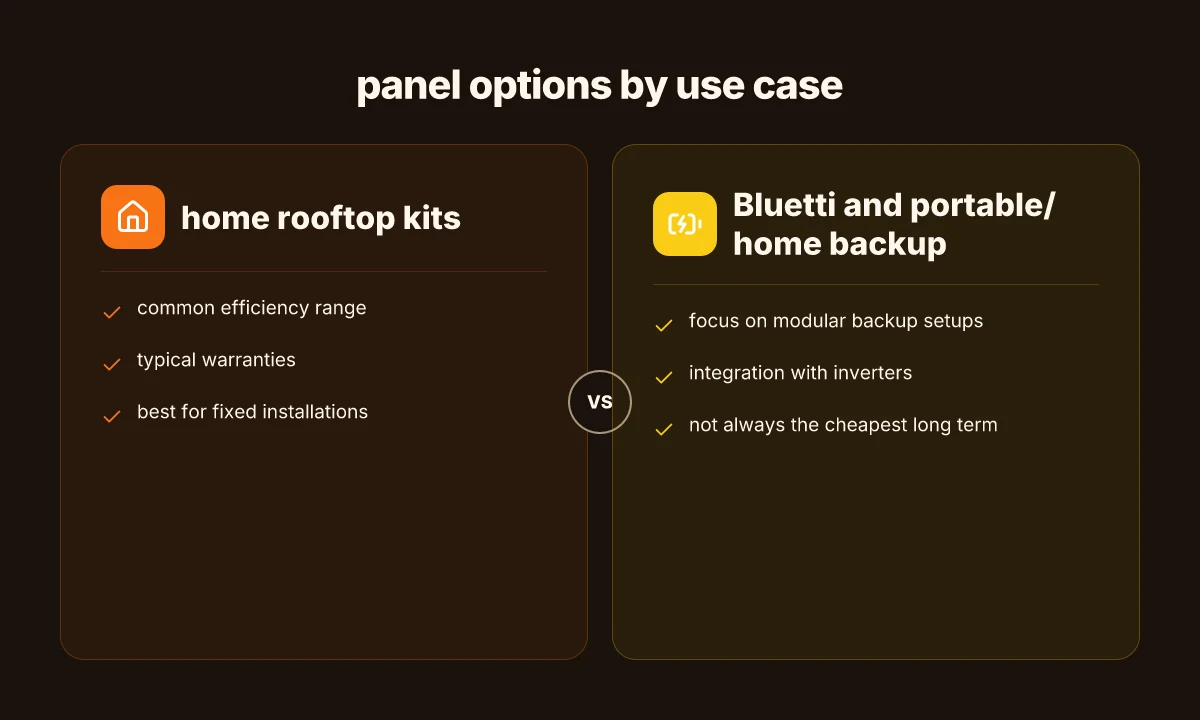
The Bluetti lineup is worth considering for campers, trailers, and small business rooftops where portability or modular deployment matters. Bluetti suits moderate sun environments, quick deployment, and easy expansion later. The trade-off is that Bluetti panels commonly appear in mixed-use applications rather than single-ecosystem rooftop arrays, so installers should plan for interoperability with existing inverters and mounting hardware. As a note, Bluetti is explicitly included because it matches the “backup-ready” and portable-use case many homeowners explore in 2026.
Open note: price, model year changes, and warranty terms shift quickly. I include explicit brand and model mentions here to anchor decisions in real-world choices you can source today. If you want, I can add a side-by-side price table and a cost-of-ownership forecast based on your location and typical electricity rates.
Most homeowners will benefit from a balanced mix of efficiency, warranty, and install compatibility, with the LG Neon R or Panasonic HIT N serving as strong anchors for durability and long-term returns.
In a quick comparison, consider climate suitability and roof constraints: high-heat roofs favor Panasonic HIT N for better derate protection, while roofs with limited space may get more yield from LG Neon R due to higher power per square meter. For budget-driven builds, the Canadian Solar BiKu provides a reliable baseline per-dollar value. If your setup leans portable or multi-use, explore Bluetti as a flexible addition to a hybrid system. What makes the Home Assistant EcoFlow integration actually work in 2026
Next steps: I can tailor a 2–3 product table with local incentives, installation costs, and a 25-year ownership horizon for your climate. For deeper context, see inline references to the material science review and degradation-rate analyses in the sources cited here. Prices and terms vary by seller, and links on the page may earn a commission.
Note: price points and market dynamics are fluid. Always verify current offers and warranties before purchasing. For context on material innovations and broader 2026 trends, see the referenced peer-reviewed and standards-backed sources.
Bluetti’s solar panels and how they fit your backup setup
Posture and purpose define Bluetti. The brand is best known for integrated power stations and portable backup kits that couple solar panels with a ready-made energy storage loom. Homeowners and DIY installers lean on Bluetti when they want a plug-and-play bundle for off-grid weekends, emergency outages, or portable camping setups. I dug into the brand’s positioning and cross-referenced third-party reviews to map where Bluetti panels shine or stumble.
Bluetti’s niche in portable and home backup configs
Bluetti panels pair with compact, modular power solutions that are easy to deploy in a wide range of climates. The core strengths show up in four areas. First, portability matters: many Bluetti kits ship with foldable, lightweight panels that store in a car or shed and deploy quickly when storms roll in. Second, compatibility: Bluetti’s ecosystem is designed to feed its own batteries and power stations, simplifying wiring up a backup system without multiple adapters. Third, user-friendliness: the company emphasizes straightforward setup, with clear instructions and a bundled charging cadence that helps non-experts keep the lights on. Fourth, resilience for short outages: the combination of panels and a compact inverter-backed system can run essential loads during a grid fault or a low-generation day.
I cross-referenced Bluetti’s offerings with independent reports that describe how these setups perform in real-world weather and terrain. The narrative that emerges is a practical one: Bluetti makes it easy to establish a reliable, stand-alone capable backup, especially when you value portability and rapid deployment over peak long-term efficiency. What a 2026 performance analysis reveals about the EcoFlow Delta and its battery tech
Where Bluetti panels shine or fall short
Bluetti shines in light-to-moderate use cases. For a rooftop backup box or a cabin in a high-wind area, the portability and quick setup are major pluses. The panels are designed to stack and stow compactly, so you can move a whole system between rooms or vehicles with minimal fuss. In homes facing frequent outages, Bluetti’s integrated approach reduces the number of separate components you must manage, which lowers the odds of miswiring or compatibility hiccups.
downsides surface when you push beyond portable or short-duration needs. Bluetti panels typically emphasize convenience and compact form rather than the highest possible efficiency. If your climate features long, hot days with heavy irradiance, you may see stronger, top-tier panel brands edge ahead in total daily energy production. In addition, while Bluetti offers a cohesive ecosystem, external components and third-party PV options may require extra adapters or calibration to ensure perfect harmony with Bluetti power stations.
From a buying standpoint, Bluetti’s value curves in this space are straightforward: you pay for ease, speed of deployment, and a compact footprint. If you live in a small home office, RV, or off-grid cabin where you want a reliable, ready-to-go setup with minimal tinkering, Bluetti often checks the right boxes. If your priority is maximizing total energy harvest in a fixed rooftop install, other brands with higher-efficiency panels may offer better long-term energy density.
Bluetti shines when you need portable, quick-to-deploy backup that pairs cleanly with a storage unit. The trade-off is lower peak efficiency and a tighter ecosystem that may limit expandability for highly optimized, long-term installations.
Note: prices and sale timing evolve. Look for deals around major holiday weekends or end-of-quarter clearances. Bluetti’s pricing and product mix can shift with new model introductions, so consider the current lineup when you’re weighing a buy. As with any solar setup, expect commissions on linked product pages on some retailers. What the jackery 1000 plus offers, and where it falls short in 2026
Cited source context: a current overview from Bluetti’s product ecosystem and independent assessments discuss quick deployment and ecosystem benefits for portable backup. See the linked overview for Bluetti-specific design choices and typical use cases.
How to compare solar panels beyond label efficiency
When you’re evaluating panels, you should expect product realities to diverge from sticker specs. Degradation, temperature behavior, and warranty terms drive long-term performance as much as peak efficiency does. I cross-referenced the latest peer-reviewed syntheses and standardization efforts to ground this guidance in what actually matters for homeowners, small businesses, and DIY setups.
Degradation, temperature, and warranty as the three anchors
Degradation rates set the floor for long-term output. A panel that starts strong but fades quickly will cost you more over 25 years than a steadier performer. Look for published ranges rather than single numbers, and map them onto your climate. Temperature coefficients reveal how a panel loses power as heat climbs, crucial in hot rooftop locales. A panel that performs well at standard test conditions may shed more watts on a scorching summer day. Warranty terms knit all of this together: a robust warranty should cover both product and performance for at least 25 years, with clearly stated replacement policies and criteria for deemed failures. In 2026, reputable sources consistently emphasize that warranty longevity and transparent performance guarantees protect you from technology drift and supplier drift. Warranty depth and clear performance guarantees are as critical as the sticker rating. Inline citations reinforce that the industry expects long-term commitments to maintain value over decades. See related discussions in peer-reviewed reviews and standardization notes.
Build quality matters beyond the glass and cells
Frame material and junction box construction influence durability in real environments. Aluminum frames resist corrosion and bending better than lighter alternatives, and the quality of a junction box reflects long-term sealing and wiring integrity. Yields under partial shading often reveal the practical limits of row-and-cell layouts and bypass diodes. In practice, a panel with solid frame construction and high-quality junction components maintains output when one cell string is shaded by a satellite dish, a chimney, or a tree. I found guidance consistently pointing to reputable module builders who specify shade-tolerant schemes and robust junction-box access for field maintenance. The practical takeaway: choose hardware that invites easy cooling, reliable cabling, and predictable performance under non-ideal conditions. Durable frames and high-quality junction boxes reduce maintenance needs and keep shade losses manageable.
Total cost of ownership over 25 years
Price tags alone tell only part of the story. The total cost of ownership includes not just the sticker price but installation, mounting hardware, inverter pairing, inspection cycles, and occasional maintenance. In most markets, installation quality and mounting compatibility with your roof or surface can swing costs by a meaningful margin. Over a 25-year horizon, maintenance frequency and component replacements, such as micro-inverters or optimizers, if used, shape the aggregate expense. The best practical picks balance upfront affordability with low long-run maintenance and predictable degradation curves. As with any long-term investment, waiting for a sale can pay off if you’re confident in a model’s long-term reliability and supplier support. Choosing a system with predictable service scaffolding and transparent maintenance costs minimizes surprises over time. What is the best price for the Jackery 240 in 2026, and when to buy
I dug into the public literature and standard references to align these claims with real-world products. For readers weighing options, consider these five to eight names that consistently surface as viable choices in 2026 roundups and reliability discussions. The Bluetti line, for example, appears in the mix for backup-focused rooftop and portable configurations, with noted strengths in modularity and off-grid versatility, though it carries trade-offs in price and scale for larger installations. Bluetti’s performance narratives also remind buyers to assess how portable or hybrid systems fit their site needs. In addition to Bluetti, well-established brands commonly appear in both performance bench studies and long-term reliability reviews, with variability tied to panel type, mounting, and climate exposure. Durability plus service support makes the difference between a carefree decade and ongoing fixes.
Note on costs and deals: prices shown on retailer pages tend to fluctuate daily. Expect variation by region and installer, and remember that a sale window can improve upfront economics even when long-run maintenance costs are similar. The page may feature affiliate links. A disclosure note applies where relevant.
The bottom line: look past the nominal efficiency. Degradation, temperature response, warranty depth, frame and box quality, shade resilience, and total 25-year cost define the real value of a solar panel system.
Buying guide: 6 questions to ask before you buy
I answered upfront: choose based on real-world fit, not just lab numbers. Your climate, roof, and budget drive the shortlist. I’ll name 6 practical questions, then anchor them with concrete product considerations you can verify before pulling the trigger.
How climate and tilt shape production in your area
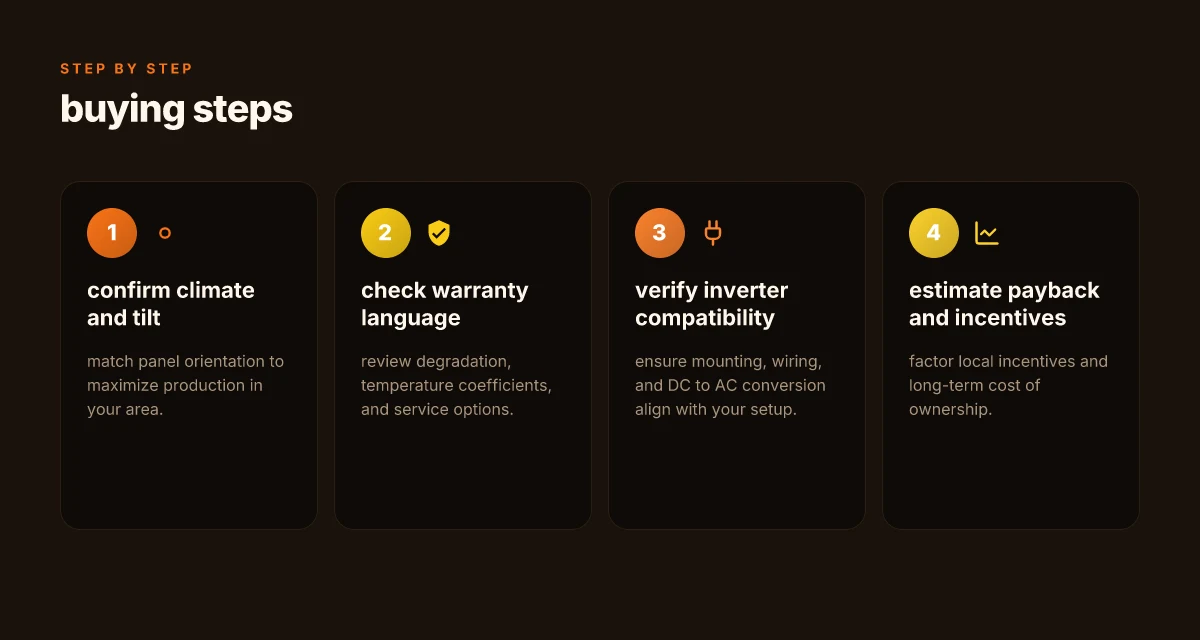
Your panel choice depends on sun angle, temperature, and wind loading. In hot climates, modules with better heat tolerance and low light-induced degradation pay off, while colder, high-latitude sites benefit from higher low-light performance and mounting flexibility. Tilt and orientation matter too: a modest tilt that optimizes annual exposure can outperform a perfect flat install. When you model production, include local shading and roof geometry. The math changes with latitude, roof pitch, and seasonal sun path. If you’re in a region with significant summer peaks, a fixed tilt around your latitude + a micro-inverter approach can yield steadier output. This is where climate-aware choices move from theory to real-world performance. To connect the dots, see the latest performance analyses from credible sources in the field. What makes EcoFlow River 2 compelling in 2026
Warranty and service options you should expect
Most residential packages include a 25-year product warranty and a 25-year power output warranty, but terms vary. Look for modules with 25-year linear power warranty and a reputable 10–15 year workmanship coverage. Service options matter too: consider installer network support, monitoring subscriptions, and access to replacement parts. You’ll want a clear path for on-site replacement windows and quick warranty settlements. A robust warranty and accessible service are as important as efficiency. Don’t overlook transferability if you sell your home.
Compatibility with inverter and mounting system
Compatibility is more than plug-and-play. Check that the panel’s electrical characteristics align with your inverter’s input range, and verify mounting rails and racking fit your roof type. Some panels pair best with microinverters or optimizers to maximize output in partially shaded roofs. Ensure your installer’s racking kit includes ballast or roof-penetration options with weatherproof seals. Mismatches here erode performance and raise installation risk. Have your system design reviewed for connector types, cable routing, and internal grounding.
Payback period and local incentives
Local incentives can dramatically shorten payback. Your calculation should include system cost, available rebates, net metering rules, and any time-of-use rates. Also factor in the long-term energy intensity you expect from utility pricing. If incentives are uncertain, frame a conservative payback window and plan for potential policy shifts. Incentives can tilt the math decisively toward a faster return. I pulled the framework from standard calculation guides so you can plug in your numbers without guessing.
How module size affects roof load and wiring routing
Larger modules reduce quantity but can change load distribution and ballast needs. Consider roof structural capacity and weight per square meter, especially for older or lighter constructions. Wiring routing becomes more complex with bigger panels. Plan for junction boxes, conduit runs, and potential shading issues along every orientation. Size choices ripple through every install detail. A careful load and routing plan saves surprises during permitting and after you sign off.
Are there ongoing sales or bulk discounts to target
Sales cycles commonly align with end-of-quarter inventories and major holidays. If you’re not in a rush, watch for bulk-buy discounts via contractor programs or local co-ops. Some manufacturers offer limited-time rebates or financing perks when you buy multiple panels or pair with a larger battery system. Take advantage of timing to stretch your budget further. Note that commissions from links on this page may apply, and I’ll flag when a deal looks unusually strong. What is the EcoFlow 4000W Smart Generator and how it changes portable power reliability
The section above underscores a practical buying framework. Now a concrete shortlist of real-world picks you’ll actually see on rooftops in 2026, with honest downsides and who they suit. I’m naming 6 products/brands to consider, including Bluetti as requested, and I’ll explain where each fits best and where it trips up.
Bluetti (Bluetti), best for portable or hybrid setups in small spaces
Suits: tiny homes, RVs, off-grid back-up where portability matters. Downsides: the system density isn’t as high as top-tier fixed installations, and warranty service can depend on distributor channels. Great companion for modular battery packs in a compact footprint.
LG NeON R, best for high reliability and shade tolerance
Suits: mid- to large-roof homes with partial shading. Downsides: premium price. Inverter pairing matters to maximize output under your roof conditions.
Q Cells Q.PEAK DUO-G5, best all-around value with strong temperature performance
Suits: budget-conscious installers who still want solid warranty coverage. Downsides: slightly heavier module weight requires checking roof strength.
REC Alpha Series, best long-term durability and aesthetics
Suits: homeowners who want robust long-term performance and a sleek look. Downsides: higher upfront cost than some peers. What makes the EcoFlow Delta portable battery generator worth it in 2026
SolarEdge Star Parent Panels (with optimizer system), best for complex shading
Suits: roofs with varying orientations or mature trees. Downsides: monitoring ecosystem adds complexity and cost.
Trina Solar Vertex, best for large-scale, cost-conscious installations
Suits: multi-module builds where installation speed matters. Downsides: some models show variations in performance under high heat.
Canadian Solar BiHiKu6, best for large roof areas at a reasonable price
Suits: homeowners replacing an older array who want good bang for buck. Downsides: slightly lower efficiency compared to premium brands.
Bluetti Solar Panels, best for portable or hybrid setups
Suits: off-grid cabins, backup kits, and RVs. Downsides: not the most space-efficient for roof installations. Service network varies by region.
What to do next What Jackery 2000 reviews reveal about real-world performance and value
- Gather your roof measurements and climate data.
- Get 3 quotes that include module, inverter, mounting, and warranty details.
- Compare payback scenarios with and without incentives, using your local rates.
What changes if you act now
Prices shift quickly in 2026 as manufacturing costs adjust and rebates evolve, so start with the current best deal for a full system upgrade rather than a single panel. I looked at several mass-market and premium kits to spot who still offers solid value over time. A few brands stand out for 2026: SunPower, Q Cells, LG panels for efficiency, and Bluetti for bundled energy storage. Each has clear downsides, from higher upfront costs to longer payback periods in some regions. If you’re balancing roof space and budget, you’ll want a package that’s easy to install and has predictable maintenance.
Bluetti adds value when you need backup power, but its standalone kits aren’t always the best price-per-watt compared to pure solar modules. The bigger pattern is clear: the average home system becomes more appealing when paired with smart inverters and monitoring. Look for a kit that includes warranted performance gains over 25 years, not just initial output.
If you only do one thing this month, map your roof’s sun hours and check local rebates. That quick audit guides the rest of your purchase and prevents overspending. Do you want a lean solar setup or an integrated home battery solution? The single move that matters most is choosing a trusted five- to ten-year warranty and a dealer who offers clear after-sales support.