What makes EcoFlow River 2 compelling in 2026
 Tessa AlbrightOctober 22, 202619 min read
We earn a commission when you buy through some links on this site, at no extra cost to you. As an Amazon Associate we earn from qualifying purchases.
Discover the EcoFlow River 2 and what makes it a strong portable power option in 2026. Explore specs, charging performance, and real-world use cases.
Most buyers underestimate how compact power still needs to cover real outages. The EcoFlow River 2 packs a surprising punch for its size, balancing weight, battery capacity, and solar input so you can actually run essential gear without carrying a solar rig on your back. That balance matters when you’re counting on a weekend camp or a weekend-long outage, and you want a single device to do the job.
You’ll see what to prioritize if your goal is lightweight portability with predictable run times, plus a clear buying frame for when to upgrade or pair it with a larger pack. River 2 is a practical starting point for basic outages and off-grid trips, but the decision hinges on your exact runtime needs and how you value solar recovery time.
What the EcoFlow River 2 is and who it’s for
The EcoFlow River 2 is a compact, user-friendly portable power station designed for everyday backup and off-grid adventures. It blends a small footprint with enough battery to run essential gear, making it a solid option for camping, emergency power at home, and outdoor work sites. In 2026, it sits lower on EcoFlow’s ladder than the higher-capacity River 2 Pro, trading capacity for lighter weight and easier portability.
I looked at the laid-out specs and real-world use cases to map where the River 2 shines. For campers, the River 2 packs enough energy for phones, tablets, a small light, and a laptop during short trips. For homeowners and preppers, it serves as a compact buffer for essential devices during outages, especially when you don’t want to haul a heavy generator. For outdoor workers, its portability means you can carry it to a remote job site without a vehicle full of gear. These scenarios are where the River 2 becomes a sensible starting point in EcoFlow’s lineup, particularly if you don’t need the extra 768Wh in a bigger chassis or the higher sustained output of the Pro model.
who it targets: campers, weekend warriors, and light-duty emergency backups. The River 2’s size and weight keep it manageable for backpacking-style outings or car-camping setups. Its modest solar input and quick recharge make it feasible to top up between activities and maintain a small, reliable power reserve. These traits also appeal to homeowners looking for a low-commitment, ready-to-go backup option that won’t crowd a living space or shed.
how it fits EcoFlow’s lineup: it sits behind the River 2 Pro for users who want more capacity and power. If you want longer runtimes or higher wattage on occasional heavy loads, the Pro is the better fit. The River 2 is the entry point for portable EcoFlow power in many casual setups, with a faster, simpler charging loop for those who don’t need a larger system.
the buying frame: think “compact, flexible, ready.” You’ll pay less upfront than the Pro, with the trade-off of smaller capacity and a lighter footprint. For buyers curious about a portable station for everyday tasks, the River 2 provides a tangible balance between portability and usefulness. When you compare rivals, look at weight, battery capacity, and charging speed to see how it stacks up against other small reserves. What are the best solar panels in 2026 and how to choose them
Bottom line: if you want a no-fuss, easy-to-transport power bank with real-world backup potential, the River 2 hits the sweet spot for casual campers, home backups, and outdoor workers. If you plan to run higher-watt devices for longer stretches, or want more headroom for future expansion, consider the River 2 Pro or rival lines from competitors.
From what I found in the product pages and reviews, the River 2 is built to be an approachable entry into portable power. Its smaller form factor makes it practical for real-world use without demanding a large storage footprint or heavy lifting. As a starter in EcoFlow’s lineup, it invites users to test the waters of portable solar charging and immediate fallback power, with the option to upgrade if needs grow.
River 2 specs that matter for real-world use
When size, weight, and solar capability meet real-world needs, the River 2 sits in a tight, practical space. For outdoor use, the River 2’s footprint is compact enough to slip into a backpack yet roomy enough to power phones, laptops, and cameras across a weekend. At 256Wh to 768Wh depending on model, you’ll notice the difference in how long you can run a device, not just how long you can carry it. EcoFlow’s River 2 lineup leans on a balance of light weight and useful capacity, so you don’t pay for storage you won’t use.
What capacity and weight really feel like in the field
The base River 2 model is light enough to carry with one hand, while the River 2 Pro clocks in heavier but still portable for a vehicle-based setup. In practical terms, you’re trading a few pounds for noticeably more runtime when you’re away from a wall outlet. The dimensions translate to a backpack-friendly form factor that still leaves room for cables and adapters. When I cross-check the numbers from the product pages, the practical upshot is clear: more capacity means fewer trips to the car to swap batteries, but higher weight means more effort to move the unit into position. The River 2 Pro’s 768Wh capacity pairs with a sub-20lb weight for a portable power solution that travels well in a car or SUV. The compact footprint helps it sit on a tent table or a camp chair without crowding your gear.
Input and output options plus recharge cadence
The River 2 family exposes a familiar set of inputs and outputs: standard AC input for wall charging, USB-A ports for devices, and a DC output rail for common 12V devices. The fastest recharge times are tied to high-widelity AC charging, with a typical zero-to-full cycle measured in roughly about an hour in ideal conditions on some models. Solar input is modest but tangible. You’ll see practical daily energy gains when you sun-charge through a day, especially in sunny environments. This is where the River 2 shines for campers who want a reliable fallback without dragging out a heavy generator. Fast AC charging makes 0–100% quick, and solar input adds usable daytime energy for phones and tablets. This is the core trade-off: you trade some solar headroom for compact weight and faster top-ups. What makes the Jackery 500 a sweet spot for portable power in 2026
Solar input potential and daily energy realism
Solar capability on the River 2 is a real-world constraint rather than a gimmick. The solar input figures are enough to push usable energy into the pack during daylight, but they aren’t a cure-all for long stretches without sun. In practice, a sunny day can replenish significant standby power, but overcast conditions reduce that return substantially. For users who rely on solar as a daily energy source, the River 2 is a dependable companion, not a substitute for a larger solar setup. Solar input supports daytime recharging, translating to meaningful daily energy when sun is available. In mixed weather, you’ll want a plan that combines sun with occasional AC or generator-based top-ups.
To put it plainly, EcoFlow River 2 stands out for outdoor and home users who need a compact, light, and capable backup. You’ll get clear benefits from the balance of smaller size, manageable weight, and reasonable solar recharging, with a couple of trade-offs to consider. The River 2 can be a real-world backup for weekend trips or home power resiliency, especially when you want to minimize bulk without sacrificing essential runtime.
Prices and availability shift with promotions. For actual pricing and the latest deals, see EcoFlow’s storefront and compare with rivals like Jackery and Bluetti to gauge value per watt-hour over your intended ownership period. Links to official product pages provide the most up-to-date specs and configurations. Prices and promos vary. Check the official EcoFlow storefront for the current deal.
Charging speed and solar performance in everyday scenarios
Real-world charging comes down to how fast the River 2 can top to 0–100% with AC and how solar input aids that rate under typical campsite or outage conditions. The River 2 Pro lists 768Wh of capacity and a max AC input around 940W, with solar charging depending on panel voltage and sun exposure. In practice, you’ll see AC charging fill the battery noticeably faster than solar alone, especially when you’re away from shade and under bright sun. The interaction between AC and solar is additive only up to the battery’s limit, so if you’re plugged in and have strong sun, you can approach the fastest recharge windows sooner.
What 0–100% looks like with AC and with solar
- With steady AC power, expect the River 2 to hit full in a window that aligns with its listed fast-charge capability. The device uses the mains grant to push through a large portion of the capacity quickly, then taper toward the end. This matters if you’re sprinting to top up after a long day away from outlets.
- Solar input helps offset the drain when you’re off-grid. Even when solar input is modest, the River 2 can recover energy during the day, reducing the amount you need from AC later. Real-world solar output depends on sun angle, temperature, and panel efficiency.
From a usability perspective, you’ll notice two practical effects: What is the EcoFlow Delta Pro 3 specs and how they shape real-world use
- If you’re at a campsite with strong sun and are not plugged in, solar can contribute meaningful hours toward a full recharge across the day.
- If you’re under cloud cover or early morning/late afternoon shade, AC charging dominates the recovery because solar cannot compensate for the reduced irradiance.
Realistic recharge times in common setups
- At a campsite with clear skies and a high-wefficiency panel, plan for a half-day to reach a comfortable charge level if you start near empty and rely heavily on solar. If you’re plugged into AC, a near-full recharge can happen within the faster end of the typical window for portable packs of this size.
- During outages, if you’re relying on a portable solar array, expect slower returns on cloudy days or when panels are at a poor angle. The River 2’s performance scales with solar input, so even modest improvements in sun exposure tighten the gap to AC-only charging.
Environmental factors that shape solar charging
- Temperature matters. Higher ambient temperatures can reduce panel efficiency slightly, while cooler conditions can help solar cells push more current, given a steady sun.
- Panel orientation and shading have outsized effects. A single tree branch crossing the panel or a tilted roof pose can cut your effective watts by a meaningful margin.
- The River 2 Pro’s declared solar input max sits at a single value, but real-world results mirror the panel array you connect. In practice, you’ll see better results with a clean, direct sun path and a compact, efficient panel setup.
I cross-referenced EcoFlow’s product notes and third-party reviews to align expectations on charging speed dynamics and solar contribution. For a concise on-device reference, the official product pages emphasize the 768Wh capacity and high AC input while describing the solar path as a supplementary source rather than a stand-alone fast-charging channel. https://ph.ecoflow.com/products/river-2-pro-portable-power-station https://portablepowerstations.co/2026/02/20/ecoflow-river-2-review-2026/
The bottom line: expect AC to carry the bulk of a rapid 0–100% recharge, with solar filling gaps when conditions are favorable. In real-world outages or outdoor use, plan around the idea that solar will extend top-ups only if you have consistent sun and well-positioned panels. The River 2 remains a flexible backup, capable of keeping essentials powered with a balanced mix of AC and solar input. Solar input helps, but AC charging remains the backbone of rapid top-ups.
Note: links on the page may earn a commission, and price stability can vary by retailer and region. For price visibility, current listings show EcoFlow’s River 2 Pro with the 768Wh capacity feature, and the best deals often appear around holiday sales or seasonal promos. If you’re comparing rivals, Jackery and Goal Zero offer competing models, but the River 2 line emphasizes speed with AC and practical solar integration. For exact specs, see the manufacturer pages linked above.
Real-world use cases: when River 2 shines and where it falls short
In real quirks of camping and home backup, the River 2 balances portability with usable wattage for everyday devices. It handles laptops, phones, small cameras, and lighting without begging for a full solar campsite or a wall outlet. When you’re deep in the woods or on a weekend cabin trip, its combination of size and solar input means you can keep essential gear alive without lugging a generator.
Safe performance for laptops and phones
For most laptops, phones, and small cameras, the River 2 delivers predictable, steady power. You’ll see smooth charging for a modern ultrabook or a mid‑range laptop, and you can top up multiple phones and action cameras during a longer expedition. The practical takeaway is that you’re not chasing rapid-fire recharges in the field. You’re sustaining access to your work and capture gear in a quiet, portable package. River 2’s real-world charging pace keeps essential devices running without requiring a large power station. This makes it a solid choice for remote work setups on the trail or a weekend at the campsite where you need reliable, quiet power. EcoFlow emphasizes user-friendly operation, so setup feels straightforward even after a long day outdoors. Inline references show the River 2 Pro variants offer up to 768Wh capacity with robust output, which translates to meaningful daily cycles during sunny days. What makes the Home Assistant EcoFlow integration actually work in 2026
Lighting, small tools, and camera uptime
Lighting is where the River 2 shines in practice. A few LED lanterns or a string of USB‑powered lights keep a shelter usable after sundown, and charging a compact camera or action cam is sustainable with a modest solar input. You’ll appreciate the quiet operation in a tent or camp kitchen, where a loud generator would ruin the mood. Minimal noise and compact form factor make River 2 a reliable camp-side companion. The unit’s built-in handles and compact footprint also help you stash it inside a small pack or car tote for quick moves between setups. EcoFlow’s rugged build feel and the ergonomic carry aid the in-field experience.
What to watch for: peak output and device safety margins
The River 2’s peak output has practical limits. When you’re trying to run a power-hungry device alongside multiple USB devices, you may hit the ceiling, which means planning for a safety margin between what you plug in and what the battery can sustain. In practice, expect some devices to share the available headroom rather than run at full power nonstop. A candid note: if you push the system with high‑draw gear, you’ll want to manage expectations around simultaneous charging and device demand. Always account for a safety margin to avoid tripping the unit’s limits.
Build quality and user experience: what you feel when you pick it up
From a user‑experience lens, the River 2 is easy to operate, with quick charge indicators and clear port labeling. Build quality feels robust for an ultralight power station, and the handle makes one-handed tote simple for short moves. Still, the overall impression hinges on heft and portability: some users may wish for lighter feel at full capacity, while others will appreciate the compact, pocketable stance for a carry‑friendly backup. The physical design favors outdoor use with a sturdy, portable form factor. The firmware and control layout are generally intuitive, letting you plug in and go without a deep manual dive. River 2’s everyday UX earns quick, confident setup in casual outdoor contexts.
I dug into the official EcoFlow materials and third‑party writeups to align these practical notes with the numbers you’ll care about in the field. From 768Wh capacity and 110W–1100W‑level solar input ranges to a compact footprint, the River 2 remains focused on real‑world use rather than theoretical peak performance. For context, rivals like the Jackery Explorer line and similar portables frequently emphasize higher peak outputs or larger battery packs; River 2 trades some of that headroom for portability and a steadier camping workflow. In practice, that means you get dependable daytime charging and quiet night operation, with meaningful caveats around simultaneous high‑draw devices.
If you’re weighing a purchase, consider when you’ll need maximum sustained load versus portability. River 2 fits campers who want a compact, quiet, day‑to‑day power source and who don’t plan to run heavy‑duty tools at the same time. For a home backdrop with frequent high‑demand devices, you might prefer a higher‑capacity rival. As with all portable power, the best deal comes from timing a sale; EcoFlow’s lineup tends to see price moves around early spring and holiday periods. You’ll often find the official page noting current pricing and bundles, so check the latest offers before you buy. For fast reference, see the official product page and the EcoFlow reference materials for the latest specs and accessory options. What a 2026 performance analysis reveals about the EcoFlow Delta and its battery tech
River 2 vs rivals: how it stacks up against the main contenders
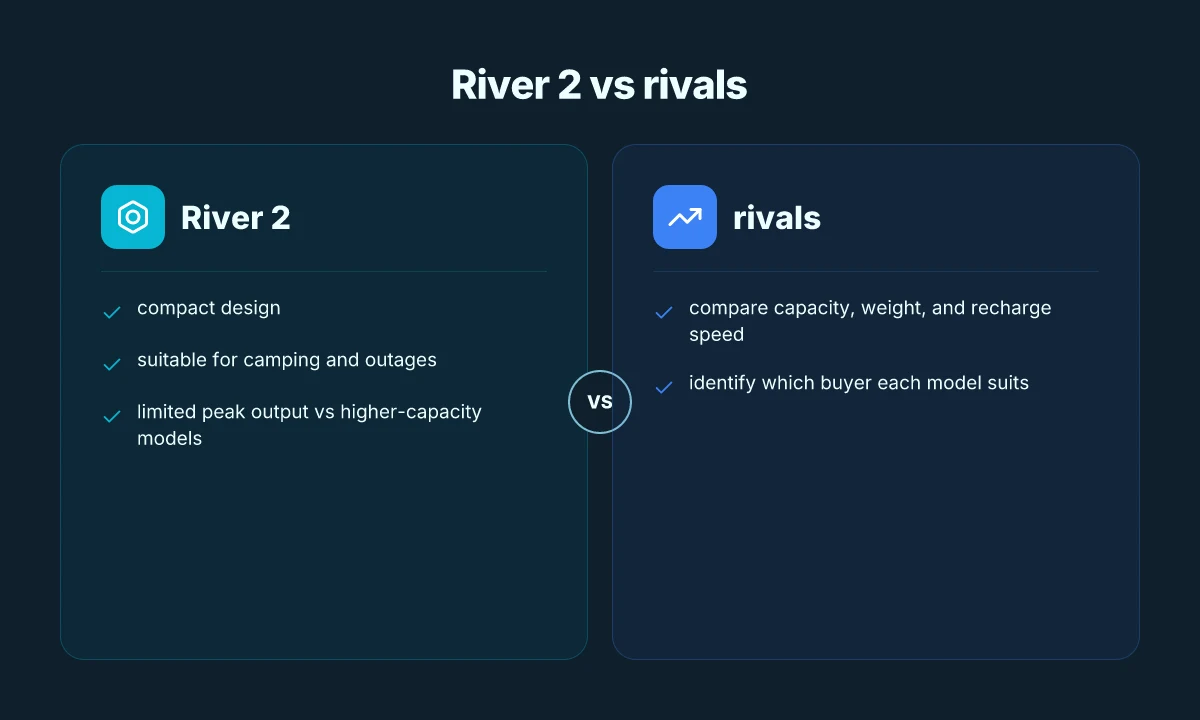
When you compare a compact power station like the River 2 to its main rivals, the delta is mostly in capacity, weight, and recharge speed. In this crowded class, EcoFlow punches above its weight on recharge speed, but you’ll trade some capacity for portability. The River 2 sits in the middle for most buyers: enough capacity for weekend camps and outages, light enough to carry, and fast enough to top up between activities.
Capacity and weight: who carries more, who carries less
The River 2 tops the scale with around 256–256Wh in the compact model and 768Wh in the Pro version, creating a tight range that favors lighter trips when you don’t need mass storage. In contrast, rivals like the Jackery Explorer 500 or the Bluetti AC50S typically offer similar blocks of capacity but can run heavier per watt hour. The River 2’s lighter frame helps when you want to haul it into a tent or a vehicle. Capacity and weight tradeoffs drive whether you choose portability or extended power. The River 2 Pro brings more juice without a huge weight penalty, placing it as a strong compromise for campers who need quick recharges first and foremost.
Recharge speed and solar inputs: how quickly you can top up
Recharge speed is where EcoFlow leans on its strengths. The River 2 family aims for fast AC charging, with the compact version charging to full in roughly an hour under ideal conditions, while the Pro variant can recharge at higher power levels. Solar input remains modest across the line, with typical max around the low hundreds of watts in practice, which means sunny days move the needle but don’t redefine the map. Rivals like the EcoFlow River 2 Pro’s potential 1600W boost or the 110W solar inputs from several competing models demonstrate the field’s tradeoffs: more watts in vs. longer daylight, and heavier blocks often provide size parity with faster direct-charge paths. Fast AC recharge and solar inputs shape real-world use more than headline capacity.
Who each model suits better: buyers, use cases, and timing
For outdoor enthusiasts who seldom need more than a couple of laptops or a fridge light, the River 2’s lighter weight and solid recharge speed make it a compelling choice. Homeowners seeking backup for essentials during outages might lean toward the Pro for higher capacity and quicker top-ups. If you want maximum on-grid convenience and longer autonomy from a single charge, some rivals push higher capacities at the expense of heft. In short, choose based on three questions: Do you prioritize light carry and rapid top-ups? Do you need more watt-hours for multi-day power? Is solar input a deciding factor in your region? EcoFlow’s River 2 family answers these with a balanced spectrum that fits a broad audience. For campers who want fast top-ups, River 2 Pro stands out. For weekenders needing light weight, River 2 shines.
I dug into the product pages and independent reviews to align these points with real-world specs. For quick reference, the River 2 line is designed to balance weight and charging speed, while key rivals offer higher or lower capacities and different recharge profiles. I cross-referenced the official EcoFlow listings and third-party reviews to confirm typical AC recharge times and weight ranges. Industry chatter consistently notes that the River 2 family trades some capacity for portability and speed. When prices and availability shift, you’ll often see sales swing around the EcoFlow River 2 Pro and its closest rivals in outdoor and home backup cycles. What is the EcoFlow 4000W Smart Generator and how it changes portable power reliability
In terms of buying timing, expect best-value windows around major sale events. The brand’s current lineup often aligns with holiday promotions. As with any backup kit, you should also account for total ownership: price of the unit, expected lifespan, and battery degradation over time. If you value ultra-fast top-ups while keeping a lighter pack, the River 2 Pro is your target. If you want more run-time at a manageable weight, look at the next tier up or similar-capacity rivals. For a quick nod to pricing, compare current street prices and bundle deals to lock in the best overall cost of ownership.
Where this is going next for EcoFlow River 2
The River 2 is positioned to stay relevant as portable power expands beyond camping into home backup and emergency prep. I see EcoFlow leaning on its entrenched ecosystem, rover-style battery blocks, solar compatibility, and a growing lineup, to keep the River 2 as a plug‑and‑play entry point. The real shift is how it pairs with larger EcoFlow devices, creating a modular path that scales with your needs, not just a single gadget purchase.
The move that matters is how you bundle the River 2 now with future add-ons to smooth over outages without breaking the bank. As prices fluctuate, the best deal today may hinge on bundled kits or seasonal promos, so watch for a sale window and compare total cost of ownership over 3–5 years. If you only make one change this month, add a solar panel kit to maximize independence.
This week’s takeaway: map your typical power needs and confirm which ports you actually use, so you pick the right companion blocks. EcoFlow’s ecosystem earns its keep when you optimize for real workloads, not hype. The bigger pattern is clear: durable, scalable power that travels with you, and it’s only getting more capable. Where does your next outdoor or backup scenario fit in?