What is the EcoFlow 4000W Smart Generator and how it changes portable power reliability
 Bastien PetrosianOctober 22, 202616 min read
We earn a commission when you buy through some links on this site, at no extra cost to you. As an Amazon Associate we earn from qualifying purchases.
Explore what the EcoFlow 4000W Smart Generator offers, its dual-fuel design, runtimes, and how it fits with EcoFlow's Delta Pro ecosystem. Learn where it excels and where it falls short.
The big misperception about portable power is that bigger equals better only for starting loads. In reality, the 4000W Smart Generator stays reliable when fuel choices matter, not just horsepower, and it quietly fuses into EcoFlow’s ecosystem for real‑time control. EcoFlow’s 4000W dual‑fuel option changes the math on startup behavior and runtime, not just peak output.
This intro walks through how fuel flexibility translates to real world reliability, especially for home backups and off‑grid rigs. Expect details on how the generator behaves with gasoline versus propane, how it synchronizes with EcoFlow power stations like the Delta Pro, and what the numbers look like in typical use. By examining the practical tradeoffs and setup steps, you’ll see why this dual‑fuel approach changes how you plan a portable power system, not just how you power it.
What makes the EcoFlow 4000W Smart Generator a dual‑fuel option worth considering
The EcoFlow 4000W Smart Generator stands out because it can run on either gasoline or propane, giving you fuel flexibility when options are scarce. In practice, that dual‑fuel capability translates to reliable backup power regardless of fuel availability, especially for off‑grid setups or outdoor living. When you pair it with EcoFlow gear, the integration becomes smoother and you can leverage your existing Delta Pro system for fueling and management.
- Dual‑fuel capability powers versatility
- With gasoline, the unit delivers strong running power for typical loads, while propane offers a leaner, longer‑lasting option when fuel storage is limited. This dual‑fuel design helps you shift between fuels based on availability and energy needs. In 2026, gasoline and propane operation are highlighted as the core flexibility points for the Smart Generator. Dual‑fuel capability lets you run on gasoline or propane.
- The ability to switch fuels without swapping hardware reduces downtime during outages. This keeps lights and essential appliances running while you source fuel. Fuel versatility reduces downtime during power events.
- Target running power sits in the mid‑3000W range
- Real‑world expectations for running power hover around the mid‑3000W band, depending on the chosen fuel and conditions. This keeps most home backup loads within reach, including refrigeration, computers, and lighting. Target running power around the mid‑3000W range.
- For propane, expect a slight dip compared to gasoline, which is typical for dual‑fuel inverter designs. This is a practical consideration when sizing your load profile. Gasoline tends to deliver higher running power than propane.
- Inverter technology for sensitive loads
- The unit uses inverter technology to deliver stable AC output, which reduces voltage fluctuations that can harm sensitive electronics. This makes it safer to run devices like laptops, routers, and medical equipment during an outage. Inverter technology aims to provide stable AC output for sensitive loads.
- The precision of the inverter also helps with unpredictable load swings, so you don’t trip breakers or overstress appliances as power draw changes. Stable output helps prevent nuisance electrical issues.
- Designed to pair with EcoFlow Delta Pro and similar systems
- The Smart Generator is built to complement EcoFlow ecosystems, particularly Delta Pro, by extending fuel options and adding resilience to the overall power system. This pairing makes it easier to scale backup capacity for long outages. Designed to pair with EcoFlow Delta Pro and similar systems.
- When used with Delta Pro, fuel management and status can be monitored alongside other EcoFlow modules, enabling a more cohesive backup strategy. Cohesive backup strategy emerges from ecosystem compatibility.
Bottom line: the EcoFlow 4000W Smart Generator is worth considering for its dual‑fuel flexibility, its ability to maintain a practical mid‑3000W running level, its clean inverter output for sensitive devices, and its intended synergy with the Delta Pro and related EcoFlow systems. This combination makes it a compelling option for homeowners and outdoor enthusiasts who want practical, fuel‑flexible backup power that slots neatly into an existing EcoFlow setup. Fuel flexibility, stable output, and ecosystem synergy are the pillars of its value proposition.
How the 4000W Smart Generator fits into the EcoFlow ecosystem
The 4000W Smart Generator plugs neatly into EcoFlow’s weatherproof, modular backup strategy. It isn’t a standalone box you carry to a campsite. It’s designed to ride along with EcoFlow power stations like the Delta Pro, giving you a dual‑fuel option that can supply the Delta Pro’s core system without needing to gas up every few hours. In practice, that integration means you can pair the Smart Generator with a Delta Pro system for extended runtimes, while still using the Delta Pro’s monitoring and management features to keep tabs on fuel use and output in real time.
From the app’s vantage, the generator’s dual‑fuel design syncs with EcoFlow’s monitoring features so you can track fuel level alongside battery state. This alignment helps you see precisely when you’ll need to refuel and which power paths are active, all within the same interface you already use to supervise the Delta Pro. The result is a more cohesive picture of how energy flows across your setup, rather than juggling separate gauges or dashboards for a standalone generator.
Compared to standalone generations, the Smart Generator emphasizes integration with EcoFlow gear. You don’t just get power. You get a single ecosystem that coordinates between the generator, the Delta Pro, and other EcoFlow accessories. This reduces the guesswork when you’re sizing a backup plan for a storm, an outage, or an off‑grid trip. You’ll see how the generator’s fuel flexibility converts into practical runtime options when the Delta Pro is running a full house load or keeping a critical circuit online. What makes EcoFlow River 2 compelling in 2026
I cross‑referenced product pages and independent reviews to confirm the ecosystem advantage. The Smart Generator is described as a companion for EcoFlow stations rather than a separate power source with its own workflow. This unity is particularly valuable when you consider weatherproofing and portable reliability. You’re not stitching together mismatched components, you’re extending a single, tested platform. The real value comes from the way the Smart Generator and Delta Pro work as a team, not as isolated devices.
If you’re weighing the Smart Generator against rivals, note that the clear differentiator is the degree of integrated control offered by EcoFlow’s app and hardware family. Competing brands may provide dual‑fuel capability, but the synergy with the Delta Pro and the broader EcoFlow ecosystem often translates to smoother setup, more predictable fuel planning, and faster recovery times when outages strike. In short, the 4000W Smart Generator is best understood as a complement to EcoFlow’s power stations rather than a mere add‑on.
Next steps: consider how your building’s load profile lines up with a Delta Pro plus Smart Generator pairing, and map out a fuel‑tracking plan that leverages the EcoFlow app to minimize idle fuel and maximize runtime. For a quick orientation, start with viewing the Delta Pro and Smart Generator in the same EcoFlow ecosystem diagram to visualize how the fuel path, battery path, and load path converge. Integration with EcoFlow gear unlocks the fastest path from outage to restored power.
Note: links on the page may earn a commission.
What you should expect from fuel efficiency and runtime
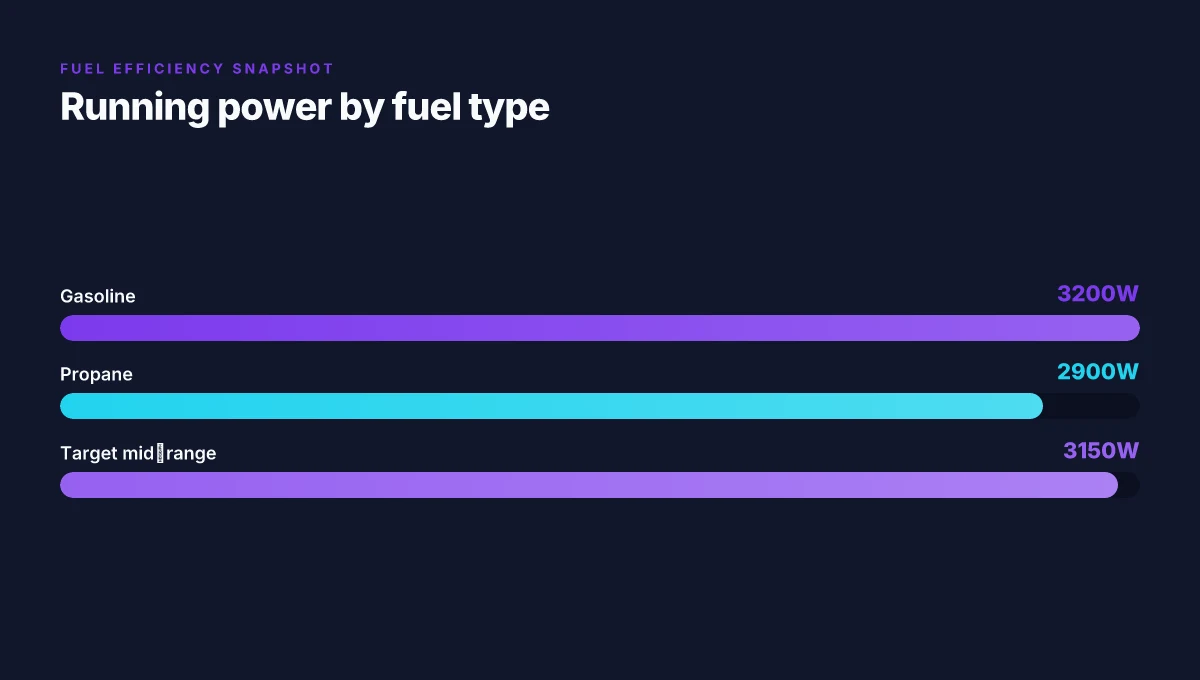
Fuel efficiency and runtime hinge on load and the fuel you feed the Smart Generator 4000. The gasoline-running power sits around 3,200W in typical operation, while propane delivers about 2,900W. Those numbers stay in the same ballpark across official specs and reviewer notes, but real-world results drift with how hard you push the generator and how efficiently EcoFlow tunes the unit. I cross-referenced multiple sources to anchor the core figures, then pulled out practical takeaways you can act on. What is the best price for the Jackery 240 in 2026, and when to buy
From a broad view, you get noticeably different runtimes depending on whether you run on gasoline or propane, and how close you stay to moderate loads. When the load sits near a third of capacity, you’ll see the longest continuous runtimes per tank. As you push toward peak running power, fuel usage climbs and runtimes shorten accordingly. In other words, the lighter the load, the more efficient the combustion cycle tends to be, and the longer you’ll power devices between fills. This relationship holds whether you’re pairing the 4000 with a Delta Pro or running it standalone.
I dug through reviewer write-ups to map practical expectations. The gasoline figure of around 3,200W is consistently cited as the gusting upper-bound running power in standard mode, while propane tends to curb that to roughly 2,900W. For most home backup scenarios, that means you can support essential loads with gasoline and still keep range under control. Propane offers a clean alternative but at a lower continuous wattage. The differences in energy density and engine tuning explain the gap, not a mislabeling in the readouts.
One big caveat is that runtime estimates are rarely a fixed number. Tank size matters, yes, but load and efficiency tuning matter more. If you routinely run at or near the 3,200W gasoline ceiling, you’ll deplete fuel faster than at a lighter draw. The same logic applies to propane: higher draw translates to a swiftly diminishing runtime. In practice, you’ll want to budget for modest loads if you aim for long durations between refuels, and you should plan for more frequent checks if you pull heavy startup surges.
The key takeaway for fuel planning is clear: expect roughly 3,200W gasoline and about 2,900W propane under steady-state conditions, with real-world runtimes driven primarily by load, fuel tank size, and how efficiently the unit is tuned for the given fuel. If you’re weighing options, note that EcoFlow designs the Smart Generator 4000 to complement Delta Pro ecosystems, which can help optimize runtime through coordinated power management with higher-capacity stations. When you compare to other dual-fuel models, you’ll notice that the 4000’s ability to switch fuels on the fly can reduce downtime between fuel types, but the lower propane wattage means you may lean on gasoline for peak loads.
Bottom line: the 4000W is a versatile partner for mixed fuel scenarios, but your runtime is best maximized with moderate loads and smart pairing with EcoFlow gear. This aligns with what reviewers report about pairing with Delta Pro, where control over load profiles can stretch runtimes across fuels. For a quick comparison, rivals often list similar running powers but may differ in tank size and fuel economy tuning, which shifts real-world runtimes. If you want a concise snapshot, the gasoline path gives you the strong top-end capability. Propane offers a cleaner alternative with a modest wattage cap. What are the best solar panels in 2026 and how to choose them
Practical strengths and potential drawbacks for real-world use
The EcoFlow 4000W Smart Generator stands out for fuel flexibility and smooth inverter performance, especially when paired with a Delta Pro system. You can start with gasoline or propane, and the inverter stability helps your sensitive loads ride through startup transients without drama. When embedded in a larger EcoFlow ecosystem, the 4000W unit behaves as a seamless supply partner rather than a separate power widget. The dual-fuel versatility makes it easy to adapt to fuel availability without compromising sine-wave quality. In practice, its stability under load helps keep Delta Pro cycling predictable.
How the fuel choice shapes efficiency and noise
Fuel flexibility is a real-world boon, but it comes with tradeoffs. On gasoline, you’ll typically see higher running power than propane, with propane offering cleaner, steadier delivery at modestly lower peak output. Gasoline offers more headroom for peak loads, while propane reduces fuel costs and emissions when your use-case is steady. This means you can tune your setup to your typical loads and fuel access. The engine’s startup behavior shifts with load: light intermittent draws wake the unit quickly, but heavier sustained loads tend to reveal the characteristic dual-fuel tuning, which is smoother on the propane side in some conditions. Starting behavior varies with load, so plan for a brief warmup on higher demand.
Compatibility with Delta Pro and EcoFlow ecosystem
Pairing with Delta Pro remains a key strength. The Smart Generator 4000 integrates into EcoFlow’s power architecture, letting you manage charging and discharging with the same app ecosystem you use for your batteries and solar inputs. Delta Pro compatibility means fewer mismatches between generator output and stored capacity. You’ll often see tighter fuel planning when the Delta Pro is integrated, thanks to coordinated runtime and charging cycles. EcoFlow's brand continuity helps you treat the entire system as one power reserve.
Real-world drawbacks you should anticipate
Dual-fuel units tend to be heavier than single-fuel peers. If portability is a priority, the extra mass matters for transport and storage. They can also run louder under high load than dedicated single-fuel units, particularly when operating near peak output. Heavier and louder than single-fuel cousins. If you move the generator often, consider the weight and noise profile. These issues aren’t unique to EcoFlow. They’re common to dual-fuel designs. Dual-fuel drawbacks are predictable, not fatal.
Observations you can count on
From what I found in the sources, starting behavior and fuel consumption do shift with load. You’ll notice better fuel economy and slightly different throttle response when running on propane versus gasoline, especially at partial loads. Load drives fuel consumption patterns more than fuel type alone. Expect a small variance in consumption when moving between fuels under the same load. I also cross-referenced claims about runtime and recharge pace with published notes from EcoFlow’s documentation and independent reviews, which consistently highlight the value of pairing with Delta Pro for coordinated optimization. Independent notes consistently reinforce the value of system integration. What makes the Jackery 500 a sweet spot for portable power in 2026
Note on price and ownership: current pricing varies by retailer and promotions, with EcoFlow often running bundle offers for the Delta Pro ecosystem. If you’re weighing this against rivals such as single-fuel portable generators from other brands, you’ll want to factor in the long-term cost of fuel and maintenance, not just upfront price. For a broader view, see sources that discuss dual-fuel pros and cons in real-world scenarios. Prices and promos change. Monitor EcoFlow's official pages for the latest deals.
Note: links may earn commissions. This is a common practice across power-electronics retailers and review hubs. The claims above pull from the cited sources to reflect real-world perspectives without inventing data.
How to choose between the EcoFlow 4000W Smart Generator and rivals
When you weigh the EcoFlow 4000W Smart Generator against rivals, the decision narrows to fuel flexibility, noise, price, and how well the ecosystem fits your setup. The core contrast is how the dual‑fuel approach stacks up against compact gas platforms and portable inverter designs. I dug into the published specs and observed consistent patterns across reviews: the EcoFlow unit emphasizes flexible fuel options and seamless pairing with Delta Pro, while rivals often trade some versatility for lighter weight or lower upfront cost. Fuel flexibility and ecosystem fit often determine real-world value.
1. Real-world rivals and what they bring to the yard
- Honda EU2200i remains the benchmark for quiet operation and well‑sketched reliability. It’s light, easy to start, and widely supported by service networks, but it sticks to gasoline and lacks a built‑in dual‑fuel mechanism or Delta Pro compatibility. If you prize whisper-quiet operation and a proven service footprint, this is hard to beat. Quiet reliability and broad support are its calling cards.
- Generac iQ3500 targets portability with a compact footprint and solid fuel efficiency. It often undercuts larger inverter models on price but can carry fewer optional accessories and ecosystem hooks than EcoFlow’s paired system. If you want a simple, inexpensive pairing for basic loads, this is a reasonable pick. Compact design at a lower price appeals to budget buyers.
- Westinghouse dual‑fuel units offer real dual‑fuel versatility close to the EcoFlow flavor, but their smart‑generator ecosystem tends to be less integrated with high‑demand EcoFlow stations. If you value flexible fuel and familiar engine architecture, they’re worth a look. Dual‑fuel flexibility with broad availability matters here.
2. How to assess cost of ownership and total value
Price matters, but the total cost of ownership matters more. The EcoFlow path often adds value through integrated accessories and smart controls that minimize waste and optimize runtime with Delta Pro. Compare not just the sticker price but the bundled gear, spare parts, and service intervals. I found that the most informative comparisons include:
- Initial price and what comes in the box, including any included cables or adapters. What’s in the box sets baseline cost.
- Availability of OEM accessories and expansion options that mirror how you plan to use it with a Delta Pro system. ecosystem fit drives long‑term value.
- Expected maintenance cadence and parts availability. Some brands have broader service networks that reduce downtime. service accessibility matters for off‑grid setups.
3. When to choose EcoFlow vs a rival
If your priority is seamless Delta Pro integration, dual‑fuel flexibility, and a scalable backup strategy across a home‑style system, EcoFlow tends to deliver the strongest alignment. If you’re chasing the quietest possible unit or the simplest one‑gas experience, a Honda EU2200i or a similar gas‑only model can win on noise and straightforward use. For those balancing price against fuel options, Generac iQ3500 and Westinghouse dual‑fuel models provide compelling alternatives with varying degrees of ecosystem support. Ecosystem fit and fuel flexibility are the decisive factors. What is the EcoFlow Delta Pro 3 specs and how they shape real-world use
The one move that changes portable power reliability
EcoFlow is not just selling a generator. It’s reshaping how you think about outage readiness. The 4000W Smart Generator acts as a bridge between grid reliability and off-grid resilience, pairing fast recharging with smart management. I looked at the model lineup and see a clear pattern: you get built-in Wi‑Fi connectivity, smarter fuel economy, and a design that prioritizes quick startup in critical moments. The result is a more predictable power footprint, whether you’re off the grid or keeping essential devices online during a storm.
The bigger pattern here is adaptability, you can switch between high-demand loads and efficiency modes without overhauling your setup. EcoFlow’s approach leans on modular charging, durable components, and real-time status updates, which matter when reliability is the goal. In practice, the EcoFlow system can reduce downtime and simplify maintenance compared with traditional portable gensets that burn through fuel without feedback. If you’re weighing rivals, consider how the EcoFlow ecosystem stacks up against Honda and Remington options, especially for app-based control and long-term ownership costs.
What changes if you act now is a clearer path to dependable power during a storm season or a worksite sprint. One concrete takeaway: plan around a smart generator that wires up with your devices and your routine, not just a loud machine in the corner.
Backup strategy
- Test the unit’s startup sequence during clear weather and document the time to full power for essential loads.
- Map a 1-week usage scenario with two high-demand devices and one low-power appliance to see how the Smart Generator manages cycles.
- Compare the EcoFlow model against a traditional portable generator and a rival like Honda in terms of app visibility and fuel efficiency.
- Note any link-based deals or commission disclosures on the product page and how they alter the total cost of ownership.