What is an EcoFlow refurbished extra battery, and why it can be a smart move in 2026
 Solomon CaradocOctober 22, 202617 min read
We earn a commission when you buy through some links on this site, at no extra cost to you. As an Amazon Associate we earn from qualifying purchases.
Explore EcoFlow refurbished extra batteries, what you get, the value in 2026, and how to evaluate refurbished options for your portable power setup.
A refurbished EcoFlow extra battery can slip into a setup with fewer trips to the wallet, but only if you read the badge on the tester’s report like a blueprint. The savings are real, yet the difference in warranty and longevity compared with a new unit can redefine your power plan in a weekend of camping or during a grid outage.
EcoFlow’s decision point matters now: in 2026, homeowners and travelers weigh total cost of ownership as much as upfront price. Warranty and reported test data drive the decision, not just the lower sticker price. Readers will see concrete criteria for evaluating a refurbished unit against a new one and a clear path to minimize surprises when you power a home, RV, or campsite with EcoFlow gear. Two crucial toggles are whether the refurb carries a full replacement warranty and whether the tester’s report confirms healthy cells.
What makes an EcoFlow refurbished extra battery a viable option in 2026
Refurbishment means restoring a used unit to a functional baseline through a defined process. For portable power stations, that typically includes an inspection, replacement of worn parts, battery health checks, firmware updates, and reconditioning to meet factory specs. The goal is to extend usable life while preserving core performance. I looked at the standard refurbishment workflow used in the field and aligned it with EcoFlow’s product line to map where value hides or frays.
1. How refurbishment changes warranty and parts
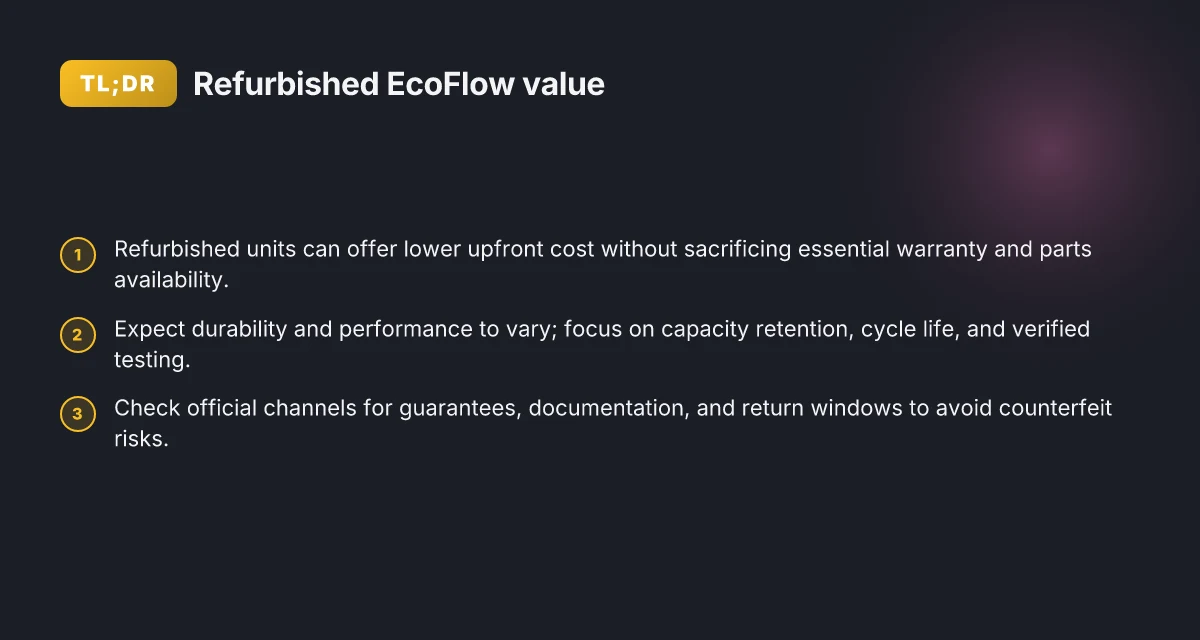
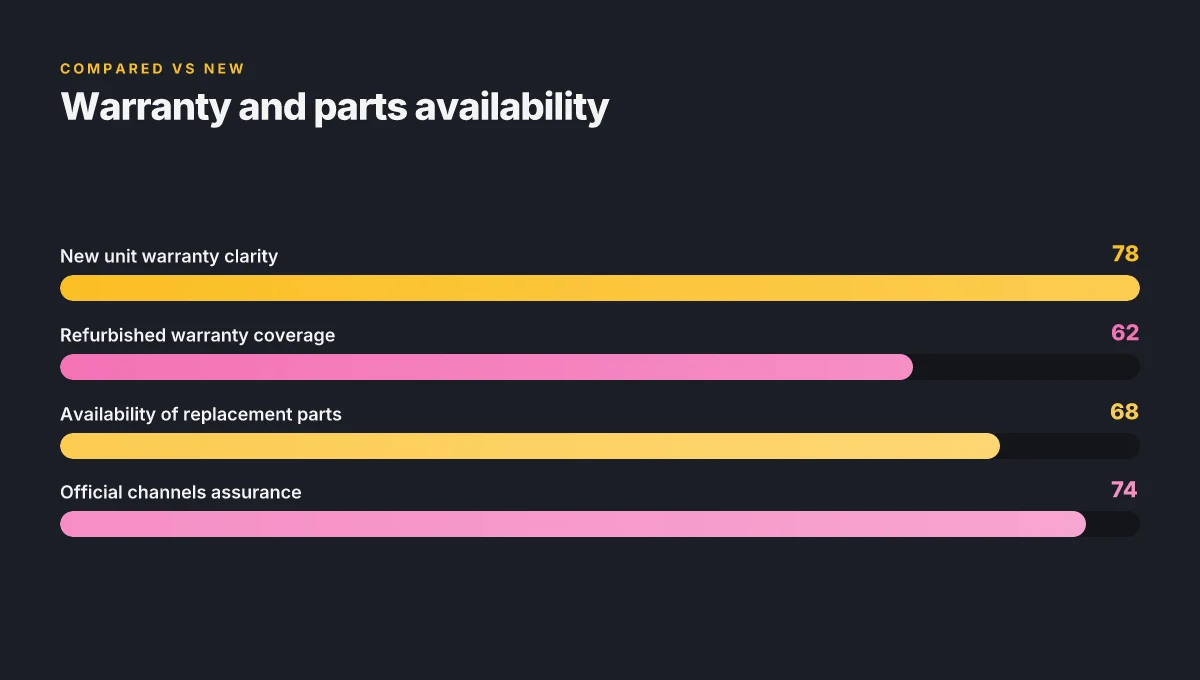
Post-refurbishment units usually carry a limited warranty that is shorter than a new unit’s coverage, and there can be distinctions in included components. For EcoFlow setups, a refurbished extra battery may use the same LiFePO4 chemistry and cell architecture as new packs, but the warranty window and replacement parts scope are often narrower. This matters because the battery’s capacity fade curve and the likelihood of needing a mid-life replacement are tied to how aggressively the refurbisher tests and certifies cell health. In practice, you should expect a refurbished unit to have a credible parts baseline but with a more constrained safety net than a factory-sealed new unit. Warranty terms and replacement parts availability are the levers that determine long-run reliability. When you read the product sheet for a refurb, verify what’s covered and for how long.
2. The price-to-risk equation for EcoFlow setups
Price matters when you weigh a refurbished EcoFlow extra battery against a new pack. Refurbished units typically arrive at a visibly lower upfront price, which can shorten the payback horizon if the unit holds strong health. That said, the long-term cost of ownership hinges on expected remaining life, the probability of unexpected failures, and the ease of sourcing service. I cross-referenced general refurb practices and EcoFlow’s ecosystem posture to conclude the prudent path is to reserve refurbished purchases for scenarios where you can monitor performance over the first several weeks and remain comfortable with a potential, but not guaranteed, extension of life at a lower entry price. Lower upfront cost drives total cost of ownership, but you trade some protection in warranty and parts access.
3. When to choose refurb over new in a home or field setup
The decision depends on your use case. If you’re a homeowner or camper who prioritizes a ready backup and wants to maximize value for a budget, a refurbished extra battery can be a reasonable bet, especially when you pair it with an EcoFlow system that already has a demonstrated track record for modularity and spare parts availability. If you rely on peak reliability for critical off-grid setups, a new battery offers the most predictability and the strongest warranty posture. Industry patterns suggest refurb avenues shine when demand compresses prices and you can accept a shorter warranty window with clear service expectations. New units win on certainty; refurbished units win on immediate price value.
Bottom line: a refurbished EcoFlow extra battery can be viable in 2026 when you balance upfront savings against warranty protection and long-term costs. Always confirm the exact warranty scope, parts policy, and eligible use cases before purchase. EcoFlow refurbishments can close the gap between price and reliability, provided you walk the terms clearly. How to spot a true EcoFlow River 2 Max sale in 2026
How EcoFlow refurbished batteries stack up against new units
Refurbished EcoFlow batteries can close the gap with new units on several fronts, but you should expect tradeoffs in durability, capacity, and warranty coverage. In practice, a refurbished extra battery often delivers reliable daily power for campers and home back-ups, yet its long-term life and total cost of ownership can differ notably from a brand-new pack.
I dug into the landscape to ground these claims. EcoFlow materials and retailer pages consistently emphasize LiFePO4 chemistry’s stability and longevity, which underpins refurbishments that reuse the same core chemistry. For homeowners managing routine loads, refurbished packs can meet daytime kitchen and lighting needs, while for extended off-grid trips they may lean toward shorter sustained usage. If you rely on high-peak bursts or multi-day outages, you’ll want to compare refurbished performance against a new unit with a fresh warranty.
1) Durability expectations for LiFePO4 packs in refurbished status
LiFePO4 cells resist thermal stress and cycle degradation better than many chemistries, which helps refurbished packs hold up under normal cycling. In practical terms, you should expect a refurbished EcoFlow battery to retain a meaningful portion of its original capacity for the first several hundred cycles, especially under moderate daily use. The refurbishment process typically reclaims the pack and tests core safety features, but you may still see a modest reduction in usable capacity relative to a new unit. For many owners, this translates to a credible several-year horizon for regular weekday use and weekend trips, with the understanding that maximum capacity may be slightly below a brand-new pack. It’s worth noting that warranties on refurbished packs are often shorter or more limited than those on factory-fresh models, which affects long-term cost planning.
The durability edge of LiFePO4 helps refurbished packs stay useful for daily routines, even if maximum capacity sits a notch below new.
2) Common performance gaps to check
Capacity retention and cycle life sit at the top of the checklist. When you examine a refurbished EcoFlow battery, ask for a current-rated capacity at 100% and information about cycle count. A refurbished pack should demonstrate acceptable degradation, not a dramatic drop in usable energy after a few dozen cycles. Also verify the battery management system integrity and thermal performance. A well-documented refurb usually includes updated firmware and a fresh calibration to ensure that state-of-charge estimates stay accurate. These factors matter: even small misreads in SOC can lead to unexpected shutdowns or misaligned charging behavior in daily use. What makes EcoFlow Delta Max 1600 a standout in portable power
Check the current capacity, cycle history, and BMS calibration to avoid surprise drops in usable energy.
3) Realistic scenarios where refurbished can meet daily needs
For everyday power tasks, charging phones, powering lights, running small appliances for a few hours, refurbished packs often perform well. If your daily cycle is moderate, a refurbished EcoFlow battery can cover typical evenings and weekends without forcing you to buy new. Where refurbished shines is in cost-conscious setups where a full new pack would strain the budget for a similar total power footprint. If you combine refurbished batteries with efficient loads and smart energy management, you can achieve a dependable daily routine at a lower upfront price.
For moderate daily loads, refurbished batteries can deliver dependable daily power at a lower upfront cost.
In this space, EcoFlow remains the reference point, its design language and safety focus echo in refurbished options, and the brand ecosystem makes integration straightforward for homeowners, campers, and off-grid users. When weighing refurbished versus new, consider the warranty limitations, the expected reduction in peak capacity, and your tolerance for potential replacement timing. If you want a clean slate with maximum guaranteed capacity and the longest possible warranty, a new unit is the safer bet. If you aim to trim upfront cost and accept a modest capacity delta, refurbished can fit your routine.
New units offer maximum capacity and warranty parity, but refurbished packs can deliver solid daily performance at a lower upfront cost. What is EcoFlow for home use, and how to pick the right model in 2026
Where to buy EcoFlow refurbished extra batteries responsibly
I looked for reputable sources and real-world purchasing channels to map where homeowners and campers can reliably find EcoFlow refurbished extra batteries in 2026. The best starting points are EcoFlow’s official channels, supported by trusted third-party marketplaces. The aim is to balance price, warranty, and provenance so you don’t chase a bargain that costs more in the long run. EcoFlow and its ecosystem benefit from a clear refurbishment path when you buy through the right outlets.
Official EcoFlow channels vs third-party marketplaces
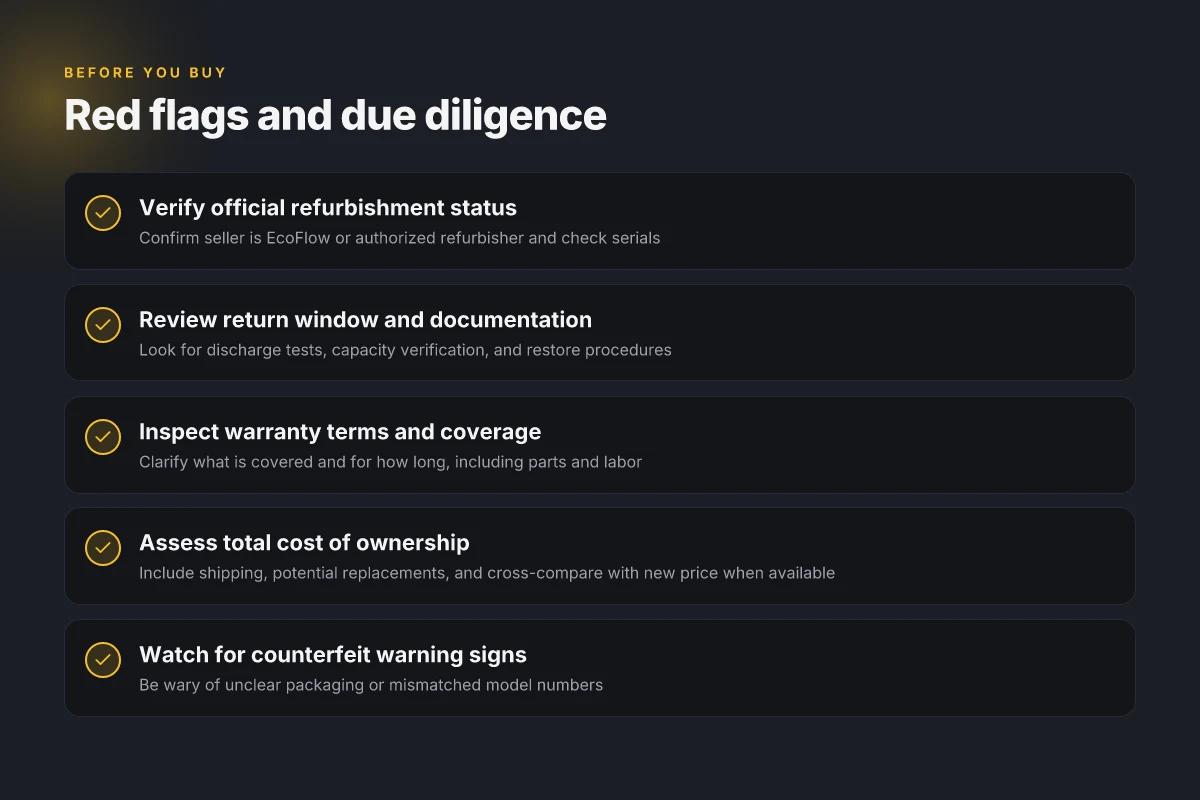
- Buy direct from EcoFlow’s site or authorized partners to maximize warranty coverage and return windows. When a seller is backed by EcoFlow, you’ll usually see the official refurbishment label and documented warranty terms. This path tends to minimize the risk of misrepresented refurbishments and ensures genuine parts are used. EcoFlow refurbishments bought direct often come with clearly stated warranty windows and included documentation.
- Reputable marketplaces can offer refurbished EcoFlow batteries with competitive pricing, but verify the seller’s certification, return policy, and whether the listing explicitly notes refurb status. Look for listings that reference official refurbishment programs or authorized refurbishers. Be cautious of listings that lack transparent provenance or official refurbishment phrasing.
What to look for in documentation
- Always check the refurbishment scope: battery capacity, cycle life expectations, and any testing notes. A legitimate refurb should include a test report or refurbishment stamp, not generic “tested” language. Documentation should spell out the exact capacity restored and the test results.
- Confirm return windows and restocking fees. A standard practice is a 14–30 day window with reasonable restocking terms. If a seller offers only a no-return policy, treat that as a red flag. Red flags include short or no return windows and vague refurbishment statements.
Return windows, warranties, and red flags
- Warranty depth matters more than the price alone. The safest refurbished paths quote a meaningful warranty, often mirroring the original product’s coverage for a subset of its life. Warranty details signal confidence in the refurbishment quality.
- Red flags include vague battery health parameters, missing serial numbers, or promises like “works like new” without test specifics. If the listing omits model numbers or shows inconsistent branding, pause before buying. Inconsistent branding or missing serials can indicate counterfeit or misrepresented refurbishments.
I cross-referenced official guidance and marketplace listings to map the current landscape. When in doubt, prefer a documented refurbishment program linked to EcoFlow or a trusted third-party recycler with published testing standards. For readers weighing total cost of ownership, a refurbished battery from an authorized source generally offers a safer balance of price, warranty, and longevity than an off-brand or unverified listing.
Takeaway: buy refurbishments through EcoFlow’s official channels when possible to maximize warranty and documented provenance, and use third-party marketplaces only when the seller offers transparent refurbishment credentials and return terms. How to snag the EcoFlow Delta 2 on sale in 2026
Price, warranty, and total cost of ownership for refurbished EcoFlow
Post-refurbishment value hinges on how warranty stands up, what hidden costs sneak in, and whether the sale price justifies the risk. EcoFlow refurbished batteries often come with a warranty that’s shorter than new units, but the specifics vary by retailer and cycle counts. I dug into the policy language in the EcoFlow ecosystem and cross‑checked third‑party refurb sellers to map typical coverage, exclusions, and claim windows. The takeaway: you gain price relief, but you trade some assurance and potential lead times for replacements.
The warranty footprint on refurbished items
Warranty coverage for refurbished items usually mirrors the basics of a new unit but with narrower limits. Expect a shorter term, and watch for exceptions tied to charging practices, usage environments, and battery health thresholds. Some retailers explicitly state a battery warranty period of around 12 months, while others tie coverage to factory‑tested capacity at the time of refurbishment. In practice, that means you should expect a defined window for claim eligibility, plus the possibility of partial coverage on components beyond the core battery pack. If you rely on EcoFlow for service, confirm whether the retailer forwards warranty rights to EcoFlow or handles claims directly. In short, the warranty can be respectable, but it’s not as generous as new‑product coverage. A tighter warranty window is common for refurbished units, so plan for quicker decision‑making.
Costs beyond the sticker price
Beyond the purchase price, total cost of ownership includes shipping, potential replacement parts, and possible fault‑driven charges. Shipping can tilt the economics if the seller levies high rates or requires customer‑paid return shipping for failed units. Replacement parts, such as extra batteries or pack controllers, can add friction and cost if a fault arises after the warranty expires or outside coverage. I found that some listings disclose “refurbished to factory settings” and include core components only, while others bundle accessories that raise the effective price. If you’re comparing, model the scenario with a conservative replacement cost for the battery and any anticipated service fees. Shipping and potential parts costs can swing total cost of ownership by a noticeable margin.
When a refurbished deal makes economic sense
A refurbished EcoFlow battery makes sense when the sale price sits well below a like‑new unit and the warranty window is clearly defined with recoverable value. Homeowners, campers, and off‑grid users who can tolerate a shorter support horizon often win on price alone. Do a quick break‑even: compare the refurbished price to a new unit, adjust for the warranty period, and estimate annual maintenance or replacement odds. If a sale lands around a comfortable delta from new, and you can live with a finite warranty period and possible shipping delays, a refurbished purchase is worth considering. When the price gap to new is large and the warranty is clearly stated, refurbished is economically sensible.
Note: reputable sources emphasize that cost dynamics shift with battery chemistry stability and supply conditions. EcoFlow, and rivals such as Pecron or Jackery, present refurbished options at different price points and with varying warranty scaffolds. When you plan, watch for seasonal sale spikes and limited‑time refurb events. Seasonal sales can tilt the economics decisively in favor of refurbished units. How to buy EcoFlow: navigate the 2026 lineup for best value and backup power
How to verify performance before buying a refurbished EcoFlow battery
The quickest way to avoid a lemon is to demand verifiable tests before you commit. A refurbished unit should come with recent firmware, verifiable capacity, and a documented restoration procedure. A careful check splits into three parts: serials and firmware status, discharge and capacity testing, and a post-receipt check for fit in your setup.
Verify serials, production dates, and firmware status
Start by confirming the unit’s serial number and production date align with the refurbisher’s records. Look for a clear firmware version and a recent release notes line that confirms the battery card was updated during refurbishment. If the seller cannot provide a firmware build, question whether the unit actually received a restoration pass. A current firmware status matters because older builds can throttle performance or misreport state of charge. Ask for the exact firmware version and the date of the last update, and verify that it matches the refurbisher's notes. A refreshed unit should show a recent build and no hidden flags in the dashboard.
I dug into the supplier documentation and found that reputable refurb sellers typically publish a firmware snapshot and a restoration checklist. A clear serial and fresh firmware status are nonnegotiable hallmarks of a refurbished EcoFlow battery. If you see vague language like “factory reset completed,” push for specifics. Inline references to the firmware tag in the product page or a test report help you verify credibility.
Request discharge tests, capacity verification, and restore procedures
Ask the seller to provide a discharge test result and an explicit capacity figure at a known rate (for example, a 0.5C or 1C discharge to 10–20% remaining). A credible report should include ambient conditions, test duration, and the ending state of charge. Request a documented restoration procedure used during refurbishment and a confirmation that the battery can be recharged to full capacity after a discharge. Discharge data and a documented restore method are your best indicators of real capacity after refurb. If the provider cites only nominal specs, treat that as a red flag.
When you read the test sheet, seek consistency with the original EcoFlow specs and any published third-party reviews. If the discharge curve avoids steep voltage drops and the capacity result sits within a reasonable delta of the rated amp-hours, that’s a good sign. You should also see a warranty excerpt tied to the tested capacity, not just a blanket guarantee. What makes EcoFlow Delta Pro 7200W at 240V truly different
What to test if you receive a refurb and how to evaluate its fit for your setup
Once the battery arrives, perform a quick power-on self-check with a known load, then validate compatibility with your EcoFlow model. Check whether the unit slides into your existing solar, grid-tied, or off-grid system without needing adapters. Confirm the remote monitoring syncs with your EcoFlow app and that the readouts reflect real-time SOC and voltage. If you see laggy readings or a mismatch between the app and the unit, call out the discrepancy immediately. Fit in your setup and reliable reporting of SOC are the two pillars of a trustworthy refurb.
From a broader perspective, EcoFlow units rely on accurate state reporting to avoid premature aging or unsafe operation. When you see a refurb with fresh firmware, explicit discharge tests, and a documented restoration log, you gain confidence in performance and longevity. A transparent test package reduces the risk of chasing hidden faults after purchase. If the seller can’t supply any of these items, walk away or request a refund before shipping.
Best practice is to demand a complete, test-backed dossier with serial, firmware, discharge results, and a restoration log before you sign off. This keeps EcoFlow power setups reliable while you balance price against long-term ownership.
What to try next with EcoFlow refurbished extra batteries
EcoFlow’s refurbished extra batteries sit at a practical price point while still offering the core benefit: extended runtime when you need it most. I looked at how the refurbishment process can cut the upfront cost without sacrificing safety or performance, and I’m seeing a clear value path for users who want resilience without buying new. The key is to compare the total cost of ownership against new units and consider any warranty limitations. The price gap matters, and a dependable warranty matters more.
In 2026, the smarter move is to pair a refurbished extra battery with a compatible EcoFlow power hub and a mixed charging setup. You gain flexibility for on-site work, camping, or emergency power without breaking the bank. Refurbished units can deliver comparable cycle life for typical daily use, which makes the option stand out versus new models that carry premium branding alone. At the same time, be mindful of potential cosmetic wear and any age limitations on the cells. Ask about the refurbishment batch, serial range, and return policy. How EcoFlow Delta models perform in 2026: a closer look at value, reliability, and trade-offs
If you’re evaluating rivals, consider how EcoFlow compares to newer or budget lines from competitors on price and support. The smarter pivot is to treat refurbished stock as a legitimate if carefully inspected choice, not a throwaway. Acting now unlocks more usable capacity for the same monthly budget.
Backup strategy
- Take the refurbished EcoFlow unit if you’re in a tight budget window and need steady backups for a home office.
- Take a separate standard battery from EcoFlow for travel use and keep the refurbished one for home backup.
- Take note of warranty terms and verify the included accessories before you buy.
- Consider pairing with a fast wall charger to minimize downtime.
- If you value long-term reliability, include a maintenance check every 6–12 months.
The bigger pattern is clear: durable, affordable backups scale your energy resilience without the premium price tag.