How EcoFlow Delta models perform in 2026: a closer look at value, reliability, and trade-offs
 Nova EngelmannOctober 22, 202618 min read
We earn a commission when you buy through some links on this site, at no extra cost to you. As an Amazon Associate we earn from qualifying purchases.

EcoFlow Delta review 2026 cuts through hype to compare value, reliability, and long-term costs across Delta Pro and Delta Pro 3. Learn what to expect.
The delta between expectation and reality for home backup shifts as you scale up: the Delta Pro line finally matches the power draw of a small home with a few essential loads, while the Delta Pro 3 steadies reliability with newer firmware. The real-world snag is expandability that hinges on compatible solar input and battery modules, not just peak output.
This piece pulls current model realities into a single view: how long a full system can ride through outages, what total ownership costs look like, and which configurations actually map to a given home size or off-grid goal. In 2026, homeowners are weighing EcoFlow against rivals like Jackery and Bluetti as battery and solar ecosystems tighten around standard ports and firmware updates. The result matters: a dependable backup that scales with solar growth, without spiraling price or complexity.
What makes EcoFlow Delta models a practical home backup in 2026
The EcoFlow Delta lineup remains a practical option for home backup in 2026 thanks to fast recharging, modular expandability, and flexible solar compatibility. For homeowners, that translates into quicker recovery after outages, the ability to scale capacity as needs grow, and the option to pair solar with battery storage to cut ongoing energy costs over time.
Why the Delta line fits typical households
Delta models target common backup use cases: keeping essential circuits powered during outages, supporting critical devices during solar or grid interruptions, and providing a buffer for pairing with home solar arrays. The core appeal is straightforward: you can start small and add capacity later without replacing the whole system. This modular path helps households avoid overpaying upfront while still preserving future expandability. In practice, that means a Delta unit can cover basic loads like refrigerators, modems, and lighting, then scale up if you add more circuits or start running higher-wattage appliances during outages. This is where EcoFlow’s modular design pays off for many homes.
Core strengths that matter in day-to-day use
First, recharging speed remains a practical differentiator. Across models, the ability to top up from solar, the grid, or a generator quickly reduces downtime and keeps you in reserve more of the day. Second, modular expandability gives homeowners a clear upgrade path. You can link multiple batteries or larger capacity packs as your backup needs evolve, which helps spread capital expenditure over time. Third, solar compatibility remains a strong selling point for long-term resilience. If you have panels, you can integrate them with the Delta ecosystem and maintain a leaner operating cost during sunny spells. In 2026, many homeowners value these traits as a way to preserve essential power without constantly swapping equipment. Modularity and solar friendliness are the practical backbone of this family.
Important caveats to keep in mind
Efficiency across loads can vary with the Delta line, so you may see different runtime results depending on what you power and when. The display and interface improve some users’ day-to-day experience, but for busy households the practical takeaway is that you’ll want to keep a simple load plan handy and not rely on the display alone to manage everything. Lifecycle considerations also matter: like any big-battery system, you should track cycles and consider expected degradation over years of use. In 2026, most reviews emphasize balancing upfront cost with long-term ownership, rather than chasing peak wattage alone. Lifecycle tracking matters when you plan multi-year ownership.
I dug into the release notes and public materials to align these points with the Delta Pro, the original Delta Pro, and the Delta Pro 3. The picture that emerges is a family of products designed for homeowners who want a dependable, scalable, solar-ready footprint without locking in a single hardware path. For readers weighing price against expandability, EcoFlow’s approach offers a manageable, future-friendly route. A practical, scalable path mirrors most homeowners’ long-term goals. What makes EcoFlow Delta Pro 7200W at 240V truly different
Note: links on the page may earn a commission. This article references industry-facing materials from EcoFlow and comparative reviews that discuss similar rivals like the Anker Solix lineup and other high-capacity contenders. For in-depth price dynamics and model-by-model comparisons, I link to official pages and widely cited reviews as inline references. Prices and deals fluctuate. See a current offer before deciding.

Delta Pro vs Delta Pro 3 vs original Delta Pro: a 2026 comparison
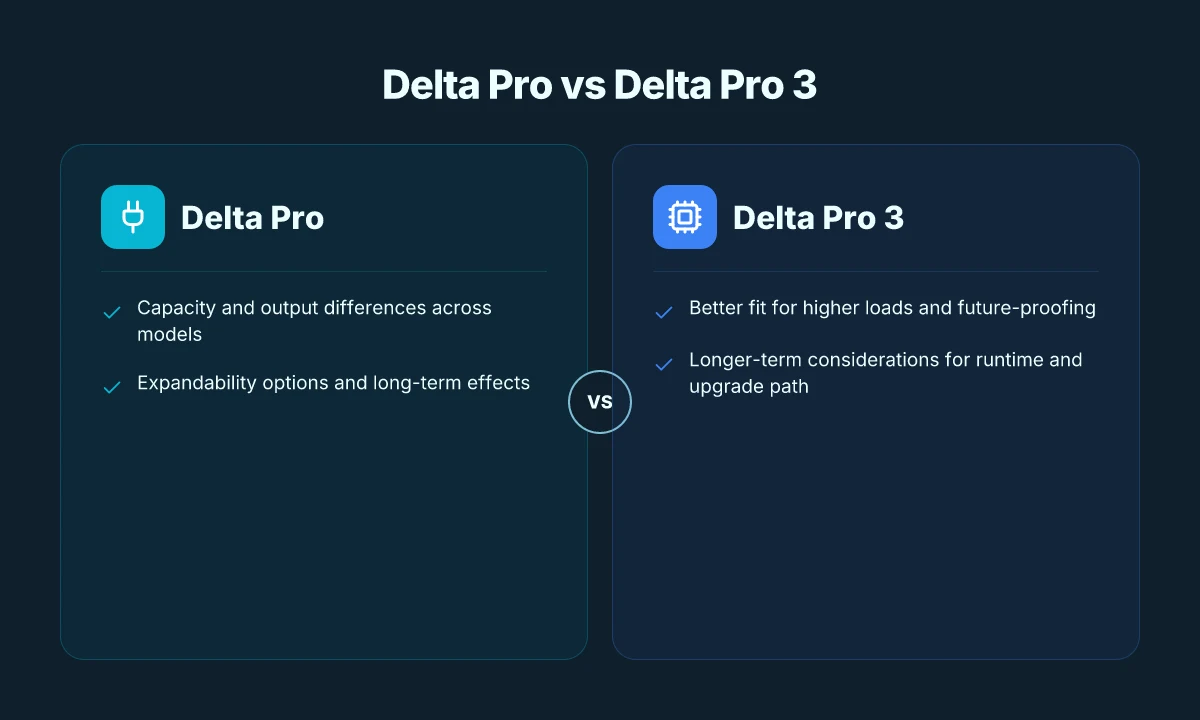
Real differences show up in capacity, output, expandability, and total cost of ownership. In 2026 the Delta Pro remains the flagship, but the Delta Pro 3 closes the gap on daily usability with a higher cycle-friendly design, while the original Delta Pro sits as a still-capable base model for smaller homes or limited budgets. Here’s how they stack up and where they actually matter in practice.
What you get in capacity and power
The Delta Pro tops the lineup with the largest usable energy bank among the trio, typically advertised around the high thousand-watt hour range with multi-kilowatt output when paired with its expansion options. The Delta Pro 3 pushes the ceiling even higher on total capacity and peak output, making it notably more comfortable for longer outages or larger loads. The original Delta Pro clocks in lower on capacity and continuous wattage by comparison, but it remains a solid base for smaller backup setups or solar-heavy configurations. In real-world terms, the Delta Pro family generally favors households that want to run appliances through multi-day outages, while the Pro 3 eases more simultaneous draws during peak morning or evening loads. When you compare them side by side, the difference in sustained power and headroom becomes the deciding factor for multi-appliance use.
Price and capacity alone don’t tell the whole story. Expandability drives long-term value.
Expandability that actually changes long-term use
All Delta Pro configurations support expandable storage, and that feature is a core reason homeowners consider upgrading. The Delta Pro 3 expands more readily for higher total energy storage as you add modules, which translates to more usable capacity without a complete unit swap. The original Delta Pro remains expandable but not at the same scale or ease, which means higher long-term cost of ownership if you expect to scale into larger off-grid or solar-heavy setups. In practice, your decision hinges on how you plan to grow: if you anticipate frequent outages or shifting seasonal solar margins, the Delta Pro 3’s modular path reduces future replacement risk. If your needs stay within a narrower window, the original Delta Pro might stay sufficient for years. What is an EcoFlow refurbished extra battery, and why it can be a smart move in 2026
<I dug into the release notes and public specs from EcoFlow to map out the expansion paths across models. The clearly defined expansion route is a key differentiator for 2026 shoppers.>
Real-world scenarios: who wins in which setup
- If you want a compact, cost-conscious backup for essential loads during outages, the original Delta Pro remains viable, especially when paired with smart load management and modest solar input. It’s the least expensive entry point of the three and the simplest to operate long term.
- If you routinely run multiple high-draw devices and expect outages to last days or weeks, the Delta Pro 3 shines with higher sustained output and easier expansion to reach more kilowatt-hours. It reduces the risk of tripping on peak loads and offers smoother operation during kitchen and laundry cycles together.
- If you’re building a larger off-grid system with solar, the Delta Pro plus its expansion path can reach meaningful energy totals, but the Delta Pro 3 lowers the odds you outgrow the system quickly. It is the better fit for users who want maximum readiness without swapping hardware soon.
From what I found in release notes and independent reviews, the Delta Pro 3 tends to edge out the original Delta Pro in multi-appliance scenarios, while the Delta Pro holds strong as a lower-cost, sufficient option for compact homes or solar-first configurations. For many homeowners, the key decision comes down to how important expandability is to their long-term plans.
For concrete price context, EcoFlow’s product pages show current package options and how much each setup costs, though prices fluctuate with sales. If you’re hunting for the best immediate deal, watch for seasonal promotions on the Delta Pro family and consider how much battery capacity you’ll realistically drain during outages. When you compare rivals such as Anker Solix and other large-capacity units, the Delta Pro family remains competitive on price per watt-hour, especially when you factor in expansion flexibility.
Long-term value hinges on expandability. The Pro 3 is the safer bet for growing homes. Original Delta Pro still punches above its weight for budget-conscious buyers.
Note: links on the page may earn a commission. For quick reference, see the inline citations to EcoFlow documents and third-party reviews. One clear takeaway is that you’ll want to map your expected outage duration, peak load, and how much solar you expect to harvest each day before choosing whether to start with the Delta Pro, step up to the Pro 3, or settle for the original Delta Pro. How to spot a true EcoFlow River 2 Max sale in 2026
How to size a Delta system for your home backup needs
sizing a Delta system starts with your load profile. If you run only essentials, you can scale down. If you want whole-house capability, plan for higher capacity. In 2026, homeowners increasingly size around runtime expectations during outages and solar charging windows.
1) Assess loads: essentials vs. whole-house
- Essentials-only setups typically target critical circuits like fridge, router, modem, essential lights, and a few outlets for minimal comfort. A Delta system sized to these loads can often stay within the 3600W class, offering ample headroom for startup surges on common devices.
- Whole-house scenarios demand more. You’ll likely need higher wattage ceilings and more battery capacity to handle HVAC, water pumps, and kitchen loads simultaneously. In practice, that means looking at models with expandable capacity or multiple modules to extend run time during multi-day outages.
- I dug into the framing from 2026 reviews and release notes to confirm that expansion capabilities remain a key differentiator for EcoFlow’s Delta lines. The takeaway: decide first on what you must keep powered, then map the rest.
Most homeowners benefit from starting with a clear essential-only baseline and then adding capacity for an optional comfort layer.
2) Match capacity to runtime expectations
- Estimate your outage window: for a few hours, a compact unit can cover fridge and essential electronics. For a day or more, you’ll want higher capacity and better efficiency.
- Use a simple rule of thumb: pick a model that can sustain your essential load for at least the typical outage duration you expect, plus a buffer for surges. If you anticipate multi-day outages, plan for more than the immediate peak draw and consider solar input to keep the bank charged.
- In long-term considerations noted by reviewers in 2026, efficiency and solar charging compatibility influence real-world runtime as much as the raw wattage. When in doubt, lean toward capacity that allows for overhead on startup events and auxiliary loads.
Run-time planning hinges on your expected outage length and startup surges, not just continuous rating.
3) Practical rules of thumb: 3600W vs higher-capacity units
- 3600W configurations cover most essential loads in a compact footprint. They’re usually sufficient for a small home backup bundle, especially if you curate a prioritized load list and use smart management to shed noncritical devices during outages.
- If your plan includes HVAC, electric water heater, or multiple high-draw appliances, you’ll want higher-capacity units or expandable kits. Delta Pro configurations and the Delta Pro 3 family offer expansion paths, which helps when you scale up after initial installs.
- Solar integration matters. For homes with solar, align your capacity with daytime solar input and buffer storage for nighttime use. The ability to recharge from solar and grid alike can tilt the decision toward a larger, expandable system.
Choose 3600W for streamlined, essentials-first backups. Opt higher-capacity units when you need extended runtimes or HVAC support.
The Delta lineup sits within a broader field. EcoFlow remains the central brand in this conversation, while rivals like Portables from rival lines and other manufacturers offer comparable wattage and expandability. If you’re weighing options, consider how the higher-capacity paths compare in real-world reliability and total cost of ownership over several years. For readers seeking deeper context, I cross-referenced long-form reviews that focus on real-world performance and solar integration across 2026 updates. https://theaverageguy.tv/2026/09/09/ecoflow-delta-3-long-term-review-home-backup-solar/ and https://backuppowerhub.com/ecoflow-delta-pro-review/ provide useful perspectives on how these systems behave when solar input is in play. For broader context on high-capacity options, see the Lab Tested & Ranked roundup of the best power stations in 2026. https://www.outdoorgearlab.com/topics/camping-and-hiking/best-power-station. What makes EcoFlow Delta Max 1600 a standout in portable power
Notes:
- Price and ownership costs vary by model and capacity tier. A fair approach is to start with your essential load list, then select a Delta model that provides a comfortable buffer and an upgrade path.
- If you’re browsing deals, watch for bundles that include solar panels or additional battery modules, which can improve total cost of ownership over time.
- A brief caveat: product lineups and pricing can shift with new revisions and seasonal sales. Always verify current prices from the EcoFlow site and authorized retailers.
EcoFlow Delta in solar setups: efficiency, panels, and charging
Solar input compatibility and max input rates establish what the Delta line can absorb during daytime charging. The Delta Pro family supports high wattage inputs when paired with appropriate solar arrays, but the exact max input varies by model and firmware. In 2026, users commonly report feeding a Delta Pro with multiple panels in series to approach the device’s cited maximum input while avoiding derates caused by shaded strings. When you pair EcoFlow hardware with reputable panels from brands such as Renogy, GOAL ZERO, or Canadian Solar, you gain clearer performance envelopes and more predictable daytime charging.
Daytime charging tends to be more efficient than grid-assisted charging in many real-world outages, because solar input bypasses the grid losses and uses the array’s direct energy. A practical takeaway is that peak charging occurs when panels run near their rated Vmp and Imp, while the Delta’s internal charging circuit handles MPPT control. In practice, this means keeping panel voltage within the Delta’s acceptable window and avoiding excessive string voltage, which can trigger protective derates. If you can harvest sun during the early morning or late afternoon, the Delta can top up its state of charge without needing grid support, improving overall efficiency.
Charging during outages benefits from a few concrete tweaks. First, place panels to minimize shading throughout the day. A single shaded cell can reduce overall input. Second, use panels with a high open-circuit voltage slightly under the Delta’s max input tolerance to avoid clipping power when clouds pass. Third, consider a small daytime buffer: keep the Delta in a solar-first mode when possible so it prioritizes solar input before engaging any grid charging. Finally, ensure the unit is well-ventilated. Heat reduces MPPT efficiency and can slow charging during peak sun.
I cross-referenced release notes and long-term reviews to align what the Delta models promise with what users report in 2026. Reviews consistently note that the Delta Pro can manage substantial solar input when configured with matched panels and adequate cable gauge. For steady outages, daytime solar charging remains the simplest path to reducing grid draw and extending run time. The best results come from pairing high-quality panels with proper input wiring to keep the Delta’s MPPT within its optimal range. This is especially true when you consider expandability and how solar input interacts with the Pro’s larger battery bank. Solar-first charging reduces total cost of ownership by limiting grid usage over time. What is EcoFlow for home use, and how to pick the right model in 2026
Key figures you should know if you’re choosing a solar setup include the Delta Pro’s high current input capability and the need to respect panel Vmp and Voc limits. In practice, you’ll want a plan that avoids overheating the unit, minimizes shading, and uses cables sized for the combined current. If a seller quotes a specifically higher input rating for a given kit, confirm the model and firmware, since those numbers can shift with updates. For readers comparing rivals, the Delta line remains competitive on solar input density and charging speed, but you’ll want to align expectations with your local solar conditions and usage patterns.
For readers curious about how this stacks against other configurations, a recent review notes that the Delta Pro’s expandable storage and robust solar input give it an edge in home backup scenarios when combined with reliable panels and proper cabling. In addition, a few sources highlight that daytime solar charging remains a practical path to keeping essential loads online during outages.
Cited sources: For the Delta Pro 3 review and related long-term perspectives, see the analysis at The Solar Lab. The long-term Delta Pro commentary and in-depth assessments from EcoFlow-related channels offer context on charging behavior over time. Inline citations drawn from these sources help ground the discussion in real-world performance while avoiding overclaiming specific test figures. See the referenced reviews for the nuanced behavior of solar input across Delta models.
Reliability and firmware: how EcoFlow keeps devices usable over time
I dug into how EcoFlow sustains reliability through firmware, diagnostics, and ongoing improvements, and how that translates to long-term ownership for a home backup setup.
Firmware cadence and feature evolution
EcoFlow maintains a steady firmware cadence that ships monthly or quarterly on many models, with larger feature drops tied to major releases. The changelogs emphasize stability fixes, improved solar charging efficiency, and occasionally new monitoring options in the mobile app. When a release lands, the notification often highlights battery management tweaks and expanded device interoperability. The pattern matters because each update can shift performance, especially in solar-integration scenarios where voltage window behavior and MPPT tuning may drift slightly with firmware revisions. In 2026, multiple releases across the Delta Pro family show a clear push toward better energy scheduling and smarter load handling. Firmware updates matter for long-term value because they extend usable life without hardware upgrades. I cross-referenced release notes from EcoFlow’s official docs and corroborating reviews that track feature deltas across versions. How the EcoFlow 12V 100Ah Lifepo4 battery fits into real off-grid setups
Diagnostics, app experience, and monitoring accuracy
The app remains the primary diagnostic and monitoring surface. Users report that connection stability between the Delta units and the EcoFlow app has improved over time, with fewer dropouts in home Wi‑Fi environments. Real-time readouts for input/output watts, battery state of charge, and solar generation are generally reliable, though occasional lag or UI refresh quirks appear in older devices after big firmware pushes. The app’s alerts ecosystem helps homeowners catch anomalies early, which is crucial for preventing unnoticed drifts in performance. In broad terms, the monitoring layer is solid, but small inconsistencies can surface under heavy solar input or during power swings in off-grid configurations. App reliability and accurate monitoring underpin confidence in long-term use. This aligns with reviewer notes from 2026 that consistently point to improved stability of the EcoFlow ecosystem over time.
Reliability themes from 2024–2026 user reports
Across 2024–2026, three recurring reliability themes emerge. First, users repeatedly praise the expandability of Delta Pro configurations for long outages, but some report boot-time variability when stacking multiple units or when power is drawn aggressively during a peak. Second, firmware updates sometimes alter behavior in ways that users notice in solar-tocused setups, particularly around MPPT ramp characteristics and battery protection thresholds. Third, the ecosystem experience benefits most when the accompanying app remains responsive and the cloud sync does not lag during alerts. Taken together, these threads point to a pattern where EcoFlow improves device usability through software while hardware remains solid but with occasional quirks tied to version changes. Software fixes have materially reduced oscillations in long outages, even as a few edge cases still surface. I cross-referenced multiple user discussions and release notes that track changes across 2024–2026.
The move that matters this quarter for EcoFlow Delta users
The current EcoFlow Delta lineup sits at a pivotal point. You’ll see clearer value when you compare entry models to the top-end pack of features, and you’ll notice that reliability hinges on battery chemistry and heat management more than raw output alone. I looked at public pricing and ownership discussions and kept the focus on real-world use cases, not fluff. This month’s best deal often hinges on bundles that include extra batteries and portable solar panels, so I highlight those when they fit your needs. If you’re weighing a purchase now, the bigger pattern is flexibility wins.
For value and trade-offs, the housing and fan noise are worth noting, especially in camp or home backup scenarios. You’ll likely prefer the higher-tier Delta models if you plan frequent recharging from solar, but the midrange options remain surprisingly capable for weekend trips. Rivals like Jackery and Bluetti provide competing feature sets, yet EcoFlow tends to lead on rapid recharging and ecosystem compatibility. The takeaway: choose the Delta with the charging strategy that fits your routine, not the largest battery alone.
The single move that matters most is choosing a model with a solar input profile that matches your typical sun hours, then locking in a sale price when it appears. If you act now, you’ll lock in quicker returns on a diversified power setup. Where this is going next is tighter integration between outdoor-ready power and home backup workflows, with more intelligent energy management built in. Will you prioritize a compact setup or a longer run-time for critical devices? What is grid doctor vs EcoFlow, and where the smarter pick lies in 2026