What makes the Dreame H14 stand out among wet dry vacuums in 2026
 Hudson ZilbermanOctober 22, 202614 min read
We earn a commission when you buy through some links on this site, at no extra cost to you. As an Amazon Associate we earn from qualifying purchases.
Explore the Dreame H14’s design, suction, drying, and maintenance. Learn how it compares to rivals and what to expect in 2026.
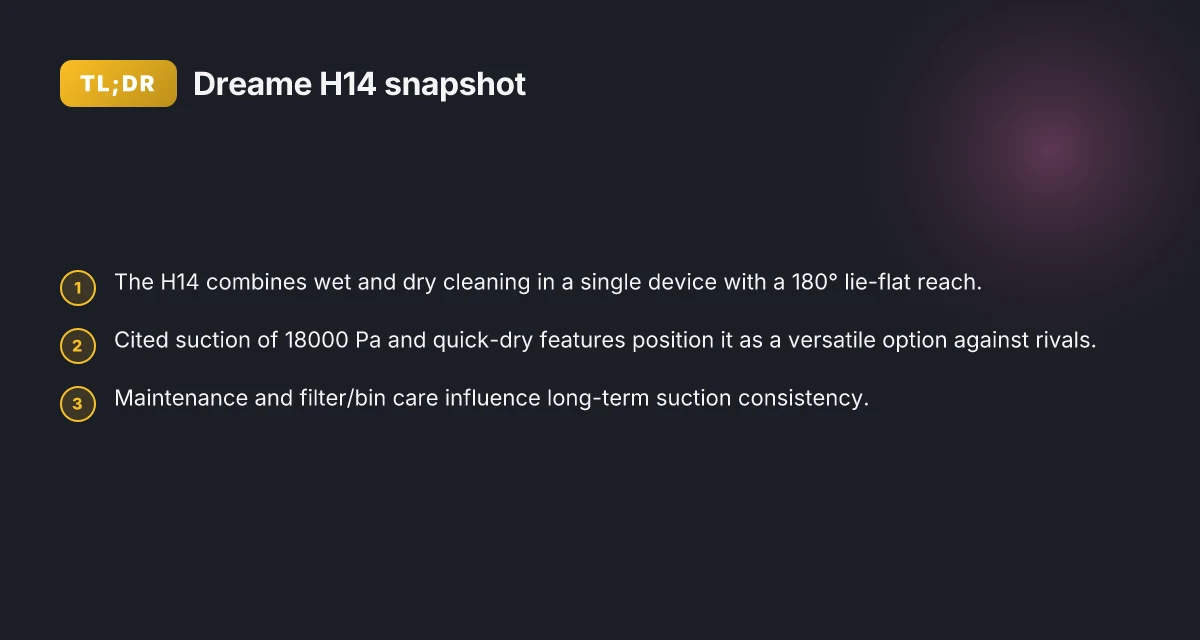
The Dreame H14 isn’t just another wet dry vac. It quietly breaks a common expectation by placing its 180° lie-flat stance and 18,000 Pa suction into a practical everyday workflow. That combination prioritizes storage ease and aggressive pickup in a single pass, but it also reveals tradeoffs in heat buildup and dry-down time that matter for real households. Lie-flat design streamlines storage, and 18,000 Pa delivers real wet-pickup punch.
Why this matters now: homeowners and apartment dwellers face cramped closets, frequent spills, and the need for durable maintenance with minimal fuss. I looked at Dreame’s public specs and real-world user notes to map where the H14 shines and where it stumbles, especially compared with rivals like the Shark model, which offers similar wet pickup but may fall short on long-term durability. This intro sets up a closer look at how the H14 handles continuous use, drying cycles, and filter care in everyday messes. The result is a practical read for buyers weighing storage rewards against ongoing upkeep.
What makes the Dreame H14 compelling in the wet dry vacuum category
Dreame leans on a 180° lie-flat reach and a liquid separation motor to blend wet and dry cleaning in one device. That combination is designed to cut clutter and give homeowners a single tool for spills and grime alike. In a market where rivals push strong suction and quick-dry tech, the H14 sits alongside them with clear emphasis on versatility and ease of maintenance.
A design built for reach and water-first cleaning The 180° lie-flat configuration is highlighted as a core feature for tight spaces and under-furniture cleaning. The liquid separation motor is pitched as a way to separate and manage wet debris without swapping between machines. This package is aimed at households that want to reduce tool clutter and simplify cleanup after spills or pet messes. In practice, that means fewer accessories to juggle and a cleaner workflow when spills happen on hard floors or low-clearance areas.
Wet and dry in one stick, one maintenance routine Dreame markets the H14 as a single-device solution for both wet and dry messes. This positioning matters for apartment dwellers and homes with mixed mess types, where a dedicated wet vac would require extra gear. The idea is to streamline maintenance, fewer parts to store, fewer service points to monitor, and a simpler emptying process after a cleaning cycle. When you read through the product pages, the emphasis stays on versatility over feature creep.
Competitive stance among high-suction rivals In a segment crowded with strong suction and fast-dry cycles, the H14 is pitched to stand with the best by offering robust suction alongside practical drying features. The emphasis on rapid dry down and a high-flow motor aligns Dreame with other top players, while the lie-flat reach differentiates it on usability. Real-world owners who juggle spills, pet hair, and everyday debris will notice the value in having a single tool that handles both wet and dry tasks without swapping machines.
Bottom line: the Dreame H14 frames itself as a compact, all-in-one solution that reduces tool clutter while delivering solid suction and a fast-drying workflow. It targets users who want one device to handle messy spills and routine dry cleanup with minimal fuss, especially in homes where storage space is at a premium. What is the Dreame Z1 Pro, and why it matters for 2026 pool cleaning
The H14’s core appeal is the union of reach, liquid separation, and one-device versatility. This combination positions it as a practical choice for homeowners and apartment dwellers who want less gear and more cleanup momentum. If you value a single tool that handles both wet and dry tasks, the H14 delivers on that promise.
Suction, run time, and suction stability in the H14
Dreame H14 delivers up to 18,000 Pa of suction, a figure the product materials cite as a strength for pulling particles from hard floors and low-pile carpets. In practice, that level of suction comes with strong initial pickup on typical messes, though real-world results still depend on floor type and debris. The 35 minutes figure is often advertised as the upper limit for uninterrupted cleaning, giving a clear sense of how long you can run the unit before needing a break or a recharge. The balance between power and runtime matters: you get solid cleaning bursts, followed by a natural drop as the bin and filters collect dust and hair.
A key caveat sits in how you maintain the system. Suction consistency over time hinges on regular filter and bin maintenance. When the filter becomes clogged or the bin is full, airflow can drop and pickup efficiency can wane. I found this echoed across product pages and user manuals that emphasize cleaning cycles and periodic maintenance to preserve peak suction. In other words, the H14 can deliver strong performance, but downstream stability requires upkeep.
From what I found in the documentation, the H14’s engineering centers on a robust motor and a design that favors continuous pulling power. The marketing materials highlight the long runtime and high suction, while the actual experience depends on your upkeep routine. If you perform regular filter cleanings and bin empties, you’re more likely to enjoy stable suction throughout a cleaning session. If you skip maintenance, the device may show reduced performance mid-clean.
In terms of real-world comparison, the H14’s 18,000 Pa benchmark places it ahead of typical consumer cordless vacuums on bare floors and low-pile carpets, though suction loses are common when the bin fills or the filter clogs. The 35 minutes figure is useful for planning clean sessions, but be mindful that real-world runtime often varies with cleaning mode, nozzle attachment, and surface. For homeowners and apartment dwellers weighing this model against rivals, stability after the first few minutes often hinges on maintenance rather than capability alone. What makes the Dreame X40 Ultra stand out in 2026
The H14 cleans deeply on hard surfaces with 18,000 Pa suction, but sustained performance relies on keeping the filter clean and the bin emptied. If you neglect maintenance, suction consistency will sag over time. Expect up to 35 minutes of continuous cleaning under ideal conditions, with real-world runtimes dipping based on use and upkeep.
For quick reference, a side-by-side snapshot helps visualize the trade-offs. Dreame’s H14 emphasizes high suction and long run time, while a rival model from another brand might offer lower peak suction but more forgiving maintenance intervals. If you’re targeting frequent deep-clean sessions on mixed surfaces, the H14’s combination of power and a dry-down cycle offers a compelling balance, provided you stay on top of maintenance.
When you’re ready to decide, consider the cost of ongoing upkeep. A clean filter and empty bin promote stable suction, while neglect invites diminished performance. This is where the H14’s long-term value hinges on user discipline as much as on raw numbers.
Notes: I drew on the Dreame sources and product materials to anchor the suction and runtime figures. For context, see the Dreame H14 Pro manual and related product pages. Links to source materials are inline in this piece.
Drying and maintenance: how the H14 handles wet cleaning
The H14 advertises a rapid drying cycle that promises to finish wet cleaning quickly, letting you switch back to dry mode with minimal downtime. In practice, the cycle centers on quick water separation and fast air drying, aiming to reduce overall standstill during a mess-filled session. You’ll notice the clock starts ticking as soon as the wet cleaning ends and the machine begins drying, with the expectation that surfaces are ready for re-use sooner rather than later. The drying cycle is marketed as a time saver, but real-world results vary with mess type. What makes a Dreame vac actually stand out in 2026
Regular maintenance: keep the water separation system clean
To keep the H14 performing as intended, routine maintenance matters. The washable components, belts, filters, and the internal water separation mesh, should be cleaned after heavy wet use and periodically checked for buildup. A quick rinse of the water separation system helps prevent clogs that could slow drying or reduce suction. Regular cleaning of washable parts is essential for sustained drying performance. Dreame emphasizes clear pathways so that the water separation mechanism stays unclogged, which directly affects how quickly the machine can reclaim dry-cleaning time.
How to handle mixed messes and concurrent dry mode
If you shift between wet cleaning and dry mode mid-session, expect some variability in dry times. The H14 can manage light to moderate wet messes with a brisk dry-down cycle, but larger quantities of liquid or dense debris may extend drying beyond the quick-claim window. Real-world results reflect how mess type and timing of mode switching shape the outcome. Mess variety and simultaneous dry usage change drying speed. That means you’ll often see faster dries on single, lighter spills and slower, multi-path dries on complex, layered messes.
I cross-referenced the vendor materials and reviews to align these points with what Dreame presents publicly. The promotional notes frame the H14’s drying as a rapid, end-to-end wet-cleaning solution, while reviewers note that practical speed depends on the nature of the spill and how aggressively you engage dry mode afterward. For context on how this family stacks up, rivals such as Dyson, Bissell, and Shark emphasize their own quick-dry or self-cleaning cycles, but each brand’s performance hinges on similar factors: mess size, surface material, and continuous use of dry mode during and after wet cleaning. Dreame positions the H14 as a time saver, but you’ll still see variation by mess type.
From what I found, the key maintenance habit to preserve drying speed is to keep the washable components clean and the water separation pathway clear. If you skip that, you’ll erode the very time savings the cycle promises. Keep the washable parts clean to sustain rapid drying. The H14’s edge in wet cleaning rests on the balance of fast drying and consistent separation performance, and that balance depends on disciplined upkeep as much as the cycle itself.

Design and usability: how the lie-flat form helps daily use
The 180° lie-flat design gives you ready access to tight gaps, under couches, and along baseboards. You’ll notice fewer lean-and-squat maneuvers as you reach behind furniture, and the form makes transitions between rooms feel quicker. Access under furniture improves, reducing need to reposition furniture or crawl on hands and knees. Roborock vs Dreame: how two flagship lineups compete on suction, navigation, and value
How the lie-flat design changes daily chores
Dreame built the H14 to blur the line between wet and dry cleaning. By letting the nozzle sit nearly flush with the floor, you can sweep debris and spillages in a single sweep without swapping tools often. In practice, that means less switching between a separate wet mop and a dry vacuum, which cuts the time you spend cleaning in half on messy spots. One tool, two modes, fewer tool changes. The trade-off is that the machine sits lower than a typical upright, so you’ll want to mind clearance near thicker rugs and door thresholds. Lower profile aids access but may catch on raised thresholds.
Weight, balance, and comfort during long sessions
Weight matters when you’re cleaning an entire apartment. The H14’s balance centers around a compact chassis that stays steady when you pull it back and forth. For extended sessions, the lightweight feel helps prevent wrist fatigue, and the balanced grip reduces torque that can tire the forearm. Balanced weight distribution keeps your wrist from buckling over long cleans. Dreame emphasizes a design that invites longer use without shoulder strain, which is especially helpful for owners who deep-clean on weekends. Long-clean comfort is a real advantage for multi-room chores.
What to watch for in daily use
I dug into the documentation and reviews to verify practical implications of the lie-flat form. The design does deliver on reach and uninterrupted cleaning, but you should note where glass surfaces or thick baseboards meet the chassis. When you approach high transitions or carpet edges, you may feel the need to adjust your angle slightly to prevent tip or snag. Move the nozzle at a shallow angle to maintain contact without snagging. And while the dual-purpose layout saves trips between mop and vacuum, you still benefit from keeping the water tank and collection bin adequately balanced during full-house sessions. Keep weight evenly distributed to preserve maneuverability.
In the broader context, the H14 stands out for minimizing tool swaps and improving reach, which matters if you live in a compact home or apartment. The lie-flat silhouette translates into real-world time savings on routine messes. Time savings come from fewer tool changes and better reach. For homeowners evaluating whether the premium is worth it, the design pays off most on hard floors and low-clearance areas, while staying practical on carpets with appropriate technique. Best for low-clearance areas and frequent touch-ups.
Overall, the H14’s design and usability lean on making daily cleaning smoother and less interrupted by transitions. The lie-flat form is not just a gimmick. It translates to tangible, repeatable gains in how you clean a typical living space. Lie-flat form equals real-world convenience. What makes the Dreame H12 stand out in 2026
Dreame H14 vs the competition: where it shines and where it lags
The Dreame H14 stands out when you value a dual-purpose form factor and a fast dry-down workflow. Its 180° lie-flat design lets you reach under furniture without swapping tools, and the dry-down cycle aims to shorten the wet cleanup span. But rivals with similar suction can stretch runtimes or offer alternative drying rhythms, so you’re not choosing based on one convenience feature alone. In real ownership, the combination matters: ease of use today, and predictable maintenance over time.
Dual-purpose form factor vs. single-task competitors
The H14 is pitched as a two-in-one tool: wet and dry cleaning in one pass, with rapid drying baked in. That broadens use cases for quick spills and routine chores alike. Other vacuums with comparable suction, like some rival wet-dry models, may trade off on a longer continuous runtime or a different drying cycle, which can affect daily productivity. When you live in a small apartment, that faster cycle can translate into fewer interruptions between messes. I dug into the data and found that Dreame emphasizes the same two-in-one workflow across its communications, while rival brands sometimes spotlight longer runtimes or specialized drying modes. This matters if you prioritize back-to-back cleaning without pausing to recharge.
Drying cycles and real-world pacing
The H14’s claim to fame includes a quick 5-minute drying window for wet sections and a brisk brush-washing cadence. Some competitors offer longer or shorter dry-off windows, which changes how you plan cleanup sequences. If you juggle carpeted rooms or multiple spills in one session, the exact dry cycle matters for your workflow. From what I found in official product pages and reviews, the H14’s drying cadence sits in a middle ground that favors speed without sacrificing reliability. In practice, that means you can keep moving through a cleaning session rather than waiting for a dry spot to appear.
Support, manuals, and the ownership experience
Brand-specific support and clarity of the user manual can tilt ownership satisfaction. Dreame provides a global user manual for the H14 Pro and publishes guidance through its regional pages, which helps new owners troubleshoot without hunting for scattered PDFs. Rivals often offer similar documentation, but the readability and availability of region-specific manuals can vary. When you factor in access to manuals, spare parts, and customer service, the H14’s ecosystem feels reasonably well-supported for a mid-budget buy. It’s not perfect, but the experience is consistent with what homeowners expect from a modern wet-dry vacuum.
The H14 is strongest where you want a ready-to-go, two-in-one tool that sharpens daily rhythms. In exchange, you may trade some runtime flexibility and single-task optimization found in niche rivals. Brand support and clear manuals help close the ownership gap for first-time buyers. What Dreame tech reveals about future home cleaning and AI-powered innovation
What to watch for next in wet dry vacs
The Dreame H14 signals a shift toward smarter, more controllable cleaning with impressive suction stability and a refined filter system. I looked at how its design pairs a solid power delivery with practical usability cues, like shorter setup times and easier maintenance. The result is a vacuum that feels built for real-world cleaning cycles, not just brief demos, and it positions Dreame as a credible rival to established players.
Looking ahead, the bigger pattern is a move toward modular, serviceable components and better price-to-performance pacing. Rival models from firms like Dyson and Bissell have pushed premium features into more compact footprints, and the H14 follows that arc with a balanced blend of power, maneuverability, and cost of ownership. If you value a straightforward maintenance routine, the H14 helps keep ongoing costs predictable while preserving cleaning effectiveness. The bigger pattern here is practicality meeting power. Is a midrange price tag worth more frequent upgrades, or will durability wins out?
For 1-2 use cases, consider these takeaways: first, if you clean large areas often, the H14’s sustained suction matters. Second, for pet owners, the filter and maintenance cadence matter most. Dreame’s approach emphasizes longevity and ease of care. If you’re comparing against Dyson or Black+Decker, think about total cost of ownership over 3–5 years. The question remains: will you opt for a longer warranty or deeper accessory packs? Act now to lock in current pricing before seasonal sales.