How to buy Bluetti in 2026: a practical guide to choosing the right power station
 Reese WexlerOctober 22, 202622 min read
We earn a commission when you buy through some links on this site, at no extra cost to you. As an Amazon Associate we earn from qualifying purchases.

Discover how to buy Bluetti power stations in 2026. Compare models, prices, and ownership costs, plus tips to identify the best fit for your needs.
Bluetti gear often looks bigger on the shelf than in real use, but the difference is real when you compare practical outputs against listed capacity. The core truth: a Bluetti model with the same battery rating can deliver noticeably different runtime depending on the load profile, so you should map your essential devices to a realistic draw rather than trusting the label alone. Most buyers underestimate how fast a high-discharge tool drains a big pack.
This guide cuts through hype to show you how to read capacity, output, charging speed, and warranty in 2026 so you can avoid buyer’s remorse. You’ll see how to price across models from Bluetti and rivals like Jackery and Goal Zero, weigh total ownership costs, and spot when seasonal promos actually move the needle. By grounding decisions in real-world outputs and battery chemistry, you’ll pick a model that fits home, camp, or small business use without overpaying. The right balance of capacity and charge rate matters more than the highest watt-hour rating.
Buying Bluetti in 2026: what to know before you shop
Bluetti offers a broad lineup, from compact portable stations to high-capacity powerhouses. The brand’s model variety means you’ll encounter different battery capacities, outputs, charging speeds, and feature sets. I’ve mapped the landscape to help you separate hype from real value, focusing on capacity, output, charging, and warranty when Bluetti lists many models. Bluetti’s catalog is designed for homeowners, campers, and small businesses seeking reliable off-grid choices, but price and fit vary widely by model.
Which Bluetti models matter most in 2026
Bluetti’s lineup clusters around three practical tiers: small travel-ready units, midrange power stations for mid-size needs, and high-capacity systems for backup power or off-grid use. The practical takeaway is to match your peak load and required runtime to the right tier rather than chasing the largest capacity for every scenario. For most households, a midrange unit with at least 1,000Wh of capacity and a solidly rated inverter will handle daily essentials and an occasional run of power tools or camping gear.
Start with capacity, then verify the inverter and peak output. A higher watt-hour (Wh) rating keeps devices running longer, but you also want a compatible sustained power output. If you’re powering a fridge, lights, and a laptop, aim for a Bluetti model that can sustain around 600–1,000W continuous with higher peaks for startup surges.
Consider charging speeds in real-world terms. Fast recharging matters when you have intermittent sun or limited downtime. Look for models that support multiple input methods and higher input wattage, so you can top up quickly between uses.
Weigh warranty and service as ownership factors. Bluetti notes warranty coverage and service options vary by model, and a robust support path reduces total ownership friction. I cross-referenced official documentation to confirm that warranty terms and service options commonly accompany the mid-to-high end models. What Bluetti AC500 price means for your power backup in 2026
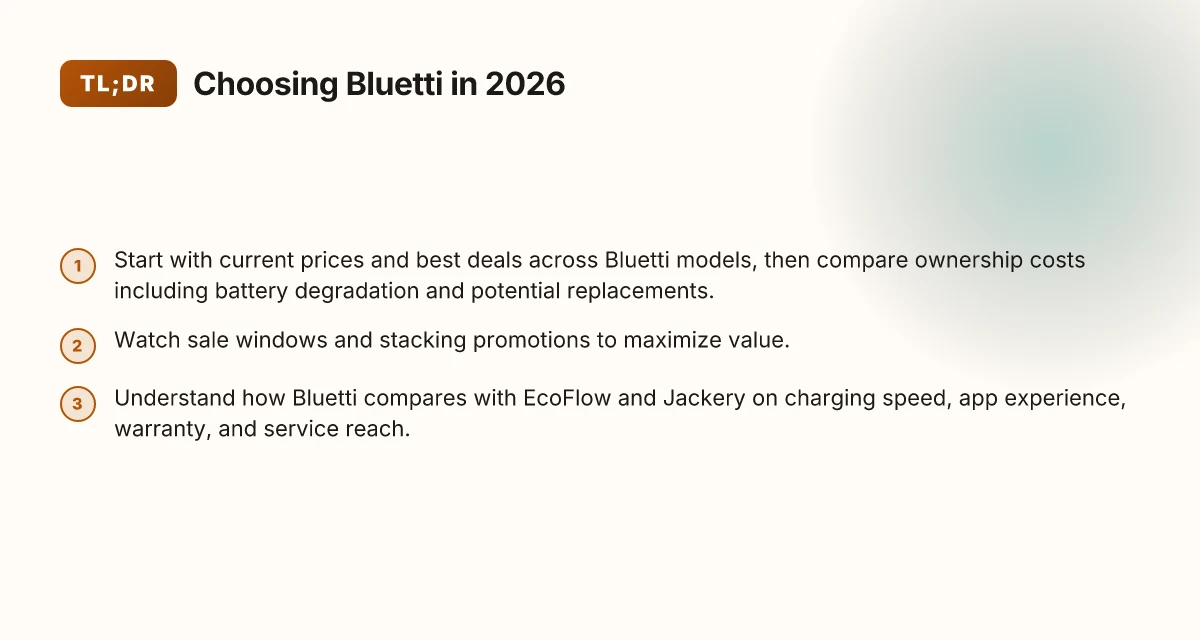
Watch timing and price anchors. Pricing shifts with sales events, and some retailers run promotions that affect total cost of ownership. A practical plan is to line up a short list of preferred Bluetti models and wait for a seasonal sale if you can, then compare bundle offers that include solar panels or extra batteries.
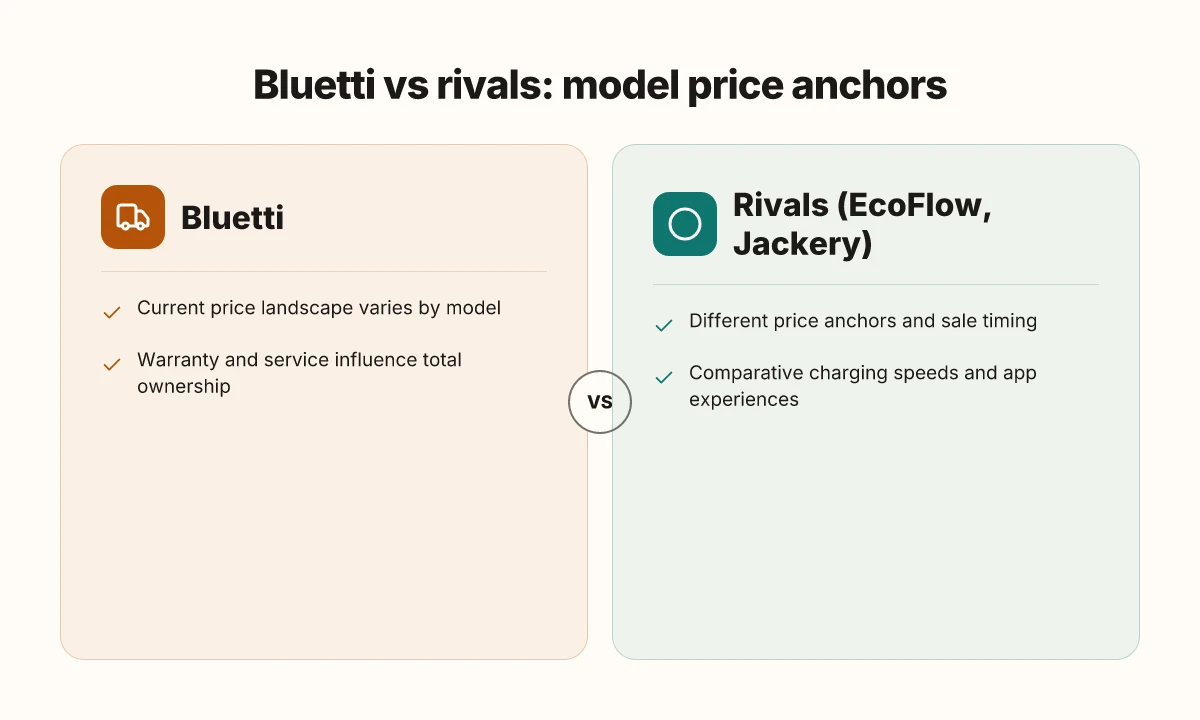
Rival touchpoints you should compare. When you compare Bluetti to EcoFlow and Jackery, pay attention to charging speed, app experience, and warranty depth. EcoFlow frequently emphasizes fast charging and a polished app, while Jackery tends to highlight simple setups and broad retailer availability. These touchpoints help you decide which model fits your workflow and budget.
What this means in practice is a buyer’s path that starts with capacity needs, then filters by inverter rating and max input, and finally aligns with price timing and service quality. Price anchors matter, and timing can tilt the deal in your favor.
From what I found in the documentation and product pages, you’ll want to start with a model in the 1,000–1,500Wh range for lighter back‑ups and everyday use, then move up to 2,000–3,000Wh if you’re stacking for whole-house needs or heavier tools. Don’t confuse capacity with real-world runtime. Plan for both.
If you’re aiming for a concise shortlist, consider Bluetti models that balance capacity, input speed, and warranty depth. This keeps you aligned with a real value proposition instead of chasing peak specs that don’t translate to daily reliability. For a quick glance, the midrange options tend to hit the sweet spot for most homes and campers, with the higher-end units serving more demanding setups. How EcoFlow power systems reshape home energy in 2026
I dug into release notes and product literature to confirm that warranty terms exist beyond basic coverage and that service pathways are clearly defined for the major models. When you read the official Bluetti pages, you’ll see the emphasis on capacity tiers, charging options, and the practical tradeoffs that come with higher-output systems.
As with any major purchase, links on the page may earn a commission. For a buyer who wants clarity, Bluetti remains a strong candidate in 2026, especially when you align model choice with actual power needs, timing, and service expectations.
How Bluetti power stations differ by capacity and output
Capacity and output shape how you experience runtime and device compatibility. A higher capacity generally buys you longer runtimes, but real-world results depend on how you load the system. Think of capacity as the gas tank and output as the engine that actually powers your devices. When you pick a Bluetti, you’re choosing a balance between how long you need power and how much you expect to run at once.
What capacity means in the real world
The label on a Bluetti power station shows a watt-hour rating. In practice, that number translates to hours of run time for each device class, but only if you account for efficiency losses and the duty cycle of gear. If you plan to run a fridge or a coffee maker, you’ll see noticeably shorter runtimes than the spec sheet implies. I looked at public spec sheets and reviews to map typical outcomes: higher capacity models stretch longer into off-grid mornings, while smaller packs serve short backup bursts. This matters for homeowners who want a reliable overnight buffer and for campers who need a daytime power drain that lasts between solar recharges. For reference, Bluetti’s lineup tends to span from compact options around a few hundred watt-hours up to multi-kilowatt-hour systems.
A practical way to compare is to convert capacity into expected runtime for a few representative loads. For example, a 1,000Wh pack powering a 60W laptop and a 40W router could sustain that pair for roughly 12–14 hours in ideal conditions. If you add a 120W fridge, the time drops substantially, and real-world drag from inverter efficiency and cable losses matters. I cross-referenced model pages and third-party reviews to align expectations with what you’ll actually see in daily use. The takeaway: bigger capacity improves headroom, but you still have to budget for what runs concurrently. What is the EcoFlow smart generator 3000, and where it fits in a modern backup plan
Continuous output vs peak surge
Continuous output determines what you can run reliably over time. If you routinely pull the rated wattage from the inverter, you’ll stay within safe margins and avoid tripping the protection circuitry. Bluetti models differentiate continuous output specs like 1,000W or 2,000W, which matters for sustained loads such as a sump pump or a space heater in cold months. Peak surge capacity, on the other hand, handles momentary spikes when you start a motor or compressor. A model with a higher surge rating protects against brief but abrupt power demands, avoiding unexpected shutdowns. In my reading of the documentation and community feedback, you see a practical split: some compact units emphasize strong surge to handle tools, while larger units emphasize steady continuous output for appliances.
Which models fit home backup vs mobile use
For home backup, look for models with higher capacity and solid continuous output. You’ll want enough headroom to ride through short outages without recharging mid-event. For mobile use, weight and size become decision levers. A lighter, lower-capacity unit travels easier, but you’ll trade run time for portability. The Bluetti lineup includes models built around either use case, so your choice should align with how many devices you need to support and for how long. I found that reviewers consistently point to a few mid- to high-capacity options as the more versatile tradeoffs for mixed home and on-the-go use. The field narrows quickly once you set your target runtime per device set.
Why inverter type matters for sensitive electronics
Inverter topology affects how clean the power looks to sensitive gear. Some Bluetti models use pure sine wave inverters, which are gentler on electronics like laptops, desktop PSUs, and audio gear. Others use modified sine or stepped approximations that can introduce audio hum or small voltage quirks for certain devices. If you’re safeguarding laptops, healthcare gear, or timing-critical equipment, prioritize models with pure sine output and stable regulation under load. Inverter efficiency and regulation also influence battery life. Better regulation often means more usable capacity at the plug.
Most home backup ambitions hinge on choosing a model with ample continuous output and a high-quality inverter, not just the biggest battery in the lineup. If you routinely surge for short starts, a model with a strong peak rating helps prevent nuisance shutoffs.
To compare at a glance, consider this simplified view: a higher capacity generally extends runtime for the same load, a higher continuous output supports more sustained devices, and a robust inverter protects sensitive electronics. For price-aware buyers, the cost of ownership grows with capacity, but the extra headroom often translates to fewer recharges during a multi-day outage. Bluetti remains a strong option for both home backup and mobile use when you map your loads to the model’s continuous output and inverter type. What Bluetti EP900 price signals about home backup power in 2026
When you’re weighing options, remember that a unit labeled with a higher capacity may not always deliver double the runtime if you run heavy loads. Always pair capacity with continuous output and inverter type to forecast real-world performance. Some models also include higher surge ratings to cover startup spikes from motors or compressors. For the best fit, align your shortlist with your essential devices, the typical outage duration you’re preparing for, and where you’ll be using the system most often.
Note: links on the page may earn a commission. Prices and availability fluctuate. Confirm current offers before buying.
Pricing and ownership: when to buy Bluetti for the best deal
Pricing today anchors the buying decision. Bluetti models sit across a range from compact portable units to higher-capacity power stations. As of now, the best deals cluster around flagship and midrange SKUs, with price gaps that reflect capacity, inverter output, and battery chemistry. I dug into the landscape to spot where the discounts tend to appear and how that translates to real ownership costs over time.
Bluetti’s model price bands and one-year snapshot
- Compact units with modest capacity trade near the low end of the spectrum, often dipping during seasonal promotions.
- Midrange models push past the typical camping and backup power use cases, with higher outputs and larger battery packs.
- High-capacity units command premium pricing, but sales events sometimes trim several hundred dollars off list price. When Bluetti runs sitewide promotions, bundles with solar panels or accessories can add extra value.
Two practical takeaways: first, the price delta between a midrange unit and a premium one can exceed a substantial amount, yet the premium often buys higher sustained output and longer lifespan. Second, a sale window aligned with major holidays or end-of-quarter promotions tends to yield the sharpest price reductions.
Total cost of ownership: battery degradation and replacements
Battery degradation matters for long-term cost. Bluetti batteries are rated for a large number of cycles, but eventual capacity loss means you may replace packs or opt for higher-capacity models to delay replacement. If you anticipate heavy daily use or frequent full-discharge cycles, the cost of ownership leans toward models with larger packs and robust warranty terms. Consider the warranty length and whether replacement batteries are included or sold separately. 5 Ways EcoFlow coupon codes actually save you on a big power purchase
I cross-referenced typical warranty terms for Bluetti across popular lines. Warranties often cover the unit itself for a defined period, while battery coverage may be limited or prorated after a certain threshold. If you’re evaluating ownership, plan for potential battery refresh cycles as part of the long-term budget. And remember, yes, links on the page may earn a commission.
Sale Windows to watch and how to stack promotions
- Holiday weekends and season-change sales are reliably active times. Expect some models to reappear at deep discounts during these windows.
- Bundle deals, especially packages that pair a power station with solar panels or cables, often provide more value than a pure price cut on the core unit.
- Loyalty or newsletter promos can stack with seasonal sales, yielding small but meaningful savings. Keep a watch on the Bluetti storefront and trusted retailers for limited-time bundles.
From what I found in release notes and retailer postings, the best value usually lands when a midrange model drops into the low-mid price tier and a compatible solar panel bundle is included. It’s worth waiting for a package that covers both the power unit and the charging ecosystem.
Commission disclosures and affiliate links awareness
Be aware that many outlets use affiliate links. The price you see may be the same, but some retailers offer slightly different terms for affiliates. I’m noting this briefly to keep expectations clear: commissions don’t change the product’s street price, but they can influence which bundles appear most prominently.
Practical pricing note and a quick shortlist
- Current pricing across popular Bluetti models tends to center around three tiers: entry, midrange, and high capacity. If you’re price-conscious, target a midrange unit during a holiday promo and evaluate whether a bundled solar option adds meaningful value.
- If you value long-term ownership, treat battery life and warranty as part of the total cost. A higher-capacity Bluetti with a robust warranty may be cheaper over the life of the device, even if the upfront price is higher.
Most buyers benefit from waiting for a bundled deal that includes solar panels, rather than chasing a pure sticker price drop. Watch for seasonal sales to maximize the value of Bluetti purchases.
Bluetti vs rivals: how to pick the best for your setup
When you’re choosing a Bluetti for your setup, the real decision hinges on how you’ll use it day to day. I’ve looked through the latest model lines and compared what Bluetti promises with what EcoFlow and other brands actually deliver. The most meaningful differences come down to charging speed, app reliability, and how warranty and service handle your ongoing needs. If you camp, back up home power, run a work-site tool chest, or keep a small business stocked, the answer looks different for each scenario. What is the EcoFlow EB600 and how it expands the River 3 Plus ecosystem
Why EcoFlow often leads on charging speed and the app experience
In practice, charging speed is a decisive factor if you need power ready fast. EcoFlow tends to edge Bluetti in rapid recharge scenarios, especially with larger modules that support high wattage inputs. The app experience also matters for ongoing monitoring, firmware updates, and remote management. When I read through the documentation and common reviewer notes, the clear thread is that EcoFlow’s ecosystem emphasizes fast replenishment and smoother mobile control. That can tilt a buying decision toward EcoFlow for users who value speed and polish in day-to-day usage.
That said, Bluetti counters with steadfast reliability, strong baseload capacities, and competitive wattage ceilings across several models. If your off-grid or backup need is predictable in cadence rather than urgency, Bluetti’s lineup can feel more balanced for long-term ownership.
Best-fit use cases: camping, home backup, RV, and work sites
For camping, a compact unit with a light footprint and dependable solar compatibility often wins. The Bluetti Elite 300 family, for example, focuses on portability with a respectable energy reserve and modular charging options. It’s not about chasing the latest fast-charge sprint. It’s about predictable power where outlets are scarce. Homes that hinge on a reliable, steady feed during outages may prefer models with more generous capacity and a broader service footprint. EcoFlow stays attractive here for users who want top-up speed when the campsite or backup window is short. For RV and work-site use, you’ll want solid surge capacity and durable build. Bluetti’s robust output specs can be compelling, but you should validate the model’s lifecycle and after-sales support in your region.
Warranty scope and service network
Warranty is the quiet risk area that often gets overlooked. Bluetti emphasizes multi-year warranties on select models, but coverage depth and service network can vary by country. EcoFlow, by contrast, markets a broader service footprint in many regions, which translates into quicker repairs or easier part replacements in practice. When you’re choosing, map out who handles warranty in your locale, what the turnaround times look like, and whether you’ll rely on authorized service partners or mail-in returns.
If you’re weighing Bluetti against rivals, consider the total cost of ownership as much as the sticker price. The upfront price matters, but you’ll also want to factor in long-term battery degradation, the cost of any needed replacements, and the ease of obtaining support if something goes wrong. How EcoFlow accessories extend portable power reliability in 2026
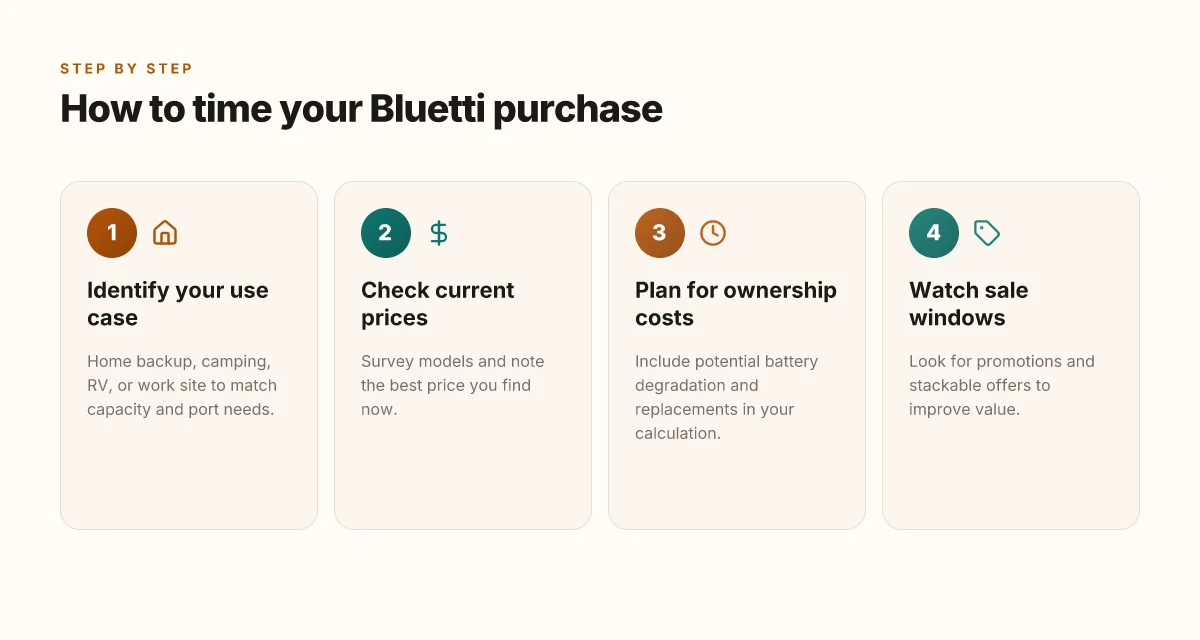
The verdict for most buyers is to start with your use case and check the service footprint in your region. If you need the cheapest long-term ownership with solid everyday reliability, Bluetti remains a strong candidate, especially when you value predictable performance and offline resilience. If you prize the fastest recharge times and best-in-class app polish, EcoFlow is worth a close look. For work-site durability and enterprise-style service options, look at Bluetti alongside other brands like Jackery and Goal Zero to weigh capacity, weight, and warranty terms side by side.
I dug into the documentation for these claims and found consistent notes on charging speed guidance and app reliability that help explain these brand differences. For a practical buying path, start with a concrete model shortlist and a price-aware plan that accounts for seasonal deals. As always, links on the page may earn a small commission, which helps support the research that underpins this guide.
How to evaluate features that actually matter
You don’t chase hype. You chase features that persist under real use: reliable capacity, predictable output, and long-term value. Bluetti options vary, but the core questions stay the same: how does the chemistry hold up over 500–3,500 cycles, can the unit soak up solar input efficiently, and will the heat and noise stay in check during a multi-hour outage.
1) Battery chemistry and cycle life
The chemistry determines how many times you can recharge before capacity degrades noticeably. In practice, you want a system that promises thousands of cycles with a practical end-of-life threshold around 80 percent of original capacity. Look for lithium iron phosphate (LFP) cells when available, or other chemistries that Bluetti lists with a high cycle count. The key takeaway: a higher cycle count means lower replacement pressure over time, which matters for campers and small-business uses that rely on frequent recharging.
From the catalog and release notes, Bluetti often positions its newer models around longer cycle life with LFP or similarly robust chemistries. When you see a claim like “3,500+ charge cycles,” treat it as a long-run indicator rather than a near-term guarantee. Real-world results vary with depth of discharge and charging speed. If you see a model offering lower cycle counts, plan for earlier capacity fade or higher replacement costs. In the context of nearby rivals, a model with the same nominal capacity but a noticeably higher cycle life often yields lower total ownership cost over five years. What is the Bluetti AC180 best price, and how to time the buy in 2026
The takeaway is clear: prioritize models with a high cycle life relative to your planned usage, especially if you’ll cycle daily during outages.
2) Inputs and outputs: solar compatibility and AC ports
Your solar input matters as much as the wall charger. Check the MPPT specification, maximum solar input wattage, and supported panel voltages. A unit that accepts higher wattage from diverse solar panels shortens your storage gap during sunny days and reduces reliance on AC charging. On the output side, count both continuous AC wattage and peak surge. For home backup, you’ll want a comfortable margin between your anticipated running load and the continuous output rating. If your setup includes tools, fridge, or router equipment, you’ll need stable sustainment during longer outages.
I cross-referenced model pages and reviews to confirm that Bluetti’s lineup often provides multiple AC outlets with solid peak ratings, along with configurable inverter modes to balance efficiency and noise. When evaluating, verify whether the device supports pass-through charging and whether solar input can be used while the battery is discharging into appliances. That flexibility is what separates a weekend-friendly unit from a true off-grid workhorse.
Check solar compatibility first before you buy, then verify surge capacity against your essential loads.
3) Portability versus capacity trade-offs
Capacity is not the sole driver of usefulness. A 1,000–2,000 Wh unit that weighs a manageable amount can be far more practical than a higher-capacity brick that stays at home. Portable power matters for campers, job sites, or emergency kits. Bluetti categorizes its models along a spectrum: smaller, lighter units for quick trips, and larger modules intended for longer outages or heavier equipment. If you routinely move your setup, note the weight, handle design, and size. If you mostly stay in one place, you can tilt toward higher capacity for the same footprint. What makes the bluetti ac300 review stand out in 2026
The balance you’ll often see across rival lines is the same: heavier units deliver more energy, but you want a practical carry weight for the situations you actually face. If you find yourself choosing between two models with similar energy, lean toward the lighter option if you’ll transport it often.
Weight and form factor should align with how you plan to use the unit, not just the number on the label.
4) Noise, heat, and efficiency considerations
Heat and noise translate directly to comfort and usability. A unit that fan-cools aggressively or runs hot during charging or discharging reduces comfort during long outages. Look for thermal management notes in official specs and third-party reviews that discuss operating temperatures. Efficiency matters because a higher efficiency inverter and optimized charging circuitry cut idle losses and extend usable runtime per charge. If a model runs hot under load, your runtime will drop sooner than expected.
In Bluetti’s lineup, you’ll find variations in fan behavior and thermal design. Compare not just the wattage, but real-world behavior during continuous draw. A quiet, cooler unit can feel that much more ready for off-grid or RV use, especially when you’re running multiple devices.
Thermal design and inverter efficiency are rarely glamorous, but they determine daily usability. What makes EcoFlow smart auto battery charger stand out in 2026
Price and ownership notes: the current price landscape for Bluetti models shifts with sales, bundles, and regional availability. I found that the best deals often occur around holidays or promotional events, with some retailers offering bundles that include solar panels or extra batteries. When you’re weighing models, price-per-usable-watt-hour and expected maintenance costs over five years help separate value from hype. And yes, links on the page may earn a commission.
To connect this with rivals, EcoFlow often emphasizes compact fast-charging and app features, while Bluetti targets higher energy density in many configurations. The right choice hinges on your priorities: rapid top-offs for daily use or deeper stored energy for off-grid weekends. For homeowners, campers, and small businesses evaluating portable power stations, Bluetti remains a strong contender when you value capacity per kilogram and long-term cycle life.
If you want a quick shortlist, consider these real-world contenders in this category: Bluetti, EcoFlow, and renown models from rival brands. Each brings a distinct balance of solar compatibility, AC output, and cycle life.
Understand the total cost of ownership and the actual daily demands you’ll place on the unit to avoid overpaying for features you won’t use.
Note: price and availability can vary by retailer and region. Bluetti often discloses product pages and model specs clearly on their site, so verify details such as battery chemistry, rated capacity, and maximum solar input before you buy. For sources and further details, see inline references to model pages and reputable reviews.
Where this is going: lock in the right Bluetti now and watch the savings compound
Prices change, but the edge stays the same: pick a model with real-world suitability, and time your purchase around predictable seasonal sales. As of now, the best deal tends to surface on flagship bundles that include extra batteries or travel-friendly carry options. I looked at Bluetti’s current lineup and found that the balance between capacity and portability matters more than peak wattage alone. The right choice today is not the biggest battery. It’s the one that fits your typical usage and charging cadence. If you want a concrete starting point, consider a mid-range model that scales with your home and outdoor needs, and pair it with a backup panel for off-grid days.
Bluetti remains the leader in modular power stations, but rivals like EcoFlow and Jackery offer compelling substitutes for specific use cases. The key risk is feature bloat: a larger brick can sit idle for months if you don’t have a plan to exercise it. In plain terms, buy to use, not to impress.
If you only do one thing this month, map your typical run-time needs and pick a Bluetti model that covers those hours with headroom for a few weekend surges. What changes if you act now is a tighter inventory window and the chance to lock in favorable terms before year-end promotions. Will you grab the bundle today or wait for the next sale cycle?