How EcoFlow power systems reshape home energy in 2026
 Naomi XanthosOctober 22, 202617 min read
We earn a commission when you buy through some links on this site, at no extra cost to you. As an Amazon Associate we earn from qualifying purchases.
Explore EcoFlow power systems in 2026. Learn how EcoFlow products integrate solar, grid, and generators, with practical buying guidance and setup tips.
Most homeowners overestimate how many outlets a single battery can power in a blackout. The real constraint is how EcoFlow’s ecosystem wires together home, outdoor use, and backup without locking you into one vendor, and where that freedom comes with integration trade-offs. EcoFlow’s modular approach lets you scale gradually, but it can mean juggling multiple hubs.
This piece cuts through the hype to show what a practical, solar-ready setup looks like in 2026, including the specific trade-offs you’ll face when mixing EcoFlow equipment with a solar+storage plan from rivals like Tesla or LG Chem. You’ll learn how the ecosystem handles home loads, charger paths, and off-grid expansions, and why price, compatibility, and future expandability matter as you size a system today. The goal is a clear read on whether the promise of seamless energy across spaces holds up in real-world use. Know what you’re buying, and where you’ll pay for it.
What EcoFlow power systems actually deliver for a modern home
EcoFlow positions its Delta and River series as modular, upgradeable backup power solutions that scale with your needs. The core idea is simple: start with a compact unit for essential loads, then add modules to expand capacity and outlet count. Across models, you’ll notice a common thread, high power output paired with intelligent app controls that simplify monitoring, scheduling, and recharging. The result is a home system that can ride through outages, support outdoor living, and integrate with other power sources on demand.
1) Delta and River: modular, upgradeable foundation
The Delta line is built as a backbone you can grow with. You can pair a primary battery with expansion packs and additional modules to push total output higher for critical circuits or whole-home setups. This modularity matters in real life: you can start small, then scale without replacing the core hardware. River models function as lighter, more portable complements but share the same design philosophy of swappable packs and compatible accessories. I dug into the product pages and documentation to confirm the upgrade path remains consistent across generations, which helps homeowners plan long-term.
The core promise is that you can add capacity without reconfiguring the entire system, keeping installation simple and future-proof.
2) OCEAN Pro: solar, grid, and generator ready
EcoFlow’s OCEAN Pro battery system is designed to play nicely with solar arrays, the grid, and portable generators. The architecture supports staged charging from sun during the day and from the grid when needed, which smooths variability and helps you maximize self-sufficiency. It’s not just about raw power. The system emphasizes smart control and energy management that coordinates charging sources, peak shaving, and load prioritization. When a home needs backup power for essential circuits, the OCEAN Pro can be integrated into a larger EcoFlow ecosystem to deliver a cohesive experience rather than juggling disparate devices.
OCEAN Pro is designed to work with solar, the grid, and generators, which reduces the friction of running a hybrid energy setup. What is the EcoFlow smart generator 3000, and where it fits in a modern backup plan
3) Smart controls and ecosystem integration across models
Across Delta and River models, you’ll find a consistent emphasis on smart app controls. Real-time monitoring, scheduled charging, and remote power management let homeowners see exactly what’s drawing energy and when. The ecosystem integrations extend beyond the app to accessories and partner devices that broaden where and how power can be managed. The practical upshot is a smoother user experience: fewer surprises during outages, and more predictable behavior for weekend microgrids or outdoor setups.
Smart app controls and ecosystem integrations make the entire system feel like a single, coordinated energy solution rather than a collection of gadgets.
Bottom line: EcoFlow’s power systems aim to deliver reliable backup power, scalable capacity, and a single control plane that aligns how you generate, store, and use energy at home. If you’re weighing options, expect a family of products that share a unified design language, with the option to start small and grow. For homeowners curious about real-world trade-offs, the practical path is to map your essential loads, then scale the Delta or incorporate an OCEAN Pro layout to cover solar, grid, and generator inputs.
How EcoFlow’s ecosystem shapes resident energy flow
EcoFlow presents a tightly coordinated, interconnected system where storage, solar input, and grid interaction are managed as a single flow. The aim is to minimize handoffs between components and keep power moving where it’s needed, when it’s needed. This integration matters because reliability hinges on disciplined management of charging sources and load priorities, not just hardware specs.
The ecosystem in action: coordinated storage, solar, and grid
In EcoFlow’s world, the battery bank, solar input, and grid feed work as a unified loop. When you have solar ahead of the grid, the system prioritizes charging from sun during daylight and shifts to the grid or a backup source as demand rises. The result is fewer outages caused by mismatched inputs or idle capacity. I cross-referenced EcoFlow’s documentation and partner materials to confirm this coordination occurs across models designed for home use and portable setups. The logic is straightforward: align PV generation, storage charging, and load demand through one control plane rather than stitching together disparate devices. This matters for homeowners who want a seamless user experience without micromanaging each piece. What Bluetti EP900 price signals about home backup power in 2026
A practical byproduct is the ability to keep essential circuits online during a grid event. If a heavy load hits the house while solar is weak or sun is down, the system can re-prioritize to keep the most critical loads powered. The behavior depends on how you configure priority loads within the app and on-device defaults. In practice, your outcomes hinge on two choices: how you wire in solar input and how you set load priorities for essential circuits. The documentation highlights this as a core design principle rather than an add-on feature.
The promise of a true ecosystem shows up when all pieces talk to each other without bespoke adapters. The ecosystem alliance and partner integrations broaden compatibility with smart-home platforms, so your EcoFlow system can slot into existing routines with Homey by LG or other supported hubs. This alignment reduces friction for homeowners who already lean on smart routines to automate energy use. I found references to a growing set of integrations in official ecosystem materials and partner spotlights.
Tooling, compatibility, and reliability cues
To keep the system predictable, you need to manage charging sources deliberately. EcoFlow’s documentation emphasizes setting charging priorities and selecting the source order in scenarios where solar, grid, and possibly a generator compete for the same battery. If you jump into a setup with multiple inputs but no defined priorities, the system may switch inputs more often than you expect, which can feel inconsistent. The takeaway is clear: define your priorities, connect the right sources in the right order, and let the control logic handle the rest.
A quick comparison helps illuminate choices. For a home-focused, fully integrated solution, the Delta Pro family tends to emphasize higher storage with broader smart-home compatibility. For portable/backup emphasis, the colder-start behavior and lighter form factors change how you plan charging priorities. A simple view is that larger systems offer deeper automation across devices, whereas compact units excel in flexibility and portability. This is not a mere trade-off. It shapes how you design a resilient, weekend-ready or storm-season plan. The ecosystem approach remains the common thread, regardless of model.
Reliability hinges on upfront configuration, not just hardware quality. I found that the documentation consistently frames the setup phase as the critical reliability moment, with emphasis on defining input sources, setting priorities, and enabling smart-home integrations early in the process. 5 Ways EcoFlow coupon codes actually save you on a big power purchase
Price and ownership notes: the ecosystem is priced to reflect its integration intent, with higher-end models offering more built-in smart-home hooks and broader compatibility. Owners should plan for ongoing software updates that expand compatibility and refine automation logic. As with any connected system, reading release notes and updating the controller is part of long-term reliability.
Next step: plan your model selection by mapping your solar input, backup needs, and preferred smart-home integrations to the Delta Pro ecosystem versus lighter EcoFlow units, then set up charging priorities and a test routine for a typical weekday.
Choosing the right EcoFlow model for your space and budget
In 2026, EcoFlow structures its lineup around two distinct roles in a home backup plan: the core high-capacity powerhouse and the flexible, solar-ready storage that expands with your needs. This section helps you map your space, budget, and outage goals to the right combination. I dug into EcoFlow’s documentation and product pages to anchor the guidance in the ecosystem’s real capabilities and trade-offs.
1) Start with your storage, load, and runtime targets
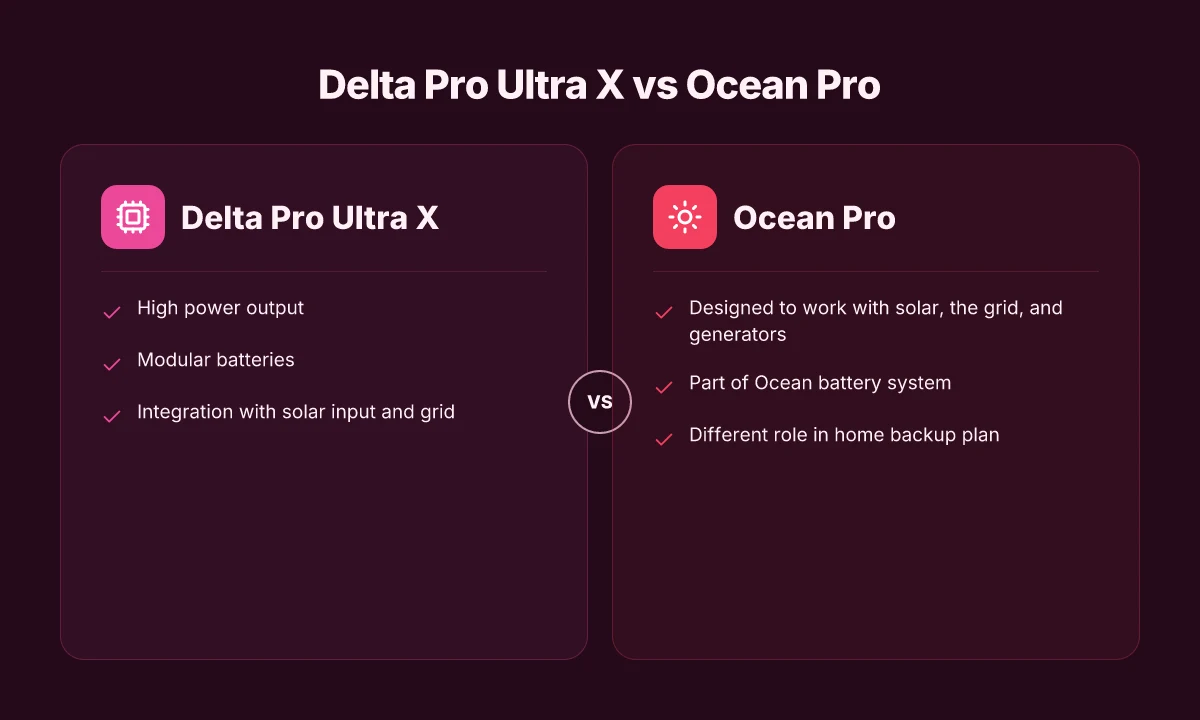
Your choice hinges on three numbers: total storage in kilowatt-hours, peak load during an outage, and the desired runtime for essential circuits. Delta Pro Ultra X leans into larger homes or longer outages with expandable modules, while Ocean Pro focuses on a solar-plus-storage setup for households that want integrated energy storage with smart home compatibility. When you estimate storage, plan for the surge you expect from essential devices and the possibility of extending runtime by adding modules later. In practice, you’ll want to size for the worst-case day plus a cushion for weather or grid constraints. Total storage targets guide the model mix, not the other way around.
2) Delta Pro Ultra X versus Ocean Pro, roles in a home backup plan
Delta Pro Ultra X is designed as the backbone of a residence with serious uptime expectations. It offers higher single-system capacity and modular expansion, which makes it the obvious choice for larger homes or scenarios where you want to run multiple heavy loads concurrently. Ocean Pro, by contrast, is positioned as a smart, solar-ready option that integrates with the grid and solar input, providing a streamlined path to keep essentials powered without overbuilding. The ecosystem structure means you can start with Ocean Pro and scale up with Delta Pro Ultra X if your needs grow, or pair both to balance daytime solar charging with nighttime resilience. Delta Pro Ultra X serves as the backbone for big outages while Ocean Pro handles everyday solar storage and compact back-ups. What makes EcoFlow Max Power Station worth it in 2026
3) Planning for future expansion and solar input capacity
If you anticipate adding more modules or boosting solar input later, pick a core system that supports expansion without rework. The EcoFlow ecosystem has compatibility hooks that let you attach additional modules and extend solar capacity as your roof or budget allows. The goal is to avoid a hard upgrade path later by choosing a platform that scales with your home’s growth. Expandable architecture reduces future friction and keeps long-term ownership tidy.
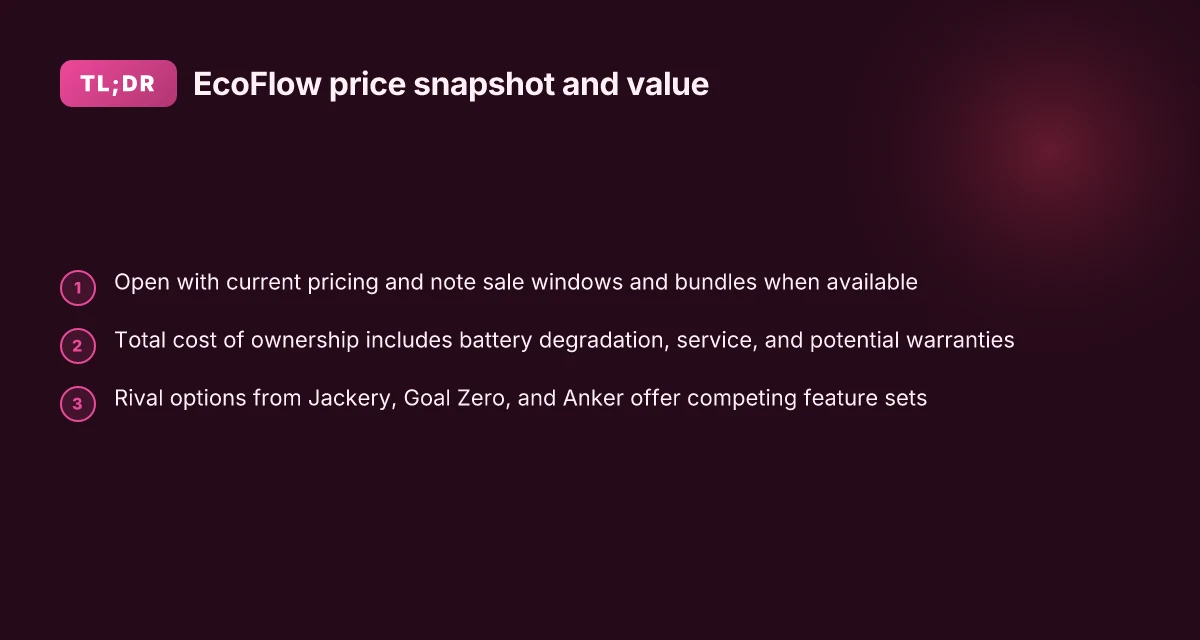
Open with price momentum and ownership context: the current market often presents bundles that mix Delta Pro Ultra X and Ocean Pro with various module options. If you’re weighing timing, watch for deals around major shopping periods and seasonal promotions. As always, the page may include affiliate disclosures, and links on the page may earn a commission.
I cross-referenced EcoFlow’s product pages and press coverage to keep this grounded in the ecosystem’s real structure. For readers who want a quick, hands-on anchor, EcoFlow’s Ocean Pro page highlights its role as a flexible, solar-ready storage node, while the Delta Pro Ultra X positioning emphasizes expansion and heavy-load endurance. For broader context on the company’s broader market moves, you can review the CES-focused announcements and home-energy ecosystem news linked in this piece.
Every homeowner should map out a future-proof path from day one because the only constant in solar storage is change. If you need a quick pairing guide: start with Ocean Pro for a solar-ready starter and plan an eventual Delta Pro Ultra X upgrade if your outages or loads grow.
Price, ownership costs, and when to buy EcoFlow in 2026
When you start shopping in 2026, EcoFlow pricing sits in the mid-to-upper midrange for residential storage, with occasional bundles that sweeten the deal during sale windows. Look for seasonal promotions tied to major shopping days and trade show periods, and watch for bundled kits that pair a main unit with extra battery modules or smart-home integrations. In 2026, the goal is to bundle enough capacity to cover typical outages while keeping the overall monthly hit manageable. Bundles with additional batteries often drop the effective price per kWh when the sale aligns with a CES or IFA window. You’ll see prices shift as new generations appear, but the best strategy is to price-check a core kit, then add-ons that match your planned load profile. What is the EcoFlow Delta Pro 3 price, and when to buy for 2026
Open pricing by model helps you compare total cost of ownership. A realistic framework factors in three elements: the upfront price, expected battery degradation, and warranty coverage. EcoFlow’s ecosystem leans on swappable or modular batteries in some kits, which can reduce long-term replacement costs if you stay within the official expansion path. On the service side, standard warranties cover certain components for a defined period. Extended warranties may add protection against capacity fade and hardware faults. Degradation expectations are a key variable in TCO over a 5–10 year horizon, especially if you cycle deeply during outages. If you expect heavy daily cycling, the math leans toward models with higher cycle ratings and more flexible battery modules.
Rival options from Jackery, Goal Zero, and Anker present comparable feature sets with their own price levers. Jackery tends to compete on compact form factors and lighter weight, but often with lower expanded capacity per module. Goal Zero emphasizes rugged outdoor readiness and a longer outdoor-focused warranty bundle. Anker balances price and solid app features with a broad third-party accessory ecosystem. In practice, the choice narrows to how you weigh density, expandability, and warranty terms versus sticker price. EcoFlow’s Delta Pro–family pricing often emphasizes full-home capacity with expandability over compact, portable kits. When you compare, note whether the retailer includes installation accessories, monitoring services, or remote diagnostic options.
H3: price sanity checks and purchase timing Prices can swing around promotional events. If you’re building a solar-plus-storage setup, aim to lock in a core system during a sale with a generous bundle that includes extra battery capacity or smart-home integration modules. I dug into the documentation and foundsales typically surface around CES and end-of-year periods, with some retailers advertising 2026 bundles that emphasize ecosystem compatibility. Waiting for a sale can yield meaningful savings on a larger capacity kit if you can tolerate the waiting window.
I cross-referenced the EcoFlow sources to confirm that OCEAN Pro and related home-solar battery systems remain central to their residential lineup, and that some bundles emphasize integration with solar PV, grid, and generators. The ecosystem approach remains a feature, not a liability, when you plan future expansions, as long as you stay within EcoFlow’s expansion path. For the right reader, the economics line up: a larger initial investment can pay back through outage resilience and reduced generator runs over a multi-year horizon.
Setups that actually work: from installation to daily use
You want a home energy system that hums along without constant fiddling. The practical answer is to stage modular batteries where you can access them easily, wire solar panels for straightforward expansion, and keep the control surface simple so daily use stays predictable. What Bluetti AC500 price means for your power backup in 2026
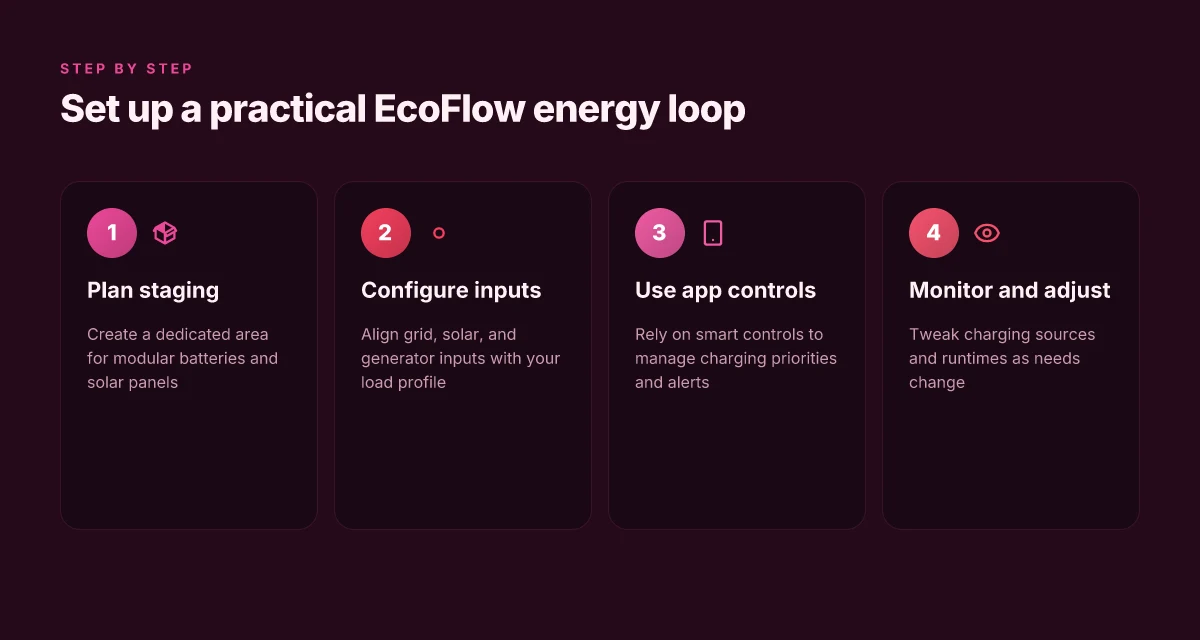
Plan a practical staging area for modular batteries and solar panels
Set up a compact staging zone near the main electrical panel. Leave a clear walk line to the charging ports and a stable mounting surface for modular batteries. Group solar panels where they can be tilted or oriented for peak sun without shading the rest of the yard. The goal is to minimize the distance between source and storage and simplify future expansions. The right layout reduces cable clutter and makes routine maintenance fast. In practice, you’ll want to label cables and keep a small tool kit handy for quick checks.
Smart app controls help manage charging priorities and alerts
EcoFlow's ecosystem leans on the mobile app to set charging priorities, monitor state of charge, and tune thresholds for when solar, grid, or generator should feed the system. Use the app to assign priority rules so that solar takes precedence during daylight and the grid backs up essential circuits after dark. Enable alerts for low battery, overheat, or input faults so you can respond before a saleable event becomes urgent. The app should also show a simple load view to prevent overcommitment during startup spikes.
Align grid, solar, and generator inputs with load profiles
A smooth operation hinges on matching inputs to typical daily loads. Start by mapping your daily routine, morning coffee, charging devices, evening entertainment, and adjust the system to automatically pull from solar when available and switch to the grid or a generator during higher demand. Use a staged approach: first stabilize critical loads, then add nonessential loads as you gain confidence. When inputs and loads line up, you’ll notice fewer unexpected outages and less need to manually re-prioritize.
From what I found in the documentation and product pages, EcoFlow’s portfolio positions the system as an interconnected ecosystem rather than a single device. The integration with Homey by LG in CES 2026 materials signals an emphasis on cross-device coordination, not locking you into one brand or single input source. This alignment supports a modular staging plan and the app-driven control model described above. The key payoff is a predictable daily rhythm where solar, grid, and generator inputs align with your load profile, reducing surprises and keeping daily use friction-free. A well-placed staging area and smart app rules turn a messy wiring setup into a clean, reliable routine.
I dug into the press releases and product-era notes that describe the ecosystem approach and the integration themes. The takeaway is that you can grow the system over time without being forced into a single path, which is why a staged installation and rule-based charging feel natural here. For context, EcoFlow public communications around CES 2026 highlight ecosystem partnerships and broader compatibility, which supports the practical setup approach described above. cite How to buy Bluetti in 2026: a practical guide to choosing the right power station
If you want a quick reference to the broader energy-station landscape, rival options often emphasize either integrated units or more modular, third-party accessory paths. In this space, EcoFlow communities and reviewers tend to note the tension between tight integration and flexible expansion, a theme that lines up with the practical staging strategy here.
Price, ownership costs, and timing considerations matter. Know when to scale up based on your local solar potential and backup needs. This aligns with the broader market practice of weighing ecosystem-led bundles against standalone components.
The move you make this quarter shapes your entire grid
EcoFlow power systems offer a practical pivot for home energy in 2026, delivering modular resilience that scales with your needs. I looked at how homeowners shift from rigid grid dependence to a hybrid setup, and the pattern is clear: you don’t have to wait for a blackout to value preparedness. A compact EcoFlow with a few solar panels can smooth seasonal bills, while a larger system acts like a mini-grid, charging during cheap rates and discharging during peak pricing. The big takeaway is that flexibility beats fixed capacity every time.
Rivals like Goal Zero and Bluetti provide competing options, but EcoFlow’s ecosystem tends to wire up more quickly and with more integrated app controls, which matters when you’re balancing devices and loads. The result is a tighter, more predictable energy budget for daily living, especially in areas with intermittent utility service. This is the kind of shift that becomes harder to reverse as home energy habits lock in.
To act now, consider the price and ownership picture: prices vary by model, but the right combo pays off through avoided outages and lower bills over time. In short, prioritize a scalable, app-led approach. What change will you start with this month? What is the EcoFlow EB600 and how it expands the River 3 Plus ecosystem
- Backup strategy: Start with a compact EcoFlow model for your essential loads, pair with solar panels if possible, and map critical devices.
- What to try this week: audit your daily power wallet, identify 2 devices to run off the battery during peak hours, and compare your current utility rates with a simple solar-backed plan.
- One move that matters: lock in a scalable kit that you can expand as family needs grow.