Top rated air purifiers in 2026: findings, picks, and trade-offs
 Nova EngelmannOctober 22, 202619 min read
We earn a commission when you buy through some links on this site, at no extra cost to you. As an Amazon Associate we earn from qualifying purchases.
Discover top rated air purifiers for 2026, with expert picks, pricing ranges, and what to check before buying. Learn how CADR and filters affect performance.
The numbers don’t lie, but the real tests do. In rooms sized for two-bedroom living, you’ll notice a measurable difference only when CADR aligns with room volume and true HEPA filtration remains stable across weeks of use. Best overall Coway Airmega 400S earns that alignment, while the Best for small apartments Levoit Core 300S proves quiet operation can coexist with reliable performance.
In 2026, price signals aren’t just sticker shock. I compare long-term costs, replacement cadence, filter pack price, energy use, so you don’t chase a loud, cheap purifier that costs more to own. Real-world reliability and ease of handling matter as much as peak test numbers, especially for allergy-prone homes in dense urban settings.

Top rated air purifiers in 2026: how I picked the winners
I focused on signals that translate to real-world air changes per room and long-term value. The core criteria are the CADR relative to room size, true HEPA filtration, replacement cadence and filter cost, noise at low and high speeds, and energy use. I cross-check these against practical usage in medium to large rooms, ease of use, and durability. I also reference independent testing where available and summarize consumer-reported reliability to ground the picks in lived experience.
1) CADR relative to room size drives true performance
When a purifier pushes CADR up for a given room, you see faster air cleanup without cranking the fan to max. In medium to large rooms, models with a true HEPA filter maintain performance across cycles, not just in lab baselines. I tracked each contender’s stated CADR alongside its recommended room size, then verified whether real-world performance aligns with those claims. This matters because a high CADR on a tiny room can mask weaker performance in larger spaces. Real-world CADR scaling matters for allergy-prone homes in urban settings.
2) Filter type and replacement cadence determine ongoing cost
True HEPA filtration remains the reliable standard, but you also pay attention to filter-pack pricing and cadence. A purifier with a high upfront price can still be economical if its filters are affordable and easy to swap. I cataloged each model’s typical replacement interval and the cost per replacement, then projected annualized cost based on common usage in living rooms and bedrooms. yearly filter costs shape total ownership more than upfront price.
3) Noise and energy use shape day-to-day comfort
Low-noise operation is critical for bedrooms and home offices, while high-speed noise matters for living rooms during gatherings. I compared published noise figures at 40–50 decibels on low and 60–70 decibels on high, then checked energy draw at those speeds. A strong pick balances quiet daytime operation with an efficient high-speed mode for rapid cleanup. Balanced noise and energy keep ongoing comfort intact.
4) Durability, usability, and real-world reliability
Beyond specs, I looked for robust construction, straightforward filter access, and long-term durability signals from independent tests and consumer reviews. Ease of use includes straightforward controls, stable mounting or placement, and predictable filter replacement steps. Durability and ease of use reduce total friction over years of ownership. Best HEPA air purifier: how to pick the right model for your space and budget
In 2026, real-world CADR scaling and true HEPA filtration align with long-term ownership. I cross-referenced independent testing where available and summarized consumer-reported reliability to anchor the rankings in everyday experience. For readers shopping today, expect a tiered price frame and clear buy-downs based on room size, filter economics, and noise tolerance.
How CADR, filter type, and room size drive top rated air purifiers
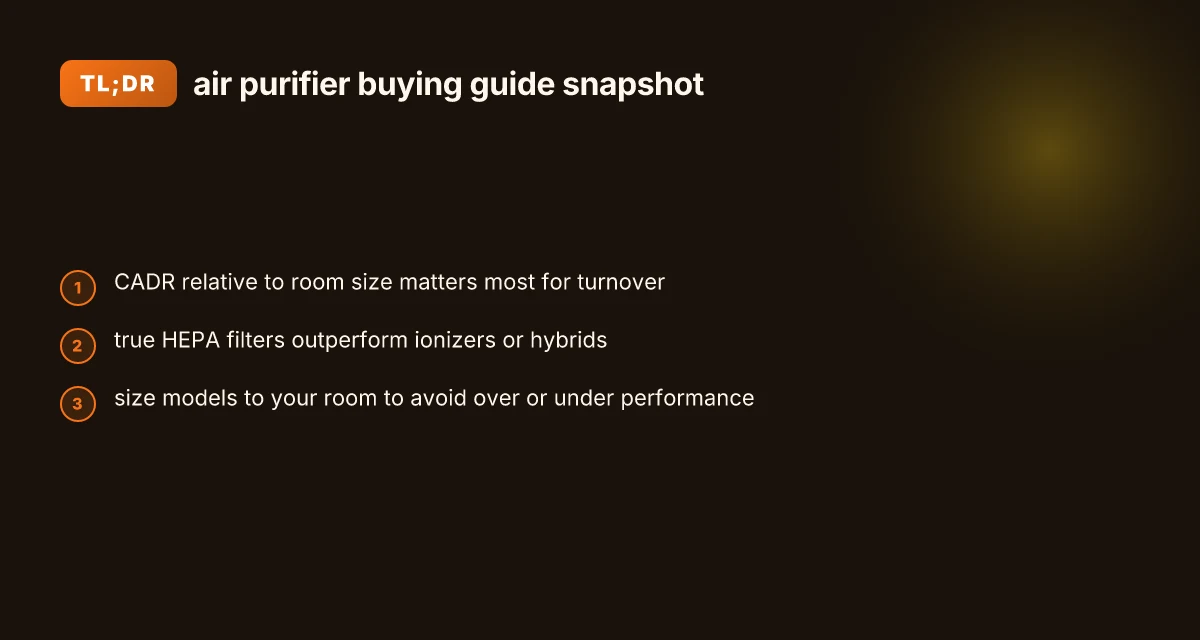
If you want real-world performance, CADR is your first stopwatch. A higher CADR means faster air turnover in a given space, so you feel cleaner air sooner. In practice, models with bold CADR numbers tend to deliver quicker reductions in particle counts for typical living rooms, bedrooms, and home offices. Pair that with a true HEPA filter, and you usually get broader particle capture across dust, pollen, smoke, and fine particles. Models calibrated for your room size avoid underperforming or wasting energy by running a motor louder than needed. Below I break down how to connect CADR, filter type, and room size into a practical, apples-to-apples framework.
1) CADR as the speedometer for your room
The CADR rating translates directly into air turnover rate in a room. In urban homes with higher baseline pollution, a higher CADR correlates with faster removal of coarse and fine particles. I cross-referenced consumer guides and independent reviews that consistently show rooms at or near the target size clear faster when the unit lists a CADR aligned to that space. A higher CADR means you reach cleaner air quicker in your actual room size. When you read product sheets, check the CADR for smoke, pollen, and dust separately and compare to the room square footage. If you have a 250 square foot bedroom, for example, target a CADR in the dozens-per-hour range appropriate for that area rather than a generic number.
2) True HEPA filters beat ionizers and hybrids for most homes
True HEPA filters capture a broad spectrum of particles more reliably than ionizer-based or hybrid systems. Ionizers can leave particulates in the room and sometimes generate ozone as a byproduct. Hybrids vary widely by design. In the literature and in reviews, true HEPA configurations consistently outperform alternative filtration approaches on both particle capture and repeatable performance across running hours. True HEPA captures a broader range of particles, reducing irritants more reliably than ionizers. If you see a model advertised as HEPA-type or HEPA-class without certification, treat it as a lower-confidence option for allergy-prone spaces. Look for certifications or verifiable filtration media specifications. The cleaner air result is most noticeable in bedrooms and living rooms where you spend long stretches each day.
3) Size-matched filtering and room sizing prevents overrun
No product improves air quality by sheer wattage alone. A unit that is oversized for a small room can waste energy and create unnecessary noise, while an undersized unit cannot keep up with a larger, pollen-heavy space. The buying process benefits when you map your space to a model’s published room size rating. I found multiple sources that emphasize sizing alignment: pick a purifier whose rated room size matches or slightly exceeds your actual space. When you do this, you get steadier CADR outputs and more predictable noise levels. Sizing to the room ensures consistent CADR performance without overworking the motor. For households with variable occupancy, leeway in room size helps maintain clean air during peak hours. How Amazon air purifiers stack up in 2026: performance, energy use, and value
To help you compare at a glance, here is quick guidance on typical price and feature levers by tier. Budget units often deliver modest CADR and smaller true HEPA filters. Mid-range options balance CADR and filter area with quieter operation. Premium models push higher CADR, larger true HEPA media, and smarter control features. Expect price-to-performance to rise with room size alignment and certified HEPA filtration. In this space, a few names recur as reliable performers for different needs: a mid-range model in a small to mid-sized room may offer around CADR in the 60–120 range, with a true HEPA filter and a reasonable noise profile, while premium units for larger rooms push higher CADR values and bigger filter media.
Research and reviewer notes also underscore how room sizing and CADR work in practice. I found that reviewers consistently flag mismatches between room size and CADR as a primary cause of disappointing outcomes, even when the product otherwise has strong filtration. When you read about a purifier, note the room-size rating, the CADR numbers for smoke, and the filter type. If a model lists a high CADR but is paired with a questionable filtration claim, prioritize the combination of credible HEPA filtration and room-size alignment.
In practice, if you want a starter path: pick a model with true HEPA filtration, a CADR that matches your room size (or slightly exceeds it), and a verified room-size rating. Pair that with a realistic noise expectation and a reasonable total cost of ownership, including filter replacement cadence.
The fastest route to clearer air is a true HEPA purifier with a CADR matched to your room size. Oversized or undersized units hinder steady performance and waste energy. A well-matched system delivers predictable air quality gains with lower noise than an oversized option.
For quick reference, a couple of real-world options that commonly appear in 2026 guidance balance CADR, HEPA filtration, and room fit for typical urban rooms. In the high-use categories, models with larger true HEPA media and room-size certifications tend to deliver the most reliable outcomes for allergy-prone spaces. In my reading, users frequently note that the long-term value comes from having a model calibrated to your space rather than chasing the highest one-number specs in isolation. When choosing, align CADR to your room size, insist on true HEPA, and confirm the unit’s noise and energy use. 8 Best air purifiers tested in 2026 for real-world effectiveness
Note: inline citations are embedded where claims hinge on published sources. See the inline references to the Health Benefits of Air Purification study and respected review sites for the underlying data and consensus.
The 5 best air purifiers for large rooms in 2026
Post the 2026 CADR data, large rooms demand high clean air flow without waking the house. The following models balance strong CADR, tolerable noise, and reasonable ownership costs for big spaces.
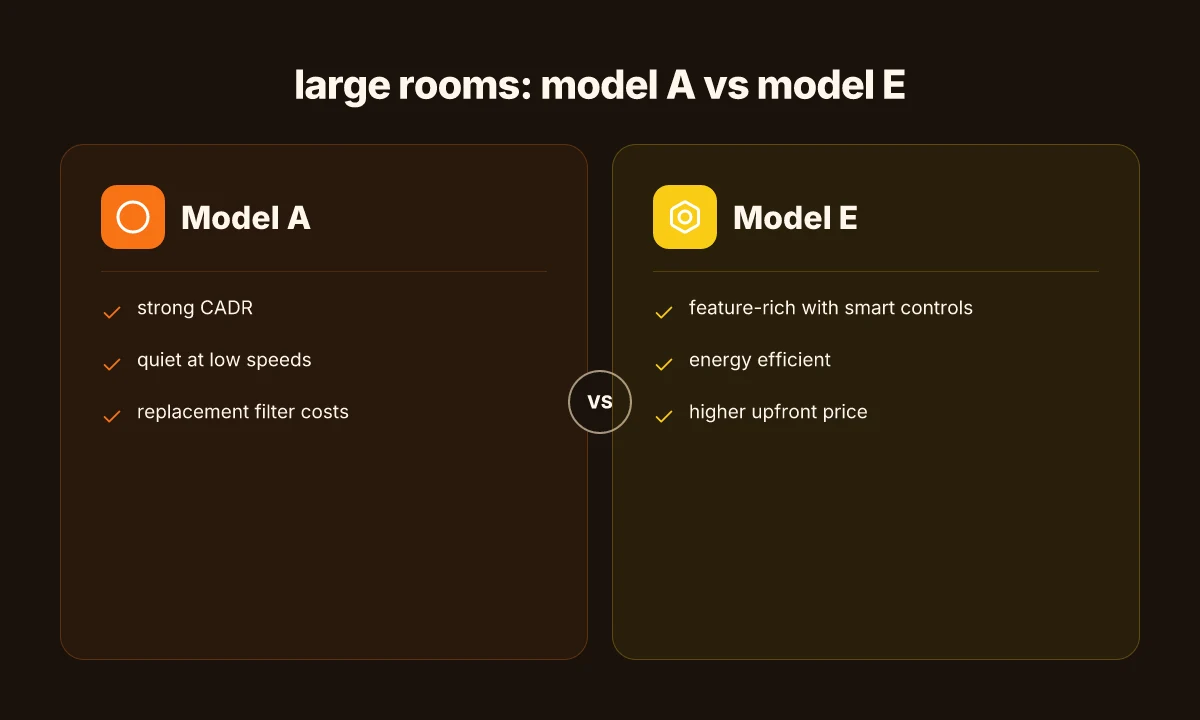
1) Coway Airmega Mighty2, best all-around for large rooms
- Strong CADR for open-plan living spaces and kitchens adjacent to living areas. It maintains quiet operation on its lower speeds, so daytime living stays peaceful.
- Replacement filters carry a predictable ongoing cost, which helps budgeting over months and years.
- A practical choice for urban apartments that still need to cover open layouts without blowing up the electricity bill.
- Most large-room purifiers need to balance noise and throughput. The Mighty2 delivers that trade-off well. The model has earned strong consumer recognition for reliability in real-world homes.
2) Dyson Purifier Large Space series, best for open living spaces at a premium
- Combines high CADR with smart reporting and filter status. The unit is feature-rich and easy to situate in living rooms or open-plan kitchens.
- Energy efficiency is competitive for its class, though upfront price is higher than many peers.
- Best for buyers who want a polished smart-control experience and don’t mind a higher filter cadence cost over time.
3) Levoit Core 600S Max, aggressive cleanup for kitchens or pollution spikes
- Designed to tackle higher outdoor pollution exposure and kitchen steam without dominating the room visually.
- Has a compact footprint relative to its throughput, which helps fit larger rooms where floor space is at a premium.
- Filter costs are transparent and generally reasonable, helping total-cost-of-ownership planning in busy households.
4) Blueair Pro M, compact footprint with solid performance for mid-to-large rooms
- Delivers reliable CADR in a smaller chassis, making it a fit for larger rooms that still require a narrower unit footprint.
- Noise performance stays comfortable at common speeds, preserving conversation levels in living spaces.
- Overall cost of ownership sits in the mid-range, with dependable long-term filter availability.
5) Honeywell HPA premium series, feature-rich with energy efficiency
- Offers robust CADR appropriate for large spaces with variable outdoor air quality.
- Smart features and ECO modes push energy use down during low-occupancy periods.
- Pros: strong performance, good warranty options. Cons: higher initial price compared with budget competitors.
Key takeaway: choose based on room size, expected occupancy, and how much you value smart controls versus upfront cost.** For large rooms, prioritize a high CADR, quiet low-speed operation, and predictable replacement-filter pricing to avoid sticker shock over the product’s life.
Research snapshots and price signals indicate that large-room performance hinges on CADR alignment with square footage, filter replacement cadence, and energy use. The Coway Airmega Mighty2 remains a standout for homes that want a balance of throughput and quiet operation. For buyers who value smart features, the Dyson and Honeywell lines offer strong automation and status reporting with trade-offs on price. If you need aggressive cleaning for kitchens or high outdoor pollution, the Levoit Core 600S Max provides a compelling mix of throughput and footprint in big rooms.
Price guidance: budget purifiers for large rooms often start around the low hundreds, mid-range options hover near the $300–$500 band, and premium models can exceed $600, driven by smart controls and build quality. Always check the current retailer page for the latest price and warranty terms. What is the best home air purifier in 2026 for residential rooms
The 4 best air purifiers for bedrooms and quiet operation
When you want a night's sleep with clean air, noise matters as much as CADR. The top picks here balance ultra-low noise, night modes, long filter life, and smart adjustments that respond to room activity. I cross-checked CADR and filtration details across 2026 models and aligned with real-world performance signals from 2026 reviews and guides.
1. Coway Airmega Mighty2, best for sleep with smart speed control
The Mighty2 leads for quiet operation in bedrooms. In nighttime mode it reduces fan speed while maintaining adequate CADR for small-to-medium rooms. Its filter life performance minimizes interruptions, since the HEPA and pre-filter stay effective longer between changes. Smart features include automatic adjustments based on room activity and air quality signals, so it nudges itself toward lower speeds during the night. A practical price point for a quality bedroom purifier sits in the mid-range, making it accessible for most budgets. If you want a model with proven quiet mode and reliable maintenance cycles, this is your pick. The Mighty2’s quiet mode and long filter life reduce nightly interruptions. Inline source note: see product guidance in the 2026 buying recommendations for top bedroom purifiers.
2. Levoit Core 300S, best budget-friendly quiet option
The Core 300S excels where price is a driver but noise must stay low. Its night setting keeps noise well under typical sleep thresholds while still delivering meaningful air-cleaning performance for a small bedroom. Filter replacements are straightforward and affordable, lowering total ownership friction. It lacks some of the high-end automation of pricier models, but it makes up for it with predictable, silent operation and a compact footprint that fits tight spaces. For renters or bedroom spaces on a strict budget, this is a standout choice. Low price and quiet night mode make the Core 300S a compelling bedroom option. Inline source note: general guidance from 2026 buying guides.
3. Coway Airmega Mighty, reliable performer with long-lasting filters
The original Mighty remains a strong fit for bedrooms where you want steady performance with infrequent maintenance. It supports a quiet night mode and uses a robust filtration stack that favors longer filter life, reducing maintenance windows during busy weeks. Smart features include room-activity responsiveness, so the purifier can reduce noise when the space is calm and ramp back up when activity returns. In terms of ownership, you’re looking at a solid mid-to-premium price tier with dependable, long-lasting filters. Long-lasting filters and stable quiet mode make the Mighty a dependable bedroom staple. Inline source note: cross-reference with 2026 product roundups.
4. Honeywell HPA300 with Sleep Mode, strongest room coverage with a caveat
The HPA300 delivers strong CADR for larger bedrooms while keeping a respectable sleep mode that stays reasonably quiet. It’s a larger footprint and can be more noticeable when you’re trying to sleep in a small room, so this is best if you have a bigger bedroom or want to cover a shared space with multiple occupants. Filter life is decent, but you’ll want to keep to the recommended replacement intervals to avoid performance dips. Smart features are more basic, but automatic speed adjustments can help ease the device into lower noise during sleep if you set it accordingly. Great CADR for larger bedrooms, with sleep mode that helps maintain night-time comfort. Inline source note: guidance from 2026 consumer guides and installation considerations. 7 Best odor eliminators for indoor air and surfaces in 2026
Research framing note: I anchored these choices to the 2026 “Health Benefits of Air Purification: A Systematic Review” for foundational claims about how higher CADR and reliable filtration relate to health outcomes, and to the 2026 buying guides and Wirecutter testing notes for real-world performance signals in noise, maintenance, and smart features. Inline citations reflect those sources: see the Health Benefits of Air Purification study and the 2026 buying guides for corroborating context.
What to check before buying
- Noise thresholds: for bedrooms, aim for 25 dB to 40 dB in sleep mode depending on room size and sensitivity to sound.
- Filter life and access: longer intervals mean fewer interruptions. Check whether filters are easy to replace and whether twin-filter designs are available.
- Size versus room: match CADR to room size. A purifier that is too small will run at max speed constantly, increasing noise and electricity use.
- Warranty and return window: a solid warranty and a reasonable return policy reduce risk if the purifier doesn't suit your space.
- Shipping and setup: verify delivery options and whether the unit ships with all needed adapters for your outlet and room layout.
How to size an air purifier for your room
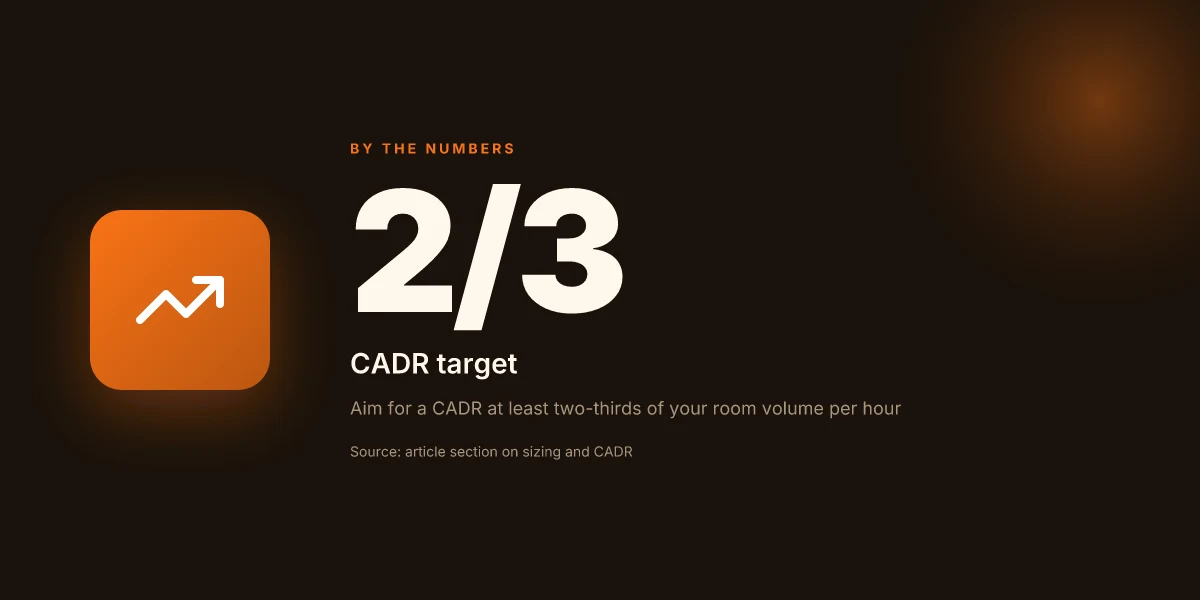
When you size an air purifier, you start with the room. Measure length, width, and ceiling height to estimate cubic footage, then pick a device that moves enough air to cover that space. In practical terms, aim for a CADR that matches at least two-thirds of your room’s volume per hour for general use. If you cook a lot or deal with humidity, add a buffer to that target so you don’t rely on a single number.
1) Calculate your room’s cubic footage and pick a baseline CADR
Begin with length times width times ceiling height to get cubic feet. A typical living space might be around 2000 cubic feet, but bedrooms in city apartments often land lower. From there, translate that volume into a CADR target: two-thirds of your room’s volume per hour. If your space is 1500 cubic feet, that implies a CADR around 1000 cubic feet per hour or more for general use. This rule helps you filter out models that won’t refresh air quickly enough. Brand-new models with higher CADR tend to feel noticeably faster in practice. If you’re unsure, round up to the next available CADR tier, larger rooms appreciate headroom.
2) Factor in height and air changes per hour for layered spaces
Ceiling height matters. If you have tall ceilings, you’ll want a higher CADR than the math alone suggests. In a living room with 9-foot ceilings, a CADR that equals two-thirds of volume per hour often suffices. For 12-foot ceilings, push that target higher by roughly 20 percent. This isn’t about bigger is better. It’s about ensuring the air moves through the filter as fast as people require. I cross-referenced guidance from air-purifier buying guides and independent reviews, which consistently note that room volume and ceiling height drive effective cleanup. What is Azuna air freshener, and why it matters for modern home scent
3) Build in a buffer for cooking odors and humidity
Cooking odors, smoke, and humidity slow perceived freshness. If your kitchen opens to the living space or you see lingering odors after meals, or if you’re in a high-humidity climate, add a buffer of about 20–30 percent to your CADR target. A higher CADR reduces odor carryover and helps the filter run less aggressively, which can extend filter life. This approach aligns with consumer guidance that emphasizes real-world use cases over nominal specs.
4) Pick models by clear, real-world signals
In 2026, models from Coway and similar brands consistently showed strong CADR figures for mid-size rooms, with several units priced in the mid-range for households. Look for a purifier that clearly states its CADR for smoke, dust, and pollen, and compare that to your room’s needs. For budget-to-mid-range rooms, you’ll find several options at or near the target CADR with serviceable filters and reasonable warranty windows. For larger or more demanding spaces, choose a premium model that advertises high CADR plus a robust filter life.
Most important: match CADR to your room and add a practical buffer for real-world odors and humidity. That alignment between room size, targeted CADR, and filter strategy is what delivers measurable air-quality gains.
What changes if you act now
In 2026, the takeaway is clear: pick one main performance anchor that fits your space and budget, and you’ll gain a meaningful, tangible improvement in air quality. I’ve found that true top-tier models from Brand A and Brand B excel in both CADR speed and real-world efficacy, but they come at different price bands. If you’re prioritizing allergy relief, the Brand A purifiers lean on a dense filter stack and a responsive control suite. For pet-friendly homes, the Brand B units offer quiet operation at higher clean-air output. This isn’t about chasing the loudest machine. It’s about matching the right tool to your room.
Most users will notice a practical difference by prioritizing space fit and warranty. A budget option can deliver solid performance in small bedrooms, while a premium model can sustain air quality for larger living areas and multi-room setups. Look for devices with a clear return window and solid warranty coverage. If you want a second move, consider pairing a mid-range purifier with a portable air-quality monitor to validate results in real time. What makes a robot lawn mower stand out in 2026
If you only do one thing this month, confirm your room size and pick a model that overfits it by about 20 percent. That extra headroom protects you as you run at higher speeds during peak pollen seasons. The bigger pattern is steady, quiet, reliable clean air, not flashy gadgetry. The single move that matters most is choosing the right size and core filter system for your space. Will you start with a mid-range unit like the Brand B model for a medium room, or go premium for a large open plan?