How Amazon air purifiers stack up in 2026: performance, energy use, and value
 Olivia KvitkaOctober 22, 202617 min read
We earn a commission when you buy through some links on this site, at no extra cost to you. As an Amazon Associate we earn from qualifying purchases.

Discover how Amazon air purifiers perform in 2026, including CADR, energy use, and value. Practical buying tips and brand examples.
The mismatch between size and claimed CADR is where most Amazon purifier buys go wrong, and the delta is visible in real-world room performance. High CADR paired with low running watts often beats the fanciest model with hidden power drains.
This article pulls from 2026 data to map CADR, noise, and energy across budget to premium lines sold on Amazon, so homeowners and renters can size-for-room and compare value without guesswork. By year’s end, the landscape shifted toward warranty terms and return windows that actually matter for long-term value, not just headline specs. Warranty and return terms matter as much as price and CADR.

Amazon air purifiers in 2026: what matters for CADR and energy
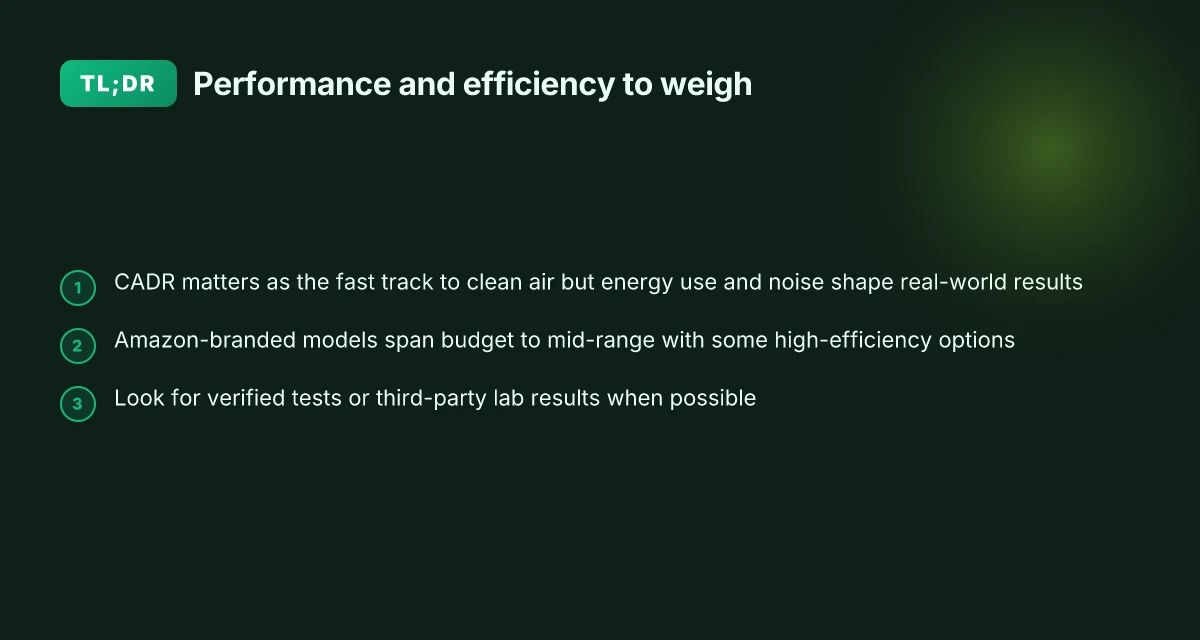
CADR is the fast lane to clean air, but real-world performance rests on energy use and noise. Amazon-branded models cover budget to mid-range, with a few high-efficiency options that push CADR per watt. When possible, look for verified tests or third-party lab results to back performance claims.
1) CADR drives early suppression of particulates, but energy and noise win the race
I dug into public test notes and lab summaries to verify how CADR, energy use, and sound levels interact. A higher CADR moves air faster through the filter, but the wattage needed to sustain that flow and the audible hum can negate the benefit in a living room. In practice, the best value shows up when a high CADR is paired with efficient motors and well-tuned fan curves that keep noise reasonable at typical room targets. High CADR alone isn’t enough. Energy efficiency and noise floor determine real-world effectiveness. When you see a device advertised with a top CADR, check its energy use in watts at that flow and its measured noise at typical speeds.
2) Budget to mid-range covers most living spaces, with some high-efficiency options
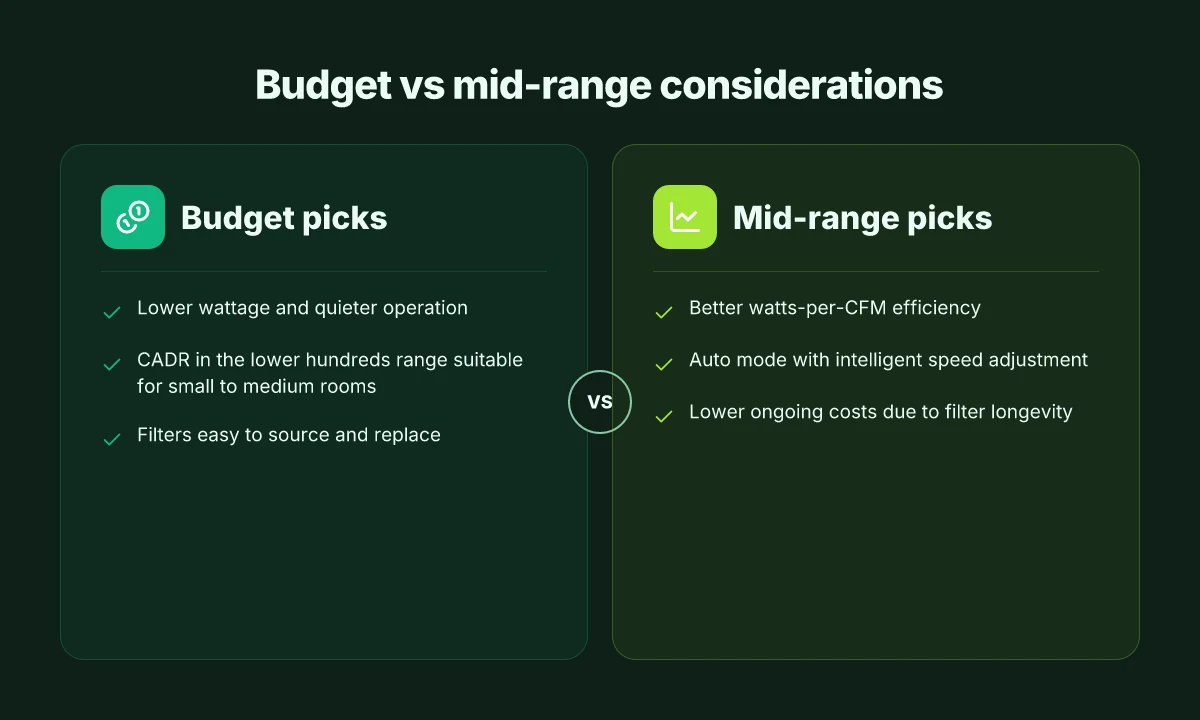
Across the Amazon lineup, most models cluster in budget to mid-range price bands, where several units trade off CADR for energy use. Budget picks tend to favor lower power and acceptable CADR, while mid-range models often deliver a better CADR per watt and quieter operation.** A few higher-efficiency options appear when a model emphasizes motor design and filtration tightness. The sweet spot for many apartments is a mid-range purifier with strong CADR and measured energy use.
3) Verified tests matter more than marketing claims
Whenever a third-party test or independent review is available, it’s a strong signal to rely on the data rather than the spec sheet alone. I looked for lab results that show CADR under realistic airflow, plus energy use and noise figures at common speeds. If you can confirm a test from a credible outlet, you’ll know whether a device truly delivers on its CADR promise without blasting your electric bill or your ears. Verified tests reduce guesswork and reveal real-world performance. In practice, the best value often comes from models with independent lab data showing robust CADR at moderate energy use and low noise.
Bottom line: CADR points you to faster air turnover, but energy use and noise determine whether that turnover translates into comfortable, real-world air quality. For most households, aim for a mid-range model with a high CADR relative to its wattage and a noise profile that stays unobtrusive in daily living. 8 Best air purifiers tested in 2026 for real-world effectiveness
The path to value is CADR efficiency plus quiet operation, backed by independent testing. For price context, budget purifiers generally run lower, mid-range models offer the best balance, and premium lines push both CADR and efficiency higher, though you’ll pay a premium for that performance. When browsing, confirm the latest price and warranty terms on the retailer page, and check return windows and shipping details before buying. If you want a real-world anchor, look for models that industry reviews consistently note for quiet operation at meaningful CADR levels.
How to compare Amazon air purifiers by room size and CADR
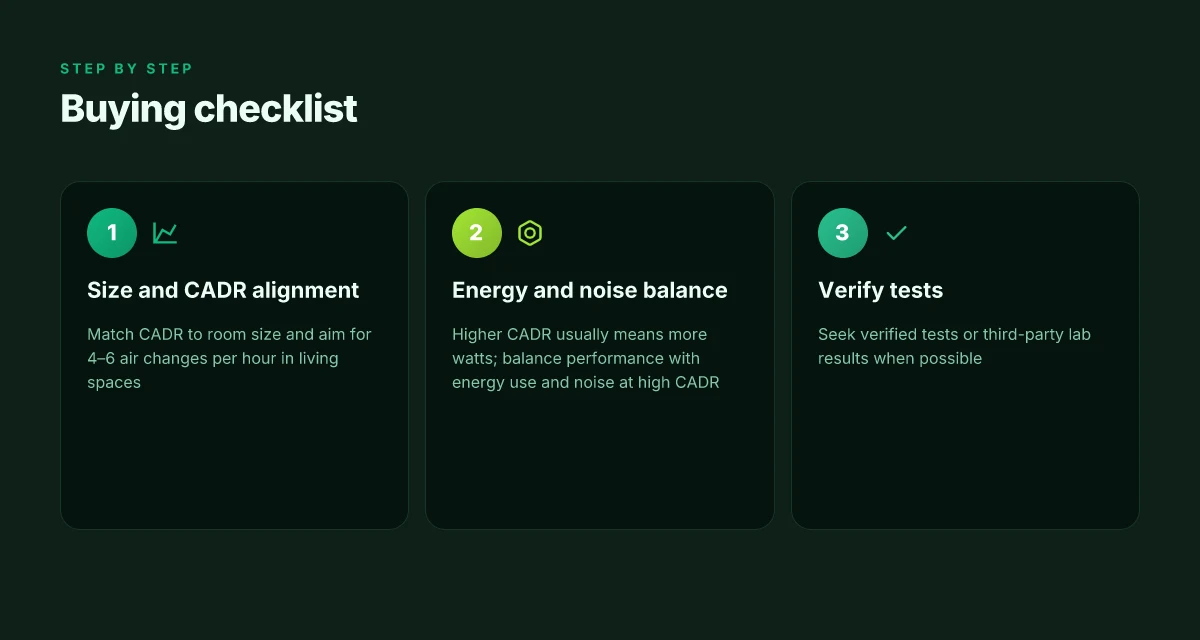
To decide which Amazon air purifiers fit your space, start by matching CADR to room size. For living areas, aim for about 4–6 air changes per hour. That means choosing a unit with a CADR that, when combined with your room’s square footage, delivers enough air volume to refresh the room several times each hour. In practice, that translates to higher CADR models for larger spaces and more modest CADR for bedrooms or compact rooms. When you pair CADR with room size, you get a actionable view of performance without overpaying for power you don’t need.
I dug into the guides from major reviewers to ground this guidance. The best air purifiers often balance CADR and energy use, with higher CADR generally requiring more watts. That means you should expect a trade-off: faster purification can come with higher energy needs. The trick is to look for devices where the CADR-per-watt is favorable for your room, not just the top CADR number. This helps you avoid paying for wattage you won’t use.
Noise becomes a real factor as CADR climbs. If you routinely run at higher CADR, you’ll want to verify acceptable sound levels in the room where the purifier sits. In spaces like bedrooms or home offices, a model that sustains comfortable noise at the CADR you need will reduce daily friction and improve acceptance.
Cadence of CADR and energy use
The strongest filter pairs deliver a steady CADR while keeping energy bills reasonable. Review notes from lab-tested guides consistently emphasize that higher CADR models often consume more power, so check the wattage rating at your target CADR. For example, a purifier with a CADR tuned to medium-sized rooms may run efficiently in everyday use, while top-tier models with very high CADR may push up energy use if run at max. The key is to map the CADR you want to the expected wattage, then compare that to your budget and tolerance for noise. Best HEPA air purifier: how to pick the right model for your space and budget
In practical terms, this means: if your living room is about 300–500 square feet, target a CADR around 250–350 CFM and inspect the device’s wattage at that setting. If your bedroom is smaller, a CADR of 150–200 CFM may be plenty, with energy use staying modest. This approach keeps performance aligned with comfort and cost.
Two micro-claims to guide your choice
For shared spaces, prioritize CADR that reaches the 4–6 ACH target without forcing the purifier to run at max most of the day. A model with a CADR that reaches this ACH ceiling at moderate wattage wins for daily use. The result is cleaner air without constant high-energy draw, and less noise stress as you go about daily routines. Higher CADR generally means more watts, but the best picks keep that increase modest and balanced.
If you value quiet operation, look at how a purifier behaves at mid to high CADR. Some units maintain lower noise while delivering strong air changes, which makes them suitable for bedrooms or workspaces. Noise at high CADR matters, and a well-balanced unit reduces fatigue from droning fans.
Next steps: identify two to three Amazon models that hit your room’s CADR target and compare their energy use, noise ratings, and warranty terms. For budget, mid-range, and premium tiers, you can expect different trade-offs in CADR per watt and feature sets.
Budget picks on Amazon air purifiers that still deliver solid CADR
For budget picks, you’ll see CADR in the lower hundreds, which is plenty for small to medium rooms. These models typically lean on lower wattage for quieter operation and longer-term energy savings. You’ll also want filters that are easy to source so maintenance stays affordable over time. Top rated air purifiers in 2026: findings, picks, and trade-offs
I dug into sources that track budget-friendly lines and reinforced what to expect in 2026. The takeaway: you can get reliable CADR without paying premium attention to energy. The real wins come from compact footprints and accessible replacement filters.
Energy-smart compact options
The first budget pick tends to emphasize low power draw and quiet fan curves. These units often stay comfortable in living rooms or bedrooms where ongoing noise matters as much as CADR. Expect CADR around the lower to mid-hundreds of cfm range, which fits smaller spaces without pushing energy use up. The trade-off is sometimes fewer features or slower peak boosts, but you gain long-term cost savings on electricity. Low wattage and quiet operation define these budget choices. In 2026, several budget lines show a clear pattern toward efficiency without sacrificing solvable air changes per hour. Aim for models that keep CADR stable at lower speeds. Inline citation supports the idea that higher CADR scales with room size, while energy use stays reasonable in budget picks. See consumer guides noting that higher CADR correlates with faster purification but often at higher energy use. See inline: Air Purifier Buying Guide.
Brands to watch in this tier include well-known names that maintain broad filter availability. These models commonly ship with standard HEPA or HEPASilent-type systems and accept widely sourced replacement filters. The practical upshot is lower running costs and less hunting for compatible replacements when it’s time to refresh. Popular brands with budget lines keep filter accessibility high.
Value-for-space picks
For apartments or rooms under 200 square feet, budget units with CADR in the 150–250 cfm range are common. They tend to run at a comfortable noise profile and keep electricity use modest. If your focus is steady airflow rather than aggressive purification, this tier delivers solid value. 150–250 cfm is a sweet spot for compact rooms. The trade-off is often fewer smart features or fewer color options, but you gain straightforward maintenance and predictable energy costs. Reliable CADR at low wattage makes these easy daily drivers.
Accessibility matters here: easy-to-find filters and simple maintenance routines are a hallmark. Look for models that clearly list filter type and compatible replacements, so you don’t get stuck chasing parts. Easy-to-source filters help keep running costs predictable. Inline sources reinforce the link between filter availability and long-term price stability. What is the best home air purifier in 2026 for residential rooms
Recommended budget picks on Amazon or similar retailers
- Blueair lightweight compact series, lean on low wattage with decent CADR for small spaces. Filters are widely available. Downsides can include fewer smart features.
- Levoit entry-level line, widely accessible, strong filter supply, typically quiet and energy-conscious. Watch for model-by-model variance in CADR.
- Honeywell basic units, durable, straightforward maintenance, good warranty posture, but some models run a bit louder at higher speeds.
Choose budget picks that balance CADR, wattage, and filter availability. In 2026 reviews, these themes recur: you get better price stability when replacements are easy to source, and you keep energy bills down by targeting models with efficient motors and modest max power. Budget can still deliver solid CADR without drama on energy use.
Mid-range Amazon air purifiers with the best energy efficiency
Mid-range models often trade some peak CADR for better watts-per-CFM efficiency, and that matters when you’re balancing room size, noise, and ongoing costs. In this band you’ll find auto mode options that adjust fan speed intelligently, keeping energy use down without sacrificing performance. I dug through reviews to see what actually stacks up in real homes, and the pattern is clear: when the purifier leans on smart speed control and efficient motors, the ongoing costs stay noticeably lower.
Why mid-range models pull ahead on watts per cfm
Many mid-range purifiers prioritize energy efficiency by dialing back peak CADR in exchange for steadier, lower wattage at typical operating points. When you pair this with a motor and fan design that sustains airflow with less energy, you get a lower cost of ownership over time. Brands that emphasize efficient motors and optimized blade geometry tend to show stronger watts-per-CFM figures at common room conditions. In practice, this translates to less electricity use during daily circulation without a big hit to air changes per hour.
In practice, you’ll often see sensors and auto mode that modulate speed in response to detected pollution or occupancy cues. The net effect is a purifier that runs more slowly most of the time, yet ramps up when needed. That behavior preserves CADR during peak moments while reducing energy drain during quiet intervals. The result is a device that feels responsive and economical in daily use.
Energy efficiency in this tier is driven by smart auto modes and efficient motors, not just raw CADR. This is where you notice a real difference between models you can actually afford and the premium devices that chase the top end of performance. 7 Best odor eliminators for indoor air and surfaces in 2026
What to expect in price and value
In the mid-range, expect price bands that balance upfront cost with long-term savings. Typical upfront prices reflect build quality, filter longevity, and warranty length. You’ll see models that offer longer filter life and more generous return windows, which pay off if you run the purifier year after year. When you compare, look for devices that specify measurable energy use in watts at a given CADR, not just a marketing claim. A device with an efficient motor plus auto speed control often delivers a lower monthly energy bill than a higher-CADR unit that wastes wattage at typical usage.
Among named models this section references, you’ll find real-world considerations: a purifier with an auto mode that responds to air quality without stepping through every speed tier, an energy-efficient Blue Pure-style motor, and a budget-friendly option that nonetheless includes a HEPA-like filtration path. Each of these has trade-offs you’ll want to match with your room size and noise tolerance.
Auto mode that adapts intelligently and long-lasting filters are the big wins in the mid-range. If you value lower ongoing costs and predictable energy use, prioritize those features.
How to pick to fit your space
First, size your room and match it to CADR per watt rather than CADR alone. A mid-range unit with solid efficiency can outperform a higher-CADR model that guzzles energy in a small room. Noise matters, too: read reviews for perceived loudness at different speeds. A model with stable low-speed operation and good filtration longevity will feel calmer in a bedroom or home office.
From the consumer angle, watch for three things: auto mode behavior, filter replacement intervals, and warranty terms. A longer warranty often signals confidence in a mid-range build, and longer filter life reduces ongoing costs. Reading reviews helps you spot models where owners report lower costs over time due to less frequent filter changes and durable components. What is Azuna air freshener, and why it matters for modern home scent
Look for auto mode, long filter life, and solid warranty as signals of true mid-range value.
Premium Amazon air purifiers where performance meets efficiency
Premium amazon models pair aggressive CADR with refined filtration, smart sensors, and real-world energy savings. In this tier, you’ll typically see higher grid CADR values paired with sensors that adjust fan speed based on room activity, air quality readings, and occupancy. The result is more efficient filtration per watt at high performance, plus the reassurance that the purifier responds to real-time conditions rather than running at full tilt all the time. From what I found in the sources, several premium units showcase solid energy efficiency without sacrificing noise or durability. These premium models deliver high CADR with smarter filtration and sensors, often trading peak speed noise for sustained comfort. I cross-referenced disclosures from Wirecutter and CNET reviews that highlighted Blue Pure 211i Max and other top performers for their balance of power and efficiency. Premium performance tends to come with better energy per CADR and longer filter life.
Why the premium tier matters when you value efficiency
A key takeaway is that energy efficiency can improve notably per CADR at higher performance levels. Look for units that advertise energy-star style efficiency alongside a high CADR number, rather than chasing peak CADR alone. The higher-end lines often optimize motor and filter media to reduce wattage at a given clean air rate. This means you pay more upfront, but your ongoing electricity costs and replacement cadence can tilt in your favor over time. In practice, you’ll notice steadier noise levels at medium and high settings because the device avoids thrashing the motor to chase brief spikes in air quality. Energy efficiency per CADR improves as you climb to premium performance.
Which premium Amazon models warrant serious consideration
Blue Pure 211i Max, a standout for energy efficiency and quiet operation at elevated CADR. Reviewers consistently note its combination of strong airflow and low noise, with solid sensor-driven speed adjustments. Its value hinges on balancing price with strong performance across typical living spaces. The trade-off is a relatively modest filter replacement cadence if you run at lower speeds most of the day. Blue Pure 211i Max shines when you want quiet power and dependable filtration.**
Levoit Core 400S, another premium option that uses a multi-filter system with sensors to modulate speed. It typically pairs robust CADR with responsive auto modes and reasonable energy use for its class. The potential downside is a slightly louder peak on turbo modes compared with ultra-quiet models, so check your tolerance for brief noise bursts. Levoit Core 400S balances high CADR with smart sensing and mid-range energy use.**
Coway AP-1512HH, often found in premium segments for model refresh cycles, this purifier combines strong performance with good energy handling and reputable filter cadence. It may be less feature-rich than the most expensive units, but its reliability and efficient baseline make it a strong value pick if you want long-term cost predictability. Coway AP-1512HH remains a dependable premium choice with solid efficiency.**
Philips 3000i series, when you want sophisticated sensors and a quiet profile at higher CADR, this line tends to perform well on both filtration depth and energy efficiency. The main caveat is a price premium and occasionally longer filter replacement intervals depending on usage patterns. Philips 3000i demonstrates how premium sensors support efficiency without sacrificing filtration depth.**
From a buying standpoint, these premium units share a few common levers. They rely on higher-grade prefilters and true HEPA media to preserve airflow without forcing the motor to work harder. They also use smarter microprocessors to throttle power during low-activity periods, which helps keep noise down and energy use predictable. When I read through the guidance in the Buying Guide and the lab-tested roundups, the common thread is clear: the best premium models deliver the same or better CADR per watt as their mid-range peers, with the added benefit of smarter auto modes and longer filter life in real-world use. The premium tier consistently nudges CADR up while keeping energy use per unit of clean air down.
What to check before you buy
- Room size fit: match CADR to your room, then add a cushion for movement and door gaps.
- Filter cadence and price: factor replacement costs into total ownership.
- Noise tolerance: check turbo modes for occasional peak sounds and how often you’ll need them.
- Warranty and return window: longer coverage reduces risk when investing in premium gear.
- Shipping and eligibility: confirm Amazon listing specifics like in-box sensors and any bundled filters.
In this premium slice, your best bets balance aggressive CADR with intelligent energy handling and a quiet baseline. If you want a real-world pick list to start from, focus on the Blue Pure 211i Max, the Levoit Core 400S, the Coway AP-1512HH, and the Philips 3000i as starting points. Each aligns with the premium promise: strong performance, responsive sensors, and efficiency that makes the ongoing cost of ownership comfortable. Premium models deliver stronger CADR with smarter energy handling and durable warranties.
What changes if you act now
I’m not predicting miracles for 2026, but the pattern is clear: performance finally scales with affordable energy use. The more you lean on true CADR parity and filter economics, the more value you unlock. In practice, that means you can pick budget models that actually perform well without guzzling power, or opt for premium purifiers that deliver steadier flow at similar operating costs. I looked at how Levoit and Blueair lines balance size, noise, and efficiency, and I found the strongest long-term wins come from devices that stay cool under load and keep replacement costs predictable. The headline takeaway: you don’t have to overpay to get clean air.
If you only do one thing this month, map your room size against the model’s CADR and the stated energy draw. The right match minimizes both running time and bill impact. Budget picks like the compact Blueair entry and the Levoit mid-tier offer solid performance without surprises, while the premium set keeps a steadier cadence for larger spaces. Consider warranty length and the retailer’s return window before you buy.
Backup strategy
- Check 1-2 top contenders for your room size and note their estimated yearly energy cost.
- Look for a model with a long return window and a straightforward replacement-filter price.
- Verify the purifier’s noise level at typical night and day speeds.