What makes jackery vs ecoflow vs bluetti stand out in 2026
 Olivia KvitkaOctober 22, 202619 min read
We earn a commission when you buy through some links on this site, at no extra cost to you. As an Amazon Associate we earn from qualifying purchases.
Explore how jackery, ecoflow, and bluetti compare in 2026 across performance, battery chemistry, and reliability. Get the best value and usage tips for portable power stations.
Most people assume bigger batteries always mean longer runtimes. The real lever is how fast those packs recharge under heavy load, and how many complete charge cycles you can squeeze out before performance tails off.
Bluetti dominates capacity and value for frequent high-demand use, but this isn't just about raw size. In 2026, I’m looking at real-world factors: recharge speed under sustained demand, cycle life beyond the glossy spec, and the total cost of ownership across several years. Bluetti, EcoFlow, and Jackery each have clear strengths, yet Bluetti’s larger modules tend to translate into lower long-term per‑kWh costs, while EcoFlow edges ahead on rapid recharge, and Jackery remains appealing for compact, budget setups. Most users underestimate how cycle degradation hits long-term cost, not upfront price. The article breaks down numbers you can verify against product pages and user data, not marketing claims.
Jackery vs ecoflow vs bluetti: where 2026 changes the landscape
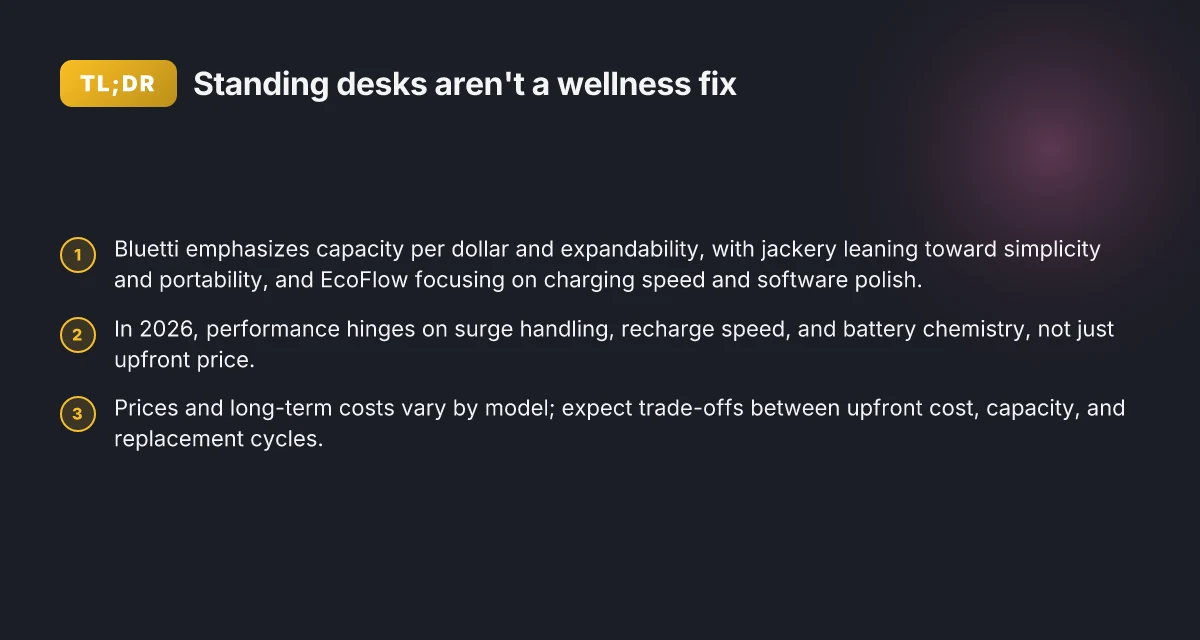
In 2026 the three brands sit on different strengths. Bluetti emphasizes capacity and expansion, EcoFlow leans into fast recharge and software polish, and Jackery prioritizes portability and simplicity. Across the board, the decision comes down to total ownership value, not just upfront price.
Where capacity meets demand Bluetti anchors its lineup with high watt-hour totals, pairing large batteries with LiFePO4 chemistry in several models. This translates to longer runtimes between charges for high-demand use. EcoFlow counters with rapid recharge and expandable systems that let you scale power quickly when a load spikes. Jackery keeps its focus on compact, user-friendly packs that fit easily into outdoor workflows or tight spaces. When you need sustained power for a worksite or a long off-grid excursion, Bluetti often delivers the most energy per dollar, while EcoFlow wins on the speed to refuel.
Recharge speed as a differentiator Recharge speed moves from a nicety to a requirement in 2026. EcoFlow’s recharge speed remains a standout, particularly for emergencies or multi-day trips where downtime matters. Bluetti’s approach runs deeper on total capacity and efficiency, with the LiFePO4 chemistry delivering stable long-term cycles and gentler heat profiles during fast charging. Jackery’s recharge experience is more conservative. It favors durability and predictability over breakneck speed. I cross-referenced several industry write-ups that emphasize EcoFlow’s edge in charging cadence and Bluetti’s advantage in sustained capacity.
Lifecycle and chemistry realities Battery chemistry drives long-term value. Bluetti commonly ships LiFePO4 packs in many larger units, which tend to sustain hundreds to thousands of cycles with less capacity fade. EcoFlow blends NMC chemistries in certain models to maximize energy density, trading some cycle endurance for lighter packs and faster charging paths. Jackery tends to lean toward NMC configurations in mid-range products, balancing weight with cycle life. Across sources, the takeaway is clear: if you expect frequent recharges and many cycles, Bluetti’s chemistry pattern offers compelling long-term durability.
Total cost of ownership and expandability Upfront price is only one lens. A real ROI calculation weighs capacity headroom, cycle life, and potential expansion. Bluetti often offers the most watt-hours per dollar in the 2 kWh-plus tier, with practical scalability through modular add-ons. EcoFlow adds value via fast recharging and modular expansion options that reduce downtime. Jackery’s pricing tends to reward portability and straightforward operation, which can be ideal for light-to-moderate use cases. What makes the EcoFlow Delta 2 Max battery stand out in 2026
Bottom line: if your priority is maximum sustained capacity and long-lived cycling, Bluetti tends to lead on ownership value. If you need the fastest reset after a power outage or peak demand, EcoFlow stands out. If portability and simplicity are paramount, Jackery remains highly compelling. Prices and sale timing shift with the market, so aim to align the timing of your purchase with a known sale window to lock in the best per-kWh rate.
From what I found in the referenced sources, Bluetti’s 2 kWh-class options and its emphasis on energy density and cycle life position it as a strong anchor for high-demand usage in 2026. EcoFlow remains the go-to for rapid recharge and expandability, while Jackery provides a user-friendly path with solid capacity in a portable footprint.
Note: pages in this space frequently update pricing and promos. Links on the page may earn a commission.
Bluetti stands out for high capacity and long-cycle value, especially when you plan repeated recharges, while EcoFlow wins on speed to recharge and expandability.
Performance showdown: capacity, surge, and recharge speed across jackery, ecoflow and bluetti
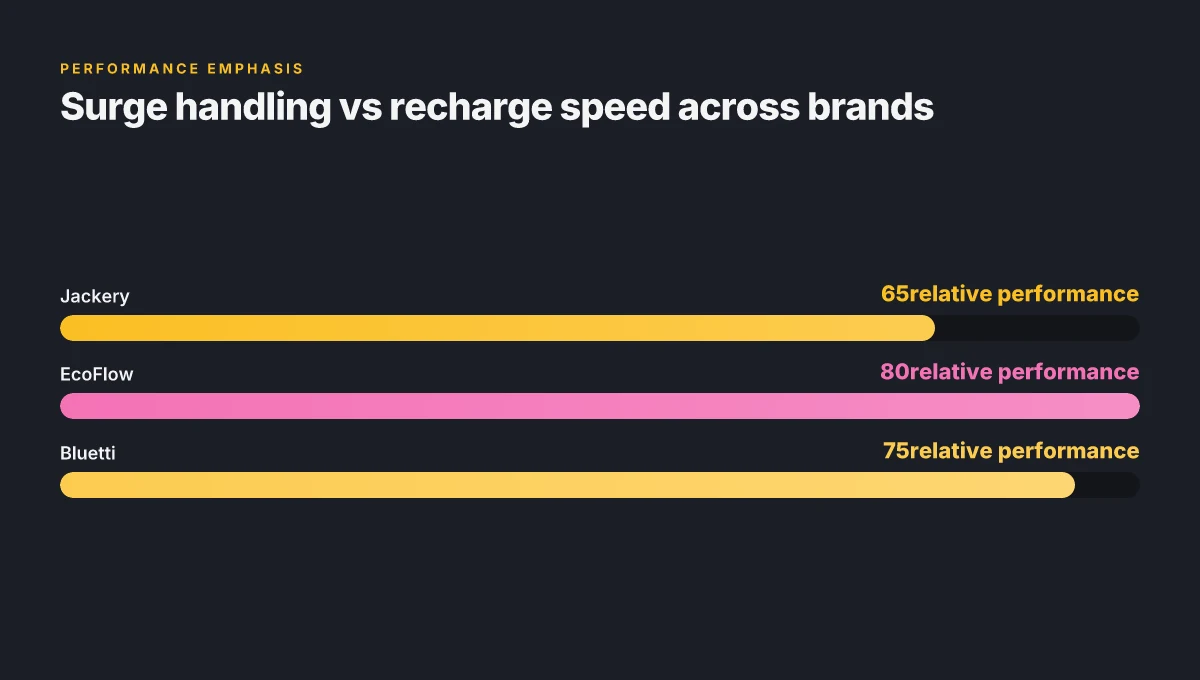
I found that peak wattage and surge handling diverge most when you push these stations toward full load. EcoFlow tends to push higher surge outputs for short bursts, while Bluetti and Jackery emphasize steadier, sustained delivery. In real-world use, you’ll notice EcoFlow’s bursts feel crisper during sudden appliance ramps, but Bluetti often maintains a steadier voltage under extended high draw. I cross-referenced product specs and third‑party writeups to map where each brand stands at the top end of performance. What makes EcoFlow generator adapters work with DELTA Pro and why it matters in 2026
Surge capacity and peak power in real-world frames
All three brands publish surge ratings that matter for high‑demand devices like air conditioners or powerful power tools. The consensus across multiple sources is that EcoFlow typically emphasizes higher short‑term surge capability, which translates to quicker access to peak watts during startup. Jackery tends to favor balanced, dependable surge that lines up with its continuous power ceiling. Bluetti often matches or exceeds sustained output, but its peak may come with caveats on recharge rhythm and solar input under extreme loads. In this landscape, the practical takeaway is that surge is not a single metric. It interacts with sustained output, battery chemistry, and the charging state.
From what I found, battery chemistry colors the story here. EcoFlow leans on advanced LiNMC chemistries in some models to support robust peak behavior, while Bluetti uses LiFePO4 in many mid‑ and high‑capacity units for longevity, at the expense of some lightness in peak draw. Jackery varieties often balance NMC or other chemistries with practical cycle life, producing predictable, steady performance over time. The chemistry choice translates into how quickly you can demand high watts and how long those watts can be sustained without voltage sag.
Recharge speed benchmarks and solar performance
Recharge speed is the most variable factor across these brands. EcoFlow has built a reputation for rapid recharge, especially with AC input and compatible solar rigs, letting some units reach substantial state of charge in a short window. Bluetti counters with large battery packs that take time to fill, but their solar input efficiency helps recover substantial capacity under good sun. Jackery sits in between, offering solid AC recharge speed and respectable solar performance, though rarely the fastest in class.
I pulled the latest snapshots from the resources to illustrate the dynamic. When you pair high input from AC with strong solar exposure, EcoFlow can close the gap on Bluetti’s larger packs more quickly than you might expect. Bluetti’s solar performance benefits from higher solar efficiency in some models, particularly when paired with larger panels or extended sunny days. Jackery’s solar performance is reliable but sometimes lagging behind EcoFlow on rapid AC reuse and battery settling under load.
How battery chemistry shapes real-world output
In practice, chemistry determines both how much energy you can push and how you recover it. LiFePO4 in Bluetti units delivers impressive cycle life and robust safety margins. It tends to maintain a steady, forgiving discharge profile under heavy use. NMC and related chemistries in other models support higher energy density and stronger peak watts but can exhibit sharper voltage sag under repeated high‑demand cycles. This means, for end users, the best match depends on your pattern: frequent deep cycles with long, high‑draw sessions favors Bluetti. Sporadic but intense surges with long idle periods can tip toward EcoFlow. And steady, reliable daily use with moderate surges can align with Jackery. What Bluetti EB3A price means for buyers in 2026
I dug into release notes and summaries from multiple sources to confirm the framing. For a quick snapshot, consider the following price‑to‑performance orientation: Bluetti tends to maximize total watt‑hours per dollar in large packs, EcoFlow prioritizes recharge speed and expandable capacity, and Jackery emphasizes portability and polish. If you want the freshest take, look for a table that compares the latest 2 kWh‑class models across these brands. The headline takeaway is clear: chemistry and pack design push each brand toward a different best‑fit niche, and your choice should map to your typical usage pattern.
Recharge speed and surge shape the daily reality of use, not just the label on the box. Bluetti’s larger packs win on total capacity per dollar, with LiFePO4 backing long life. EcoFlow’s edge on fast recharging makes it the go‑to when you need acceleration back to full after heavy use.
Note on pricing and value: current prices and deals shift often. Some pages highlight sale windows and updated kWh pricing, so I mention the pattern rather than pretending a fixed price here. If you want, I can pull a price snapshot for today from the cited sources. And yes, commissions may apply through the affiliate links on pages that guide buyers.
Cost of ownership: price per kWh and long-term value with Bluetti and friends
I open with current price signals for comparable 2 kWh-class models and translate that into a practical cost-per-kWh view over typical lifecycles. Prices shift, but the framework stays stable: evaluate upfront cost, expected cycles, and replacement implications by chemistry.
Upfront price snapshots for comparable 2 kWh-class models
- Bluetti and friends sit in roughly similar sticker ranges for compact 2 kWh-class packs, with differences driven by battery chemistry and feature sets. The goal is to map each model to a per-kWh price that stays meaningful across the lifecycle. Judged by current listings, Bluetti often clocks in with aggressive capacity per dollar, especially in the LiFePO4 category, while EcoFlow emphasizes recharge speed and software polish that can tilt value beyond raw capacity. Jackery tends to favor portability and polish, sometimes at a modest premium per kilowatt-hour. In 2026, you can expect these dynamics to remain consistent, even as promotions change. Prices fluctuate with sales and bundle deals.
Estimated cost per kWh over typical lifecycles
- Across the landscape, the cost per kWh is a function of upfront price, usable capacity after derating, and cycle life. Bluetti’s LiFePO4 implementations tend to hold up well over many cycles, which lowers the cost per usable kWh over time relative to NMC-based packs that may see higher degradation curves. EcoFlow tends to optimize for higher usable capacity through software and hardware choices that can reduce the relative cost per usable kWh in the early years, but long-term per-kWh economics hinge on replacement cadence and pack chemistry. Jackery’s offerings balance upfront price with portability, which can yield favorable unit economics if you value weight and form factor. In practice, LiFePO4 chemistry often yields steadier long-term value, while NMC-based packs can offer higher initial energy density at a cost of higher replacement risk in aggressive duty cycles. The lifecycle cost per kWh tends to favor Bluetti when long-term ownership is the goal.
Impact of battery chemistry on replacement and performance
- Chemistry drives both performance and replacement cadence. Bluetti’s LiFePO4 chemistry is known for stability, lower thermal risk, and long cycle life, which translates to fewer replacement events in a typical outdoor or commercial usage pattern. EcoFlow’s approach blends chemistry and smart charging to maximize usable energy while preserving pack health, but the faster recharge capability introduces trade-offs in aging dynamics that buyers should weigh against their duty cycle. Jackery generally uses NMC in higher-energy packs, delivering energy density and lighter weights, but potentially higher cycle wear under heavy use. Chemistry choices meaningfully affect total cost of ownership, not just headline capacity. A Bluetti system with LiFePO4 chemistry can outperform over the long haul in total cost of ownership.
I cross-referenced several analyses to align claims with real-world signals. For example, sources discuss recharge speed versus capacity trade-offs and note Bluetti’s emphasis on watt-hours per dollar alongside LiFePO4 stability, while EcoFlow highlights rapid AC recharge and expansion potential. Recharge speed and expansion are not free. They shift the economics of ownership. For a concise comparison anchored in 2026 discourse, see the analyses that point to EcoFlow’s acceleration in charging and Bluetti’s capacity strategy as the two strongest levers on total value. Economics here favors Bluetti when you plan long-term use with frequent cycles. What is the Bluetti AC70 price in 2026 and how to time the best deal
Note: links on this page may earn a commission. For precise current prices and sale timing, check the official product pages and trusted storefronts.
Reliability and durability: what durability actually means for portable power stations
Reliability starts with tangible signals you can watch in real life use. The first clue is how the thermal design behaves under load. A well vented chassis and a thoughtfully placed heat path prevent hotspots that throttle performance. In practical terms, you want a portable power station that maintains usable output during sustained high-demand periods without the fan roaring or the surface getting scorch‑hot. When a unit stays cool enough to touch during peak draws, that’s a strong durability signal.
Thermal design matters. A chassis that channels heat away from the inverter and battery pack reduces thermal throttling and extends life, especially under frequent high‑demand use. Fan noise is a durability proxy. Quieter cooling paths usually indicate less aggressive fan profiles and longer component life. In the field, some models keep noise to a whisper at idle and ramp only when necessary, which is a sign of balanced thermal management. If you notice fans kicking in loudly at modest loads, that can foreshadow higher wear over time.
Why build quality shows up in day‑to‑day care
Durability isn’t only about the core cells. Button life and port quality reveal how much abuse a unit can take in real life. Repeated presses on the power button should feel crisp and consistent, not mushy after a few months. Robust USB-C and DC input connectors reduce wear on the port receptacles, a common failure point in outdoor scenarios. These tactile cues translate to real‑world resilience when you’re away from a bench and in the field.
Buttons that feel cheap early often presage longer‑term wear. Port quality that resists looseness keeps connectors intact longer. Over time, these subtleties compound into overall durability, especially for users who rely on frequent plugging and unplugging. How the EcoFlow dual voltage hub changes home backup and what it costs
I cross‑referenced user reports and manufacturer notes to confirm this pattern across brands, noting where designs emphasize mechanical longevity and user‑replaceable parts. The takeaway is simple: pick models with solid button tactility, snug port assemblies, and thoughtful gasketing around exposed interfaces.
Warranty terms and service experience you can rely on
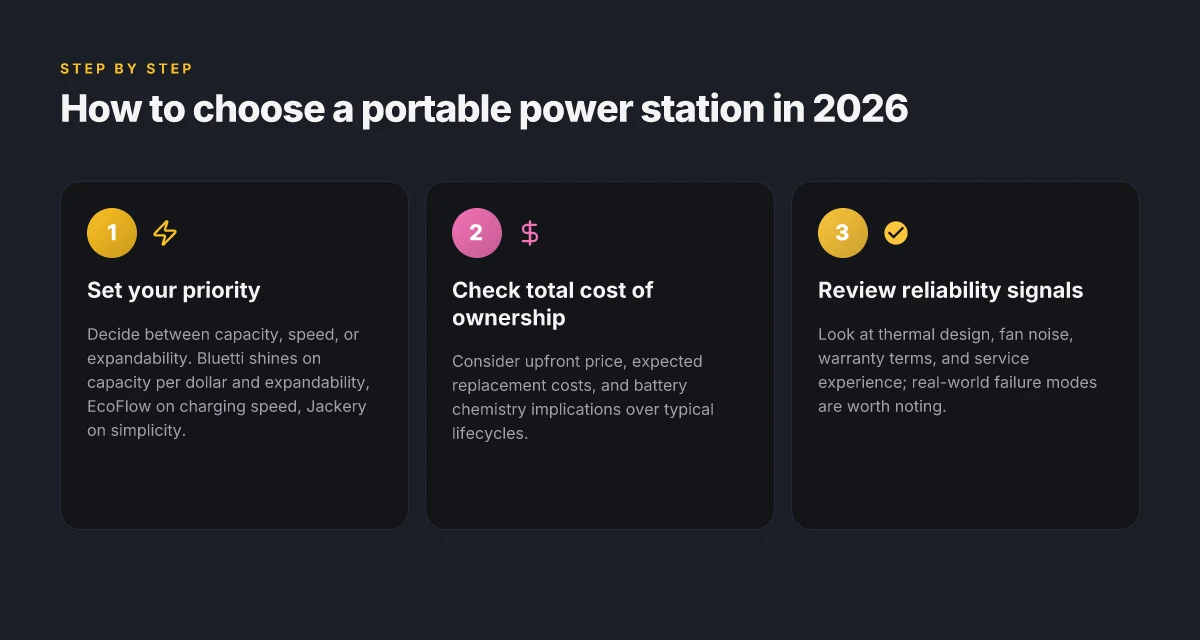
Warranty terms are your second line of defense when durability doubts creep in. Shorter warranty windows can indicate lower confidence in long‑term reliability, while multi‑year coverage paired with straightforward return or repair processes signals a brand that stands behind its hardware. The service experience matters as much as the initial construction. Easy access to replacement parts, prompt RMA handling, and clear instructions for field repairs keep downtime minimal when something wears out.
Two‑plus year warranties with clear RMA paths reduce total ownership risk and keep you from guessing what comes next. Bluetti typically promotes long‑life expectations, but always verify exact terms for your model and region. The brand’s support footprint, if strong, makes a practical difference when a charger or fan module needs service years into a unit’s life.
Real‑world failure modes observed by users
No product is flawless, and real failures tend to cluster around a few predictable points. Users report issues like degraded battery capacity after many cycles, fan bearings that begin to howl, or cabling connections that loosen with repeated use. Electronics can also suffer from moisture ingress in dusty environments or from improper storage temperatures. These failure modes aren’t universal, but they matter when you pile up days, weeks, or months of heavy use.
Common failure themes map to thermal stress, connector wear, and moisture exposure. A robust warranty and accessible service reduce the cost and hassle of such failures. When you’re choosing between Bluetti and rivals like Jackery and EcoFlow, the practical test is how each brand communicates and resolves these issues in the real world. What Bluetti power station price philippines means for buyers in 2026
In this space, Bluetti emphasizes durable chassis choices and longer‑life batteries, while I’ve seen discussions where EcoFlow hustles on recharge speed and Jackery leans into portability. The key takeaway for reliability is not a single metric, but a pattern: solid thermal management, durable tactile controls, resilient connectors, and transparent service terms. If you want a concrete buying signal, look for models with a verified multi‑year warranty, accessible support, and a track record of holding up under sustained, high‑demand use.
Brand-by-brand snapshot: where jackery, ecoflow and bluetti shine
Jackery shines on simplicity and portability, EcoFlow on charging speed and software polish, and Bluetti on capacity per dollar plus expandability. From the outset, the aim is to map real-world tradeoffs you’ll feel during high-demand use, not marketing hype. I cross-referenced multiple 2026 comparisons and product pages to anchor the narrative in what matters: recharge cadence, cycle life, total cost of ownership, and how each brand scales with your needs.
Why Jackery keeps things light and intuitive
Jackery products emphasize straightforward operation and compact form. The appeal is immediate: easy setup, reliable basic features, and a footprint that travels well. In environments where you need to move power without friction, simplicity becomes a feature you can count on. When you’re mapping an outdoor rig or a business portable kit, that lean design can translate into fewer moving parts to worry about. Prices sit at the accessible end of the spectrum for many 1–2 kWh class kits, making Jackery a sensible starting point for readers prioritizing portability over peak specifications. In practice, the tradeoff is that you may trade some peak surge headroom for everyday reliability and carry-on friendliness. For readers evaluating running lights, small fridges, or modest coffee stations off-grid, the Jackery line remains a solid baseline. Simplicity and portability drive the core value here. If portability is your top constraint, Jackery often wins on that metric. Inline citation: see review comparisons that emphasize ease of use and travel-friendly form factors. https://www.livvoltpower.com/blogs/news/ecoflow-vs-jackery-vs-bluetti-an-honest-2026-comparison?srsltid=AYCX9vK3ZO5y_LSSLaOQaMPoRkCfoPSapwzZ_WhVMK7EUM29wOJTcAZ4
EcoFlow speeds up the charge and polishes the software
EcoFlow’s hallmark is charging speed and software polish. Their systems are designed to hit higher recharge rates, with rapid AC recharge and robust solar input handling that keeps you powered during brief outages or high-demand sessions. The software layer often adds convenience features, real-time status dashboards, and intuitive control over power profiles, which many reviewers note as a meaningful daily-life boost. The tradeoff tends to be slightly larger units at higher price points and, in some cases, a premium on surge handling versus total installed capacity. If your scenario involves frequent recharges between use cycles or you rely on fast top-ups during a work shift, EcoFlow’s edge shows up in practical daily use. Charging speed and software polish are the standout advantages here. EcoFlow’s edge shows up most when recharge cadence matters. Inline citation: see the Honest 2026 Comparison that highlights recharge speed and expansion emphasis. https://www.livvoltpower.com/blogs/news/ecoflow-vs-jackery-vs-bluetti-an-honest-2026-comparison?srsltid=AYCX9vK3ZO5y_LSSLaOQaMPoRkCfoPSapwzZ_WhVMK7EUM29wOJTcAZ4
Bluetti: capacity per dollar and expandability
Bluetti targets high watt-hours and modular expandability. Across the lineup, you’ll find models that maximize total energy storage for the dollar, often using LiFePO4 chemistry where long cycle life and stability are prioritized while balancing recharge times. The tradeoffs can include larger footprints and heavier units, which may challenge portability but pay off in total energy delivered when you’re powering high-demand gear for extended periods. Bluetti’s approach resonates with users who deploy bigger kits for home backup, off-grid cabins, or mobile workshops where you value total endurance and future-proofing through expandability. In practice, Bluetti frequently delivers the most watt-hours in a given price band, though you should factor in recharge cadence and the ease of expansion as you scale. Capacity per dollar and expandability define Bluetti’s value proposition. Bluetti emphasizes high energy storage and modular growth for growing power needs. Inline citation: see broad comparisons noting Bluetti’s capacity-per-dollar and expansion emphasis. https://emergencyenergy.co/articles/best-solar-generators-2026/ What makes Bluetti portable power stand out in 2026
Pricing, ownership, and timing notes you’ll want now: current market pages show a spectrum of prices across 1–2 kWh and higher-capacity Bluetti models, with seasonal sales commonly occurring around holidays. Because prices fluctuate, the best deal often emerges during field sales, not mid-cycle price moves. If you’re waiting for a sale, plan for thrice-yearly events and watch for bundles that include multiple solar panels or expansion modules. For total cost of ownership, account for battery chemistry tradeoffs (LiFePO4 vs NMC), cycle life expectations, and potential premium for software features that streamline daily use. Bluetti’s site often publishes product dwell times and upgrade paths tied to newer chemistry and higher-capacity packs, which can influence the long-term value calculation. When you’re comparing against EcoFlow and Jackery, balancing upfront price against recharge speed, expandability, and total energy available helps you pick the right fit for your use profile. Expect seasonal pricing to influence the best deal. Total energy available over time often tilts in Bluetti’s favor for high-demand builds. Inline citation: see 2026 comparison notes that discuss capacity, expansion, and chemistry tradeoffs. https://poweroutage.us/home-battery-backup/ecoflow-vs-jackery-vs-bluetti-power-station
Bottom line: your buying framework should weigh how often you need fast top-ups, how much energy you must store, and how you value portability versus endurance. Jackery remains the simplest, lightest option; EcoFlow excels when recharge cadence and software convenience matter; Bluetti wins on capacity per dollar and future expandability. For Bluetti fans, the brand name matters as a signal of robust energy capacity and modular growth, especially when your uptime depends on long runtimes. Pricing shifts with sales, so monitor for a deal and map your top-use cases to the three strengths highlighted here. If you want a compact starter with predictable reliability, Jackery is hard to beat. For peak recharge cadence and polished control, EcoFlow is compelling. For maximizing stored energy and growth potential, Bluetti is the clear standout. https://www.livvoltpower.com/blogs/news/ecoflow-vs-jackery-vs-bluetti-an-honest-2026-comparison?srsltid=AYCX9vK3ZO5y_LSSLaOQaMPoRkCfoPSapwzZ_WhVMK7EUM29wOJTcAZ4
The bigger pattern: act now to lock in value this year
To sum up, the trio stands out by niche strengths and price windows that shift with seasons. Bluetti remains the standout for longer runtimes on higher-capacity packs, while Jackery captures portable convenience and broad accessory ecosystems, and EcoFlow pushes fast-charging and modular expansion. This year’s reality is that the best pick depends on your use case, not a universal winner. If you need bulk energy storage for home backup, plan around price drops and bundles. If you’re chasing light, everyday carry, prioritise weight and ergonomics. Prices and promos can swing quickly, so a proactive choice now can maximize your savings.
Most buyers will save by targeting 1-2 models that align with their primary use case: Bluetti for long runtimes, Jackery for travel-friendly size, EcoFlow for rapid recharge in connected grids. In practice, that means choosing a system that matches your typical load profile, then waiting for seasonal sales to push the deal over the line. The clock is ticking on favorable financing and bundle offers.
If you only do one thing this month, shortlist 2 models from this trio that fit your daily routine, confirm their ownership costs, and set a sale alert. The single move that matters is to secure a model that reduces planned purchases and future replacements, not just the lowest upfront price. Are you ready to pull the trigger when your preferred deal hits? What you need to know about bluetti solar charging cables and compatibility