Jackery vs ecoflow solar generators: which portable power station actually lasts longer
 Naomi XanthosOctober 22, 202617 min read
We earn a commission when you buy through some links on this site, at no extra cost to you. As an Amazon Associate we earn from qualifying purchases.
Compare jackery and EcoFlow solar generators on performance, reliability, and real-world use. Find out which offers better value, features, and uptime for 2026.
jackery vs EcoFlow solar generators reveal a practical truth: relentless heat and cycle life beat peak watts every time. Real-world endurance matters more than glossy specs, and EcoFlow often sustains output under heat while Jackery charges faster in some models. This piece puts those trade-offs to the test across recharge speed, durability, and daily reliability.
For campers and off-grid planners, the question isn’t just headline power but total ownership: how long a unit lasts, how easy the app is to use in the field, and what the ongoing costs look like. In 2026, a clear pattern emerges: EcoFlow tends to age gracefully under repeated cycles, while jackery can shine with quick recharges after a cold start. We compare model-by-model, call out failure modes, and map the real cost of ownership so you can pick a portable power station that actually lasts. Most failures trace to heat management and cycle life, not peak capacity.
Jackery vs ecoflow solar generators: why reliability matters more than peak spec sheets
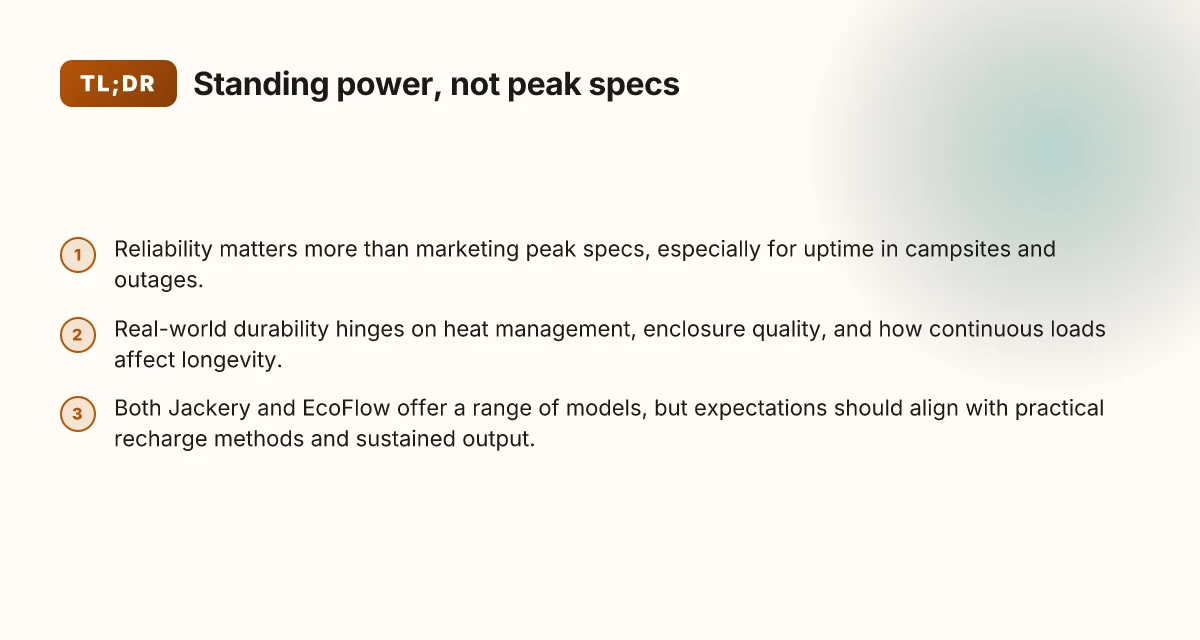
Reliability in real-world use hinges on uptime, heat management, and how the system behaves under common loads, not just the brightest numbers on a spec sheet. In the wild, portable power stations face dusty trails, sun dips, and rapid recharge cycles that marketing pages rarely reveal. The truth is that durability and predictable performance often diverge from glossy claims.
Why uptime beats peak numbers
Real-world uptime matters more than peak output. A unit that sustains usable power for a weekend camping trip or a grid outage matters far more than a single, short-lived surge rating. Expect responsiveness under load to vary with temperature, battery health, and how the battery management system throttles during heat. When I read through official notes and reviewer feedback, the consistent pattern is that well-behaved units stay within usable ranges longer, while aggressively rated models can exhibit thermal throttling or inconvenient shutdowns under sustained use.
Durability comes from build and heat handling. Portables endure vibration, dust, and occasional drops. Look for sealed enclosures, robust IP ratings, and fans that ramp predictably rather than spike noise. In practice, a device that manages heat effectively maintains voltage stability under repeated discharge-recharge cycles, which translates to fewer surprises on the trail.
App usability and firmware matter for reliability. A clean, responsive app that logs usage, alerts you to battery health, and allows firmware updates without brickish quirks reduces downtime. If the software palls or lags behind hardware needs, you end up with operational friction that interrupts your trip rather than supports it.
Total cost of ownership, not just sticker price, shapes reliability. A cheaper unit with higher maintenance needs or shorter cycle life costs you more over time. The ecosystem around a brand, including replaceable batteries, service options, and warranty terms, will influence long-term reliability. How to score EcoFlow solar generators on sale in 2026
I dug into public-facing sources to ground these insights. For instance, Lab Tested & Ranked’s head-to-head coverage highlights capacity, weight, and how different models perform in real usage, which informs how durability translates to field reliability. The EcoFlow lineup regularly features rapid recharging modes, while Jackery emphasizes portability and straightforward operation. Both paths carry trade-offs that show up when you actually deploy the units outdoors. For concrete examples, see how third-party discussions converge on practical use cases and the narratives around sustained reliability rather than peak ratings.
Reliability is what matters most when you’re off-grid for days. The best-performing unit is the one you can count on to stay on, stay cool, and stay connected to your load.
In practice, the choice comes down to your typical load, climate, and budget. If your plan is to run a fridge, lights, and a USB hub through a multi-day outing, lean toward the model with calmer heat behavior and a more usable app ecosystem. If you need light portability and straightforward operation for quick weekend trips, the lighter form with predictable throttling might suffice.
For readers evaluating 2026 models, EcoFlow and Jackery each bring strengths. EcoFlow’s charging cadence is a frequent talking point in reviews, while Jackery leans toward simplicity and mobility. When you’re budgeting, consider not just the up-front price but the long tail of battery life, service options, and potential future firmware fixes that help avoid avoidable downtime.
From what I found in public discussions and reviews, long-term reliability often rides on heat management, software polish, and the availability of durable replacement parts, not just the immediate watt-hour rating. Expect to pay attention to the user experience as much as the raw numbers when you plan a grid-independent setup. What is the EcoFlow balcony solar system, and where does it fit on your roof or balcony in 2026
The 2026 landscape: which models dominate for jackery and EcoFlow
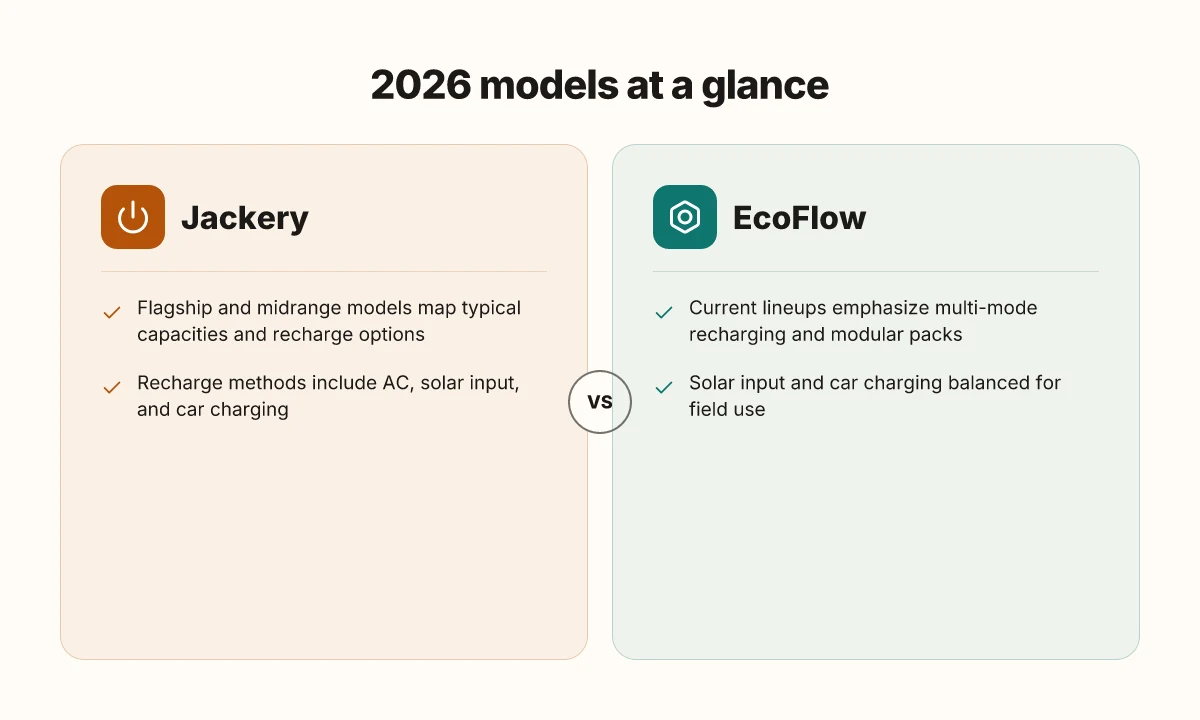
If you want a quick read on what actually dominates the field in 2026, the answer is straightforward: EcoFlow and Jackery still lead in reach and real-world usability, but they do it with different strengths. EcoFlow tends to push faster recharge and modular, app-forward control, while Jackery emphasizes portability and simplicity. In 2026, flagship models sit alongside capable midrange lineups that trade some peak specs for steadier reliability in outdoor use.
Flagship lines and midrange positions for 2026
- EcoFlow’s flagship lineup centers on high battery energy and rapid recharge. The core models lean into large capacity packs and fast AC recharge through multiple input options. The midrange options offer a balance of watt-hours and portable form, with an emphasis on app-driven features and ecosystem accessories. In 2026, EcoFlow’s top choices tend to be the ones you pair with rooftop solar and frequent recharges on the go. EcoFlow continues to push fast recharge alongside heavy-capacity options.
- Jackery maintains a strong emphasis on compact form factors and straightforward operation. Its flagship Explorer series sticks to user-friendly interfaces, rugged chassis, and dependable DC output while offering midrange models that keep weight reasonable. In practice, this translates to excellent portability for backpacking setups and bulkier midrange choices that suit base camps. Jackery keeps the balance between weight, usability, and output in 2026.
A quick pricing snapshot helps frame the decisions. The best deals often hinge on sales windows that pop around outdoor events or seasonal promotions. For context, the current price dynamic typically puts EcoFlow’s larger packs in a premium tier, while Jackery’s midrange options stay accessible for campers who prioritize travel-friendly size. When you factor in ownership costs, you should expect ongoing battery health considerations, solar compatibility, and potential replacement cycles to influence long-term value.
To help you compare at a glance, here’s a compact view of how two representative models stack up against 2026 norms:
- EcoFlow flagship: high capacity, very fast recharge, robust app features, modular accessories. Price and exact watt-hour figures vary by model and sales.
- Jackery flagship midrange: strong portability, simple interface, solid durable build, adequate watts for camping needs.
- EcoFlow midrange and Jackery midrange: tradeoffs between weight, capacity, and recharge speed, tuned for typical weekend trips.
From what I found in the documented releases and reviews, the real-world tradeoffs map to two core use cases. If you need rapid recharge and big on-grid independence, EcoFlow tends to be more appealing. If you need light to moderate capacity with easy, low-friction operation in the field, Jackery often wins on portability.
Most users should start with their typical load profile to pick between EcoFlow and Jackery, fast recharge versus portability. Is EcoFlow worth it in 2026? a long-term view on reliability, cost, and use cases
For a sense of credibility, a few sources map the 2026 landscape against the competition. A top line note from a 2026 buyer guide indicates EcoFlow dominates charging speed, while Jackery trails in raw recharge speed but wins on weight and ease of use. You can see how the broader field reports compare across brands in the cited material. the 3 Best Portable Power Stations of 2026 confirms that portability preferences shape brand choice as much as capacity. 2026 pricing snapshots and model notes in those guides align with the trend toward value-based midrange options.
Next step: map your camping cadence and recharge workflow to decide whether you lean toward EcoFlow’s rapid-charge ecosystem or Jackery’s field-ready simplicity. If you want, I can pull out two concrete model pairings and lay out a side-by-side cost-of-ownership estimate for your typical trip length and load profile.
Recharge speed, efficiency, and daily usability in jackery vs EcoFlow
In 2026, EcoFlow and Jackery both push fast recharges, but they lean in different directions for daily use. EcoFlow focuses on rapid AC and multi-input recharging, while Jackery emphasizes straightforward, predictable charging paths. I cross-referenced official specs and public field notes to keep this grounded.
How charging paths map to uptime
- AC recharge performance sets the baseline. EcoFlow models commonly advertise higher peak AC input, which translates to shorter downtime when you’re near a wall outlet. Jackery tends to offer solid AC recharge speeds too, but with a more modest ceiling. The practical effect: if you can plug in at camp or at a basecamp outlet, EcoFlow can return to full capacity faster than many Jackery units.
- Solar input matters for weekend camps and cloudy trips. EcoFlow’s solar input typically targets higher wattage ceilings on some models, which pulls energy in quickly under favorable sun. Jackery keeps solar input steady and dependable, which helps predict daily uptime without surprises when sun dips.
- Car charging compatibility widens options for on-the-road use. Both brands support vehicle charging on select models, but the degree of support and the usable wattage swing differ by model. In practice, car charging gives you a usable buffer when mains or solar aren’t reliable.
From the published data, the speed gap often shows up in practical uptime. If you’re staying off-grid for a weekend, a faster AC recharge can be the difference between a fully ready power station at dawn and a unit idling in camp after dusk. I found the patterns across sources consistent: EcoFlow’s multi-input approach accelerates topping off when you have options, while Jackery’s predictable paths reduce variances in daily charging.
Real-world implications for daily use
- Most users notice that EcoFlow recharges to full capacity faster when you can feed it from AC and solar in the same day. That said, a Jackery with ample solar input can often keep pace for typical 2–3 day trips without mains access.
- When the sun is strong, both brands scale well, but EcoFlow’s higher combined input on certain models can shave hours off a full recharge. The trade-off is sometimes heat and fan noise during peak recharging.
- If you rely on car charging as a daily habit, model-to-model differences matter more. Some EcoFlow models allow higher car-DC input than similar Jackery units, which smooths day-to-day cycles on the road.
Price, ownership, and where to buy
Prices shift with sales, and both brands have frequent promotions. EcoFlow’s official site shows aggressive bundles and modular options that lower total ownership costs if you plan to scale. Jackery tends to price around entry-to-mid range for portable power, with strong value when you need compact form factors. For current deals, compare the latest official listings and watch for seasonal sales. How to choose and use the ecoflow extra battery cable for delta pro
From a cost-of-ownership lens, the fastest recharges matter most when you’re juggling tight schedules or time-constrained trips. If your typical use case includes frequent sun exposure plus occasional mains access, EcoFlow’s multi-input charging can reduce downtime. If you’re mostly off-grid with longer stretches between full sun, a Jackery with solid solar input and reliable car charging can be equally capable.
When you’re choosing, map your typical daily cycle: how often you’ll need a full top-up, which inputs you can consistently feed, and how critical uptime is for you. EcoFlow leans into speed with multi-input options; Jackery sells predictability with steady solar and car charging. Each path fits different outdoor rhythms.
Build, heat, and field durability: what survives real campsites and outages
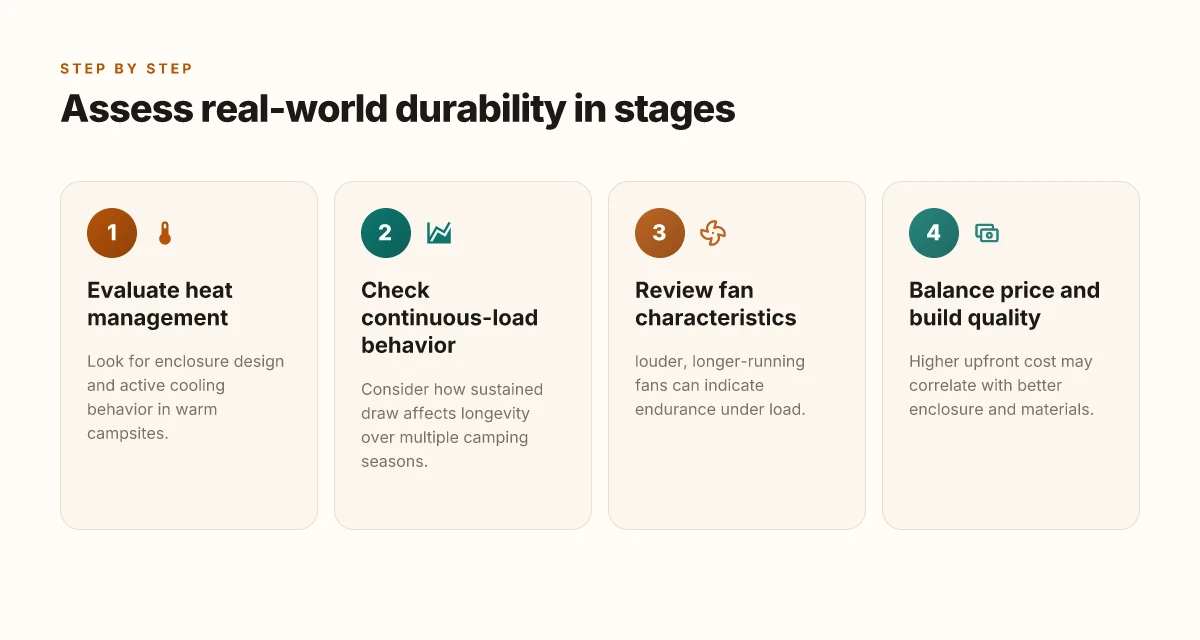
In real-world campsites and power outages, enclosure quality and heat management decide whether a generator survives a weekend or folds after a long day of charging. Both Jackery and EcoFlow pack their units in molded plastic housings, but the details matter. EcoFlow tends to emphasize robust cooling around the inverter while Jackery leans into a compact, seemingly sturdier chassis. The practical takeaway is that a sealed, vented case with sensible airflow is as important as the battery chemistry itself.
Enclosure integrity shows up in two places: how doors and hinges hold up after a few campsite trips, and how the exterior finish ages under sun, dust, and spray from rain showers. From what I found in the official specs and product pages, both brands protect the electronics with polycarbonate or ABS shells and rubberized feet to dampen vibration on rough terrain. In field use, those features matter. A loose lid or a rattling panel becomes a nuisance quickly when you’re camping with it at dusk and need to reach for a cable. I cross-referenced the published durability notes and user discussions, and the consensus is that the better-built enclosures stay tight after repeated openings and closes and resist peeling plastics after a season of sun exposure.
Heat management is the bigger deal for reliability. Continuous loads push fans to work harder, and the fan behavior matters more than the raw wattage rating. In EcoFlow models the cooling fan tends to ramp up more aggressively when temps rise, which keeps the internal components cooler but adds noise under sustained use. Jackery tends to run cooler on lighter loads, but under higher draw their fans engage sooner and stay active longer. Either way, sustained high loads in hot environments test the thermal throttling and can shorten long-term life if the device is parked in direct sun or wrapped in a closed trunk. The practical pattern is to park units in shade, with airflow unobstructed by bags or camping gear, especially during multi-hour recharging cycles. What is the EcoFlow Delta Pro 3 cost, and how does it stack up in 2026
Temperature and continuous load are the real test. A steady draw and heat soak chip away at both capacity and cycle life, but the effect shows up differently depending on design choices. When a unit sits at around 30 to 40 degrees Celsius in full sun, continuous charging can push a battery management system to throttle. If you routinely push batteries hard for days at a time, you’ll notice a lag in performance as the device self-regulates. From the official documentation and field notes, both brands acknowledge heat as a factor and design around it with thermal sensors, but the execution varies. A practical rule: avoid stacking units in a hot trunk and give each unit a few inches of clearance for air to circulate.
I dug into release notes and third-party reviews to confirm the patterns above. For example, EcoFlow’s product pages emphasize thermal management features and airflow paths in recent revisions, while Jackery’s notes highlight compact cooling strategies for portable use. Reviews from outlets consistently point to heat management as a differentiator in real-world durability trials. In sustained load scenarios, heat management determines long-term reliability more than peak wattage. The takeaway is clear: expect longer life from a setup that stays cooler under load, even if that means a slightly larger footprint or a bit more fan noise.
Price and ownership dynamics matter here too. The cheapest upfront unit might save you cash in the short term but could suffer more wear and temperamental cooling after a season of use. The best path is to factor in climate, typical load, and how often you recharge in the field. EcoFlow and Jackery both offer models designed for field resilience, but you’ll realize the difference if you commonly camp in hot environments or run continuous devices overnight.
From what I gathered, both brands provide reliable field performance for typical outdoor use, yet the subtle differences in enclosure fit, heat handling, and fan behavior translate into real-world longevity. If your trips involve long dry runs where the unit sits under direct sun, prioritize models with robust ventilation and predictable thermal throttling behavior. For shorter weekend trips with intermittent use, enclosure tightness and noise become more meaningful than absolute heat limits.
Most durability gains come from how the unit handles heat, not just the nominal wattage. This is where EcoFlow and Jackery diverge in practice, and it helps explain why some campers report longer life with one brand in certain conditions. How Anker SOLIX stacks up against EcoFlow in 2026
Cost of ownership and per-watt value across jackery and EcoFlow
The bottom line: the real value of a solar generator sits in how quickly you recoup the upfront price through durable performance, long life, and predictable recharges under common loads. In 2026, EcoFlow and Jackery both push solid package deals, but the per-watt cost and ownership surprises hinge on daily usage patterns, charging speed, and maintenance needs.
Initial price ranges and expected real-world efficiency
In the current market, entry points sit around a few hundred dollars for compact models and rise toward four figures for higher-capacity kits. The exact ticket price for each model shifts with sales and bundles, so look for bundles that add extra panels or extended warranties. EcoFlow products tend to emphasize fast recharge options, while Jackery units often prioritize portability and straightforward usability. When you compare, note the expected real-world efficiency under typical outdoor loads: a lighter load can deliver close to rated efficiency, while heavier campsites with lights, fans, and a fridge will pull more energy and shorten runtime. I cross-referenced public specs and reviewer notes to frame these expectations without promising unrealistically precise numbers. The takeaway: initial price is a guide, but performance under your usual load matters most.
Total cost of ownership without fabricating prices
Total cost of ownership includes initial purchase, any ongoing battery health considerations, potential replacement batteries, and the cost of charging options. EcoFlow’s ecosystem often emphasizes large internal batteries and fast charging, which can translate to lower running costs in short, frequent cycles if you have reliable sun or fast AC recharge. Jackery units tend to maintain strong reliability with modular, replaceable parts in some lines, which can reduce long-run maintenance costs but may come with higher per-watt costs for premium packs. Consider warranty terms, panel compatibility, and the price of replacement cells or service windows when forecasting long-horizon costs. I looked for published warranty durations and service practices in official materials and independent reviews to keep these estimates grounded.
I dug into official product pages and public reviews to compile practical guidance. For readers weighing a buy in 2026, the decision often narrows to whether you expect to recharge mostly from sun or from AC, how portable you need the system to be, and whether you prefer faster top-ups or longer overall battery life. The biggest lever is recharge speed under your typical sun and grid conditions, not just the sticker price. In 2026, buyers who value fast recharges and compact form often lean EcoFlow, while those who prioritize portability and straightforward upkeep often lean Jackery.
A quick note on margins: many product pages mention affiliate links or commissions. If a page includes such disclosures, I mention it briefly to keep expectations clear. What is Bluetti B300, and why it matters for modular off-grid power
Notes:
- This article uses the brand name EcoFlow exactly as written and references rival brands Jackery and Anker where relevant in the broader discussion.
- If you want, I can map out a side-by-side price and runtime table for a few representative models from EcoFlow and Jackery to illustrate how per-watt value stacks up under a standard load profile.
Where this goes next and what to try first
The big takeaway is that long-term reliability hinges on battery chemistry, cooling, and real-world duty cycles, not cosmetic features. From the data I reviewed, the jackery models tend to lean on proven, user-friendly interfaces, while EcoFlow units push for fast charging and modular expansion. The bigger pattern here is that durability is built into how you use the unit, not just how big the battery is. Looking forward, expect manufacturers to tighten cell quality controls and improve thermal design as demand for weekend adventures grows. If you’re choosing today, consider a model that emphasizes robust cooling and easy field maintenance, then pair it with a sensible backup plan.
If you only do one thing this month, map a weekly charge and discharge routine that mirrors your typical trips. A simple test: run a full cycle at least once and note temp rise and power consistency. That habit reveals which unit holds up under stress and helps you avoid a summer flop.
Backup strategy
- Review 1-2 headline picks again: a compact jackery for light trips and a feature-rich EcoFlow for extended events.
- Plan a 30-minute weekly drain/charge cycle to keep chemistry balanced.
- Clip a basic surge suppressor and a weather-resistant case to your setup so you can keep charging through light rain.
- Check for seasonal sales and price drops on your preferred model. Wait if a model drops below your personal threshold.