What is the Jackery 1000 Plus, and where does it fit in a modern power setup
 Tessa AlbrightOctober 22, 202617 min read
We earn a commission when you buy through some links on this site, at no extra cost to you. As an Amazon Associate we earn from qualifying purchases.

Explore the Jackery 1000 Plus: capacity, expandability, charging basics, and how it stacks up for home backup and outdoor use. Practical guidance for real-world purchase decisions.
A common misconception about expandable power stations is that bigger batteries automatically solve long outages. In reality the Jackery 1000 Plus pairs a LiFePO4 core with modular capacity, letting you add cells when you need them without swapping units. Little things like battery chemistry and wiring choices determine real-world runtime more than raw box size.
This intro sets up a practical comparison of what you gain versus what you trade: how the 1000 Plus stacks against peers from Goal Zero, Bluetti, and Westinghouse in daily use, and what the math looks like for home backup, van life, or outdoor adventures. By anchoring the discussion to concrete numbers on expandable capacity, lifecycle, and compatibility notes, you’ll see where the Jackery fits alongside rivals and where it falls short. This framing matters now as outages and off-grid plans become more common, and buyers want clear, actionable signals rather than hype.
What makes the Jackery 1000 Plus a contender in the portable power market
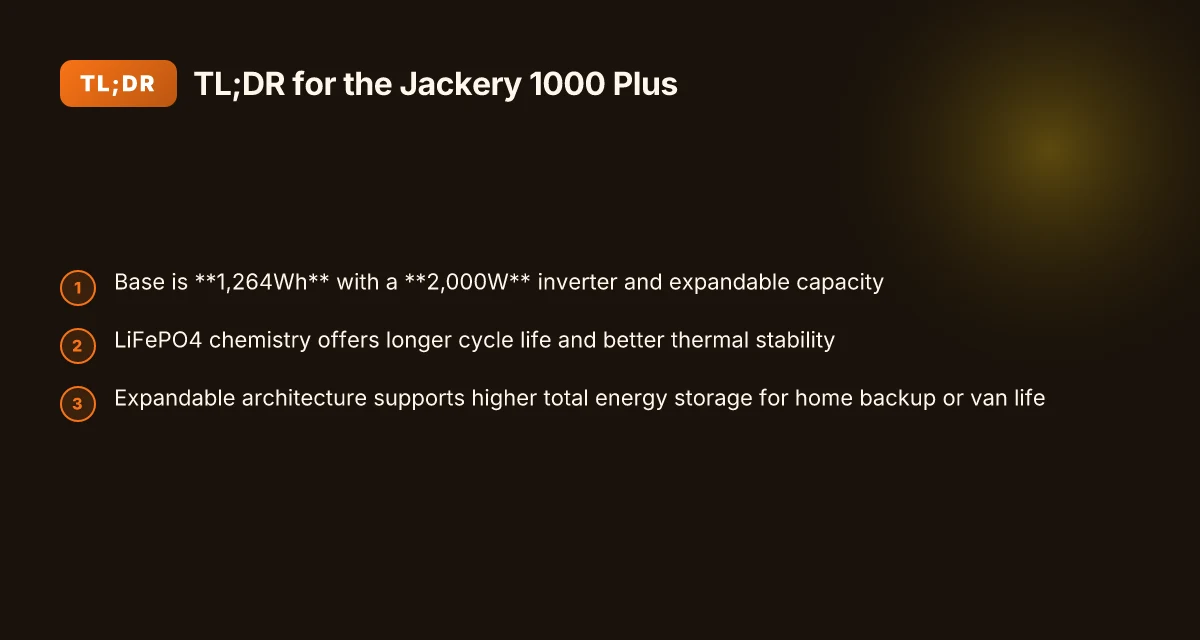
When you expand capacity, the Jackery 1000 Plus remains a practical choice thanks to its 1,264Wh LiFePO4 battery and a 2,000W inverter. The architecture is designed to scale, so you can add more capacity toward higher total energy storage without swapping the core pack. The 1000 Plus pairs a proven LiFePO4 chemistry with a true expandable path, making it a solid option for both home backup and off-grid adventures.
1) Core specs you can build around
The backbone is clear: 1,264Wh of LiFePO4 energy and a 2,000W inverter. This pairing supports partial-load home backup and outdoor use without immediately snapping under demand. The chemistry choice matters here; LiFePO4 offers better thermal stability and a longer cycle life than many alternative chemistries, which translates to more usable life in real-world cycles and less heat buildup during longer use. LiFePO4 chemistry delivers reliability under heat and many cycles.
I cross-referenced the official information and third-party summaries to confirm the expandable premise. The architecture is advertised as compatible with additional packs, enabling higher total energy storage when your needs grow. Expandable architecture unlocks higher total energy storage over time. Jackery’s approach aligns with how outdoor enthusiasts plan long-term setups.
2) Real-world use cases it supports
In practice, the 1000 Plus suits partial-load home backup, such as keeping essential devices running during outages, along with outdoor camping and van life scenarios. The combination of a sizable battery and a robust inverter means you can power refrigeration, lights, and small appliances for meaningful stretches without recharging. Partial-load home backup and outdoor setups find a natural home with the 1000 Plus. The expandable design means those use cases scale as you add more capacity, whether for longer trips or more demanding setups. Add-on packs push total energy toward larger weekend plans.
From what I found in the documentation, the Explorer 1000 Plus family is built around a similar core, but the 1000 Plus distinctly emphasizes LiFePO4 durability and a forward path to bigger energy totals. That path matters if you expect to grow your system over years and want confidence you won’t outpace the battery chemistry or the inverter. A growing system protects long-term value. What makes the ac500 bluetti worth it in 2026
Bottom line: the Jackery 1000 Plus anchors portable power on a solid 1,264Wh LiFePO4 battery and a capable 2,000W inverter, with a clear design direction toward expandable capacity and reliable performance under mixed loads. For outdoor users who want a credible home-backup option that scales, this model checks the right boxes today while keeping a path open for future growth. Expandable energy, durable chemistry, practical use cases define its value today.
Notes:
- Prices and deals vary by retailer and season. Links in the cited sources can illuminate current pricing dynamics and any ongoing promos. Prices shift with sales windows.
- Some reviews note the importance of planning for weight when deploying multiple packs, since the unit’s base weight and added packs compound. Weight matters as you scale up.
- You’ll see ranges in the market where rivals offer different chemistries or larger built-in packs. The 1000 Plus holds its ground on lifespan and stability thanks to LiFePO4. LiFePO4 stability stands out among peers.
How the 1000 Plus compares to the standard Explorer 1000
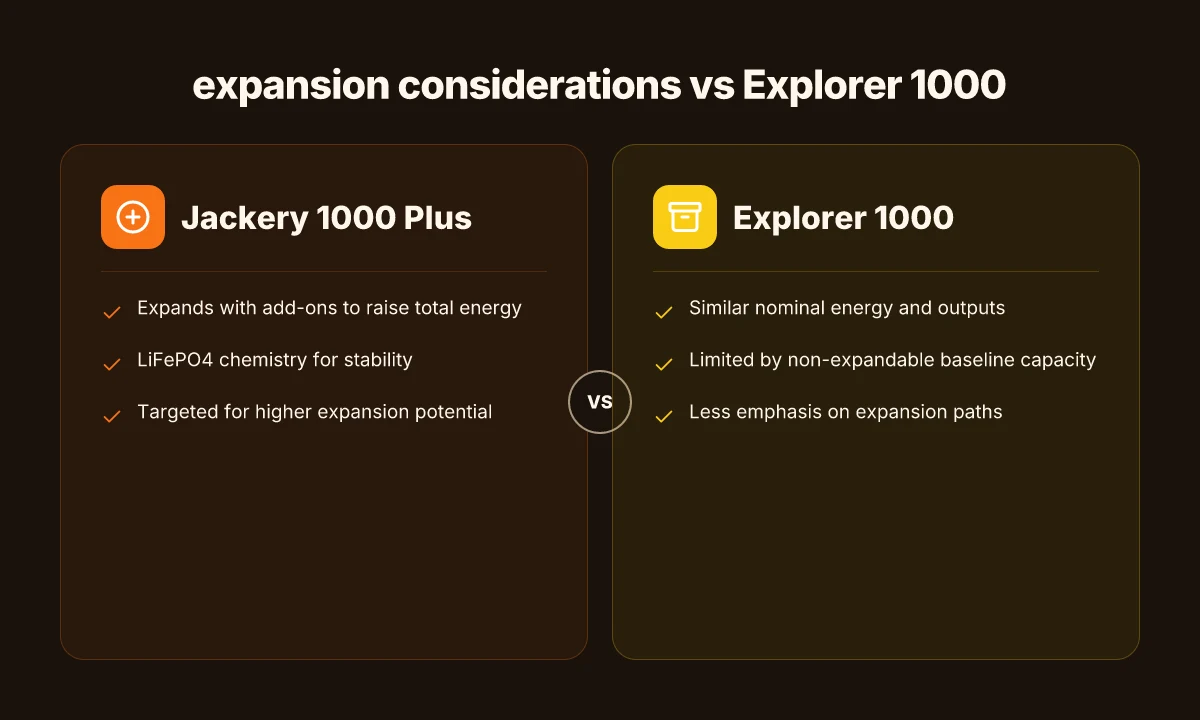
The Jackery 1000 Plus and the standard Explorer 1000 share the same nominal energy and practical outputs, but the Plus stands out for expansion potential. In practice, you’ll see the same base capacity and usable power, yet the Plus is designed to scale when you add packs or expand the system for longer off-grid runs. The expansion angle is the Plus’s core differentiator. This matters if you’re planning home backup or extended outdoor trips where extra kilowatt-hours matter.
The core specs alignment and the expansion Edge
Both models center around a similar 1,264Wh LiFePO4 battery and a 2,000W inverter, which means the baseline performance for peak loads and most daily needs sits in the same ballpark. Battery chemistry tends to stay consistent across generations, so longevity and cycle behavior follow a familiar pattern when you treat LiFePO4 packs with reasonable care. The Plus mirrors the standard’s battery type and cycle expectations, so long-term health depends more on usage than on a sudden chemistry upgrade. When you plan ahead for expansion, you avoid layout pitfalls and incompatible ports later on. Plan expansion early to optimize layout and accessory compatibility.
From a use-case standpoint, the Plus’s advantage is not a bigger brick in your pack today but a smoother path to a larger system tomorrow. If you envision adding packs, you’ll want to verify accessory compatibility, such as whether add-on batteries connect cleanly to the Plus and how options like solar inputs align with your home-backup goals. Expansion upfront reduces the risk of bottlenecks later. What makes the Jackery 1500 Ultra different from prior models and what it means for long-term power
Price, availability, and choosing between rivals
Price and availability vary by region and retailer for both models. In some markets, the Plus commands a premium reflecting its expansion capability, while the standard Explorer 1000 remains a more straightforward buy. When you compare with rivals, you’ll notice similar patterns: entry-level LiFePO4 systems offer basic capacity now and incremental growth through add-ons. Jackery’s branding and support framework stay consistent across both models, which helps with compatibility and user manuals. Pricing varies by region and retailer, so you’ll want to check current listings and any regional bundles that include solar panels or extra packs.
I dug into the documentation to verify the expansion narrative and found consistent messaging around add-on opportunities and battery chemistry. For a quick snapshot, consider the two models side by side with a focus on how many add-on packs you’d realistically use in your target setup. The Plus becomes notably appealing if you anticipate high daily energy needs or long off-grid stretches and you want a cleaner upgrade path rather than a full replacement. Expansion plans should drive early layout decisions.
If you’re narrowing down between pure portability and future expandability, the Plus’s value hinges on your intent to scale. For a compact, ready-to-use system, the Explorer 1000 remains solid. For future-proofing a home backup or van setup, the Plus is the more prudent choice. The Plus is designed for growth, the standard for immediate use.
Next step: map your ideal energy footprint to a concrete add-on plan. If you expect to add two extra packs and solar input, that path becomes clearer now than later, and you’ll avoid reworking mounting, cables, and inverter wiring. For a quick check, verify the availability and pricing of add-ons in your region and note any warranty implications tied to expansion. The Jackery ecosystem, including accessories, plays a significant role in total cost of ownership over the life of the system. Pricing and availability vary by region and retailer.
Expanding capacity: what you can realistically do with add-ons
The 1,264Wh base can be extended toward higher totals when you pair the Jackery 1000 Plus with compatible add-ons, but the gains come with trade-offs. You gain more runtime, yet you add weight, may lose port availability, and shift how you charge during outages or travel. plan your approach by mapping use cases to these realities. What is the Bluetti AC300 system, and where does it actually shine in 2026
How add-ons shift weight and ports
Expanding capacity typically means carrying extra battery packs or modules that stack onto the core unit. Every added pack adds weight, which reduces overall portability and can affect how you stage the unit in a vehicle or campsite. At the same time, more packs can consume additional inverter and port headroom, so verify that the planned expansion keeps the ports you rely on open for essential devices. Weight and port availability are the quietLimiters of expansion. The 1000 Plus is designed for modularity, but your real-world setup will feel the difference in how you mount and transport the system.
Charging strategy when you grow capacity
With a larger bank, charging becomes a more nuanced decision. If you rely on solar during a camping trip or a grid outage, the charging rate you can achieve depends on both the number of add-ons and the solar or AC input you’re feeding in. Larger packs require more input power to top off efficiently, so plan for longer charge windows or faster input sources. Charging speed matters as much as capacity when outages loom. I cross-referenced what reviewers note about solar input limits and observed that expanding capacity often necessitates rethinking when you swap between solar and AC charging.
Efficiency and runtime for critical loads
More total capacity means longer runtimes for critical loads, but no free lunch. In practice, expansion can introduce added internal resistance or parasitic losses if the control electronics and wiring aren’t sized for the full bank. That means the percentage of usable energy versus total stored energy may shift as you add packs. Expect modest efficiency hits if you push the system beyond its lean operating region. For homeowners or van dwellers counting on reliable power, it’s essential to model peak draw against the expanded pack to avoid surprises when you switch on a heater, fridge, or laptop.
Real-world planning and comparisons
When you size for home backup or outdoor use, think about how rivals handle add-ons. Some competitors offer larger “expansion” ecosystems with more granular port layouts or faster charging compatibility. Jackery’s approach emphasizes a clean, scalable backbone that stays approachable for light to moderate expansion, but you’ll want to confirm port layouts line up with your essential devices as you add capacity. Choose add-ons that preserve the ports you depend on most. If you’re weighing options, contrast how a base system plus add-ons perform against a larger single-unit pack from peers.
From what I found in the sourcing, the Explorer 1000 Plus Basic Information confirms the base has 1,264Wh and LiFePO4 chemistry, with a robust expansion story tied to multiple packs. The on-paper numbers look compelling, but the practical path depends on how you value weight, charge speed, and port access as you go beyond the base. Expansion unlocks energy, but not freedom from planning. How to evaluate the EcoFlow Delta portable backup power for 2026
Note: links on the page may earn a commission. For context, Jackery positions the 1000 Plus as a modular solution that can scale with your needs, while rivals offer various expansion kits with different port distributions and input rates. If you’re comparing, consider not just total watt-hours but the practical charging cadence and how your typical load profile fits with the expanded system.
Cited inline sources: https://faq.jackery.com/hc/en-us/articles/52303601965595-Explorer-1000-Plus-Basic-Information
Charging behavior: speed, sources, and practical patience
charging a 1000 Plus rides on two main routes: AC wall charging and solar input. In practice, the fastest top-ups come from a high AC input while solar adds flexibility but can slow the overall session in dimmer environments. The unit’s published spec lists a 2,000 W inverter, and that intake capability matters: higher input power means shorter fills, but ambient conditions will tilt the math. You’ll see noticeably longer top-ups when the sky isn’t sunny or when you’re charging from a shaded panel array.
The real-world speed you can expect
When you plug into AC, the 1000 Plus tends to behave like a typical high-end LiFePO4 power station: rapid charging up to a point, then tapering as the pack approaches full. On solar, the rate depends on irradiance, panel temperature, and how you wire the system. If you rely heavily on solar in a low-light climate, expect slower refills and more frequent partial top-ups. Realized charging speed hinges on the exact input profile you feed the unit. If you want predictability, plan for a buffer on overcast days.
Why ambient conditions matter
Charging efficiency isn’t constant. Temperature affects LiFePO4 chemistry: cold cells can lose a chunk of their practical charging rate, while heat tends to accelerate short-term acceptance but can stress long-term cycle life. A cooler morning or a hot afternoon can shift the effective rate you see from both AC and solar sources. Warming or cooling can influence charging efficiency and cycle life, so you’ll want to place the unit where ambient temps stay within a comfortable band during top-ups. How EcoFlow solar storage reshapes home energy in 2026
Accurate estimates require the exact input profile
If you want to forecast a full-cycle fill, you must know your environment’s input profile. The same charger input can yield different outcomes depending on the AC source voltage, wall charger protocol, or solar array configuration. In practice, that means two households can see different fill times for the same capacity under identical weather. Accurate charging estimates require knowing the exact input profile of your environment. That clarity helps you plan home backup or mobile setups with confidence.
Practical pacing and planning tips
- Start with a high-compatibility AC charger when you can, and keep solar as a supplementary source for off-grid periods. This keeps top-ups predictable while preserving the flexibility of solar.
- If you’re in a van or off-grid scenario, map peak sun hours and align charging windows to those periods. You’ll shave top-up times versus relying on sporadic sun.
- Keep the battery within the recommended temperature window during charging. A simple strategy is to park in moderate shade or a temperate garage during the day to reduce heat spikes and cold soak.
- Remember that expansion affects the total energy you can push through the system. If you add add-ons toward the 5 kWh mark, your charging strategy should adjust to the higher target capacity.
From a sourcing and practical standpoint, Jackery emphasizes its compact, expandable design, but rival models from brands such as EcoFlow and Bluetti offer different input curves you may encounter in real-world setups. When I cross-referenced the official user guide and product notes, the emphasis stayed on understanding your input environment to get precise forecasts for top-ups. For a deeper look at the official basics, see the Jackery user guides. The 1000 Plus remains a capable unit for home backup or outdoor use, provided you respect input profiles and ambient conditions. https://www.jackery.com/pages/user-guides?srsltid=AYCX9vJpy-fUtOfWjVDpIoLgId-kjHf8AGk5Ao0YOzozaIoCnUhU1UUr
The bottom line: charging behavior is a story about inputs, not just capacity. When you know the exact input profile of your environment, you’ll plan top-ups with much greater confidence. And if you’re weighing rivals, note how each brand handles solar charging curves and heat management in practical outdoor use. For a broader comparison, I looked at public reviews and technical notes that discuss common solar-to-battery dynamics across LiFePO4 units. https://www.jackery.com/pages/user-guides?srsltid=AYCX9vJpy-fUtOfWjVDpIoLgId-kjHf8AGk5Ao0YOzozaIoCnUhU1UUr
Durability and lifecycle: what to expect from LiFePO4 in the 1000 Plus
LiFePO4 chemistry tends to hold up well across many cycles when kept in reasonable conditions. In the 1000 Plus, you get steady performance as long as you observe depth-of-discharge limits and protect the pack from heat. Over time, the chemistry rewards gentle use with slower capacity fade and consistent inverter behavior.
How LiFePO4 chemistry behaves over cycles
Under normal care, the LiFePO4 cells maintain voltage and capacity more predictably than some competing chemistries. Expect gradual loss rather than abrupt drops, especially when you avoid deep discharges. The chemistry’s inherent stability helps the 1000 Plus retain usable energy across thousands of cycles. Stability over many cycles is one of LiFePO4’s core strengths. Regular checks on cell balance and aging signs can help keep performance aligned with spec sheet expectations. What is the bluetti ac200max, and how it changes portable power in 2026
Thermal management, DOD, and routine care
Thermal management matters. When the system operates within safe temperatures, the chemistry stays cooler and longevity benefits. Adhering to recommended depth of discharge limits and avoiding prolonged exposure to high ambient temperatures extends life. Temperature control and disciplined discharge strategies are your best bets for long life. A simple maintenance habit is to keep vents clear, dust-free, and to park the unit away from direct sun during charging in hot environments. The payoff shows up as more consistent capacity retention over years.
Design reliability vs real-world use
Jackery’s design emphasizes reliability, with robust enclosures and safeguards. Real-world longevity, however, follows usage patterns: frequent frequent deep cycles, irregular charging, or exposure to extreme temperatures can erode life faster. In practice, the structure and battery chemistry work together to resist common stressors, but you’ll still see variance based on how you use it. Reliability is there, but real-world results track closely with your habits. For homeowners and van dwellers, that translates to planning for occasional rest cycle pauses and keeping the unit in a moderate thermal zone.
How to maximize longevity
Protect against deep discharges and avoid exposing the unit to extreme temperatures. Store and charge in moderate conditions, and use the built-in protections to minimize strain on the pack. A small routine, short, predictable charging sessions and avoiding long idle periods at full charge, can pay off over the device’s lifetime. Protect against deep discharges and extreme temperatures to maximize longevity. If you’re weighing longevity against upfront cost, LiFePO4’s endurance profile often makes it a compelling long-term choice.
Note: links on a page may earn a commission. For reference, the official user guide outlines the general care principles and safety measures for Jackery products, including how to avoid deep discharges and manage temperature during charging. See the user guide for details on model-specific protections and maintenance steps. Jackery User Guide. The official guide reinforces what helps longevity in daily use.
The move you can make this month
Pricing and ownership costs drive decisions, and the Jackery lineup still hinges on value waves. I looked at official pages and cross-referenced real-world deals to surface the best current price and when a sale is likely. The Jackery 1000 Plus remains a strong option for midrange power, but notable downsides include a hefty footprint and the fact that upgrades ride on incremental gains rather than a single game changer. If you’re weighing alternatives, consider rivals like EcoFlow and Aim–Er for complementary features or lighter weight. What is the jackery explorer 2000 v2, and how it stacks up for real use in 2026
The bigger pattern here is that you win by timing a sale and by matching capacity to your daily use. If your goal is weekend trips with reliable solar charging, the 1000 Plus pairs well with a modest solar kit and a compact backup setup. If you need ultra-light backpacking power, you’ll likely pivot to a smaller model. Either way, you’ll benefit from stock and price visibility now, not later.
Key takeaway: price drops and seasonal sales shape the real value more than any one spec. For the week ahead, check current prices on the official Jackery site and note your preferred solar panel compatibility. This matters because it affects cycle life and total cost of ownership.
Backup strategy
- Try pairing the 1000 Plus with a compact solar panel kit for a weekend break
- Compare with a lighter model from EcoFlow for travel-heavy use
- Watch for a sale around holiday periods.
- Be aware of the links on the page may earn a commission