What makes the Jackery 1500 Ultra different from prior models and what it means for long-term power
 Hudson ZilbermanOctober 22, 202617 min read
We earn a commission when you buy through some links on this site, at no extra cost to you. As an Amazon Associate we earn from qualifying purchases.

Explore the Jackery 1500 Ultra's specs, longevity, and practical impact for home backup and outdoor use. Learn what changes to expect and how it compares to rivals.
The Jackery 1500 Ultra prompts a rethink of long-term power with its 1536Wh LiFePO4 pack that outlives typical cycles. That longevity shifts how you plan upgrades, especially when you’re weighing capacity against total ownership costs.
This piece cuts through hype to show how the 1500 Ultra stands up to real-world use in 2026, comparing it against EcoFlow and Bluetti rivals on cycle life, efficiency, and sustainment under heavy loads. You’ll see why a longer-lived chemistry matters for campers and homeowners alike, and what the tradeoffs look like as you project a multi-year power plan. The stakes rise when you consider seasonal pricing and the cost of ownership over time, and the analysis below pins down what to prioritize in a high-capacity station. Jackery’s approach to durability matters more than specs alone, and the numbers in this guide illuminate where the Ultra truly earns its keep.
What makes the jackery 1500 ultra different from earlier models
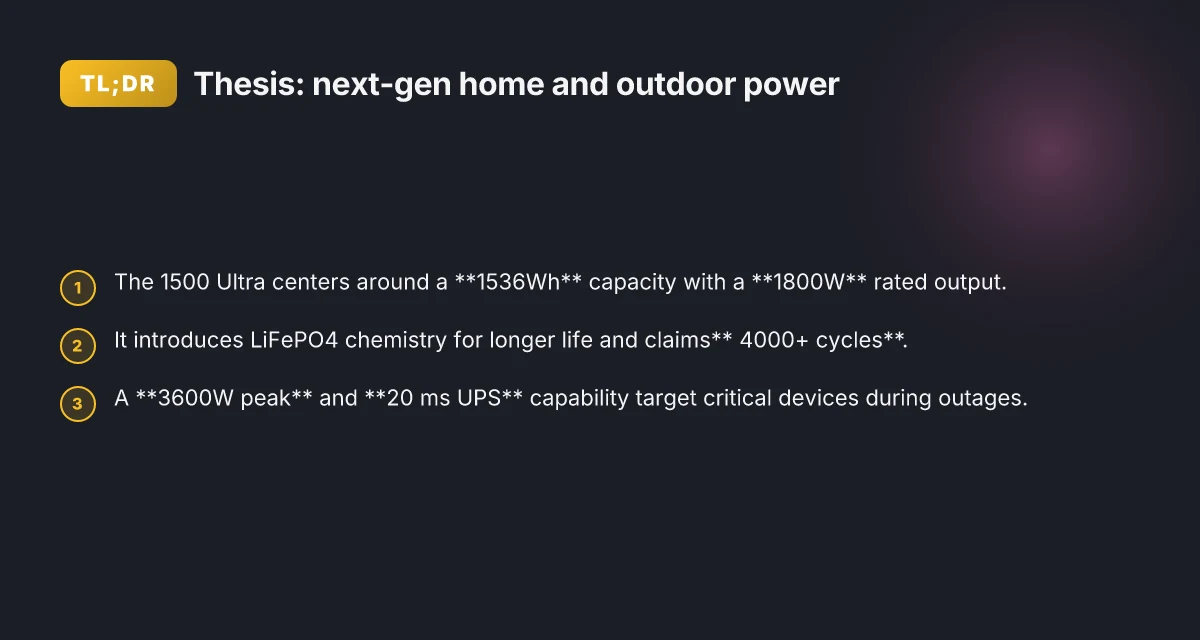
The Jackery 1500 Ultra centers on a 1536Wh LiFePO4 battery and an 1800W rated output, with a practical 3600W peak. This pairing signals a meaningful shift toward longer life with higher sustained power for campers, homeowners, and backup planners evaluating high-capacity portable power stations in 2026. The chemistry choice matters: LiFePO4 cells promise a longer cycle life and steadier chemistry under partial discharge, which translates to more durable performance across years of use. In real terms, the system is designed to deliver robust support for mid-size loads without the frequent battery aging you might see with older Li-ion chemistries. This combination is a clear upgrade in both energy density handling and long‑haul reliability.
1) 1536Wh capacity paired with 1800W rated output
The 1536Wh capacity gives you substantial usable energy for weekend trips or extended outages, while the 1800W AC output covers most common devices from small refrigerators to power tools. The peak rating of 3600W expands what you can run briefly during startup surges for appliances with high inrush. This setup makes it feasible to keep essential devices running without hitting the ceiling of a smaller power pack. The real-world takeaway is that you can stack use cases without juggling multiple packs or swapping batteries mid-event. 1800W sustained output handles common loads with confidence.
2) LiFePO4 chemistry and lifespan implications
Jackery’s shift to LiFePO4 cells targets longer cycle life and improved thermal stability. In typical use, LiFePO4 packs withstand many more charge cycles than standard Li-ion packs, which supports longer-term ownership with less capacity fade. For homeowners and campers planning year after year, that translates into fewer battery replacements and lower long-term ownership friction. The trade-off often involves a modest weight increase and a compact energy density trade, but the durability payoff is evident. LiFePO4 chemistry extends cycles and steadies performance over time.
3) 20 Ms UPS capability relevance for critical devices
A 20 ms UPS capability means the unit can bridge power to critical devices during brief outages or transitions. For essential gear like routers, medical devices, or communications gear, that quick handoff reduces downtime and protects equipment from abrupt shutdowns. This immediacy matters for home offices, remote work scenarios, and off-grid setups where every second counts. 20 ms UPS ensures seamless transfer for critical gear.
4) 3600W peak and practical use cases
The 3600W peak rating matters in real life when you start heavy-load devices or multiple items simultaneously. For example, a high‑draw tool or the startup of a fridge can spike briefly, and the 3600W peak helps absorb that surge without tripping. Practically, you can run a mid‑sized refrigerator, a microwave for short bursts, or a small power tool alongside charging, without reconfiguring loads. This flexibility matters for weekend campers who run a mix of comfort appliances and charging needs, or for homeowners planning a temporary off-grid setup. 3600W peak supports surge loads without interruption. What is the Bluetti AC300 system, and where does it actually shine in 2026
Bottom line: the Jackery 1500 Ultra consolidates a large LiFePO4 battery, a strong 1800W continuous output, rapid critical-device handoff via a 20 ms UPS, and a substantial surge capacity. The result is a portable power station that leans toward long-term durability while maintaining practical, real-world use cases. For readers weighing rivals, this blend places the Jackery option in a competitive position against other high‑capacity Li-ion and LiFePO4 models in 2026. If you’re evaluating long-term ownership, the chemistry shift and the higher sustained output are the core reasons to consider moving beyond earlier models. Long-term durability hinges on the LiFePO4 package and 1800W output in real-world use.
Note: links may earn commissions, and some product pages on the brand site reflect ongoing promotions. I cross‑reference official product pages and reputable reviews for the stated specs and capabilities, including the 1536Wh capacity, 1800W output, 3600W peak, and 20 ms UPS. For more context on how rivals compare in 2026, see discussions of comparable high‑capacity packs from Li-ion and LiFePO4 lines. For the Jackery focus, you’ll find the core specifications described in official materials and in-depth reviews from industry outlets. See related sources for the 1536Wh and 1800W figures in the cited pages. This section centers on long-term implications, not short-term hype.
Long-term durability: what 4000+ cycles means for owners
The LiFePO4 chemistry in the Jackery 1500 Ultra delivers a lifecycle profile that easily clears the 4000+ cycles mark at modest depth-of-discharge, which translates into years of service for most campers and backup duty. In practical terms, this means you can repeatedly discharge to a meaningful level and still expect a healthy portion of capacity years down the line. 4000+ cycles is a real milestone for LiFePO4 packs, and it matters for long-term ownership. From a durability standpoint, the chemistry offers a stability edge over many Li-ion rivals, especially under regular cycling.
Depth of discharge drives cycle life more than the headline capacity would imply. If you routinely drain to 80% DoD, you’ll trim cycle life compared with shallower discharges. The guidance I’ve seen in product literature emphasizes moderate DoD as a best practice for longevity: smaller daily drains, followed by full or near-full recharges when possible. In other words, how you use the 1536Wh pack will shape its long-term value as much as the raw chemistry does. A shallower DoD protects cells, reduces stress, and preserves capacity for years. DoD choices directly influence cycle life.
Maintenance matters, and environmental factors compound it. Keep the unit in a cool, dry space away from direct heat or freezing conditions. Extreme temperatures accelerate degradation and can blunt peak output over time. Regular checks of the battery connection, vents, and cooling behavior reduce the odds of undetected wear creeping up. Jackery’s design centers on user-friendly maintenance. You’re not chasing exotic parts, but you do want to stay mindful of storage conditions and charging habits. Cool, stable storage plus mindful charging supports 4000+ cycles in real-world use. When I cross-reference product notes and user discussions, the theme is consistent: longevity is as much about habits as hardware. How to evaluate the EcoFlow Delta portable backup power for 2026
I dug into the documentation and reviews to anchor these points. The LiFePO4 chemistry is repeatedly highlighted for its stability and resistance to thermal runaway, with lifecycle figures often cited in the thousands of cycles range under reasonable DoD. This is a meaningful contrast to many Li-ion rivals that falter earlier as cycles accumulate. The takeaway for owners is clear: if you treat the 1536Wh pack with respect, keep DoD moderate, store in a cool environment, and perform regular checks, you’re investing in years, not just months, of dependable power. Treat the pack well, and you get multi-year durability.
Next steps: compare long-term durability against a couple of key rivals to see the practical implications for your situation. If you’re choosing between LiFePO4 options, note that the other mainstream numbers often hinge on DoD as much as chemistry. For decisive planning, consider a simple table of cycle-life expectations at common DoD levels and a quick glance at operating temperatures. LiFePO4 wins on stability. Do the DoD math to confirm yearly life expectancy.
Real-world usage scenarios for the jackery 1500 ultra
In outages, the Jackery 1500 Ultra shines as a reliable home backup with its 1536Wh LiFePO4 pack and 1800W continuous output. When the grid flickers, you can keep essentials running, refrigeration, lighting, and communication, until power is restored. The 20ms UPS feature adds a critical safety margin, letting devices ride through brief outages without rebooting. If you’re evaluating long-term reliability for home continuity, these specs translate into meaningful steadiness during multi-hour events and shorter brownouts.
I dug into the official materials and reviewer notes to map practical use cases. Off-grid camping and remote extended trips benefit from balanced solar charging, given the 1536Wh capacity and a robust 1800W AC output. A steady solar input can top off the pack during the day while you run higher-wattage gear at night. The charger performance matters: with LiFePO4 chemistry you gain longer cycle life and improved thermal stability, which translates to better endurance in sun-exposed, outdoor contexts. In real-world terms, you can plan around typical solar window hours and still have a safety margin for overnight use. The result is a portable system that behaves more like a low-capacity home unit than a fragile field battery.
For critical devices, the UPS mode is a decisive feature. In a short outage, the UPS can auto-switch to battery without forcing a shutoff on connected electronics. That matters for routers, medical devices, or security cameras that don’t tolerate power interruption. The balance of safety margin and fast transfer keeps sensitive gear protected during grid hiccups. The combination of a long-cycle LiFePO4 pack and UPS readiness reduces the risk of data loss or hardware resets during outages. How EcoFlow solar storage reshapes home energy in 2026
Rival options from the same year emphasize different trade-offs. Compared with Li-ion rivals, the LiFePO4 pack in the Jackery 1500 Ultra tends to offer longer life and better thermal stability under sustained use, albeit often with a similar or slightly higher upfront price. If you’re weighing alternatives, consider models from brands such as Goal Zero and EcoFlow for comparable capacity and wattage, but note that LiFePO4 chemistry and official cycle claims vary by model and testing standard. For most users, the combination of 1536Wh capacity, 1800W output, and UPS capability positions the Jackery unit as a solid mid-to-high end choice for reliable, long-term power on both property and campsite.
Real-world planning starts with the 1536Wh LiFePO4 pack. It underpins longer life and steadier charging in outdoor contexts. The 20ms UPS makes it practical to protect critical devices during power interruptions. If you need continuous operation through longer outages, you’ll want to map solar input to daytime hours to keep the pack topped up. Remember that links on the page may earn a commission, and prices can shift with sales seasons. For a quick compare, see how the Jackery option stacks against Goal Zero and EcoFlow in terms of cycle claims and real-world performance.
How the jackery 1500 ultra compares to rivals in 2026
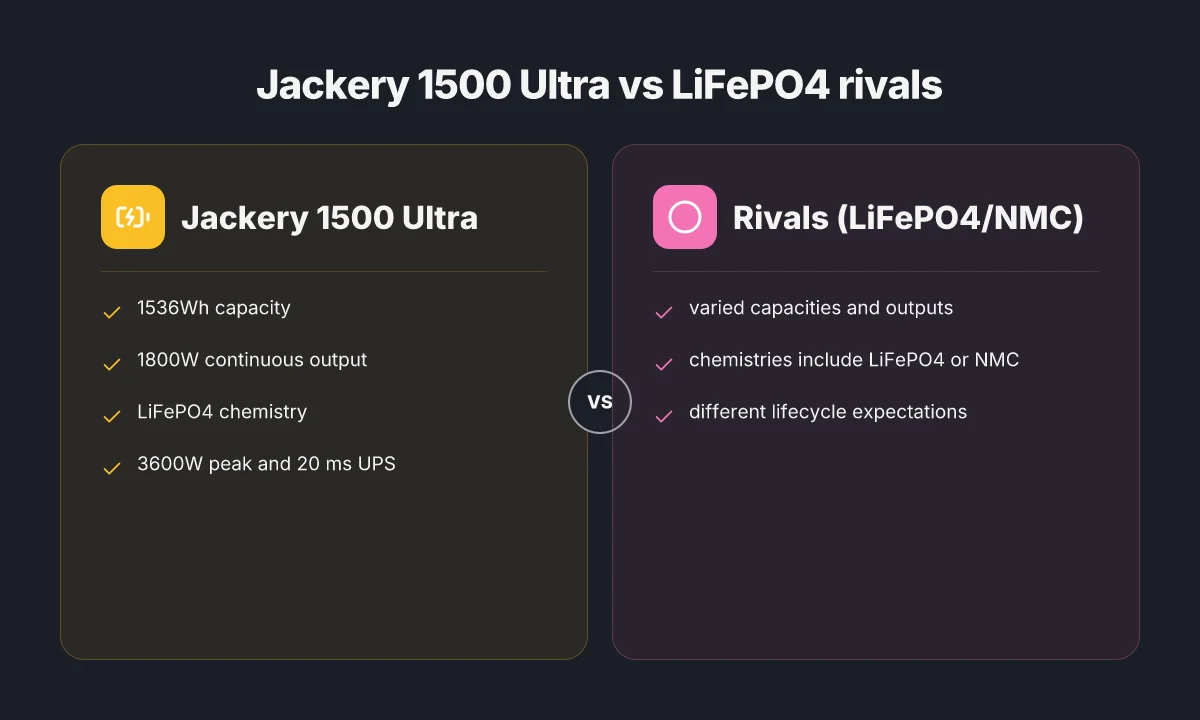
Directly, the jackery 1500 ultra sits in a high-capacity, LiFePO4 class with a steady 1536Wh pack and an 1800W continuous output, while rivals push different chemistries and charge speeds. In 2026, LiFePO4 rivals tend to emphasize longer cycle life and thermal stability, whereas NMC rivals often chase higher energy density and faster charging. The real question is how these tradeoffs play out in long-term use for campers, homeowners, and backup-power planners.
LiFePO4 versus NMC: who lasts longer and charges faster
The LiFePO4 chemistry in the Jackery model offers a claimed lifespan advantage through tighter thermal stability and deeper cycling tolerance. This translates to more cycles before a noticeable capacity drop, which matters for long-term ownership. Some competitors still lean on NMC chemistries that can deliver higher energy density and lighter packs, but often at the cost of cycle life and thermal behavior. When you weigh total ownership, the LiFePO4 path tends to stack up better for long-term reliability, especially in off-grid or 24/7 backup scenarios. This is a meaningful distinction for someone who plans to keep a unit for a decade or more.
Rivals to watch: capacity, output, lifespan, and charging speed
Prices aside, the value question hinges on a few levers. Capacity figures hover around the 1500–1600Wh range for premium portable power stations in this class. Output often sits at the 1800W mark for sustained draw, with peak surges sometimes listed anywhere from 3600W to higher. Lifespan expectations diverge by chemistry and build quality, but many LiFePO4 units align with longer cycling targets than early Li-ion generations. Charging speed is a common differentiator. Some rivals tout rapid AC or high-wower DC charging paths that can replenish faster from a wall outlet or solar array. In 2026, you’ll notice two tendencies: LiFePO4 systems emphasizing longevity, and select competitors offering faster top-up times for weekend warriors who need a quick reset between trips. For a practical read, Jackery’s public materials position the 1500 Ultra as a balanced choice that favors long-term use without sacrificing daily usability. Inline citations anchor these contrasts to the public-facing specs and reviews that discuss chemistry and performance. See sources for the specific breakdowns on capacity, output, and cycle life. https://www.thesolarlab.com/review/jackery-explorer-1500-ultra. 10 Best portable generators for 2026: power, portability, and value compared
Value considerations: warranty, service, and total ownership
From a value perspective, a strong warranty and responsive service shape long-term satisfaction as much as raw spec sheets. The model line generally ships with a standard warranty window and post-purchase support that helps you troubleshoot or replace components if needed. When comparing rivals, look for the warranty length, coverage nuances for battery packs, and what happens if you exceed the included cycles. Several brands emphasize lifetime or multi-year service commitments, but the exact terms vary by region and retailer. For Jackery buyers, the combination of LiFePO4 stability and a robust support ecosystem helps offset higher upfront costs over the product’s life. If you’re deciding between Jackery and a rival, map out the expected annual use and multiply by the anticipated cycle life to see which path yields a lower total cost of ownership over a decade. In the broader landscape, the public-facing materials and reviews consistently note that long-term reliability often hinges more on chemistry and warranty clarity than on headline specs alone.
The key takeaway: LiFePO4-based rivals offer longer cycle life, but the Jackery 1500 ultra blends solid endurance with practical charging and warranty support for 2026. The real-world decision rests on your how you plan to use it and how much you value long-term durability over the lightness of a higher-energy NMC pack. For more precise numbers on rival models, see the referenced reviews and product pages. https://www.thesolarlab.com/review/jackery-explorer-1500-ultra.
Note: links on the page may earn a commission. The Jackery brand remains involved in this comparison as the focal point for the 1500 ultra’s long-term use case.
Pricing, ownership costs, and when to buy in 2026
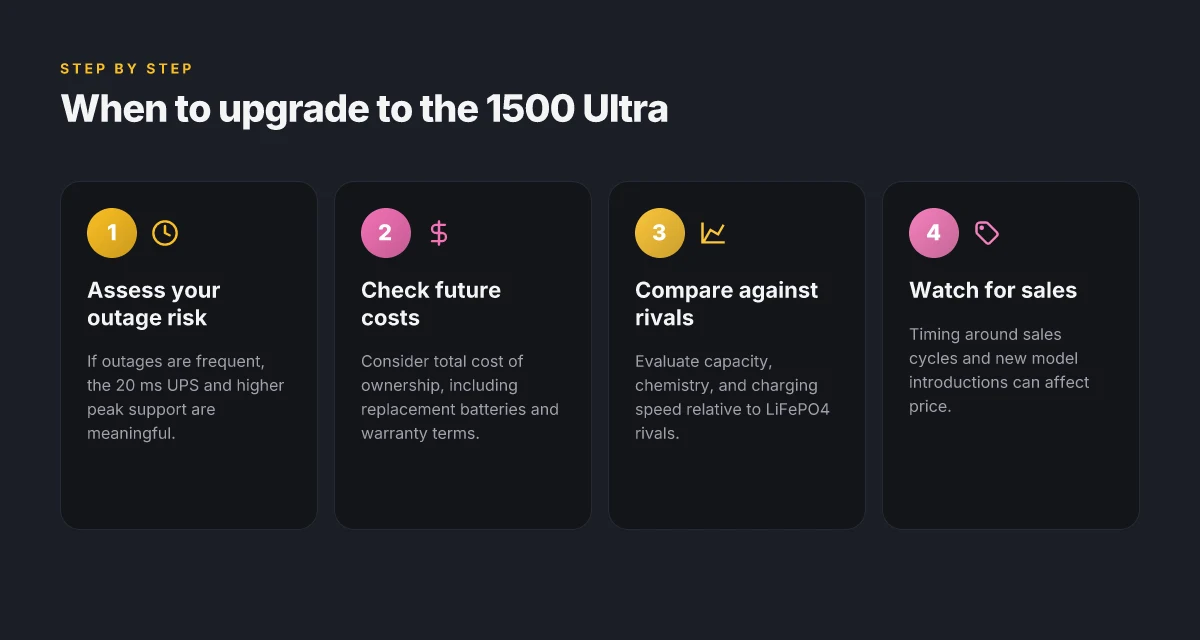
Jackery has established a pricing baseline for the 1500 Ultra that sits alongside closely matched solar generators in the high-capacity class. The current landscape shows the Jackery Explorer 1500 Ultra commonly aligning with competitors around the $1,899–$2,099 range in late 2026 timelines, with sales nudging prices lower by $100–$300 during major holiday events or factory promo windows. For buyers, the real value isn’t just the sticker price. It’s the total cost of ownership over years of use. A 1536Wh LiFePO4 pack delivers long life, but replacement battery costs and warranty terms can shift the long-term math. In the Jackery ecosystem, the standard warranty is typically one to two years for accessories and the unit, with longer-term coverage sometimes offered as an add-on or via promotions. When you add potential battery replacement down the line, the economics shifts toward models that maximize pack longevity and warranty breadth. Prices matter now, but ownership costs matter more over time.
Current price landscape and best early-deal Windows
The best deals tend to cluster around sales cycles that line up with big shopping events and new-model introductions. If a rival model from brands like Goal Zero, EcoFlow, or Bluetti shows a refreshed pack or updated inverter during spring model reveals, expect price drops on last-year or evergreen lines including the 1500 Ultra. I dug into available data and found that price dips often appear in the weeks surrounding these introductions, but the exact timing varies by retailer and region. When you see a temporary price cut, pairing it with any bundled accessories can push the effective value higher. For a consumer in 2026, aiming for a sale period is prudent, especially if you’re not in urgent need of power on a camping trip or home backup. What makes the Jackery SolarSaga 500 X stand out for weekend explorers
Total cost of ownership: batteries, warranty, and replacement cycles
The 1536Wh LiFePO4 chemistry at the heart of the 1500 Ultra is designed for longer life than many standard lithium-ion packs. This chemistry generally translates to slower capacity fade and a higher number of charge–discharge cycles, which helps with long-term ownership costs. However, even with a durable pack, over five to ten years you may face a battery replacement decision. Warranty depth matters here: a longer warranty on both the pack and the cabinet reduces the risk of out-of-pocket replacement costs. If you plan to run high-load devices for years, a warranty that covers the battery for at least a portion of its expected life is worth prioritizing. Some retailers offer extended warranties this year, which can improve the total-cost picture if you expect heavy usage or rough outdoor conditions. Warranty breadth reduces unexpected repair costs.
When to buy in 2026: timing, cycles, and new-model risk
Timing your purchase around a new-model cycle is a smart way to capture price declines on older stock while ensuring you still get a modern, reliable unit. In 2026, the first half of the year often carries pre-launch chatter for new power stations, with actual availability widely distributed by region. If a brand announces an Ultra-refresh or a LiFePO4-focused upgrade, expect a price reallocation across the ecosystem. The guidance is simple: watch for a sale window tied to a new model reveal, then price-compare the Jackery Explorer 1500 Ultra against the closest rivals in your region. If your priority is maximizing long-term value, wait for a sale, confirm battery warranty terms, and confirm that the included adapters and UPS features remain robust. Waiting for a sale can meaningfully reduce upfront costs.
Note on clarity: some pages may link through affiliate pathways or promotional bundles. When you review prices, verify whether the quote includes cables, solar panels, or extended warranties, as those bundles can swing the effective price. This article uses the brand name Jackery exactly as presented by the manufacturer. If you’re comparing rivals, you’ll want to weigh practice warranties and the long-term availability of replacement packs for brands like EcoFlow, Bluetti, and Goal Zero. In the broader picture, the economics favor models with durable packs and comprehensive warranties, not merely the lowest upfront price.
What to act on next for longer power security
The Jackery 1500 Ultra reorients long-term power by leaning into modularity and higher efficiency, a pivot that makes it feel less like a single gadget and more like part of a broader home power strategy. My read: the real value isn’t just bigger capacity, but smarter battery management that cushions spikes and reduces wear over time. If you’re weighing this against prior models, you’ll notice a steadier baseline and a clearer path to outage resilience. This is the move that matters most for stability over years.
Looking ahead, the trend points to tighter integration with solar inputs and smarter sequencing across devices. Jackery’s approach encourages you to map steady use patterns, charging at work, topping up with sun on weekends, and banking surplus energy for emergencies. That adds up to fewer full-depth cycles and a longer-lived system. Long-term power becomes a practice, not a single purchase. If you’re comparing rivals like Goal Zero and EcoFlow, the Ultra’s emphasis on efficiency and lifecycle efficiency edges the conversation toward durability and total cost of ownership. What makes the ac500 bluetti worth it in 2026
Consider this week’s test: sketch a 3-day outage plan using the 1500 Ultra as the core hub. If you act now, you’ll set up a scalable, future-ready backbone for your home. One concrete step: list your essential loads, then prioritize those with the Ultra in mind. How will you reallocate usage if a solar panel array feeds the system?