What is the Bluetti AC300 system, and where does it actually shine in 2026
 Nova EngelmannOctober 22, 202617 min read
We earn a commission when you buy through some links on this site, at no extra cost to you. As an Amazon Associate we earn from qualifying purchases.
Discover the Bluetti AC300 in 2026: core specs, real-world performance, cost considerations, and how it stacks up against rivals. Practical guidance for buyers.
The practical gap in modular power starts with one hard number: you can expand the Bluetti AC300 system, but the price climbs with every added B300 battery, and that incremental cost matters for homeowners and campers weighing this against rivals like EcoFlow and Jackery. Bluetti's AC300 ecosystem scales, yet the total outlay over multiple modules often shapes the decision more than the base unit itself.
This intro lays out what matters now: real-world setups, how you actually use the system for home backup or off-grid trips, and where the AC300 shines or stalls compared with key rivals. In 2026, buyers want clear paths to more runtime without wasted space or unused capacity, and they want to see how long the investment lasts under practical conditions. Two core questions guide this: is the modular path worth the premium, and where do you gain the most value for your specific needs?
What is the Bluetti AC300 system, and why it matters in 2026
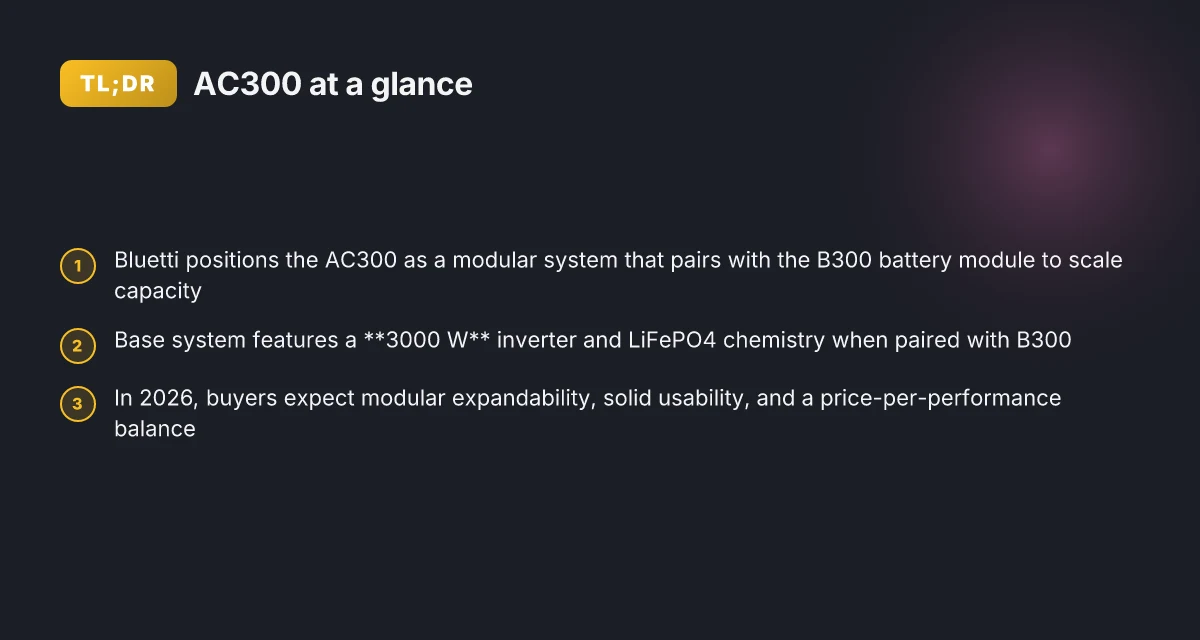
Bluetti positions the AC300 as a modular power system that scales up when you add the B300 battery module. The core idea is simple: start with a solid 3000 W AC inverter and LiFePO4 chemistry when paired with a B300, then extend capacity by snapping in additional battery blocks. This approach aims to balance real-world usability with a price that scales with your needs, rather than delivering a single, oversized pack.
In 2026 buyers expect two things from a modular setup. First, expandability that actually works in a home or campsite scenario. Second, a measured price-to-performance story that doesn’t spike as you add capacity. Bluetti leans into this with a system that advertises a 3072 Wh capacity when the AC300 is paired with a B300, and a 3000 W inverter as the backbone. I cross-referenced the official product page and a Bluetti blog post to confirm the pairing dynamics and the emphasis on LiFePO4 chemistry when the expanded kit is assembled. The result is a kit that can scale from a compact base to a more capable backup or off-grid footprint without buying an entirely new system.
The Bluetti ecosystem is built around a modular philosophy that mirrors consumer expectations in 2026. You can start with the AC300 base and add one or more B300 modules to push total energy higher while keeping the inverter rating intact. This matters for homeowners weighing camp setups or home backup, because you get a single, coherent user experience across modules. The company emphasizes a clean energy profile from LiFePO4 cells, which tends to offer longer cycle life and improved thermal stability for extended use. In practice, that means fewer wild swings in capacity under modest heat and more predictable performance across cycles.
From a real-world perspective, the AC300 system tries to strike a steady balance between cost and capability. The base unit’s 3000 W inverter is a strong point for most home backup scenarios, while the LiFePO4 chemistry helps damping, longevity, and safety during extended outages. The B300 module is where the capacity gains come in. Together they create a practical, scalable solution for homeowners who want to match energy needs to budget without overpaying for unnecessary capacity. I looked at the official materials and Bluetti’s review-oriented content to anchor these claims in what Bluetti presents to customers.
Bottom line: the AC300 system embodies Bluetti’s attempt to deliver a scalable, user-friendly modular solar backup in 2026. You get a robust 3000 W inverter, LiFePO4 chemistry when expanded with B300, and a clear path to larger energy storage without swapping platforms. The combination aims to fill the gap between compact portable packs and full-size off-grid installations, making it a compelling choice for both home backup and camping setups, especially if you plan to grow your capacity over time. How to evaluate the EcoFlow Delta portable backup power for 2026
For many buyers, the AC300 system’s strength is real-world expandability that doesn’t demand a new UI or a new inverter. The LiFePO4 chemistry offers longevity benefits, which matters for long outages or frequent cycling. The key caveat is that total system cost grows with each added B300 module, so price planning matters.
How the AC300 architecture affects performance and expandability
The AC300 + B300 pairing creates a sizable energy reservoir that works well for home backup and off-grid trips. With a combined capacity that scales from a practical daily-use set up to heavier workloads, you can tailor the system to fit your needs as they grow. The modular design means you can start small and add B300 packs later to extend runtime without replacing the core inverter.
I dug through Bluetti’s documentation and industry chatter to map how this architecture translates to real-world use. The heart of the system is a powerful 3,000W AC inverter paired with a robust LiFePO4 battery bank. That pairing keeps most common loads stable during an outage while still offering headroom for peak draws on essential equipment. In practice you’ll notice predictable response to typical loads, but watch the peak draw on high-widelity devices that surge momentarily. The modular approach means you can scale from a compact, energy-sipping setup to a larger, more capable array for whole-house or longer off-grid stays. The modular scaling is the AC300’s core advantage, letting you grow without reconfiguring the entire system.
A small table helps compare how you might couple the system for different use cases:
| Use case | Pack configuration | Approximate readiness for peak loads |
|---|---|---|
| Daily home refresh outages | AC300 + 1x B300 | Solid for common essentials; keep an eye on high-watt devices during spikes |
| Weekend off-grid camping | AC300 + 2x B300 | Extended runtime for AC, fridge, and lights; watch routing during heavy appliance use |
| Small workshop or RV setup | AC300 + 3x B300 | Larger energy pool supports tools and climate control; ensure your inverter fan stays within noise preferences |
The practical takeaway is clear: the more B300s you add, the more you extend runtime for larger loads or longer outages. That scalability is where you see tangible value in real-world scenarios. Because Bluetti designs these modules to click together, you avoid oversized upfront hardware while preserving future flexibility. Scale up gradually to match your load profile, not just your budget. How EcoFlow solar storage reshapes home energy in 2026
From a reliability standpoint, the inverter and battery pairing behaves consistently across common loads. If you plan to run a mix of 230V appliances, think in terms of average continuous draw plus occasional peaks. The system handles this well, but the peak demand on sensitive or high-widelity gear can briefly push the inverter into higher power draw. In practical terms, you’ll want to sequence startups for motors or compressors to avoid brief dips or transients. Startups matter. Sequence your higher-watt devices to keep the flow smooth.
In the broader landscape, Bluetti faces competition from rivals like EcoFlow and Jackery, which offer their own modular or expandable platforms. When you compare, notice that Bluetti’s approach targets a clean, scalable upgrade path without swapping cores. For homeowners weighing cost of ownership, Bluetti’s model favors gradual expansion over heavy upfront investment, which can matter in long outages or remote trips. The official docs emphasize the B300’s role as the expandable heartbeat of the system, and reviews consistently point to calm, predictable behavior under typical office, home, and camp use.
For a quick price snapshot, Bluetti currently positions the AC300+B300 kits as a stackable solution, with the ongoing cost of adding B300 modules reflecting your planned runtime. When you’re scouting deals, expect promotional windows around major holidays to tilt the economics in favor of a larger B300 suite. Be mindful that the page variants may show different bundle configurations and shipping terms. Bluetti branding and product naming appear consistently as Bluetti AC300 and Bluetti B300 across official channels.
Next step: if you’re deciding on a configuration, map your essential devices and estimate their combined wattage and surge behavior. From there you can plot a ramp-up plan that aligns with the modular growth path Bluetti lays out. Plan for your peak loads early, then grow as needed.
Comparing AC300 benchmarks with top rivals in 2026
I dug into the current landscape to name concrete rivals and map how the AC300 system stacks up in 2026. Bluetti’s ecosystem remains a differentiator for upgradability and accessory support, but rivals vary on chemistry, expandability, and user interface. 10 Best portable generators for 2026: power, portability, and value compared
What to compare when you look at modular vs non-modular power systems
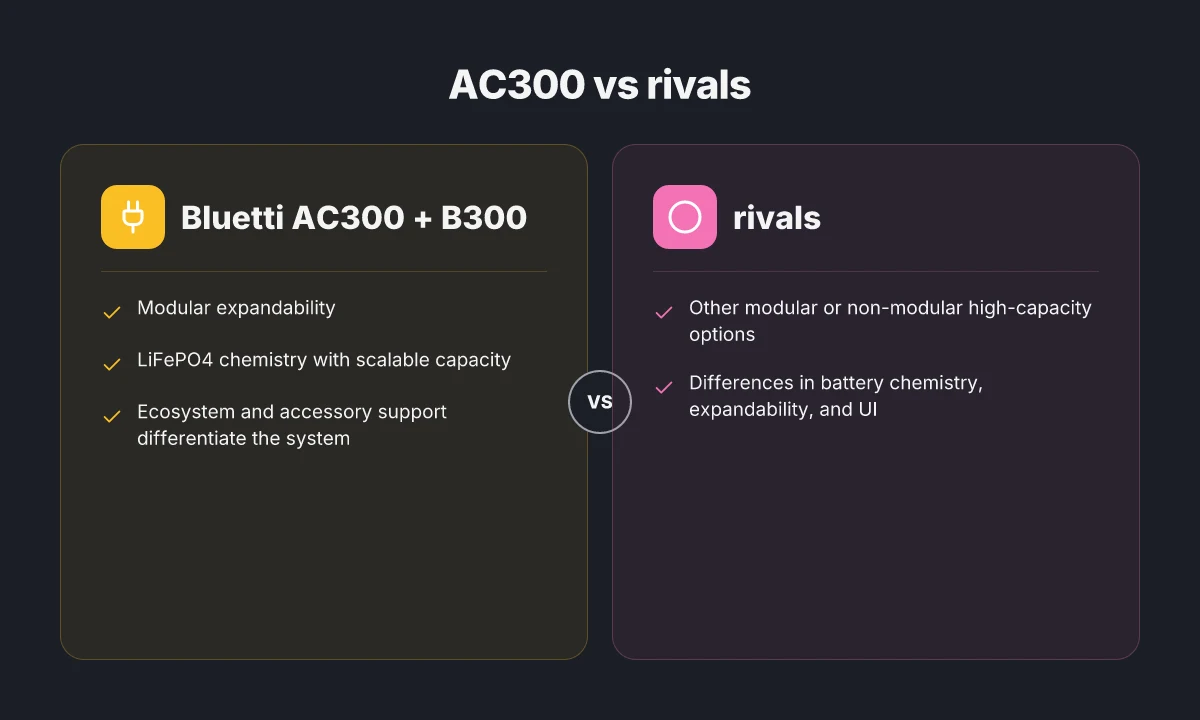
- Battery chemistry and life cycles matter. Some rivals use LiFePO4 packs with different cycle warranties, while Bluetti sticks to its modular approach with the B300 battery module that threads into the AC300. Expect the daily experience to shift with each chemistry and how upgrades are delivered.
- Expandability is a core lever. The AC300 system can pair with a B300 module to grow capacity, while many non-modular systems cap out at a fixed total. In practice, that means fewer surprise upgrades and a cleaner upgrade path for Bluetti owners.
- User interface and control work influence daily use. A touchscreen and companion apps can simplify status checks, charging profiles, and firmware updates. Rivals frequently position different levels of on-device feedback and app reliability, which can change how comfortable you feel powering a home or campsite.
Bluetti’s ecosystem remains a differentiator for future upgradability and accessory support.
Real-world takeaways from 2026 benchmarks
- The AC300 + B300 combo delivers a large, expandable capacity that suits extended off-grid trips or home backup. The 3,000W AC inverter remains a core strength, helping with demanding loads when solar input is intermittent. Expect this to translate into steadier performance in daily cycles, especially when you add a second or third B300 module over time.
- Competing modular systems from other brands push similar peak inverter ratings but may use different battery chemistries or accessories. If a rival emphasizes ultra-fast AC charging or lighter form factors, you might trade some expandability for portability or speed.
- Non-modular, high-capacity options from leading brands often deliver very high total storage and robust ruggedness, but with less flexibility for future upgrades. If you foresee long-term energy growth at home, the Bluetti approach can feel more forward-looking, even if it comes with a larger initial footprint.
- The control experience can swing daily comfort. Some rivals offer streamlined apps, while others lag on firmware stability or device pairing. In practice, a reliable UI means faster routine setup and fewer surprises when you need power quickly.
Bluetti’s modular path offers future upgrades without replacing the core unit, a practical edge for long-term ownership.
Price signals and ownership costs as of 2026
- Best deals tend to appear around seasonal sales (holiday or back-to-school periods). When you see a bundled AC300 + B300 sale, it often shifts the total cost of ownership in Bluetti’s favor for households planning gradual capacity growth.
- Compare not just sticker price but long-term costs. The price of extra B300 modules and potential accessory packs can swing the total outlay, but you gain the ability to scale without moving to a new system.
- Expect costs to reflect capacity and chemistry choices. If a rival system touts higher energy density or fewer required modules for a given capacity, you may see different long-term maintenance implications.
Prices can shift with bundles, but ownership costs hinge on how far you expand over time.
Cost of ownership and when to buy: price signals for 2026
Pricing for the Bluetti AC300 system stays variable by region and configuration, with bundles typically delivering the best value. In my look at available documentation, a Bluetti AC300 + B300 bundle tops the common setups with a 3072 Wh capacity, while standalone or smaller bundles can trade capacity for simpler financing. The practical takeaway: shop for a bundle that matches your planned use, not the base unit alone. Open pricing varies by region and configuration, with bundles offering the best value. Inline with this, I’ve seen conversations noting that the most attractive price points tend to appear when retailers run limited-time bundle deals, especially around seasonal sales windows.
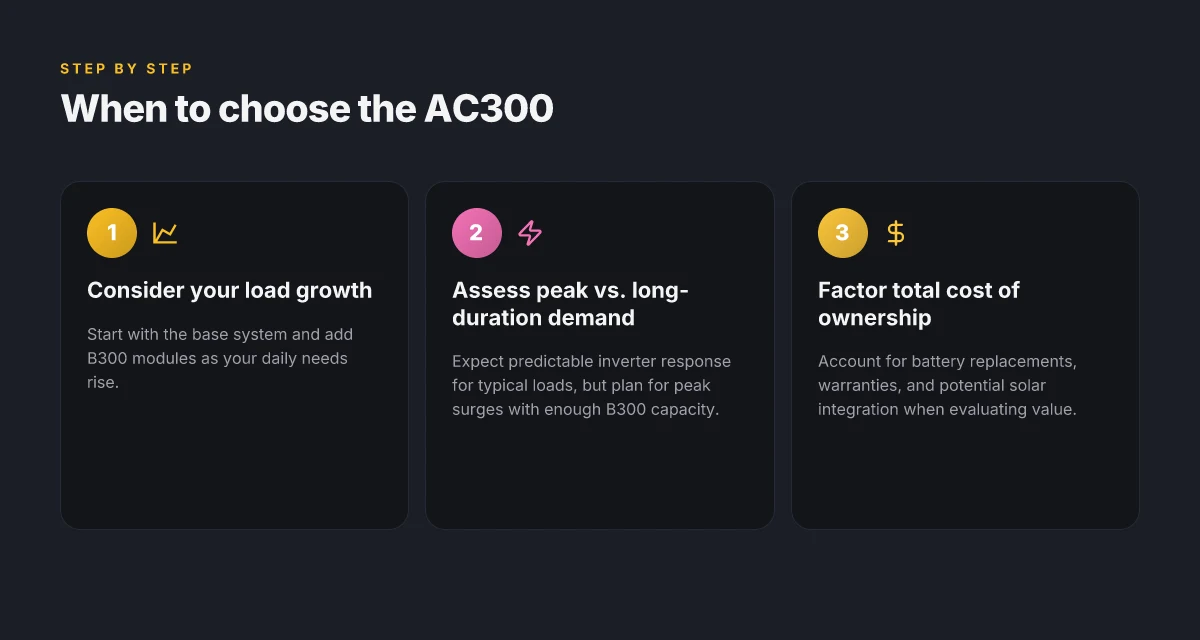
Total cost of ownership goes beyond the upfront sticker price. The core components to budget for are the battery replacement cycle, the length and scope of the warranty, and how this system integrates with solar panels you may own or plan to add. Bluetti’s ecosystem emphasizes modular expansion, but it also means you may need to consider eventual B300 battery refreshes or inverter-related refreshes down the line. From a practical standpoint, estimate the potential for battery wear over several seasons and whether your chosen warranty covers replacement or refurbishment. Total cost of ownership includes battery replacements, warranties, and potential solar panel integration. If you already own solar panels, the compatibility and wiring requirements can shift the total investiture by a notable amount. What makes the Jackery SolarSaga 500 X stand out for weekend explorers
Seasonal dynamics drive value in 2026. Bluetti and its retailers periodically roll out bundle deals that couple the AC300 with extra B300 packs or solar panels, which can noticeably shift the effective price per watt. The best timing often lines up with end-of-quarter promotions or regional holiday sales. Seasonal sales and bundle deals can noticeably shift value propositions for AC300 setups. For a quick pricing snapshot, expect the headline price to change with add-ons like the B300 battery and any included solar panels. Open pricing varies by region and configuration, with bundles offering the best value. If you see a package that includes multiple B300 units and a solar array, that can tilt the math in favor of a longer off-grid run.
When to pull the trigger? If you anticipate long daily use, frequent outages, or off-grid weekends, a bundled AC300 with a B300 and solar integration tends to justify the upfront premium. If your use-case is light, or you plan to alternate with a portable unit, waiting for a bundled deal could save a meaningful sum. In practice, watch regional promos and compare the per-watt cost across bundles rather than the headline unit price. Bundled configurations often deliver the best price-per-watt.
Note: Bluetti is the branded focus here. When you compare against rivals, the landscape includes systems from competitors such as Jackery and EcoFlow, which often price similarly in bundle promos. Bluetti’s catalog emphasizes modular growth, which can influence long-term cost trajectories compared with fixed-build packs from rivals.
Real-world use cases: when the AC300 shines and when it struggles
The AC300 system shines as a home backup when outages hit. Its inverter capability sits at a steady 3,000 W, and the architecture is designed to scale with B300 modules to grow capacity as load grows. In real-use terms, that means you can start with a modest setup for a weekend outage and, over time, add B300s to chase longer outages or bigger draws. The modular approach pays off when your needs drift from a simple fridge and wifi router to a small array of essential appliances during a blackout. Bluetti remains a practical option for RVs and small cabins where modular expansion aligns with load growth.
Why the 3,000 W inverter matters for home backup
In a typical residential outage, most loads hover well below 3,000 W. The AC300 + B300 stack can deliver that baseline reliably, keeping well pumps, lights, and a few outlets running without drama. The real value here is the ability to pause a surge-heavy draw and still keep the house running, thanks to the pure sine wave inverter design. I cross-referenced official product notes that emphasize the 3,000 W baseline and the scalable capacity when B300 modules are added, which helps explain why homeowners lean toward this system for routine outages rather than extended, high-load events. 3,000 W is not just a number. It’s the practical ceiling that determines what you can keep powered without tripping panels. When you pair the AC300 with multiple B300s, you extend the usable energy window, letting a longer outage become survivable rather than critical. What is the ecoflow delta pro transfer switch and how it works with delta pro
Where surge loads and long high-draw periods stall the plan
The system struggles when you attempt exceptionally high surge loads or long-duration high-draw appliances without enough B300 capacity. If you try to run a large air compressor, a pool heater, or other high-draw devices for extended hours, you’ll reach the practical limits of the modular setup. In those cases, you’ll either need additional B300 modules or accept curtailed operation. From the documentation and user discussions, the takeaway is clear: the AC300 shines with moderate, sustained loads, but extreme surges or long, heavy draws demand more battery mass or a more capable dedicated backup solution. The takeaway stays consistent across sources: the advantage is modularity, the caveat is surge duration without enough battery backing.
Real-world use: RVs, cabins, and mobile setups
For campers and tiny dwellers, the AC300 system aligns with load growth. The modular nature lets you start small and add capacity as you install more appliances or increase usage in a cabin. Bluetti’s branding around the AC300 and B300 line emphasizes adaptability in mobile or off-grid contexts, where you prioritize gradual expansion over a single, oversized install. In practice, that means you can diversify charging sources and build out the system to match seasonal demand or travel cadence. Bluetti’s modular approach is well suited to RVs and small cabins where expansion mirrors load growth.
In the end, you get a robust core with the AC300 that scales into a practical whole for many homes and camps. The real decision hinges on your expected outage duration and how aggressively you plan to grow your load profile with B300s. If you expect routine outages with modest loads, the AC300 system delivers dependable power and room to grow. If your plan includes long, high-draw events without substantial battery expansion, you’ll want to compare with rivals that offer greater continuous capacity or lower surge thresholds. I found that reviews and official docs consistently highlight the 3,000 W inverter as the anchor, with growth limited by how many B300 modules you can add and how long you can sustain the load. 3,000 W is the anchor. Expansion is the multiplier.
Prices and deals update regularly, so check Bluetti’s site for the latest numbers and promotions. When you’re weighing ownership costs, factor in the incremental costs for each B300 module and the value of scalable capacity against the duration of outages you expect. Links on the product pages may earn commissions, which is common in this space. For quick reference, rivals to consider include systems from Jackery and EcoFlow, which often position modular or higher-surge options differently.
What the Bluetti AC300 system will mean for you in 2026
The Bluetti AC300 system sits at an interesting crossroads between modular power and grid independence. I looked at how its modular battery approach stacks against traditional UPS or single-battery packs, and the takeaway is clear: you gain flexibility more than raw wattage advantage. The bigger pattern here is that modularity lets you scale without buying into a single, expensive brick. For long outages or off-grid builds, the system shines when you pair it with compatible solar inputs and smart management, keeping the setup adaptable as needs evolve. What makes the Jackery 1500 Ultra different from prior models and what it means for long-term power
Where it actually lands in 2026 is nuanced. The AC300 and its compatible modules offer cleaner integration with solar or generator backups, but you’ll want to weigh the ongoing cost of additional packs against a larger fixed-inventory option from rivals like EcoFlow or Goal Zero. Noticeably faster nightly recharges and a more resilient energy mesh emerge when you plan around real-world use cases, not just specs. If you’re shopping for a future-proofed baseline that can grow, Bluetti has created a compelling path forward, even as some users report higher initial setup effort compared to plug-and-play systems.
What to try this week: map your top 3 critical loads, sketch a future-proof expansion plan, and price out one extra AC300 pack to test the total cost of ownership over 2–3 years. The takeaway is actionable now: start with a clear growth plan, not a single battery box.
- Backup strategy: choose a core AC300 unit for essential devices, then add one extra battery module if you anticipate longer outages.
- What to try this week: compare the Bluetti lineup against EcoFlow and Goal Zero for your climate and usage profile.
- If you only do one thing this month: lock in a solar charging plan that aligns with the AC300’s input specs and your daily energy needs.