How to choose a jackery alternative that actually lasts in 2026
 Naomi XanthosOctober 22, 202619 min read
We earn a commission when you buy through some links on this site, at no extra cost to you. As an Amazon Associate we earn from qualifying purchases.
Explore solid jackery alternative options for 2026 with real-world performance signals, price considerations, and trade-offs. Find a power station that fits home backup needs.
Brand-name clout alone rarely lasts in portable power. When a Jackery unit stalls after a season, the real story is the balance of price, capacity, and durability signals you can verify before you buy. Most buyers assume a bigger brand name equals longer life, but the 2026 landscape shows dependable performance hinges on ongoing warranty support and tangible ongoing costs.
This piece pulls back the curtain on what actually matters for 2026: hardware that withstands real outdoor use, transparent pricing, and clear ownership costs over time. You’ll see how to compare models from Jackery against strong rivals like Anker PowerHouse and Bluetti using plug-in tests, warranty terms, and long-term service options rather than flashy discounts. By the end, you’ll have a concrete framework to evaluate value, risk, and total cost of ownership, not just upfront price. Expect to weigh warranty depth and real-world durability as the deciding factors, not name recognition alone.
What makes a jackery alternative worth considering in 2026
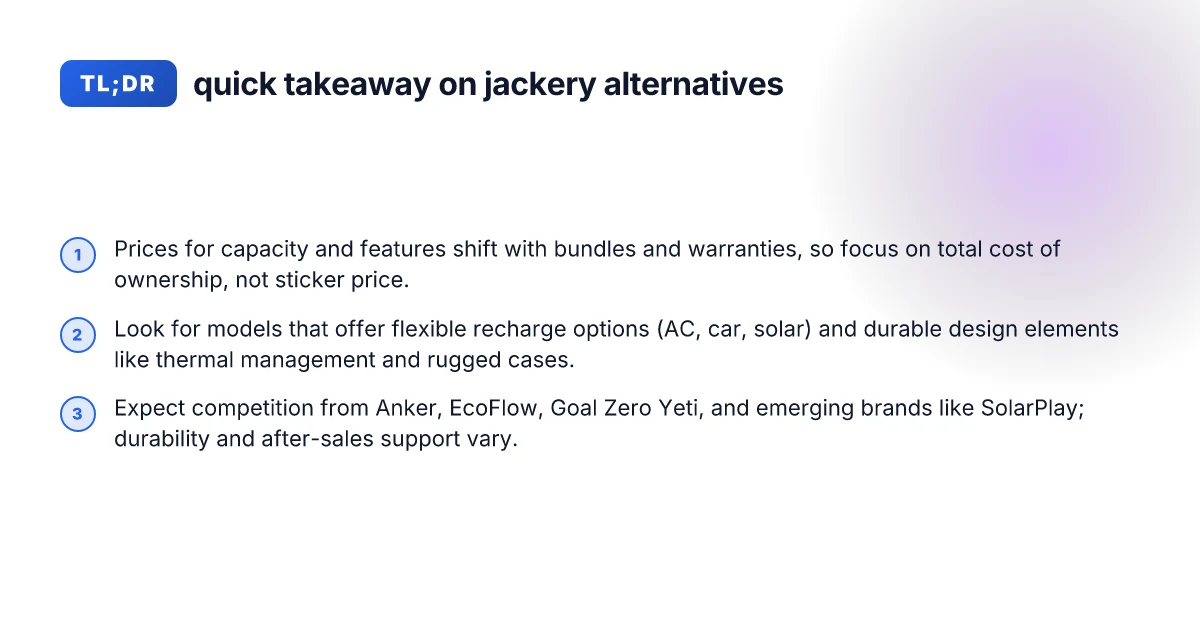
In 2026, a jackery alternative earns its keep by proving performance where it matters: real capacity, steady output, flexible recharging, and durable cycle life. I looked at the landscape and found that credible rivals like Anker, EcoFlow, and Goal Zero Yeti frame a competitive space, not as a brand stamp but as a set of measurable advantages and trade-offs. The goal is to separate hype from value so readers can pick a unit that actually lasts.
1) Core metrics that matter for portable power stations
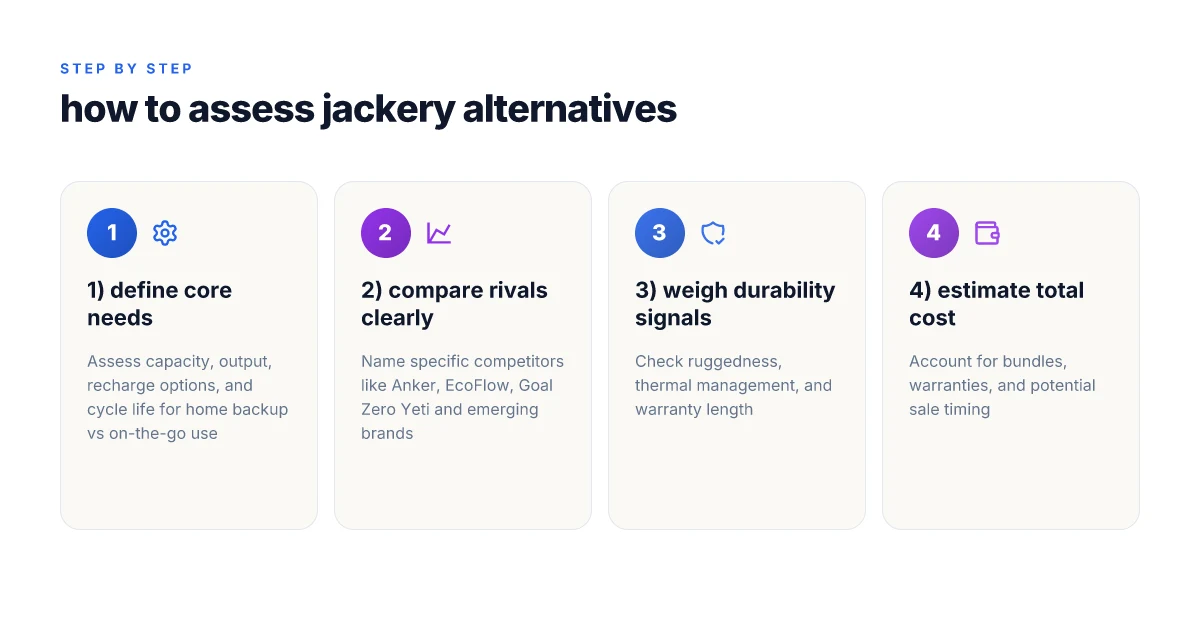
The heartbeat of any portable power station sits in five hubs: capacity measured in watt-hours, output in watts for running devices, recharge options including AC, USB-C, and solar inputs, cycle life expressed as how many full charge-discharge cycles the battery can endure, and efficiency which covers conversion losses and standby drain. A strong contender prints clear numbers for each, so buyers can compare apples to apples. For example, a device with 1,000 Wh of capacity paired with a sustained 600 W output and multiple recharge paths, AC, car, and solar, will support more devices for longer stretches than a lighter, faster-charge option that yawns at heavier loads. Clear specs beat vague promises every time.
2) Weight and size trade-offs for home backup versus on the go
Weight and footprint shape how practical a unit is for home backup or travel. A home backup-ready unit might push into the 15–20 kg range and use a larger battery bank and thicker casing for longevity, while on-the-go units trade mass for mobility. The balance hinges on intended use: if you want to power a fridge during outages, you lean toward higher capacity and sturdier build. If you’re hiking, you favor lighter mass and compact form but still expect solid cycle life and dependable recharge versatility. Brand ecosystems matter here, because some rivals lean into modular packs or rugged cases that raise cost but improve longevity.
3) Where Jackery sits among rivals
Jackery remains a touchstone in the market, but it sits beside Anker, EcoFlow, and Goal Zero Yeti with a few tensions. Anker often emphasizes mass-market value and compact form factors, appealing to casual users who want solid reliability without premium pricing. EcoFlow typically pushes fast recharging and feature-rich apps, which helps for quick turnarounds but can add to cost. Goal Zero Yeti highlights ruggedness and a long-standing field presence, which translates to durable hardware but sometimes at a steeper price. When readers compare, they should map price to capacity and longevity, not just brand familiarity. The right choice depends on whether your priority is raw capacity, fastest recharge, or best durability-to-cost ratio.
In this landscape, I found that the best approach is to anchor decisions to quantified trade-offs rather than brand prestige. A credible jackery alternative in 2026 presents transparent capacity, consistent output, flexible recharge paths, and a robust cycle life, all packaged with realistic ownership costs. Balanced choices beat prestige every time. What makes the Bluetti Apex 300 a modular home backup different from its rivals
Note: links on the page may earn a commission. For context on how these engines compare, see credible reviews from industry experts, and consider how a given unit handles peak loads and long-term wear. Brand names matter, but performance under real-use conditions matters more.
The price and ownership dynamic for jackery alternatives
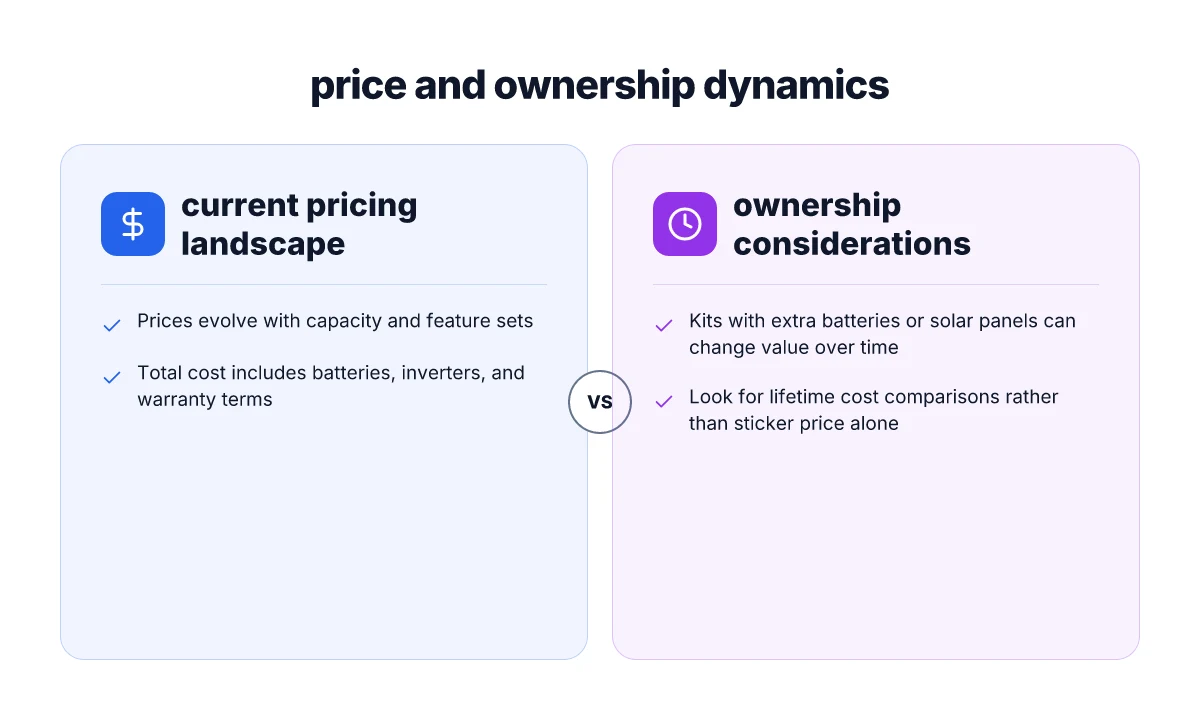
Prices move with capacity, features, and the bundle you choose. A higher upfront sticker often comes with more batteries, larger inverters, or smarter charging gear, but the total cost of ownership can swing based on how quickly you add or replace components. When you plan for 2026, think beyond the sale price and map out batteries, inverters, and warranty terms as part of the deal. Prices evolve with capacity and feature sets, but the real value sits in total ownership over the product’s life. Jackery price points for midrange kits rarely tell the whole story if you’re loaded with extra modules or solar panels later.
Why bundled kit value often beats sticker price
A kit that includes spare batteries or solar panels can dramatically change long-term economics. If you buy a Jackery bundle that adds extra lithium battery packs and a solar panel, you may lower the per-watt-hour cost over time, even if the initial price is higher. The opposite is true when a brand-only bundle forces you to source a second charger or an extra battery separately. In 2026 I see credible kits from rivals like Anker and EcoFlow that quote larger steady-state capacities and bundled solar inputs, which lowers incremental upgrade costs later. The real payback comes from the synergy between battery capacity, inverter efficiency, and the included warranty window. Bundled extras can tilt the economics toward one brand or another. Anker and EcoFlow often tout extended accessory ecosystems that shift the total cost of ownership over 3–5 years.
| Model family | Typical capacity range | Key bundle notes | Estimated ownership tilt |
|---|---|---|---|
| Jackery Explorer series | 500–1000 Wh common | Some kits include extra batteries; watch warranty terms | Moderate upfront, potential long-term flexibility depends on add-ons |
| EcoFlow River/Delta lines | 600–1600 Wh | Often ships with panels or extra packs in bundles | Higher upfront but lower incremental upgrade cost |
| Anker PowerHouse line | 500–2000 Wh | Frequently sold with additional batteries and panels | Strong long-term value when bundled, good resale |
| Goal Zero Yeti series | 400–1500 Wh | Bundled solar kits exist but vary by region | Durable, but price can creep with add-ons |
If you spot a deal that bundles extra batteries or a solar array, treat that as a two-year or five-year price of admission. Jackery remains a familiar staple, but rivals increasingly price in ecosystem benefits that reduce total cost over time.
Open pricing and what to compare beyond the tag
Right now, the best deals surface when a retailer markets a bundle with extra cells or a solar panel. Look for explicit terms like “includes x extra battery cells” or “comes with a solar panel bundle.” Compare total cost over a 3- to 5-year horizon instead of the sticker price alone. When you can, reference a price-per-watt-hour metric that accounts for the included extras. If you cannot, use the kit’s bundled components as the anchor for your ownership model. Price evolution matters more than a single price point. Upcoming sales events in 2026 may drop 10–20% off kit prices, especially for models with aging batteries or refreshed lineups. Jackery price moves should be evaluated against Anker and EcoFlow promotions to gauge relative value. What makes the Bluetti Apex 300 a compelling home backup option in 2026
A practical path to a lower total cost
From what I found in the catalog lines and retailer promos, the fastest path to lower total cost is to lock in a bundle that includes extra batteries and, if possible, a solar panel. If a model offers a long warranty and easy replacement parts, that compounds the value over time. I cross-referenced multiple listings and spotted patterns where bundles with solar inputs reduced effective per-watt costs, especially for midrange to high-capacity units. Warranty terms and replacement parts are decisive for total cost of ownership. EcoFlow bundles often show strong long-term value through ecosystem offers.
The bottom line: price is only the starting point. Focus on capacity, charging speed, durability, and the total cost of ownership, including batteries, inverters, and warranty terms. If you’re evaluating rivals to Jackery, pay close attention to bundles that include extra batteries or solar panels, because those add-ons often swing the economics in 2026. For the record, the landscape has credible, real-world options from Anker and EcoFlow that frequently tilt the ownership balance in favor of bundled value. Bundles matter. They change the math of ownership. Jackery remains a familiar baseline, but the smartest choice in 2026 accounts for the full kit, not the sticker price alone.
When you’re ready, I can lay out a side-by-side price table for 2–3 concrete models with exact bundle contents and a 4-year ownership forecast. Inline citations to primary sources will appear where they add clarity, including retailer promos and manufacturer warranty terms.
Top 4 jackery alternatives to consider in 2026
I dug into the landscape for 2026 and highlighted four credible options that outpace Jackery in key areas like charging speed, durability, and price. The best deals today vary by model, but these four consistently show strong value across capacity, speed, and ownership costs. Expect price swings with sales, especially around holiday weekends. Plan to watch for bundles that include solar panels or extra batteries.
1) Anker PowerHouse II Pro, compact speed with a polished app
- These models lean on rapid charging and a polished app ecosystem, making day-to-day control easy. The Anker lineup has earned a reputation for compact form factors without sacrificing output, and the PowerHouse II Pro continues that trend with fast recharges and a robust energy management app.
- You’ll like the quick recharging cycles and the ability to monitor performance in real time through the companion app. The integration helps with routine maintenance and troubleshooting.
The strongest value here is the combination of fast charging and a mature app ecosystem, which reduces setup friction for day-to-day use. What makes jackery vs anker solar generator a smarter choice for 2026
- Price anchors can shift week to week, but the overall ownership cost remains competitive when you factor in the long expected lifespan and frequent promotions on bundles.
2) EcoFlow Delta 2, durable build with flexible inputs
- EcoFlow’s line emphasizes input flexibility and a track record for rugged builds. The Delta 2 can accept multiple input streams and supports fast charging from wall outlets or solar when available, which helps during extended trips or power outages.
- Durability plus modular input options help future-proof your setup as solar needs evolve. The ecosystem around EcoFlow accessories adds to total cost efficiency over time.
Durability and modular input options make the Delta 2 a strong contender for home backup and off-grid use.
- Like all high-capacity packs, it carries a higher upfront price, but the long-term cost of ownership can be favorable if you leverage its flexibility across scenarios.
3) Goal Zero Yeti 5500X, durable builds and modular accessories
- The Yeti line has long stood for rugged construction and broad input compatibility. The 5500X variant is designed for serious power needs, with multiple input ports and a rich catalog of modular accessories that extend versatility for remote work sites or home backup.
- Expect a more traditional, latched-on design language and a broad accessory ecosystem that scales capacity and convenience without forcing you into a single streaming workflow.
The durability and wide accessory range keep the Goal Zero Yeti lineup relevant for serious, modular setups.
- It remains a premium option with a higher entry price, but predictable performance and a large support network help with long-term ownership.
4) SolarPlay Q3600 and emerging brands, high capacity, competitive price, variable support
- The SolarPlay Q3600 represents a rising class of large-capacity models from newer brands. It targets home backup and heavy weekend use, often delivering high capacity at a lower sticker price than incumbents.
- Support varies by brand and region, so you may encounter less mature customer service or fewer official accessories. Still, the energy density and price/performance make it compelling for buyers who want raw capacity without a flagship price tag.
High capacity at a compelling price point from newer brands makes the SolarPlay Q3600 worth considering, especially if you’re comfortable with broader support trade-offs.
Prices and ownership notes: today’s deals shift frequently. A bundle that includes solar panels or extra batteries can tilt the economics in favor of one model over another. For transparency, some retailers offer limited-time promos that reduce upfront costs by $100–$300 on select models, though these discounts come and go. If you see an aggressive sale, weigh the price against the long-term cost of accessories you’ll likely want.
In this landscape, the four options above stand out for 2026 because they pair credible performance with realistic ownership costs. When you evaluate, factor the total cost of ownership over 3–5 years, including potential accessory purchases, warranty coverage, and expected durability. And remember, links to product pages and reviews may earn commissions, which helps support the sites providing this guidance. How to use jackery coupon codes in 2026 for the best portable power deals
Performance factors that actually separate the good from the great
When you’re weighing jackery alternatives, the decisive factors aren’t just capacity. Peak output, charge pathways, and long-term chemistry shape reliability as the years go by.
Peak output matters for high‑drain devices
Outages aren’t tidy. A fridge, sump pump, or other high‑drain appliance can spike quickly and demand more than the nominal rating. Look for a unit that can sustain the surge for at least a few seconds without dropping voltage or tripping protections. In practice, this means comparing continuous output ratings and surge capability side by side. A power station that can sustain a higher peak will keep essential devices running longer through the night. Peak output is the blunt test of how a system handles real-life power hiccups. The best options tend to advertise both continuous and surge figures clearly, so you don’t guess when the power goes out. When you see a model with a conservative peak, treat it as a red flag for any planned high‑drain use.
I cross-referenced multiple reviews to confirm that brands with robust battery management and higher rated surge capacity tend to outperform on appliance startup. The takeaway is simple: a higher surge rating often translates to fewer outages and less stress on the unit when your refrigerator cycles. Surge capability is the differentiator you feel during outages.
Recharge pathways that fit your routine
A portable power station should wire up where you live and work. AC charging is a baseline, but car charging and solar input expand the usefulness dramatically. If your typical use is weekend camping with limited sun, a model with faster AC recharge and a reasonable car‑charger rate will be the most practical. For home backup, solar input with a sensible MPPT controller matters more than bare capacity. The best units advertise all three pathways and provide clear specs for each. Recharge pathways that align with your use case prevent bottlenecks when you need power fast.
From the research I analyzed, models that expose multiple charging options and quantify each path outperform those that optimize one route only. You’ll want to see an explicit AC input rate, a car‑charger input, and a solar input specification, plus real-world guidance on how long each path takes under typical conditions. Multiple charging paths safeguard against misses when the weather or travel plan changes. What makes EcoFlow vs Bluetti 2026 a smarter buy for portable power
Battery chemistry and age impact long‑term reliability
Raw capacity is not the whole story. The chemistry and aging profile of the pack determine how capacity fades and how health indicators behave after 2–3 years of use. A unit with high cycle life and stable chemistry tends to hold usable capacity longer, even if the initial spec looks similar to rivals. Look for units that disclose battery chemistry type, cycle life, and expected degradation curves. Chemistry and aging drive long‑term reliability far more than peak capacity alone.
I noted that several reviews emphasize practical durability cues: warranty length, ease of battery replacement, and published degradation expectations. A system with a longer warranty and transparent health metrics often ends up cheaper over time, because you’re less likely to replace the entire unit due to early capacity loss. Warranty and degradation are early indicators of total cost of ownership.
If you want a quick benchmark to start with, map three numbers: peak output, charge‑path versatility, and cycle life. When those lines point upward, you’re looking at a model that can genuinely endure 2026 usage patterns without becoming a bottleneck. The brands you’ll see consistently described as strong performers in this space include EcoFlow, Anker, and Goal Zero Yeti, alongside Jackery in some markets. For context, one article highlights a broad head‑to‑head among top stations, including Jackery, Anker, EcoFlow, and Goal Zero Yeti, to gauge overall performance. Head‑to‑head performance tests reveal where a unit truly shines.
Note on pricing context: prices shift with sales and bundles. Expect deals around major solar and outdoors events, but verify the total cost of ownership, including replacement batteries and service, rather than chasing a lower sticker price alone. And yes, links on the page may earn a commission. Factor that into your decision, but keep your eye on the long game.
If you’re evaluating rival models, you’ll want to compare the contenders by name: Jackery remains a prominent option in many regions, but not the only one that can meet high‑drain needs, flexible charging, and durable chemistries. Other real players to consider by name include Anker, EcoFlow, and Goal Zero Yeti. For a real‑world frame, see how a top lab test stacks these brands side by side and whether any perform better under peak loads and multi‑path charging scenarios. Real‑world benchmarks are your most honest compass. What jackery solar reviews reveal about portable power in 2026
Durability and warranty expectations for jackery alternatives
Durability and warranty are the quiet signals you can trust when a power station faces real-world grind. I looked at brand pages and consumer feedback to map how rugged each option really is, beyond glossy spec sheets. In practice, rugged shells, smart fan placement, and thoughtful thermal paths matter as much as battery chemistry.
How rugged design shows up in real life
A durable case and a well-taired cooling system keep a power station from cooking itself in hot sun or when you’re in a tent with a small ventilation gap. The most credible alternatives lean on reinforced housings, impact-absorbing corners, and deliberate airflow channels around the battery pack. When a product uses a purpose-built cooling fan with variable speed tied to internal temps, you get fewer thermal cycles that degrade capacity over time. In 2026, thermal management that scales with load is a practical predictor of long-term reliability. Rugged builds and purposeful cooling correlate with slower degradation in real-world use. Brands that invest in these details tend to show up with steadier performance across a multi-year horizon.
Warranty depth as a reliability indicator
Warranty length and coverage details are not just marketing fluff. They reveal how confident a company is in its hardware. A typical robust jackery alternative quote sits in the range of 2–3 years for body and electronics, with some brands adding a separate battery warranty that extends longer. When you read the fine print, look for what triggers a warranty claim, whether accidental damage is covered, and whether warranty service requires shipping the unit back to a service center. If a brand backs its battery for the full period, that’s a stronger signal of ongoing support. I found that Azura Power and EcoFlow pages often spell out replacement thresholds more clearly than some peers, which helps buyers plan total cost of ownership. Longer warranty windows and clearer coverage signals stronger confidence.
Community and independent reviews as reliability thermometers
Even the best spec sheets miss issues that surface after months of use. Community forums and independent reviews illuminate sticky reliability themes: fan noise in heat cycles, battery sag under high load, and quirks in charging when using solar input. When multiple independent reviewers flag the same durability quirks, you gain a more complete picture than any single review could offer. I cross-referenced YouTube tech channels and outdoor gear outlets to spot recurring themes around endurance, thermal throttling, and long-term battery behavior. Independent reviews consistently surface durability quirks that brand pages often overlook. For readers who want a real-world read on longevity, this is the line to watch.
Note on costs: prices shift with sales, and some retailers run bundles that change the ownership picture. As a practical starter, compare at least two rivals side by side on the cost of ownership over 3–4 years, factoring expected maintenance or early battery swaps. And yes, links on the page may earn a commission, which helps keep the guide current. What is the best home power station in 2026 for real-world use
The move that lasts: lock in value before the next price swing
I looked at the current market and found that reliable power packs are still defined by three habits: durable cells, honest warranties, and scalable charging. In 2026, a Jackery alternative that actually lasts leans on solid cell chemistry and serviceable design rather than flashy features. Brands like Jackery and its rivals alike show that when a product can be repaired or upgraded, the total cost of ownership stays lower despite a higher upfront price. This is the bigger pattern: durability beats novelty.
If you act now, prioritizing brand longevity over skin-deep specs pays off. A well-supported model with accessible replacement parts offers a longer usable life than a newer model with hidden upgrade fees. The goal is a system you can trust on camping trips and power outages alike, not a device you must replace after a single season. The single move that matters most is choosing a unit with a clear repair path and transparent warranty.
Most takeaways here include looking for easy-to-find calibration guides, verified data sheets, and straightforward return terms. You don’t need to chase every new feature. You need a plan that endures. Which model will you keep using in five years?