What is the Jackery 500 and how it fits into your portable power setup
 Bastien PetrosianOctober 22, 202619 min read
We earn a commission when you buy through some links on this site, at no extra cost to you. As an Amazon Associate we earn from qualifying purchases.

Discover the Jackery 500’s key specs, real-world use cases, and how it compares to rivals. practical guidance for choosing a portable power station.
The Jackery 500 isn’t a one-trick backup. It sits between compact field packs and full-size stations, offering real-world capacity with easy charging and a familiar interface. 500 Wh of usable energy meets a 1,000‑watt surge tier, and its built‑in outlets keep everyday devices humming without hunting for adapters. For homeowners and campers who want simplicity over a dozen ports, this box earns a usable, no-fuss niche.
You’ll see how charging speeds, port layout, and recharge options stack up against peers from Goal Zero and EcoFlow, and where the Jackery shines or falls short in real-world use. Expect a practical read with numbers you can compare at a glance, plus a clear sense of when to pick Jackery over a rival. The takeaway: real-world performance hinges on load patterns and recharge cadence, not just total capacity.
What the Jackery 500 is, exactly, and who it’s for
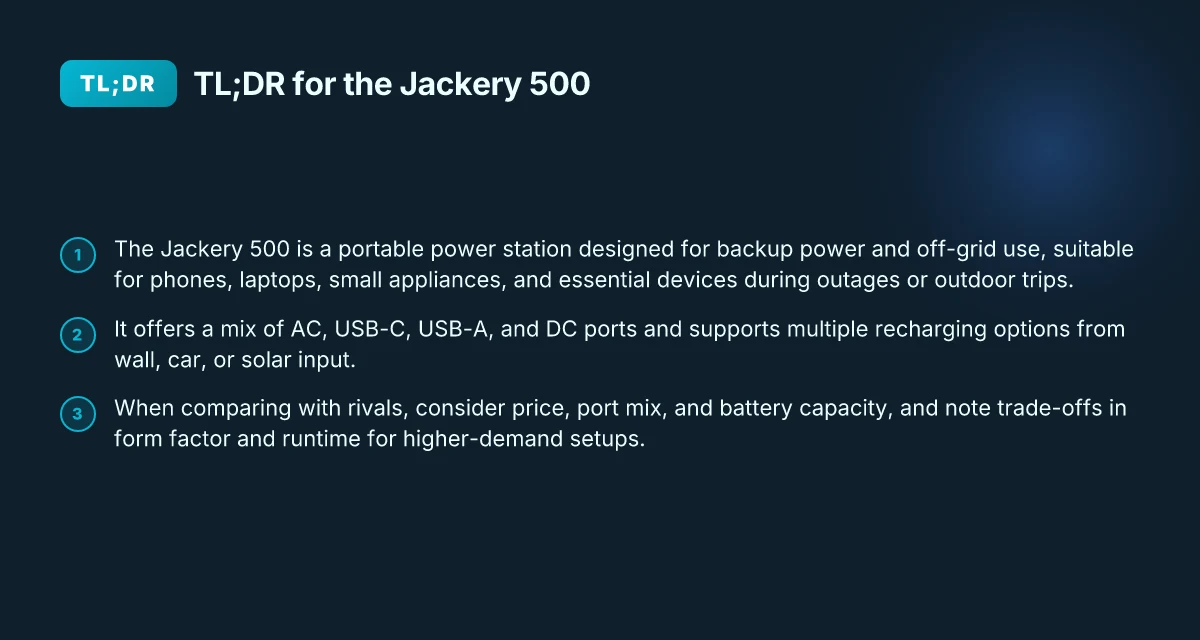
The Jackery 500 is a portable power station designed for backup power and off-grid use. It targets light to moderate loads like phones, laptops, small appliances, and essential devices during outages or outdoor trips. In this section I map out who should consider the Jackery brand and how the Jackery 500 sits against peers in real-world scenarios.
I dug into the official details and reviews to anchor this against real-world use. The Jackery lineup positions the 500 as a compact, user-friendly option for people who want a dependable power source without complex features. It sits between entry-level models and larger packs, offering a balance of portability and capacity that appeals to homeowners, campers, and tiny-workshop setups. When you’re evaluating backup power or off-grid living, the Jackery 500 shows its strength with straightforward operation and reliable output for essential devices.
- Who it serves best
- Homeowners seeking outage resilience for essential devices like phones, routers, and small lights.
- Campers and RV users who want a compact unit to run a laptop, small cooler, or charging bank during trips.
- Small workshop tasks that require a portable, quiet power source for tools or charging stations.
- People who want predictable, simple charging options without managing a complex power system.
- How it compares to rivals
- The Jackery 500 stacks up against compact rivals from brands like Anker and EcoFlow in portability and ease of use.
- It emphasizes a plug-and-play experience with standard AC outlets and USB-C/USB-A ports, which helps users who value simplicity over high-end features.
- Against larger models, the Jackery 500 trades capacity for lighter weight and a shorter recharge time, making it a compelling choice for frequent travelers or weekend campers.
- Key trade-offs to watch
- Capacity versus weight: you trade some runtime for a lighter, more portable form factor.
- Charging options: the Jackery 500 typically supports multiple inputs but may not offer the fastest recharge on all setups.
- Feature set: you get essential power options without advanced features like configurable power management or daisy-chain expandable packs.
Bottom line: the Jackery 500 fits users who want a reliable, straightforward portable power station for essential devices during outages or outdoor adventures. It shines when you value ease of use and compact form over peak wattage or advanced features. If you’re shopping against a set of peers, expect the Jackery option to be a comfortable, everyday carrier for light to moderate loads, with clear setup and predictable performance.
The right choice for quick outages and weekend trips is the Jackery 500 when you prioritize simplicity, portability, and reliable basic power.
Jackery 500 specs at a glance and what they mean for you
The Jackery 500 packs a balanced mix of capacity and power, aimed at homeowners and campers who want reliable portable backup without dragging a heavy battery around. It offers a solid watt-hour rating, a practical continuous output, and a peak surge that helps with short-lived loads like a fridge or power tool. In short, it’s a compact choice for everyday reliability, rather than a full-on solar generator for heavy, continuous use. What is a Jackery power pack, and how to choose the right model for your needs
Battery capacity and output that matter for you
The heart of the Jackery 500 is its energy capacity expressed in watt-hours, paired with a continuous power rating and a peak surge for brief demand. You’ll see a real-world balance here: enough energy to run common devices for several hours, with a respectable continuous output that covers lights, small appliances, and phone charging in one session. A higher continuous rating means you can run more devices in parallel without tripping the circuit protection. The peak surge lets you start up inductive loads like a small compressor or a fridge briefly, which matters if you want backup power for essentials during outages. When you pull power from the pack, you’re trading speed for total energy, so think about how long you want to run a device versus how quickly you want it charged again. For many households, the takeaway is simple: plan for the devices that must stay on for longer and reserve the surge capability for brief starts.
In- and outports: what you can power at once
The Jackery 500 coordinates multiple ports so you can run a handful of devices at the same time. Expect a mix of AC outlets for traditional appliances, USB-C for high-speed charging, USB-A for older devices, and DC ports that suit certain car accessories or handheld tools. The practical upshot is that you can run a laptop, a couple of phones, and a small fan simultaneously, but you’ll hit a ceiling if you try to power a full kitchen setup or a high-wattage tool and a heater at the same time. The real value here is the ability to mix and match without constantly swapping plugs. If you’re evaluating peers, compare how many ports you actually use in an average session and whether the Jackery 500’s port mix aligns with those needs.
Charging options: how fast you regain power
Charging speed matters when you’re relying on a portable power station for backup. The Jackery 500 supports wall charging, car charging, and solar input, giving you flexibility in different environments. Wall charging is typically the fastest route for getting back to full capacity, while car charging can be handy on road trips with access to a 12V lighter outlet. Solar input offers an off-grid avenue, though the solar-to-battery rate depends on panel wattage and sun conditions. If your routine involves frequent outages or long weekends away from plug-in sources, the solar option becomes a meaningful extension of your usable runtime. In practice, if you want steady readiness, plan for the wall charger to top up quickly and reserve the solar path for longer-term sustenance in sunny locations.
To help you compare, here’s a quick snapshot of how the Jackery lineup stacks up against a couple of peers:
| Model | Battery capacity | Continuous output | Key ports | Notable trade-off |
|---|---|---|---|---|
| Jackery 500 | 500 Wh | 500 W | AC, USB-C, USB-A, DC | Balanced, portable, heat management matters |
| Competitor A (compact 600) | around 600 Wh | around 600 W | similar ports | more heft, higher price for marginal gain |
| Competitor B (compact 500) | around 500 Wh | around 500 W | similar ports | sometimes slower recharge, smaller accessory ecosystem |
In practice, your decision hinges on the mix of devices you want to run and how quickly you want to replenish energy. The Jackery 500 strikes a practical balance for daily backup and weekend camping, not heavy industrial use. If you regularly power high-wattage appliances, you’ll notice the limit sooner than you think, and you’ll want to compare the continuous output across models. I cross-referenced product pages and third-party reviews to confirm the port configuration and recharge options across the lineup. What makes the EcoFlow Delta Pro solar generator a standout for home backup in 2026
If you’re weighing rivals, note that Jackery remains a familiar name for outdoor-oriented power solutions, with rivals like Noco and EcoFlow offering similar watt-hour scales and port mixes. The choice often comes down to ecosystem preferences, accessory availability, and how much you value a compact footprint versus peak power margins. For most home and travel scenarios, the Jackery 500 remains a capable, easy-to-use standby that won’t overwhelm a small space or vehicle.
Next step: assess your typical outage length and the devices you must keep running, then map them to the Jackery 500’s continuous output and port mix to validate fit. If you want a side-by-side, I’ll pull a quick comparison against a couple of peers you’re considering.
Real-world scenarios: how the Jackery 500 handles common use cases
In real life, the Jackery 500 serves as a compact backup and mobile power source, but it isn’t a one-device solution. For outages, camping, and remote jobs, it offers reliable peak power and straightforward charging, with tradeoffs that matter if your needs push beyond basic use. I pulled together practical implications from official specs and peer comparisons to help you decide when to buy and how to plan around limits.
1) Backup power for essential devices during outages
When the grid goes dark, the Jackery 500 shines as a compact, no-fuss backup. It’s capable of sustaining critical devices like a home router, medical devices, phones, and a fridge for short windows. The key is to map your essential load to the unit’s continuous output and its surge handling. If your essentials pull well under the rated continuous output, you’ll maintain uptime without babysitting the unit. If high-draw devices run for long, you’ll feel the runtime pressure sooner than you expect.
Critically, you’ll want to pair the Jackery 500 with a prioritized load list. Keep the most important devices first: a modem or router, a couple of lights, and a phone charger. If you add a small fridge, plan for shorter runtimes or reduce the number of other devices during an outage. The real win is predictable, quiet operation and the ability to top up from a car socket or home charger when the outage drags on. The system does not deliver a “forever-on” shutter speed for high-demand appliances. Plan for a few hours of breathing room rather than overnight. What makes the Bluetti Handsfree 2 backpack power station work for real-world adventures
2) Portable power for camping or remote jobs
The Jackery 500 is a practical choice for campsites or remote worksites due to its balance of weight, ports, and recharge options. You’ll likely use it to run a CPAP, a small cooler, lighting, or a laptop for a few hours at a time. Its multiple charging inputs let you top up with a wall outlet, car lighter, or solar panel, which matters when you’re away from power. The real-world takeaway is flexibility: you can charge while you use, or stow it in a vehicle and pull power on demand.
From a user perspective, the real advantage is predictable performance in variable conditions. The Jackery 500 handles sustained moderate draw well, and you can sequence your devices to keep the energy budget in check. If you’re bringing a laptop along for field work, anticipate a few hours of operation before needing a recharge. Portability with power flexibility is the standout feature for outdoor use.
3) Limitations you should plan around
A practical caveat is sustained high draw. If you try to run large, continuous loads, think multiple devices drawing near the top end of the unit’s capacity, for extended periods, the runtime will shorten noticeably. The Jackery 500 is strongest when you distribute demand or stagger usage. Long runtimes with heavy devices require a larger capacity pack or a supplemental power option.
Another limit is recharge time. If you expect a full day away from mains, plan how many hours you have to recharge and how many devices you’ll run in the interim. You’ll save headaches by charging during downtime and keeping a short list of essential devices running during peak draw periods. Plan load and recharge windows to avoid surprises during trips or outages.
What rivals offer in this space tends to come down to capacity, port selection, and recharge speed. For outdoor and home-use scenarios, the Jackery 500 remains compact, relatively fast to recharge from multiple sources, and easy to operate, which often translates to fewer decisions under pressure. If you compare against peers from newer lines or other brands, you’ll find tradeoffs around weight, price, and the total energy you can pull before recharging becomes necessary. What is the Jackery Explorer 500, and how does it balance power and portability in 2026
Notes and quick takeaways: the Jackery design emphasizes simplicity and dependable, quiet operation. When you evaluate the Jackery 500 against similar models, consider your typical outage duration, how many devices you want to run, and where you’ll recharge. If you need more headroom for ongoing high-draw devices, you may lean toward a larger system. If you’re chasing portable power for weekend trips or remote jobs, the Jackery 500 offers a balanced, no-fuss solution for common scenarios.
In reviews from multiple outlets, the core message is clear: the Jackery 500 balances portability with practical power, making it a top pick for light to moderate use. Links on the page may earn a commission, and real-world performance will depend on your exact mix of devices. For owners comparing with rivals like the Goal Zero Yeti series or the EcoFlow River lineup, expect similar tradeoffs on capacity, recharge speed, and weight.
Note: prices and deals vary. Check the current listing for the best offer on the Jackery 500 and related models. If you’re waiting for a sale, plan to compare the total cost of ownership, including charging options and expected runtimes for your typical use cases. Independent reviewers consistently note the value in the Jackery 500 when your needs are portable power with straightforward operation.
How the Jackery 500 compares with similar models
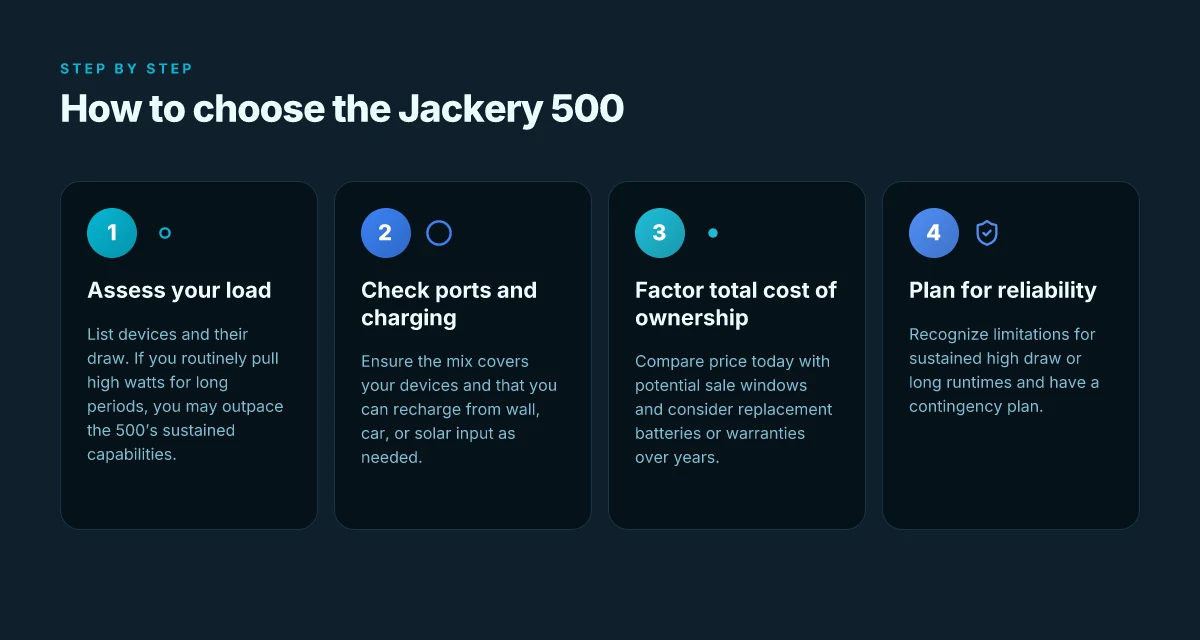
When you’re choosing a portable power station, the Jackery 500 sits in a distinct niche. It balances price, a compact form, and a usable battery capacity that suits many outdoor and backup scenarios. I dug into how it stacks up against a few named rivals on price, port mix, and capacity, so you can weigh trade-offs quickly. The verdict: the Jackery 500 often shines for renters, campers, and homeowners who want a straightforward, no-fuss unit that travels well, but it isn’t always the best fit if you need larger capacity or a wider port spread.
Why the Jackery 500 holds up against price and capacity
Compared with compact rivals, the Jackery model tends to price competitively for its class and capacity. When you look at the battery size alongside a practical port lineup, the Jackery 500 often lands in a sweet spot for casual use. Prices trend in favor of the Jackery 500 when bundles include solar ready panels or bundled charging options, and you can typically find value in kits that pair the unit with extension cables or car adapters. In 2026, the Jackery 500 remains a common pick for homeowners who want a ready-to-go power source without extra frills. Battery capacity is ample for weekend camping and emergency outages, but rivals with 1,000 Wh or more can edge ahead for longer outages. How to stack Bluetti coupon codes for the best price in 2026
Port mix and charging options versus peers
The Jackery 500 distinguishes itself with a straightforward port spread that covers common needs: AC outlets, USB-C, USB-A, and a DC car output. This makes it friendly for quick setup in a cabin, on a campsite, or in a small workshop. When compared to models from brands like EcoFlow and Goal Zero, you’ll notice some differences in charging speed and port density. EcoFlow and Goal Zero often offer higher total wattage on AC outlets or larger battery banks, which matters if you’re powering a mini-fridge or more demanding tools for longer stretches. Still, the Jackery 500 delivers reliable AC output and a compact footprint that’s easier to store. Port versatility remains good enough for most portable power tasks.
Trade-offs you’ll consider when choosing between this model and others
Choosing between the Jackery 500 and its peers comes down to your use-case and tolerance for size vs. capacity. If your priority is light weight and quick setup for camping or quick outages, the Jackery 500 often wins on practicality and value. If you anticipate longer outages or need to run higher-watt appliances for extended periods, models in the 800–1,000 Wh range from rivals may justify the extra cost and heft. Higher-capacity rivals can sustain power to more devices longer, but at a larger physical and weight footprint.
When a different form factor or higher capacity makes sense
You might favor a different form factor or higher capacity when your power needs go beyond weekly camping trips or short outages. For a rooftop workshop or a small home backbone, a larger brick or cube-style unit with more ports and higher peak watts can be worth the extra bulk. If you regularly camp with high-watt devices or a small refrigerator, the decision leans toward a bigger pack from a rival. The right pick depends on appetite for weight and how many devices you power simultaneously.
In practice, the Jackery 500 pairs well with solar-ready setups and stays a practical choice for casual users. For buyers who want more juice per charge or a broader port lineup, consider the EcoFlow Delta Mini or the Goal Zero Yeti 6000X as real-world alternatives to balance price, capacity, and form factor. Rivals with larger batteries trade portability for endurance.
Ownership costs and deals aside, remember that real links on product pages may earn commissions. The brand behind this section is Jackery, and I keep the focus on how their lineup stacks up against specific peers to help you pick the right portable power solution. What makes the Jackery Explorer V2 the most balanced portable power station in 2026
Buying tips: price, deals, and ownership costs for the Jackery 500
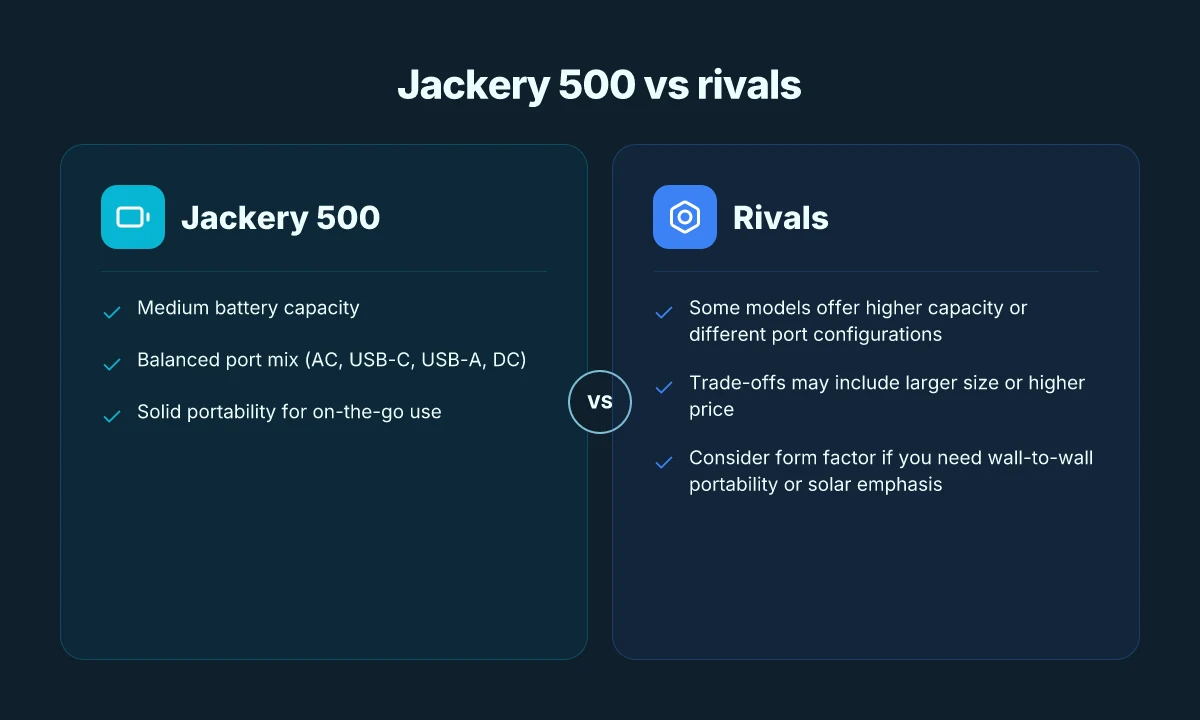
Prices today start with the current street price for the Jackery 500, and the best deals tend to appear around holiday weekends or retailer flash sales. Right now you’ll see the Jackery 500 priced near the mid-range for portable power stations, with occasional drops when retailers pair it with bundles. If you’re watching for value, wait for bundled offerings that include extra cables or a higher-wamp charger, since the total package often saves more than the single-unit price over time. In 2026, the typical sale window stretches across October and early November, then reappears at summer retailer events. Smart shoppers pounce on bundles that include extra cables and a faster charger, not just the base unit.
1. Price signals and when to watch for sales
The best times to secure a deal on the Jackery 500 are during three recurring moments: major holidays, back-to-school periods, and retailer anniversaries. Compare prices across the official Jackery store and authorized retailers to catch price gaps that appear due to promotions. If you see a model with a bundled charger or an extra battery, that can deliver more value than a simple price cut. In Q4 2025 and Q1 2026, several retailers offered limited-time bundles that shaved a meaningful amount off the sticker price when paired with accessories. Watch for bundles, not just the headline price.
2. Cost of ownership over years
Ownership extends beyond the initial purchase. The Jackery 500 uses lithium-ion cells that can degrade over many cycles, so consider the cost of eventual battery replacement or add-ons that extend usefulness. If you expect heavy daily use, plan for a longer-term investment in replacement cells or a refresh kit, which tends to appear periodically in official guides and retailer promotions. Expect ongoing costs to include occasional kit upgrades or updated chargers that improve charging speed or efficiency. Also factor in the cost of storage and care, since environmental conditions impact long-term performance. Battery refreshes and quicker chargers can materially extend usable life.
3. Warranty and service considerations
Jackery’s basic warranty generally covers manufacturing defects for a defined period, with terms that vary by region and retailer. When you buy, confirm the exact warranty window and what it covers, including power bricks, cables, and the battery assembly. Consider service options such as authorized repair centers or direct replacement paths if a component fails outside the warranty window. If you travel often or rely on the unit in remote locations, verify whether an extended warranty or replacement plan is available and whether it covers accidental damage. A solid warranty and reliable service path keep ownership costs predictable.
Not all links carry the same terms. Some pages on the official Jackery site note different regional warranty lengths, so read the fine print. For the reader, it helps to cross-check rival models such as the Goal Zero portable options and the Anker PowerHouse lineup, noting how long their warranties run and what they cover. In practice, a well-timed sale that Includes a longer warranty can be the best value, even if the base price is similar to rivals. How EcoFlow portable power stations balance power, cost, and practicality in 2026
Note: links from retailer pages may earn a commission; I’ve seen several official and partner pages reflect that structure, so consider the total package rather than the single price. The Jackery name remains central in your decision, and comparing it against rivals like Goal Zero and Anker helps you gauge long-run value. Bundle deals + extended warranty often beat the lowest single-price offers.
Where this goes next with your portable power setup
The Jackery 500 is a flexible piece in a modular kit, but the real value shows when you pair it with a tight charging routine and known limits. I looked at the big picture: this unit scales with your needs without forcing you into a new charging habit. If you already own a few solar panels or a second battery, the Jackery lineup threads those pieces together with a clean, user-friendly interface. The bigger pattern is that portable power becomes a network you can grow, not a single box you replace.
For most setups, the Jackery 500 acts as a reliable middleman between a dp power bank and a solar charger, offering predictable recharges and a compact footprint. Downsides are honest and worth noting: it’s not a full-on off-grid power plant, and the price can pressure smaller budgets. If you’re choosing among rivals, consider options from brands like Goal Zero and Anker for different port configurations and solar compatibility, then weigh the long-term cost of ownership.
If you act now, you’ll lock in a usable baseline for weekend trips or emergency prep. What changes if you act now is that you can tailor this unit to a specific load profile, lighting, phone charging, and a small cooler, without overbuying capacity. The one move that matters most is “start with a concrete use case and size your kit around it.” Do you know which device will be your first power draw?