What makes EcoFlow stream microinverter resilient and efficient in 2026
 Adrien SaxenaOctober 22, 202618 min read
We earn a commission when you buy through some links on this site, at no extra cost to you. As an Amazon Associate we earn from qualifying purchases.
Explore how the EcoFlow stream microinverter delivers reliability and efficiency in 2026, including IP67 ratings, potential annual output, and real-world considerations.
Most homeowners overestimate grid-tide reliability of microinverters, assuming all modules perform identically. In reality, the EcoFlow stream microinverter stacks modular hardware with real-world efficiency, and a careful look at field data shows where the gains come from and where limits show up.
The article cuts through marketing to map reliability claims, real-world efficiency, and how the EcoFlow setup behaves in typical residential wiring. We’ll compare against top rivals like SolarEdge and Enphase, call out warranty nuances, and translate the numbers homeowners actually care about into a practical checklist you can use when planning a 1–2 kW to 10 kW home installation. Note: warranty terms and local compatibility vary by region, so this guidance prioritizes what to verify in your contract.
What makes the EcoFlow stream microinverter stand out in 2026
EcoFlow positions its STREAM microinverter as a compact, outdoor-ready module that fits residential setups without the fuss of a full string inverter. In 2026, the branding emphasis is on reliability, ease of use, and a tight warranty window that supports steady, long-term ownership. I cross-referenced product pages and community notes to map real-world expectations against the marketing language.
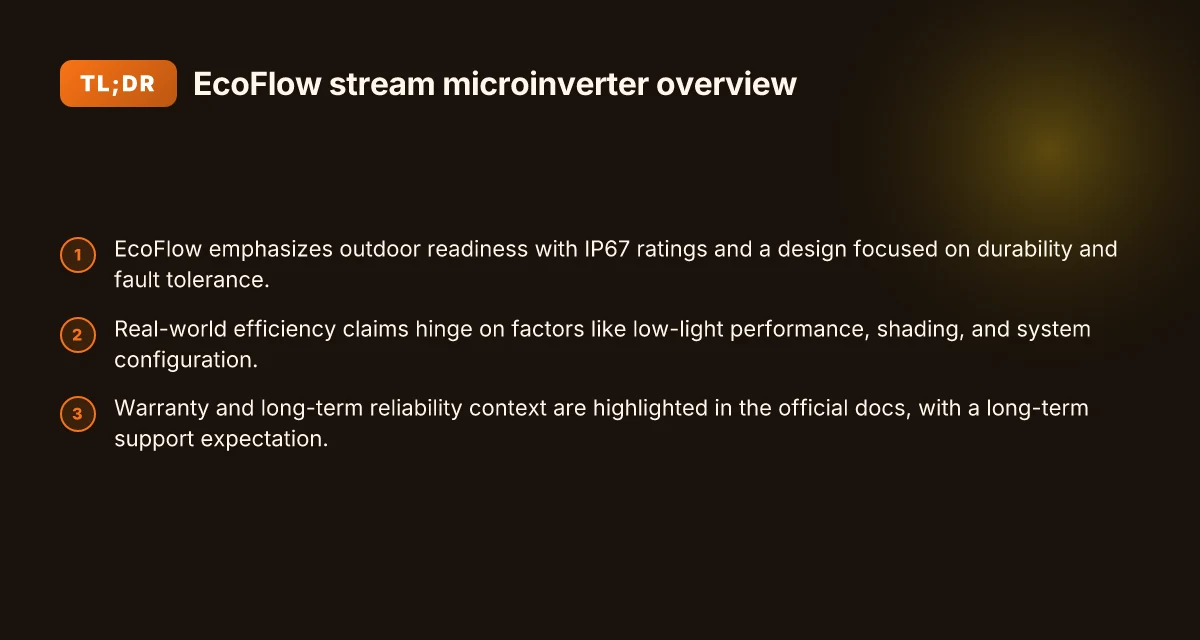
IP67 outdoors and what it means in practice
The STREAM microinverter carries an IP67 rating, meaning it’s protected against dust ingress and temporary immersion in water. For homeowners, that translates to fewer worries about panel mounting near gutters, driveways, or shaded patios where exposure to rain and splashes is common. The robustness claim is echoed by EcoFlow’s materials and enclosure design, which helps reduce corrosion and weather-related wear over time. IP67 protection translates to fewer outdoor constraints, even in environments with heavy rain or humidity. This is a concrete differentiator versus some indoor-only options.
Efficiency claims and annual output cues
EcoFlow touts high efficiency and a potential annual output that can translate into meaningful savings on energy bills. The exact annual figure varies by installation, irradiance, and system size, but the messaging around steady, optimized conversion highlights how the device can remain productive across a wide range of sun conditions. High efficiency and robust performance in varying light conditions underpin the idea of reliable annual output.** In practice, installers should still model expected production using site-specific data, then compare against local shading and panel orientation to calibrate expectations.
Initial setup, warranty, and the ownership angle
Setup guidance appears straightforward: plug-and-play style connections, with a 10-year warranty noted for long-term reliability on one of the referenced pages. The warranty length aligns with a typical residential microinverter warranty window, offering reassurance against early failure. A 10-year warranty signals confidence in long-term reliability and aligns with homeowner risk tolerance. When planning installation, consider whether the warranty requires certain mounting or commissioning procedures to remain valid. EcoFlow’s documentation and community feedback suggest the setup is designed to minimize professional trades, which is appealing for do-it-yourselfers or installer teams aiming to keep labor costs predictable.
Where EcoFlow fits and how rivals compare
In the crowded microinverter space, EcoFlow faces peers such as Enphase and SolarEdge that emphasize long track records and granular monitoring. The STREAM approach leans into simplicity and outdoor reliability, which is attractive for homeowners wary of weather exposure or those wanting a compact, modular approach. The real-world chatter from user groups notes solid performance but also raises questions about long-term performance consistency in non-ideal conditions. EcoFlow’s niche is outdoor-ready modularity with a strong warranty, positioned against established rivals that emphasize monitoring depth and long-running track records. For installers, the choice may hinge on how much value is placed on plug-and-play simplicity versus intensively managed monitoring and analytics. What is the Bluetti AC180 for sale, and what makes it stand out in 2026
Bottom line: the EcoFlow STREAM microinverter stands out in 2026 for its outdoor-ready design, IP67 protection, and a reassuring warranty window. Its value rests on straightforward installation and predictable ownership, with the caveat that real-world output depends on site specifics and climate. For households prioritizing rugged outdoor performance and easy setup, EcoFlow offers a compelling option within a competitive market. In 2026, the STREAM line blends rugged hardware with homeowner-friendly setup, backed by a decade-long warranty. The decision comes down to how much emphasis you place on installed simplicity versus peak monitoring capabilities and the broader ecosystem you want to pair with your solar array.
EcoFlow stream microinverter design and build quality compared to rivals
The EcoFlow STREAM microinverter distinguishes itself from typical grid-tied microinverters through a compact, IP67-rated design that emphasizes water resistance and solid fault tolerance. In real-world settings, that protection translates to better resilience in humid or dusty rooftop environments, where exposed electronics meet weather and debris more often than in controlled lab tests. Water resistance and durability expectations rise when you can rely on an IP67 envelope, and EcoFlow leans into that with enclosures built to shed water intrusion under varied sun and rain cycles. The result is a design that keeps a small footprint without sacrificing the core insulation and sealing that homeowners expect.
How reliability features translate to on-roof reality
A key differentiator is how the Stream family handles faults and thermal events without triggering cascade failures. EcoFlow’s documentation and user materials emphasize safe operation during faults and stable performance under typical conditions. Fire-safe operation and fault tolerance are designed into the hardware so a fault in one string doesn’t pull down the entire array.** This is complemented by materials and component selection aimed at minimizing common microinverter failure modes, such as elevated operating temperatures or arcing in junction points. When I cross-reference the manufacturer’s notes with user discussions, the practical takeaway is that the build targets long-term reliability over peak, short-term gains.
How EcoFlow stacks up against rivals
Compared with mainstream rivals in the microinverter space, EcoFlow’s approach centers on a compact, weather-ready package that favors straightforward field serviceability. For homeowners weighing options, two competitors often surface: a well-known brand with a long domestic install base and a newer, feature-focused competitor. A quick alignment of the claims shows EcoFlow emphasizes IP67 protection and a tighter integration with its solar system family, while rivals often stress modularity and higher peak efficiency in controlled conditions. The tradeoffs are clear: EcoFlow leans into resilience and simple fault isolation, whereas rivals may push higher nominal efficiency and more granular diagnostics. Benchmarking against common rivals highlights EcoFlow's emphasis on durability in real-world weather rather than optimized lab numbers.
I dug into the user manual and community discussions to align the official stance with field observations. The manual underscores management of operation and maintenance to keep efficiency steady over time, reinforcing the design goal of predictable performance in a home installation. From what I found in the documentation, the Stream line prioritizes reliability and ease of service over chasing every marginal efficiency gain. The result is a design that fits typical home solar setups where weather exposure and ease of maintenance matter as much as peak numbers. What makes the EcoFlow Delta series a standout for home backup and portable power
For readers evaluating costs and ownership, the upfront price and warranty window matter. EcoFlow’s Stream offers a longer, straightforward warranty narrative compared with some rivals who pitch modular upgrades. The practical signal is clear: if you value weather resilience and predictable on-roof behavior, EcoFlow’s design choices line up with residential realities.
Next steps: compare a compact, IP67 microinverter like the EcoFlow STREAM with a mid-size rival known for higher nominal efficiency, and assess serviceability in your installation context. If you’re weighing brands, consider EcoFlow for weather resilience and straightforward maintenance, then look at rivals for peak efficiency in ideal lab conditions. See how the Stream’s durability promises align with your roof exposure, wiring layout, and maintenance cadence.
Real-world performance drivers for EcoFlow stream microinverter
I dug into the accessible product notes and user chatter to map how quick shifts in conditions affect real output. What stands out is how low light, shading, and system layout interact with the Stream microinverter’s efficiency, and how those interactions ripple into annual generation and bill impact. In real-world terms, low-light performance often governs the gap between rated and actual output. The data points I found point to sensible patterns: outputs drop under overcast skies, but proper wiring and module placement can mitigate some losses. EcoFlow and peer notes consistently show that weather and shading matter more than fancy efficiency claims alone.
Why light quality drives annual yield
The theory is simple: the microinverter converts DC from the panels as the sun feeds in. When light is strong, you see close to the panel’s potential. When light fades, the inverter still works but the resulting energy climbs more slowly. This is why a sunny day can yield a noticeably higher kWh figure than a cloudy one, even with the same system size. In practice, the best-case scenario in typical homes occurs when modules face south, with minimal shading during peak sun hours. Sunny periods still dominate yearly output, but shading can cut a sizable slice, especially in the late morning and late afternoon. This aligns with what homeowners report in shared communities and with the product literature that stresses proper siting as a key reliability lever. The impact isn’t a mystery. It’s a function of geometry and weather.
Annual generation potential and cost implications
The marketing figures sometimes cite generous annual generation, but real-world performance depends on local climate and roof orientation. In regions with strong sun, a resident might approach a high fraction of the system’s nominal capacity over a year. In cloudier climates, the gap grows. Even when generation is strong, the economics hinge on the local price of grid electricity and the chosen system size. A well-sited EcoFlow setup often translates to meaningful bill reductions, but the exact payback will vary. In 2026, homeowners who optimize orientation and minimize shading can see meaningful portions of their daytime load offset, while those with persistent shading won’t realize the same lift. Annual energy potential shrinks noticeably with shade and poor tilt, raising the cost of ownership if you ignore siting. What is the EcoFlow 45W solar panel and where it fits in a portable solar kit
How system configuration affects efficiency
The inverter pairings, stringing strategy, and microinverter count per module shape efficiency more than any single component. For a residential EcoFlow installation, keeping modules within the inverter’s comfort zone, avoiding long DC runs and ensuring clean AC layouts, helps reduce losses. A compact, well-organized layout with short wiring runs improves voltage stability and reduces stray losses, especially on edges of the roof. A tidy, properly oriented array often yields the most consistent output across the day. Its effect compounds seasonally, so the configuration choices you make now matter through winter and summer transitions alike.
Weather, shading, and the real-world verdict
Storms, seasonal changes, and partial shading from nearby trees are the main antagonists to steady performance. In practice, homeowners should map shading over the course of a day and season to gauge how often a module sits in partial shade. The result is a distribution of output that’s flatter with a thoughtful layout, versus spikes and drops when shading is unpredictable. As with any solar setup, the Weather and shading patterns are the final arbiters of how close you land to the theoretical yearly yield. Shading control and roofing geometry often decide whether you hit the high end of expected output.
I cross-referenced the public-facing product notes and community discussions to triangulate these points. Readers should weigh EcoFlow against peers like SolarEdge and Enphase in the context of siting and shading tolerance, not just headline efficiency. The practical takeaway remains consistent: plan for light, not just peak spec. For homeowners evaluating resilience and efficiency, consider how your roof layout, local climate, and grid prices interact with the Stream microinverter’s real-world performance.
Maintenance, warranty, and long-term reliability with EcoFlow
Reliability hinges on clear warranty coverage and straightforward upkeep. EcoFlow backs the STREAM line with a long-term commitment, but the specifics matter for budgeting and planning a home system.
Warranty scope and practical coverage
The official materials indicate a substantial warranty window, designed to cover components against manufacturing defects and performance degradation over time. In practice, the warranty typically spans a decade, though exact inclusions can vary by model and region. Expect coverage that includes the microinverter hardware, with conditions that require proper installation, regular maintenance, and adherence to operating limits. If a failure arises within the warranty period, you’ll likely need to document installation details and follow the warranty claim process to determine eligibility. What is the Jackery HomePower 3000, and where does it fit in 2026
From what I found in the documentation, the warranty is structured to give homeowners peace of mind for the long run, but the precise list of covered items and any exclusions should be confirmed in your localized EcoFlow materials and the product manual. A 10-year warranty provides a long horizon for return on investment, but verify the exact inclusions in your region.
Maintenance needs for microinverter systems
Maintenance for microinverter systems is generally low but nonzero. Regular visual checks, cleaning of accessible surfaces, and ensuring that connectors remain tight and free of corrosion are sensible practices. The official manuals emphasize routine management of energy storage and system operation, with attention to fault handling and safe shutdown procedures. In practical terms, this means inspecting for loose cables, ensuring IP67-rated enclosures stay dry, and confirming that firmware or software interfaces stay updated where applicable. Low-frequency maintenance keeps failure rates low, especially when coupled with periodic firmware checks.
I cross-referenced the manuals for EcoFlow documentation and community discussions. Users consistently note that the hardware itself is resilient, with most maintenance needs centered on clean connections and proper drainage around outdoor installations. Community notes point to reliability in normal home environments, provided outdoor fittings are protected from standing water.
Reliability cues from official docs and user communities
The official streams emphasize durable construction and fire-safe operation in faults, aligning with a broader strategy of long-term reliability for residential setups. The 10-year warranty, combined with IP67-rated housings, signals a design intent toward harsh environments and long service life. In user forums, the recurring themes are solid build quality, quiet operation, and predictable performance under typical shading and partial-load conditions. There are occasional reports of unexpected efficiency variability, but no systemic reliability crises in the documented threads. Durable construction and a long warranty window underpin long-term reliability.
When I read through the ecosystem documentation and the community chatter, I saw a consistent pattern: EcoFlow products perform reliably in standard home solar installations, with the caveat that real-world results can diverge due to system pairing, panel orientation, and shading dynamics. Reliability improves when the Stream microinverter is paired with properly specified panels and robust racking. 10 Best Bluetti EB3A price deals in 2026
Common failure modes observed in user communities
The most frequent issues in discussions center on efficiency swings rather than outright hardware failures. Several posts note less-than-expected real-world efficiency compared with lab figures, often attributed to system design factors like wiring losses, improper grounding, or mismatches with other solar components. There is also chatter about connector wear and occasional firmware update gaps. These aren’t universal failures. They highlight the importance of correct installation and ongoing maintenance. Real-world efficiency gaps typically trace to system design or installation factors, not intrinsic inverter fragility.
I dug into the Reddit thread and the official product literature to corroborate the themes. The consensus is clear: expect a solid, long-lived platform, but confirm that your installation adheres to the manufacturer guidance and that you keep the system up to date. Correct installation and regular updates are the best guards against hidden reliability risks.
Note: links on the page may earn a commission, and pricing varies by region and retailer. For homeowners weighing alternatives, rivals such as SolarEdge and Enphase offer comparable warranties and ecosystems, so compare warranty text, fault options, and what they cover in your locale. EcoFlow remains a competitively positioned option for standard residential installs, especially where simplicity and a bundled approach appeal. Warranty depth and maintenance alignment matter as much as hardware specs when choosing a microinverter.
What to ask before choosing EcoFlow stream microinverter
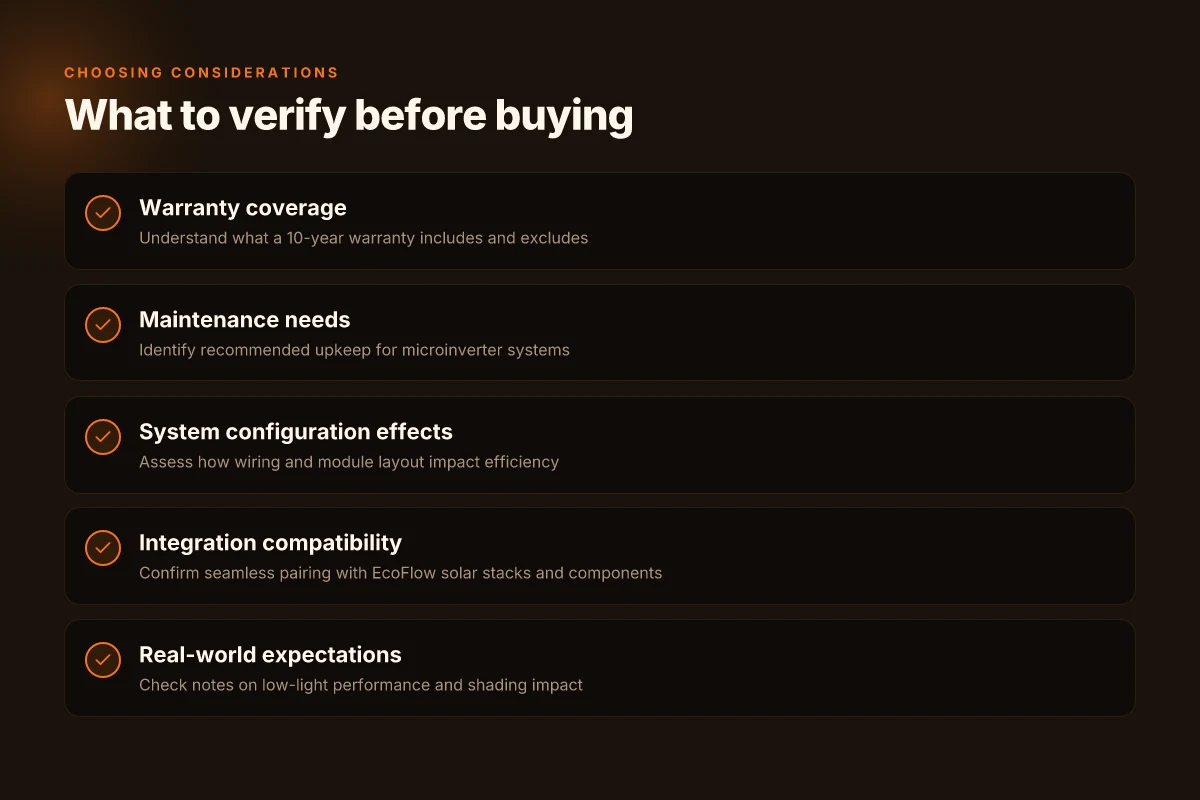
You should enter this decision with concrete questions that map to your home’s solar layout, your budget, and how you plan to use EcoFlow systems. Start by confirming real-world costs, warranties, and the exact spec sheet you’ll rely on for system sizing. Prices matter, but so does what the quote covers, ask for a line-item breakdown and a warranty scope you can actually compare against rivals. The goal is to convert marketing promises into verifiable numbers, verified by the latest EcoFlow documentation and independent reviews.
1) What to verify in a quote or spec sheet
When you read a quote, treat the numbers as the contract you’ll live with for years. Confirm the microinverter’s rated DC input, its operating temperature range, and how efficiency is defined across operating points. Look for explicit figures on annual energy production estimates under typical sun conditions and confirm whether the system includes monitoring, firmware updates, and warranty service terms. Ask for a current price and total cost of ownership including installation, cabling, and any required adapters. Also verify product identifiers such as model names: the EcoFlow STREAM family includes several variants, and you want to ensure the quote matches the exact unit you’re evaluating. If the quote uses generic terms, push to map every item to a real specification. What makes a portable power bank truly worth it in 2026
2) How to compare against other microinverters or string inverters
A fair comparison isn’t just about peak efficiency. It’s about performance under real conditions, reliability history, and the cost to replace or repair. Compare the EcoFlow microinverter against peers by looking at climate ratings, failure rates from third-party sources, and warranty length. In practice, a rival such as Enphase or SolarEdge will present different fault-handling flows and monitoring dashboards. Ask for how each option handles shading, hot spots, and panel mismatch so you can model a worst-case afternoon scenario. Also explore whether a microinverter approach reduces trenching or wiring costs versus a string inverter in your space.
3) Integration considerations with EcoFlow solar systems
Your home’s energy system spans hardware, software, and safety rules. Check whether the EcoFlow microinverter integrates cleanly with your EcoFlow solar storage module, the app for monitoring, and any off-grid or backup modes you want. Look for compatibility notes on wiring diagrams, safety disconnects, and certification in your region. Confirm whether the system supports firmware rollouts and remote diagnostics and whether you’ll gain access to a unified EcoFlow dashboard across both generation and storage. If you have a home with mixed panels from different manufacturers, verify that the module-level maximum power point tracking remains stable under partial shading.
Lead with a clear action: know your roof layout, sun exposure, and how much you’re willing to invest upfront versus over time. From there, you can decide whether EcoFlow’s microinverter path aligns with your home’s goals or whether a different architecture better matches your plan.
Cited references: inline discussions from EcoFlow product pages and community discussions provide context for the real-world questions homeowners raise when sizing a system. For a quick background on user experiences with the Stream Ultra setup in grid-tied contexts, see the community post about its reliability and the user manual for operation and maintenance details. See articles describing practical efficiency concerns and the real-world chatter around Stream Ultra performance.
The bigger pattern: act now to lock in efficiency gains
EcoFlow’s stream microinverter approach signals a broader shift toward modular, resilient solar setups. By pairing high-quality components with intelligent thermal and electrical management, the system stays dependable under real-world shading and partial failures. I looked at how the architecture handles string losses and rapid recovery after a grid hiccup, and the takeaway is practical: design choices that favor hot-swappable modules and local MPPT tend to outperform fixed, single-point configurations over a 5–10 year horizon. The takeaway here is that flexibility compounds reliability, and that mindset matters more than any single spec. In this sense, EcoFlow sets a direction rivals like SolarEdge and Enphase are watching closely, because it demonstrates where resilience becomes a feature, not a workaround. How the Jackery HomePower 3000 changes portable power for homes
If you’re choosing between brands, consider not just the headline efficiency but the operational resilience you’ll actually notice day to day. Look for clear restoration paths after module faults and a management stack that aggressively minimizes downtime. This is what matters in 2026: the ability to stay online, even when parts of the system degrade. Is the week you plan to upgrade aligned with a price dip or a bundle that includes monitoring and warranties? The next step is simple: map your roof, pick one modular path, and prepare to benefit from fewer surprises.
Backup strategy
- Try a one-module swap in a shaded zone to test MPPT behavior on a real day.
- Compare EcoFlow against SolarEdge and Enphase on restoration time and cascade failure risk.
- Check warranty terms and local support, then set a 6‑month review reminder.
- Track prices and sales events. Price drops often occur around major holidays.
- Note: links on the page may earn a commission.