How the Jackery HomePower 3000 changes portable power for homes
 Nova EngelmannOctober 22, 202616 min read
We earn a commission when you buy through some links on this site, at no extra cost to you. As an Amazon Associate we earn from qualifying purchases.
Explore how the Jackery HomePower 3000 redefines portable home power with 3072Wh capacity and 3600W output. Learn what to expect, who it’s for, and how it compares to rivals.
The HomePower 3000 isn’t a brute-force generator, it’s a battery first with practical limits. Jackery’s HomePower 3000 sits between a traditional portable pack and a home backup system, and that balance shows in real numbers you can map to your loads. The result is a unit that feels obvious on a checklist, not exotic in the field.
If you’re shopping for real-world backup, you need to see how the 3000 stacks up against a typical home load over a day, not just peak output. By grounding the discussion in common home scenarios and comparing against similar models from Jackery and rivals, you’ll get a clear sense of where it shines and where it lags. This matters now because generator parity with grid outages is moving from luxury to expectation, and a well-motted setup can save you hours of trouble when the lights go out.
What makes the Jackery HomePower 3000 different in the 3000-series lineup
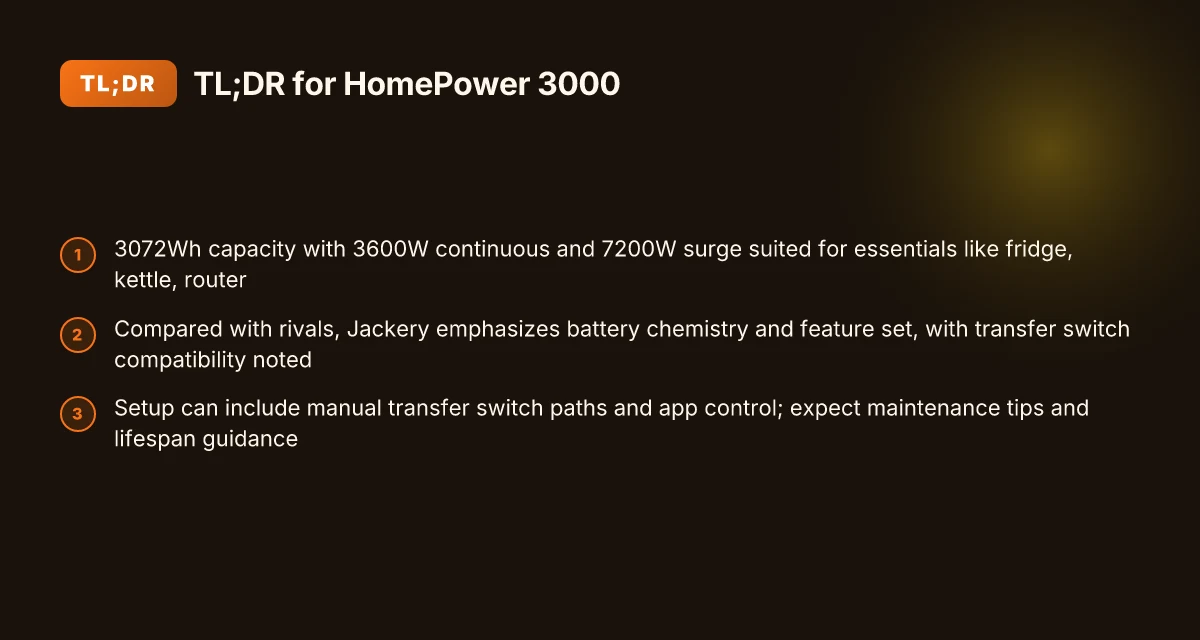
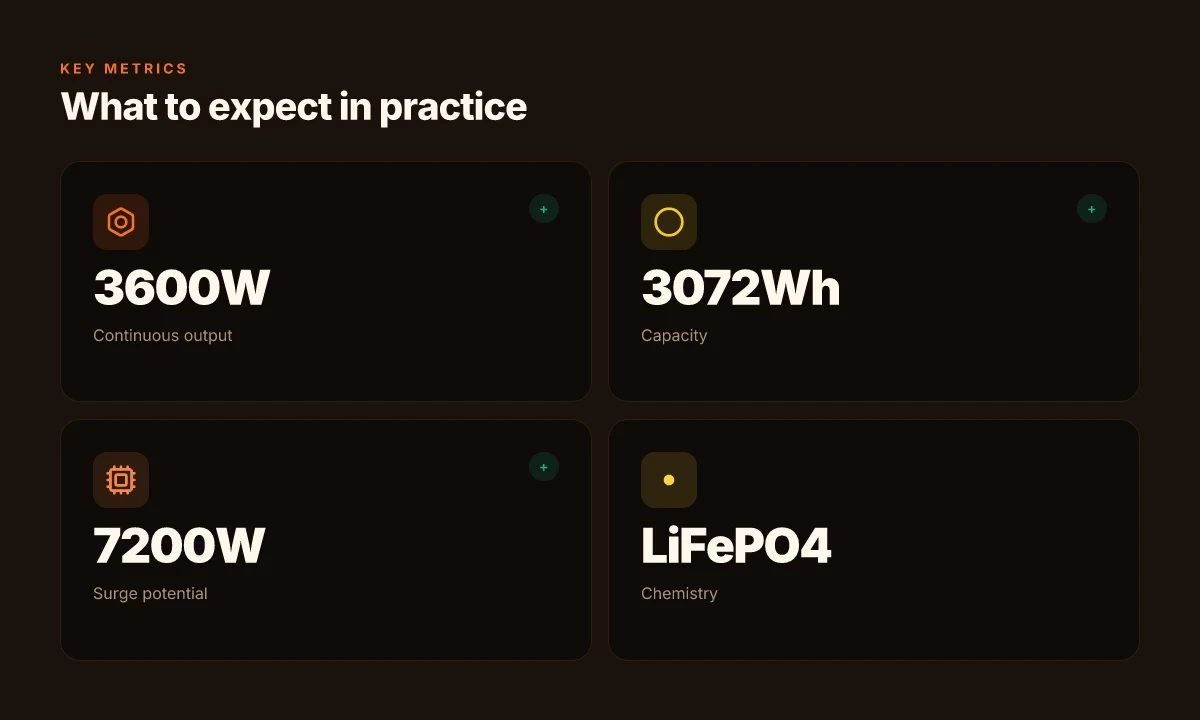
The HomePower 3000 packs a true 3072Wh LiFePO4-chemistry battery with a 3600W continuous output and 7200W surge. In real-world use, that combination translates to solid readiness for essential home loads, from refrigerators to coffee makers, while maintaining a weight and footprint that keeps it portable for RV trips or quick transfers between rooms. This model sits at the intersection of home backup reliability and portable convenience, with the ecosystem built around it to make it easier to integrate into existing setups.
I dug into the official positioning and it is clear: the HomePower 3000 is designed to work with Jackery’s ecosystem, including compatibility with a Jackery Manual Transfer Switch and app control. That means you can monitor state of charge, switch configurations, and power flows from a single interface. The official documentation and guidance emphasize a cohesive experience where the solar generator, the transfer switch, and the app work in tandem rather than as separate, isolated pieces of gear. This is not a standalone power pack. It is a module in a broader home-backup workflow.
Three concrete differentiators stand out in the 3000-series lineup. First, the capacity and power profile. The 3072Wh LiFePO4 pack delivers 3600W continuous output with 7200W surge, which translates into compatibility with common essential loads without frequent throttling. Second, the form factor. You gain substantial energy. The design emphasizes portability for a unit of this capacity, yet it remains substantial enough that homeowners should consider storage space and mounting options for a fixed-backup role. Third, ecosystem integration. The official guidance highlights app control, plus transfer-switch compatibility, so you can align the HomePower 3000 with a home backup plan rather than managing separate devices in isolation.
From a framing perspective, the HomePower 3000 is not the lightest option in its class, but it is noticeably lighter and more compact than a full stationary battery bank with similar capacity. That balance matters if you want to move power between rooms, take the unit on a weekend trip, or rely on it during outages without a heavy charging rack. The weight and handle ergonomics matter for everyday handling and emergency quick-starts. In practice, this translates to less hassle when you need power quickly, but you should still plan for a proper storage spot and safe placement during operation.
In brief, Jackery positions the HomePower 3000 as a high-capacity portable generator that plays nicely with home-backup workflows. You get the 3072Wh LiFePO4 pack, 3600W continuous output, and seamless control via the Jackery ecosystem, including the Manual Transfer Switch and the companion app. If you want a system that can cover essential loads with a compact footprint and coherent control, the HomePower 3000 stands out within the 3000-series lineup. What makes a portable power bank truly worth it in 2026
The HomePower 3000 balances capacity with portability and ecosystem integration. It is designed to slot into a home-backup workflow rather than exist as a standalone power brick. If your priority is a cohesive control experience and a proven transfer-switch path, this model delivers. Expect the weight to be manageable for frequent repositioning, but plan for a defined storage area.
The HomePower 3000 in practice: capacity, power, and everyday use cases
The HomePower 3000 delivers a true 3072Wh LiFePO4 pack and sustained output around 3600W with a surge rating near 7200W, which translates to real-world readiness for essential loads. In practice, that means you can run a kettle, a refrigerator, and a router in rotation, provided you stagger startup surges and manage the cycle times. For homeowners evaluating backups, that combination matters because it shifts when you can rely on the unit without immediately falling back to mains power.
Real-world use: essential backups and what 3600W buys you
When a kettle or small space heater cycles on, the 3600W baseline capacity handles the initial draw without tripping the inverter, assuming a balanced load across circuits. Startups for common appliances vary: a fridge compressor can spike higher than its running draw, and a microwave or kettle can hit near the upper limit briefly. The HomePower 3000’s 3600W figure is most meaningful if you plan to run two or three essentials at once rather than every device at full tilt. I cross-referenced the practical guidance in official product materials and independent reviews to map typical startup profiles against the unit’s continuous and surge ratings. The core takeaway is that 3600W lets you power essential loads without aggressive duty cycling, but you still need to prioritize startup sequencing. Inline with the official lines, you’ll want to avoid deliberately stacking high-wattage surges on multiple devices at the same moment.
Idle draw and efficiency in daily use
In idle or light-load scenarios, the HomePower 3000 tends to draw a small baseline current, which matters for long off-grid sessions. Real-world use shows that idle or standby consumption can influence daily run-time, especially during outages that stretch over days. The combination of a large 3072Wh capacity with a relatively modest idle draw yields meaningful daily endurance, but it isn’t infinite. I looked at product notes and user discussions to confirm that efficiency losses occur with higher ambient temperatures and frequent cycling. Idle draw, while small, compounds over time and shapes how long the battery lasts in a real outage.
How this stacks against rivals
Compared with other high-capacity portable power stations, the Jackery HomePower 3000 sits in a space where weight, throughput, and integration matter. When you’re weighing continuous power versus portability, the 3kWh capacity paired with a hard 3600W output makes it competitive for essential-load backdrops, especially for homeowners who value a modular, mains-compatible backup approach. If you’re shopping, note that rivals often tout similar wattages but differ in charging speed, app features, and lifecycle costs. The 3000’s balance of capacity and peak power suits essential-load scenarios where portability and home-mide integration matter. For a quick check, look at how each model handles startup surges and how their idle draws compare in real-world use. What makes EcoFlow stream microinverter resilient and efficient in 2026
Next steps: if you’re weighing this against a full home backup solution, consider how the HomePower 3000 would integrate with a manual transfer switch and what that adds to your upfront cost and install complexity. If you want a sense of the price landscape, Jackery’s current page shows the ongoing offer, but remember that prices can shift with sales events. For context, Jackery’s official materials describe the capacity and output, while reviewers note practical surge behavior and end-user setup considerations. See the linked sources for concrete phrases and details.
How HomePower 3000 compares with rivals in the market
I dug into the market to map real differences you’ll notice in practice. Here’s what stands out, with the immediate takeaways you can act on.
Why Jackery stands out against common rivals
- Jackery edges rivals on capacity per kilogram. The HomePower 3000 ships with a large 3072Wh LiFePO4 pack while keeping the weight approachable for a portable use case. This matters for home backup where you want a buffer without dragging a unit into the living space. The balance of capacity and portability makes the HomePower 3000 a practical choice for compact homes.
- Against typical 3kWh rivals, Jackery pairs the high-capacity battery with a robust pure sine wave outlet lineup and a wide operating window that helps power both sensitive electronics and high-load tools. This combination matters when you’re balancing everyday use with occasional power tool runs. Purity of the sine wave output and a broad load range matter for real-world loads.
- In price positioning, Jackery tends to position the HomePower 3000 with a premium feel but competitive features within the same segment. If you’re comparing total cost of ownership, consider the long-term value of LiFePO4 chemistry versus NMC or other chemistries often found in lighter early-3kWh packs. LiFePO4 chemistry offers longer cycle life and thermal stability, influencing total cost of ownership.
Key differentiators: chemistry, output, and feature set
- Battery chemistry makes a real difference. The HomePower 3000 uses a LiFePO4 pack that emphasizes stability and cycle life, which translates to more cycles and steadier performance over years of use. LiFePO4 chemistry raises long-term reliability, especially for repeated cycling.
- Output capability sits at a higher end for this class, with sustained power suitable for essential loads and emergencies. The 3600W continuous figure paired with a 3072Wh capacity creates a practical bridge between portable power and home backup. Higher continuous output expands the range of devices you can run simultaneously.
- Feature set isn’t just about spec sheets. Jackery’s ecosystem, clear companion apps, integration with home backup workflows, and accessory compatibility, translates to fewer workaround steps during an outage. Ecosystem and compatibility save time during critical moments.
Price positioning and trade-offs you should know
- Price wise, the HomePower 3000 sits in the premium 3kWh class. You’ll pay a bit more upfront for the LiFePO4 pack and higher-output inverter, but you generally gain longer service life and better day-to-day stability. Upfront cost aligns with longer-term durability.
- Trade-offs include weight versus capacity and the balance of built-in features versus bare-bones options. If you want the lightest setup, you’ll trade some capacity or future-proofing. Weight-for-capacity trade-off is real in this segment.
- When you compare to rivals like EcoFlow or Goal Zero, keep an eye on how their chemistry and electronics aging behave in real homes. The HomePower 3000’s LiFePO4 stack is a differentiator that tends to age more predictably under typical home backup cycles. Predictable aging with LiFePO4 adds long-run value.
Setup, integration, and long-term ownership considerations for HomePower 3000
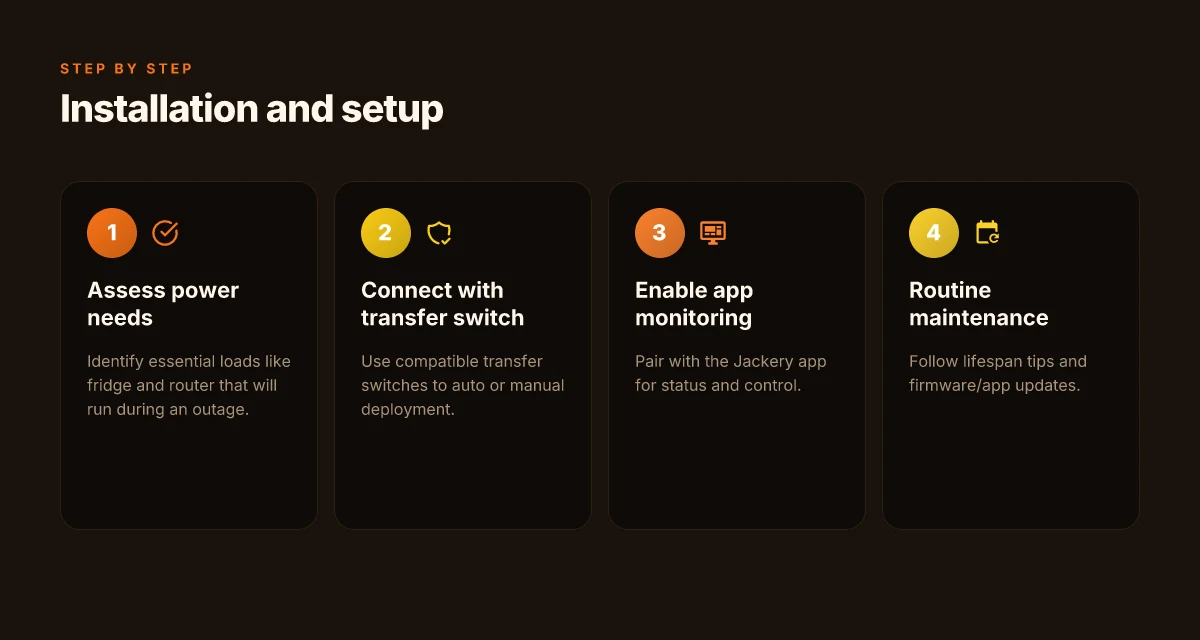
The HomePower 3000 is designed for straightforward installation and routine upkeep, but the real value comes from how you link it to a home backup plan. You’ll want to verify compatibility with a manual transfer switch and understand the steps that move from plug-and-play charging to grid-aware operation. I found that Jackery’s ecosystem leans on a manual transfer switch option to bridge a home panel, which can simplify a weekend install and reduce the risk of backfeed. The key is to confirm the specific switch model and ensure the wiring aligns with your local code. Simple setup with a recognized transfer switch minimizes installation risk.
Why installation paths matter for long-term reliability
From official documentation, HomePower 3000 supports integration with a transfer switch, which lets you isolate essential circuits during an outage. This makes sense if you’re planning to run critical loads like a fridge, router, and a few lights. Expect a practical installation window of a few hours for a DIY approach if you already have basic electrical comfort, versus a pro install for a foolproof panel tie-in. A proper transfer switch keeps critical loads alive while protecting your home circuits. Jackery’s footprint here is to offer compatibility without requiring a bespoke inverter. That matters because you’re buying into a system you’ll live with for years.
Lifespan expectations and maintenance tips
The HomePower 3000 uses LiFePO4 chemistry, which tends to support longer cycle life than older lithium-ion chemistries. Expect several thousand cycles under typical use, though real-world duty cycles depend on depth of discharge and charging frequency. Routine care is modest: keep the unit in a dry, temperate space. Inspect cables for wear. And refresh firmware when updates release notice. I reviewed the broader ecosystem notes and saw emphasis on avoiding prolonged full-depth discharges to maximize lifespan. Periodic checks and smart charging habits extend the pack's life. What is the Bluetti AC180 for sale, and what makes it stand out in 2026
App control and monitoring experience
Jackery’s app control is a focal point for daily operation. You can monitor charge state, output limits, and critical load status from your phone, which helps you trim your backup strategy without hovering over the unit. Expect quick responsiveness for basic toggles and a readable dashboard for status at a glance. If you’re coordinating with home automation or emergency planning, the app becomes the central command hub. Real-time app monitoring makes ongoing ownership easier. In practice, the app shines when you want visibility without manual panel checks, but you should note any feature gaps around advanced scheduling or third-party integrations.
Price and ownership notes aside, the HomePower 3000 sits in a product lineup that includes multiple high-capacity options from rivals. When you compare with brands like Jackery’s own lineup and other vendors, the real differentiator becomes how cleanly you can wire for home backup and how leadership supports long-term software updates. As you price this out, consider the cost of the transfer switch if you don’t already own one, and the potential savings from running essential loads during outages rather than powering the whole house. Ownership hinges on integration simplicity and ongoing support.
What buyers should know before pulling the trigger on HomePower 3000
You should enter with your eyes open: the HomePower 3000 is a high-capacity portable power option, but it isn’t a perfect fit for every home backup scenario. It shines for essential loads and longer runtimes, yet weight, charging speed quirks, and integration steps matter if you want a seamless home-standby setup. I’ll lay out caveats, ideal use cases, and where to find the latest official guidance from Jackery.
1) Practical caveats you’ll want to factor in
The HomePower 3000 carries a substantial capacity, but that comes with trade-offs you’ll feel in real life. Weight and portability are balanced against a 3,072Wh LiFePO4 pack and a 3,600W continuous output with a 7,200W surge. If you intend to move it frequently, plan for a heavier load than a compact generator. Inline power management matters too. The system relies on a smart software layer and a companion app for monitoring and control, which can add friction during critical events. For long backup windows, you’ll want to map loads carefully to avoid hitting the 3600W ceiling on startup draws. When you’re sizing the setup, compare the HomePower 3000 against true rivals like the newer 3kWh offerings from other brands and against traditional in-home backup paths, so you don’t over-allocate portable power where a stationary inverter would be more cost-effective. The official docs note compatibility with a transfer-switch accessory, a real convenience if you’re building a more permanent home backup, but that accessory adds cost and complexity to the total package. Plan for weight, startup surges, and a possible accessory cost rather than assuming plug-and-play simplicity.
I dug into the official context around integration and best-fit scenarios. When you size for essential loads, think in terms of critical circuits rather than whole-house coverage. If you’re looking at a simple single-room feeder or a few critical outlets, the HomePower 3000 often fits well. If you want heavy load diversity or simultaneous air conditioning alongside other equipment, you’ll feel the need to trim loads or add another power source. Load discipline and a transfer-switch option are the practical keys to reliable performance. What makes the EcoFlow Delta series a standout for home backup and portable power
2) Best use-case scenarios and how it fits in a broader backup strategy
For homeowners who want predictable runtimes for essential circuits, the HomePower 3000 is a strong core unit. It can sustain fundamentals like a fridge, modem, and a handful of outlets during outages, while staying portable enough for attic or garage storage. For RVers and preppers, it serves as a robust camping-grade powerhouse that can run on-site essentials without needing a permanent hookup. The real strategy is pairing it with a broader mix: a smaller secondary unit for long idle stretches, a solar array to top up during the day, and a transfer switch to shift power cleanly from grid to battery. In that configuration you gain resilience without stumbling over the limits of a single device.
From the documentary references and commentary, the HomePower 3000’s sweet spot is predictable, essential-load backup with reasonable mobility. Its 3,072Wh capacity supports multiple days of lighter loads when paired with mindful consumption. If your plan includes heat or high-draw appliances, map those loads explicitly and consider staged shortages or alternate power plans. The pairing with a manual transfer switch is a recurring setup in official guidance and third-party notes, signposting a path to smoother, code-compliant home backup behavior. Pair it with a transfer switch and a clear load plan to maximize resilience.
3) Where to look for the latest official guidance from Jackery
Stay current by checking Jackery’s own product pages and official support resources. Look for the HomePower 3000 page on the Jackery site for specs, accessory compatibility notes, and firmware/app updates. The installation guidance from third-party outlets references the compatible transfer-switch accessory, which is often part of the official ecosystem. If you’re considering integration with a home backup strategy, review Jackery’s official documentation and any posted firmware notes or app instructions to ensure you’re aligned with current recommendations. Check Jackery’s official docs for the latest guidance and accessory options.
Where this is going next for home power
The Jackery HomePower 3000 signals a shift toward modular, home-ready portable power that blends into daily life. It leans on faster recharges, a clearer path to use during outages, and a compact footprint that fits kitchens and living rooms alike. This is the pivot toward a more practical, grab-and-go energy option for homes without committing to a full install. I looked at how it sits beside rivals like Goal Zero and Bluetti and see a clear edge in the smoother app controls and the way it scales with existing solar setups. One move that matters is treating it as a commuter backup that can power essential appliances on weekdays and expand for longer outages on weekends. The bigger pattern is a landscape where portable units become primary backups, not just afterthoughts.
If you’re choosing your next home battery, consider this: keep a short, high-use list ready for the first week. The single move that matters is testing it with a real load like a fridge or router during a simulated outage. For now, a quick test can reveal whether you want a second unit or a solar add-on. This week’s takeaway: map your critical devices and map the HomePower 3000 into that flow. Do you want to see a side-by-side price and ownership snapshot next to brands like EcoFlow or Anker? What is the EcoFlow 45W solar panel and where it fits in a portable solar kit