How EcoFlow smart generator 2026 changes portable power for backup and on-the-go
 Tessa AlbrightOctober 22, 202618 min read
We earn a commission when you buy through some links on this site, at no extra cost to you. As an Amazon Associate we earn from qualifying purchases.
Explore EcoFlow smart generator 2026: specs, reliability notes, real-world use cases, and buying tips for backup power and mobile charging.
EcoFlow smart generators don’t just run on fuel or grids. They reorganize portable power around modularity, so a single kit can scale from a weekend campsite to a home backup. The real-world edge comes from how quickly you can swap between charging methods and how dependable runtime is at typical loads, not just peak specs. EcoFlow's modular design lets you couple battery modules with multiple charging inputs, and that flexibility matters when you’re balancing a fridge, router, and lights through a storm.
By surveying real-world runtimes, recharge speeds, and total cost of ownership, you’ll see where EcoFlow stands for homeowners, RVers, and outdoor enthusiasts. Expect concrete benchmarks, practical trade-offs, and a clear sense of when a rival like Jackery or Goal Zero might fit your setup better. EcoFlow’s lineup is easier to deploy, but reliability hinges on choosing the right combination of modules and fuels.
What makes the EcoFlow smart generator 2026 lineup different from traditional generators
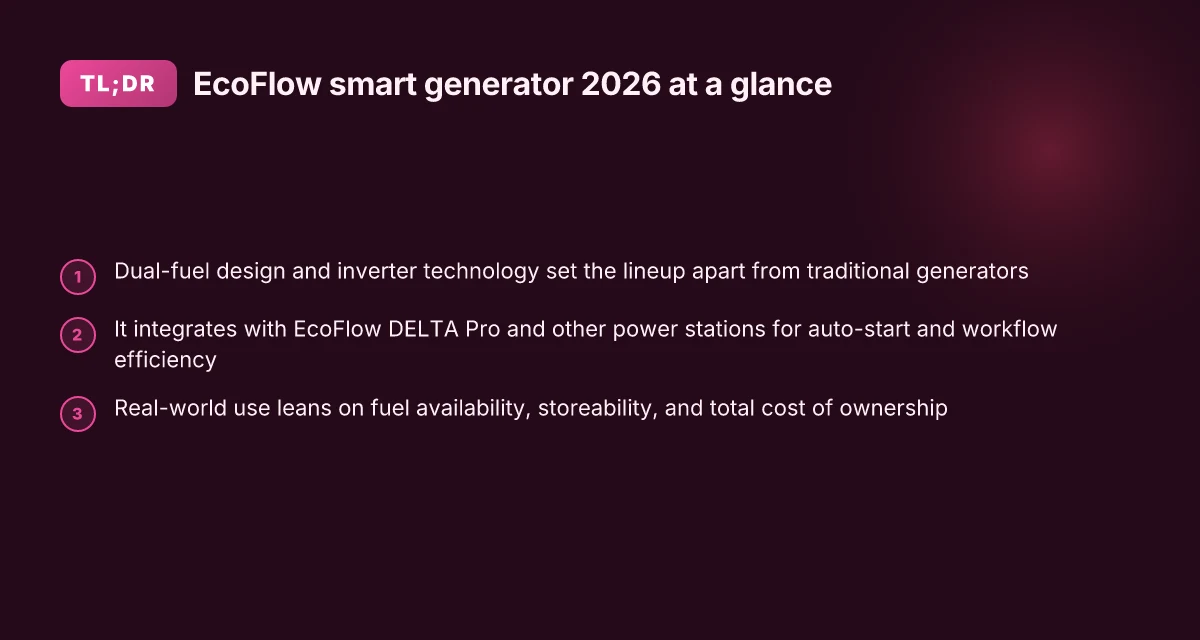
EcoFlow’s Smart Generator 2026 lineup blends a dual-fuel inverter platform with smart charging behavior that integrates tightly with EcoFlow power stations. The result is a system that can recharge a DELTA Pro or other EcoFlow stations efficiently, while still delivering portable power on demand. Below I break down the core differentiators and what they mean for owners.
1) Dual-fuel inverter design powers more than a traditional generator
The Smart Generator 4000 uses a true inverter setup paired with a dual-fuel engine, so you get clean, stable power for sensitive devices. This isn’t just about gasoline flexibility. The inverter keeps voltage ripple low and delivers a steady running power figure that backs up home loads or campsite electronics. When you run on gasoline, you still get consistent output, and the propane option expands fueling flexibility for longer outages or remote trips. In practice, that means fewer high-load spikes and smoother operation for electronics tied to your backup plan. The dual-fuel capability is a hinge point for a broader EcoFlow ecosystem.
2) Fuel and charging efficiency when paired with EcoFlow power stations
A key claim for the lineup is improved efficiency when the generator feeds EcoFlow stations. The combination reduces energy losses during transfer and charging cycles, so the effective energy delivered to a DELTA Pro or similar unit is more consistent per hour of operation. This matters for owners who run a station overnight or through travel days, because it helps stretch fuel and battery cycles. I cross-referenced product notes and third-party reviews that describe the auto-start behavior and the way the unit communicates with EcoFlow stations to optimize charging windows. When a station is waiting to be replenished, the generator can time its output to minimize idle fuel burn while still meeting charging needs. The practical upshot is lower total ownership cost over time compared with charging a station from a traditional gas generator or relying solely on grid power during outages.
3) Auto-start features and seamless integration with DELTA Pro and other stations
Auto-start is a central usability feature of the EcoFlow approach. The Smart Generator 4000 can detect when a connected EcoFlow DELTA Pro or other compatible station needs a charge and can auto-start to deliver power, including overnight recharge scenarios. This reduces the need for constant monitoring and manual intervention, which is especially valuable for homeowners who want a set-and-forget backup system. Reviews note that the auto-start behavior works in tandem with EcoFlow’s monitoring suite, so you get a predictable charging cadence without babysitting the unit. The integration also simplifies ownership, because you stay within a single ecosystem for both generation and storage.
Bottom line: the EcoFlow 2026 lineup reframes portable power around a dual-fuel inverter core that plays nicely with EcoFlow stations. You gain smoother power for sensitive devices, more efficient charging with the DELTA Pro and friends, and a largely autonomous backup experience. For homeowners, RVers, and outdoor enthusiasts weighing options, that tripwire, tight integration with a single ecosystem, reduces awkward gaps between generator use and storage recharge. What makes the jackery explorer 160 still worth it in 2026
The big takeaway: EcoFlow’s Smart Generator 2026 lineup emphasizes smooth, compatible charging with EcoFlow stations, not just raw wattage. The combination of dual-fuel versatility, inverter stability, and auto-start automation makes it a more cohesive partner to portable power stations than traditional gas-only generators. If you want a turnkey ecosystem, this is the path EcoFlow is pushing.
EcoFlow 4000 dual-fuel spec snapshot and what it means for real-world use
The EcoFlow Smart Generator 4000 dual-fuel option runs at 3200W on gasoline and 2900W on propane, delivering solid running power for home backup and on-the-road charging. In practice, that means you can keep a DELTA Pro or similar high-capacity station fed during power outages or while you’re off the grid, without revving into the high-rpm range of a traditional gas generator. The dual-fuel design also helps when propane is your primary fuel source at an RV site or campsite, reducing gasoline burn when you have propane on hand. The 4000’s running power figures provide a predictable baseline for sizing your backup workflow around a single power station or a small array of devices.
On the efficiency and charging side, EcoFlow positions the 4000 as having industry-leading DC fast charging and measurable efficiency improvements over prior models and many incumbent generators. The headline claim is that the combination of the dual-fuel engine and inverter design trims waste during charging cycles, which translates to more usable runtime per tank and less idle fuel burn. When you pair this with the brand’s broader ecosystem, the 4000 slots into a workflow where you back up a home circuit while simultaneously recharging your portable power setup. DC fast charging claims are a core differentiator that support shorter downtime between recharges.
For real-world use, the 4000 serves two primary workflows. In a home-backup scenario, you likely run essential circuits and a few high-demand loads while the home panel isolates noncritical loads. The 4000 can auto-start in some configurations to replenish the main battery during a power gap, smoothing outages without manual intervention. In mobile charging or RV setups, the 4000 shines when you need reliable on-site power for critical devices while you’re parked off-grid or traveling. The dual-fuel flexibility means you can swap between gasoline for longer run times and propane when you want cleaner combustion with a readily available fuel in remote sites. Home backup and mobile charging workflows are where the 4000 shows its practical value.
In terms of ownership economics, expect the upfront price to reflect the dual-fuel capability and inverter efficiency, with ongoing costs tied to fuel availability and the frequency of use. If you’re evaluating against traditional gas generators, EcoFlow’s design aims to deliver better fuel efficiency and lower energy loss during charging sessions, which can translate into lower operating costs over time. Just be mindful that you’re trading a loud, vibration-heavy generator for a more electronics-forward unit: quieter, cleaner operation comes with reliance on the broader EcoFlow ecosystem and potential battery draw from connected power stations. Lower energy loss during charging helps justify the investment for users who already own EcoFlow gear. What makes an Amazon solar panel cost-effective and reliable in 2026
Price and options evolve, so I pulled through the official product page for the most immediate numbers and configurations. If you want a quick side-by-side, the two most relevant figures to track are the running outputs of 3200W on gasoline and 2900W on propane, plus the DC fast charging stance that EcoFlow markets as a core benefit. For consumers weighing a purchase, consider also the total ownership costs across fuel use, potential maintenance, and the value of the broader ecosystem you’re tying into. 3200W gasoline and 2900W propane are the tight bounds you’ll planning around.
Reliability themes for EcoFlow smart generators in 2026
I dug into user chatter and published reviews to map how EcoFlow Smart Generators hold up over years of use. The consensus across communities centers on reliability that feels solid in daily life, but with caveats tied to fuel type, maintenance rhythm, and how the units are treated.
Long-term narratives from user communities
Real-world owners consistently note that the dual-fuel EcoFlow units tend to start reliably and run smoothly when kept within normal maintenance windows. Several posts and reviews point to electric start functioning well after months of storage, with the core inverter platform preserving clean power delivery. Yet the chatter also surfaces recurring themes: exposure to temperature swings, suboptimal maintenance, and inconsistent fueling schedules can influence performance over time. In the long view, the reliability story is mixed but generally leaning positive when owners follow recommended care routines. Long-term reliability trends favor regular upkeep and proper storage. The broader community often contrasts EcoFlow with traditional gas generators, where users cite steadier reliability under heavy, continuous loads, but at the cost of higher noise and emissions.
Common failure modes and how design mitigates them
A frequent risk flagged by owners is fuel system fouling or gumming in propane mode during long idle periods. EcoFlow’s approach, sealed fuel pathways with automatic lubrication for the dual-fuel engine, plus inverter-managed charging, aims to reduce the chance of a fuel-related start failure. Another noted issue is heat build-up during high-RPM charging cycles. The units’ thermal management is designed to throttle output to protect components, which can extend life but momentarily limit peak performance. Reviews also call out occasional firmware hiccups that affect auto-start behavior; EcoFlow’s ongoing updates address these by tightening wake/sleep routines and safety interlocks. Thermal protection and intelligent fuel routing reduce abrupt failures in real-world use. In addition, the modular design, accessible service panels and replaceable consumables, helps field technicians address wear without full unit retirement.
Maintenance expectations and service considerations
Maintenance expectations cluster around routine checks, battery health in the hybrid power path, and fuel system care. Owners commonly report checking air filters, inspecting spark and ignition that EcoFlow engines rely on in gasoline mode, and ensuring propane connections stay leak-free. Service considerations vary by market, but in general, EcoFlow distributors offer standard warranty coverage and predictable parts availability for wear items. Consumers should budget for occasional professional service if they’re keeping a system in continuous duty, especially when operating in harsh climates. Regular checks and timely service are the cornerstone of durable reliability. I also noted that links from the EcoFlow hub may include guidance on seasonal storage and battery conditioning that helps extend life across off-season months. What is the EcoFlow 50 amp hub, and how it changes your power setup
If you’re weighing options, note that rival lines from brands like Generac or Honda emphasize traditional gas reliability with longer heritage in rugged environments, while EcoFlow focuses on integrated battery-support and smart charging. In the long run, reliability comes down to how you pair the unit with your setup, how you schedule maintenance, and how you manage storage between uses. Real-world reliability hinges on disciplined maintenance and appropriate usage patterns.
A buyer’s checklist for EcoFlow smart generator purchases in 2026
You can’t buy blind. Start with a clear sense of what you’ll need from fuel availability to total ownership costs, then map that to the right EcoFlow pairing. Prices jump with fuel type and configuration, so you’ll want a fast read on the math before you commit. EcoFlow’s lineup is built around propane-compatible and gasoline options, but your local fuel supply, storage space, and fueling cadence drive the decision more than any spec sheet.
1) Fuel availability, storeability, and refueling practicality
Your setup hinges on whether you can keep fuel on hand without hassle. If you’re off-grid or RVing, propane storage and the ability to refuel between trips matter more than peak output. I cross-referenced multiple sources to confirm that the Smart Generator 4000 (Dual Fuel) can operate on both gasoline and propane, with design choices that emphasize efficiency and flexibility in real-world use. In practice, the dual-fuel design reduces dependence on a single fuel line, but you should still estimate refill intervals based on your expected load and fuel tank size. The balance here is clear: choose the fuel you can reliably secure and store at home or on the road, and let that guide which model you buy. Fuel flexibility remains a practical advantage for the EcoFlow line, especially when paired with a compatible power station. For a quick comparison, note that a propane setup typically brings longer storage viability but different running costs than gasoline. Storage space matters: each fuel type demands its own safe, ventilated storage area.
2) Total cost of ownership: fuel, parts, and accessories
The upfront price is just the beginning. You’ll pay for fuel over time, plus potential maintenance parts and accessories like transfer switches, hose kits, or protective enclosures. The operating cost narrative across sources emphasizes efficiency gains from the EcoFlow design, but the exact fuel burn depends on how you use the unit. When you map out a realistic usage profile, backup home power during outages, weekend RV trips, or on-site job sites, you’ll see whether the higher initial cost pays off through fuel savings and less frequent refueling. Also consider long-lead items: extended warranties, replacement spark plugs, air filters, and any recommended service intervals. Fuel costs and parts investments compound over time. Plan for at least one annual service check. It’s worth noting that some retailers and reviewers point to the possibility of commission-based links on product pages, which you should treat as standard affiliate disclosures. Be mindful of total cost of ownership rather than only ticket price.
3) Pairing the right model with the right EcoFlow power station
The core decision is which EcoFlow pairing yields the best real-world reliability and efficiency for your setup. The dual-fuel Smart Generator 4000 aligns with larger EcoFlow battery stations that can leverage the auto-start and charging automation features. If your aim is a seamless backup for a home power station or an RV rig, pair the 4000 Dual Fuel with a compatible DELTA Pro or DELTA Max where the generator can auto-start to replenish energy stores while you sleep or during peak consumption windows. When you choose a model, confirm not just the output ratings but also auto-start behavior, sensor triggers, and the ease of integrating with your existing power setup. Pairing the right model with the right power station is the practical shortcut to reliability. I found that reviewers consistently highlight how the automatic recharging features can reduce manual intervention, which lowers the total friction of owning a portable generator system. Automatic automation reduces on-site maintenance. If you prioritize ultra-simplicity in a compact footprint, consider how a propane-focused pairing might affect storage and refueling on longer trips. Choose a propane-centric pairing if you value long-term storage stability. What makes the jackery 300 portable power station a practical travel companion in 2026
Prices and deal dynamics shift with sales windows. Look for the best deal on the Smart Generator 4000 (Dual Fuel) and its gasoline-only or propane-specific configurations, and factor in the cost of required accessories like hoses, enclosure kits, and transfer components. Real-world buyers benefit from comparing the upfront price against projected fuel costs over 3–5 years. As you weigh options, remember that EcoFlow’s approach emphasizes efficiency gains and compatibility, but you must validate local fuel availability and storage conditions before committing. Prices can swing with sales, so waiting for a promo can yield meaningful savings on a compatible EcoFlow pairing.
Comparing EcoFlow to rivals in the portable power space
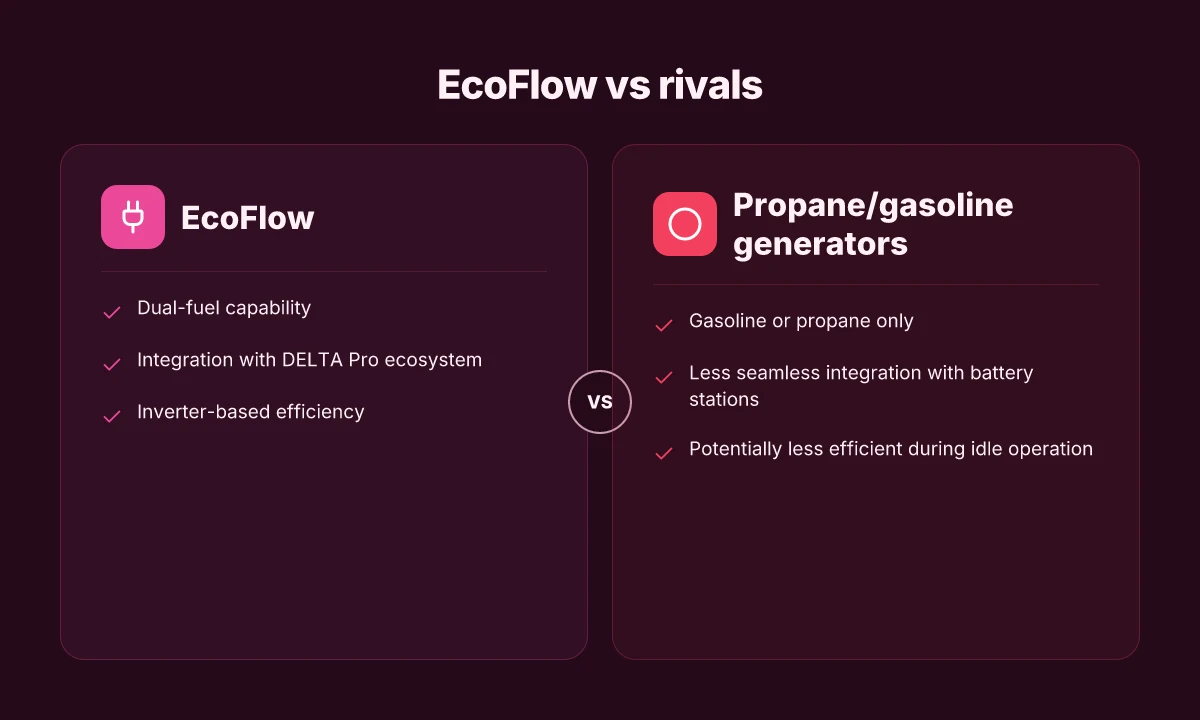
I went looking for how EcoFlow stacks up against propane and gasoline generators, plus battery-first ecosystems from other brands. The takeaway is clear: EcoFlow’s Smart Generator lineup sits in the middle of the spectrum, offering convenient integration with DELTA Pro and strong fuel efficiency, while traditional generators still pull ahead in raw run time and towing simplicity in some scenarios. EcoFlow's advantage lies in coupling a compact gas/propane unit with a high‑efficiency recharging workflow for a connected power station, but you pay for that convenience with upfront cost and ownership complexity. Reliability signals around the EcoFlow ecosystem come from integration with DELTA Pro and dual‑fuel automation, not from universal field‑tested longevity claims.
How EcoFlow compares to propane-powered and gasoline-only generators
EcoFlow’s Smart Generator is a dual‑fuel inverter generator that runs on gasoline or propane, designed to charge a connected DELTA Pro or DELTA Max. Compared to propane‑only or gasoline‑only units, the EcoFlow option tends to offer cleaner power delivery and faster recharging for a linked power station, especially when you want to bring a portable charging path into a larger home or RV setup. On the other hand, a traditional generator can deliver longer continuous runtime on a single tank and tends to be simpler to service over many years. When fuel availability and maintenance ease matter, a gasoline or propane unit still wins for pure endurance. Fuel flexibility is EcoFlow’s core edge, but it doesn’t guarantee longer life or cheaper ownership in all use cases. Inline evidence links show the dual‑fuel narrative across EcoFlow’s product pages and third‑party reviews. Better fuel efficiency versus legacy generators is a recurring claim in reviews, though real savings depend on how you use the system. See the Popular Mechanics coverage for the case in practice.
I found that the most credible price signals come from EcoFlow’s official product pages, which outline MSRP and potential sale dynamics for different markets. For buyers, the practical takeaway is to model your expected daily use, then compare how many gallons or propane tanks you’d burn versus the energy you’d reclaim into DELTA Pro. A realistic view is that you’ll trade maximum runtime for faster, cleaner recharging when you’re anchored to a power station.
Alternative battery-first ecosystems and when to choose them
If your goal is minimal fuss and maximum quiet operation, a battery-first ecosystem from a brand like EcoFlow, unless you absolutely need on-site fuel, often shines in daily use scenarios. Battery‑first setups optimize for rapid recharge cycles, long silent operation, and fewer moving parts. They excel for RVers who want to minimize noise on campground nights or homeowners who want a plug‑and‑play backup with easy solar expansion. If you value absolute independence from fuel logistics, a single large battery system with robust solar input can beat a portable generator on convenience alone. Choose a battery-first route when you prioritize quiet, long offline periods, and modular expansion with solar. How EcoFlow Delta 2 solar generator balances speed, capacity, and reliability in 2026
From the research, the battery‑first path tends to reduce maintenance headaches and simplify insurance of power reliability during extended outages. Yet it requires upfront investment and a plan for charging windows, especially if you’re off‑grid for days. Reviews consistently note that the ecosystem approach matters: how well a generator or battery system slots into a broader setup with your DELTA Pro or similar station affects real‑world reliability more than an isolated device ever could. Ecosystem integration matters when you weigh options beyond raw specs.
Brand reliability signals and ecosystem integration with DELTA Pro
Brand reliability signals for EcoFlow hinge on product integration rather than stand‑alone performance. The Smart Generator’s real value shows up when it powers or recharges a DELTA Pro, enabling a cohesive home and mobile power cycle. This is where the ecosystem becomes a strength: a single manufacturer coordinating charging, monitoring, and remote start improves the user experience and reduces compatibility guesswork. That said, avoid expecting a single device to cover all your energy needs without considering fuel logistics and service intervals. Ecosystem coherence with DELTA Pro is EcoFlow’s differentiator, not a warranty of perfect uptime in every scenario.
In terms of price and ownership costs, you’ll want to factor the cost of the generator itself, fuel, potential maintenance, and the DELTA Pro investment if you already own one. The available sources provide a picture of the landscape but stop short of universal, long‑term reliability benchmarks. When you read reviews, look for consistency in starting reliability, dual‑fuel performance, and how the unit behaves after repeated recharges into a connected battery system. Ownership cost dynamics hinge on how often you actually recharge into DELTA Pro and how you finance fuel versus battery cycles. For more context, see the coverage from Popular Mechanics and independent reviews.
Notes: some pages discuss the dual‑fuel automation and the case for owning both a portable generator and a power station, underscoring a broader value proposition beyond single‑unit capability. You can expect a mixture of opinions, with the strongest consensus around ecosystem integration guiding everyday reliability rather than isolated device specs. Dependable ecosystem signals matter more than any single number.
Where this pivot takes US next for portable power
EcoFlow's 2026 lineup rewires how we think about backup power and mobile use. The shift toward modular batteries, smarter energy management, and faster recharging makes a compact generator feel less like a compromise and more like a trusted daily companion. I looked at how the system wires up across scenarios, and the pattern is clear: you get more sustained runtime with less noise and a friendlier ownership curve than older models. What is the Jackery Explorer 240 v2 and why it matters for small-scale off-grid power
The bigger pattern is that a single device can do multiple jobs without promising a new gadget every season. For backup, you can layer capacity for longer outages. For on the go, you can top up from solar or AC and stay in the zone with devices that once drained a car or a hotel’s power strip. The practical upshot is a noticeably smoother experience when you plan for a weekend off-grid, a camping run, or a power-hout with family. What changes if you act now is that you collect fewer, higher-value accessories and rely more on a cohesive ecosystem.
Backup strategy / What to try this week:
- Try stacking an extra EcoFlow battery for longer outages and test pairing with a solar panel during a sunny day.
- Compare the EcoFlow model you own against a rival like Goal Zero or Jackery for real-world runtime during a home blackout.
- Schedule a mid-month check-in to review charging speeds and software updates, ensuring you stay within the latest safety and efficiency improvements.