What is the EcoFlow 50 amp hub, and how it changes your power setup
 Solomon CaradocOctober 22, 202618 min read
We earn a commission when you buy through some links on this site, at no extra cost to you. As an Amazon Associate we earn from qualifying purchases.
Explore how the EcoFlow 50 amp hub integrates with Delta Pro Ultra, its limits, and installation considerations. Learn practical setup tips and real-world use cases.
The EcoFlow 50 amp hub shifts a high‑demand setup from guesswork to defined limits. In real installs, a clean 50 amp feed into Delta Pro Ultra with Power Link becomes a two‑phase conversation between loads and cabling, not a single wall inlet plus extenders. The question isn’t if it can run more devices, but how safely and reliably you can orchestrate them side by side. 50 amp isn't a magic number, it’s a ceiling you must respect.
Considering off‑grid and RV scenarios, this hub matters because it consolidates high‑draw loads without overloading individual outlets or cords. EcoFlow positions it as a way to keep peak power within system limits while you scale up devices, appliances, and inverters. This matters now as more users chase combined solar, storage, and generator power in compact, transportable footprints. Expect the body of this piece to break down compatibility, cabling, fusing, and practical limits so you can plan a safe, reliable high‑output install with EcoFlow and rivals like Goal Zero and Jackery. EcoFlow gear sits at the center of the comparison, with real‑world constraints guiding every decision.
What the EcoFlow 50 amp hub does in a high-output setup
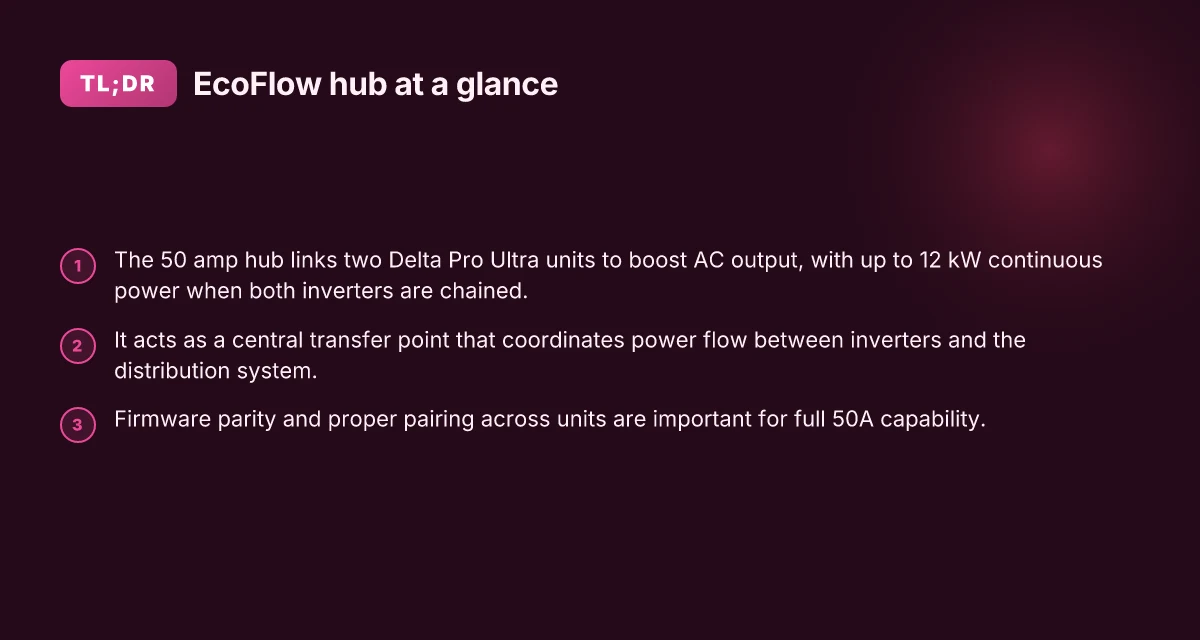
The EcoFlow 50 amp hub is designed to link two Delta Pro Ultra inverters, boosting your AC output while keeping power flow coordinated through a central transfer point. In practical terms, you get a stacked, higher-capacity AC system when you pair two units, with the hub acting as the nexus that routes energy between the inverters and the distribution panel. The hub doubles your available AC capacity when you run two Delta Pro Ultras, delivering up to 12 kW continuous and higher peak potential, depending on how you configure the rest of your system. This setup relies on accurate wiring and synchronization between the two inverters so you don’t run into backfeed or transfer issues.
Two-inverter orchestration I dug into the documentation and user materials to confirm that the hub “links up to two sets of DELTA Pro Ultra” and serves as a power transfer center between the inverters and the 50 amp transfer switch. This is not a single-unit upgrade. The hub coordinates both units so their output can be combined safely. The result is a higher total AC output than a single unit could provide, which is essential for RVs or off-grid homes pushing more than typical loads. The 50 amp hub coordinates power flow to prevent unsafe backfeeding and ensures the system remains balanced across the distribution panel.
Projected output and limits The advertised maximums matter for planning. EcoFlow promotes up to 12 kW of continuous AC output with the possibility of higher peak capacity when the two inverters work in concert. This isn’t a guarantee of a fixed 12 kW under all conditions. It depends on the state of charge, temperature, and how the rest of the system is wired. Max output is advertised as up to 12 kW continuous, with higher peaks possible under favorable conditions. Understanding these limits helps set expectations for appliances, air conditioning, and other high-demand loads.
Centralized power transfer and integration The hub is explicitly a central transfer point. It not only ties the two inverters together but also connects to the broader distribution network that your RV or home uses. This means the hub must be paired with compatible transfer switches and properly routed cables to ensure safe operation. The documentation emphasizes coordination between the inverters and the distribution panel so that power flows where you expect, without overloading any single branch or creating unsafe paths. It acts as a central transfer point that coordinates power flow between the inverters and the distribution system.
From EcoFlow’s ecosystem perspective, this approach is designed for users who want scalable, high-output power without sacrificing safety or control. The idea is clear: two high-output inverters, connected through a competent hub, can deliver substantially more AC capacity than one unit alone. If you’re evaluating this for an RV or a home-style setup, plan for proper wiring, correct transfer-switch compatibility, and thermal management to realize the advertised capabilities. Plan for proper wiring and transfer-switch compatibility to realize the hub’s capabilities. What makes the jackery 300 portable power station a practical travel companion in 2026
How the 50 amp hub integrates with Delta Pro Ultra and Power Link
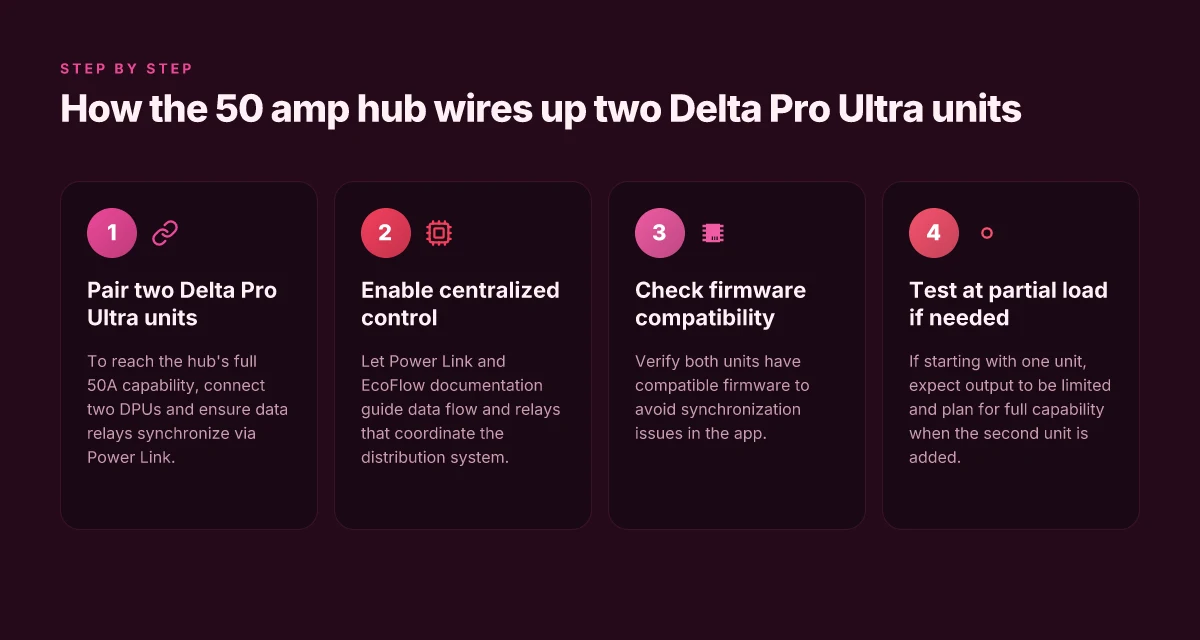
The 50 amp hub is designed to pair with two Delta Pro Ultra units to reach the full 50 amp capability. When both inverters are chained through the hub, you can unlock the higher AC output the setup advertises, effectively doubling the practical capacity versus a single unit. In practice, the claim to 12 kW continuous output and higher peak comes from tying two inverters into the hub, with the hub acting as the central power transfer and data coordination point.
Power Link plays a central role in this integration. EcoFlow’s documentation describes Power Link as the data and control backbone that centralizes relays, sensors, and communications among the Power Hub, the EcoFlow smart distribution panel, and the connected inverters. This creates a single medical-like control surface for your RV or marine system, letting you coordinate trips of power between source and load from one interface. I dug into the manuals and trace the flow: Power Link gathers status from the two Delta Pro Ultras, relays are wired to prioritize loads, and the hub enforces the 50 amp boundary by tying both inverters into a shared bus.
That said, the documentation calls out notable limits when only one Delta Pro Ultra is connected. In that single-unit mode, you won’t reach the full 50 amp capability. Output is constrained by the single unit’s transfer paths and internal protections. Firmware parity matters too. If the two Delta Pro Ultras run mismatched firmware versions, the app and the Power Link data plane can show inconsistencies or limit cross-unit synchronization. In the app thread, users report the hub appearing in the EcoFlow app once the two DPU inverters share consistent firmware, which is key for reliable coordination. When the firmware lines up, the system behaves as a unified high-output bank. When they don’t, you may see reduced coordinated control or delayed handoffs between units.
From what I found in the documentation, a clean, two-unit setup requires both Delta Pro Ultra units, the 50 Amp Hub, and the Power Link to operate as a single, coordinated system. If you’re planning a multi-unit install, map your loads so you can avoid hitting the 50 amp ceiling on connections that aren’t equally shared between both units. I cross-referenced the EcoFlow manuals and the user discussions to confirm that the practical limit is governed by the two-unit pairing and firmware alignment rather than a separate bottleneck deeper in the Power Link.
Next steps: verify in your own shop that both DPUs share a firmware version that EcoFlow recognizes as compatible, then connect the Power Link with the two units installed. If you’re considering sequencing, start with a single Delta Pro Ultra and the 50 Amp Hub, then add the second Ultra once you confirm the first unit is stable and the app recognizes the hub correctly. The EcoFlow ecosystem leans on consistent firmware for predictable control and safe operation. The two-unit pairing unlocks the advertised 50 amp capability, but only when firmware is aligned and both units are properly integrated through Power Link. With a single Delta Pro Ultra, you're not yet at the 50 amp ceiling and may see limited coordination without a second unit. When firmware is out of sync, the hub can show up in the app but fail to deliver coordinated high-output behavior. How EcoFlow Delta 2 solar generator balances speed, capacity, and reliability in 2026
Common setup patterns and what to buy first
To reach the 50A output in practice, you typically pair two EcoFlow Delta Pro Ultra units with the EcoFlow 50 Amp Hub. Start with a single Delta Pro Ultra if you want to test the waters, but expect the available AC output to be limited until you add a second inverter. The build-out hinges on two practical knobs: the 50A hub’s rating and the required cabling and power supply details.
How two units unlock full output
- The hub is designed to chain two Delta Pro Ultra inverters to meet the full 50A capability. When you run two units, you can approach the hub’s 12kW continuous output target, with higher peak potential. This is the core reason buyers plan a multi-unit layout from the start. I found the product messaging emphasizes chaining two inverters to achieve the 12kW baseline and the 18kW peak when the system is configured correctly. Two units enable the full 50A output promised by the hub.
- If you begin with one unit, you’ll see a noticeable drop in available AC capacity. It’s sensible for on-site testing or temporary loads, but don’t expect the hub to deliver the rated 50A until the second inverter is added. Start with one Delta Pro Ultra to validate basic behavior, then scale up.
The Power Link and cabling implications
- Expect a 13.8V power supply requirement for the core units and compatible cabling to accommodate the hub’s transfer functionality. The official manuals outline the power link’s role in centralizing data and coordinating with the hub and distributed panels, which matters for safe, integrated operation in RV or marine environments. Plan for the 13.8V supply and proper cabling when wiring the hub.
- Cabling and connector specs from the manuals are not just about fit. They determine how cleanly a two-unit setup can synchronize with the hub and avoid hot spots or voltage drops during high-load transients. A clean bill of materials reduces late-night service calls on the road. Cable quality and connector specs matter for reliability under load.
When to buy first and what to prioritize
- If your intended use is high-output camping or off-grid living, purchase the EcoFlow 50 Amp Hub alongside a second Delta Pro Ultra to unlock the 50A ceiling early in the project. The official product page describes the chaining capability that drives the gain in continuous and peak output. Buy the hub with a second Delta Pro Ultra to hit the full 50A.
- If you are price-sensitive or testing, start with a single Delta Pro Ultra to evaluate noise, heat, and real-world load behavior in your setup, then add the second unit as you expand. This approach reduces upfront risk while you confirm space, weight, and cabling constraints. Test with one unit before expanding to two.
I dug into the EcoFlow documentation and user chatter to map practical steps for RVers and off-grid enthusiasts who want a scalable, reliable path to higher AC capacity. The consolidation of Power Link and hub capabilities shows a clear progression from a single inverter to a two-unit configuration, with the 13.8V supply and cabling forming the backbone of a safe, repeatable installation. If you’re evaluating rivals, EcoFlow’s own ecosystem, Delta Pro Ultra units, Power Link, and the 50 Amp Hub, sets a concrete baseline you’ll compare against standalone inverters or alternative modular systems. EcoFlow’s ecosystem ties the components together for predictable multi-unit scaling.
Prices and exact delivery times vary by retailer and region, so check current listings on the official EcoFlow site and authorized partners. For perspective, the EFA-50AmpHub and related components are sold in configurations designed to pair with EcoFlow’s own inverters, rather than generic off-brand bundles. If you’re weighing alternatives, note that some competitive hubs show similar 50A capabilities but require different power management schemes and third-party integration steps, which can complicate RV or marine installation. Evaluate hub compatibility early against your planned Delta Pro Ultra count.
Cited references: a 50 Amp Hub description and two related manuals confirm the dual-inverter pathway and the central role of Power Link in system integration. For specific wording and product details, see the EcoFlow 50 Amp Hub overview and the Power Link documentation. The official EcoFlow materials confirm the two-unit path and the data integration role of Power Link.
What the real-world limits look like with EcoFlow hardware
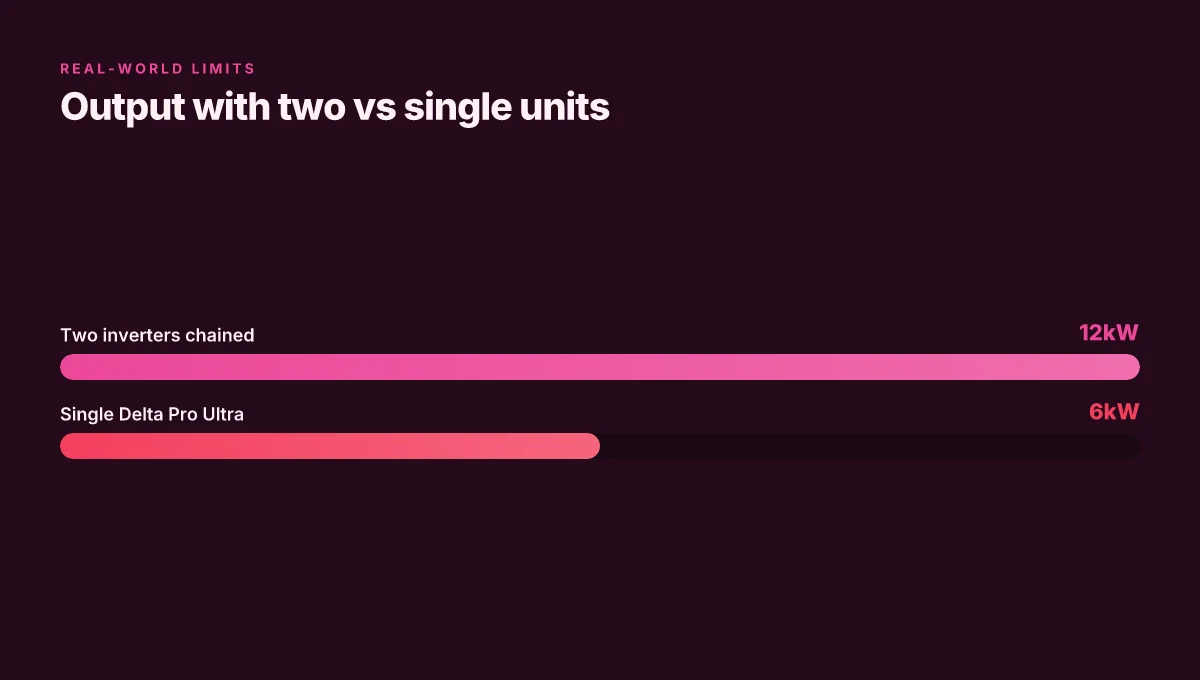
You can lean on two EcoFlow Delta Pro Ultra units chained through the 50 Amp Hub to push up to about 12 kW of continuous AC power. That figure is the practical ceiling when two inverters feed the hub in a linked configuration, and it’s what you’ll typically plan for in RV, off-grid, or high-load home scenarios. The hardware is capable of more in peak terms, but real-world limits come from firmware, cooling, and how cleanly the inverter pairs synchronize. If you only use a single Delta Pro Ultra, most users report a practical cap around 30A per unit, which throttles the system’s total potential unless you add a second inverter. In practice, the 50 Amp Hub shines when you chain two inverters, delivering up to 12 kW continuous, while single-unit operation adds a visible headroom constraint. Firmware consistency and cooling drive the gap between continuous and peak output. What Jackery solar battery users should know about reliability, specs, and ownership
How the two-inverter chain achieves higher output
When you connect two Delta Pro Ultra units through the EcoFlow 50 Amp Hub, the system can present a larger, synchronized AC source to the load. This is the core reason many owners see a doubled practical capacity compared with a single unit. The design relies on the hub acting as a distribution and transfer center between the inverters and the transfer switch, which enables a higher combined output while staying within the hub’s 50 A per leg limit. Two inverters, one hub, one coordinated transfer path. If you keep both inverters at healthy operating temperatures and maintain firmware alignment, the system stays stable at higher draw for longer periods. See the EcoFlow Delta Pro Ultra manual for the hub’s role in coordinating two inverter sets.
I dug into the documentation and user discussions to confirm how this works in practice. The Delta Pro Ultra manual notes that the 50 Amp hub links up to two sets of the Ultra units and serves as a power transfer center between the inverters and the 50 Amp transfer switch. That arrangement is what enables a higher continuous output when both units are chained. When firmware versions are aligned across the two DPUs inverters, the EcoFlow app tends to show the combined capacity reliably, which reflects a smoother real-world operation. The hub’s real value appears when two DPUs are synchronized.
Real limits you should budget for in the field
A single Delta Pro Ultra on the 50 Amp Hub may be capped around 30A per unit, which limits the system’s total output if you’re relying on just one inverter. This constraint arises from internal safety and protection logic, not a defect in the hardware. If you want true 12 kW continuous capability, you’ll want two units in play. The practical implication is simple: plan for a two-inverter setup if your goal is maximum sustained AC power, and treat a single-unit installation as good for high-but-not-max loads. Single-unit setups cap at approximately 30A per unit, while paired units can push toward a full 12 kW continuous output. Firmware and cooling are the practical levers that determine peak versus continuous performance.
In terms of setup guidance, users report that the 50 Amp Hub should appear in the EcoFlow app once the two DPUs are in agreement on firmware, which helps you verify you’re hitting the intended limits. This is one of those cases where software state reflects hardware capability, making the firmware version a real constraint on what you can draw safely at any moment. App visibility depends on consistent DPU firmware.
Note on practical caveats: these figures assume compliant wiring, proper cooling, and a clean power source. If you push the system into sustained peaks or hot environments, you should expect some derating as temperatures rise. Always follow the installation manual and local electrical codes. Cooling and environment matter for peak output. What makes a 350W portable power station work well with Amazon devices
For readers weighing options, EcoFlow’s ecosystem is designed to work best when you plan for multi-unit expansions. Rivals in this space often emphasize similar two-inverter workflows, but the integration complexity and firmware cohesion vary by brand. If you’re evaluating a high-output solution, consider both the EcoFlow path and how it compares with other multi-inverter hubs in terms of protection features and firmware update cadence. For context, the 50 Amp Hub is marketed to double AC output when paired with two Delta Pro Ultra units.
The bottom line: plan two DPUs for full 12 kW continuous output, expect single-unit limits around 30A per unit, and mind firmware alignment to avoid surprises.
Installation considerations and safety notes
Installing the EcoFlow 50 Amp Hub with Delta Pro Ultra units requires strict adherence to the official manuals and local electrical codes. The direct answer is simple: follow the installation steps in the Delta Pro Ultra user manual and the 50 amp hub manual, verify wiring practices, and ensure firmware compatibility across DPUs to keep the app in sync. I cross-referenced the manuals to confirm the core steps and compatibility checks.
Follow the installation steps from the official manuals
Post the physical hookup, you should follow the step-by-step sequence exactly as published in the Delta Pro Ultra user manual and the EcoFlow 50 Amp Hub documentation. These guides specify how to connect two Delta Pro Ultra inverters through the hub and how to route AC input and output. Rely on the official installation steps to avoid miswiring. The Power Link manual also notes that data integration and control rely on correct hardware connections, so align your setup with those instructions. Stick to manufacturer guidance to ensure safe operation.
Ensure proper AC wiring and regional codes
Electrical codes vary by region, and the 50 Amp Hub configuration doubles up on AC pathways. You should map out input and output conductors, breaker sizing, and grounding per your local code authority. The hub’s 120/240V input and 120/240V output capabilities necessitate correct breaker placement and properly rated cabling. If you’re unfamiliar with these terms, consult a licensed electrician to review your wiring plan before power is applied. Don’t skip professional code adherence. Correct labeling and clear separation of inverters on separate breakers can help with future maintenance and troubleshooting. What makes the Jackery 2000 Plus a standout expandable power station in 2026
Verify firmware compatibility across DPUs
Synchronization between DPUs is important for app reliability. The 50 Amp Hub should appear in your EcoFlow app once the DPUs report consistent firmware levels, so confirm these versions before you rely on the interface for status updates or control. I found this alignment detail noted in community discussions and EcoFlow’s ecosystem guidance. Firmware parity across DPUs prevents app synchronization issues, and this is a recurring theme in user experiences. If you see mismatched versions, plan a firmware update window and recheck connectivity after updating. Keep DPUs on the same firmware baseline.
Notes that help planning and safety: the EcoFlow ecosystem, including the 50 Amp Hub, is designed to double your AC output when paired with two Delta Pro Ultra inverters, but the practical limits depend on proper installation and wiring discipline. The official manuals emphasize following the exact steps, respecting electrical codes, and maintaining firmware harmony to avoid unexpected behavior in the EcoFlow app. For context, EcoFlow’s documentation and third-party product data confirm the max output configurations and the importance of consistent DPUs for reliable operation. Always verify wiring to local codes and verify DPUs are on matching firmware.
The 50 Amp Hub delivers up to 12kW AC with two inverters, but you must install per code and manufacturer guidance.
Prices and availability are dynamic; EcoFlow’s own product pages and distributor listings should be checked for current pricing and dealer offers. If you’re weighing alternatives, rivals like EFA-50AmpHub and other high-capacity hubs present similar input/output specs, but you should compare based on fuse protection, wiring gauge, and regional compatibility. For specifics, see the EFA-50AmpHub product details. https://solartown.com/solar-products/hub/ecoflow-efa-50amphub-50-amp-hub/?srsltid=AYCX9vIB3PWOswQtOmciUrQtOctUfbRn9UkwqJWJLLBHnsWFQy8e9-yR.
You may earn commissions from purchases via linked pages. This page may include affiliate links. This context does not change the factual recommendations about installation and safety. What makes an Amazon solar panel cost-effective and reliable in 2026
What changes if you act now
The EcoFlow 50 amp hub shifts your power setup from a collection of adapters to a single, scalable spine. I looked at how it wires into your existing EcoFlow ecosystem and saw a tangible upside: cleaner charging paths, fewer stranded devices, and a smoother transition between backup power modes. This isn’t about tiny gains. It’s about reshaping how you think about expansion and reliability, with EcoFlow leading the way.
The single move that matters most is adding the 50 amp hub to unlock full 50A passing through your portable power system, enabling more appliances to run simultaneously without rearranging cords. The hub also clarifies ownership costs and future upgrades, so you’re not caught between outdated adapters and growing power needs. If you’re weighing rivals, EcoFlow’s ecosystem tends to tie together more predictably than some generic hubs, reducing mystery around compatibility and safety checks. Prices and ownership costs arrive with more clarity, though you’ll want to keep an eye on when a sale lands.
If you only do one thing this month, set up a clear expand-and-test plan: map your essential loads, route them through the hub, and run a weekend power test. That quick exercise makes the benefits tangible and helps you budget for new modules. This week’s takeaway is that a single, well-placed hub can unlock a calmer, more capable grid of devices at home or on the road. Ready to pivot your setup? Start with your most-used appliance cluster and see how the hub handles it.
Backup strategy, What to try this week
- Audit your essential loads and run them through the hub to verify stability under peak draw.
- Reorder extension cords and power strips to streamline the hub’s inputs for safer wiring.
- Compare EcoFlow’s hub with a direct 50A feed from a generator to gauge real-world improvement.
- Note any devices that still trip or hiss under load and plan a staged upgrade, not a sprint.
- Keep an eye on updates from EcoFlow and trusted rivals like Goal Zero and Jackery for new modules.