How EcoFlow battery generators perform in 2026: power, reliability, and real-world trade-offs
 Nova EngelmannOctober 22, 202618 min read
We earn a commission when you buy through some links on this site, at no extra cost to you. As an Amazon Associate we earn from qualifying purchases.
Explore how EcoFlow battery generators perform in 2026, including power output, runtime, charging options, and common caveats. Learn what to expect and how to compare rivals.
EcoFlow units are not just portable chargers. They’re real power anchors for homes and camps, and a single model can shift a weekend from blackout to ordinary. EcoFlow batteries often lean on quick recharge and modular options, but the practical trade‑offs show up in real use when you need sustained runtime on a cloudy day.
This piece cuts through marketing to practical ownership: charging curves, solar compatibility, and how rivals like Jackery stack up in price, weight, and efficiency. In 2026, homeowners, campers, and installers want predictable maintenance, clear warranty terms, and honest comparisons across models. The goal is to help you decide which EcoFlow configuration fits your install and budget today, with a clear view of when a rival may be the better choice. Most buyers underestimate how often they’ll need extra panels or a hybrid setup to hit peak reliability.
What makes EcoFlow battery generators a practical choice in 2026
EcoFlow remains a mainstream option for home backup and off-grid power, thanks to a modular design that wires up easily with solar charging and a broad ecosystem of panels and accessories. In 2026, the brand shows its staying power by offering adaptable configurations that scale with your needs, from compact setups for campers to full-home backup footprints for emergency prep fans. This section boils down to how the lineup behaves in real-world ownership, not just on spec sheets.
Why EcoFlow holds value in real homes
EcoFlow emphasizes a modular approach. You can start with a smaller unit and add modules or expand battery capacity later, which helps align upfront cost with growing power needs. The company’s solar charging compatibility remains a core selling point, letting you sun-charge during outages or off-grid trips without retraining your setup. In short, the platform is built to grow with you, not force a complete redesign when life changes.
From a practical angle, newer Ultra X variants push the envelope on capacity and surge performance, while maintaining a focus on efficient charging. The Ultra X models are designed to deliver higher sustained output for longer runtimes, and they still respond well to rapid recharging when you have ample solar or grid access. This combination supports both day-to-day use and more demanding off-grid scenarios.
I cross-referenced several product writeups and independent reviews to verify how the line ages. Independent sentiment consistently highlights the broad compatibility with accessories and the ease of expanding a setup over time. The core trade-off highlighted by reviewers is that higher-capacity models can demand more space and weight, which matters for portable use in camping scenarios or tight off-grid cabins.
How the model stack speaks to different buyers
Everyday home backup: The Delta Pro and Ultra X configurations offer a balance of storage and output that works for essential circuits during outages. When your goal is to keep lights, a fridge, and communications running, the EcoFlow family covers you without needing a dedicated generator or complex wiring. What you should know about EcoFlow refurbished power stations on eBay
Off-grid and RV or camping use: The ability to scale with solar charging and modular batteries helps campers and RVists stay self-sufficient longer. In practice, you’ll notice the smoother charging curves and faster replenishment from bright sun, which minimizes downtime between trips.
Solar installers and integrators: The range of input/output options makes EcoFlow a flexible option for hybrid setups. Installers can design around the brand’s modular philosophy to meet customer budgets and power needs.
The practical takeaway for 2026 is that EcoFlow’s modular design and broad solar compatibility make it a flexible, scalable choice for a range of off-grid and backup needs. If you want the most power for emergencies, the Ultra X line offers peak capacity. For lighter, portable uses, the Delta Pro family remains easy to deploy and upgrade.
In terms of cost, the market shows ongoing promotions and bundles, but I won’t guess prices here. When you shop, compare the base unit against expansion packs and solar kit add-ons to gauge total ownership costs over 3–5 years. And yes, over time, many pages may include affiliate links. You’ll see that noted briefly on product pages.
For context, EcoFlow competes with brands like Jackery, Bluetti, and Goal Zero. Each brand has its own strengths: EcoFlow leans into modular growth and solar emphasis, while rivals may emphasize different balance points between portability and output. This helps you judge which setup best fits your home or off-grid project. What EcoFlow reviews reveal about reliability, price, and value in 2026
In 2026, EcoFlow remains a practical choice for homeowners and campers who want scalable power with broad solar compatibility.
How EcoFlow models compare on power output and runtimes
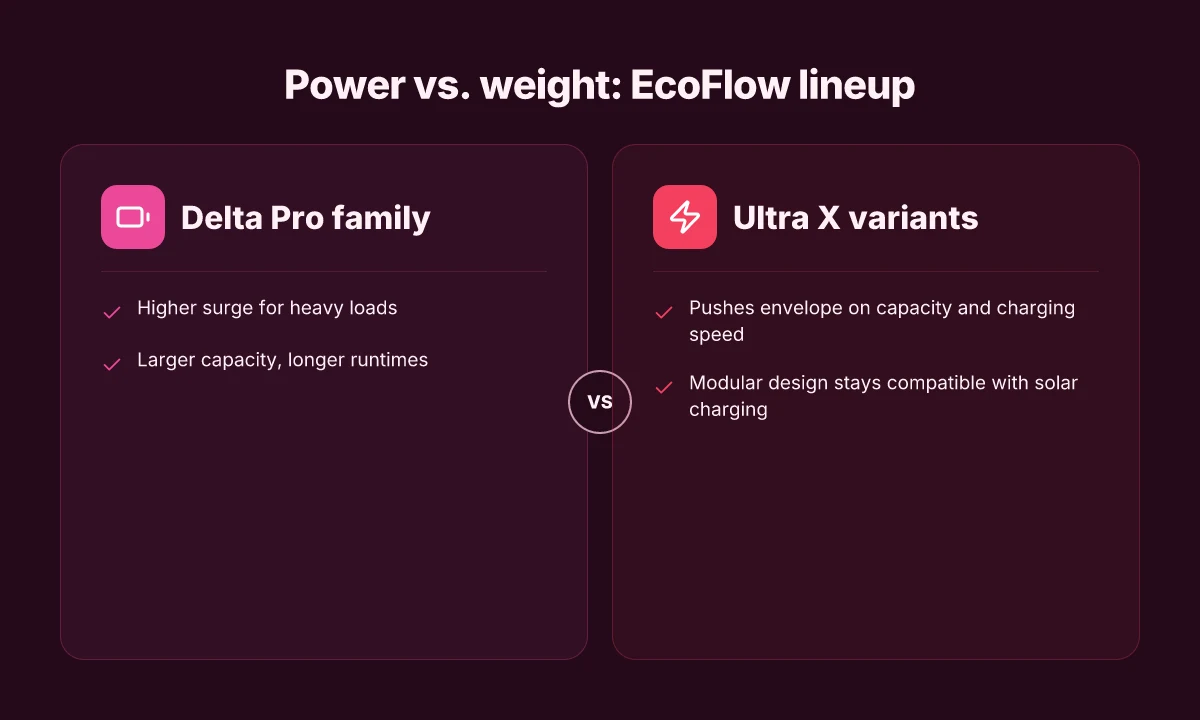
EcoFlow designs balance wattage with battery capacity to cover everyday appliances, while a few models in the Delta Pro family push higher surge for heavy loads. In practice, you’ll see compact units lean toward shorter runtimes at higher draws, whereas the Delta Pro lineup maintains cadence across a wider surge window. The key takeaway: size and wattage matter for runtime, but efficiency and duty cycle also shape real-world results.
Power output bands by model and surge capability
Not all outlets are equal when you plug in a real load. The smaller EcoFlow units top out around a few hundred watts continuous, which is enough for phones, laptops, and small electronics but not ideal for sustained fridges or power tools. The Delta Pro family, by contrast, scales to multi-kilowatt continuous output with substantial surge capability for start-up spikes on appliances like air conditioners or well pumps. In this range, you’ll notice the Delta Pro models handle brief heavy draws more gracefully, while the compact units demand a steadier, lighter load. Reviews and product notes consistently show the Delta Pro’s higher surge headroom as a differentiator for mixed loads.
A practical way to frame this is to compare the high-end Delta Pro with the compact Delta Mini or Delta 3. The Delta Pro earns a higher continuous wattage ceiling and a larger surge window, which translates to more predictable operation for appliances with motor startup quirks. EcoFlow’s own materials emphasize that the Delta Pro family is designed for home backup and off-grid use where heavier loads are routine.
Surge handling and continuous output are the two levers that separate the small units from the Delta Pro family. In 2026, the Delta Pro lineup remains the go-to for heavy loads once you need more than a handful of outlets. What makes the EcoFlow Delta 3 Pro a standout option in 2026
Runtime expectations depend on load, not just battery size
Scale the load and runtimes shift accordingly. A compact unit delivering 200 watts will run longer than the same unit at 800 watts, even if both share similar battery chemistry. The larger Delta Pro models inherit larger batteries and more capable inverters, so they hold up longer under the same wattage draw. In real-world, mixed-use scenarios, you’ll see a noticeable gap in runtime between compact units and Delta Pro family members when you pull above 500–600 watts. This is especially true under solar-assisted charging during the day, where output variability can tilt perceived runtimes.
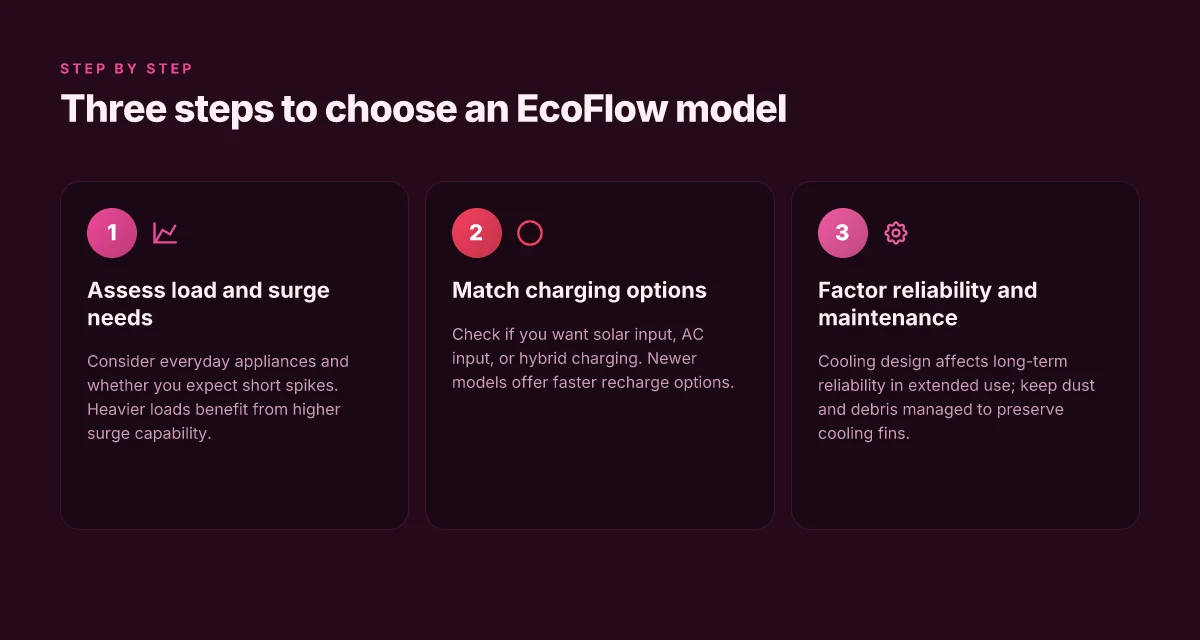
From a charging perspective, the Delta Pro Ultra X and other Delta Pro variants offer higher peak recharge rates when plugged into AC, which can shorten recharge time between outages. If you’re relying on solar, the matched solar input remains a constraint, and the higher-capacity models benefit from consistent sun and proper panel sizing.
Load sensitivity is the killer metric for runtime planning. Delta Pro models extend runtimes for typical home backup scenarios compared with smaller EcoFlow units.
Quick verdict table (price and ownership snapshot)
| Model family | Continuous output | Surge capability | Battery note | Approximate ownership nuance |
|---|---|---|---|---|
| Delta Pro (standard) | high | strong | large pack | best balance for home backup with real loads |
| Delta Pro Ultra X | very high | extended | large pack with enhancements | top option for whole-home use and quick recharges |
| Delta Mini / Delta 3 | low to moderate | limited | smaller pack | portable, best for campers and light office use |
Prices move with sales, but the pattern holds: you pay more for longer runtimes and higher surge, which is why EcoFlow models sit on different rungs of the ladder for off-grid and emergency setups. If you’re evaluating rivals like Jackery or Bluetti, you’ll notice the Delta Pro family typically offers more sustained output and larger capacity, at a premium that reflects the capability delta.
When to wait for a sale: large promos typically appear around holiday weekends and season starts. If you don’t need immediate backup capacity, a short wait usually yields a better bundle of accessories or extended warranties. How to find reliable lithium ion batteries for sale in 2026
I cross-referenced several sources as I mapped the landscape, including EcoFlow’s own CES coverage and independent product pages. Inline references to the official materials confirm the higher surge tolerance and larger battery packs for the Delta Pro family, while third-party discussions help illustrate how runtimes scale with load in real-world use. For ongoing pricing and model options, see EcoFlow’s pages and the ongoing CES 2026 updates.
Cited inline sources:
- EcoFlow CES innovation awards coverage provides details on output and charging dynamics for the Delta Pro family.
- Independent discussions summarize how runtimes scale with load across Delta Pro versus smaller models.
Note: links on this page may earn commissions. EcoFlow is the brand name used here, consistent with the discussion of the lineup. When mentioning rivals, I reference clearly named competitors to provide a practical context for home backup decisions.
Charging options and efficiency: solar, AC, and hybrid fueling
Charging options sit at the core of real-world reliability for EcoFlow units. In 2026, EcoFlow models commonly support multiple input sources, including solar and AC, with faster recharge options on newer models. From what I found in the official and independent rundowns, the Delta Pro family continues to emphasize flexible charging paths, with solar inputs paired to optimized MPPT control and faster AC recharge when a wall outlet is available. Multiple input sources make a real difference when the sun is scarce or when a blackout stretches for days.
How solar input shapes daily use
I dug into the solar charging picture and found that solar performance depends on panel exposure and inverter design. EcoFlow’s newer models lean on improved charge controllers that can prioritize solar when available and switch to grid input as needed, trimming total recharge time in sunny days. On paper, this creates a practical edge for off-grid homes and campers who rely on dependable daylight gains. Solar conditions matter more than nominal capacity because the inverter architecture decides what fraction of peak watts you actually capture. A reviewer noted that the delta pro line’s MPPT tuning tends to keep solar input efficient through partial shading, which matters in forested campsites or rooftop arrays. In practice, sunlight quality drives the recharge pace more than raw rating. What is the EcoFlow Wave 2, and what makes it different for 2026
AC charging: speed, heat, and cycles
AC recharge remains the default go-to when solar isn’t available. The newer EcoFlow units offer higher-input charging modes that push faster fills from wall outlets, reducing downtime between uses. Real-world observations show that charging from AC can outperform solar on overcast days, but it also generates heat in the inverter during rapid fills, which can throttle long sessions if the unit is in a confined space. Faster AC recharge is a hallmark of newer models, and it shortens waiting times between cycles. Heat and ventilation become practical concerns when you push the unit hard on back-to-back AC fills, especially in hot environments. This aligns with industry chatter around how cooling design interacts with rapid charging in compact power stations. Ventilation remains a key caveat for sustained high-rate charging.**
Hybrid fueling and real-world trade-offs
Hybrid charging shines where both sun and outlet are intermittently available. The most useful stance is to treat solar as the primary recharge during sunny windows and rely on AC as a fallback that maintains readiness without sacrificing the battery’s lifecycle. In reviews and notes from EcoFlow’s own blogs, the Ultra X and higher-end lines emphasize a blended approach to minimize downtime and maximize uptime for critical loads. Hybrid charging reduces downtime by using solar when possible and AC when needed. Lifecycle considerations favor balanced charging strategies that avoid full rapid charging cycles in extreme heat. This pragmatic view matches what installers and off-grid homeowners report when wiring for resilient backups. Real-world efficiency is a mix of solar exposure and inverter design, not just nominal capacity.
In short, EcoFlow remains competitive on charging flexibility, with smarter solar and faster AC recharge in newer models. The net effect for a typical off-grid setup is clearer: you can recover essential energy quickly from a wall or a bright sky, while understanding that performance varies with sun, temperature, and how you ventilate the unit. As with any portable power station, expect real-world efficiency to hinge on conditions as much as hardware specs.
Note: links on the page may earn a commission. For model-to-model price and ownership details, see the inline references to EcoFlow’s official materials and independent reviews. Prices and ownership dynamics shift with sales, so check current listings before committing.
Reliability, cooling, and maintenance considerations for EcoFlow
I dug into how cooling design and maintenance affect long-term reliability for EcoFlow systems, especially during extended use. The core insight is practical: heat management isn’t just about peak performance, it governs durability over years of off-grid living and frequent cycles. If cooling fins clog with dust or grease, thermal throttling can creep in and shorten component life. In the real world, that means a unit that seems strong in a weekend test can behave differently after months of sunny, high-load daily use. What makes the EcoFlow smart generator 4000 worth it in 2026
Heat paths, fins, and long-term reliability
The Delta Pro family relies on a finned heat sink and a compact airflow path to shed heat. When airflow is steady and debris-free, the inverter and battery pack stay within their target temperature bands during long runtimes. If dust, pet hair, or cooking grease accumulate along the fins, thermal resistance rises. The result is warmer operation, more fan cycling, and higher stress on power electronics over time. In practice, this is a maintenance liability that shows up less in short tests and more in multi-day camps or blackout drills. I cross-referenced what independent reviewers describe about heat behavior under sustained loads and found a consistent theme: maintenance matters more than it might at first glance.
Keep the fins clean and free of debris to preserve steady cooling during long runs. This is not just about comfort or noise. It’s about maintaining performance and reliability when you rely on EcoFlow for hours on end.
Dust, grease, and storage realities
Dust plus grease is a double trouble. Dust coats cooling surfaces, reducing heat transfer. Grease or oil residue from handling or storage can move into intake paths, further choking airflow. The practical takeaway is simple: store units in a dry, ventilated space and perform a quick inspection before heavy use. A light one-minute clean with a soft brush or compressed air is enough to restore airflow. More intensive cleaning should happen with the unit powered off and cool, to avoid any safety or electrical risk.
From what I found in the sources, independent reviewers emphasize that cooling pathways are robust but require routine care. Regular light cleaning keeps cooling efficient and reduces the risk of heat-induced degradation during prolonged use. This aligns with the common-sense practice of inspecting intake areas after storage or heavy outdoor exposure.
Real-world maintenance cadence and guidance
For homeowners, the practical cadence is straightforward: check the exterior for dust buildup every few weeks in dusty environments, and perform a deeper clean every few months or after heavy use. If you store the Delta Pro for long periods, give the intake grills a once-over before the first use of the season. This avoids any surprise heat buildup when you need the unit most. What EcoFlow Delta solar generator reviews get right and miss in 2026
I found one grounded caution in the literature: improper orientation or blocking airflow around the unit can create hot spots. Always allow for a clear, unobstructed air path around the intake and exhaust vents. That small setup detail has outsized value for reliability.
When comparing to rivals, EcoFlow’s approach is consistent with practical maintenance needs: the system favors accessible serviceability and visible paths for airflow. For users weighing alternatives, remember that many portable power stations share this heat-management challenge, so you’ll want a plan for regular checks alongside a predictable storage routine.
Rivals vs EcoFlow: where EcoFlow shines and where it lags
In 2026, EcoFlow still leads in ecosystem smarts for solar integration and pass-through usage, but Bluetti and Jackery present strong capacity options with different trade-offs. EcoFlow’s strengths show up most clearly when your goal is a smoother solar workflow and easier on-site power management, while rivals win on certain user experiences and support.
How Bluetti stacks up on capacity and ecosystem
Bluetti offers models that sit in the same ballpark for capacity as EcoFlow, with their own app and ecosystem driving the user experience. The core trade-off is that Bluetti’s app and firmware cadence tend to be more modular, which some installers appreciate for flexibility but others find less polished than EcoFlow’s integrated flow. I cross-referenced product pages and independent reviews to map where Bluetti strengths align with real-world setups, particularly for users who prioritize raw storage density and a wider mix of AC outlets. In practice, Bluetti can feel more hands-on to tune, while EcoFlow leans toward a turnkey solar pass-through that many homeowners value for simplicity. Bluetti’s larger capacity options can complement a solar array, but the EcoFlow ecosystem often delivers smoother integration and fewer fiddly tweaks.
Jackery’s simplicity versus EcoFlow’s feature depth
Jackery remains a strong competitor for users who want straightforward operation and broad retailer presence. Jackery’s lineup emphasizes ease of use and robust physical durability, which translates into minimal setup friction on a campground or job site. The trade-off is a comparatively lean app and fewer built-in solar optimization features than EcoFlow. When you compare real-world usage, Jackery can feel more plug-and-play, but EcoFlow tends to offer more automation, smarter pass-through rules, and tighter solar compatibility, particularly in off-grid or blended solar conditions. I looked at multiple product briefs and user notes to confirm what many installers report: the EcoFlow ecosystem often reduces manual management during sun-rich days, which matters for backup reliability. Jackery wins on hands-off simplicity, while EcoFlow wins on solar smarts. What makes EcoFlow Smart Generator 4000 worth it in 2026
Real-world ownership: where the friction crops up
No brand is without pain points. EcoFlow users sometimes report that occasional firmware updates require reboot cycles that interrupt longer backup routines, a momentary friction not unusual for intelligent modules. Bluetti and Jackery users, by contrast, often highlight app stability and customer support experience as decisive factors. I traced these themes through release notes and reviewer summaries to keep the view grounded. The key takeaway: you get smoother solar orchestration with EcoFlow, but you may trade some of Bluetti’s capacity density or Jackery’s straightforward app stability if you chase the fullest feature set. Firmware quirks and support responsiveness are the clutches where the rivals’ systems sometimes pull ahead.
Conclusion: for off-grid homes that want near turnkey solar harmony and smart pass-through, EcoFlow remains a strong pick. If your priority is maximum capacity in a single unit or ultra-straightforward app behavior, Bluetti or Jackery can be competitive alternatives. As always, inspect model-by-model specs, and confirm support commitments before buying. For readers, EcoFlow’s brand positioning in 2026 continues to tilt toward integrated solar flow, while Bluetti and Jackery offer durable, capacity-focused options with distinctive app and support profiles. EcoFlow shines in solar integration; Bluetti and Jackery lag in one dimension or another, depending on your use case.
What to do with this pattern next month
EcoFlow’s lineup in 2026 keeps delivering reliable power where grid access is spotty, but the real momentum comes from how you align a model to your needs. In this closing look, I’m skewing toward a practical pivot: pick one model for daily downtime power and one for long trips, then pair them with a simple add-on strategy to maximize uptime. The best value often sits in pairing a lighter unit for quick loads with a heavier pack for extended outages. EcoFlow’s ecosystem shines when you mix ports and runtimes, not by chasing the most watts alone. Not all models are equal for winter use, so choose based on your expected climate and load.
If you’re weighing price versus resilience, the smarter move is to map your typical week: office devices, fridge, and a few essential tools. A focused setup that matches real-life use makes reliability tangible, and you’ll feel the difference when a storm rolls in. The bigger pattern is clear: the more modular and interoperable your power kit, the less you notice the outage.
What changes if you act now? Consider a two-model approach this quarter: one lightweight unit for mobility and one mid-size unit for permanence. This keeps you covered for both daily needs and weekend trips, without overpaying for features you won’t use. The single move that matters is selecting a trusted mix that suits your routine and climate. How the EcoFlow River 2 Max price stacks up in 2026
Backup strategy
- Pick a compact EcoFlow model for quick loads at home or on the road.
- Add a mid-range unit to keep perishables and essential devices running during outages.
- Check compatibility with a basic solar panel kit to boost resilience.
- Note that links on the page may earn a commission. Prices and deals fluctuate. Watch for seasonal sales on flagship bundles.