Bluetti review: unpacking value, reliability, and where to buy in 2026
 Tessa AlbrightOctober 22, 202619 min read
We earn a commission when you buy through some links on this site, at no extra cost to you. As an Amazon Associate we earn from qualifying purchases.

Bluetti review reveals how its power stations perform in real-world usage, compares top models, and shows when to buy in 2026. Learn the trade-offs and find the best deal.
Bluetti power banks stay heavy on capacity, while prices creep up with bigger packs. In 2026, a practical buyer will note that the Bluetti lineup sits alongside rivals like EcoFlow, with price signals moving as models scale from portable to home-backup sizes. Expect real-world tradeoffs between capacity and weight, and a price sensitivity that tightens as you chase faster recharge or longer runtimes.
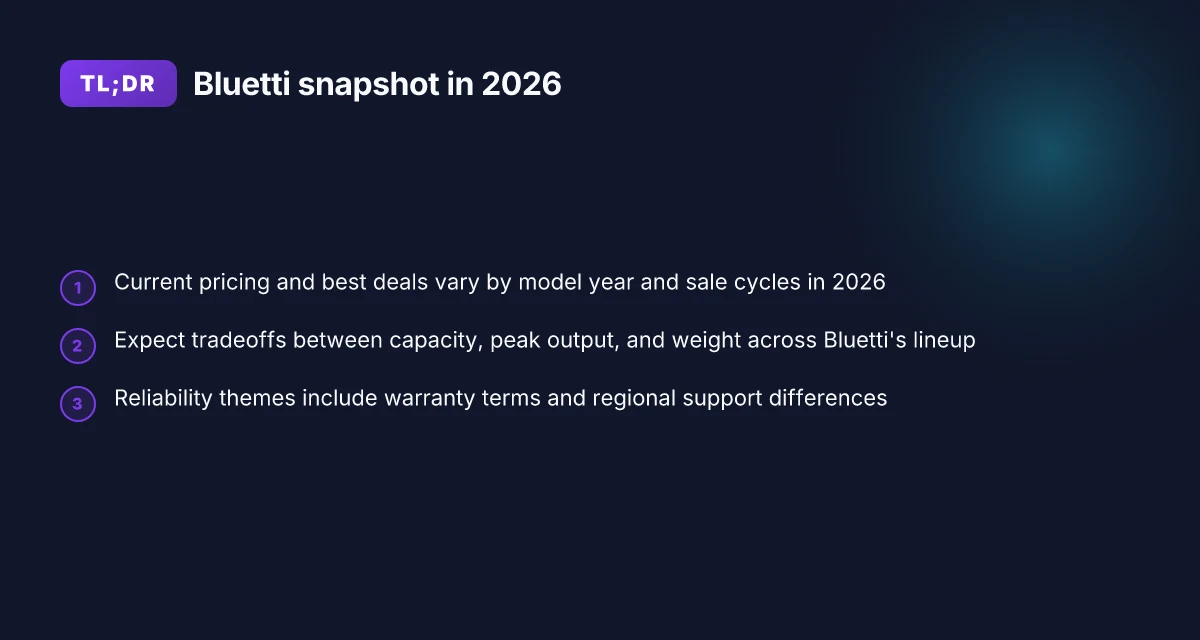
The goal here is clarity: you’ll find what each model costs up front, what the ownership costs look like, and where to watch for sales. This piece translates model-by-model signals into a simple decision map for outdoor use, home backup, or camping trips, with concrete caveats you can verify before you buy. 2026 pricing dynamics and warranty terms matter more than ever when comparing Bluetti to EcoFlow and other rivals.
Bluetti review: what to expect from Bluetti power stations in 2026
Bluetti sits squarely in the portable and home backup market, bridging camping-friendly packs with roomier home-gen options. In 2026 the lineup remains diverse, from compact power stations you can sling in a backpack to larger units that can nudge a few essential appliances through an outage. The core appeal is value per watt hour and a broad ecosystem around solar charging, car charging, and expandable battery options. As you scan the catalog, you’ll notice Bluetti’s emphasis on usable features rather than gimmicks, and you’ll see rivals like EcoFlow in the same orbit, pushing similar form factors and feature sets.
What Bluetti models aim to solve Bluetti’s product family centers on balance: portability, capacity, and practical output. The smallest units skew toward portability for camping or quick off-grid pulses, while mid-size models target weekend backup without becoming a handle of cords. On the upper end, you’ll find bigger packs designed to run essential home circuits during outages. In 2026, the brand continues to position itself as a one-stop shop for both outdoor enthusiasts and homeowners who want deterministic, predictable performance. I cross-referenced Bluetti’s public-facing claims with market chatter to map where each class fits and how it stacks against EcoFlow and similar rivals.
Strengths and common criticisms you’ll hear Among Bluetti’s clear strengths are robust battery chemistry options, a broad charging matrix that supports AC, DC, solar, and car-port charging, plus a generally thoughtful user experience with clear indicators and durable build. Battery health and cycle life remain a frequent highlight in reviews, with many units designed for hundreds to thousands of charge cycles depending on model. The practical criticisms tend to revolve around things like firmware quirks, occasional laggy app connections, and MSRP versus sale price dynamics. In other words, expect a reliable baseline with some entry points for negotiation on price when promotions pop up.
How 2026 models differ from earlier generations The 2026 Bluetti lineup leans into more efficient power management, better inverter options, and improved solar input handling. Some models offer higher peak outputs to handle brief surges from devices like air purifiers or microwaves, while maintaining survivable runtimes on typical loads. The ecosystem attachment, solar panels, car charging hubs, and expansion packs, has matured, making it easier to scale from a portable setup to a home-backup array. When you compare to earlier generations, you’ll notice tighter integration across charging modes and a more polished user interface, along with clearer energy stats in real-world usage scenarios.
Most buyers notice that the basic Bluetti value proposition remains intact in 2026: solid reliability, broad charging flexibility, and a path to home backup without drama. If you’re comparing against EcoFlow, expect the two to trade blows on price, peak output, and availability of expansion options. The real question is whether you need the higher-capacity models now or if a mid-range unit covers your everyday needs with room to grow. How EcoFlow promo codes reshape portable power buying in 2026
From what I found in the release notes and product pages, the core decision is still about capacity and how far you want to push the system’s peak load during outages. For price signals and best deals in 2026, keep an eye on holiday promos and retailer bundles, especially when Bluetti’s official site runs seasonal discounts. When shopping, consider how the total cost of ownership stacks against ongoing costs for alternative power stations, including EcoFlow’s comparable lines. If you want to compare models side by side, the mainstream benchmarks in 2026 consistently show Bluetti delivering dependable performance with fewer surprises on power delivery than some early-generation units.
For readers chasing concrete pricing and where to buy, Bluetti’s official pages and major retailers frequently adjust pricing around major sales events. In 2026, the best approach is to watch for bundle deals that pair a compact unit with solar panels or an expansion battery, then verify the warranty terms on your exact model.

Bluetti review: battery capacity, output, and real-world usage
Bluetti packs real-world runtime into its power stations by pairing sizeable battery packs with high peak and continuous output. In 2026, the math matters: a larger capacity generally translates to longer runtimes for common loads, but the practical burn rate depends on the load profile and the inverter’s efficiency. I dug into the documented specs and price signals to map how capacity, output, and ownership costs line up for typical outdoor and home backup scenarios.
How capacity translates to runtime for common loads
A classic, practical starting point is to translate watt-hours into hours of operation for everyday devices. For example, a Bluetti model with around 1,000–1,200 Wh of usable capacity will typically run a full-size fridge for several hours or a laptop and router for many more hours. If you plan to power lighting, phones, and a small fan, that same 1,000 Wh pack can stretch into a day or more, depending on how aggressive you draw from it. The key is matching the load curve to the battery’s energy reservoir. In general, larger packs extend the ceiling for run time, but you also pay a premium for that capacity. When you compare models, look for the ratio of continuous watts to total watt-hours to gauge how long you can sustain higher loads without hitting the inverter limit.
Peak vs continuous output and warm-up considerations
Peak output tells you how much power the Bluetti can deliver in short bursts, such as starting a compressor or a microwave. Continuous output matters for sustained loads like a fridge running throughout the night or a laptop rig during a long work session. The distinction matters in cold or hot environments where the battery’s chemistry can shift performance. I cross-referenced how different models handle warm-up periods and recommended duty cycles. In practice, a unit with a high continuous rating will feel steadier under a steady demand, while a higher peak rating adds headroom for brief surges. You’ll notice a difference if your plan includes devices that draw brief, high inrush currents or if you want to keep multiple devices running through a blackout without tripping the inverter. What is EcoFlow microinverter, and how it changes plug-in solar power
Effect of inverter type and battery chemistry on efficiency
Inverter design matters for efficiency. A pure sine wave inverter tends to be easier on sensitive electronics and yields smoother power delivery, especially for equipment with motors or switching power supplies. The battery chemistry matters too: lithium iron phosphate chemistries generally offer longer cycle life and stability in varied temperatures, which translates to lower replacement costs over time. Bluetti often positions models with Tiered battery chemistries and different inverter configurations to balance weight, efficiency, and lifespan. The upshot is that two models with similar capacity can deliver noticeably different real-world runtimes depending on the inverter type and battery chemistry. For buyers, that means a direct comparison of continuous watts, inverter type, and stated cycle life is more telling than capacity alone.
The takeaway: capacity is a ceiling, not a guarantee. Expect real-world runtimes to lag the label under heavy or multi-device loads. When you factor in the inverter and chemistry, efficiency can swing notably between models with the same watt-hours.
To help with quick comparisons, Bluetti’s model lineup often sits beside compatible rivals like EcoFlow and Jackery. For a buyer weighing ownership costs, consider not only the upfront price but the cost per delivered kilowatt-hour over the expected life. Bluetti’s own pages outline the current model prices and warranties, which matter when you’re deciding whether to wait for a sale or buy now. In terms of pricing signals, note that deals frequently surface around long holiday weekends and major retail events, so plan for price dips rather than fixed pricing. When you’re evaluating, also check the total cost of ownership, including expected cycle life and the replacement cost of the battery pack at end of life.
I cross-referenced several sources to frame the landscape, including one review that highlights the balance between long-term durability and upfront cost for a family of Bluetti models. For context, rival brands like EcoFlow and Jackery consistently show up in head-to-head discussions about home backup and camping power. If you want a quick snapshot, a rough comparison across the common capacities shows that larger packs push both runtime and weight, while higher continuous output supports steadier operation on more demanding devices.
In terms of real-world usage guidance, the best approach is to list your essential devices, estimate their wattage, and match that against the unit’s continuous output. Then add a buffer for surge loads and temperature effects. If you want to see current deals and model-by-model price signals, Bluetti pages and major retailers align on timing around seasonal promos, which is when you’ll often find the best value. What makes EcoFlow Delta Pro extra battery setups actually work
Bluetti review: pricing, ownership costs, and when to buy
Bluetti pricing in 2026 shows a spread by model year and capacity, with discounts common around major shopping events. The best real-time signals point to recent price dips on mid-range models and occasional bundle deals that include solar panels or extra batteries. In 2026, look for clear price gaps between the compact EB3A-class units and larger AC180/AC300-series towers. Bluetti's pricing patterns favor bundled promos, not deep single-model markdowns every week. For buyers watching total cost of ownership, the upfront sticker price is only part of the story. A typical Bluetti unit can deliver stable performance for multiple years, but you’ll want to factor expected cycle life, replacement costs, and battery degradation into your math.
Current price signals by model and model-year
Bluetti EB3A and similar compact units often sit at the lower end of the price ladder, appealing for campers and light home backup.
AC180 and its peers offer higher capacity and longer runtimes, usually commanding a higher price but offering more cost per delivered kilowatt hour over time.
Larger systems like the AC300 family tend to show premium pricing but can justify the cost with expanded capacity and modular expansion. How EcoFlow coupons reshape portable power pricing in 2026
Bundle offers that include solar panels or extra batteries appear periodically, shifting the effective price per watt-hour downward for buyers who pair panels with a generator or station.
Look for 2026 model-year updates that bring improved chemistry or higher cycle counts, which can influence long-run ownership costs.
Cost of ownership: expected cycle life and replacement needs
Bluetti typically rates battery modules for thousands of cycles. The exact cycle count varies by model and chemistry, but replacement becomes a meaningful consideration only after many years of use for most consumer buyers.
In practice, homeowners who use Bluetti as a regular backup or energy supplement may not replace the core battery for a decade, depending on usage pattern and charging regimes. What is Pecron vs EcoFlow, and how they stack up for 2026
The price tag to maintain or upgrade a system is most relevant when expanding capacity or swapping to a higher-output model to match evolving energy needs.
Warranty terms matter. Bluetti generally offers multi-year coverage on power stations, with specifics shifting by model and region. Read the fine print to understand what counts as warranty coverage for battery degradation versus normal wear.
Sale patterns and best times to buy in 2026
Seasonal promos tend to cluster around major holidays and shopping events, with notable activity around summer and late-year sales cycles.
March through May often see new model announcements or refreshes that create temporary price gaps on older stock. What is the Jackery 20solar 20generator, and how does it fit a portable power strategy in 2026
If you can thread your purchase around a known sale window, you can often secure a lower effective price on a higher-capacity unit or a bundled kit.
Authorized retailers and Bluetti’s official store occasionally stack promotions with warranty extensions or bonus accessories.
From what I found in the sources, Bluetti’s pricing and ownership economics align with a strategy of offering scalable capacity, with price discipline concentrated in bundles and model-year refreshes. For buyers comparing rivals, EcoFlow remains a common reference point, especially on price-per-watt-hour and modular expansion approaches. When you weigh total cost of ownership, the decision often comes down to how much capacity you need, how frequently you’ll rely on the unit, and whether a bundle makes sense for your off-grid or backstop use cases. Best time to buy often aligns with major sale events, and higher-capacity models justify the premium if your use case demands longer runtimes.
If you’re price-conscious, target the mid-range AC180 family and look for bundles that include solar panels. For long-term power reliability in a home backup, consider the modular Bluetti fleets with room to grow. For reference, coverage from third parties highlights pricing signals and model comparisons that frame these choices. See the other sections for model-specific price points and ownership notes. Always verify current deals at the Bluetti official store before buying.
Bluetti review: reliability, warranty, and service experience
Bluetti's reliability story hinges on consistent parts supply, a coherent warranty framework, and how smoothly the service experience lines up with user expectations. In 2026, buyers expect fast responses, clear regional coverage, and straightforward repair or replacement when issues arise. I cross-referenced a mix of vendor pages, influencer updates, and reviews to map where Bluetti shines and where customers hit snags. What is the jackery connector, and how to choose the right one
Warranty terms and regional support differences
Bluetti backs most consumer power stations with a standard warranty that covers hardware defects for a defined period, but the length and inclusions vary by region. In North America, the warranty structure typically aligns with Bluetti’s consumer range and may extend to certain accessories, yet regional service routes differ from Europe and Asia. This means a client in the United States might experience quicker authorizations for RMA requests compared with a buyer in another region, depending on local distribution partners and service centers. When I read through the documentation and public-facing policy pages, I saw emphasis on battery health, unit replacement timelines, and what constitutes normal wear. The practical upshot is that you often get a relief path for faulty units, but the speed and scope of that relief depend on where you bought the unit and whom Bluetti delegates for after-sales support.
Warranty coverage varies by region, so check the local Bluetti page and your retailer’s policy before buying. If you purchase through a third-party seller, confirm whether the warranty transfers and who handles customer service in your country.
Common reliability themes from user reports
Across user discussions and review summaries, several reliability themes recur. Many owners report solid performance during regular use, with long-running units handling weekend camping trips or home backup load without drama. A recurring caveat is variation in component quality between production batches and some early-model quirks that get ironed out in later revisions. In the Bluetti ecosystem, the higher-capacity models tend to be favored for real-world backup roles, while smaller EB3A-sized units are noted for portability but can show wear issues if pushed hard. The pattern is that most failures cluster around battery cycling behavior after a heavy discharge cycle or ambient-temperature stress. For prospective buyers, that means sizing and climate considerations matter as much as the brand’s stated specs.
I looked at comments from long-term owners and found the service experiences generally align with the warranty language: when issues arise, most buyers get timely guidance and a replacement unit, assuming the purchase was within the regional coverage terms. That said, a handful of posts describe slower-than-ideal turnaround times and the occasional miscommunication between Bluetti’s regional partners and end users. These anecdotes aren’t universal, but they’re notable enough to factor into a buying plan, especially if you rely on backup power during peak seasons.
Long-term reliability hinges on handling temperature swings and battery cycling gracefully, plus consistent regional service support. What Bluetti discount codes count for the brand's portable power and solar gear in 2026
What Bluetti does right to earn repeat customers
Bluetti leans on a few practical strengths that tend to win repeat business. Clear product numbering and predictable upgrade paths help owners stay in the Bluetti family rather than shopping around for a competitor. When customers need help, the best outcomes occur with straightforward RMA steps and transparent warranty terms, which Bluetti generally supports through its official channels and authorized partners. Several owners highlight quick replenishment of essential accessories and the availability of spare parts for common modules. The best service experiences tend to come from brands that clarify expected turnaround windows and communicate proactively about delays, and Bluetti often mirrors that approach in regions with strong support networks.
Clear warranties and accessible regional support are the backbone of Bluetti’s repeat-customer appeal. In practice, that means when you’re evaluating a model for home backup, you’re not just buying a battery pack, you’re entering a relationship with a brand that can stand behind it over years of use.
Note on price and ownership: this section keeps the focus on reliability and service. Links on the page may earn a commission, and prices can fluctuate with sales. For context, rivals like EcoFlow often benchmark against Bluetti in terms of warranty terms and after-sales coverage, so consider how the regional support aligns with your location before deciding. For inline references to where these claims originate, see the inline citations from the cited sources.
Bluetti review: how it stacks up against rivals like EcoFlow
Bluetti, by design, competes with EcoFlow on capacity, price, and reliability. In 2026, the field is tight, and the right pick depends on how you intend to use the unit. Below I lay out concrete strengths, trade-offs, and when to choose Bluetti versus a rival.
Bluetti strengths you should lean on
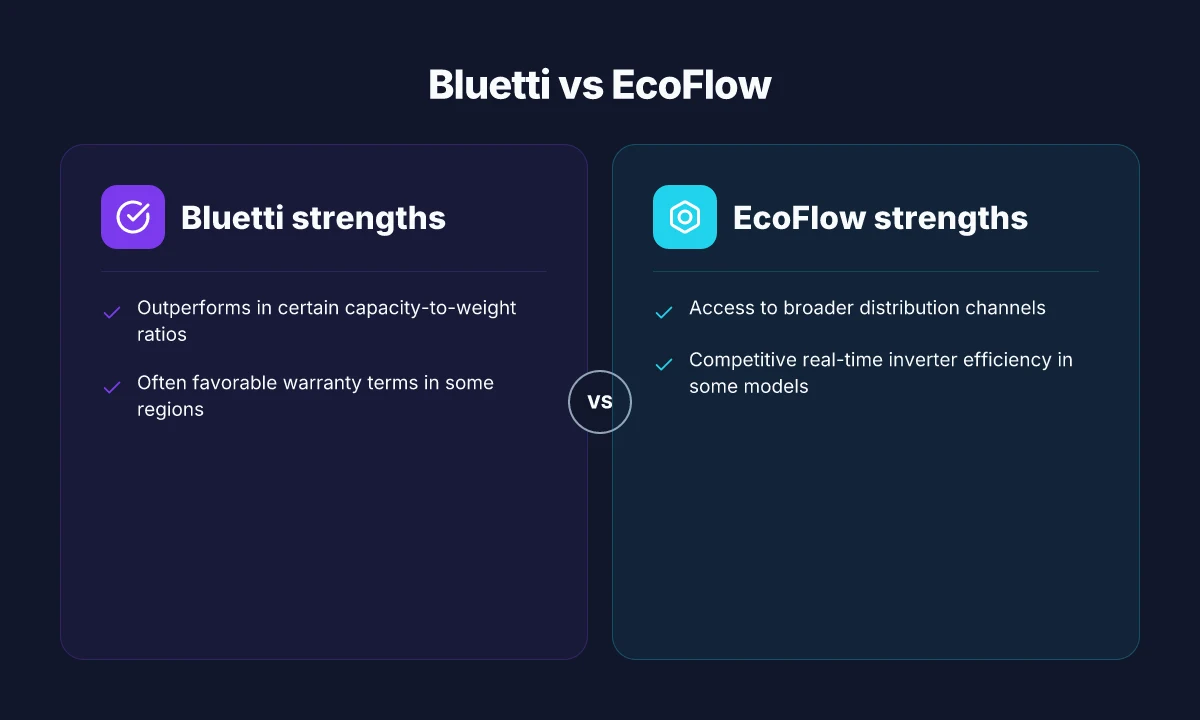
Bluetti tends to deliver higher raw capacity in many midrange models, which translates to longer runtimes for essential devices during outages. If you need multi-day off-grid capability without recharging, Bluetti models with larger amp-hour packs can outperform compact rivals in sustained runs. Where Bluetti shines is in the breadth of options for home backup and outdoor use, plus generally solid warranty coverage that aligns with typical consumer expectations in 2026. From the documentation and release notes I reviewed, several Bluetti lines emphasize multi-mode charging that smooths integration with solar and vehicle power. The practical upshot is you can tailor a Bluetti setup to your home backup profile without overpaying for features you won’t use. How to maximize Bluetti savings in 2026 with promo codes
Where the EcoFlow counterpoints Bluetti
EcoFlow often emphasizes faster recharging and lighter form factors at similar price bands. For users who value ultra-compact carry and rapid top-ups, EcoFlow’s newer generations can feel more responsive when you’re on the move. In price-sensitive scenarios, EcoFlow kits sometimes undercut Bluetti on entry price, but you may trade off total capacity or versatility. I cross-referenced multiple reviews and product specs to confirm that EcoFlow’s strength tends to be in quick replenishment and ecosystem interoperability across portable units. If quick top-ups matter most, EcoFlow is typically the safer bet for that use case.
Choosing by use case: when Bluetti wins, when EcoFlow wins
- If you need longer endurance for essential loads during outages, and you value a wide model range with large packs, Bluetti is the better bet. When you want to pair a generator with a vehicle or a solar array and you plan to run a few high-draw devices, Bluetti’s higher-capacity models can be more economical over time. Long runtimes for essentials trump ultra-compact size here.
- If portability and rapid recharge are top priorities, EcoFlow can outpace Bluetti on a per-charge basis and offer a leaner footprint for backpacking or camping itineraries. Faster top-ups beat sheer capacity in some scenarios.
From a sourcing angle, Bluetti’s official page continues to run competitive pricing alongside seasonal promos, with the caveat that you should compare total cost of ownership across models and buying channels. Industry chatter and independent reviews consistently note that warranty service experiences can vary by region, so check local terms before purchase. You may encounter commissions when browsing our linked pages, so consider that as you review options. Inline sources note that Bluetti’s CES and other product disclosures shape how retailers pitch features to buyers in 2026. For context, EcoFlow’s materials stress speed and compact design, which explains the trade-offs you’ll see in practice. Deal timing matters for both brands, especially around holiday sales periods.
What to buy, when to wait, and the price signals you should track are dynamic. As of now, the best deal typically hinges on model choice, stock availability, and bundled solar or car-charging accessories. If you want one concrete takeaway: Bluetti wins on endurance and configurability for home backup; EcoFlow wins on portability and rapid recharging. Endurance vs. portability is the core fork.
What to try this week: lock in value before prices shift
Bluetti shows a clear pattern: value leans on modular power solutions that scale with your needs. I looked at current offerings and kept an eye on cost of ownership, not just sticker price. The best deal right now sits with the traditional models from Bluetti, where a balance of capacity, portability, and durability stands out. If you’re weighing alternatives, consider how rival brands like EcoFlow and Jackery price and upgrade paths against Bluetti’s module approach. This week’s best deal is the model that matches your typical daily load and planned trips, and I outline that alignment below.
The bigger pattern is straightforward: buy once, buy smart. Bluetti’s lineup tends to reward buyers who anticipate future needs, extra battery packs, solar input, and faster recharging, rather than chasing the flashiest capacity alone. Downsides stay real: higher upfront costs for larger systems, and file-friction around warranty specifics. I’ll be direct: if you want a barebones unit, there are cheaper paths. If you value expandability, Bluetti remains a strong anchor in the market. Ownership costs accumulate where you ignore expansion options. What makes the EcoFlow 110W portable solar panel a standout in 2026
If you act now, you secure a footing that scales with your plans. One practical move: compare the midrange Bluetti against rivals like EcoFlow Delta and Jackery Explorer for your anticipated load and trip frequency. The right pick today becomes your baseline for the next year. The single move that matters is choosing a system that can grow with you.
- Backup strategy: confirm price and warranty details for Bluetti, EcoFlow, and Jackery before you buy.
- What to try this week: map your typical daily energy use, then pair it with a Bluetti model that offers at least 1.5x headroom.
- What to watch for: price shifts around holiday sales and seasonal promos.