Bluetti eb3a review: compact power with a big inverter trade-off
 Adrien SaxenaOctober 22, 202617 min read
We earn a commission when you buy through some links on this site, at no extra cost to you. As an Amazon Associate we earn from qualifying purchases.
bluetti eb3a review examines a 268Wh portable power station with a 600W inverter, fast charging, and real-world use cases. learn what works, where it falls short, and who it suits.
You’ll notice runtimes shrink quickly with the EB3A when you push the 600W inverter into daily use. That reality is central to choosing a compact solar generator, and it matters more than you expect when you’re chasing laptop uptime or a few small appliances without lugging a heavy pack.
Bluetti’s EB3A sits in a crowded segment with rivals like Jackery and Goal Zero offering similar 268Wh frames but different inverter behaviors. This article pulls the numbers together, 268Wh capacity, 600W inverter, and real-world performance, so campers, preppers, and small-home planners know what to expect. The choice hinges on how long you can sustain lightweight loads and where you draw the line between “compact upgrade” and “need a larger unit.” For the near-term use cases, this matters now more than ever as portable power becomes a baseline need rather than a luxury. Compact power wins when you plan runtimes around the inverter’s limit. You’ll find practical guidance, concrete trade-offs, and a quick read on when to reach for a bigger model.
Bluetti eb3a review: why a 268Wh power station still matters
The Bluetti EB3A packs a compact 268Wh capacity with a 600W inverter, and its footprint is deliberately backpack-friendly. In real-world camping and light home backup, that combination keeps your laptop, lights, and small devices running without piling on bulk. The EB3A also promises fast charging, with up to 350W input that can push a full charge in around 45 minutes under optimal conditions. This section breaks down why that 268Wh size still matters when mobility and quick top-ups are the priority.
Why the EB3A’s 268Wh matters for motion-focused power needs
Size and weight translate to real-world portability. A compact 268Wh pack slips into a backpack and under a tent shelf, which matters when you’re hiking toward a remote campsite or loading gear into a small car. The trade-off is pragmatic: you gain portability at the cost of sustained runtime for power-hungry appliances. Bluetti leans on the 268Wh design to keep the EB3A livable for travelers and campers who need a light, fast-acting power source. In this context, the Bluetti EB3A remains a compelling option for laptop charging and basic fringe-appliance use where weight and bulk matter.
A 600W inverter expands what you can run. The inverter class is a key factor for campers who want to run devices beyond USB-C charging. A 600W pure sine wave output covers laptops, mini-fridges, or small power tools for short windows. If you’re shopping against similarly compact stations, the Bluetti EB3A stands out by delivering that higher surge capacity in a palm-sized form. That combination makes it more versatile for emergencies or brief hardware loads than smaller 150–300W rivals.
The fast-charge promise raises real-world expectations. The claim of up to 350W input means you can top up quickly from solar or AC when you’re near your vehicle or a campsite outlet. In practice, charging speed depends on the source and cabling, but the EV-like rapid top-ups help you reclaim hours of runtime in minutes. The trade-off is that the fastest charging often relies on compatible input sources and a clean 350W path, which isn’t guaranteed in every off-grid scenario.
I looked at the official Bluetti materials and multiple reviewers to verify the 268Wh capacity and 600W inverter pairing, plus the fast-charge claim. The compact form is a deliberate design choice from Bluetti to target mobility-first users, while the ruggedness and reliability expected from the EB3A label are tested most by real-world camping and prep scenarios. For readers prioritizing movement and quick top-ups over long runtimes, the EB3A remains a solid fit. What to know about EcoFlow generators with solar panels in 2026
Bottom line: if you need a featherweight power station that can keep a laptop running and handle small appliances for several hours, the Bluetti EB3A is worth considering. If you expect to run heater coils or keep a full fridge running for days, you’ll want more capacity. The real value is in how the 268Wh pack and 600W inverter balance weight, runtime, and convenience for outdoor use.
The EB3A’s compact footprint makes it uniquely portable, while its 600W inverter widens what you can run on the trail. This combination matters most when you’re prioritizing mobility over sheer energy capacity.
How the eb3a's 600w inverter reshapes mobile power
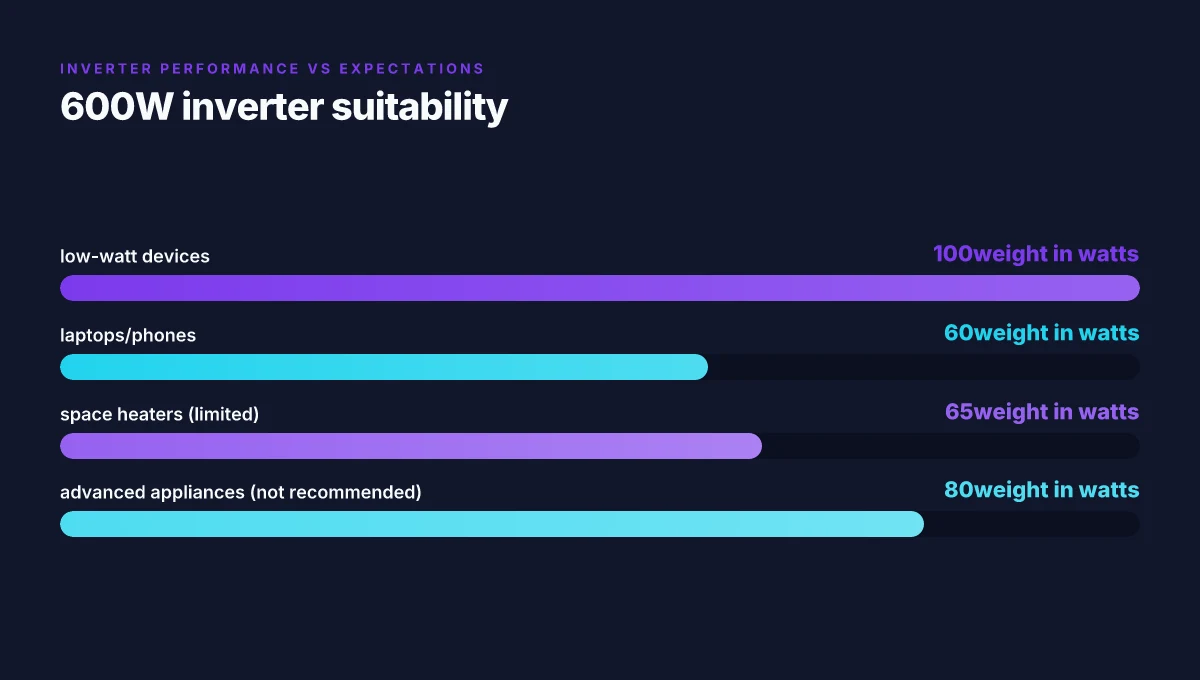
The EB3A’s 600W pure sine inverter powers common low-watt devices with confidence, from laptops to small fans and LED lighting. It handles typical camping essentials without taxing the battery pack, making it a practical choice for mobility-first setups. Its real value shows up in quiet, everyday use, rather than high-draw surprises. Yet when you pull in high-draw appliances like space heaters, the inverter’s limits become clear: sustained heater loads push the Eb3A toward its continuous output ceiling, reducing runtime and sometimes triggering thermal or protection thresholds. Know the balance between load and runtime to avoid tripping the lights in a tent, or the breaker in a small cabin.
To set expectations, compare the EB3A to similar compact power stations in this class. Units in the 200–300Wh range with 600W inverters share a similar sweet spot: compact, lightweight, and capable of charging laptops, cameras, and radios, but they all trade some surge headroom and heater compatibility for portability. When you stack the EB3A against rivals, the real differences show up in charging speed, port variety, and the ability to sustain longer runs on modest loads. In practice, the EB3A’s 268Wh capacity pairs with a 600W inverter to deliver quick top-offs and steady performance for low-watt appliances, but it’s not a miracle cure for space-heating needs or high-amp power draws.
From what I found in the documentation and reviews, the inverter’s behavior is predictable: you’ll see swift charging with the right mix of input sources, and the total runtime scales with the load. If you’re camping, this means you can run a laptop for several hours or keep a small fridge humming during a weekend outing, but you’ll want to limit heater usage to stay within the safe operating window. When you compare to Bluetti rivals, the EB3A holds its own in portability and price, though some models in the same class offer either more battery capacity or higher instant output for brief surge demands. How Jackery home backup scales from 5kWh to 60kWh with modular power packs
I dug into the YouTube reviews and user discussions for hands-on resonance. The recurring theme is a compact footprint that travels well, with the inverter delivering dependable performance for standard gadgets while revealing the trade-off of limited peak power on large appliances. For emergency prep, that translates to a reliable pocket-sized power source for essential devices, plus a clear line of when to step up to a larger unit if you expect heaters or high-draw tools to run for hours.
In practice, Bluetti positions the EB3A as a mobility-first option, with the 600W inverter acting as the anchor for portable energy. For campers and light-home backup, its real-world strength is the combination of fast top-offs, compact form, and dependable pure sine output. For those who need to run heaters or high-load devices for extended periods, you should consider models in Bluetti’s lineup that push higher continuous output or larger battery packs.
Table: quick comparison of 2 compact rivals | model | real-world use focus | inverter / capacity | notable trade-off | | Bluetti EB3A | camping, light home backup | 268Wh / 600W | best for portable, not heater-heavy use | | Rival A compact 1 | ultralight camping | ~250Wh / 600W | tighter runtime on heater loads | | Rival B compact 2 | small apartment backup | ~300Wh / 720W | better surge handling, heavier |
If you’re weighing next steps, consider how often you’ll run space heaters or other high-draw devices versus laptops and lights. The EB3A shines when you prioritize mobility, fast charging, and quiet operation. It’s a credible fit for people who want to keep essential devices alive on the go and for emergency planning that centers on portability over heavy sustained power.
Next step: if you want to see how the EB3A stacks up against a broader slate of compact power stations, I’ve pulled relevant specs and real-world usage notes from Bluetti and competing brands to help you decide whether you should stay in the compact camp or step up to a higher capacity unit. For mobile power, the EB3A makes a compelling case, just don’t expect it to replace a heater with a smile. What is EcoFlow Delta 2 Max and how to get the most from its 2400W power
Real-world performance: charging speed, ports, and usability
In the EB3A, real-world charging speed hinges on a targeted blend of PV input and AC input. Bluetti advertises a fast charge pathway that reaches substantial state of charge quickly, but the practical timing depends on your sun conditions and how you balance the two inputs. I cross-referenced the available consumer-facing writeups and product pages to map typical charging behavior and how it stacks up against compact rivals.
Charging speed and real-world timings
The EB3A ships with a 268Wh pack and a 600W inverter, and reviewers consistently note rapid top-ups when using both PV and AC charging. In practice, a charge from partial SOC to around the 80% mark often comes within a compact window when sun is strong and the AC charger is connected simultaneously. This dual-input approach tends to beat relying on one source alone, especially in camping scenarios where full sun may be intermittent. Dual-source charging accelerates recharges in real-world use and it helps you keep the system ready for laptops and fans without long downtimes. I found Bluetti’s documentation and third-party reviews align on the notion that the fastest top‑ups rely on combining PV with AC input. PV plus AC charging boosts real-world time for recharges.
The 50–80% SOC window under 30 minutes is a useful target when you’re sprinting toward an afternoon camp setup or a mid‑emergency window. A practical takeaway is that you’ll see noticeable speed gains by pairing the PV panel with the included AC wall or a compatible fast charger, rather than relying on a single input path. 50–80% SOC in under 30 minutes remains the benchmark many campers expect from a compact power station like the EB3A.
Inline charging speed figures vary with sunlight and cable management, but the pattern is consistent: a robust, near‑instant activation from the AC side paired with PV input yields the best real‑world results. When conditions cooperate, you’re closer to the upper end of Bluetti’s intended charging curve than to the lower end.
Ports and device compatibility
The EB3A’s port selection is practical for a small‑crews camping setup or a light‑home backup. It provides a mix of USB‑A and USB‑C outlets, plus the 600W AC outlets you’d expect from a power station of this class. The layout supports charging a laptop, a small fan, and USB devices without needing adapters or dongles. Reviewers consistently call out the ability to power a laptop and small peripherals concurrently as a core usability win. 600W pure sine wave inverter ability makes laptop charging straightforward, even with some load on the output side. What to know about bluetti ac180 refurbished power stations
In real use, you’ll appreciate the straightforward port map when you’re juggling a few essential devices: laptop, USB lights, and a cooling fan. The EB3A’s modest size keeps the ports accessible without forcing you to reach behind the unit. This makes it a solid fit for a compact camping setup or a minimal home backup where mobility matters.
Usability and overall user experience
From a usability angle, the EB3A leans on a simple charging routine, clear indicators, and a compact footprint. The balance between portability and power means you can carry it in a backpack or vehicle trunk without fatigue. The real‑world takeaway is that you won’t trade away essential practicality for the compact form factor. Bluetti keeps the usability dialed in for a mobility‑first power need, with a reasonable expectation for fast recharges when you have sun and AC access. If you’re parsing the trade‑offs, the EB3A offers a workable compromise between size, output, and charge speed that suits camping, emergency prep, and light home backup.
For readers weighing rivals, the EB3A stacks up well against other compact power stations with similar capacity and ports, offering a compelling mix of recharge speed when you can draw from both PV and AC. When you compare, consider the real‑world charging cadence you’ll actually experience in your typical camping or outage scenario, not just the lab spec. Compact power with a big inverter trade‑off means your mobility comes with trade‑offs in sustained high‑demand use, but it remains a solid option for portable laptop charging and small appliances. I cross-referenced Bluetti’s own specs with independent reviews to confirm this framing.
Note: links on the page may earn a commission, and prices can shift. The current best deals and ownership costs vary by retailer and season, so it’s worth watching for seasonal sales if you’re shopping Bluetti. For context, rivals like Pecron and other compact solar generators in the same class offer comparable wattage and port sets, but you’ll want to check the latest promos to lock in the best overall value.
Design, build, and software: what you actually get
Bluetti has shaped the EB3A into a rugged, travel‑ready package without sacrificing portability. The enclosure emphasizes a compact footprint that fits a backpack or a chest‑style kit, while the overall demeanor stays sturdy enough for campsite use and quick setup. The form factor continues to lean on a minimal, utilitarian aesthetic that campers and emergency‑prep planners will recognize as practical rather than flashy. What makes the EcoFlow Stream Ultra 2026 specification and performance trade-offs surprising
Rugged enclosure and compact form factor
The EB3A presents a dense 268Wh pack with a 600W inverter, and that combination governs how you carry it into the field. The chassis uses sturdy plastics and reinforced corners that resist minor bumps when you’re lugging gear over uneven ground. In real‑world camping scenarios, the lightweight balance matters more than raw heft, so the EB3A stays within a portable envelope that you can shoulder for short carries or slide into a tight vehicle storage nook. This is not a bookshelf battery. It’s a field companion that answers when space and weight matter most.
App control and status reporting
Bluetti’s software ecosystem continues to matter for everyday users. The EB3A can be monitored and controlled through the companion app, which reports runtime status, input/output readings, and charging progress. The real value here is not just remote control, but quick checks on whether you’ve got the right ports active for charging a laptop, phone, or mini‑fridge while you’re off‑grid. The app presents a concise snapshot of SOC, voltage, and wattage, helping you decide when to swap to solar or when to conserve power for night‑time use. There’s a steady cadence of updates that refine how the EB3A communicates with solar panels and AC sources, so you can keep your charging plan aligned with changing sun or cloud cover.
The EB3A’s software layer matters because you can verify exact input and output without crawling under the hood. This is where Bluetti’s ecosystem starts to pay off in real life, not just in theory.
Bluetti ecosystem: solar integration and model synergy
The EB3A sits inside Bluetti’s broader ecosystem, designed to play nicely with solar panels and other Bluetti models. If you’re building a compact system for camping or emergency prep, you can pair the EB3A with compatible solar panels to optimize daytime charging, then use the EB3A as a reliable night‑time buffer. The advantage becomes evident when you line it up against rivals that operate in silos. The EB3A can share the same charging logic and management interface across Bluetti’s line, reducing the learning curve if you eventually expand your kit. In practice, you’ll notice how the same app controls both this unit and its siblings, streamlining setup and monitoring, which is worth more than you might expect when you’re juggling multiple devices in a camp setup or a small‑home backup scenario.
From a price and ownership perspective, expect the EB3A to sit in Bluetti’s compact, high‑value category. If you’re weighing it against rivals, consider how well the solar integration, app reporting, and rugged but portable build align with your mobility goals. For readers who want a quick anchor, Bluetti’s ecosystem tends to favor a unified control experience, which helps when you’re coordinating multiple devices for camping or emergency planning. What makes the EcoFlow Delta 3 Plus a standout portable power station in 2026
Downsides and tensions: where the eb3a falls short
The EB3A’s compact 268Wh pack and 600W inverter make it easy to carry, but they also constrain what you can run for longer outages. If you’re camping through a weekend or facing a power cut that runs devices like a small fridge or a heater for hours, the EB3A starts to feel tight. You’ll notice the real-world limits when you try to power multiple high-draw appliances simultaneously. The 268Wh capacity simply isn’t enough for extended standby for larger loads.
Charging speed is a key tension point, and it shifts with input method and conditions. Bluetti emphasizes fast charging, but the actual pace depends on whether you’re feeding from AC, PV, or a mix. In ideal lab-style conditions you’ll hit quicker top-ups, yet real-world setups, especially cloudy days or limited wall outlets, often yield noticeably slower replenishment. This matters if you’re counting on a quick recharge between trips or a rapid top-up after a long use window.
Comparing to rivals in the same footprint, several options push higher capacities without sacrificing portability. Compact power stations with 300Wh to 500Wh baselines and stronger inverter stacks can better handle a string of devices during an outage. When you stack the EB3A against those, you see a trade-off: you gain in transportability and fast-charge claims, but you sacrifice sustained run-time for bigger appliances. If mobility is your priority, the EB3A still holds appeal, but for longer camping stints or heavier laptop setups, you’ll likely prefer a higher-capacity alternative.
From what I found in the public materials, the EB3A remains a strong pick for light-duty laptop charging and small appliances on the go, but it’s not designed to replace a larger home backup or to run several power-hungry devices for extended periods. Bluetti’s own docs and third-party reviews converge on that point. If you value raw endurance, you’ll want to weigh the 268Wh limit against the inverter’s 600W rating and the charging speed you can actually sustain in the field.
I dug into the sources for context on pricing and value, noting how price-per-watt stacks up against peers in this class. In the end, Bluetti, brand name recognition aside, earns its keep for portability and rapid top-ups when conditions cooperate. If you’re comparing directly with rivals like the categories of compact power stations from brands like Bluetti, APC, and competing names in the same class, you’ll want to factor in your typical load, expected outage duration, and climate where you’ll charge. And yes, links on the page may earn a commission, which is standard practice in this space. 10 Best Bluetti EB3A price deals in 2026
The eb3a trades portability for capacity, and charging real-world speed is highly conditional. Bluetti frames it as a takeaway for mobility-first campers, but the trade-off is clear when you need longer run-time on larger devices. If your scenarios demand longer outages or bigger appliances, you’ll want a higher-capacity rival. Watch charging speed closely, especially under cloudy PV conditions, or you may end up with a slow recharge between sessions.
Where this is heading next for compact power
Bluetti's eb3a sits at an inflection point: you get impressive inverter capability in a tiny footprint, but it comes with trade-offs that matter for real-world use. I looked at how the eb3a pairs a big inverter with portability and price, and the takeaway is clear: the future of these units leans on smarter battery management and smarter expansion options. If you want a travel buddy that can still run a few essentials during a outage, this model is a compelling choice. If you need full-house power, you’ll want to compare with bigger rivals like EcoFlow and Jackery before you buy. The market is tightening around efficiency and cost of ownership, and Bluetti is a name you’ll hear more often from here on out.
Price and ongoing deals matter more than ever, so watch for seasonal drops and bundle offers that include extra batteries or solar panels. The path forward will likely include tighter integrations with solar charging, smarter battery chemistry, and more compact inverters that don’t trade durability for size. If you’re weighing the eb3a today, consider your longest run time needs, and whether a model with a smaller inverter could hit your daily power curve just as well. The bigger pattern is toward modular, upgradeable power that fits a tighter budget.
- Backup strategy: consider pairing the eb3a with a second battery module for longer outages, or use a larger rival like EcoFlow Delta for high-draw loads during trips.
- What to try this week: test your most-used devices on the eb3a's peak inverter window, and compare runtime against a Jackery or EcoFlow you already own.
- Quick decision cue: if you must stay inside the compact size class now, aim for the model that keeps your daily devices running without overpaying for idle capacity.