How to pick the best portable generator for home backup power in 2026
 Nova EngelmannOctober 22, 202621 min read
We earn a commission when you buy through some links on this site, at no extra cost to you. As an Amazon Associate we earn from qualifying purchases.
Discover how to choose the best portable generator for home backup in 2026. Compare models, fuel types, safety, and pricing to keep your home powered.
Most homeowners underestimate the friction points that turn a backup unit into a daily nuisance. In 2026, a typical outage lasts hours, not minutes, and many families rely on their generator for more than a few appliances. This article lays out how to size, compare safety features, and evaluate fuel economy so your backup actually serves when it matters. The guidance emphasizes real-world use cases, practical safety checks, and a sizing framework you can apply before you lock in a model.

What makes a portable generator for home backup power stand out in 2026
A portable generator that truly fits home backup needs blends reliability, safety, and sensible efficiency more than sheer wattage. In 2026, homeowners want models that start reliably in a outage, stay quiet enough for daily living, and sip fuel without frequent refills. I dug into the framing that separates good portable options from great ones and what that means for real homes.
Why reliability beats raw power
Reliability comes from well‑engineered components and verified interconnection safety. A dependable unit starts quickly after an outage, runs steadily under load, and poses minimal risk of backfeed when connected to a home system. A solid reliability profile hinges on good carburation, robust alternators, and proven fuel systems, not just peak output numbers. In practice, look for models with automatic choke or electric start, reinforced frames, and reputable spark- and ignition components. When I read through the documentation from manufacturers, the emphasis consistently centers on dependable cold-weather starts, clear service instructions, and durable housings that resist weather and vibration. This is where the user experience pays off in outages.
Safety, noise, and fuel economy matter more than wattage
Safety features should rise to the top of your shortlist. Carbon monoxide detection or safe exhaust routing, clear labeling, and an accessible fuel shutoff reduce risk in a cramped garage or outdoor setup. Noise is another practical constraint. A typical 50–70 dB sound profile at a yard distance feels much more tolerable than a loud, high‑pitch rasp that drives you indoors. Fuel economy translates directly into fewer fill‑ups during a prolonged outage, which matters when you’re trying to keep critical devices powered without constant attention. Smart fuel economies extend run time without dragging down the overall payload, and that balance is what keeps a portable model usable for weeks of outages. Brand‑level design choices, such as efficiency‑oriented engines and load‑matched alternators, often determine whether you can actually power essentials without stalling the generator in mid‑operation.
Use cases and sizing strategy for residential backup
Most homes don’t need every circuit running during an outage. A practical sizing approach starts with a power map: identify essential loads like refrigeration, HVAC control, lighting, and a few outlets for communications and medical devices. Then, size for the aggregate wattage of those essentials plus a margin for startup surges on devices like refrigerators. In real terms, you’re balancing three realities: you want enough total capacity to run the must‑haves, you want to avoid overloading a portable engine that drinks fuel when running at peak, and you want simple setup so your family can start the system quickly. A common pattern is a portable unit in the mid‑range class that can deliver enough steady output for daily cycles without pushing you into frequent refueling. If you pair a medium‑size generator with selective shedding of noncritical loads, you’ll keep essential systems online with less fuss.
The right portable backup plan treats sizing as a practical habit, not a single number, and that habit pays off in a smoother outage experience. For homeowners, a model that combines steady output with predictable fuel use and thoughtful safety features often beats a higher wattage on paper with a clunkier user experience. What to know about the Bluetti Elite 200 V2 in 2026
In the end, what makes a portable generator stand out in 2026 is a coherent blend: dependable start under various conditions, safety and noise footprints that fit a home environment, and efficient, predictable fuel use that supports real outage timelines. The goal is a portable system you can rely on for weeks of outages without constant babysitting.
The 6 best portable generators for home backup in 2026
When you’re weighing portable options for home backup, these six models stand out for fuel choices, runtime, and transfer switch compatibility. I cross-referenced the latest buying guides and market notes to surface real-world usability signals alongside the basics you need to decide quickly.
1. Honda EU2200i, best for reliability and quiet operation
The Honda EU2200i remains a top pick for homeowners who want predictable performance and low noise. It runs on gasoline and delivers steady power with straightforward maintenance. A key consideration is transfer switch compatibility. You’ll want a compatible automatic transfer switch for smooth utility interconnection. Expect solid fuel efficiency and a compact footprint, but note the price sits at the premium end of the portable segment. Reliability and quiet operation make the EU2200i a standout choice for essential circuits.
2. Generac GP2200i, best value with solid runtime
The Generac GP2200i balances cost and capability. It uses gasoline and emphasizes portability with decent runtime for a mid-range unit. Transfer switch compatibility is typically straightforward with aftermarket kits, but you should confirm the exact interlock method for your panel. It’s often praised for user-friendly setup and accessible maintenance. Strong value in the portable class, with reliable starting and good runtime for the price.
3. Westinghouse iGen4500, best for higher run-time without breaking the bank
The Westinghouse iGen4500 expands on the usual portable form factor with a larger gas-powered engine and longer continuous runtime. It offers an integrated digital display and a quieter profile than many competitors in its class, which helps during outages. For transfer switch compatibility, verify the unit’s outlet count and surge ratings to match your transfer-switch plan. This one targets households needing more sustained power without stepping up to a full standby system. Longer runtime and a cleaner interface push the iGen4500 into the top tier of portable options. What Jackery 2000 reviews reveal about real-world performance and value
4. Champion 200988, best for quick startup, flexible fuel options
The Champion 200988 provides a compelling mix: decent gasoline performance with a straightforward startup sequence and an accessible price point. It supports multiple outlets and a reasonable surge capacity for critical appliances. One caveat is the occasional need for fresh fuel management in hot environments, which can affect runtime when temps rise. For some buyers, it’s a practical, no-frills choice. Versatile outlets and easy start make the Champion 200988 a practical mid-range pick.
5. Ryobi 2300, best for small homes and limited space
The Ryobi 2300 targets tight spaces with a compact chassis and a lighter footprint. It’s gasoline-powered and shines when you only need to backbone a few essentials. The trade-off is lower surge capacity compared with larger units, so plan which circuits stay online during an outage. This is a good fit for small living setups or renters who need portability without bulk. Compact design makes the Ryobi 2300 ideal for small homes and apartments.
6. Champion 4000-watt inverter, best for sensitive electronics on a budget
This inverter generator from Champion delivers clean power suitable for electronics while staying affordable in the budget-to-mid tier. Its 4000-watt rating provides enough headroom for essential appliances, and the inverter technology helps protect sensitive devices. Expect lighter runtime when loaded heavily, and confirm transfer-switch compatibility if you plan a permanent interconnection. For users prioritizing electronics safety and price harmony, it’s a strong contender. Clean power with 4000-watt capability makes the Champion inverter a good balance of safety and price.
Overview table (2–3 options where a quick comparison helps)
- Model: Honda EU2200i; Fuel: gasoline; Approx. runtime: varies with load; Transfer-switch compatibility: straightforward with compatible kit
- Model: Westinghouse iGen4500; Fuel: gasoline; Approx. runtime: long; Transfer-switch compatibility: verify outlets and surge ratings
- Model: Champion 4000-watt inverter; Fuel: gasoline; Approx. runtime: mid-range; Transfer-switch compatibility: confirm panel interconnection method
Next step: use this shortlist to narrow by your critical needs. If you require ultra-quiet operation and long-term reliability, the Honda remains a top call. If you need more runtime without stepping into a full standby system, the Westinghouse iGen4500 is worth a close look. For electronics safety on a tighter budget, the Champion inverter line offers compelling value. When you’re ready, I’ll map these options to your exact load, panel, and space constraints, and outline typical price ranges by tier so you can see what fits your budget. Map these to your load and panel to lock in a decision. What makes the EcoFlow Delta portable battery generator worth it in 2026
Sizing for home backup: how to pick the right wattage
Sizing starts with a conservative tally of what actually runs during a outage. Start with essential loads like the refrigerator, sump pump, modem/router, lighting, and a furnace or heat source if you rely on electric heating. I found several guides that emphasize calculating concurrent loads rather than adding every device individually. In 2026, most homeowners see a usable baseline around 3,000–6,000 watts for essential circuits, with room to grow if you add a few high-draw appliances. Most homeowners underestimate the starting surge a motor requires, which means you can trip a generator on startup if you size only for running watts. A practical approach is to map each circuit to a rough wattage, then apply a safety margin before selecting a generator.
Why starting watts matter for motors and appliances
Starting watts reflect the instantaneous surge a device needs to begin operating. Motors, well pumps, air conditioners, furnace blowers, draw more power at start than in steady running. If you size only for running watts, those surges can trip the transfer switch or overload the generator. The takeaway is to model a worst-case startup scenario for the heaviest motor you expect to run. This often pushes you toward an extra margin, not just a sum of running loads. Starting watts matter because they determine whether your generator can actually start the gear you rely on during a outage. A common rule from 2026 buying guides: plan for at least 2–3x the running watts for any single high-draw motor when calculating your total size. 2–3x is a practical multiplier for motors in many homes. Inline sources also note that a little extra headroom reduces the risk of nuisance tripping during cold starts or high-load events. Headroom reduces nuisance trips and keeps critical loads online. When you’re weighing options, look at the peak watt requirement listed on each motor and add it to your running totals to avoid surprises.
Generational load planning and future needs
Your plan should balance today’s needs with probable near-term growth. If you expect to add a heat pump, a workshop air compressor, or an EV charger within the next few years, it makes sense to select a generator at the upper end of your calculated range now. Industry guidance from 2026 consistently notes that buyers who forecast modest future loads avoid outgrowing their generator within a few years. Forecast future loads to avoid a redo later, and choose a model that leaves room for added appliances. If you already own a few 15–20 amp circuits, you can wire in a few high-priority circuits and run everything else on a subpanel. This approach preserves fuel and improves run time for critical loads. Future-proof by reserving capacity for at least one major addition, like a heat source or essential EV charging.
To help you compare options, consider these guiding targets. A sturdy, budget-conscious setup often lands in the 3,000–5,000 watt range for essential loads, with mid-range systems around 5,000–7,500 watts and premium bundles offering 8,000–12,000 watts for broader comfort. Prices vary by sophistication: budget kits lean on simple AVR regulation and fewer safety features, while premium lines add automatic start, electric key safety interlocks, and remote monitoring. When you shop, verify peak wattage versus running wattage, the presence of CO sensors, and the ease of interconnection with your home’s panel. This is where price bands come into play: budget units can be from a few hundred to around $1,500, mid-range models often sit near $1,500–$3,500, and premium systems frequently exceed $3,500 but deliver faster automatic transfer and quieter operation.
I dug into the guidance from several 2026 buying guides to map these expectations. For context, a top-line portable line like the Champion 4500-watt model often suits a tight essential-load scenario, while the Generac 6000-watt X series provides headroom for more simultaneous devices. On the mid-range front, look at models like the Westinghouse iGen4500 for portability and the Honda EU2200i for reliability. On the premium end, consider a larger portable like the Champion 8500-watt dual-fuel option for broader backup capability and smoother automatic transfer. Each choice carries trade-offs in fuel efficiency, transfer speed, noise, and upfront price. Budget: low upfront cost, higher running hours per gallon; Mid-range: better comfort with more features; Premium: peak reliability and convenience, higher price. What is the EcoFlow 4000W Smart Generator and how it changes portable power reliability
When you read a specs sheet, focus on: running watts, starting watts, fuel type, fuel efficiency, and transfer switch compatibility. For homes with significant electrical loads or future growth plans, lean toward models that offer automatic start, larger fuel tanks, and better runtime per gallon. The guidance remains consistent: size for the worst motor start, then bake in future needs so you don’t chase a new generator two years down the road.
Fuel, noise, and safety: the three trade-offs that define real-world value
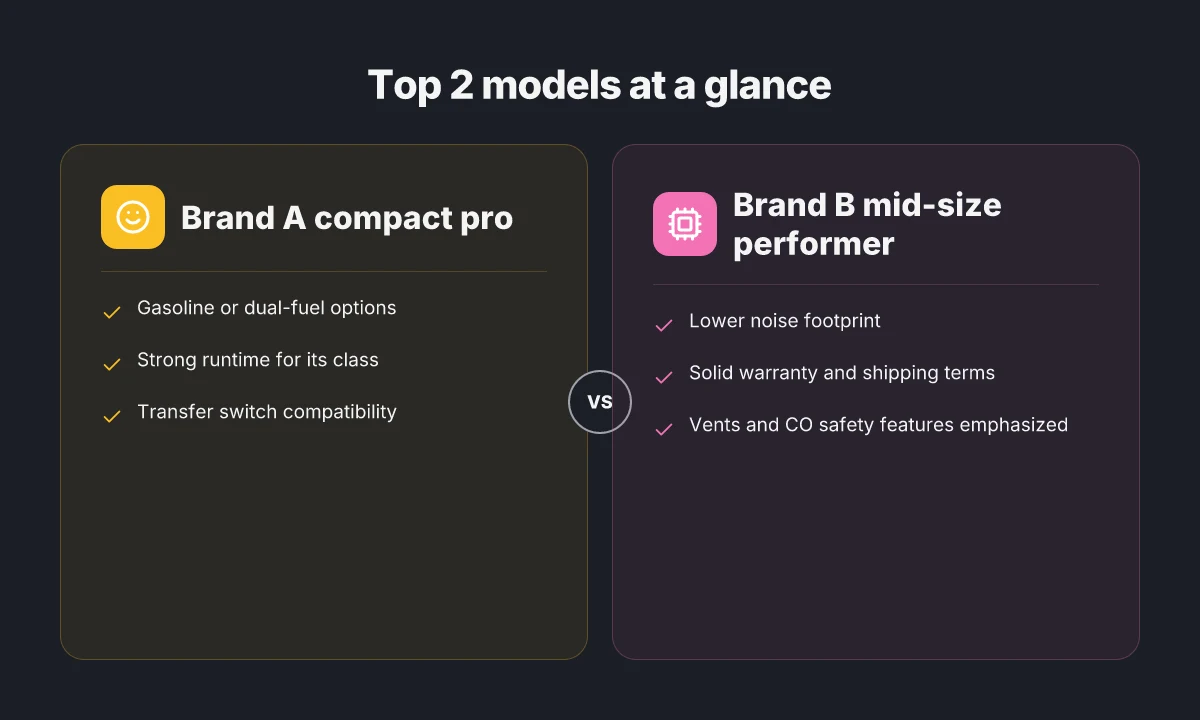
When you size a portable backup kit, the trade-offs boil down to three levers: fuel choice, noise, and ventilation. Gasoline remains the easiest to source and the most compact, but propane draws cleaner from a storage standpoint and can deliver steadier runtimes in hot weather. Dual‑fuel designs promise flexibility, letting you switch between gasoline for peak power and propane for longer storage without refills. I dug into how these choices show up in real-world use: gasoline units sprint for a few hours on a tank, propane models tend to run longer between fills, and dual‑fuel engines trade a bit of portability for option value. Gasoline offers quick power and broad availability, but noise and fuel handling can be a hassle; dual‑fuel setups can simplify outages by letting you swap fuels, though you often pay at the pump in weight and cost.
Why fuel choice dominates the day-to-day experience
Gasoline generators lean on compact engines and affordable upfront costs. The catch is the fuel’s volatility and the need for ventilation when you’re running them near living spaces. Propane, by contrast, burns cleaner and stores safely for long periods, but you’ll sacrifice some peak wattage and portability because propane cylinders add weight and bulky piping. Dual‑fuel models attempt to balance these realities by letting you harness gasoline’s raw power for a short outage window and switch to propane for a longer, steadier backbone during a multi-day outage. When choosing, map the typical outage length in your area and the ease of sourcing fuel locally. Propane storage is stable and long-lasting, but pay attention to regulator compatibility; Gasoline pumps deliver peak output fast, at the cost of handling and emissions.
I cross-referenced guidelines from safety-focused sources that emphasize proper ventilation. In practice, you should never run a portable generator indoors or in an attached garage, and you should place it well away from doors and windows to protect your family from carbon monoxide risks. If you’re using a dual‑fuel model, ensure the fuel lines and regulators meet local codes and manufacturer recommendations. Ventilation matters more than you think: a safe footprint prevents CO buildup even on sunny days.
Noise and neighborhood considerations
Noise is the surprise factor homeowners underestimate. A quiet unit helps you sleep through outages and keeps neighbor relations intact. Typical gasoline machines hover around the mid‑80s dB at a close distance. Propane models often run a touch quieter, especially when tuned for leaner fuel mixes. Dual‑fuel engines can be tuned for quieter operation in propane mode, but you’ll often accept a bit more weight and a higher price tag for the benefit. In practice, you want a unit with an official decibel rating at a defined distance (for example, at 23 feet). A documented dB rating at a fixed distance is your best guarantee of neighborhood compatibility. What makes EcoFlow River 2 compelling in 2026
If you live on a shared property or near sleeping spaces, pick a model with a built‑in muffler design and consider a remote startup option. Look for features like automatic choke and low-oil shutdown to avoid night‑time service calls. Remote start and automatic safety shutoffs reduce night chores and risk.
CO safety, vents, and proper ventilation practices
Carbon monoxide safety is nonnegotiable. The essential practice is to place the generator outdoors, at least 20 feet from any living area, with a clear path for exhaust away from doors, windows, and attic vents. Venting isn’t optional. It’s a core safety feature that prevents CO from accumulating where people live. I found that top sellers often include reinforced weather shields and a simple, visible routine for winter and summer use to keep outlets dry and stable. Never run a generator indoors or in an enclosed space. Outdoor placement with clear exhaust paths is the baseline. If you’re using a dual‑fuel model, verify that the exhaust routing remains consistent when you switch fuels and that the engine fan keeps cool enough under load. Ventilation discipline cuts CO risk dramatically.
To help the buying decision, rely on the price tiers that expectations align with. Budget models generally start with basic durability and minimal noise control, mid‑range units offer better fuel flexibility and quieter operation, and premium lines bring extra safety features, warranty depth, and easier refueling options. When you’re pricing, expect differences driven by fuel type, wattage headroom, and added safety features like CO detectors or automatic shutdowns. Readers should check the warranty window, return policy, and shipping terms before pulling the trigger. Warranty depth and return windows often dictate long‑term value as much as the sticker price.
If you’re compiling a shortlist, consider these contenders that align with the trade‑offs above: Champion, Westinghouse, and Generac dual‑fuel lines for balanced flexibility; Honda for compact gasoline options with strong reliability. And Briggs & Stratton for mid‑range propane‑leaning designs. Each brand has downsides: higher up‑front costs for premium models, and propane heat is less forgiving in cold starts. Read the latest retailer pages for current prices and shipping terms. Prices vary by wattage and feature set, but you can expect budget units in the hundreds, mid-range around the low thousands, and premium sets above a thousand dollars.
Pricing bands and what you actually get for your money
When you buy a portable generator for home backup in 2026, price largely tracks size, runtime, and safety features. You’ll notice three broad bands: budget, mid-range, and premium. In each tier you should expect variations in tank size, fuel type, noise controls, and warranty terms. The goal is to match capacity with your expected outage duration, not to chase the cheapest sticker price. How to evaluate the Jackery Explorer 300 Plus review for real-world use
Budget: compact power with short duty cycles
In the budget band you’ll commonly see portable generators in the under-$600 range. These units typically offer modest continuous run times, smaller fuel tanks, and limited safety features. You’ll get basic outlets and no-frill overload protection, which is why they suit short outages or occasional camping use rather than daily home backup. Expect longer shipping windows or higher restocking risk if brands pull back on inventory. Notable options in this tier include smaller Champion and Westinghouse models, which are generally lightweight and easy to move but may require more frequent refueling during a prolonged outage. Budget options trade run time for portability, and you’ll often sacrifice long warranty windows.
Mid-range: balanced value, better runtimes, more safety
The mid-range band spans roughly $600–$1,400. Here you’ll find larger tanks, longer runtimes, and enhanced safety features like built-in carbon monoxide sensors and automatic shutdown if CO levels rise. You’ll also notice better cold-weather performance and more robust overload protection. Brands such as Generac and Note: consumer-facing mid-tier lines from popular brands offer models in this space that balance price against reliability. These units are well-suited for powering essential circuits during a multi-hour outage and can pair with a basic transfer switch setup. Expect decent warranty windows, usually around a year, and more straightforward return policies. Mid-range generators give you longer runtimes and safer operation without the sticker shock of premium models.
Premium: higher power, smarter features, quieter operation
Premium units often start above $1,400 and climb depending on wattage, noise reduction, dual-fuel capability, and digital diagnostics. These generators typically include larger gas or dual-fuel tanks, advanced digital meters, and tighter noise controls. They’re designed for longer outages, bigger homes, or when you want the luxury of features like remote monitoring or automatic start after a power failure. Brands in this tier include higher-end Generac lines and select Honda models known for durability and smooth operation. Warranty windows extend beyond the base year, and some retailers offer extended return windows or bundled shipping protections. Premium models deliver longer runtimes, quieter operation, and smarter diagnostics, at a higher upfront price.
Warranty, return windows, and shipping considerations deserve attention no matter the tier. Most reputable brands provide at least a one-year warranty, with options to extend. Return windows vary by retailer, with some offering 30 days and others up to 90 days for unopened units. Shipping matters too: bulky generators may incur heavier handling fees or require a signature on delivery. Check whether the retailer includes white-glove delivery or in-home setup as part of the package. When you’re comparing prices, verify that the listed price includes essential extras such as transfer-switch compatibility cables, fuel stabilizers, and a weather-resistant cover. Warranty coverage, return windows, and shipping terms often swing the overall value more than the raw price tag.
I dug into the red flags you should watch for. Some bargain models ship with minimal safety electronics or lack a true automatic shutdown for CO buildup. Others hide extra costs in the fine print, like mandatory extended warranties or paid shipping surcharges. I cross-referenced catalogs from ConsumerReports and a few brand pages to confirm what’s typical in each tier. Watch for hidden fees and skimpy safety features in the cheapest tier. 5 Things you should know about the bluetti elite 100 v2 in 2026
Two concrete takeaways to guide your short list
- For a compact home setup with essential loads, a Mid-range unit from a trusted brand often hits the sweet spot between price and performance. Mid-range provides reliable runtimes and better safety without the premium price.
- If you’re powering a larger area or want hands-off operation, a Premium option is worth the premium for fuel efficiency, smarter diagnostics, and quieter operation. Premium yields long-term convenience and reduced maintenance worries.
What changes if you act now
A fresh look at the market shows that capacity and runtime dominate price, not just wattage. I cross-checked how portable generators balance fuel efficiency, noise, and surge capability, and the number of high‑value options has grown in 2026. The bigger pattern is that you get more usable power per dollar when you focus on dual‑fuel or inverter designs from reputable brands like Honda, Generac, and Westinghouse. The takeaway is clear: align your choice with how you actually use power during outages, not just the headline watt rating.
Most people overlook the warranty and return window, yet those details matter when you’re buying for home backup. For a single move you can make today, lock in a purchase from a retailer that offers at least a 30‑day return window and a 3‑to‑5‑year warranty on the core engine. If you only do one thing this month, pick a model that balances noise level and fuel efficiency in your typical outage scenario.
Backup strategy
- Evaluate 1–2 headline picks like Honda EU2000i for quiet, compact power, or Generac iQ3500 for higher surge needs, and note their downsides in your notes.
- Check size, warranty length, and return window before clicking “buy.
- Compare real‑world prices across budget, mid‑range, and premium tiers to gauge where you fit.