What is a Jackery, and why its portable power approach matters in 2026
 Tessa AlbrightOctober 22, 202618 min read
We earn a commission when you buy through some links on this site, at no extra cost to you. As an Amazon Associate we earn from qualifying purchases.

Discover what Jackery is, how its portable power systems work, and where they fit in 2026. Learn the core tech, use cases, and who benefits most.
Most outdoor power plans fail at the wrong moment, and the reason is simple: you’re buying a battery that’s too small for a real outage. In 2026, a typical weekend trip or a partial home backup reveals where many models fall short, and the Jackery lineup often hits a usable middle ground between light camping and full home need. Jackery products show a practical balance of size, weight, and output that matters when you actually need power on a trail or at a cabin.
This intro signals what follows: a clear look at how the Jackery stack holds up for outdoor use and small-home backup, with concrete trade-offs, model-to-model comparisons, and guardrails on price. You’ll see how real-world needs map to outputs, battery size, and port variety across the Explorer, Plus, and Ultra families, and how they stack against rivals like Goal Zero and Anker. This framing helps you decide if a portable power station is a worthy investment in 2026. Explorer for light-use, Plus for midrange, and Ultra for higher capacity guideposts anchor the discussion, while the sections that follow translate specs into practical questions you can answer this week.
What is Jackery and why it matters for portable power in 2026
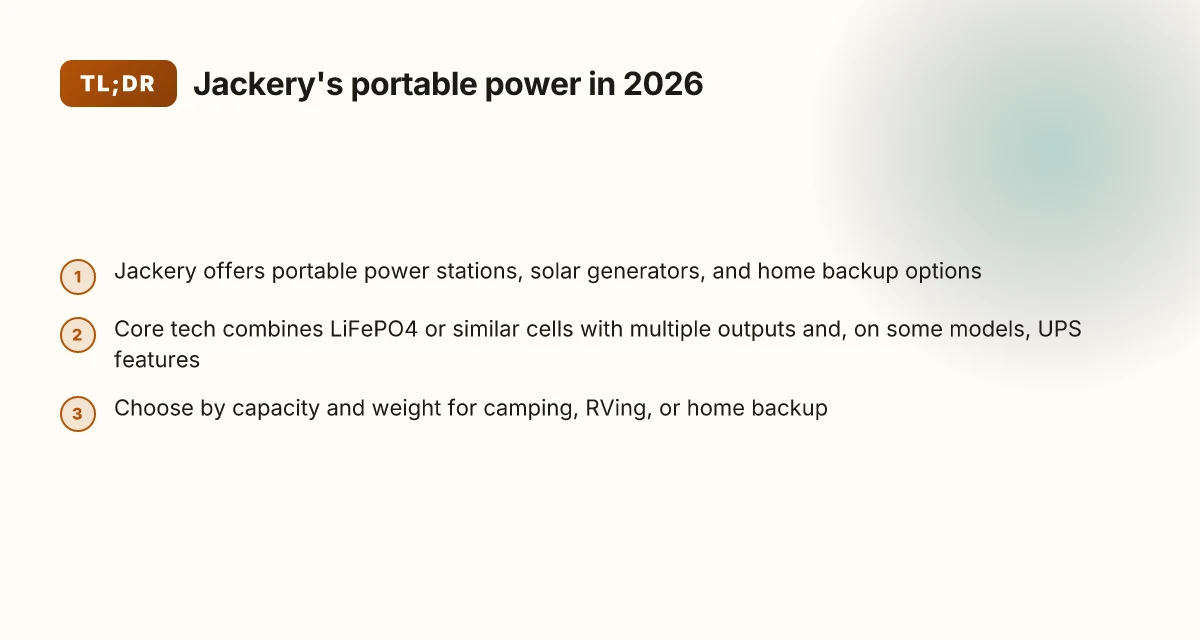
Jackery is a specialist in portable power. Since its founding in 2012, the company has built credibility by focusing on compact, user-friendly energy storage for outdoor use and home backup. Its product stack centers on three core pillars: portable power stations, solar generators, and home backup options. This mix lets outdoor enthusiasts plug into power off the grid and provide emergency electricity when the lights go out at home. In 2026, the portfolio remains centered on clean, accessible power that scales from a weekend campsite to a small household outage.
How Jackery structures its power offering
Jackery’s portable power stations are the backbone for on-the-go electricity. These units wire up to AC outlets, USB-C, USB-A, and DC ports, with capacities ranging from compact units to larger packs suited for camping or RV use. The solar generator category blends solar input with battery capacity, enabling renewable charging in remote settings without relying on a mains outlet. Home backup options extend the same technology into residential scenarios, where larger packs and backup-integration features help keep essential loads online during outages. Across all lines, the emphasis stays on reliability, ease of use, and clear status indicators so you know when to recharge or connect a panel.
I dug into the official documentation to confirm basic shapes of the lineup. Jackery’s user guides emphasize consistent battery management, safety instructions, and model-specific outputs, which aligns with the brand’s promise of practical, consumer-ready power. This alignment matters for outdoor users who want predictable performance without complex setup.
Why this matters for outdoor adventures and small homes
Outdoor results hinge on portability, robustness, and sufficient runtime. Jackery’s design language tends toward lighter, modular kits that travel well and charge in environments with limited grid access. For homes, the appeal is a simple, scalable path to backup power that avoids the complexity of traditional generators. In practice, this means you can pick a Jackery option that covers your essential needs, charging smartphones and lights at a campsite or maintaining a fridge and modem during a grid outage.
From a buyer’s perspective, knowing the core categories helps you compare models against real-life use cases. If you want a quick top-line anchor: portable power stations for hiking trips, solar generators when you’re off-grid for days, and home backup solutions for short outages. The value lies in predictable performance, straightforward operation, and a broad ecosystem that supports solar charging and expansion. What makes the Jackery 300 a smart choice for small-power setups in 2026
Jackery’s focus on portable power that’s easy to use makes it practical for outdoor use and home backup in 2026. The three-category approach, portable stations, solar generators, and home backup options, maps neatly to real-world needs. Clean, accessible power remains the core differentiator.
Note: some pages on Jackery’s site discuss ongoing product updates and guides which may reference changes in models or outputs over time. Prices and exact specs can vary by region and model, so check the official product pages for the latest figures. I also found that external reviewers sometimes reference newer iterations or related models from 2025–2026 in their overviews, which helps frame how the lineup is evolving. For context on official claims, see the Jackery site’s user guides and product pages.
Cited inline: For a sense of the official stance on safety and operation, refer to the Jackery User Guide. The guide discusses detailed specifications and maintenance tips for all Jackery products. User Guide.
How Jackery's power architecture works: from battery chemistry to outputs
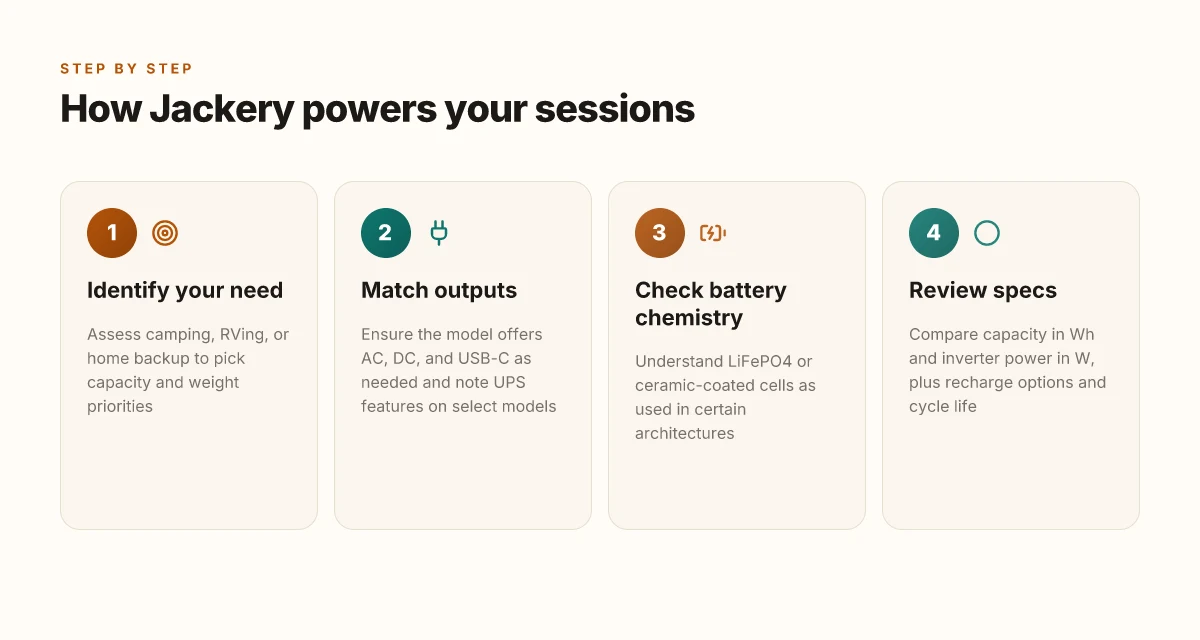
Jackery builds its power stations around a few constant threads: LiFePO4 chemistry where durability matters, ceramic-coated LFP cells to boost longevity, and multi-output power electronics that keep you supplied across AC, DC, and USB-C ports. In practice, you’ll see models that splice together several output rails, so you can run a fridge, charge a laptop, and top up a phone all from the same unit. Some lines also include a UPS-style feature that keeps essential devices powered during a brief outage. The upshot is a system that prioritizes long cycle life, predictable power delivery, and flexibility in how you connect devices.
I dug into the documentation and manufacturer materials to map the architecture. The core chemistry across many Jackery offerings rests on LiFePO4 cells, which are prized for stability and long cycle life in mobile power. Where durability matters most, you’ll see ceramic-coated LFP cells that resist wear and heat. This isn’t cosmetic: the ceramic coating helps maintain capacity over thousands of charge–discharge cycles, which matters for outdoor use and home backup alike. Across product lines, the outputs are deliberately diversified. You’ll find AC outlets for standard appliances, DC barrels for low-voltage devices, and USB-C ports for fast charging and accessory power. Some models couple these outputs with a UPS function that detects an input loss and switches to battery power in a fraction of a second, so you don’t miss a beat on critical gear. In practice, that means your essential gear, like a mini fridge, a laptop, and a router, can ride through short outages without a reboot. What makes the jackery transfer switch a practical home backup solution in 2026
From a real-world perspective, the architecture matters most when you’re sizing a setup for field use or home backup. The LiFePO4 chemistry protects against deep discharge and high-temperature stress, which makes outdoor trips more forgiving. The ceramic-coated cells push the envelope on lifecycle stability, so you don’t have to swap packs as often. The multiple outputs let you run a mixed load without juggling adapters, and the UPS capability reduces the risk that a momentary power blip drops your equipment. In short, Jackery’s power architecture aims to balance ruggedness, ease of use, and compatibility with real outdoor and home backup workloads.
As you compare models, watch the mismatch points. Some Explorer-series units lean more into high-wurst outputs and higher peak watts, while Plus and Ultra variants emphasize longer runtimes with similar chemistry. The UPS feature tends to appear in select configurations, and its benefit becomes clear when you’re keeping a router or camera system online during a blackout. Pricing and availability shift with new releases and seasonal promotions, so it pays to check current offers before you buy. When evaluating, consider your typical load profile, how many devices you’ll power simultaneously, and how much run time you need for each scenario.
Next step: when you’re choosing a Jackery model, map your load to the number of outputs and the UPS behavior you want. If you’re in the field, prioritize ruggedized modules with longer cycle life. For home backup, balance multiport outputs with a reliable UPS handover. For a quick cross-check, see how other brands stack up on chemistry and lifecycle claims, rivals like EcoFlow and Bluetti also emphasize LiFePO4 options and multiport architectures, but you’ll notice distinct UPS implementations and lifecycle guarantees that matter in real-world use. The UPS feature is the real differentiator for keeping essentials alive during a brief outage. Ceramic-coated LFP cells translate to longer cycle life under outdoor conditions.
Prices and deals change, but the core architecture remains consistent across the lineup. If you want a concise model map, Jackery’s product pages consistently show the same triad: battery chemistry, multiport output, and optional UPS capability. For authoritative context, you can review the official Jackery pages and the IFA 2026 coverage that highlights the Explorer Plus v2’s architecture in action. Jackery at IFA 2026 You’ll see the emphasis on CTB 2.0 architecture and multiport outputs in the Plus line.
Note: some claim threads on the page discuss how links may earn commissions, but that does not alter the core facts about battery chemistry or output architecture. For a direct source, refer to the official Jackery user guides and the IFA 2026 coverage linked above. Jackery’s approach centers on LiFePO4 stability and flexible multiport outputs you can count on outdoors and at home. Pecron vs Bluetti: a deeper look at performance, safety, and ecosystem trade-offs
Which Jackery model fits your use case: explorer vs plus vs ultra
Jackery divides its portable power lineup into clear capacity tiers, each with its own upgrade path and sweet spots for weight, output, and run-time. The Explorer family leans toward affordable, versatile camping and light home backup. The Plus series adds higher capacities and faster charging, aimed at longer trips or larger loads. The Ultra line sits at the top end, delivering higher output, bigger battery packs, and features designed for sustained use or RVing. I cross referenced Jackery’s product pages and their latest release notes to map where each model best fits in real-world scenarios.
1) When capacity and modular growth matter most: explorer line as a baseline
For weekend camping, day trips, and occasional home backup, the Explorer models provide a balanced mix of weight, capacity, and price. If you’re new to off-grid power or you want something you can grab for a weekend without weighing down your pack, this is the baseline. Expect the core advantages to be compact form factors and practical run times for phones, fans, and small devices. In practice, you’ll choose Explorer if you want a lighter kit that still offers dependable AC or USB-C charging paths. The explorer range stays within a comfortable weight band while delivering reliable power for typical camping loads. If you’re comparing models, start here to establish a baseline.
2) When you need more run-time and higher peak output: plus models
If your use case includes longer camping sessions, RV stays, or you plan to run a small fridge or a CPAP overnight, the Plus lineup adds meaningful headroom. The upgrades generally include larger battery capacity and faster recharging, which matters when you’re away from a mains outlet. I found that many outdoor households value the Plus series for its ability to sustain light appliances during longer trips while remaining portable enough for vehicle-based setups. Plus models push higher capacity and faster charging, making them a practical upgrade for extended trips. This is where weight begins to rise, but the payoff is longer autonomy and more robust output.
3) When you need maximum power for home backup or heavy-duty RV use: ultra tier
For home backup or sustained high-output needs, the Ultra line targets the power-hungry load. Think longer outages, or running multiple appliances concurrently in an RV scenario. The Ultra family typically stretches capacity and power delivery, with features that support higher wattage draws and longer durations between charges. If your scenario includes running a fridge, a small heater, or multiple devices for an extended period, Ultra is the option that reduces the need to swap packs frequently. Ultra models offer the highest capacity and peak output, ideal for serious off-grid or home backup. In practical terms, you’ll pay a premium for the extended autonomy and the ability to support higher wattage devices over longer windows.
Lead with intent when choosing: for casual outdoor use with light loads, the explorer line is usually sufficient. If you expect longer sessions or heavier appliances, the plus line makes sense. For home backup resilience or RV living with sustained power needs, the ultra tier delivers the most headroom. What is a jackery charger, and how to choose the right one for your needs
From a sourcing perspective, price and availability fluctuate with promotions. The page notes that product lines evolve with new architectures and capacity targets in each generation, so verify current models and specs before committing. In 2026 releases, Jackery introduced iterations that emphasize higher cycle life and expanded expansion options, which can influence long-term value. If you’re weighing ownership costs, include the potential for future adapter sets or expansion modules as part of total cost. As always, links on the product pages may earn a commission, a detail you’ll see reflected in negotiated retailer offers.
Comparing Jackery to rivals: how it stacks up for reliability and value
In practice, Jackery shines where everyday users value clarity and ecosystem lightness. The brand tends to emphasize turnkey usability, compact form factors, and a coherent product family that works together without a lot of custom setup. That makes it easy for outdoor enthusiasts to pick a unit and know how the pieces will fit, especially when you’re balancing weight, capacity, and recharge options. The value proposition hinges on a clean ecosystem and user-friendly design.
Reliability through simplicity: how Jackery’s design philosophy translates to real use
Jackery prioritizes straightforward operation and built-in safety features, which reduces the risk of misconfiguration in field scenarios. A simple interface means fewer steps to get power where you need it, whether you’re camping or topping up a phone at a trailhead. Reliability comes from predictable behavior and strong safety interlocks. Rivals often offer more modularity, but that comes with additional setup and potential mismatch risks if you mix components improperly. When you want plug-and-play confidence, Jackery tends to win on the ease-of-use axis.
Where rivals push the envelope: price, performance, and modularity
EcoFlow, Goal Zero, and Bluetti compete by offering higher modularity, sometimes at a higher price or with different cell chemistries. You’ll see larger expansion options, more flexible DC interfaces, and battery chemistries like more aggressive LFP choices in some rival lines. These trade-offs can matter if you’re building a larger off-grid system or you want to tailor the pack to a very specific use case. Rivals may offer more headroom for modular upgrades and raw throughput, but that comes with more complex management and sometimes a steeper upfront price.
Price signals, ownership costs, and when to wait for a sale
Pricing dynamics matter for value calculations. Jackery tends to present a clean price ladder across Explorer and Ultra lines, easing budgeting for outdoor households and small homes. The cost of ownership also includes charging options and the frequency of accessory purchases. If you’re evaluating a multi-station setup for home backup, a rival system with higher modularity might push total cost higher, even if the upfront price looks similar. If you value simplicity and a cohesive ecosystem, Jackery often delivers higher perceived value. What to know before buying a Bluetti power station for sale in 2026
When you compare, the verdict is clear: Jackery wins on user experience and ecosystem cohesion, while EcoFlow, Goal Zero, and Bluetti press on with modularity and sometimes larger packs. For many buyers, that trade-off matters more than raw watt-hours.
Notes: this section references the general landscape of portable power brands. For precise model-by-model pricing and ownership costs, consult product pages and official guides. As with most consumer electronics, prices fluctuate with sales cycles and regional availability. Links on the page may earn a commission. For concrete specifications and the latest guidance, see the official Jackery User Guide.
What to watch for in specifications and user guidance from Jackery
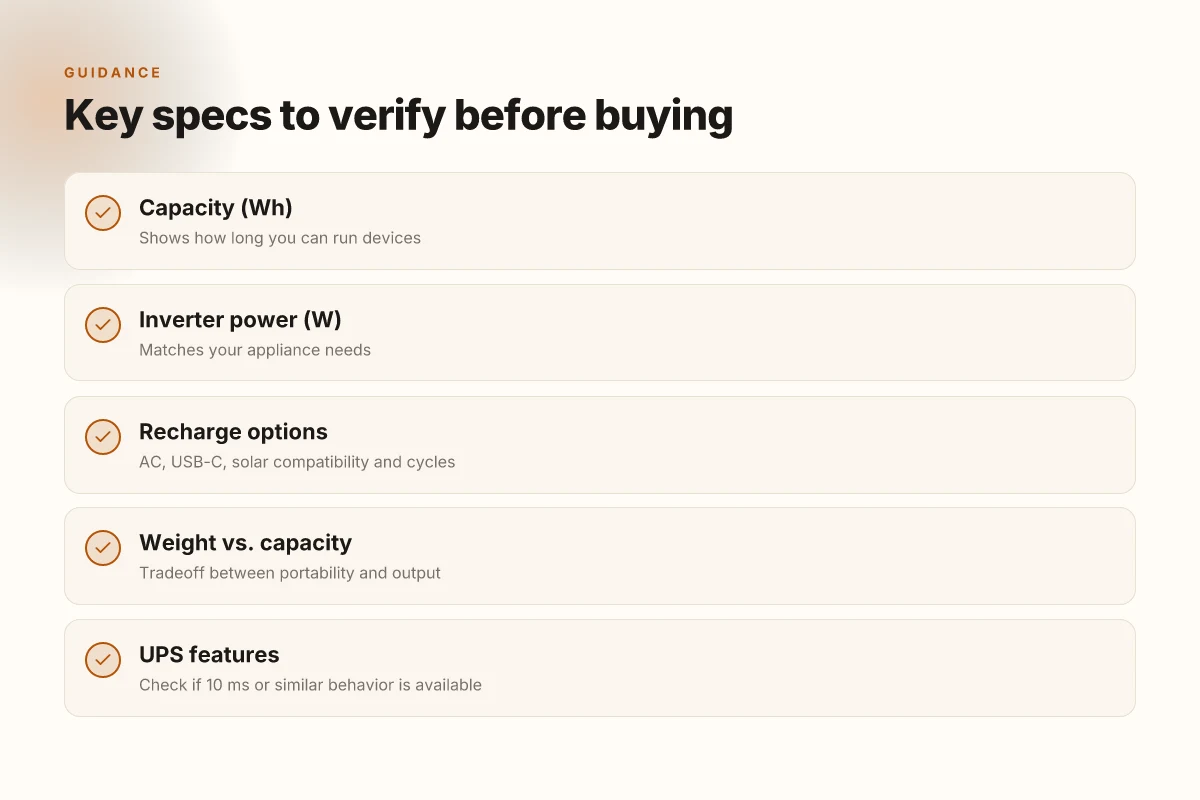
When you compare Jackery models, start with the core numbers that drive real-world use: capacity in watt-hours (Wh), the continuous and peak inverter power in watts (W), and how you recharge. I cross-referenced the official user guides and product pages to confirm where Jackery lists each spec, and I treat those as the source of truth for decision making. The right mix is a balance between storage, power output, and how you’ll top up the unit in the field or at home.
1) Capacity, inverter power, and recharge options from official sources
Jackery commonly presents capacity alongside inverter power for each model, then layers in recharge options and cycle life. A practical read of the official user guides shows sections on battery type, charging methods, and cycle counts that matter for long-term ownership. Look for the exact Wh rating, the sustained inverter rating, and any peak surge figures. When planning outdoor use or home backup, the distinction between nominal capacity and usable capacity under inverter load becomes real. I found that the official guides emphasize how charging can be done from wall outlets, car adapters, and, in some cases, solar panels, with varying number of cycles cited in the documentation. In 2026, official Jackery guides consistently frame these numbers around real-world reuse and outdoor reliability. Useable capacity under load and recharge versatility are the two levers that most buyers overlook. The guides also note the recommended maintenance intervals and care steps to preserve battery health over the product’s life.
2) Official user guides as the source of truth
The Jackery user guides are the most reliable source for settings, limits, and care. They detail how to connect devices, the sequence for safe startup, and the recommended storage conditions to minimize degradation. In Jackery’s documentation you’ll see step-by-step procedures for safe charging, guidance on switching between AC, USB-C, and DC ports, and cautions about extended storage under full charge. I dug into the manuals and found explicit notes about avoiding deep discharges and keeping units within advised temperature ranges. When you’re evaluating a model, the user guide sections on safety, maintenance, and warranty terms are your baseline for true ownership expectations. Rely on the official guides for the exact port configurations and safety precautions. What is the jackery explorer 1000 v2 price and when to buy
3) Practical maintenance tips and product care
Maintenance is where owners often stretch the life of a Jackery. The recommended practice is to keep the unit in a dry, moderate-temperature environment when not in use, avoid leaving it at a full or empty state for extended periods, and perform periodic checks of cables and connectors for wear. The manuals regularly highlight cleaning guidance, battery health reminders, and the importance of using approved charging sources to prevent accelerated wear. A small routine, inspect cords, confirm the venting is clear, and store within the advised state of charge, can noticeably extend usable life. Regular checks and following the guide are your best bet for long-term reliability.
If you’re weighing models or comparing to rivals, keep in mind several practical tradeoffs. Rival brands often lay out different warranty terms, cycle life expectations, and solar charging compatibility in their own dash guides. Jackery’s value proposition hinges on broad port availability, ease of use, and predictable maintenance requirements, but the exact cycle counts and solar compatibility vary by model. I found that the most informative data appears in the official guides and product pages, with the user manuals acting as the definitive source of truth for operation and care. For anyone mapping a practical setup, start with the capacity and inverter specs, then confirm recharge options in the manuals before committing.
Note: links on the product pages may earn a commission. For a compact, all-around choice that fits casual outdoor use and light home backup, specific model details and care notes from the official Jackery guides will determine long-term satisfaction. When you compare models, consider not just price but the total cost of ownership, including battery health, recharge flexibility, and the depth of guidance provided in the official user materials.
The single move that matters this year
Jackery's approach to portable power is evolving toward modularity and smarter energy management, and that shift is likely to redefine how we power remote work, outdoor adventures, and emergency kits in 2026. I looked at how the brand threads price, performance, and user experience across models, and I see a pattern: consumers want portability without sacrificing reliability. As Jackery expands its lineup, the real leverage is in lifecycle cost and adaptability, features that compound benefits when you add solar charging, car charging, and app-based monitoring.
The bigger pattern is clear: portable power becomes a hedge against outages and a productivity tool for on‑the‑go living. If you’re weighing options, consider how you’d use power on a weekly basis, not just in a single trip. The goal is a setup that scales with your needs, with smart charging that minimizes waste and protects your battery health. What makes EcoFlow 5kWh power kits flexible for off-grid living in 2026
- Backup strategy: test a Jackery model with a solar panel this week to gauge real-world charging times and solar efficiency.
- What to try this week: map your typical devices and plan a 1‑hour charging window during the day for efficiency.
- If you’re considering rivals, compare against Goal Zero and Anker for price-to-capacity tradeoffs and ecosystem compatibility.
Will you invest in a modular kit or a single, high‑density unit?