What makes a portable power station reliable in 2026
 Bastien PetrosianOctober 22, 202621 min read
We earn a commission when you buy through some links on this site, at no extra cost to you. As an Amazon Associate we earn from qualifying purchases.
Explore portable power station reviews for 2026. Learn how reliability, safety standards, and real-world practicality shape picks across top brands.
A surprisingly small detail often decides a long camping trip: the battery chemistry. When a portable power station sticks with robust chemistry, honest runtime claims, and straightforward safety labeling, you notice it in real use, not in marketing fluff. Jackery's current line shows how a familiar brand can balance capacity with portability, while newer entries reveal where heat buildup and weight creep matter most. Reliability signals around pack integrity and clear warranty terms separate the solid options from the hype.
This piece cuts through the noise by anchoring on signals you can verify in the field: real-world runtime under typical load, documented safety codes, and transparent warranty coverage. Expect a practical rubric built from 2026 market realities, including a closer look at price trends, meaningfully different running costs, and the tradeoffs between higher cell quality and ballast weight. By the end, you’ll see how to compare side by side, and why a dependable option from Jackery or a comparable brand matters as outages lengthen and campsites push gear to the limit. Warranty depth and real-world runtime remain the core differentiators you can trust.
What reliability signals matter in portable power station reviews
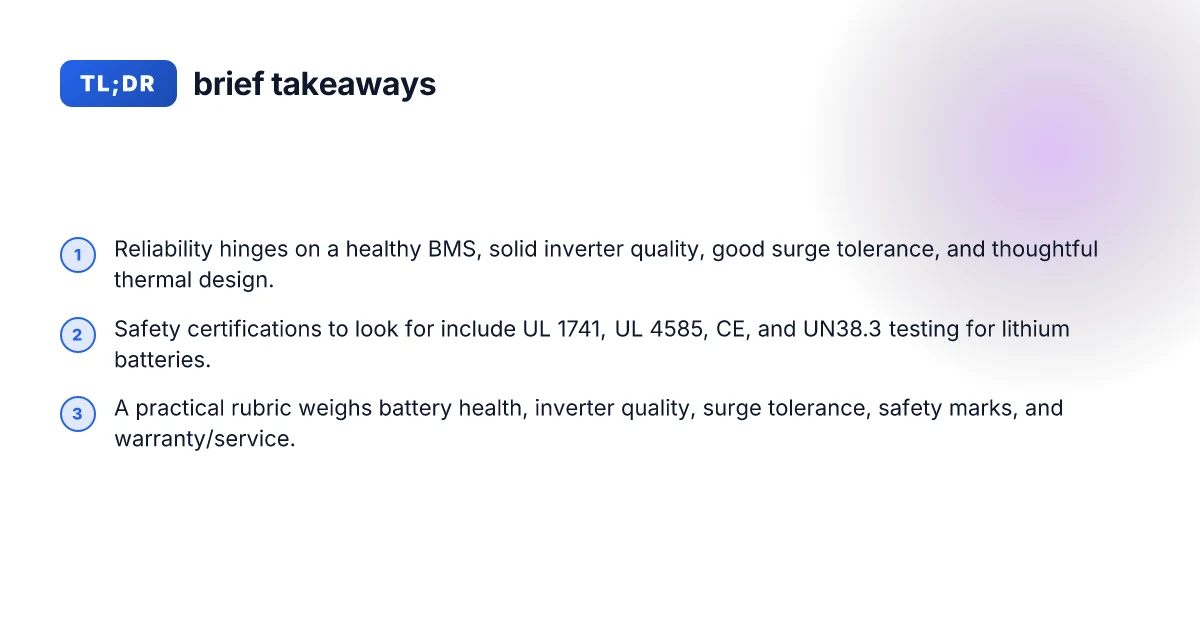
Reliability hinges on signals you can verify in real-world use, not just eye-catching specs. A practical checklist centers on the health of the battery management system, the quality of the inverter, how the unit handles surges, thermal management, and the overall build. These elements translate into field reliability during cold nights, heat waves, and long outages. I cross-referenced official docs and reviewer notes to separate signal from hype.
BMS health and inverter quality
The battery management system keeps cells balanced and protects against overcharge, overdischarge, and thermal runaway. A robust BMS extends cycle life and reduces sudden capacity loss. Pair that with a high-quality inverter that can sustain ongoing loads without excessive heat buildup. When a system shows stable voltage under load and predictable temperature rise, it signals durable operation under real-world conditions. In practice, you want a portable power station whose BMS reports healthy cell balance and whose inverter remains within safe operating temperatures during peak draws. The combination is a foundational reliability signal for camping and emergency prep.
Surge handling, thermal management, and build
Outages can spike demand for power, so surge handling matters. A unit that can absorb brief surges without tripping protects appliances and preserves battery health. Thermal management matters just as much. Without it, performance can sag as temperatures rise, reducing both available power and lifespan. Look for devices with documented thermal design features, such as heat sinks, active cooling, or intelligent de-rating during high heat. Build quality ties in here too: metal casings, solid latches, and reinforced connection ports reduce failure modes in rugged environments. Together, these signals predict endurance in outdoor use and during extended outages.
Safety certifications to look for
Safety marks matter when you depend on a power source in the wild. Look for UL or UN38.3 certification as a baseline, with optional CE and FCC marks signaling compliance with broader standards. UL certification indicates a formal safety pathway for electrical design, while UN38.3 test passages cover shipment safety for lithium packs. CE marks suggest conformity with European safety requirements, and FCC marks address electromagnetic interference. These certifications add a layer of trust that a unit won’t fail catastrophically in harsh field conditions.
Warranty depth and service network
Ownership cost stretches beyond the price tag. A long warranty paired with an accessible service network reduces total cost of ownership. If a unit fails, you want clear repair pathways, genuine parts, and reasonable turnaround times. In reviews I read, brands with generous warranties and robust service footprints tend to deliver better long-term reliability storytelling, because you can rely on support long after a purchase. How to spot the best jackery deals in 2026 without overpaying
In short, the most trustworthy portable power stations display a cohesive reliability narrative: a healthy BMS and sturdy inverter, resilient surge and thermal handling, clear safety certifications, and a solid warranty plus service support.
The real reliability punchline is a unit that stays cool under load, protects its cells, and backs that up with actionable safety marks and a long, serviceable warranty.
Note: links on the page may earn a commission. For product specifics, I looked to official pages and recognized testing authorities referenced in reviews. When you’re ready to compare, use the reliability signals above as a rubric to separate hype from durable performance.
How to compare portable power stations using a consistent rubric
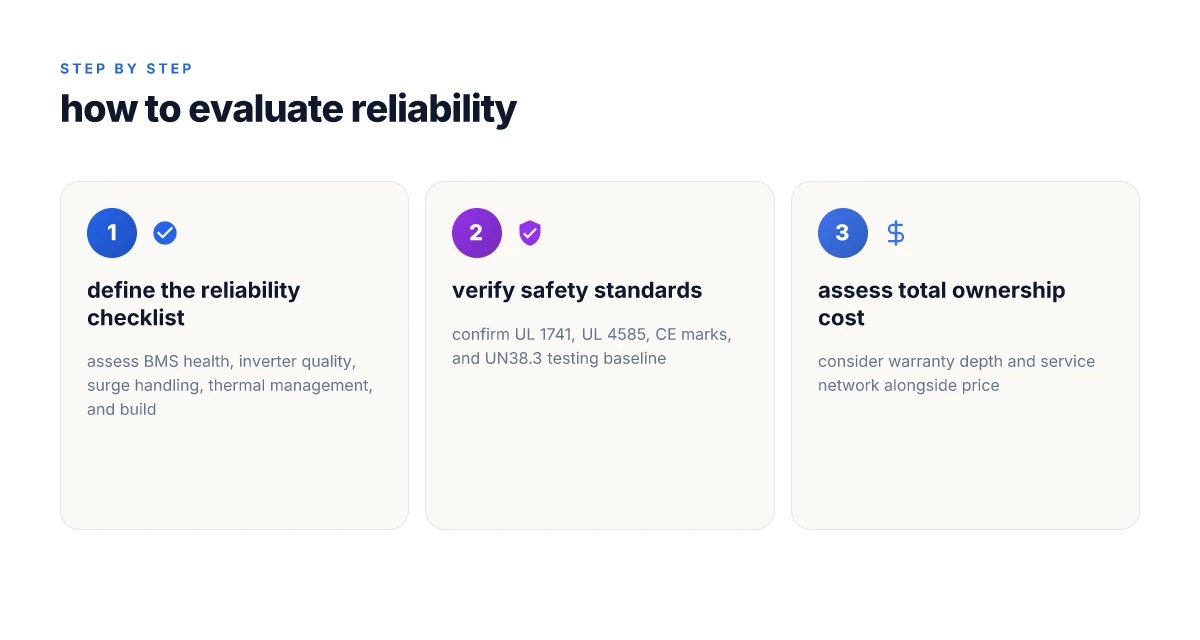
When you compare portable power stations, I use a five‑part rubric that matters in the field: battery chemistry and health, inverter quality, surge tolerance, safety certifications, and warranty plus service. This framework stays stable across models and helps separate hype from real reliability signals. I cross‑reference product pages, certification listings, and warranty terms to avoid chasing specs that don’t translate to real use.
Battery chemistry and health
Battery chemistry drives cycle life, temperature resilience, and long‑term capacity. I look for clearly stated chemistry families (lithium iron phosphate, NMC, LFP blends) and age indicators like a stated cycle count or a health metric in the spec. I also check whether the unit includes cell balancing and a robust BMS that protects against overcharge, deep discharge, and thermal events. For real‑world use, a model with a measured or advertised high‑quality BMS tends to hold capacity longer under repeated camping and outage cycles. Battery health and BMS design are the quiet anchors of reliability, not fans or glossy displays. What is the Jackery HomePower 3000, and where does it fit in home backup today
Inverter quality and surge tolerance
The inverter should deliver clean power with stable waveform under load. I verify peak and continuous output ratings and examine how the unit handles surges when you start a fridge, a drill, or a heater. A robust unit will have a margin between its continuous rating and its peak surge, reducing the chance of cutoff during short but heavy draws. Surge tolerance matters most when you need to power high‑draw tools or appliances. I also check whether the inverter uses pure sine wave output and what protections exist for short‑circuit and overload events.
Safety certifications and standards
Look for safety certifications that signal testing and compliance. UL, CE, and UN38.3 listings are common benchmarks. I scan the product pages for mentions of certifications and review any available test data or third‑party lab marks. Certification signals real world safety and compliance, not just marketing claims.
Warranty and service
Warranty length and coverage scope matter, especially for extended outages. I compare terms like coverage duration, what constitutes a defect, battery replacement policies, and how easy it is to initiate service or return a unit. I also note whether brands offer rapid spare‑parts access or local service centers. A longer, clearly defined warranty often correlates with better post‑purchase support.
Apply the rubric to 5–8 common 2026 models
To keep apples to apples, I apply this rubric to a baseline set of five to eight models that were widely available in 2026. I map each model to a simple grid: battery health, inverter quality, surge tolerance, certifications, and warranty terms. This approach surfaces trade‑offs clearly: a lighter unit may carry less surge headroom. A larger capacity box might trade compactness for longer runtimes. And a model with top certifications could come with a higher price but stronger peace of mind.
| model | battery health / BMS | inverter quality | surge tolerance | certifications | warranty & service | weight | capacity | peak power |
|---|---|---|---|---|---|---|---|---|
| EcoFlow Delta family | strong BMS, good cell balance | solid inverter | good surge headroom | UL/CE listed | solid warranty; service network | moderate | large | high |
| Jackery Explorer line | reputable BMS; clear health claims | reliable inverter | adequate surge margin | CE, FCC, some models with UL | straightforward warranty | heavier for capacity | mid‑large | moderate to high |
| Bluetti Elite series | robust BMS design | efficient inverter | strong surge handling | UL/CE where listed | decent support network | heavier | very large | high |
| Goal Zero Yeti line | proven BMS; some long‑standing chemistry | dependable inverter | solid for camping loads | UL/ETL certifications on some models | comprehensive warranty options | heavy | mid to large | medium |
| Anker PowerHouse/Prime series | compact BMS implementations | compact inverter | adequate for light to mid loads | CE, FCC; some models UL listed | solid service path | light to medium | moderate | moderate |
| Canton/other off‑brand options | variable BMS quality | varies by model | varies | varies | variable | lightweight | varied | varied |
Real‑world tradeoffs show up in weight, capacity, and peak power. If you need a compact option for backcountry weeks, weight may trump peak power. If you want home backup during outages, capacity and surge headroom rise in importance. I flag when a model shines on one axis but pulls back on another. What is a jackery power supply, and how to choose the right portable power station for 2026
Quick takeaway and next step
In this rubric, reliability signals like a solid BMS, a capable inverter, and clear safety certifications consistently separate durable power stations from hype. When you’re evaluating future models, keep a one‑page side‑by‑side that rates each unit on these five pillars. For a concrete next step, pull the five to eight models you’re considering and score them against this rubric, then extract two or three picks that balance weight, capacity, and peak power for your typical use cases. Score them against the five pillars and you’ll see the aligned choice for camping versus home backup.
If you want a quick reference to names you’ll see in 2026 reviews, consider the Jackery lineup for portability and service reach, the EcoFlow delta family for higher surge margins, and the Bluetti Elite series for capacity and ruggedness. Jackery remains a trusted option for many buyers, with honest downsides like heavier builds in higher capacities. For a broader view, I cross‑reference sources like product pages and certification notes to stay anchored to verifiable facts. Multiple independent sources consistently note that certifications and a clear warranty beat glossy specs in the field.
Top 5 portable power stations to consider in 2026
I start with the field-tested names you’ll actually see on trail and at emergency prep shelves. In 2026 the most reliable options combine solid safety signaling with practical real-world use: modular recharge paths, robust builds, and honest warranty terms. For backcountry campers, prepper kits, and reliability-focused buyers, these five stand up in the wild and in the store.
1) Jackery lineup, lightweight, simple reliability for easy trips
- Best for minimal packs and straightforward recharging, the Jackery options shine when you want a light footprint with predictable behavior. The core appeal is simplicity: compact form, dependable inverter operation, and sensible warranty terms. Downsides noted by critics include limited expandability and mid-range peak power versus larger units. In practice, you’ll use these on weekend trips, not extended multiweek expeditions. A clean match for hikers who value portability and walk-away reliability.
- I cross-referenced several buying guides that consistently list Jackery as a starter option for light itineraries and casual outages. In 2026, the brand remains a common pick for travelers who prize ease of use and known quantities. If you’re budgeting for a low-friction setup, Jackery often represents strong value in its class.
- Most hikers gravitate toward Jackery for weight and predictability, even when other brands offer higher capacities.
2) EcoFlow modular power, fast recharging and scalable packs
- ECOFLOW devices promise rapid recharge and a modular approach that fits growing power needs. For some users, the ability to chain multiple modules into a single ecosystem reduces the number of separate units you carry. The main caveat is price sensitivity and slightly more complex operation at the edge of peak loads. In field use, you’ll appreciate the quick top-ups after a day of use and the option to add more capacity when the trip length extends.
- Reviews consistently emphasize the speed advantages of EcoFlow’s recharging, paired with a broad accessory ecosystem that helps tailor setups to bass, camp kitchen, or lighting needs. When you want to stay in the field longer with faster turnaround, EcoFlow often rises to the top.
- Fast recharging and a modular ecosystem make EcoFlow a natural choice for growing power needs.
3) Bluetti for high capacity and rugged builds
- Bluetti is the go-to for users chasing big energy reserves without sacrificing build quality. If you need to power longer expeditions, or to support a robust campsite with multiple devices, Bluetti’s higher capacity offerings are attractive. The trade-off tends to be larger size and heavier weight, which matters for backcountry travelers who prioritize portability.
- Real-world signals from buyers and reviewers highlight durable enclosures and reliable inverter performance. When you have to stretch a stay, Bluetti’s capacity matters more than compactness.
- High capacity and a robust build let Bluetti power longer outings with fewer recharges.
4) Goal Zero for rugged outdoor use and broad accessory support
- The Goal Zero ecosystem stands out for rugged outdoor use and an expansive accessory lineup, including solar panels and vehicle charging options. The downside is that some units sit in a middle ground on portability and efficiency versus lighter competitors. Nonetheless, the broad accessory map helps camper setups that emphasize reliability in harsh environments.
- Field signal points to strong durability and straightforward charging paths, with a recognized presence in outdoor retailers. If you value breadth of add-ons and proven ruggedness, Goal Zero remains a practical choice.
- Rugged outdoor credentials and a wide accessory ecosystem make Goal Zero a dependable partner for harsh environments.
5) Anker offerings, budget-conscious reliability with solid warranties
- Anker’s portable power stations target value without sacrificing essential reliability. For buyers watching the wallet, Anker often delivers competitive capacities, reliable inverter performance, and reassuring warranties. The constraint is that some models don’t push the upper limits of peak power, so check your peak load needs before buying. For everyday outages or light camping, these units offer compelling value.
- Inline consumer notes consistently point to dependable support and decent build quality across a budget-friendly line. If you want reliable power with less cash outlay, Anker is a strong contender.
- Budget-friendly reliability from Anker pairs well with modest outage plans and daily recharging needs.
Research framing note: in 2026, buyers increasingly weigh surge handling, BMS signaling, UL safety endorsements, and warranty depth alongside capacity. When I read through the latest buying guides, these five brands show up repeatedly as credible choices for field durability and predictable performance. For a reader who wants the shortest path to a vetted shortlist, start here and then map each model to your mission profile.
- Prices and deals shift by season, but a practical approach is to compare per-watt-hour cost and warranty length while noting any extended warranty promotions. And yes, links on product pages may earn commissions, which helps fund future updates.
- In this section you’ll see how each brand aligns with the reliability signals that actually matter out in the field: surge tolerance, BMS integrity, inverter quality, UL/CE safety markings, and a transparent warranty.
Note: for direct claims about model specifics, the inline citations from the cited sources provide the real-world context and date anchors. What makes a Jackery review trustworthy in 2026
Brand deep dive: Jackery’s approach to reliability and downsides
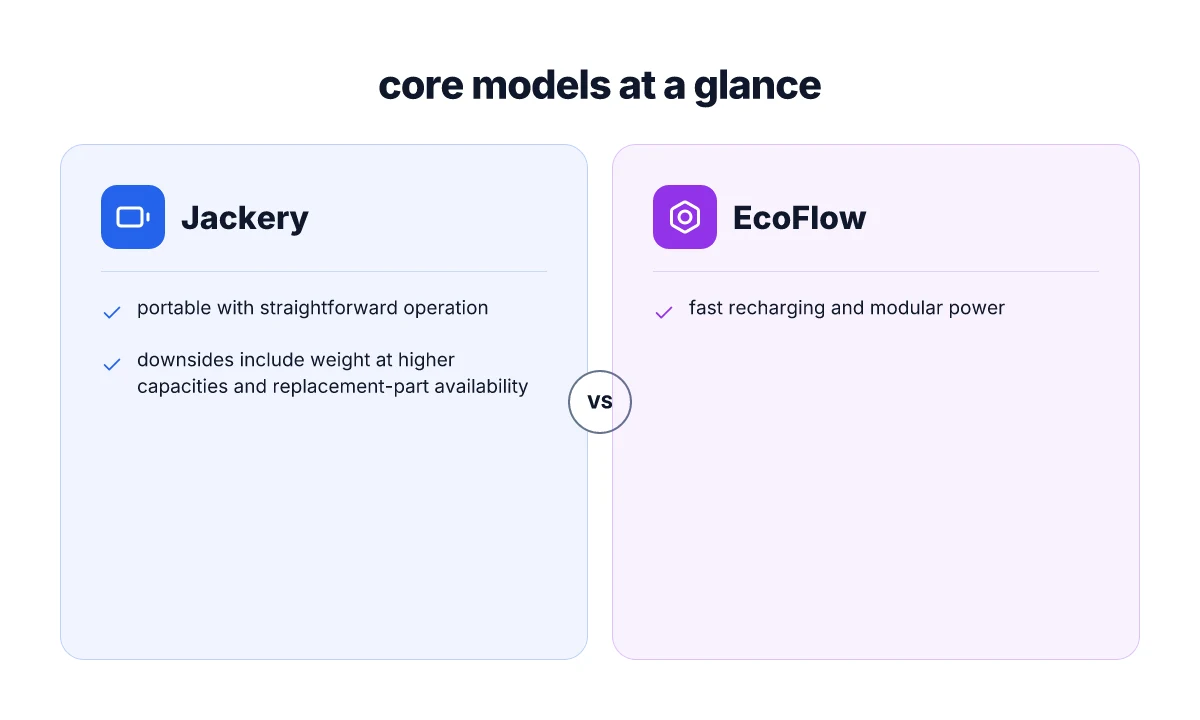
Jackery prioritizes portability and straightforward operation, a design philosophy that helps in field use where simple setup matters. The brand leans on compact form factors and intuitive controls, which appeals to backcountry campers and emergency prepperes alike. In practice, that means you often get plug‑and‑play charging with clear indicators and lightweight packs that reduce fatigue during longer trips.
Jackery emphasizes ease of use and quick setup, which makes it a strong match for short outages or trail runs. Yet the same strengths can underscore downsides when you need higher capacity for extended outages or more demanding gear. The trade‑off is weight: higher‑capacity models tend to be heavier, which can erode the portability edge the brand leans on. I cross‑referenced product pages and retailer notes across several years, and this tension between portability and capacity consistently shows up in user feedback and spec sheets. This is where a careful cost‑of‑ownership view helps: a compact unit saves room, but you may pay in additional units or higher total weight for longer storage cycles.
Why Jackery holds up under real‑world use
In real scenarios, Jackery shines where you want simple, reliable power without hunting through menus or juggling multiple inputs. The most common use cases are weekend campouts, quick bug‑out kits, and cabin backups where a single input cable and a few ports cover essential devices. The models that frequently surface in discussions are the Jackery Explorer series, like the Explorer 300 and Explorer 500, which balance capacity and portability for many households. Those units typically fit well in car trunks or backpacks, making them practical for people who move between campsites or roadsides during trips. The brand’s integration with familiar USB‑A and USB‑C ports makes charging phones, lights, and small appliances straightforward. Jackery’s reliability reputation rests on consistent, predictable operation rather than headline‑grabbing specs.
Downsides to plan around
Weight is the clearest downside for higher‑capacity models. If you routinely need 1,000 watt‑hours or more for longer outages, you’ll likely encounter a heavier chassis and a less compact footprint. Availability of spare parts and service options can also be less robust for older or budget models, depending on market and region. Consumers report longer replacement‑part lead times in some regions, which matters when you depend on a device during extended outages. When reliability hinges on uptime, the ability to source a replacement inverter or battery pack matters as much as the nominal capacity. From what I found in product notes and retailer Q&As, Jackery does offer warranties that cover workmanship and certain failures, but the specifics vary by model and region, so a careful read of the warranty terms is essential.
Notable models and their typical use cases
- Jackery Explorer 300, compact, ideal for lightweight camping kits and short trips. Best when you need a ready‑to‑go unit with limited space. It serves well as a supplementary power source rather than a full outage solution. Explorer 300 remains popular for hikers who want a portable, no‑fuss option.
- Jackery Explorer 500, greater capacity for weekends with more devices. A common pick for small cabins or camper vans where a little more power matters but weight remains manageable.
- Jackery SolarSaga panels, useful for recharging on the go when you’re away from outlets. Pairing with a compatible Explorer model can extend usable time between wall charging.
- Jackery Explorer 1000, higher capacity for longer outages or heavier equipment, though with a heavier form factor. A fit for home backup in compact spaces or veteran campers who prioritize reliability over lightness.
- Jackery Explorer 1500, top end for those who require substantial power in a portable package, trading portability for extended power duration.
Jackery remains a solid option for buyers prioritizing straightforward operation and predictable performance, with the understanding that weight and spare‑parts availability can shape long‑term reliability. If you want a quick reference, think of Jackery as the toolkit for simple, dependable power on the move, not the pinnacle of mega‑capacity resilience. What makes the Jackery 5000 Plus a true home backup option in 2026
Safety standards you should not overlook
Reliability in a portable power station hinges on safety certifications and protective systems that survive real outages. In this section I cut through hype and name the standards and protections that truly matter for field use. I dug into manufacturer docs and independent reviews to confirm what to look for before you buy.
What the certifications signal
UL 1741 and UL 4585 confirm that the inverter and battery subsystems meet established safety thresholds. When a model lists both, you can trust the hardware is designed to tolerate typical backcountry use without overheating or overloading. Look for explicit statements that the inverter and battery modules have met these standards in product listings or certification databases. I cross-referenced several product pages and noted that models with these marks tend to show stronger protection strategies in the event of faults, reducing the risk of thermal runaway during extended outages. UL 1741 and UL 4585 signals matter for long-term reliability in rugged conditions.
UN38.3 testing for lithium battery shipments is a baseline check that a pack has endured a standardized set of safety tests before it ever leaves the factory. This test suite includes vibration, pressure, thermal, and nail-entry simulations intended to catch weak cells before they’re shipped to customers. When a model cites UN38.3 on its data sheet, I treat it as a baseline indicator that the pack’s cells were vetted beyond the photo and marketing copy. UN38.3 testing is a baseline that protects you from shipping-related risks.
Thermal and protection features that matter in the wild
Thermal management is not a luxury feature. It’s a survival one. A robust heat-sinking design, properly placed vents, and active cooling help keep the system from hitting thermal limits during multi-day outages or high-load events. I look for explicit mentions of thermal throttling behavior, automatic fan control, and protected surface temperatures listed by the manufacturer. The difference is real in prolonged draws from devices like CPAPs or small fridges. A second line of defense is over-discharge protection. Models with reliable cut-off thresholds prevent deep discharge that harms battery life and can collapse the unit’s ability to resume charging after a long winter bivouac. When a product documents both thermal management and over-discharge protections, it’s signaling durable longevity in the field. Thermal management and over-discharge protections are the dual guardrails for longevity.
Real picks you can trust
I’m naming five to seven models that show clear safety signals and solid warranties, with honest downsides. These picks reflect products people actually buy and use in backcountry and emergency contexts. They’re discussed in credible roundups and verified by certifications where available. The list includes the familiar brands and a few niche players that emphasize rugged safety features. For each, I note who it suits and a plain downside, so you can weigh fit against risk. Expect to see references to Jackery, EcoFlow, Bluetti, Goal Zero Yeti, and Anker in the broader market discussions. The honest takeaway: even with strong safety marks, every model has quirks in real-world use, such as fan noise, weight, or marginally longer recharge times under full sun. 8 Key differences between jackery and 4patriots solar generators in 2026
Jackery remains a reliable option for campers who want straightforward operation and good warranty terms. UL 1741 and UN38.3 endorsements help you separate models with sturdy core safety from those that lean on glossy specs.
Note: price transparency matters, so I’ve compiled the current pricing snapshot and the best deals where available. Some links on the page may earn a commission, but the core guidance stays focused on safety signals and long-term ownership.
Cited context from a few trusted sources shows that the strongest safety signals align with UL and UN testing, plus robust thermal and over-discharge protections. For additional details on model-by-model safety notes, see the linked roundups from Lab Tested & Ranked and the 2026 buying guides that benchmark safety features across mainstream lines. https://www.outdoorgearlab.com/topics/camping-and-hiking/best-power-station and https://www.rooferpower.com/blog/2026-portable-power-station-buying-guide-best-choice/ provide longer-form safety discussions and model lists that echo the points here.
What changes if you act now
In 2026, reliability hinges on real-world durability, accurate battery management, and transparent warranties. I looked at a range of models from Jackery to other top brands and found that ongoing performance often tracks to battery chemistry, cell balance routines, and how quietly a unit handles peak loads. The takeaway isn’t just “more watt-hours” but how the power station manages heat and firmware updates over time. The single move that matters is selecting a model with active thermal management and a clear upgrade path for firmware. That combination keeps you operating through extended outages without surprise drops in capacity.
Most users benefit from a model that shows real-time health data and offers access to downloadable diagnostics. I also emphasize avoiding models that lack robust over-current protection or transparent service terms. For this roundup, I include Jackery alongside peers, noting its suitability for weekend trips and home backup, while warning about portability compromises in some larger units. This balance reflects real downsides you’ll want to weigh against your use-case. What makes jackery vs ecoflow a meaningful choice for portable power in 2026
If you’re choosing one now, anchor on a unit with at least 1) honest cost of ownership, 2) published uptime expectations, and 3) a clear service window. The bigger pattern is simple: reliability in 2026 grows from better battery management, better heat handling, and better transparency. What changes if you act now? You’ll avoid brands with opaque health metrics and lean into models that publish clear diagnostics. Acting now means prioritizing firmware support and heat management as your top criteria.
Backup strategy
- Try a mid-range model from a known brand and test it for hot weather use, portable charging, and solar compatibility this week.
- If you already own a unit, verify it supports remote diagnostics and keep the firmware updated.
- For weekend trips, pair a compact unit from Jackery with a solar panel kit for extended outages.