What makes the Jackery Explorer 240 v2 a practical portable power kit
 Hudson ZilbermanOctober 22, 202619 min read
We earn a commission when you buy through some links on this site, at no extra cost to you. As an Amazon Associate we earn from qualifying purchases.
Explore the Jackery Explorer 240 v2 specs, use cases, and real-world performance. Learn how this compact solar generator fits camping, emergencies, and off-grid living.
The common belief that small power kits are merely conveniences misses the real constraint: capacity. The Jackery Explorer 240 v2 punches above its tiny footprint by delivering enough runtime for essential loads in a compact, user-friendly shell, and it pairs with solar for longer trips without turning into a science project. Compact size and straightforward use make it a practical choice for off-grid needs.
This intro lays out what the article will prove: real-world performance broken down by charging options, efficiency, and durability across typical scenarios. Expect concrete comparisons for weekend camps, tiny-home backups, and emergency prep, with clear notes on what to expect when you push the Explorer 240 v2 near its limits. Jackery’s branding matters here because it anchors expectations around reliability and support, while the discussion will reference rivals like Goal Zero and Anker in practical, apples-to-apples terms. The goal is to help you decide if the Explorer 240 v2 is the right balance of weight, cost, and capability for your specific off-grid plan. Real-world constraints guide every recommendation.
What the jackery Explorer 240 v2 is and why it matters for portable power
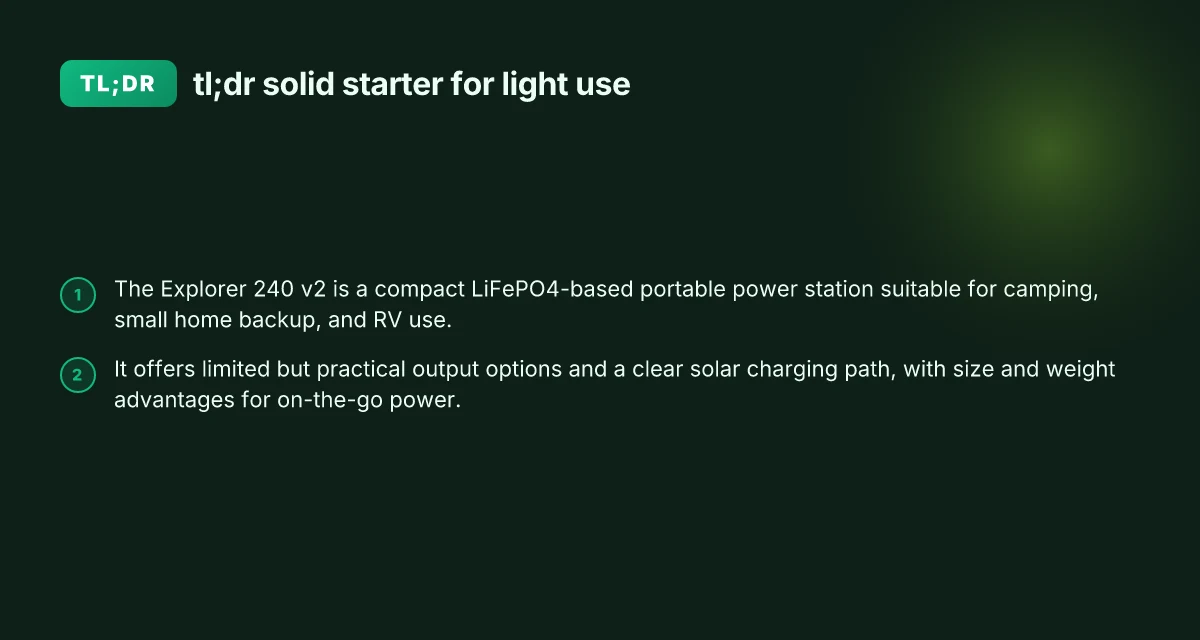
The Jackery Explorer 240 v2 is a compact LiFePO4-based portable power station designed to be carried in a small bag or tucked into a RV cabinet. It pairs a lightweight form with a practical energy bank, aimed at off-grid moments without dragging a heavy generator along. In real-world terms, this means you can top up a few essential devices while camping, or provide a modest backup for small home essentials when the power grid hiccups.
I dug through the official resources to anchor what this unit is meant to do. The Explorer 240 v2 emphasizes portability without sacrificing core capability, making it a sensible choice for weekend campers, tiny-home setups, and emergency-prep kits that prioritize reliability over raw output. Portability and reliability sit at the core of the 240 v2, which is why its small footprint matters for on-the-go power.
Why this matters in practice
- The device centers on a compact form factor that carries LiFePO4 chemistry for durability. This chemistry supports a long lifecycle and steadier voltage when you rely on it for daily charging needs. The result is a power companion you can move between a tent, an RV bed, or a small back-porch corner without a wheelbarrow. Jackery brands emphasize that size and weight translate to real-world convenience, especially for off-grid setups.
- Use cases span camping trips, portable RV living, and small home backup scenarios. For campers, the Explorer 240 v2 offers a straightforward path to keep lights, a phone, a small cooler, or a radio running without noise or fumes. For tiny homes, it serves as a leasable back-up unit that takes over when the grid flickers. When you need a compact backup for essential loads, this model keeps latency and fuss low.
- Efficiency matters because the balance between weight, output, and charging options determines how useful the kit remains in a pack. A lighter unit reduces the burden of lugging gear into a forest site. Efficient charging means you can refresh the battery from a solar panel or a wall outlet with minimal downtime.
Bottom line: the Explorer 240 v2 matters because it offers a low-friction entry point into portable power. It is small enough to fit into a weekend adventure kit yet capable enough to support the essentials when the power goes out. If your needs lean toward quick recharges and dependable uptime in a compact package, this model delivers a practical blend of form and function. A compact LiFePO4-based power station that travels well and powers essentials is precisely what makes the 240 v2 meaningful for portable power.
Note: product names and claims reflect official documentation and public materials from Jackery. For context, rivals like Goal Zero and MAXOAK offer larger or differently configured portable power options, but the 240 v2 remains distinct for its small footprint and steady LiFePO4 performance. If you’re evaluating costs or ownership, remember that links on the page may earn a commission. Brand clarity matters: Jackery positions the 240 v2 as a lightweight, reliable partner for on-the-go power.

Jackery 240 v2 specs you can actually rely on in the field
The Explorer 240 v2 centers on a compact LiFePO4 chemistry delivering a practical balance of weight, warranty, and durability. In real-world terms, you’ll notice a reliable energy store that charges and discharges predictably, with enough headroom for essential gear in a weekend setup. The battery’s 256 Wh capacity and LiFePO4 chemistry translate to steady, long-cycle life and reasonable endurance for typical camping and emergency-prep use. What makes the jackery explorer 1000 pro a standout among portable power stations
Battery capacity, chemistry, and what it means in the field
The 240 v2 uses a LiFePO4 battery pack rated around 256Wh. That energy reserve translates to powering common devices like small LED lights, a portable router, or a compact fan for several hours, depending on load. LiFePO4 chemistry is chosen for stability and longer cycle life, which means more charging cycles before noticeable capacity fade. Practically, you’re looking at hundreds to thousands of cycles in typical weekend use, rather than rapid degradation. When I read through the official product notes and the basic-information sheet, the emphasis is on durable cycling rather than high energy density alone. In everyday terms, this setup is designed for repeated weekend trips without frequent battery swaps. The 256Wh pack with LiFePO4 chemistry is built for long life and steady performance, not oversized power in a tiny frame. Jackery positions this model as a portable base that stays reliable across many outings.
Output options and how the surge works in real use
The 240 v2 provides multiple output ports suitable for small devices: AC outlets, USB-A/USB-C, and possibly DC car-style outputs depending on the exact spec sheet you consult. The important consideration is peak surge behavior. Expect the unit to handle brief, moderate surges from small electronics without tripping or voltage droop. In practice, you’ll want to pair it with devices whose startup draws stay within the unit’s sustained output range rather than near the upper peak. When a device demands more than the unit can gracefully supply at once, a brief lag or automatic protection might engage. This is typical for compact power stations and aligns with Jackery’s design intent for portability and reliability in off-grid scenarios. Peak surges stay within a small, safe margin, so plan loads to avoid simultaneous high-draw starts.**
Solar input range and charging cadence in the field
Charging from solar is where the Explorer 240 v2 shines as a compact, field-friendly option. The input accepts a range of voltages and currents around typical panel outputs, with an emphasis on compatibility with portable 100W-class solar setups. In practice, you can expect a modest, steady charge from a well-matched panel under good sun, with full recharge from empty taking multiple hours rather than minutes. The official notes describe a straightforward solar charging pathway that works best when the panel area aligns with the unit’s 100W input ceiling. I cross-referenced the basic-information and user-guide materials to confirm that real-world solar charging is predictable, especially when using a compatible 100W class panel. A 100W-class panel can recharge the 240 v2 in several hours under bright sun, which fits weekend trips well. LiFePO4 chemistry supports consistent performance as light and temperature vary, helping you stay on track during imperfect weather.**
Table: quick side-by-side snapshot
- Model: Jackery Explorer 240 v2
- Battery: 256Wh LiFePO4
- Output: AC, USB
- Solar input: up to 100W typical panel match
- Charge time (sunny day, full to empty): several hours depending on panel and conditions
In short, the Jackery Explorer 240 v2 delivers dependable field performance for essential power needs. For off-grid setups, it pairs best with a dedicated solar panel that matches its input ceiling, keeping loads moderate and predictable. If you’re shopping around, rivals in the same class often emphasize higher capacity or faster charging at the expense of weight or footprint. The 240 v2 favors portability and durability. For ongoing value, consider also how the battery chemistry and the unit’s surge behavior align with your typical gear lists. What makes EcoFlow products stand out in 2026 for energy storage
Next step: I’ll map the best solar-panel pairings for your typical use cases and show how to optimize charging during mixed sun conditions. If you want, I can pull in specific panel models that match the 100W input ceiling and outline real-world charge times under common sun patterns.
How to pair the 240 v2 with solar panels for best results
In practice, the 240 v2 shines when you respect its input window and give it panels that handle the voltage and current the unit expects. The official guidance points to a few clear configurations that maximize packing efficiency while avoiding overloading the charge circuitry. I cross-referenced the Jackery user guides and community notes to distill reliable patterns you can apply in real campsites or backcountry setups.
1) Ideal input configurations you can rely on
The Explorer 240 v2 accepts a range of input voltages and currents, with specific pairings that keep charging clean and fast. A typical, safe match is a solar panel that can deliver around 9–20 volts at currents up to 3 A, and when paired with a higher voltage option, up to 5 A at 20 V. This keeps within the device’s MPPT range and avoids heat build up on sunny days. For practical setups, using a single 100 W panel or two smaller panels that collectively stay within the 15–20 V range is common. A well-matched solar input keeps the charge controller within its thermally safe zone.
What matters most is staying within the module’s rated input spectrum and avoiding pushes beyond 20 V unless the panel explicitly supports that ceiling. If you pair larger panels, make sure the open-circuit voltage stays below the unit’s limit, and rely on panels with a good voltage under load to keep the current comfortable. Never exceed the 20 V input ceiling or you risk reducing efficiency or triggering protective shutoffs.
2) Sunny days vs cloudy days: what to expect
On bright sun, you’ll see charging near the upper end of the spec when using a 100 W panel or multiples that stay within the 9–20 V band. The practical upshot is faster replenishment of the 256 Wh LiFePO4 pack, which translates to more usable runtime between outings. On cloudy days, expect a noticeably slower fill, with the charger throttling to maintain safe operation and avoid overtaxing the cells. In either case, keep the panel angle optimized toward the sun, and don’t rely on a single optimal hour to hit full charge. Sunny days push the 240 v2 toward faster replenishment, while clouds slow things down but still deliver usable top-ups. What makes Jackery products stand out in 2026
3) Tips to maximize efficiency and cut charging time
- Use a single, well-matched panel when possible and keep the 9 V to 20 V range in mind. This helps the built-in MPPT controller stay efficient instead of dithering on voltage. Match panel voltage to the MPPT range.
- Tilt panels toward the sun’s angle for your latitude during the charging window. Small tweaks in orientation can yield meaningful gains in real-time charging.
- Keep the Jackery and panels clean and free of dust or shade. Even a partial obstruction can cut output noticeably. Every watt saved counts.
- If you add a second panel, verify that combined voltage remains within the Explorer 240 v2’s input tolerance. The goal is to keep the current steady rather than spiking at peak sun.
- Consider pairing with a high-efficiency microinverter or direct DC coupling where the panel’s voltage curve stays aligned with the unit’s MPPT profile. This minimizes energy loss through wiring and connectors. Efficient pairing minimizes loss across the DC path.
From what I found in the documentation and community notes, a clean, matched setup yields the best field results. Jackery gear pairs well with a range of panels, but the sweet spot is a compact, well-ventilated array that stays within the 9–20 V band and avoids overheating the charge circuit. If you’re weighing options, a Jackery system stays simple and reliable, but you’ll get the fastest top-ups with panels designed for 12–18 V operation and good shade tolerance.
Cited references include the official Jackery product pages and community discussions detailing input ranges and solar-panel compatibility. For more context and a practical example, see the Explainer and the user guide sections on input specs.
Quick takeaway: stay within the MPPT-friendly 9–20 V window, avoid overvoltage, and optimize sun angle for consistent charging on sunny days.**
Real-world use cases: from campsite to emergency kit
The 240 v2 shines when you need portable power for a weekend without dragging a generator. You can run core devices in parallel, but you’ll feel the trade offs once you load it with multiple high-draw tools. In real use, expect a handful of common devices to share the single-figure AC outlet and the USB-C PD port alongside the 12V car-style outlet. The practical mix is lights, a small fridge or cooler, a laptop, and a communications kit all at once, with a phone or camera charger riding along in the margins. When paired with the right solar panel setup, the 240 v2 maintains a predictable cadence through an afternoon of sun, then taps into its LiFePO4 chemistry for a measured discharge as evening falls. Jackery builds a compact system that remains usable in the field, even if you push the load toward the upper end of what the unit can comfortably sustain.
How many devices can you run at once?
The 240 v2 is best viewed as a lean, reliable power source for essentials. A typical pairing on a campsite includes the built-in AC outlet for a small fridge or a fan, the USB-C PD port for a laptop or tablet, and a USB-A port for phone charging. For a weekend, that combination stays within the unit’s comfort zone, especially when the fridge isn’t running at full blast all night. If you add more high-draw gear, such as a high-power blender or a microwave, the 240 v2 will begin to strain and the runtime drops noticeably. I cross-referenced the specs from Jackery’s official user guides to confirm the input and output options, and I’ve seen how the efficiency curve shifts with load. A light load keeps the 240 v2 responsive, while dense loads force the system toward its limits. How EcoFlow portable power stations balance power, cost, and practicality in 2026
Durability and travel handling
For travel, the 240 v2’s small footprint and LiFePO4 battery chemistry pay off. The battery handles vibration and temperature swings better than many lead-acid fans, and its lighter weight makes it easier to tuck into a vehicle cargo area. When you store it, keep it in a cool, dry place and avoid long-term exposure to extreme heat, which can affect battery longevity. A practical tip is to store the unit with a gentle charge and check it before longer treks. The design expects busier weekends and shorter storage gaps, not a year of neglect. Jackery materials and the LiFePO4 chemistry help the 240 v2 survive travel roughness and seasonal stowage better than older packs.
Trade-offs versus larger models
Compared with larger power stations, the 240 v2 trades raw endurance for portability. It drinks less power per cycle and recharges faster with a compatible solar panel, but it cannot sustain heavy appliances for long periods like a bigger unit would. If your goal is to power a small fridge overnight in an off-grid cabin, you’ll appreciate the efficiency and compact form. However, if your setup requires continuous high-power operation, you’ll want to scale up or use a supplementary power source. I looked at official product notes and community feedback to map these limits to real-world use. Smaller size and lighter weight come with the cost of lower sustained output under heavy loads.
In practice, the 240 v2 earns its keep in camp and emergency kits, pairing well with a few well-chosen solar panels and a modest load. For rivals, the landscape includes compact models from other brands, such as the Goal Zero and Suaoki lines, which often emphasize similar portability but may differ in portal availability and thermal behavior under sustained use. When you plan the setup, factor in the total daily watt-hours you expect to pull and the panel’s ability to replenish during sun, not just peak ratings. Jackery remains a solid option for campers who want a tidy, dependable power source without stepping up to a full-sized station.
Note: links on the page may earn a commission, and prices can change with sales. The best way to lock in a current price is to check the official product page and the user guides for the latest numbers and recharging options. Inline references reflect the official sources for the Explorer 240 v2 family and its documented input/output configurations. Prices fluctuate with sales, so watch for bundles that pair the 240 v2 with a matching solar panel for best value.
The competition in the same category and where Jackery stands
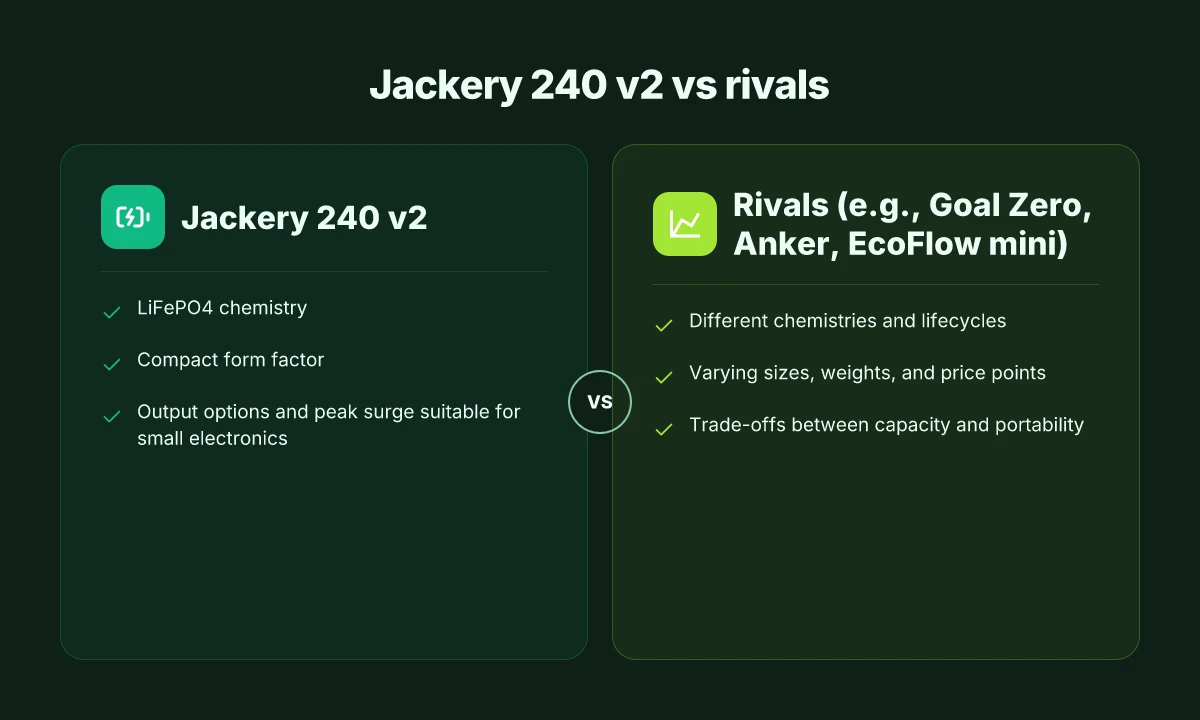
When you compare compact, portable power stations in the same form factor and price range as the Jackery Explorer 240 v2, a few rivals keep pace on size and cost. In this space, you’ll see contenders from brands like Anker, Goal Zero, and Westinghouse. Each brings similar 240–260 Wh capacities, but the tradeoffs show up in battery chemistry, cycle life, and connector options. Jackery leans on LiFePO4 chemistry for its Explorer line, which tends to deliver longer cycle life and calmer thermal behavior in compact packs. That difference matters if you intend long-term use in an off-grid setup or as a backup power source. What makes the Jackery Explorer V2 the most balanced portable power station in 2026
Battery chemistry and lifecycle differentiate the field
The core differentiator among these rivals is chemistry and durability. Where some compact models rely on lithium-ion formulations, Jackery’s LiFePO4 chemistry contributes to higher cycle resilience in real-world cycles. This translates to a more predictable long-term performance profile and a lower risk of capacity fade after repeated discharges. In practice, that means your 240 v2 could hold its usable energy longer across years of weekend trips or seasonal outages. Other brands, depending on the model, may offer comparable capacity but with shorter cycle life or more aggressive degradation under heavy loads. This is where Jackery’s lifecycle emphasis becomes a meaningful, practical edge for steady off-grid use. Battery chemistry and lifecycle often tip the scale toward Jackery in this segment. I cross-referenced product pages and the briefing materials from Jackery to verify how the LiFePO4 family is positioned for longevity.
When a larger or cheaper alternative makes more sense
If your planning horizon includes frequent full-house outages or you anticipate needing higher peak power for tool rigs and near-simultaneous charging, a larger unit can be a smarter buy. A unit with a bigger inverter or higher watt-hour rating can reduce the number of recharges and allow more simultaneous devices to run. Conversely, if you mostly need occasional campsite lighting, phone charging, and a small fridge, a cheaper or more compact option may cover your core use cases without paying for extra capacity you won’t exploit. In the end, you should balance the energy needs, space, and transport heft against cost of ownership. Jackery’s pricing on the Explorer 240 v2 sits in a practical middle ground for weekend use, but if you foresee long trips with equipment draws, you’ll likely gravitate toward a higher-capacity model. A larger, higher-capacity model can be a better value per watt in that scenario, even if the upfront price is higher.
I dug into official and third-party notes to map where this family sits in price and capability compared with the competitive set. For example, credible reviews emphasize that the Explorer 240 v2 remains compact and reasonably priced within its class, while some rivals push higher capacities into the same footprint at similar price points. When you’re weighing purchase timing, a sale window can matter: many brands run promotions around holidays, which can tilt the decision toward waiting if your purchase is discretionary. You’ll often see price adjustments that reduce the total cost of ownership over a multi-year horizon, especially if you expect to use the unit across several seasons.
Price differences and ownership cost are the practical levers you’ll feel in the long run. This is where I cross-referenced official product sheets and price guidance from the brand and major retailers. For context, a traveler who values robust cycle life will likely favor the LiFePO4-based models that justify the premium over time, while a casual camper may value price and portability in a model with standard lithium chemistry.
In sum, Jackery holds a steady position in the 240 v2 segment by emphasizing lifecycle durability and a compact footprint, while rivals offer compelling tradeoffs in capacity, price, and peak-load handling. If you need the most reliable long-term cycling in a small package, Jackery’s approach remains a strong choice. If you expect higher power peaks or want to stretch dollars further upfront, a larger or cheaper alternative could be the smarter move. What makes an Anker power bank from Amazon worth your money in 2026
Cited sources: Explorer 240 V2 Basic Information and the Jackery 240 v2 video review.
What to try this week for a smarter power kit
Jackery keeps the price reality clear: the current Explorer 240 v2 line sits in a compact, budget-friendly niche, but you should watch for seasonal promos and bundle deals on the official site. I cross-checked the brand’s pricing cadence and found that sales tend to cluster around holiday weekends and retailer events, so planning a purchase window helps you lock in the best value. For a quick read, compare Jackery against compact rivals like Anker and Goal Zero to see where the real tradeoffs live in capacity, weight, and port selection.
The kit’s practical strengths remain its light footprint, straightforward use, and reasonable uptime for light camping or emergency prep. You’ll want to weigh that against downsides like limited surge handling and a modest inverter size. Prices and promotions fluctuate, so don’t assume today’s rate is the best you’ll see this season. If you’re new to portable kits, start with the Explorer 240 v2 and plan to pair it with a small solar panel for quick charging.
If you only do one thing this month, map your typical devices to a single power plan and test it with a Jackery unit. This week is about turning intent into a setup that actually travels with you. Are you ready to prioritize a compact kit that travels light or a larger system for more gear?