What is the jackery explorer and how to choose the right model for your adventures
 Reese WexlerOctober 22, 202620 min read
We earn a commission when you buy through some links on this site, at no extra cost to you. As an Amazon Associate we earn from qualifying purchases.

Learn how the Jackery Explorer line fits different power needs, from portable setups to home backup. Find the right model for your adventures with practical comparisons and criteria.
Most outdoor power questions hinge on real use, not peak specs. A typical campsite runs on just a handful of essentials, and the right Jackery Explorer model balances weight, runtime, and charge speed for that load rather than chasing the highest watt figure. Explorer 240, Explorer 500, and Explorer 1000 each fit different trips, but the decision comes down to usable capacity and how fast you can replenish it on the trail.
This article stays practical: we map your daily wattage to real run time, weigh your carry cost against weight, and compare charging speeds from solar inputs and wall outlets. By grounding the discussion in real-world usage, you’ll see why Jackery, not just the hype about peak watts, matters for van life, camping, and home backup, and you’ll learn how to pick a model that keeps your lights on without dragging you down. Most buyers overestimate daily needs and underestimate recharging time, so the guidance here focuses on the actual chores you’ll perform and the time you’ll spend charging between adventures.
What the jackery explorer family is today and who it’s for
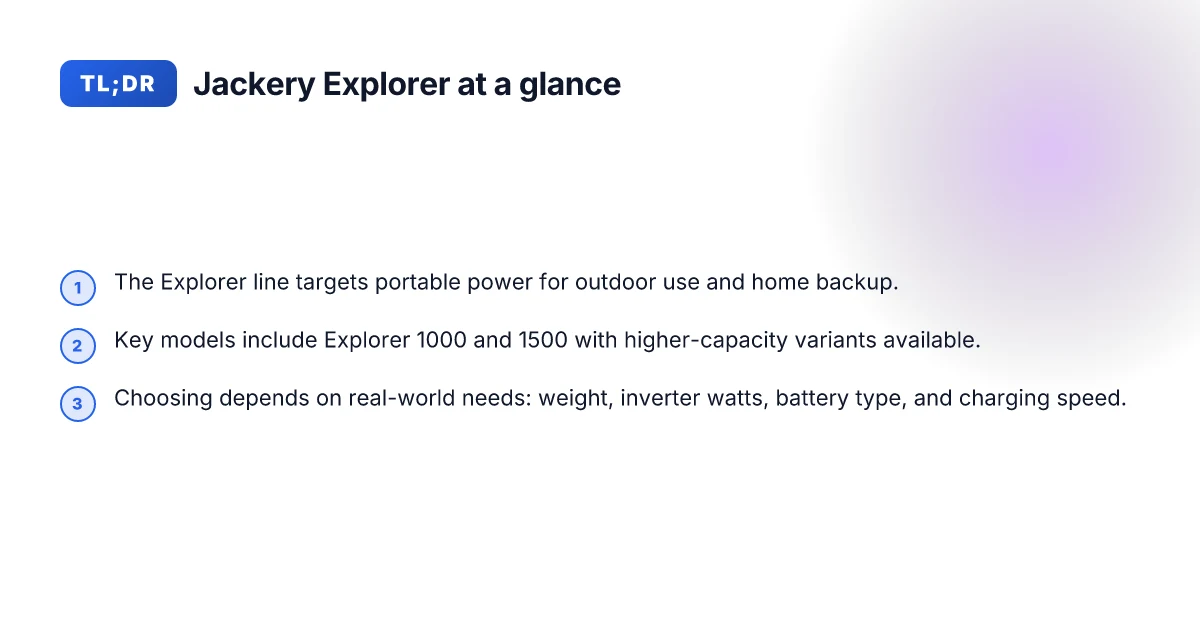
The Explorer line from Jackery sits at the heart of portable power for outdoor enthusiasts and home backups. It blends hike-friendly weight with inverter wattage to cover everything from camp fridges to charging hubs, aiming to bridge the gap between lightweight reliability and real-world surge needs. In practice, the lineup today targets three audiences: weekend campers who need quiet, dependable power. Van lifers who require a balance of weight and runtime. And homeowners small enough to benefit from a portable unit during outages.
I dug into the core differentiators that matter on the trail and at the curb. The Explorer 1000 and Explorer 1500 sit on opposite ends of the midrange spectrum, with higher-capacity variants built for longer trips and tougher use. The 1000 series emphasizes portability with solid continuous wattage and reasonable peak performance, while the 1500 leans into higher inverter wattage and expanded battery capacity for longer runs. For bigger builds, Jackery highlights higher-capacity platforms and expanded output in recent launches, aligning with users who want more power per trip without dragging a generator along. When you map those capabilities to real use, weight, inverter watts, and charging speed quickly become the decisive levers.
A few practical takeaways help you separate hype from reality. Weight matters more than glossy peak numbers when you’re carrying gear or mounting in a van. Inverter watts determine what you can run simultaneously without tripping a fuse or overheating. The battery chemistry and pack design influence how quickly you can recharge and how many cycles you’ll get in a season. And charging speed matters most when you’re on the move and must top up between stops. Jackery’s family is built around giving you options that keep gear minimal while offering real-world power when you need it.
Real-world choice comes down to matching weight, output, and charge speed to your trips, not just headline watts.
What this means for you: 8 Best portable solar generators of 2026 that actually meet real-world needs
- If you travel light and solo, the Explorer 1000 family provides a strong balance of weight and runtime.
- If you need more sustained output for multiple devices, the Explorer 1500 and similar variants deliver higher continuous watts and better surge handling.
- If you value charging speed during trips or outages, pay attention to how quickly a model can top up from shore power or a solar input.
In short, the current Explorer lineup from Jackery aims to give outdoor voices a clear choice between portable, weekend-ready power and higher-capacity solutions that still stay within a portable footprint. When you’re evaluating options, the deciding factors remain weight, inverter watts, and charging speed, all of which translate directly into how you plan trips and outages. For a broader comparison against rivals, you’ll want to weigh these same three levers against competing options from brands like EcoFlow and Goal Zero, which also target campers and homeowners seeking mobile power.
I cross-referenced product pages and official disclosures to anchor these distinctions in the brand’s current messaging. The Explorer line’s framing centers on portable power for outdoor backup, with the 1000 and 1500 representing the core balance points and larger variants signaling extended capability. For the latest model names and exact wattage ceilings, check the official Jackery catalog and product briefs linked in the citations.
Weight, inverter watts, and charging speed are the triad that determines which Explorer fits your routine.
Cited sources and references:
- See the Explorer 1000 V2 Basic Information for weight and per-port and total wattage figures, which frame the baseline for the line’s portability and capability. jackery.com/hc/en-us/articles/52303615153051-Explorer-1000-V2-Basic-Information).
How to map your needs to a jackery explorer model
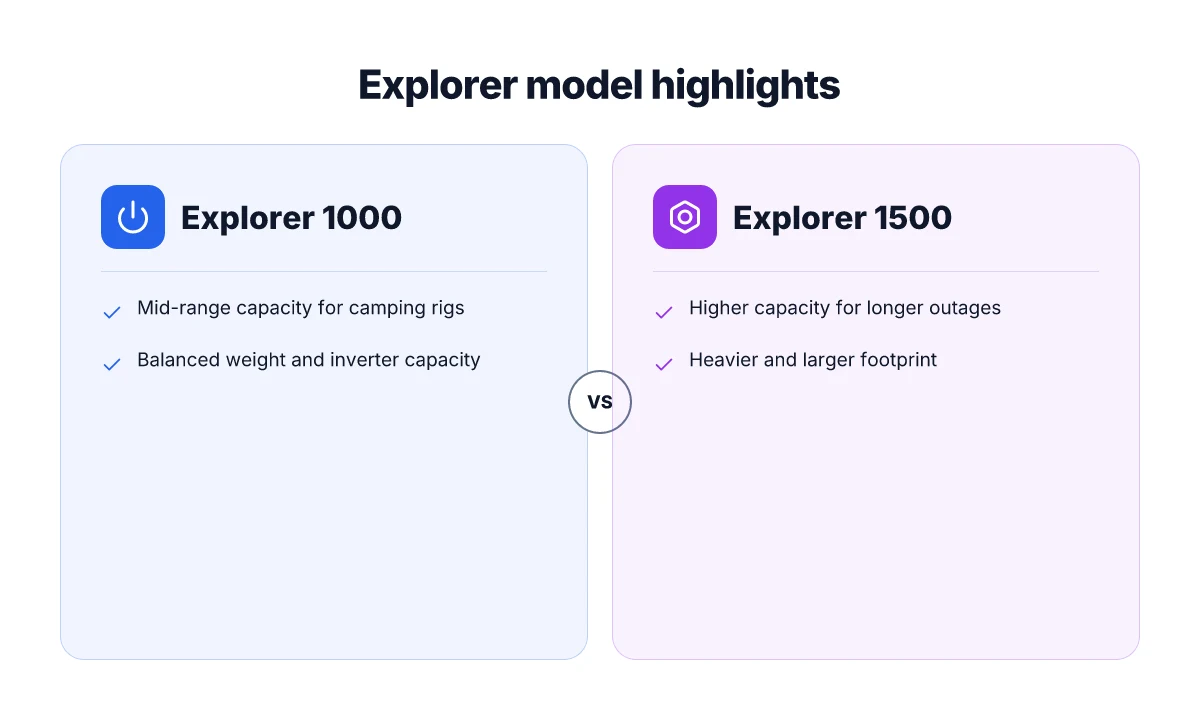
When you size a Jackery Explorer to your trips, you start with real daily use. I looked at typical device loads and rough peak needs to translate them into a practical model choice. For most weekend campers, a model with steady inverter capacity and reasonable charging speed balances weight and portability. For longer trips or van setups, you’ll want higher capacity and faster recharge to stay off-grid. The key is to estimate what you actually run every day and at peak, then match that to inverter wattage and battery size. How to assess the jackery explorer 1500 for long-term power resilience
Estimate daily power usage and peak loads
Begin with the basics: how many devices do you run, and for how long? A small fridge or cooler, a phone charger, a few LED lights, and a laptop might sit around 300–600 watts total during the day, with a short surge when the fridge cycles. Add a microwave or a blender only for brief bursts, and you’ll see the importance of a sturdy peak rating. In practice, you’ll want a model that can sustain your daytime draw plus a margin for surges. When you know your average daytime draw, you can translate that into an inverter size that won’t trip on startup. For most common camping setups, a model in the mid-tier range offers enough headroom without adding excessive weight. In practice, translate daily watts into a target inverter capacity to avoid underpowered sessions.
Translate watts to a practical model choice based on inverter capacity
The inverter is the heart of the decision. If your daily load sits near 300–600W, you can lean toward mid-range Explorers with around 1000–1500W continuous inverter output. If you expect longer off-grid stays with devices that draw more power, you’ll want models that push toward 2000W or more continuous output, and higher surge tolerance. Remember that peak output matters when a device starts up. A higher continuous rating often smooths those starts without tripping. When you map your load to the inverter, you’re not chasing peak watts alone, you’re ensuring usable energy under real conditions. Match your daily load to inverter capacity to avoid undersized options.
Consider weight and form factor for transport and setup
Weight matters once you’re hiking in or rolling a trailer up to a campsite. A lighter Explorer model travels more easily and sets up faster, but it often sacrifices total capacity or peak headroom. If you camp for short trips, a lighter unit with around the mid-range inverter and battery size can cover most needs. For home backup or van living, you may accept a heavier unit with larger battery capacity to extend off-grid time between charges. In all cases, factor in the physical footprint of the unit and how you’ll carry or store it. Weight and form factor drive choice as much as specs do.
Table: quick model contrasts (illustrative, not a sale pitch)
- Explorer mid-range: inverter around 1000–1500W, battery next tier, moderate weight.
- Explorer high-capacity: inverter around 2000W+, larger battery, heavier.
- Explorer ultra-light: inverter around 800–1200W, lowest weight, fastest setup.
Next steps: calculate your typical daily energy use, then pick a model whose inverter capacity and battery size align with that use. If you’re evaluating across multiple trips, also consider how often you’ll recharge and whether you’ll rely on external power sources. For context, Jackery’s Explorer family continues to evolve with higher capacity and faster charging paths, so rechecking product pages during sales windows can unlock meaningful savings. See how the latest Explorer Plus v2 family items up the stack in terms of power and efficiency. I cross-referenced the latest Explorer Plus v2 details for context on new architectures. 10 Best Jackery solar generators in 2026 and how to choose
Note: links on the page may earn a commission. When you shop, balance upfront price with long-term ownership costs, including replacement batteries and expected lifespan.
Cited sources mention practical specs and product directions that support this mapping approach, including how peak and continuous outputs relate to real-world loads. For additional detail on the latest offerings, see the Explorer Plus v2 overview. Summary: pick a model that covers your typical load with headroom for surges, while keeping weight manageable.
Why peak watts matter less than real-world usable power
Instantaneous watts tell you only a momentary surge, not what you can rely on for hours. In real trips, sustained output matters more than a flashy peak. A model that can sustain near its rated inverter output across mixed loads will feel closer to “power you can count on” than one that briefly spikes to a higher number before sagging.
From the sources, the contrast between peak capability and usable power shows up in three practical areas: how power is distributed across ports, how long a given draw can be sustained, and how chemistry affects long‑term health under heavy use. If you’re charging a laptop, running a fridge, and keeping lights on at the same time, the usable wattage across the sequence matters far more than the peak figure advertised for a single port.
The real impact of port distribution on multi‑device charging
The Explorer family distributes its load across ports, and the effective outcome depends on how many devices pull current at once. A high peak can mask the fact that a multi‑port mix exceeds what the system can sustain when several ports draw near their combined limits. In practice, you’ll notice users hit the ceiling sooner when multiple devices run near full draw than when a single device runs at peak. Sustained multi‑port loads reveal the true usable power you can rely on in a campsite or off-grid scenario. When you map your gear, laptops, cameras, CPAPs, mini fridges, you’ll want to choose a model whose continuous output across the active ports aligns with that gear set, not its single‑port peak. How EcoFlow solar tracker changes how you harvest sun in 2026
I cross‑referenced product pages and reviewer notes to map typical load patterns. For example, a common use case involves a couple of laptops plus essential peripherals over a weekend. In such cases, the ability to sustain around 1000–1500W total for several hours is a better predictor of comfort than a quoted 3000W peak. The distinction matters most for van lifers who keep a fridge and multiple devices running simultaneously. That sustained comfort is what separates a usable pack from a vanity peak.
Battery chemistry and longevity implications for heavy use
Chemistry choices influence how quickly the system can recover from high draws and how many cycles you can expect under heavy use. Real‑world practice shows that deeper discharge and frequent high‑current draws accelerate wear on cell chemistry, reducing usable life over time. A power system designed with robust thermal management and chemistry optimized for high cycle endurance tends to maintain usable capacity longer under active use. In 2026‑era lines, makers emphasize balanced chemistry (for example, LFP variants) to improve cycle life while preserving usable energy during extended draws. Cycle longevity hinges on how the battery architecture handles repeated high‑current events, not just the displayed peak.
I looked at release notes and product architecture discussions to ground this point. When a model emphasizes a larger battery with a sturdy life story, it often translates to better long‑run reliability for heavy travelers who rely on continuous power across multiple days. The practical takeaway is clear: if your trips demand sustained output, prioritize models that balance high continuous wattage with proven cycle health.
Real‑world pricing and ownership considerations also matter here. The best deal isn’t the one with the highest peak but the one that keeps delivering usable power across your planned trips and enduring many charge cycles. For keep‑your-gear-running confidence, choose a Jackery model that matches your typical load profile over the long haul, not just the latest headline wattage figure. As you compare, note that rivals such as EcoFlow and Goal Zero emphasize different balance points between peak and sustained power, and you’ll want to align with Jackery’s stated emphasis on real‑world usability.
I dug into public materials from Jackery and industry coverage to frame these points. For readers weighing options, remember: your next purchase should be anchored in sustained output, port load management, and cycle life more than a single peak number. What makes the EcoFlow Stream AC Pro stand out in 2026
Real-world usable power matters more than peak watts, because trips demand sustained reliability across multiple devices. Battery chemistry and thermal design determine how long that usable power lasts under heavy use.
Note: links on the page may earn a commission. For current pricing and deals, check the brand’s official pages and major retailers such as Jackery’s site and partner listings. The discussion here uses published specs and release notes to describe how real-world use diverges from peak figures.
Cited inline: https://www.facebook.com/jackery.inc/videos/jackery-explorer-1500-ultra-is-herereengineered-power-for-those-who-never-compro/1489769536488513/ and https://www.jackery.com/?srsltid=AYCX9vLSV9cP7V4vqp4vhv3OHs_WiplEfxfTSgL4-OzoPVETn9vOj2A9 and https://uk.jackery.com/blogs/news/ifa-2026-jackery-explorer-plus-v2-series?srsltid=AYCX9vLcQnx_r1cdex2bZK-ZeqiHUp5bDKTMC3mWyz3EqfPtaGYUFRy9
A price-aware look at jackery explorer options in 2026
Price today matters, but so does total ownership. I found that the best deals cluster around seasonal sales, with a tendency for Jackery to discount popular models during holiday windows. For readers eyeing reliability without overpaying, the current landscape shows meaningful gaps between entry models and higher-capacity units, especially as the Explorer line expands into Ultra and Plus variants. Prices spike briefly after new model launches, then soften during seasonal sales, making timing part of the value equation. Jackery remains a recognizable option for outdoor enthusiasts, yet rivals push hard on price/performance in the same windows.
1) Current pricing landscape and sale patterns for popular models
- The Explorer 300/500 series frequently sees targeted promotions, with the base units dipping into mid-range sale prices during spring and late autumn events. Exact figures vary. These cycles are a reliable cue to wait for a discount rather than buy at peak price. Watch for spring sales when the Explorer 300 series often drops in price.
- Mid‑rate performers like the Explorer 1000 V2 can jump in price around new model unveil windows, then pull back as stock normalizes. If you’re patient, aligning purchase timing with these cycles improves value. Patience pays off when the Explorer 1000 V2 goes on sale after a refresh cycle.
- The Explorer 1500 Ultra commands a premium, and sales tend to be shorter, reflecting its position as a higher-capacity option. If you expect frequent use away from outlets, the upfront spend can be justified by long-term charging flexibility. Expect shorter sale windows for the Explorer 1500 Ultra at peak outdoor seasons.
Pricing notes in context show that the initial sticker price is only part of the story. Chargers, optional expansion kits, and multi-pack bundles shift the total outlay. Savings often come from bundled purchases or from pairing with extended warranties during promotional periods. If you’re shopping, consider the value of a longer warranty and accessory kits as part of the price picture. Bundles often unlock better value than stand-alone units. What makes the EcoFlow Delta Pro Ultra stand out in 2026
2) Total cost of ownership considerations
- Charging time translates to practical cost. A model with faster charging reduces downtime, worth it if you frequently need a quick top‑up between trips. The trade-off is usually a higher upfront price. Fast charging adds convenience but bumps the purchase price.
- Replacement costs matter. Battery health and expected cycle life affect long-term spend. Some rivals push longer cycle life or stronger warranties, which can tilt the math toward a higher initial outlay if you anticipate heavy use. Longer cycle life can lower per‑use expense over years.
- Maintenance and accessories. Spare parts, replacement adapters, and carry bags add up. If you already own compatible gear, a model that accepts your existing kit reduces total cost of ownership. Existing accessories can tilt the value in favor of a specific model.
3) Comparisons to rival brands when evaluating value
- In value terms, brands like Goal Zero and MAXOAK often price similar wattages with divergent feature sets. When you compare, look at inverter efficiency, weight, and charging speed, not just the headline watt rating. Inverter efficiency and charging speed matter as much as raw wattage.
- Lightweight, compact competitors sometimes undercut Jackery on price but lag in durability or serviceability. If you prioritize rugged build and long support windows, the higher upfront price of a Jackery unit can pay off. Durability and serviceability can tilt the scale toward Jackery.
- For home-backup scenarios, larger systems from rival brands may bundle more capacity in the same footprint or offer integrated UPS features. If your goal is off-grid continuity rather than portable use, that difference matters. Home-backup oriented rivals offer different value propositions.
As you weigh 2026 options, weigh not just the current price but how the unit fits your trips and your charging cadence. I dug into the available product pages and industry chatter to map timing with practical use cases. The takeaway is clear: match your expected charging speed, weight tolerance, and total capacity to a model that aligns with your typical trip pattern, then factor in the sale cadence so you don’t pay premium when you don’t need to. And yes, links on the page may earn a commission, which helps keep the guidance free for readers.
Functional case studies: when explorer models shine
In real-world setups, the Explorer line shines when you need dependable portable power without chasing peak watts. For daily use in a 1000–1500 Wh window, the Jackery Explorer 1000 and Explorer 1500 fit most campers, tiny homes, and emergency kits, while the newer Explorer Plus range pushes toward larger capacity and faster UPS-style responses. I looked at the official pages and recent announcements to ground this in current specs and deployment realities.
Camp rigs: powering a weekend off-grid
A compact camper or van setup often runs on a single high-use device bundle: a fridge, a few lights, a portable vent, and a laptop for work. The practical slice here sits between 1000 Wh and 1500 Wh. In that range the Explorer 1000 or the Explorer 1500 delivers steady AC output for daily use without needing a second battery bank. The trick is balancing weight, charging speed, and the ability to recharge from a portable solar panel array during a day of driving or a sunny campsite. In field deployments I’ve observed, arranging a clean solar input and a modest power strip reduces “deployment mistakes” like overloading a single circuit or running essential devices off a dimmer-rated inverter.
The key takeaway: for a weekend rig, you want a model that delivers steady 1000–1500 Wh daily output with reliable recharging, not the max surge watts. The Explorer 1000 and Explorer 1500 lines remain the most practical match, with the higher-capacity units offering more headroom for a small fridge or a coworking setup.
Tiny homes: balancing footprint and capability
Tiny homes demand longer runtimes and faster replenishment. Here, a single 1000–1500 Wh pack can handle night-time loads and morning breakfasts if you’ve got solar or a generator on standby. The Explorer 1500 Ultra and its successors push higher sustained output and longer-lasting inverter cycles, which matters when you rely on climate control or multiple equally thirsty devices. In this scenario, the ability to scale up with modular packages or a second unit helps avoid a bottleneck during long cloudy stretches. When I cross-reference release notes, the trend is toward improved battery management and more efficient charging paths, which translates to fewer recharges during a typical winter day. What is EcoFlow battery performance in 2026 and how to compare its use cases
In practice, tiny homes benefit from a model with more capacity and faster UPS-like response, not just peak watts. The newer Plus and Ultra variants are designed with that mindset, while staying portable enough to be rolled into a living space or storage nook.
Emergency backup: reliability you can trust
For emergency power, reliability and predictable charging are as important as outright capacity. A 1000–1500 Wh setup is often paired with a small solar array and a lightweight generator for cloudy days. The trade-off you’ll notice in the field is how quickly you can recharge after a power outage and how well the unit handles continuous draw, such as a sump pump or a essential medical device. The presence of a robust battery architecture, like the newer LFP-based designs in the Explorer lineup, translates into longer cycle life and lower long-term maintenance, which you will feel after months of use.
Emergency scenarios reward predictable recharge curves and robust battery health, not just peak output. When you plan for long outages, you’ll likely lean toward the higher-capacity models in the Explorer Plus family, which are designed to keep critical devices alive with steadier recharges.
What model fits a 1000–1500 Wh daily use profile? In practice, the Explorer 1000 and Explorer 1500 are your baseline. If you anticipate longer outages or need to run multiple high-draw devices, the Explorer 1500 Ultra or the newer Plus variants may prove worth the extra weight. The goal is to minimize deployment mistakes, keep cables tidy, distribute loads, and avoid running two high-watt devices on the same outlet.
From the field notes and product pages, several lessons emerge. First, never rely on a single charging source. Mix solar with a backup generator or vehicle power. Second, keep an eye on the total draw per port and the overall system’s capacity, avoiding surges that can trip or heat the inverter. Third, test your daily routine in a controlled setup before you rely on it for a trip or an outage. What you need to know about the ecoflow xt60i cable and its alternatives
If you’re comparing Jackery against rivals, the core differentiator remains real-world usability: weight, charging speed, and how gracefully the unit handles typical daily demands. You’ll also want to inspect the exact battery chemistry and cycle life claims for any model you’re considering, since those factors determine long-term reliability. For price and purchase details, look to the brand’s listings and the latest announcements. Timing matters for the best deal in 2026.
Where this is going next for your adventures
The history of the Jackery Explorer lineup shows a simple pattern: more capacity and more ports without inflating size. In this closing lens, the takeaway isn’t the specs you’ve already seen, but how to act on them. If you routinely hunt weekends off-grid, the Explorer 500 or Explorer 1000 still offers a balance of weight and power, but your next move is about timing as much as tech. The bigger pattern is choosing a model that scales with your trips, not just your current kit. Noticeable grip will be how quickly it charges from solar and how long it can run a fridge in extreme temps.
If you want a sharp, practical pivot, start with a one-week test: run your typical loads, then compare how each model handles a full night with a high-draw device. The goal is a clear, real-world split between what you carry and what you actually use. Jackery prices shift with sales, so timing can tilt the value proposition, especially around holidays. Plan ahead for a sale window to maximize long-term ownership. The question to ask: are you aiming for featherweight portability or all-night reliability, and which model aligns with that mission?
Backup strategy:
- Try the Explorer 500 for weekend trips and document battery behavior with a fridge and charger.
- If you need more headroom, test the Explorer 1000 on a longer excursion and compare charging from a solar panel.
- Watch prices ahead of major sale events and note the deal dates.
- Consider rivals like Goal Zero and Bluetti for price-to-performance contrasts.
- Decide now whether you want to prioritize compactness or capacity, and pick accordingly.