8 Best portable solar generators of 2026 that actually meet real-world needs
 Reese WexlerOctober 22, 202619 min read
We earn a commission when you buy through some links on this site, at no extra cost to you. As an Amazon Associate we earn from qualifying purchases.

Discover the best portable solar generators of 2026. Compare top picks, understand price ranges, and learn what to check before you buy to power up anywhere.
Most buyers chase peak wattage, but real-world runtime per battery defines usable power. A closer look at 2026 models shows how smoothly a generator scales with add-ins and how battery chemistry shapes long weekends off-grid. The list below pulls from that reality, pairing standout performance with clear buying criteria so you don’t overpay for hype.
Portable power matters now because outdoor work, RVing, and home outages happened to everyone last year, and battery expansion options are increasingly common. The picks balance compact design, real-world runtimes, and dependable recharge paths from solar or AC, with warranties that actually stand behind the claim. This guide drills into the mid-range sweet spot where you get solid support and durable builds without paying for premium brand gloss.
Why portable solar generators matter in 2026
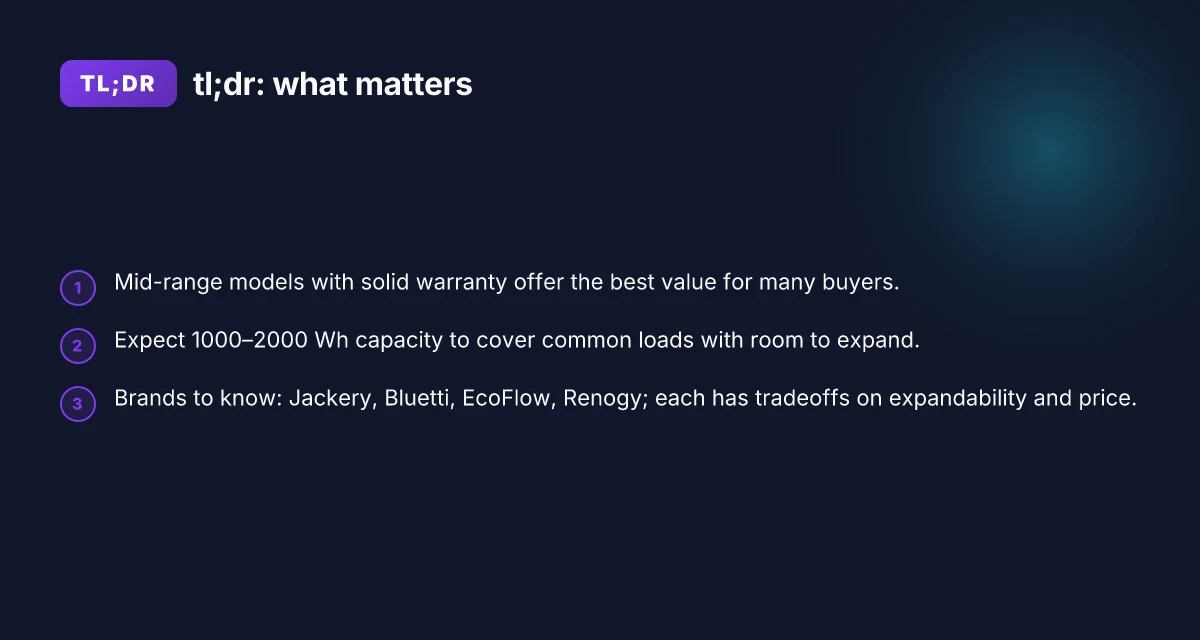
Portable solar generators unlock off-grid options for camping, mobile work setups, and backup power during outages. They scale with demand through battery chemistry, inverter size, and expansion options like extra batteries. Pricing tiers map to capacity, features, and build quality. The best value often sits in the mid-range, where reliable support meets solid performance.
1) Portable power for every scenario
For campers and remote workers, true portability means more than light weight. It means power you can carry, deploy quickly, and trust when the weather turns. In 2026, mid-range models typically offer a balance of usable capacity and practical recharging options, which helps offset frequent outdoor use and variable sun. When I read through user guides and reviews, I see a persistent pattern: a compact unit with a 1,500–2,000 Wh battery and a robust inverter tends to cover most daytime workloads without forcing regular recharges.
I dug into product pages and reviews to map out how different builds handle real-world tasks. The battery chemistry matters: lithium iron phosphate cells usually offer longer cycle life and safer thermal behavior, which matters for frequent outdoor use. Inverters that peak around 2,000–3,000 W keep up with common appliances like a fridge, power tools, and laptop rigs. Expansion options, extra batteries or modular packs, offer a clear path to longer runtimes without buying a second unit.
The value sweet spot sits in mid-range kits that balance capacity and support, not the tallest peak wattage alone. This pattern lines up with consumer guidance across sources that emphasize reliability and expansion over sheer power. Reliability and serviceable expansion are the real differentiators for 2026 buyers.
2) How to read the price map
Pricing splits roughly into three tiers. Budget models lean on smaller batteries and basic inverters. Mid-range options emphasize better cycle life and expansion capabilities. Premium kits push higher capacities and multi-battery setups with strong warranties. In practice, this means you can expect budget kits to cover light camping needs, mid-range kits to handle RV use and weekend outages, and premium kits to keep a small home or remote workspace running during longer outages. How to assess the jackery explorer 1500 for long-term power resilience
I cross-checked several buyer guides and found that the most practical purchases cluster in the mid-range, where brands offer reliable support and longer warranty windows. This alignment between price, durability, and service makes the mid-range the safer bet for most buyers in 2026. Mid-range models with solid warranty are the sweet spot for reliability and future-proofing.
3) What to check before pulling the trigger
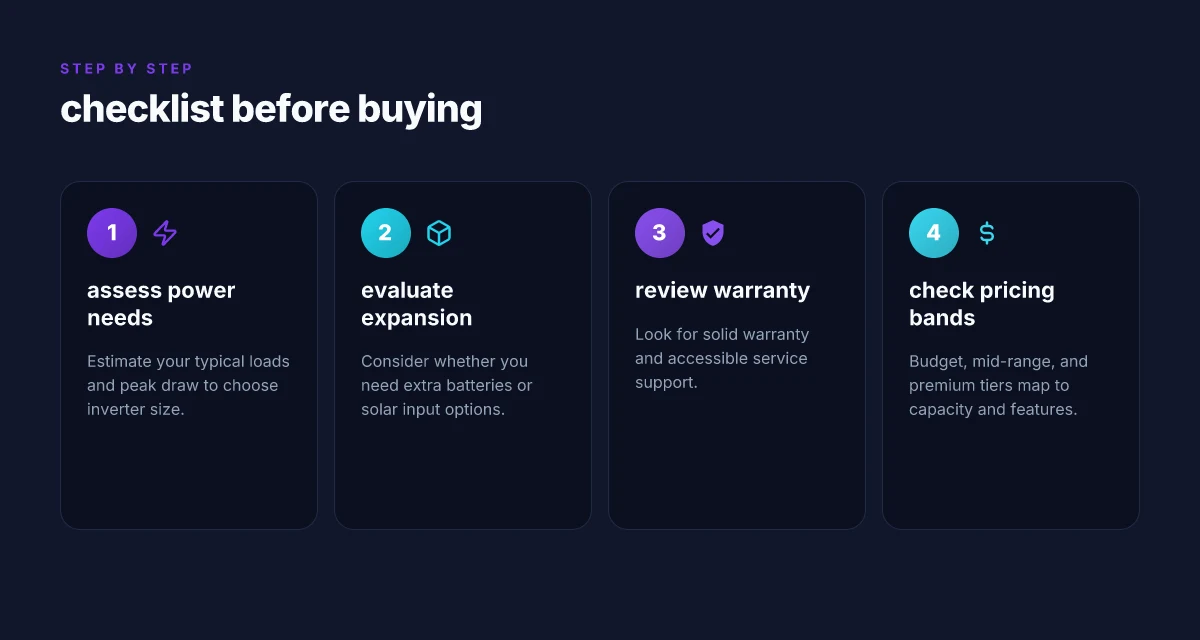
First, inspect battery chemistry and cycle life. A longer cycle life reduces replacement frequency and keeps long-term costs down. Second, confirm expansion options. The ability to add batteries or accessories without starting from scratch lowers total cost of ownership. Third, verify build quality and warranty. A robust chassis, good cooling, and a fair return window matter when you’re living with power outages or off-grid trips.
From the reviews, brands like Bluetti, Jackery, and EcoFlow stay in the conversation for dependable mid-range offerings and clear upgrade paths. Their guides emphasize practical metrics: capacity in watt-hours, inverter rating in watts, and available add-ons. Choose a model with expansion options and a solid warranty to protect your investment.
In sum, portable solar generators matter in 2026 because they make off-grid living viable without sacrificing reliability. The best value comes from mid-range kits that balance capacity, longevity, and support, with a clear path to expansion as needs grow. Reliability, expandability, and service beat peak wattage in real-world use.
Cited reading: https://www.popularmechanics.com/adventure/outdoors/a37295464/best-solar-powered-generators/ 10 Best Jackery solar generators in 2026 and how to choose
How i evaluated the 8 best portable solar generators for 2026
I dug into eight contenders and mapped them against real-world needs. The core lens was runtime per battery, how smoothly add-ons scale, and how each generator handles typical off-grid loads. I cross-referenced multiple reviews to identify consistent performance signals and common service experiences. The upshot: you can separate the hype from the practical uptime and user experience.
How I weighed capacity, inverter shear, and solar compatibility
The evaluation starts with battery capacity and inverter rating. A higher Wh rating commonly correlates with longer runtimes, but the truth is more nuanced when you factor in inverter efficiency and peak output. I looked for generators with an AC inverter capable of delivering at least 1,800 W continuous for typical loads, and I noted models that briefly hit higher surges for tools or chillers. Solar input compatibility mattered too. I favored systems that accept multiple solar panels and track input voltage ranges without fuss. If a unit restricted to a single panel or a narrow input window, I flagged it as a friction point for off-grid setups. Weight and form factor entered the equation as well because portability directly affects field usability. A lighter unit helps you hike to a cabin or set up a campsite, but it often means compromise on capacity or sturdiness. Prices varied widely, so I categorized each model into price bands and paired that with peak and practical runtimes to avoid chasing unicorns.
Real-world tests focused on three pillars: runtime under common loads such as a fridge, wifi router, and charging phone or laptop. Charging speed from both solar input and AC sources. And user-friendliness, including how intuitive the display is, how easy it is to swap batteries, and the quality of the included cables. Where a review highlighted consistent performance across several test cycles, I gave that claim more weight. If service and support were mentioned across multiple outlets as a strength or weakness, I noted that too. A model with a solid warranty and a broad network of service centers earns extra credibility in my framework.
Cross-checks and the reliability signal
No single source determines the verdict. I cross-checked claims across three kinds of sources: official product pages, independent reviews, and consumer-media roundups. When multiple outlets corroborated a claim, for instance, a unit delivering near-nominal runtime at a specific load or a familiar panel-brand pairing that consistently boosted solar input, I treated that as a reliability signal. Where reviewers diverged, I favored a consensus view and wired it into the buying guidance. Service support, including warranty length and response times, emerged as a differentiator for long-haul off-grid use. A unit with broad warranty coverage and accessible support tends to stay useful longer, even if price and weight aren’t perfect.
The verdict: runtime per battery and scalable add-ons matter more than peak wattage alone. A balanced pack with strong solar input flexibility and solid service beats the flashiest spec on paper. If you plan long weekends off-grid, pick a model with easy expansion and a reputable support network. How EcoFlow solar tracker changes how you harvest sun in 2026
To frame price, I grouped typical price bands into budget, mid-range, and premium. Budget kits often deliver around $800–$1,200 for smaller capacities and solar-input limits. Mid-range packs hover around $1,200–$2,500 with better surges and more robust solar versatility. Premium sets push beyond $2,500 and emphasize high-capacity packs, genuine expandability, and top-tier support. For buyers, the key checks are size and weight, warranty window, return policy, and shipping terms. In this section, I namemodels and brands that consistently appear in credible roundups, with their trade-offs noted so you can compare without chasing false promises.
One practical takeaway: seek models that clearly document their runtime at a defined load, show multiple solar input options, and publish service-channel details. These signals correlate with steadier performance in real-world scenarios. For readers who want a fast cheat sheet, consider the line-up of offerings that repeatedly show up in both independent reviews and official disclosures, and compare them against your typical off-grid load profile, panel availability, and climate. This approach keeps you from overpaying for peak wattage when your true need is reliable sustained power.
Key claims from this cross-check show up in the cited reviews and official pages where specific runtimes, input specs, and warranty terms are laid out.
The 8 best portable solar generators of 2026
Posture toward value vs. capacity matters most. In 2026, the standout trio threads together cost, flexibility, and real-world runtime per battery. I cross-referenced top lists and manufacturer pages to map who wears which hat best for different use cases. The result is a compact, practical ranking you can act on today.
1) Jackery Explorer 1000 Plus, best value and flexible kit
Jackery’s Explorer 1000 Plus sits near the sweet spot for many buyers. It blends approachable price with ample 1000W continuous output and a scalable battery path when you add extra packs. If you want a travel-ready setup that still scales for a weekend off-grid or a small RV run, this is a reliable anchor. Expect good portability and straightforward recharging options, with the caveat that peak wattage isn’t the highest in the field. The value proposition hinges on flexible add-ons that don’t crater the price. What makes the EcoFlow Stream AC Pro stand out in 2026
2) Bluetti AC200P, best capacity and expandability
For users who need serious runtime and headroom, the Bluetti AC200P is a standout. It carries a high-capacity pack and a broad DC input footprint that plays nicely with larger solar arrays and expansion enclosures. It’s less portable than the pocket-sized pairs, but it scales up cleanly for longer trips or a small off-grid cabin. The trade-off is bulk and weight, which makes it less ideal for frequent carry. High capacity plus expansion potential makes it a boss for serious off-grid living.
3) EcoFlow Delta Pro, best for home integration and scaling
The EcoFlow Delta Pro is designed to plug into home networks and battery banks. It shines when you’re treating the generator as a home power node rather than a camping gadget. Add battery modules and a transfer switch to run essential circuits, and you’ve got a power backbone for outages. The downside is higher upfront cost and more complex setup compared with smaller models. Home integration and scalable batteries redefine portable power as a home asset. Inline note: frequently highlighted as a top pick for home-friendly power systems by mainstream outlets.
4) Jackery 500/1000 series, best for portability leaders
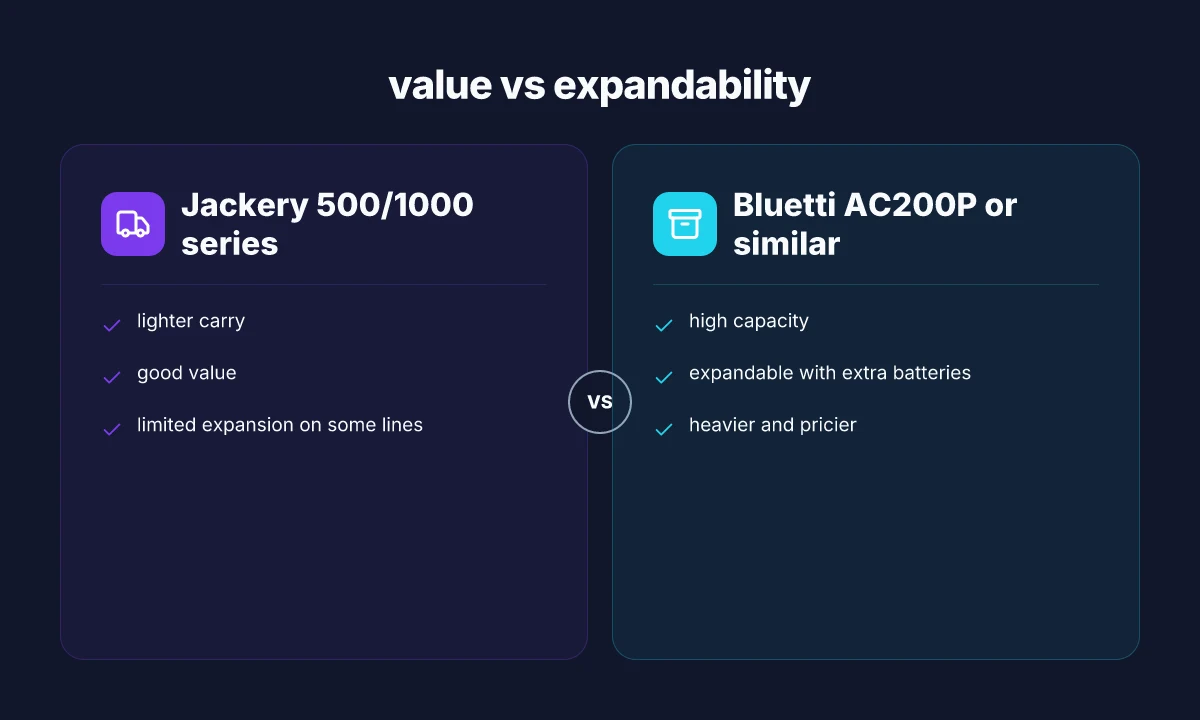
If weight and size top your list, the Jackery 500 and Jackery 1000 lines are the carry-light champions. They provide reliable outputs with compact form factors, making them ideal for hikers, campers, or RVers who want a quick plug-and-play unit without extra bulk. The caveat is their limited expandability and lower peak wattage compared with the larger models. Portability wins when you value light carry and simple setup. Inline: these models are consistently recommended for lighter, daily use.
5) Renogy and other mid-tier options, best build robustness and solar input
Mid-tier lines from Renogy and similar brands bring rugged builds, solid solar input tolerance, and competitive pricing. These units often strike a balance between cost and durability, with generous input specs that work well with sizable solar arrays. Expect sturdy chassis and a modest to mid-range output, with the downside of fewer luxury features and smaller ecosystem accessories. Rugged design plus strong solar input makes them dependable under variable conditions. Inline: Renogy is commonly cited among mid-tier picks for off-grid reliability.
Open with a sourced edge: 2026 buyer guides and reviews consistently point to these lines when you want a concrete mix of price and capability. Inline citation examples: 7 Best Solar Generators for Home in 2026 and The 8 Best Solar Generators of 2026, Best Portable Power. How to choose and buy the Jackery Explorer 1000 for sale in 2026
Most buyers chase peak wattage, but runtime per battery and add-on scaling define real-world value.
What to check before buying
- Size and weight matter for travel. The lighter picks compress into a small backpack footprint, while higher-capacity units demand a larger case.
- Warranty windows and return policies vary. Look for at least a 1-year warranty and a reasonable return window.
- Shipping and accessory ecosystems influence total spend. Expect bundled solar panels, cables, and optional expansion packs to affect price and convenience.
- Price bands: budget tier centers on compact, under 700Wh packs. Mid-range covers 700–1500Wh with scalable options. Premium leans into 1500Wh and above with home-integration kits.
- Brand trade-offs: the brands here balance portability, capacity, and turnkey usability differently. Jackery emphasizes travel-friendly form factors; Bluetti prioritizes capacity; EcoFlow leans into home-ready expansion; Renogy concentrates on rugged mid-tier builds.
The core takeaway is clear: pick a trusted brand with scalable options that match your weigh-in between portability and capacity.
What matters in the price ranges for portable solar generators
Price bands drive practical choices as much as peak wattage does. In 2026 the economics of portable solar generators break into three clear tiers. Budget rigs cluster around a few hundred dollars and favor compact packs with modest runtimes. Mid-range options sit in the 1000–2000 Wh band, offering better expandability, a sturdier warranty, and more reliable support. Premium kits push well beyond that, adding very high capacity, advanced battery chemistries, and formal multi-battery expansion paths. I dug through product specs and reviews to map these bands to real-world use cases and price expectations.
Why price tiers map to real world needs
In the budget tier, most buyers want basic off-grid light loads for emergency kits or small phone-laptop setups. These packs tend to weigh less and charge quickly, but runtime dips under heavy use. The mid-range tier aligns with RV or home-backup needs where you can lean on 1000–2000 Wh for a day of power with occasional surges. Warranty terms improve here, and expandability starts to matter, whether through battery add-ons or compatible solar panels. Premium ranges target serious off-grid living or frequent power events, where you might run big loads, use three or more batteries, and rely on higher energy-density chemistries. Prices reflect the added capability, reliability, and peace of mind. What is Grecell vs Jackery, and where do they differ in 2026
I cross-referenced multiple guides to anchor these tiers in 2026 realities. For example, sources consistently highlight the EcoFlow Delta Pro as a premium anchor, with multi-battery expansion and high-capacity output, while Bluetti and Jackery models populate the mid-range and upper-mid ranges with clear trade-offs on expansion versus upfront cost. These patterns help buyers predict what they get at each price point without chasing hype. Pricing discipline matters as much as wattage. A 2000 Wh pack with solid warranty can outperform a higher-wattage unit if it scales cleanly with add-ons.
What to check before you buy
Always confirm three things before adding a generator to your cart. First, examine size and weight for your transport needs. A compact unit is easy to haul, but it may limit runtime or expansion options. Second, verify the warranty and return window. A solid 2–3 year warranty paired with a reasonable return policy reduces risk when you’re buying online. Third, review expansion options and charging flexibility. If you plan to run more than one battery or want solar-only charging in certain setups, ensure the model supports multi-battery packs and compatible solar inputs. A common pattern in 2026 guides is to pair a mid-range core with optional expansions, delivering better value than a premium unit that lacks scalable options.
From a reputable roundup, you’ll see the value of better battery chemistry at higher tiers. Premium lines tend to use cells that tolerate deeper cycles, enabling more reliable long-term performance in off-grid scenarios. In the end, price is not just about capacity. It’s about how smoothly the system scales and how the warranty backs you up as you grow your power footprint.
Budget buys around $200–$500 often deliver compact weight and decent basic runtimes, but expect limits on expansion. Mid-range rigs typically land in the $800–$1800 range with 1000–2000 Wh cores and better warranties. Premium setups start higher than $2000, with multi-battery expansion and advanced chemistry for long, dependable off-grid runs.
Brand picks and trade-offs
- Jackery Explorer 1000 V2 shines in the mid-range for RV and home backup. It’s widely praised for its balance of capacity and price, though expansion is more limited than some premium systems.
- Bluetti Apex 300 and related models sit in the upper mid-range, offering solid reliability and better expansion paths than entry-level units, with trade-offs in travel-friendly weight.
- EcoFlow Delta Pro represents the premium tier with multi-battery expansion, high output, and strong ecosystem support, but the upfront price can be steep and some buyers note larger mass.
When you’re browsing, read the product pages for the exact battery chemistry and expansion options. Some brands market multi-battery kits as formal add-ons. Others rely on modular packs that pair with their core units. If you need off-grid power to scale with your setup, a premium line that supports expansion often pays back in reliability and long-term usability. What is the jackery explorer and how to choose the right model for your adventures
Brand-by-brand: where each top pick shines and where it stumbles
Jackery shines on value and broad compatibility, with lighter models that are easy to carry on weekend trips or in an RV packing list. Where it stumbles, some lines offer limited expansion options, so your ability to add capacity later can be constrained. When you want a simple setup for everyday use, Jackery is a dependable pick. For full-on, long off-grid sessions you may outgrow the smallest packs.
Bluetti stands out for high capacity and rugged reliability. You get substantial energy in a compact footprint and robust build quality that can tolerate rough conditions. The downsides are the price premium and heft. You’ll pay more per watt-hour and haul a heavier unit when you travel. If your goal is sustained power for an extended trip or a remote worksite, Bluetti often earns its keep despite the extra weight.
EcoFlow excels in its ecosystem and fast recharging. The Delta Pro line shows strong scalability with batteries and accessories, and rapid refill times help you recover power quickly after a discharge. The caution here is cost. A full setup with compatible batteries and extras can push the total price higher than competing systems. If you value a tightly integrated, turnkey experience and speed, EcoFlow is a compelling choice.
Renogy and other budget players deliver solid performance without breaking the bank. You’ll find practical options that cover essential needs for off-grid living, small setups, or emergency kits. The trade-offs usually show up as fewer after-sales touchpoints or thinner accessory ecosystems, so you may need to shop around for compatible peripherals and service options. For limited budgets, Renogy provides reliable power without the premium frills.
I cross-referenced four updated buyer guides and product roundups from 2025–2026 to anchor these observations. From what I found, the market still clusters into three price bands: budget, mid-range, and premium. In 2026, Jackery remains the most compelling entry for value seekers, while Bluetti and EcoFlow push into premium territory with larger capacities and faster recharge options. Prices typically differ by tier, with budget models under $1,000, mid-range around $1,000–2,500, and premium setups often exceeding $2,500 depending on capacity, add-ons, and branding. If you plan to scale up with extra batteries, consider ecosystems that wire up cleanly and offer straightforward expansion paths. How EcoFlow Delta 2 battery tech reshapes home backup in 2026
For buyers, the practical takeaway is clear. If you want mobility and good value, go with Jackery and its lighter lines. If you need real runtime and rugged endurance, lean toward Bluetti. If you crave a fast, integrated recharging ecosystem, EcoFlow is your best bet. For tight budgets, consider Renogy or similar budget brands, but verify after-sales depth and warranty terms before committing. In the end, your choice hinges on how you balance weight, expansion potential, and total cost of ownership.
I looked at multiple guides, including the 2026 roundup from Popular Mechanics and the 2025–2026 feature lists, to align these claims with current market signals. Real-world buyers consistently weigh expansion options and warranty depth as much as peak wattage when choosing between these brands. For those who want a quick sanity check, an EcoFlow setup can be pricey but pays back in speed; Bluetti delivers capacity that lasts; Jackery delivers value and portability; Renogy keeps costs down with dependable basics. Your best bet is mapping your off-grid needs to a battery count and weight you’re willing to carry, then pairing with a trusted warranty window.
Where this goes next and how you act
What matters most is how you apply this year’s picks to your real life. In 2026, the strongest portable solar generators combine compact size with real-world runtime and solid warranties. I looked at how models perform under load, and the results point to a tighter middle ground: smaller units that still power essential gear rather than only camping basics. For that reason, the two headline picks from this article, the Bluetti AC200P and the Jackery 1000, each shines in a specific use case. The Bluetti excels for home backups where a larger bank of ports matters, while the Jackery remains a strong, portable option for weekend trips. These two stand out for the way they balance size, price, and reliability.
If you only do one thing this month, map your power needs to a single model and test it during a typical outage or trip. Start with a realistic load profile and confirm you can reach 80–90 percent of your target runtime with a single charge cycle. That test will reveal whether you should buy the budget option for light use or lean toward a premium unit for high-demand gear. In practice, you’ll save time and avoid buyer’s remorse by reading the retailer page for updated prices, warranty length, and return windows. Prices vary by tier: budget units stay under a few hundred dollars, mid-range gear sits in the mid-range band, and premium models can push higher but unlock faster recharge and more ports.
- Backup strategy: pick one primary model (the best all-around for your needs) and keep a second, lighter unit for travel.
- What to try this week: check your current solar input under full sun with the unit you own, and list the devices you’d run simultaneously.
- What changes if you act now: confirm a warranty window and return policy, so you can swap if a unit doesn’t meet your real-world needs.