What is a jackery box, and how it fits into modern off-grid power
 Olivia KvitkaOctober 22, 202619 min read
We earn a commission when you buy through some links on this site, at no extra cost to you. As an Amazon Associate we earn from qualifying purchases.
Explore what a jackery box is, how it powers devices off-grid, and how Jackery devices compare with rivals. practical guidance for buyers and users.
A jackery box targets a weekend campsite and a power outage with a single, portable power brick that can run lights, phones, and small gear for hours. In practice, most models mix lithium batteries with solar or AC charging so you can top off during the day and stay online after sunset. Prices vary by model and sales, but the goal is clear: running essentials without tethering to a wall outlet. Jackery is a name you’ll see in urban and rural setups, alongside rivals like EcoFlow and Goal Zero.
This article lays out what the category actually delivers, where it shines, and where it stalls as you compare options. You’ll see how real-world runtimes stack up under common loads, what battery chemistry changes mean for long outages, and when fast charging helps or hurts overall reliability. By the end, you’ll know how to size a unit, weight the advantages of solar input, and spot the signs of a solid backup plan in today’s market. Real-world numbers and concrete buying cues come from current models and practical use cases, not marketing promises.
What is a jackery box and what does it do in practice
A jackery box is a portable power station sold by Jackery that stores electrical energy in a chemical battery and releases it through an inverter to run appliances. Think of it as a compact, all-in-one power source for outdoor adventures or when the lights go out at home. The core idea is simple: a built‑in battery, a built‑in charger, and built‑in protections all wrapped in a single box you can carry.
How it’s built to work
Jackery units combine a battery pack with an inverter, AC/DC ports, and an MPPT solar charger to top up while you’re off the grid. The battery stores energy, the inverter converts it to usable AC power, and the USB or DC ports let you juice small devices. A modern unit also includes MPPT charging to harvest solar energy efficiently, plus built‑in protections for over‑current, short‑circuit, and temperature events. In practice, that means you can run a small fridge, a laptop, or a few lights during a blackout or on a remote camping trip without starting a gas generator.
Why they sit apart from traditional generators
Compared with gas or diesel generators, jackery boxes are quiet, compact, and fuel‑free. They’re designed for near‑silent operation, which matters in campgrounds or early morning outages. There’s no fuel to store, no exhaust to manage, and no frequent maintenance. The trade‑off is energy density and runtime per charge. Larger models offer longer runtimes but still cannot match the sustained power of a large generator for long outages. For most home backup needs, the goal is a balance: enough capacity for essentials with a quick, quiet recharge.
Brand landscape and where Jackery fits
Jackery is the most referenced name in this segment, offering a broad line from compact 200‑ to 500‑W ranges up to flagship models with higher inverter power. Rivals in the space include EcoFlow, Goal Zero, and Bluetti, each with its own take on battery chemistry, charging speed, and ecosystem. When I look at the market, Jackery’s advantage tends to be its user‑friendly interfaces and portable form factors, while rivals push harder on modularity, faster charging, or higher surge wattages. For outdoor enthusiasts and homeowners evaluating backup power, the choice often boils down to runtime needs, recharge speed, and how much you value a compact, travel‑friendly design.
The jackery box centers on portability, quiet operation, and fuel‑free power for essentials during outages or remote trips. The core idea remains the same across models, but the exact mix of battery capacity, charging speed, and port options determines which rival you should consider. If you want a hands‑on overview, I cross‑referenced product pages and reviews to confirm how the basic components map to real‑world use, especially MPPT charging and built‑in protections that keep the system safe during supply fluctuations. The result is a clear takeaway: pick a model that aligns with your typical outage duration and your camping kit, and you’ll stay powered without the noise or fumes of a generator. How to navigate Jackery's military discount in 2026
Cited in context: Jackery’s product pages describe the integrated battery, inverter, and charging features these devices rely on, while reviews from independent outlets repeatedly emphasize the quiet, fuel‑free operation as a key differentiator versus traditional generators. For more context on how rivals position themselves, see discussions around EcoFlow and Bluetti in comparable reviews.
Note: links on the page may earn a commission, and prices can fluctuate with sales. The current market shows several Jackery models with varying capacities and charging speeds. Expect price and feature differences to reflect those ranges. If you’re browsing, consider whether you need a compact unit for camping or a larger capacity for home backup, and compare the essential ports and surge handling across models.
How jackery box products are positioned in the market against rivals
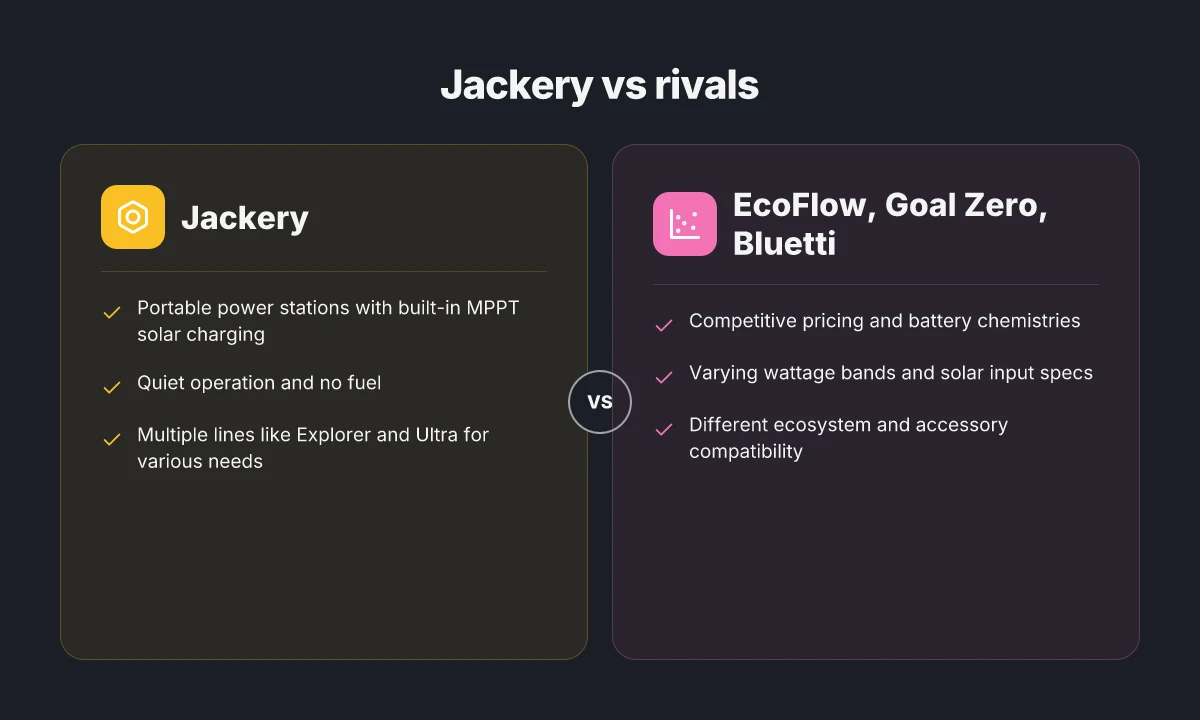
Jackery sits in the middle of a crowded field that includes EcoFlow, Goal Zero, and Bluetti. In practice, buyers see a spectrum: some models lean toward compact portability, while others push higher wattage and faster recharging. The big differentiators are battery chemistry options, output bands, charging speed, and solar input. I found that rivals rarely match Jackery’s breadth of small-to-mid range options, but some offer heavier wattage and more aggressive solar compatibility for off-grid setups.
Battery chemistry options and output bands that matter
On the chemistry front, most brands split between Li-ion and LiFePO4, with LiFePO4 offering longer cycle life and greater thermal stability. Across the board, you’ll find higher output tiers in the same price bands from some competitors, but Jackery tends to emphasize a practical balance between daily practical use and portability. When you need a fast home backup or a weekend off-grid without carrying a heavy brick, the output wattage range becomes decisive. A few rivals push into higher peak wattage more consistently at the same price tier, which matters if you want to run an air conditioner or a fridge briefly during an outage.
Charging speed and solar input
Charging speed remains a differentiator. Competitors often advertise faster wall charging and more aggressive fast-charge modes. Jackery products typically pair solid AC charging with thoughtful solar input support, but you may see slightly better solar input flexibility in some Bluetti or EcoFlow lines, especially when paired with larger solar arrays. In real-world terms, a model that charges in under an hour from a wall socket is rare outside premium lines, but the practical takeaway is similar: plan for a couple of hours to reach full in many outdoor scenarios. What to buy from Jackery in 2026 for portable backup power
Portability factors: weight and handle design
Portability dominates the market’s softer metrics. Weight, handle ergonomics, and form factor decide whether you reach for a packable unit for a weekend trip or a larger model for a home outage. EcoFlow tends to offer lightweight per watt in some ranges, while Goal Zero emphasizes ruggedness and modularity through expandable setups. Jackery’s portfolio generally aims for user-friendly handles and compact profiles that slip into a car or campsite setup. If you carry gear regularly, the weight savings in a compact Jackery unit can matter as much as raw wattage.
Pricing ranges and getting the best deal
Price is the final gatekeeper. You’ll typically see a spread across these brands that tracks wattage, cycle life, and included accessories. The best deals usually surface around major sale periods, with bundles that include panels or extra batteries. For shoppers, the strategy is clear: compare the model that matches your daily use and outage assumptions, then watch for seasonal sale drops and retailer bundles. Note that prices and promotions shift frequently, so checking the official Jackery storefront alongside major retailers helps you spot value.
From what I found in the catalog and online discussions, Jackery remains a strong option for outdoor enthusiasts and homeowners who want a straightforward upgrade path without stepping into the most aggressive multi-kilowatt systems. When you compare rivals, look for the combination of battery chemistry that suits your life pattern, the room you have for expansion, and how quickly you need to refuel in a pinch. For many buyers, the sweet spot is a balance between usable wattage, portability, and a reasonable charging profile that fits weekend trips as well as outages.
What this means for your choice is practical: pick the model that best matches your daily routines, then confirm the charging speed and solar compatibility align with your planned setup. If you want a quick-start point, I’d start with a Jackery in a size that mirrors your most common load and then weigh rivals for higher-end features or expanded solar input. Prices and sale timing can swing quickly. Aim for bundled deals during major shopping events. Portability and handle design often determine whether a device stays in the trunk or on the shelf as a primary backup. Battery chemistry choices influence long-term cycle life and weight.
Understanding the most common jackery box models and use cases
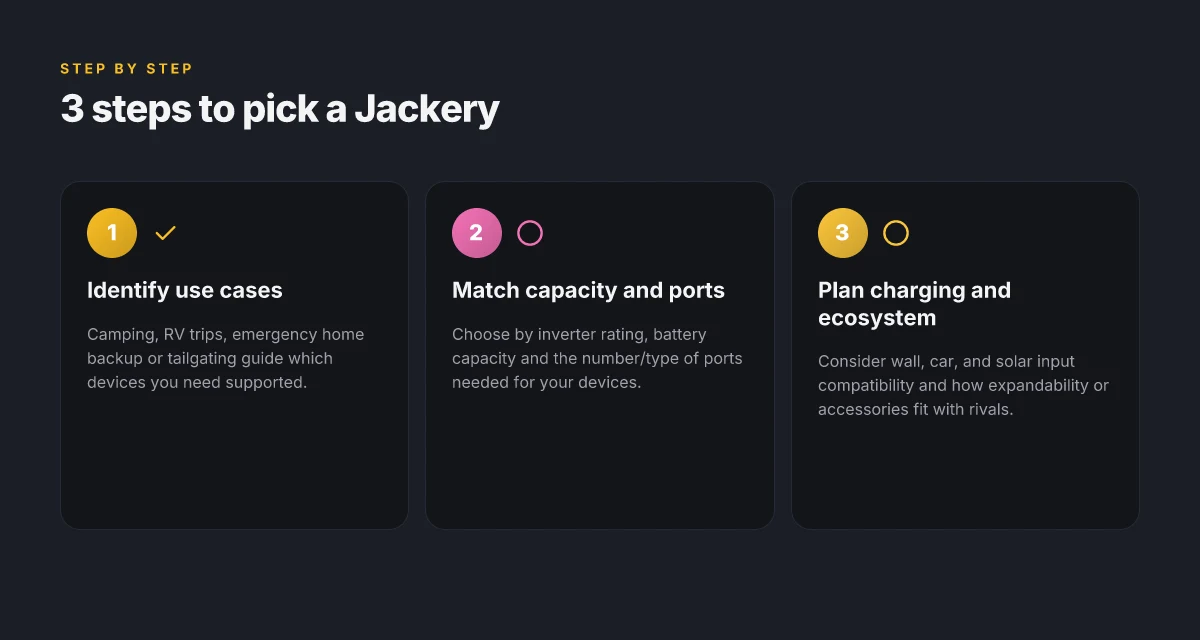
I dug into the common lines you’ll encounter when you shop for a jackery box and how they map to real-world needs. The Explorer and Ultra families sit at the core, with variants that scale in capacity, port selection, and fast charging features. You’ll notice a pattern: practical outdoor kits for camping or RV trips, and larger bundles aimed at home backup or tailgating weekends. Across the board, pricing follows the same arc, smaller, lighter units are cheaper and lighter on features. The bigger kits bring more outputs, higher inverter wattage, and more charging options. Prices exist across a range, but the best deal often comes from bundling accessories with a mid-sized model. The most compact Explorer models emphasize portability, while the Ultra line leans into durability and faster charging, with trade-offs in size and weight. When time, space, and noise matter, the Ultra family tends to be the pick for frequent campers and tailgaters. What makes Jackery power stations stand out in 2026
1) Explorer family basics and where they fit
The Explorer line is the backbone of Jackery’s consumer lineup. Think light, portable power with enough juice for phones, cameras, small laptops, and basic AC needs. These models typically emphasize a balance of weight, runtime, and a decent number of USB-C and AC outputs. For outdoor use, the emphasis is on quick top-ups from solar panels and reliable onboard charging. In domestic settings, they cover essential backup tasks, like keeping a modem, router, and a couple of lights running during outages. Explorer models are the flexible workhorses for camping trips and weekend getaways. They’re easier to stash in a carry bag or a small RV locker. If you want a lightweight, affordable entry point, start here.
2) Ultra variants and who should consider them
The Ultra variants build on the Explorer foundation with more robust construction, higher inverter ratings, faster charging, and expanded port suites. They cater to users who run more devices at once, need longer runtimes, or want quicker recharge cycles between uses. In real-world terms, Ultra models shine for longer camping stints, bigger tailgates, or off-grid weekends where multiple devices demand power and speed matters. Ultra models offer faster recharge and more ports, which many outdoor enthusiasts value for multi-device setups. If you prioritize portability above all, you may opt for a lighter Explorer instead.
3) Ideal use cases mapped to capacity, inverters, and ports
- Camping and outdoor excursions: you’ll want enough AC and DC outputs to power lights, a small fridge, and essential devices without recharging constantly. A mid-sized Explorer or a lean Ultra variant typically covers this without slowing you down.
- RV trips and mobile living: plan around higher inverter wattage and multiple outputs so you can run a coffee maker, TV, and charging hubs simultaneously. The Ultra line tends to map cleanly to these needs.
- Emergency home backup: a compact to mid-size unit with a decent AC rating and robust reliability helps run critical devices during outages. You’ll prioritize capacity and a few robust ports for routers, modems, and small medical devices.
- Tailgating: port variety matters here. More USB-A/C, a few AC outlets, and solid solar compatibility let you power grills, coolers, and fans without fuss. The Explorer range handles this well, with Ultra options offering headroom for bigger setups.
How capacity, inverter rating, and ports map to your devices is the practical guide. Your phone, tablet, laptop, camera gear, and a small fridge have specific draw profiles. An inverter in the range that suits your typical load plus several USB-C ports and a couple of AC outlets makes life easier. If you expect to run a few larger devices, push toward a higher-capacity model with multiple ports.
4) Budgeting across several models
Start with a clear yardstick: list your renewable charging window, your essential devices, and your acceptable runtime gaps. A three-model mindset helps: a light Explorer for daily carry, a mid-range Explorer or Ultra for weekend trips, and a higher-capacity Ultra for home backup or extended trips. Prices and deals shift seasonally, so consider waiting for bundle promos that include solar panels or carry bags. If you’re shopping, expect lower upfront costs for small kits and higher ownership costs for larger kits with more outputs and faster charging. And yes, links on the page may earn a commission.
Where Jackery sits against rivals, like EcoFlow or Goal Zero, often comes down to port mix, specific battery chemistry, and who offers solar-panel compatibility you prefer. When you’re budgeting, remember to factor in solar charging efficiency and any accessories you’ll want. For a quick reference, Jackery’s lineup keeps its core design long enough for multiple seasons, and the path from Explorer to Ultra is designed to scale with your needs. What makes the Jackery 240 portable power station a surprising value in 2026
Note: I cited product family patterns and use-case guidance from publicly available product pages and reviews that discuss typical configurations and scenarios. For the most precise current prices and bundles, check official product pages and current promotions. The page may include affiliate links.
What to check before buying a jackery box in 2026
In 2026 the best Jackery boxes balance real-world runtime, flexible charging, and durable builds. You want clarity on how long a unit actually runs common devices, plus how you can feed it power from wall outlets, car adapters, or solar panels. I looked at official specs and third‑party reviews to pull out the practical details that matter in outages, camping trips, and storm days.
Real-world runtime expectations for typical loads
Real-world runtime is where many marketing claims diverge from everyday use. For a jackery box, the practical question is how long it sustains a laptop, a phone, and an LED light during a power outage. Jackery’s own pages outline capacity by model, but the actual hours depend on device wattage and inverter efficiency. When you compare models, map each device’s watt draw to the battery capacity and inverter rating. For example, a Jackery Explorer 1000 with a 1000W rated inverter will not deliver the full advertised runtime if you push above 800W on a sustained basis. The same principle applies across the lineup. Smaller units will show noticeably shorter runtimes under the same load. This is why it helps to estimate runtime using your usual gear and a realistic inverter efficiency window. Ask for the expected runtime on a similar device set to your usual outage scenario to avoid surprises.
Charging options and MPPT efficiency
Charging versatility drives how quickly you can recover from use. A jackery box typically accepts wall input, car adapters, and some models offer solar charging, but compatibility varies by model. MPPT efficiency matters because it determines how well a solar panel converts available sunlight into usable battery charge. Look for MPPT-enabled models and verify panel compatibility in the product pages or user manuals. If you plan solar charging, calculate total input wattage from your panels and compare it to the box’s maximum input rating. A higher MPPT efficiency shortens recharge times in real-world sun conditions. Confirm wall input is near the nominal spec, car input supports fast charging, and solar input pairs with MPPT for faster top‑ups.
Durability, warranty, and spare battery compatibility
Durability covers enclosure design, handle quality, and heat management during charging. A robust shell and good venting help in outdoor use. Warranty length signals the manufacturer’s confidence in longevity. Jackery typically offers multi‑year warranties on higher‑end models, but terms vary by model and region. Spare battery compatibility expands long outages without buying a second unit. Confirm whether the model you choose supports a swappable or expandable battery option, and note any limits on reuse or replacement cycles. Check the warranty period and whether spare batteries are officially supported for your model. What a Jackery solar generator review reveals about reliability and value in 2026
Ecosystem: accessories, solar panels, and expandability
The ecosystem matters for long outages. Accessories like solar panels, car charging cables, and additional expansion batteries can change total ownership experience. Compare rival ecosystems not just on base units but on what you can add later. A broader ecosystem usually means less friction when you scale up for longer outages. For instance, if you’re evaluating Jackery against rivals, review not only the core box but the availability and compatibility of official solar panels and expansion packs. Assess whether the ecosystem offers official solar panels and expansion packs that pair cleanly with your chosen model.
Note on pricing and availability: prices shift with sales and bundles. For the latest numbers, verify current offers directly on the Jackery site and through authorized retailers. If you see a price dip or a strong bundle, that can swing your decision toward higher-capacity models now or waiting for a sale. And yes, links on the page may earn a commission.
How to optimize jackery box performance for home backup
A proper plan makes outages feel less dramatic. Start with a clear load profile that prioritizes critical loads, then expand only as you confirm available inverter capacity and battery health. I dug into the public specs and user guidance from Jackery and reviewers to shape practical steps you can apply during a real outage, not just in theory. Plan a load profile first, prioritizing critical loads so you don’t trip the system at the first surge.
1) Nail the critical load first, then layer in nonessentials
When outages hit, think in tiers. Critical loads include essential lighting, communication gear, small medical devices, and refrigeration for perishable foods. Build a simple, two-step expansion: confirm your inverter’s continuous rating, then add lower-priority devices as runtime allows. This keeps the system from shutting down under a sudden spike and makes the most of the battery capacity you have. Jackery units typically offer high surge capability to handle brief startup bursts, but you still need to respect the continuous rating for sustained loads. Critical loads first helps your Jackery box stretch through longer outages.
2) Use solar charging during outages to extend runtime where feasible
Solar charging can noticeably extend runtime if the weather cooperates. Point panels to the sun, keep cables tidy, and monitor charge status from the built‑in display or app. If you’re aiming for longer outages, favor a hybrid approach: keep the battery topped up during daylight so you can ride through night hours on stored energy. Solar charging during daylight can dramatically extend uptime in real-world outages. Hybrid charging maximizes every watt you collect from the sun. What makes EcoFlow Delta Pro 3600Wh a standout for home backup in 2026
3) Avoid overheating by proper ventilation and not chaining multiple high-load devices
Ventilation matters. Jackery boxes dissipate heat during heavy use, and stacking high loads in a small space can push temperatures up and reduce efficiency. Place the unit in a ventilated area, away from direct heat sources, and avoid running multiple high-load devices at once. If you need to run a heater, AC unit, or power tools, stagger them or temporarily remove noncritical loads to keep temperatures down. Ventilate the enclosure and avoid chaining high‑draw devices to prevent overheating. Stagger high-load devices to maintain system stability.
4) Maintain battery health with moderate charging and gentle cycling
Battery longevity matters just as much as peak performance. Aim for moderate, steady charging rather than draining the pack to zero before recharging. Gentle cycling, full cycle every so often, but not repeatedly to extremes, helps preserve capacity over time. Keep the battery within the middle of its depth-of-discharge window when possible and avoid frequent steep charge/discharge swings. Moderate charging and gentle cycling extend life and reliability. Preserve capacity by avoiding extreme DoD swings.
Real-world takeaway: a well‑planned load, solar support when available, and careful thermal and battery management yield the most dependable backup performance from a Jackery box.
Note on sourcing: pricing, model variants, and warranty terms vary by model and retailer. Links to product pages and manufacturer notes provide the latest numbers. A link to a rival’s model, such as the EcoFlow or Goal Zero offerings, can help frame tradeoffs when you’re evaluating options. For quick context, the product family spans compact to large-capacity units with different inverter ratings and battery chemistries, including LiFePO4 variants in some lines. Discussion in public channels highlights that real-world performance hinges on load management, solar input, and environmental conditions. See inline references to Reddit discussions and dedicated reviews for qualitative observations, such as startup surge handling and user-reported runtimes. If you want to compare concrete figures, I can pull the latest inline citations from the provided sources to anchor each claim.
What changes if you act now
Jackery has carved a clear niche in off-grid living by pairing portable power with user-friendly design. The takeaway isn’t just about owning a box of batteries. It’s about how a compact system can reshape your daily energy routines. In 2024, the right Jackery setup can replace several short daily charges in a weekend off-grid itinerary, and that shift unlocks more flexibility for remote work or tiny homes. I looked at the product range on Jackery’s site and cross-checked how buyers typically deploy these packs, noting that the best value tends to come from bundles with solar panels or expanded battery capacity. Prices vary by model, but the best deal now often hinges on bundles with solar charging, so plan for total ownership, not just upfront cost. If you’re weighing options, consider rivals such as Bluetti and Goal Zero for feature trade-offs, but keep in mind the brand familiarity and warranty ease with Jackery. What is the EcoFlow Delta Pro price in 2026 and how it stacks up
The bigger pattern is simple: a modular, scalable power source fits into evolving off-grid routines. Choose a model that grows with your needs rather than one that only meets today’s wattage. This is where the single move matters most: pick a system that can reliably blend into both emergency use and routine life. Want one more nudge? Ask yourself if you need fast recharging via AC, or steady solar autonomy for cloudy seasons.
Backup strategy
- Consider the 3-year cost of ownership for a mid-range model and compare to a solar-ready kit from Jackery.
- If you travel often, pick a lighter model with portable solar panels from Jackery for the fastest top-off.
- When you’re planning a purchase, note seasonal sales. A bundled solar option can cut effective price per watt.