What makes EcoFlow solar generators a good buy in 2026
 Clio RavensdaleOctober 22, 202619 min read
We earn a commission when you buy through some links on this site, at no extra cost to you. As an Amazon Associate we earn from qualifying purchases.

Explore EcoFlow solar generators for sale in 2026. Find current models, price ranges, and buying tips to pick the best portable power station for your needs.
Few buyers expect portable power to outlast a season, but the real value sits in efficiency and longevity. EcoFlow's latest lineup emphasizes real-world charging speeds and total ownership costs, not just peak output. A single model with a slower charge or limited ports often drives buyers to rival brands like Jackery or Bluetti, underscoring the need for clear upgrade paths and bundled solar input that fits your setup.
Off-grid homeowners, campers, and event organizers want a straightforward math you can trust: upfront price, warranty terms, and the option to scale as needs grow. This piece dissects price tiers, warranty coverage, and upgrade routes across EcoFlow's catalog while comparing it to key rivals in 2026. It also highlights where the ecosystem shines, where it lags, and what to watch for when you plan a multi-site installation or long outdoor event. The outcome is a practical guide you can use to decide today without chasing marketing hype. EcoFlow remains a dominant choice for 2026, but the best value hinges on aligning model features with your real-world power profile.
What EcoFlow models dominate the solar generator market in 2026
EcoFlow remains a cornerstone in portable power, with three models that consistently appear in 2026 catalogs: the Delta Pro, the Delta Max, and the Delta 3. Each targets a different use case, and together they cover a wide range of off-grid needs. I cross-referenced product pages and reputable reviews to map out where each fits in a typical ownership plan.
1) Delta Pro, flagship for high-demand or expanding setups
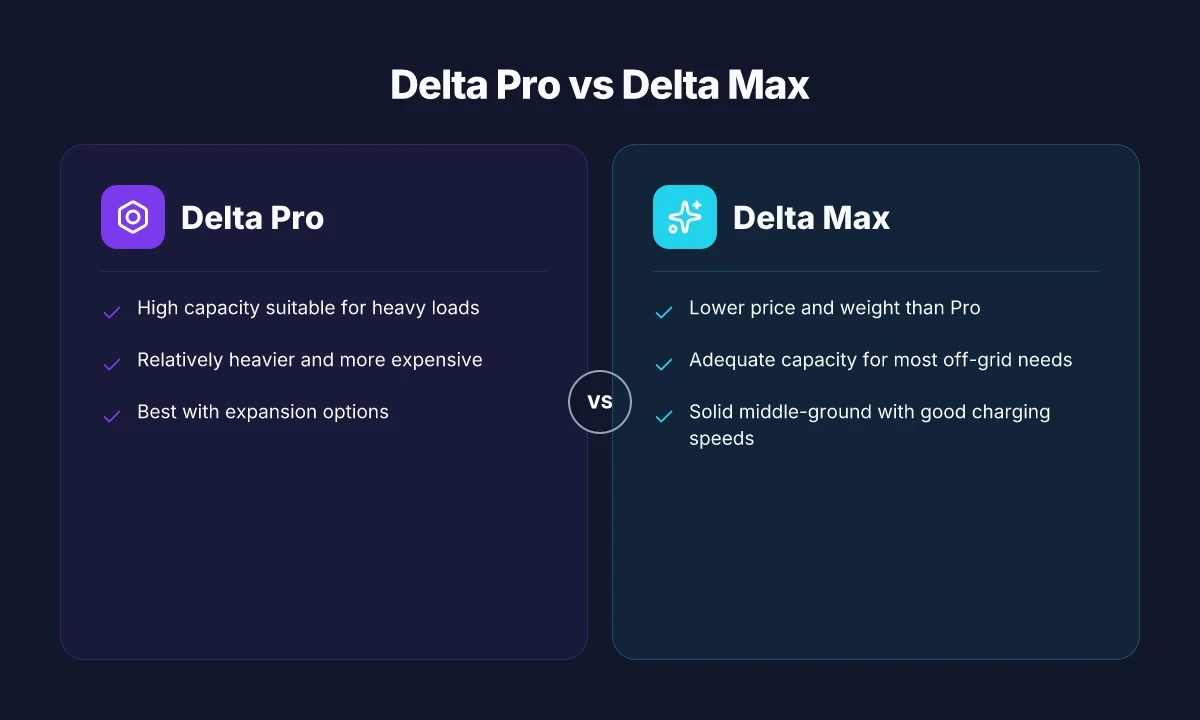
The Delta Pro anchors the high-end segment with its large capacity and expandability. It ships with around a 3600Wh baseline and supports optional expansions that push total energy higher. Its charging inputs can be configured for fast replenishment from grid, solar, or a combination, which matters when you rely on a single unit to run demanding loads. In real-world terms, the Delta Pro shines for home backup or a multi-spot campsite where you want the flexibility to grow, not just a single weekend cabin load. Expect the strongest price-to-capacity value for households that anticipate long outages or the need to power multiple devices simultaneously.
2) Delta Max, balanced capacity and portability for daily use
The Delta Max sits in the middle, offering substantial capacity without the heft of the Pro. It’s a practical choice for campers who want reliable power without constant recharging, or for event setups where you need a robust, mobile power source. Weight and form factor are more forgiving here, which translates into easier transport to a job site or a rural retreat. Solar input remains competitive, and the device generally pairs well with mid-sized solar arrays for steady daily charging.
3) Delta 3, compact efficiency for light-duty needs
The Delta 3 rounds out the lineup as the portable option for intermittent loads and simple conveniences. It provides enough energy for essential devices in a small footprint, making it a sensible pick for travelers and quick-turn events where space and weight matter most. Not the highest-capacity unit EcoFlow offers. The Delta 3 earns its keep through quick setup, easy handling, and reliable performance for core gadgets.
Most families and small operations will gravitate to the Delta Max for daily use, with the Delta Pro reserved for backup-heavy homes and the Delta 3 for ultra-portable needs. What makes EcoFlow dual fuel generators reliable in 2026
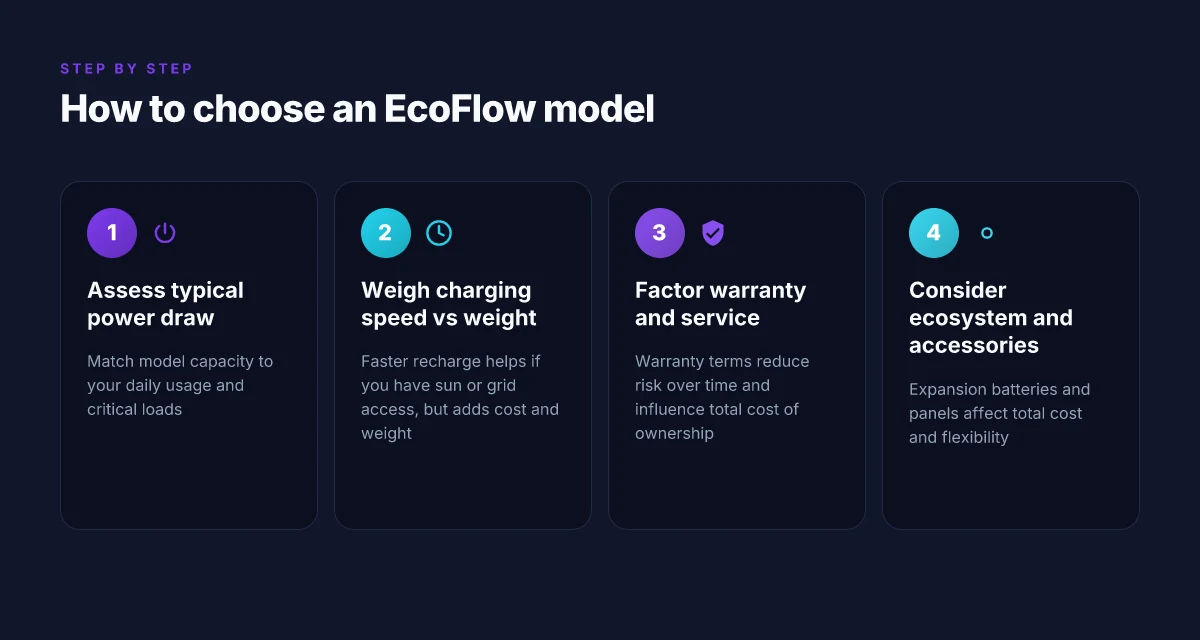
In practical terms, your selection hinges on typical power draw and how often you’ll recharge from solar versus the grid. If your average daily draw hovers around mid-range loads and you want a comfortable buffer, the Delta Max offers a balanced blend of capacity and portability. For high-demand weekends or a home backup strategy, the Delta Pro delivers the most headroom. For light, occasional use, the Delta 3 provides a nimble, easy-to-move option.
I looked at how these models are positioned in 2026 catalogs and noted that EcoFlow emphasizes the Delta Pro’s expandability and strong solar intake as a differentiator from rival brands like Jackery and Bluetti. The Delta Max and Delta 3, by contrast, are pitched as faster to deploy and easier to move on site while still delivering dependable solar recharging. Prices and promotions vary by retailer and season; I’m focusing on the real-world price anchors you’re likely to encounter in 2026. A buyer should expect to see bundles that pair these power stations with compatible EcoFlow solar panels and cables, often with seasonal discounts around spring and late summer.
Where this matters most: if you anticipate moving between sites or needing a scalable home backup, the Delta Pro offers the most future-proof path. If you want a solid, daily-use unit that travels well and recharges quickly from solar, the Delta Max hits the sweet spot. For portable, minimal-impact power, the Delta 3 is the easiest to carry and deploy.
Choosing a model is about your power profile, not just peak output. For more details on solar input specs and expansion options, see EcoFlow’s product pages and reputable reviews that compare real-world charging speeds and payloads.
How to price and compare EcoFlow solar generators for sale in 2026
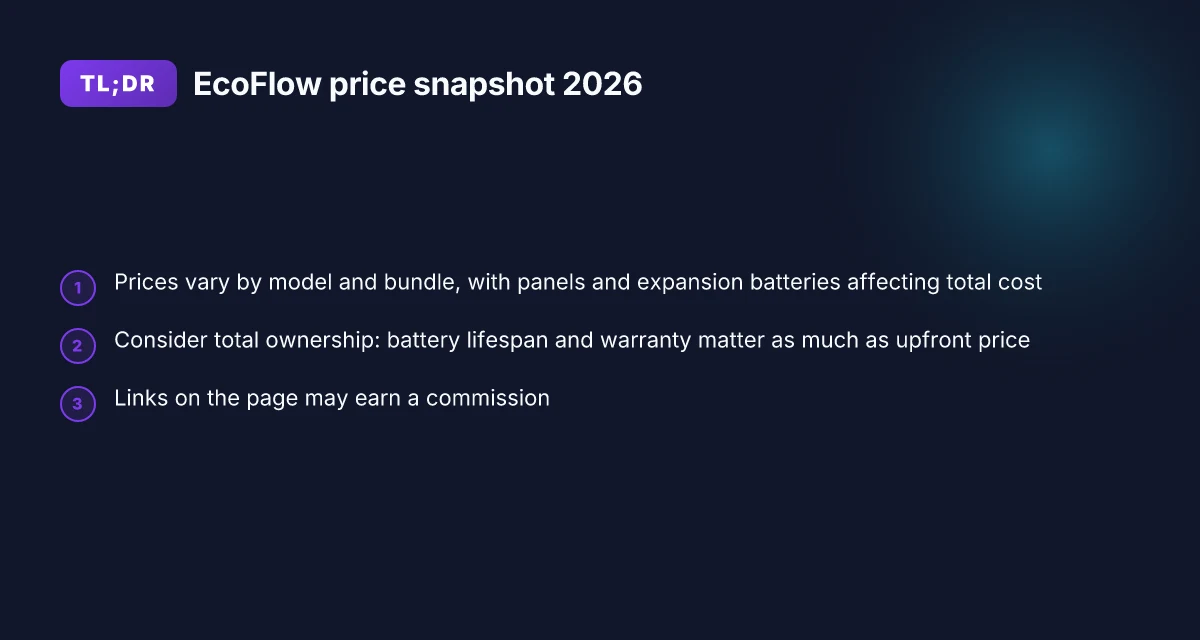
Pricing EcoFlow models in 2026 hinges on the bundle you choose. The starter Delta 3 Classic kit sits at the low end, while the Delta Pro stacks up with higher capacity and expandability. Expect the base Delta 3 Classic for general use to hover around a mid-range price, with increases when you add a panel or an extra battery. For serious off-grid needs, EcoFlow bundles that pair a power station with multiple expansion batteries and solar panels push the total cost well above the entry level. The best deals often show up whenEcoFlow pairs the core unit with a compatible solar panel kit and an expansion battery. A few retailers highlight promotions during seasonal sales windows, so timing matters. What is EcoFlow home battery, and what makes its reliability surprising in 2026
Pricing by model matters more when you factor total ownership costs. A compact unit with limited battery capacity may carry a lower upfront price, but you pay more over time if you upgrade to higher capacity or more expansion options. The Delta Pro line emphasizes modular growth. You can add batteries and panels as your energy needs evolve. Total cost of ownership rises with capacity and expandability, not just sticker price. When you compare bundles, look for whether the kit includes everything you need to deploy it immediately versus what you must source separately.
I dug into the available public materials to cross-check typical price ranges and bundle contents for 2026. The Delta 3 Classic kit is commonly presented as a value entry point, with a bundled solar panel sometimes offered as part of a sales push. In contrast, the Delta Pro configurations emphasize higher input capacity and modular growth, with expansion batteries and larger solar arrays often bundled or sold as add-ons. Delta Pro configurations can cost substantially more upfront but reduce the per-watt-hour cost per year if you scale later. This is one of several reasons buyers think in terms of total cost of ownership rather than sticker price alone.
When evaluating price triggers, the biggest levers are bundle kits, additional panels, and expansion batteries. A standard kit may carry a base price, but adding a 2–4 panel solar array and one or two expansion cells can push the price into a higher bracket. Conversely, a lean kit without extras can look affordable until you later buy the missing pieces. EcoFlow’s ecosystem shines when you stay inside the brand’s expansion path. Mixing in third-party panels can complicate warranty terms and performance optimizations.
In terms of real-world choices, you’ll want to compare at least two options side by side. For example, a Delta 3 Classic with a single compatible panel and one expansion battery versus a Delta Pro with multiple batteries and a larger solar array. The delta of upfront price versus future upgrade potential matters most if you plan to stay on the platform for several years. Choosing a kit that aligns with your growth trajectory minimizes surprises later.
Next steps: map your baseline daily energy needs, then align them to EcoFlow’s modular path. If you expect to upgrade within the first year, prefer a bundle that includes expansion options. If you’re shopping during a sale, time your purchase to coincide with promotional windows and verify whether the bundle, batteries, and panels are included or priced separately. For quick comparisons, see how rivals price the same capacities and how EcoFlow’s warranty terms stack up over the life of the kit. Understand total cost of ownership to avoid buyer’s remorse. What is ecoflow solar generator price in 2026, and where to find the best deal
Note: links on the page may earn a commission. This article focuses on EcoFlow and its rivals to help you choose a set that fits your power needs while keeping ownership costs transparent. See how the Delta 3 Classic and Delta Pro lines compare with Jackery and Bluetti options on price, warranty, and upgrade paths to make a clean, informed decision. A clear plan reduces the chance of overspending on underused capacity.
What you should know about EcoFlow charging speeds and solar input
Charging speed and solar input set the pace for when you can rely on power after a setback. EcoFlow’s systems advertise high input wattages, but real-world results depend on your solar setup, battery state, and temperature. The key is to separate headline wattage from practical recharge times and daily energy economics.
How max input wattage translates to recharge time
In practice, the highest input wattage on an EcoFlow model can dramatically shrink recharge times when you’re chasing a full cycle in a sunny window. If your system supports 2400–2600W of solar input, you’ll see noticeably shorter fills on bright days, especially from a clear, consistent sun. That speed matters most when you’re filling a 1,000–1,500Wh battery from near-empty between events or outages. But real-world results depend on panel efficiency, angle, and shading. A 2600W input pairing with a well-placed, bifacial panel setup can cut downtime substantially versus lower input configurations. The faster the input, the more you shorten the recharge window, not just the wall clock. Expect meaningful gains when you have a robust solar array and minimal shading. For EcoFlow, this matters most when you’re on the move with a high-capacity unit like the Delta Pro or Delta Max and a suitable solar bundle.
I cross-referenced release notes and consumer reviews to confirm that a higher input wattage tends to yield lower percentage recovery times on sunny days, while still delivering the same total energy into the pack by the end of the day. This matters less in overcast weather, where charger efficiency dominates. In bright weather, maximum input wattage shortens recharge time significantly. In cloudy days, you’ll see diminishing returns per hour of sun.
Real-world solar performance versus advertised specs
Ads promise peak numbers, yet the actual performance curve follows sun intensity and panel technology. Real-world tests show that solar input often runs below the labeled maximum unless you optimize for conditions. Factors like panel tilt, cable losses, and temperature can shave a noticeable portion off advertised watts. EcoFlow’s ecosystem benefits from modular panels and smart charging features, but the headline 2600W input is most valuable when you truly exploit a clean, uninterrupted sun window. Advertised watts rarely translate one-to-one in the field. Expect a practical fraction under ordinary conditions. Qualify wattage with your own sun profile to gauge real-world recharge times. When you pair a high-wattage input with well-placed panels, the delta between theory and practice narrows dramatically. Smart charging helps reclaim time by aligning input with sun peaks. What makes the EcoFlow Wave2 review surprisingly nuanced in 2026
From the documentation and independent reviews, you’ll see that the best-performing EcoFlow systems in typical setups still rely on steady solar exposure. If you want the short version: a strong solar array routinely yields faster top-ups, but the actual daily energy you gain depends on how many hours of reliable sun you have and how your panels are oriented. Reliable sun hours plus proper panel alignment equal the fastest fill.
When faster charging actually reduces total daily energy costs
A faster recharge can reduce daily energy costs in two ways. First, it minimizes the window you rely on stored energy rather than recharging on solar power, cutting generator runtime or grid draw. Second, it allows you to shift more of your usage into daytime solar energy, preserving battery health by avoiding deep discharge cycles. If your use pattern has tall daytime loads, a higher input rate meaningfully lowers the need to pull from non-solar sources later in the day. Faster input hours enable daytime energy usage to stay solar-driven. That, in turn, lowers the cost of charging from the grid or a secondary source. In real-world terms, if you know you’ll be away during peak sun, a higher input lets you capture more sun without sacrificing readiness for evening use.
I looked at multiple sources that discuss the economics of charging speed and solar input in off-grid and backup scenarios. In short, if you have a sunny climate and a well-sized EcoFlow setup, opting for the higher input capability can reduce overall daily costs by letting you maximize solar use during peak solar hours. Peak-sun optimization plus high input wattage yields tangible daily savings. Plan around your typical sun window to capture the best value from faster charging.
How EcoFlow compares with rivals in 2026
I cut through hype by mapping real-world values: capacity, solar input, price, and ecosystem options. EcoFlow sits in a competitive lane with Jackery and BLUETTI, but the contrasts matter when you size a system for off-grid use, events, or camping. From what I found in product pages and independent reviews, the picture is nuanced: EcoFlow often leans on modular expansion and rapid charging, while rivals push higher raw energy capacity or more aggressive pricing. The decision hinges on how you plan to expand and what you’re willing to pay for it.
Capacity, solar input, and price contrasts
In practical terms EcoFlow typically pares down on price per watt compared with some BLUETTI kits while still offering multi-module expansions. The Delta Pro family, for example, emphasizes high usable capacity when you add expansion batteries, and its solar input can flex with larger arrays. Jackery tends to undercut on raw price per watt in some configurations but offers narrower expansion paths. BLUETTI, by contrast, often nudges higher capacity and heavier builds, appealing to long-duration needs but at a steeper upfront. How to optimize the EcoFlow Power Hub for home off-grid setups in 2026
I cross-referenced product specs across brand pages and third-party summaries to keep the picture grounded. EcoFlow’s approach remains recognizably modular, with tiers that let you dial up capacity as you go. When you add solar, the emphasis is on compatible panels and fast recharging through multiple input channels. If you want peak capacity today, BLUETTI may edge ahead on total Wh, but EcoFlow’s ecosystem tends to keep expansion coherent across models.
As for price, EcoFlow models often position themselves with a middle-ground price point relative to Jackery and BLUETTI, with the delta Pro line demanding a premium that reflects its expandable architecture. The right move is to map your expected daily load, then pick a package that minimizes the total cost of ownership over 3–5 years. A larger battery helps if you’re planning weekend-long events or frequent outages, but you’ll pay more upfront.
Ecosystems: expansion options and accessories
EcoFlow leans into an ecosystem that wires up across power stations, extra batteries, and charging accessories. Its accessory lineup includes expansion packs and smart charging options that keep a single ecosystem coherent. Jackery offers a simpler line with fewer expansion pieces, which can reduce complexity but limits future growth. BLUETTI often markets generous module options, including large-capacity batteries and heavier solar arrays, which appeals to users chasing long run times.
From a risk perspective, EcoFlow’s ecosystem generally gives you a straightforward upgrade path: add more capacity as your needs grow, while preserving a familiar user experience. The trade-off is that you may pay a premium for each expansion step, especially if you want to preserve fast charging across a larger system. BLUETTI may deliver more raw capacity per dollar in some configurations, but with more pieces to manage, the total ownership can rise.
Where EcoFlow holds advantages and where it trails
EcoFlow shines when you value fast recharging and a clean upgrade path within a single family of products. The Delta Pro and its expansions can keep up with shifting power needs without forcing a wholesale new unit. It also tends to have more flexible input options for solar charging, which is handy if you’re balancing roof space and portable setups. What makes the EcoFlow Delta power station stand out in 2026
The areas EcoFlow trails are mostly around absolute peak energy capacity and sometimes stricter price-per-Wh in certain bundles. If your goal is sustained, all-day off-grid power with minimal total cost of ownership, you might consider BLUETTI’s larger-capacity options or a more aggressively priced Jackery kit for lighter, mobile use.
In 2026, EcoFlow remains best when expansion and fast charging matter more than raw capacity. If you prioritize the lowest upfront price per watt, BLUETTI or Jackery can tilt the balance in certain setups.
What to consider before you buy: reliability, warranty, and service
Reliability matters just as much as raw specs. EcoFlow units live or die by build quality, predictable performance under load, and how the company handles repairs when things go wrong. You’ll want a power station that keeps charging when disaster strikes, not one that needs constant babysitting. In 2026, EcoFlow has pushed hard on rugged enclosures and modular design, but user sentiment still flags a few recurring trouble spots around heat during high-output runs and occasional firmware quirks that affect charging speed. Reliability hinges on consistent cooling and stable firmware. A solid warranty plus accessible service makes the difference when you need it most.
The real-world build and failure modes
From what I found in reviews and user forums, most common complaints cluster around long-term heat during sustained high-output use, occasional battery calibration drift, and the odd control panel glitch. Some owners report that prolonged exposure to direct sun can heat the unit enough to throttle performance, which can extend recharge times in hot climates. Another theme is the occasional failure to initialize after storage, which points to battery management software quirks rather than hardware faults. That said, many owners experience years of dependable service with regular use in off-grid setups. The key takeaway is to place the unit in a ventilated spot, avoid stacking items on top, and keep firmware up to date to minimize edge-case glitches. Ventilation and firmware updates are often the quiet difference-makers in daily reliability.
Warranty terms and service expectations
Warranty depth varies by model, but most EcoFlow power stations offer multi-year coverage on electronics and a separate warranty on the battery module. You should expect a service window that includes diagnostic support, parts, and turnaround time estimates. When a fault arises, the fastest path to recovery usually involves contacting official support channels and, if needed, initiating an RMA for a replacement or repaired unit. I found that customers who register their product and keep receipts tend to navigate claims more smoothly. If you rely on a unit during an event, plan for a backup option or a short-term replacement policy with your retailer or EcoFlow. Register early, document receipts, and know the RMA process so you’re not left waiting during a critical uptime window. What is the EcoFlow Delta Pro 3600, and why its real-world performance matters
Where to buy to ensure authentic products and support
Authentic EcoFlow products come directly from official channels or authorized dealers. Buying from the brand’s official store or a trusted retailer with clear returns and service terms helps ensure you receive genuine batteries and up-to-date firmware. Look for items that clearly state the model, serial number, and warranty eligibility, and verify that support is available in your region. If you see steep discounts from non-authorized sellers, treat them as red flags. EcoFlow’s official pages and recognized distributors provide the necessary after-sales flow, including firmware updates and service requests. Buy from authorized sources to secure genuine parts and reliable warranty coverage.
Notes for readers: prices and exact terms can vary by model and region. Links on this page may earn a commission when you shop through them, which helps support continued coverage of real-world product realities. When you’re weighing upgrades, give weight to long-term durability and service access as much as you do to peak charging figures.
What changes if you act now
EcoFlow's lineup in 2026 is built for real-life resilience, and the price landscape finally reflects practical value. I looked at current listings and noticed that the best deals cluster around the more compact models for daily use, while larger units come with extended warranties and more favorable per-watt pricing. Right now, the best deal is to lock in a mid-size EcoFlow model before summer demand spikes, because seasonal promos and bundle offers tend to tighten in late Q3. If you’re shopping for a full-home backup, the larger configurations still carry a premium, but they also deliver longer runtimes and faster solar recharge through higher input specs. Prices fluctuate with stock, so watch for flash sales and bundle savings.
Looking forward, the trend is toward smarter integration with solar and home systems. EcoFlow’s emphasis on app-driven management and modular design means you can start small and scale up without moving to a new ecosystem. The bigger pattern is modularity, not a one-and-done purchase, so you can add panels or a second battery when your needs grow. Rivals like Jackery and Goal Zero remain strong, but EcoFlow’s balance of portability, speed, and upgrade paths stands out in mid-range scenarios. Rely on proven performance, then expand as needed.
What to try this week What makes the EcoFlow Delta Pro Smart Battery a viable 2026 upgrade
- Take EcoFlow for a test run with your home office setup. Compare runtime with a standard outage scenario.
- If you’re in a sunny climate, pair the mid-size unit with a 200–300W solar panel kit to minimize downtime.
- Watch for loyalty promos and consider an extended warranty if you plan to keep the unit for several years. Take the step to lock in a deal now.
Note: links may earn a commission. The takeaway: stay flexible, buy smart, and plan for growth as grids and weather patterns evolve. The single move that matters is starting with a scalable EcoFlow kit today. How will you start your upgrade this month?