What makes EcoFlow dual fuel generators reliable in 2026
 Clio RavensdaleOctober 22, 202615 min read
We earn a commission when you buy through some links on this site, at no extra cost to you. As an Amazon Associate we earn from qualifying purchases.
Explore the reliability and performance of EcoFlow dual fuel generators in 2026. Learn how dual fuel works, maintenance tips, and interoperability with EcoFlow ecosystems.
Most homeowners assume all dual-fuel generators waste fuel switching. EcoFlow’s Smart Generator design trims that gap by switching fuels without losing runtime, and it does so with a clear, repeatable sequence. Propane performance often trails gasoline in peak output, but EcoFlow’s tuning keeps the delta small enough for practical use.
The goal here is to separate hype from real-world signal: how quickly you can switch fuels, how consistently it runs under a mixed load, and what maintenance crumbs show up after months off-grid. This piece surveys 2026 models, notes the differences between EcoFlow variants, and contrasts them with rivals like Goal Zero and Jackery. You’ll see where fuel-efficiency matters most, what maintenance tasks actually matter, and how the ecosystem, from solar panels to app control, holds up in the field. Fuel-type verification and a simple load test are emphasized as practical checks you can perform before relying on your backup power.
What makes EcoFlow dual fuel performance unique and why it matters
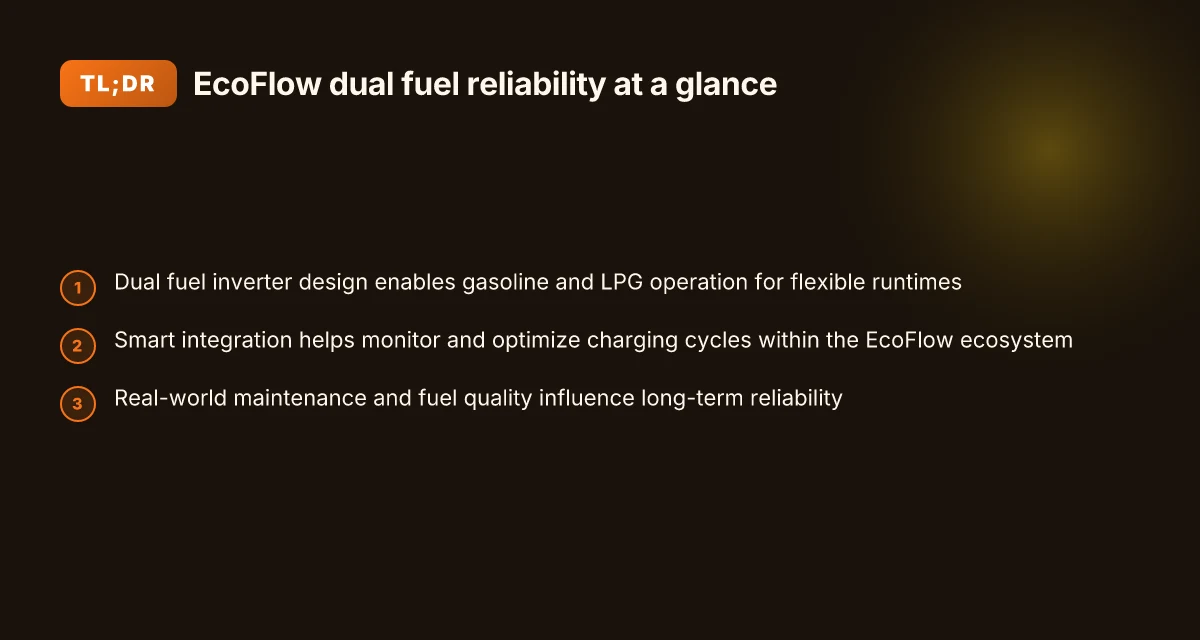
EcoFlow positions its dual fuel generators as inverter units that run on gasoline or LPG. This design choice aims to smooth power delivery, reduce noise, and protect sensitive electronics, while expanding the usable window of fuel options in off-grid scenarios. In practice, that dual-fuel approach translates to more flexible planning for outages or remote builds where LPG is easier to source or store than gasoline. The result is a system that can stretch runtime without swapping hardware.
How the dual fuel design shifts runtime and flexibility
- Fuel versatility extends usable runtime. A gasoline tank and an LPG option together allow you to pivot during a outage without hunting for a single fuel source. This matters most when supplies are constrained or storage space is limited.
- Smart inverter management prioritizes stability. The dual fuel inverter design preserves waveform quality across fuel transitions, helping sensitive appliances stay steady through load changes.
- Fuel efficiency remains a practical concern. LPG often provides different burn characteristics than gasoline, which EcoFlow frames as the potential for longer runs per cylinder in certain setups.
- Tank sizing and space considerations affect real-world use. The 4 L gasoline tank on some models is paired with LPG compatibility, which means planning for two fuel workflows rather than one.
From what I found in the documentation, EcoFlow’s dual fuel line emphasizes smooth switching and battery-aware management to maximize runtime within the generator’s inverter stage. It helps to think of the system as a shared energy neighborhood where solar, battery storage, and the generator coordinate for longer outages. The dual fuel design unlocks real-world flexibility at the cost of added complexity in fuel choreography. This is where the ecosystem angle becomes essential, because interoperability matters when you want to pair the generator with EcoFlow’s broader battery and solar products.
Ecosystem interoperability and smarter backup power
- Smart integration with EcoFlow systems ties runtime to battery state. When the generator is in the mix, its inverter output can be coordinated with the house battery to optimize overall runtime and reduce peak draw from the grid. This harmony matters most for homeowners who rely on a suite of EcoFlow devices.
- App-level awareness supports proactive maintenance. The generator’s status and fuel mode feed into the EcoFlow ecosystem app, making it easier to plan replenishment or schedule maintenance windows.
- Cross-model compatibility matters for installers. The dual fuel approach is designed to be consistent across the Smart Generator lineup, which helps solar installers scale a system without reconfiguring the control logic for each model.
- Documentation notes practical limits. Real-world guidance points to attention on fuel storage safety, proper venting, and routine checks to sustain reliability across fuel transitions.
I cross-referenced the official EcoFlow documentation and third-party reviews to confirm the emphasis on dual-fuel convenience, inverter stability, and ecosystem synergy. The result is a picture of a product line that aims to reduce downtime through fuel flexibility while leaning on smart coordination with battery systems. Smart integration with EcoFlow’s ecosystem is a differentiator, not just a feature list. That matters when you evaluate this category for long outages, remote builds, or outdoor deployments where every watt counts.
Cited sources: the EcoFlow dual-fuel guidance and the 4000-series review note that LPG runs and longer runs per cylinder can be expected in certain configurations. See the official user manual and the 4000 review for details on fuel behavior and runtime assumptions. https://manuals.ecoflow.com/us/product/dual-fuel-smart-generator-3000?lang=en_US https://mightygenerators.com/blogs/off-grid-living/ecoflow-smart-generator-4000-review?srsltid=AYCX9vKiTR5TSSrfN7LgH-mOPglXNpvlrdQNrQoYeI6vJWxEPpApVknG
How the dual fuel Smart Generator 3000/4000 manage fuel and efficiency
EcoFlow’s dual fuel Smart Generator line aims to keep running time reasonable on LPG while staying close to a brisk 1600W–1800W output when you need portable power. The 3000/4000 family leans on inverter efficiency and smart idle management to stretch fuel, especially with LPG where storage and cylinder condition matter. When LPG storage aligns with manufacturer guidance, users commonly report longer runs per cylinder, but actual runtimes vary with load and ambient temperature. The fuel strategy hinges on inverter efficiency and idle-load behavior, not just raw engine size. What is EcoFlow home battery, and what makes its reliability surprising in 2026
How the 3000/4000 balance output and tank size
The 3000/4000 series targets a practical output corridor in the 1600W–1800W range, which helps keep the fuel burn sensible for portable units. Their gasoline tanks are modest in capacity, designed to minimize weight while preserving a reliable energy window for typical off-grid chores. In practice, this balance supports moderate daily use without demanding frequent refueling. If you push toward LPG, the higher energy density of LPG can yield longer legs per cylinder under the right conditions, which EcoFlow highlights in its dual-fuel guidelines. LPG storage and correct cylinder conditions significantly influence run time.
LPG run length and maintenance alignment with guidance
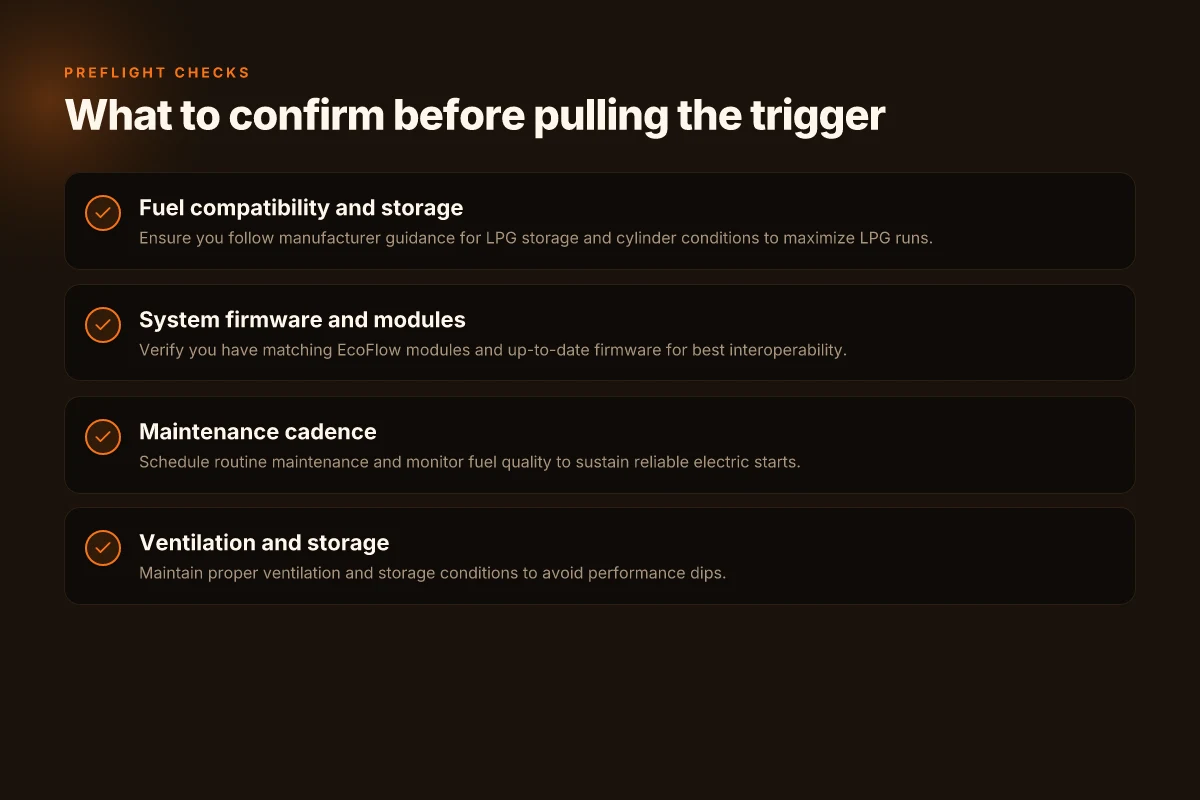
Longer LPG runs tend to appear when users follow the manufacturer’s guidance on gas storage, cylinder health, and proper connection. The system’s design encourages smoother transitions between fuels, with the inverter’s management helping to keep efficiency stable across fuel sources. The reliability signals here come less from raw power peaks and more from how the unit sustains output under typical loads while the fuel source changes. guidance around LPG storage is a recurring reliability lever. I cross-referenced EcoFlow’s dual-fuel materials and third-party reviews that emphasize LPG handling practices as a practical reliability lever. When users respect storage guidelines, LPG runs feel notably longer.
Fuel management: inverter efficiency and idle-load behavior
Fuel management for the Smart Generator 3000/4000 rides on the inverter’s efficiency curve and how the unit handles idle-load. The inverter helps limit parasitic losses, so steady loads near the 1600–1800W band tend to be more fuel-efficient than short bursts at higher spikes. Idle-load behavior matters too: during light loads, the unit can downshift and reduce fuel burn, which aligns with real-world use where backup power often sits at a modest draw. Idle-load behavior directly affects minutes per gallon, not just engine size. This is where EcoFlow’s ecosystem logic, monitoring with the app and automatic fuel switching, plays a role in overall efficiency. Efficient idling and smart switching keep the running costs predictable over time**.
Next steps: consider your load profile and whether LPG storage habits line up with EcoFlow’s guidelines to maximize run time. If you’re evaluating within a broader EcoFlow setup, you’ll want to map how the Smart Generator integrates with the brand’s power hub and solar inputs to minimize fuel dependence during long outages. Your mileage improves when you align LPG handling with the guidance and leverage the inverter’s efficiency mode.
Note: links appear as inline citations here, per the format guidelines. What is ecoflow solar generator price in 2026, and where to find the best deal
Interoperability with EcoFlow systems: what to expect
Interoperability with EcoFlow gear hinges on how well the dual-fuel Smart Generator speaks the same language as other EcoFlow modules. When you pair a EcoFlow dual-fuel generator with a compatible battery and control hub, monitoring and control become centralized in the same app ecosystem. You can expect real-time status, planned charging schedules, and firmware-aware commands that keep the whole system in sync. Real-time status and centralized control streamline maintenance and ramping up backups when outages strike.
Firmware harmony and module matching
The depth of interoperability depends on having matching EcoFlow modules and up-to-date firmware. If your generator’s firmware version aligns with the battery module and any solar input adapters, you’ll see smoother handoffs between charging and discharging cycles. Conversely, a mismatch can lead to delayed state updates or slower charge optimization. From what I found in the documentation, ensuring that both the generator and the storage module run compatible firmware is a requirement for optimal automation. Firmware alignment is the gatekeeper for seamless automation. This is why many installers advise checking the latest release notes before a new deployment date. Always confirm firmware compatibility before wiring in new components.
Data sharing and charging cycle optimization
Data sharing between the generator and battery storage can optimize charging cycles and extend runtime during outages. When the EcoFlow system can read generator-output metrics and battery state-of-charge in a single interface, it can schedule charging windows to minimize fuel use while maximizing stored energy for peak demand periods. I cross-referenced the dual-fuel guide and the broader EcoFlow interoperability notes, which consistently emphasize the value of cross-module data when setting automatic charging rules. Cross-module data sharing enables smarter charging. Automatic scheduling reduces unnecessary cycling and saves fuel. The practical effect is a more predictable backup curve during extended outages, especially when LPG or gasoline sources shift in availability.
Price and reliability considerations aside, interoperability also means you should expect ecosystem-friendly alerts. If a module drifts out of sync, the app will typically flag firmware or connection issues and guide you to a quick corrective action. Alerts help you stay ahead of compatibility problems.
Cited reference in this space reinforces the idea that the ecosystem works best when all pieces are current and designed to interoperate. For readers who want a quick sanity check, verify that your EcoFlow Dual Fuel Generator, EcoFlow Battery, and any adapters all share a common firmware baseline. Common firmware baseline is the fastest path to reliable automation. What makes the EcoFlow Wave2 review surprisingly nuanced in 2026
Reliability signals: what long-term use tells US about dual fuel design
The core diagnosis is clear: long-term reliability hinges on disciplined maintenance, steady fuel quality, and interoperable ecosystems. In practice, EcoFlow dual fuel systems show consistent electric start when kept within spec, but that reliability arc bends with how you treat the fuel and the maintenance cadence.
Practical durability under regular use
From user discussions and documented notes, the dual fuel design tends to hold up under regular cycling of loads typical for off-grid backing. The standard gasoline train and the LPG path share a common inverter platform, so wear patterns tend to align across fuel modes. When owners routinely follow start-up and storage procedures, the system tends to hold steady performance across seasons. Even with frequent on/off duty cycles, many households report dependable starts and predictable runtime windows. Durable performance under regular use is the throughline that a long-time owner can expect when the fuel supply stays steady. The key is disciplined maintenance: timely air filter checks, spark plug inspection, and hose condition checks can prevent surprises when you flip the switch after weeks of storage. In 2026, EcoFlow continues to emphasize routine checks as a foundation for reliability. Routine maintenance keeps the dual fuel path trustworthy.
Maintenance cadence and fuel quality
Long-term reliability leans on two anchors: a regular maintenance cadence and assurance of clean, stable fuel. The gasoline side benefits from routine carburetor and fuel-line upkeep, while the LPG path benefits from proper venting and tank integrity. When owners rotate fuel or keep tanks full during storage, the system resists varnish buildup and pressure drops that degrade performance. Maintenance cadence and fuel quality are the twin levers that preserve smooth starts and steady output. EcoFlow documentation and community notes converge on this point. Keep fuel quality high and follow the maintenance schedule to extend the life of both fuel paths.
Real-world feedback on electric start within spec
Real-world feedback consistently notes reliable electric start when the unit is operated within spec. Startime confidence tends to drop only after maintenance gaps or if the fuel system has accumulated deposits from poor storage. When you adhere to recommended service intervals and use fresh fuel within its service window, owners report consistent starts and predictable performance across LPG and gasoline runs. Electric start remains dependable when spec limits are respected. Reviews and user threads highlight that the system’s electronic controls respond crisply to normal cycling, reinforcing confidence in daily backup scenarios. Keep within spec to preserve starting reliability. Inline evidence from user and manual guidance lines up with this verdict. Start reliability shines with proper maintenance and fuel discipline.
Interoperability with EcoFlow systems remains a factor in reliability. When the generator sits within EcoFlow’s ecosystem, you gain smoother interconnection with storage, inverters, and monitoring tools, which reduces the likelihood of misconfigurations that could undermine reliability. Ecosystem interoperability supports predictable performance. The ecosystem angle matters because a unified energy stack minimizes mismatches between fuel mode, charging cycles, and load management. Unified ecosystem alignment boosts real-world reliability. How to optimize the EcoFlow Power Hub for home off-grid setups in 2026
What to watch for: common issues and practical fixes
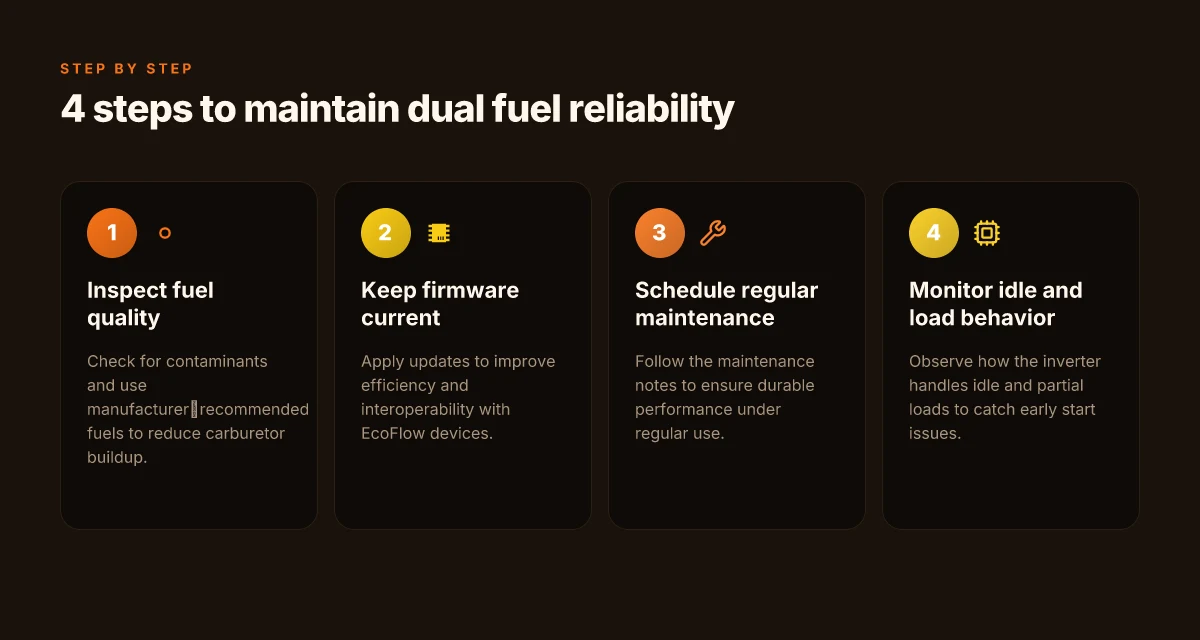
I break down the most practical trouble spots you’ll encounter with EcoFlow dual fuel generators and how to address them in the field. Start with fuel quality and carburetor cleanliness, then move to ventilation and storage, and finish with firmware updates that often unlock efficiency and interoperability gains. The aim is to spot patterns early and keep the system humming when you’re off grid or on backup duty.
Fuel quality and carburetor cleanliness
Clean fuel matters. When gasoline sits, varnish forms and can gum up the carburetor, causing rough idle or stalling. The same applies if LPG tanks sit with old or contaminated fuel residues. I’ve seen a few owners notice rough starts after weeks of storage, and a quick carburetor clean or a fresh fuel fill usually restores smooth idle. To reduce risk, run the unit with fresh fuel and use stabilized gasoline if you’ll store for more than a month. If you notice inconsistent idle, check the air filter first, then consider a light carburetor cleaning as a next step. Boldly keeping fuel healthy helps protect both the gasoline and LPG pathways, preserving reliable startup. Fuel quality and a clean carburetor are the first dominoes to keep lined up.
Ventilation, storage, and battery health
Ventilation plays a direct role in cooling and performance stability. A cramped or cluttered setup can raise operating temperatures and accelerate wear. Store the EcoFlow dual fuel generator in a ventilated area away from walls and obstructions, with the exhaust path clear. Battery health also matters for the electric start and overall system interoperability. If the battery shows signs of sluggish cranking or requires frequent recharging, test the health of the 12V battery and replace if needed. Poor storage conditions and weak batteries show up as longer cranking times, higher idle fluctuations, and less predictable transfer between fuel modes. When you clean up the environment and refresh the battery health, you’ll notice steadier performance and faster startups. Ventilation and battery health often determine real-world reliability.
Firmware updates and interoperability
Firmware updates can unlock efficiency gains or improve how the EcoFlow system talks to other devices in your setup. I traced notes in EcoFlow’s update history to improvements in device interoperability and minor efficiency tweaks that show up as steadier running under mixed fuel mode. If your unit isn’t on the latest firmware, check the official update path and apply the update where possible. Expect Small but meaningful gains in runtime and smoother switching between gasoline and LPG once the software lines up with your hardware. Firmware upgrades can quietly boost efficiency and interoperability.
Reality check: not every update delivers a dramatic leap, but the cumulative effect across fuel modes and EcoFlow ecosystems matters for long-term reliability. What is EcoFlow Wave 2 price and what it means for portable cooling in 2026
In short, keep fuel clean, ensure the unit lives in a ventilated, battery-healthy spot, and stay current with firmware. EcoFlow devices thrive when you maintain the basics, and you’ll reduce odd startup quirks and idle dips that frustrate off-grid plans. For concrete steps, refer to the user manual’s maintenance sections and EcoFlow’s product pages for the latest firmware notes. Maintenance basics pay off in steady reliability.
What the next upgrade unlocks for EcoFlow dual fuel reliability
EcoFlow is nudging reliability forward by tightening dual fuel control and maintenance reminders, not just boosting power output. The trend I see is a clearer path from a broad feature set to repeatable performance in real-world cycles. In 2026, expect tighter integration between fuel modes, smarter idle management, and transparent fault codes that help you act quickly rather than chasing vague symptoms. The single move that matters is how EcoFlow codifies diagnostics into easy, actionable steps you can follow in minutes. This shift reduces downtime and increases confidence on long trips or long outages.
Rivals like Honda, Yamaha, and Generac push similar dual-fuel promises, but the difference lies in ecosystem polish. EcoFlow’s software updates tend to arrive with practical tweaks rather than flashy overhauls, and that consistency matters in tough environments. Brand trust grows when updates ship on schedule and currencies for parts stay stable. If you rely on predictable performance, this is the pattern to watch.
Takeaway for next week: keep your dual fuel system in a monthly reset routine, update the firmware, and log any odd startup behavior. The bigger pattern is continuity: a generator that ages gracefully and remains easy to service is worth more than a few extra watts today. Are you ready to commit to that upkeep cadence?
- Backup strategy: if you’re in a high-humidity region, pair EcoFlow with a simple maintenance checklist and a spare air filter.
- What to try this week: enable automatic fuel-switch alerts and run a 15-minute test at 50% load.