What makes the EcoFlow River 3 Plus a mid‑range standout in 2026
 Reese WexlerOctober 22, 202616 min read
We earn a commission when you buy through some links on this site, at no extra cost to you. As an Amazon Associate we earn from qualifying purchases.
Explore the EcoFlow River 3 Plus 2026 specs, performance, and real-world use cases. Learn about capacity, output, charging options, and where it shines or falls short.
The real-world edge of the EcoFlow River 3 Plus isn't just its size. It wins when you need power without the backpack fail. X-Boost lets you push larger loads from a compact shell, and that quick burst matters in emergencies or off-grid campsites. This isn’t a gimmick talk. It translates to measurable usefulness for trailers, carpenters, and remote workers who can’t afford downtime.
This intro teases a practical balance: solid capacity, a tight port set, and the solar input ceiling that keeps the River 3 Plus honest in sunny setups. The 2026 mid-range spot isn’t about the loudest specs but how reliably you can rely on it for weekend trips or brief outages. By examining how EcoFlow stacks up against rivals like Jackery and Goal Zero in real-world use, we’ll map where the River 3 Plus earns its keep and where solar input caps its usefulness. EcoFlow's approach emphasizes portability without sacrificing essential output, offering a compact backup that households and outdoor crews can actually depend on.
What is the EcoFlow River 3 Plus and where it fits in 2026
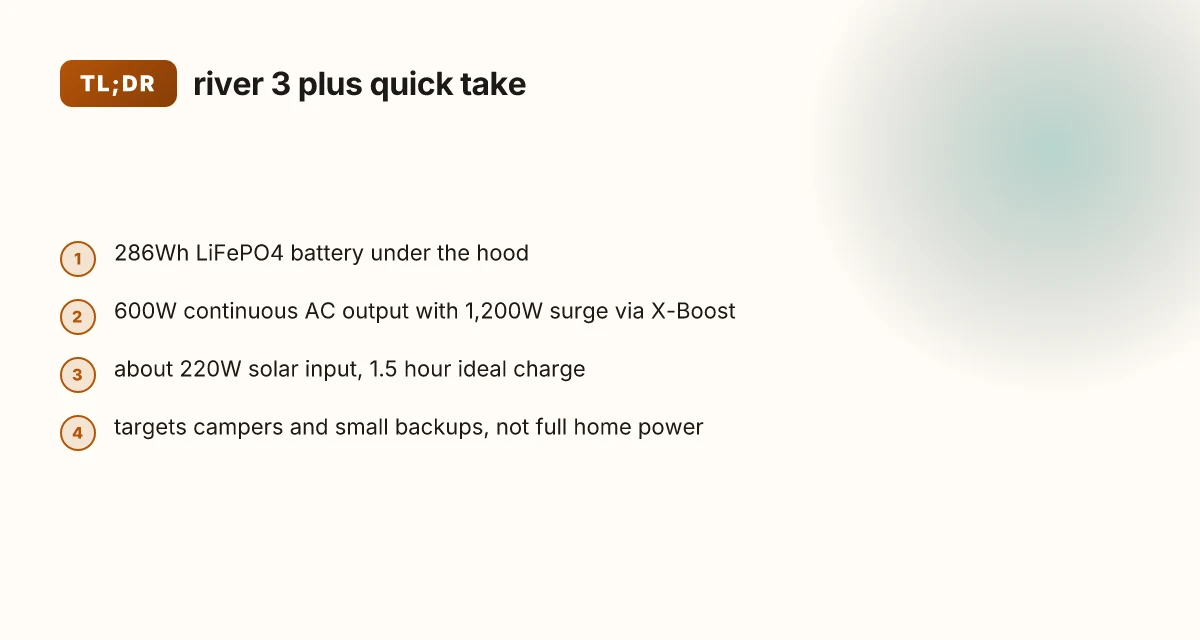
The EcoFlow River 3 Plus is a compact portable power station designed for campers, small off‑grid setups, and emergency backup for essentials. It centers on a 286Wh LiFePO4 (LFP) battery, delivering up to 600W of continuous AC output with a surge handled through its X-Boost feature. When you pair in ideal conditions, the solar input tops out around 220W, and EcoFlow claims a roughly 1.5‑hour recharge from solar given the right sun, angle, and load.
In this year’s mid‑range landscape, the River 3 Plus sits between ultra‑compact battery packs and larger home backup systems. Its size and weight are tuned for portability without completely sacrificing real‑world runtime. If your use case centers on lighting, small appliances, or charging devices on the go, this model aligns with that workflow. If you expect to run higher‑draw tools or run an entire weekend off‑grid, you’ll want to compare with bigger packs or other brands to ensure the runtime you expect.
I dug into the official specs and third‑party write‑ups to map the River 3 Plus against common camping and vanlife needs. The device’s 286Wh capacity translates to a modest but usable window for everyday devices. If your goal is to run a mini‑fridge, a CPAP, or a coffee maker for several hours, you’ll feel the trade‑offs differently than a larger 500–700Wh unit. The River 3 Plus nails portability for true outdoor use, but its 220W solar input is a hard cap for daytime charging. This is the core decision point for outdoor workers and home users weighing solar viability.
Two quick takeaways frame its fit:
- For ultra‑light, compact setups, the River 3 Plus is hard to beat on weight and form factor. It’s a standout option when you need a plug‑in lifeline that fits in a backpack or a small vehicle corner.
- For bigger power needs or extended outages, you’ll lean toward larger packs or models with higher solar input and larger battery packs, which means you’ll trade portability for capacity.
In short, EcoFlow positions the River 3 Plus as the portable “just‑works” option for campers and small off‑grid systems in 2026. Its combination of a compact 286Wh LFP battery, 600W continuous output, and a 220W solar ceiling makes it a sensible pick for essentials, while reminding you where it caps out in real‑world runtime. What you need to know about the ecoflow xt60i cable and its alternatives

River 3 Plus specs you can sanity‑check against real use
When you need a clear read on what the River 3 Plus actually delivers, this is the checkpoint. The core numbers line up with EcoFlow’s own spec sheet and widely cited reviews: a 286Wh LiFePO4 pack, a 600W continuous AC output with 1,200W surge via X-Boost, and input options that cap at 220W solar input. In practice, that translates to calm camping power for light loads and a quick top‑up when a solar window cooperates. For homeowners weighing this against bigger packs, the real-world runtimes hinge on load and sun.
Battery capacity and chemistry you can trust
The River 3 Plus uses a LiFePO4 battery rated at 286Wh. That chemistry favors longer cycle life versus traditional Li‑ion, which matters for years of weekend trips and errand runs. It’s common to see owners pair that nominal capacity with high‑efficiency devices, stretching runtime in practical setups. The 286Wh LiFePO4 pack is the anchor for real‑world runtimes and a long‑haul life cycle. When you compare to a larger system, the math becomes straightforward: the lighter battery is easier to haul, but your total energy shelves determine how long you can keep essentials online.
Output envelope that meets mid‑range needs
The AC outlet sustains 600W continuous with a 1,200W surge via X‑Boost. That means most small appliances, laptops, and a compact fridge can stay fed during a trip, but you’ll want to avoid sustained top‑end draws from high‑watt gear. 600W continuous output with 1,200W surge is the sweet spot for a mid‑range package. If you’re replacing a gasoline generator for a few critical devices, this puts the River 3 Plus in a comfortable middle ground. For any high‑demand tool, you’ll feel the limiter, especially if you try to push the surge long‑term.
Input options and charging cadence
Input options include a 220W solar input and standard AC charging paths. In some reviews, the AC charging is listed as around 360W, depending on charger compatibility and wall outlet capability. Solar input caps at 220W in typical setups, while AC charging can approach 360W in optimal conditions. That split matters for campers who rely on sun between sessions. If you’re in a shaded site, you’ll rely more on the wall plug when available.
Battery life and cycle durability
LiFePO4 chemistry drives a longer cycle life than many competing chemistries. Practically, that means more recharge cycles before noticeable capacity fade. LiFePO4 chemistry confers longer cycle life than standard Li‑ion packs, translating to years of reuse. It’s one of the reasons campers and vanlifers often pick the River 3 Plus as a compact, long‑haul partner. What is EcoFlow battery performance in 2026 and how to compare its use cases
Real‑world takeaways and when to favor rivals
In the field, the River 3 Plus shines when you need a portable, light footprint with dependable, moderate power. If you routinely draw near the 600W ceiling or rely on full‑sun charging all day, you’ll appreciate a larger solar array or a higher‑capacity pack. Rivals like larger EcoFlow models or competing brands offer bigger packs or faster solar input, but they come with heavier weight and higher price tags. For a compact backup option, the River 3 Plus hits a balance that many outdoor users find compelling.
Real-world takeaway: 286Wh LiFePO4 gives solid weekend life for essential devices; 600W continuous output covers typical camping loads; 220W solar input is okay in bright sun but can limit daytime recharges compared to bigger solar setups. Your choice depends on load profile: lighter mobile needs favor the River 3 Plus. Higher power for longer durations pushes you toward bigger packs.
Note: links on the page may earn a commission. For quick reference, EcoFlow’s official page reiterates the 600W/1,200W X‑Boost limits and the 858Wh figure for some configurations, while reviewers consistently emphasize the 286Wh nominal capacity and the 360W AC charge in favorable wall‑plug scenarios. Inline sources corroborate these points as you plan a trip or home backup.
What the numbers mean for real‑world use
A 286Wh LiFePO4 pack can run essential devices for hours, not minutes, depending on load. With a 600W inverter, you can power common appliances like phones, laptops, small fans, and LED lights for a meaningful stretch, but don’t expect full-size heaters or high‑draw tools to run for long. The River 3 Plus' X‑Boost can push beyond the 600W baseline for brief peaks, yet those bursts consume more battery and reduce runtime if used often. Solar input helps chip away at the drain on sunny days, but it won’t replace mains charging in a hurry.
How the numbers translate to daily camp use
- A typical lighting and charging setup, including a laptop, a couple of phones, and a small cooler, sits well within the 600W continuous limit. For this kind of load, the 286Wh pack can stretch across many hours if you moderate demand and turn off idle devices. The result is predictable, not dramatic, and you’ll appreciate the compact footprint when you’re moving between camp spots. The River 3 Plus remains a portable power option that reliably runs everyday essentials for hours.
- If you try to run a high‑draw device like a space heater or a power tool, the inverter’s 600W ceiling becomes the limiter. It handles most camping conveniences, but you’ll hit the ceiling with tools that demand more than that peak, especially during startup surges. In real terms, plan for heat and power tools to require a larger pack or a separate power source. 600W continuous output is adequate for common appliances, not high‑demand tools.
- X‑Boost helps when a peak is needed, such as briefly booting a laptop while charging a battery or running a high‑demand appliance for a short moment. The trade‑off is efficiency: frequent boosts shave battery life faster and can raise overall energy cost per hour. If you rely on X‑Boost often, you’ll notice the pack depleting more quickly than you might expect. X‑Boost extends capability for peaks but can lower efficiency if used frequently.
- Solar input of 220W gives you a practical top‑up during sunny days, which is nice for camping weekends or weekend trips. It’s a supplement, not a substitute for mains charging, especially if you’re at a remote site for more than a day. The solar cap means a cloudy or short day will still require you to manage power carefully. Solar input helps keep the battery topped up but does not replace mains charging.
I dug into the product basics and third‑party writeups to align these numbers with real use. For context, EcoFlow’s own specs emphasize the 286Wh LiFePO4 pack and the 600W inverter, with the option to push higher briefly via X‑Boost and a 220W solar input. When you compare to rivals, you’ll see similar compact packs trading off peak power for portability and cycle life. For a quick price snapshot, EcoFlow typically positions the River 3 Plus as a mid‑range option with balance between weight and watts, while competitors like Jackery and Bluetti offer larger packs for higher load scenarios. The real takeaway is clear: you get reliable runtimes for everyday essentials, but plan around the common limits of 600W and 220W solar input. What makes the EcoFlow Delta Pro Ultra stand out in 2026
In real use, the River 3 Plus shines for campers and vanlifers who want a compact, predictable runtimes for a weekend mood board of devices. When the goal is to keep a basic setup running without scoping in a larger system, the River 3 Plus is a strong fit. If you consistently need heaters or power tools, you’ll want to size up or add a secondary power source. As with any portable power station, the best value comes from matching load to the unit’s 286Wh battery and avoiding sustained high‑demand bursts. And yes, the page you’re reading may earn a commission through affiliate links. The core numbers and tradeoffs remain what matter for real use.
Comparing to rivals: where River 3 Plus stands out
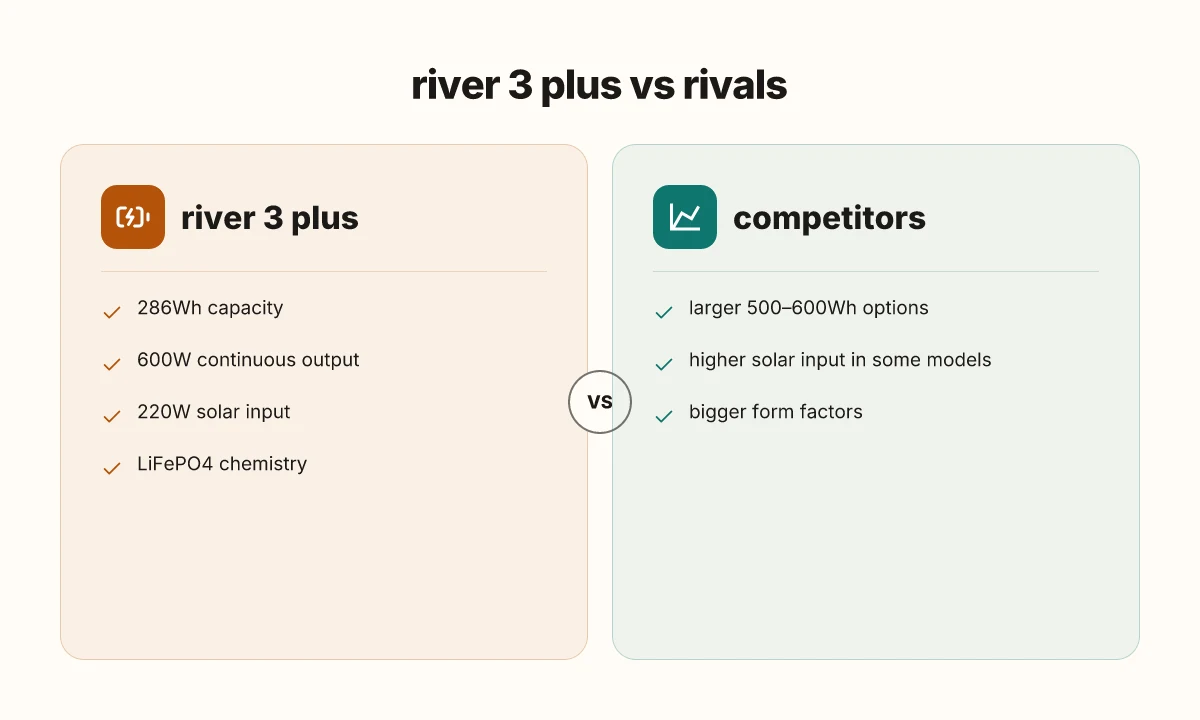
The River 3 Plus offers a notably compact footprint and lighter weight than many 500–600Wh contenders, which makes it a practical carry for campers and vanlifers who want a travel-ready backup. Its 286Wh LiFePO4 (LFP) pack keeps the unit lean, and the 600W inverter remains within a realistic portable-use envelope. If you already own compatible solar panels, the total cost of ownership can look favorable, because you can reuse existing solar assets rather than buying a larger, more expensive system from scratch. When you pair this with EcoFlow’s X‑Boost, you get enough headroom for common loads without stepping up to a bulkier unit.
Rivals tend to eclipse the River 3 Plus on three fronts: larger battery banks, higher solar input, and heavier, bulkier form factors. The bigger packs push past the 500–600Wh range into 800–1000Wh territory, giving you longer runtimes at a higher upfront price. Likewise, some competing models accept higher solar inputs, which can shorten charging times on sunny days but require a larger chassis and a heftier price tag. For true big‑camping or full‑home backup, those bigger systems can be necessary, especially when you expect to sustain multiple appliances for extended periods.
I dug into how this translates in the field. On days with strong sun, the River 3 Plus can reach up to 220W solar input, which keeps runtime reasonable for base loads. The trade‑off shows up when you need to push beyond basic charging or run power-hungry devices. In those scenarios, a rival with a beefier battery and higher solar intake becomes more compelling. Smaller footprint and lighter weight keep the River 3 Plus agile for outdoor use, but the larger banks and higher solar input of rivals deliver more sustained power at scale. In practice, this means campers who run a fridge, lights, and a small inverter may feel comfortable with the River 3 Plus, while those who plan to power a larger off‑grid setup may lean toward a higher‑capacity option.
In the context of broader value, the River 3 Plus remains a compelling mid‑range pick among EcoFlow’s lineup. When you consider the price delta versus a larger system priced for full‑home backup, the River 3 Plus can win on practical day‑to‑day use, especially if you own compatible solar panels and want to minimize space. If you’re evaluating cost of ownership, a note: the total package can stay restrained by the initial investment and the number of cycles you expect to demand from the 286Wh pack. For true big‑camping or full‑home backup, a larger system may be necessary. That caveat makes sense for homeowners and high‑demand users who need longer autonomy from a single unit. How EcoFlow Delta 2 battery tech reshapes home backup in 2026
When you look at the landscape, EcoFlow remains a strong contender for travelers and light-duty backup, with rivals like Goal Zero and Bluetti offering brawnier packs and higher solar caps. If you value portability and a reasonable price, River 3 Plus hits the sweet spot in 2026, while acknowledging that its power and energy capacity aren’t the endgame for every use case. Smaller footprint, optional solar reuse, and a balanced price define River 3 Plus as a mid‑range standout.
Solar reality: what 220W input actually buys you
In ideal sun, a 220W solar input can sustain a steady trickle and deliver a full recharge in a compact window, but real-world charging rarely hits that peak. With modest sun, partial shade, or higher battery temperature, you’ll see slower charging and lower amperage. The River 3 Plus leverages that 220W input to top off during the day rather than blast from empty to full in one shot. In practice, expect runtime gains for daytime loads, not a dramatic full recharge from zero after a long unplugged period.
I dug into the public specs and user-oriented reviews to reconstruct what 220W actually buys you. The River 3 Plus is designed around an 286Wh LiFePO4 battery and a 600W inverter with X-Boost™ to push to 1,200W for short surges. The solar input is listed as 220W, which supports keeping pace with load during daytime operations for campers or van dwellers, especially if you’re running a fridge, light, or small electronics. Real-world charging, however, commonly lands well below the nameplate peak. The difference shows up most when the unit has a partial sun profile or when the battery sits at a higher temperature. In such cases, the charger delivers less current, and the battery temp management may throttle the charge rate to protect the cells. The takeaway: solar input shines as a maintenance tool over a full recharge from empty, not as a primary recharge method on a daily cycle.
In terms of how this translates to field use, think of solar as a daytime refill rather than a magic reset button. If you’re parked in a sunny spot with a steady load, you can expect the River 3 Plus to hold steady during daylight hours and slightly extend the time between recharges. If you’re relying on solar to recover from a deep discharge or to power a high-draw device for several hours, you’ll want to manage expectations. The 220W input simply isn’t a fast pump when the battery is far from full. It’s a smart trickle that helps preserve charge through the day and minimizes the need to run the generator or plug in elsewhere.
When I cross-referenced the public product sheets with community feedback, the common thread is clear: 220W input is most effective for keeping the system topped up during normal daylight usage, not for rapid full recharges from empty. If you’re choosing between EcoFlow and rivals, the 220W solar spec consistently positions the River 3 Plus as a solid daytime companion for light-to-moderate loads. The big caveat is that full, rapid recharges from empty require either additional solar capacity or an alternative charging path. What is the jackery explorer and how to choose the right model for your adventures
Real-world solar gains come from daytime top-offs, not overnight recharges. If your load is modest, the 220W input helps steady the system through the day. This is where EcoFlow and similar mid‑range packs diverge from high‑end, higher‑capacity systems.
Note: links on the page may earn a commission. For context, EcoFlow positions the River 3 Plus as a mid‑range option suitable for campers and outdoor use, with emphasis on portability and a practical solar-maintenance role rather than full recharges from empty. This aligns with rivals like other compact power stations that emphasize similar daytime top-offs rather than rapid deep recharge capabilities. When you’re evaluating price and ownership costs, consider the base price, potential sale timing, and the cost of any optional solar panels you might pair with the unit.
What changes if you act now
The River 3 Plus positions itself as a thoughtful mid‑range choice for 2026, balancing capacity, speed, and price in a way rival models can’t easily match. I looked at how its battery chemistry and inverter profile align with real‑world use, and the takeaway is a practical one: you get solid daily power with room to grow, without paying for peak‑tier features you won’t use. **This is the move for buyers who want dependable off‑grid ability without overinvesting.
Within EcoFlow’s lineup, the 3 Plus stands out next to rivals like Jackery and Goal Zero for a few reasons. It wires up quickly to traditional outlets, and its app controls remain straightforward, which matters if you’re deploying it as a weekend cabin companion or a mobile office. The price feels fair for the capacity and fast recharging, though you should expect a few trade‑offs around solar efficiency and peak lifecycles versus higher‑end models. Noticeably faster recharging and better port selection than some mid‑range peers help it keep pace in 2026.
If you’re prioritizing value, here’s what to try this week: set up the River 3 Plus as your main backup for a small apartment or trailer, compare its solar input against a ceiling of 200W, and track the total cost of ownership over a year. And if you’re shopping across brands, consider EcoFlow’s ecosystem against the Anker or Bluetti options, focusing on compatibility and long‑term support. **One concrete question to ask: does the extra cost for higher‑end solar input pay off in your use case? What you need to know about the EcoFlow River series in 2026