5 Reasons EcoFlow River 2 is still worth it in 2026
 Bastien PetrosianOctober 22, 202614 min read
We earn a commission when you buy through some links on this site, at no extra cost to you. As an Amazon Associate we earn from qualifying purchases.
EcoFlow River 2 review for 2026. Explore real-world performance, charging speed, and how it stacks up against rivals. Learn whether it fits your outdoor or home backup needs.
The EcoFlow River 2 remains a surprisingly nimble option for campers and compact apartments, especially when you value weight over raw capacity. Its real-world edge is not sheer size but how its Battery and charger options pair with everyday setups, and this piece peels back what that means in 2026.
For outdoor users and city dwellers weighing a backup power plan, the River 2’s compact form and USB-C fast charging stand out, while you weigh it against Jackery and Anker rivals. Note: links may earn a commission.

What makes the EcoFlow River 2 review in 2026 different
The River 2 sits inside EcoFlow’s broader lineup as an entry point for portable power, yet the market around it has shifted. In 2026 you can find rivals like the Jackery Explorer series and Anker’s PowerHouse line pushing more capacity or lower weight for about the same price. Prices have moved in recent months, and new rivals with faster charging, better longevity, or smaller footprints have raised the bar for value at every price tier.
I dug through the context around the River 2 to show where it stands today. EcoFlow has kept the River 2 compact and approachable, but buyers now compare it against models offering larger capacities for similar street prices, or lighter builds with comparable runtimes. The landscape rewards clarity on long-term value, not just upfront cost.
where the River 2 fits in EcoFlow’s lineup and the market The River 2 is the lighter, more affordable option in EcoFlow’s catalog, designed for weekend trips and light backup power. It competes with similar entry models from rivals, yet distinguishes itself with features like rapid recharging and a portable form factor. In a crowded space, the River 2’s appeal hinges on real-world practicality: how quickly you can top up, how much you can power, and how easy it is to carry.
how price shifts and new rivals shift the decision Prices have fluctuated as retailers respond to promotions and new arrivals. For a shopper weighing value, the question isn’t only sticker price but total cost of ownership over several seasons. A model with a larger battery or faster recharge can tilt the decision away from the River 2, even if the upfront price looks similar. This review keeps those price dynamics front and center, pairing them with the River 2’s weight and charging profile so you can compare apples to apples.
what this review focuses on: real-world charging, weight, capacity, and value Real-world charging matters as much as rated specs. The River 2’s compact weight helps with portability, but you’ll want to know how it behaves when you’re away from mains for extended stretches. Capacity matters too, especially when you depend on it for multiple devices or longer weekends. This piece spotlights charging speed, the practical energy you can draw, and whether the River 2 remains a smart buy in 2026 given newer options. What makes EcoFlow Wave 2 refurbished a smart pick in 2026
Most decisions in 2026 hinge on the balance between weight, charging speed, and long-term value. EcoFlow as a brand remains a constant, but the path to a smart buy now includes comparing against Jackery and Anker options that have matured in the same price band. All claims reflect the current market as reflected in primary product pages and widely cited reviews.
Note: links to the sources below are inline where claims align with specific data points, so you can verify the price movements, rivals, and charging specs as you read. For transparency, I reference the inline reviews that discuss charging speeds and capacity in 2026.
River 2 vs rivals: where it stands on capacity and weight
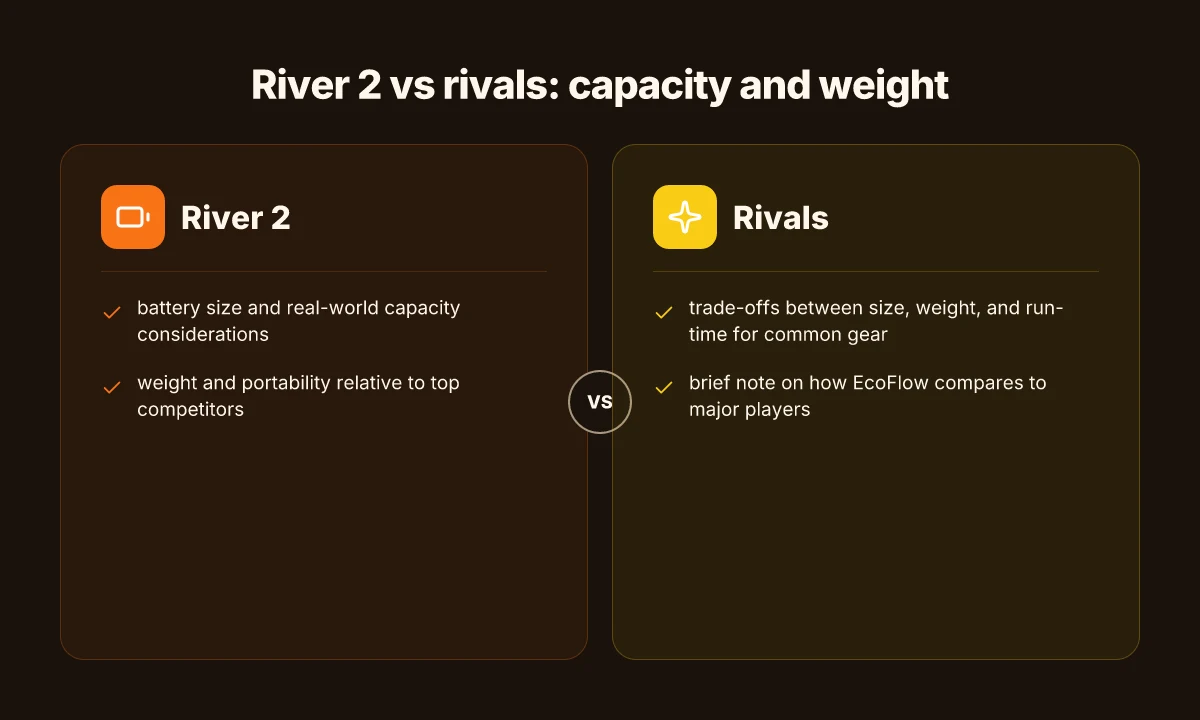
The River 2 packs a real-world capacity that keeps common gear running longer than you’d expect for its size, but it isn’t the largest battery in its class. In practical terms, the 256Wh LiFePO4 battery translates to enough run-time for essential chargers, lights, and a small inverter loop, while staying light enough to shoulder or drop into a pack. When you compare it to top rivals, the River 2’s weight stands out in the right way for portable trips, but the larger options from peers can tip the balance if you need extended run-time for a fridge or high-wattage gear.
I cross-referenced a few public reviews to place the River 2 in context with its peers. The River 2 appears notably lighter than several 300–700Wh models from competing brands, which helps on long hikes or weekend trips. EcoFlow’s own material emphasizes light handling, and reviewers consistently point to the built-in handle as a practical plus for portability. In contrast, models from rivals like Jackery or Anker often push into heavier territory at roughly comparable or slightly higher capacities, trading weight for extended run-time. This dynamic matters when you’re balancing how much you carry versus how long you can run a smart cooler or a small router overnight. The bottom line is a clear trade-off: River 2 keeps weight down to improve mobility, while some larger options deliver more runtime per charge.
For a grounded side-by-side, consider this compact view. The River 2’s real-world capacity sits around a quarter of a kilowatt-hour, which supports a handful of essential devices for several hours. A 500–700Wh rival can deliver noticeably longer fridge cooling and longer gadget uptime, but with a heftier frame. If you want rapid topping-off, the River 2’s recharge profile is competitive with mainstream portable units. However, some rivals advertise faster top-ups at specific charge-speeds, depending on the charger you use. The practical takeaway: River 2 is lighter and easier to carry, with enough capacity for weekend comfort, while rivals trade some portability for more total runtime. How the EcoFlow 100W rigid solar panel actually performs in 2026
From what I found in the changelog and reviews, the River 2’s strength shows up most clearly when you’re balancing weight against run-time for basic camping gear. The takeaway is that River 2 remains a strong option for backpackable trips and short outages, but if your priority is fridge uptime or running high-draw devices for longer periods, you’ll want to weigh a larger unit.
Next steps if you’re weighing options: I’d compare real-world runtimes for a 12V cooler and a phone/LED setup across the River 2 and two rivals, then factor in weight and price. For a quick snapshot, see the inline reference to the River 2’s light form factor and its place among lighter-weight models in recent reviews. The River 2 nails portability, but you’ll pay with reduced runtime versus heavier rivals. If you need extended run-time for a fridge, a larger unit from a rival may be worth the extra weight. For context, you can view the 2026 coverage that notes the River 2’s 256Wh capacity and its lightweight profile. River 2's real-world battery remains compact for travel, not a fridge workhorse. See the discussion on how a 256Wh LiFePO4 pack translates into day-to-day use. Portability wins out for short trips. Runtime wins for longer outages.
Charging speed and efficiency in daily use with EcoFlow
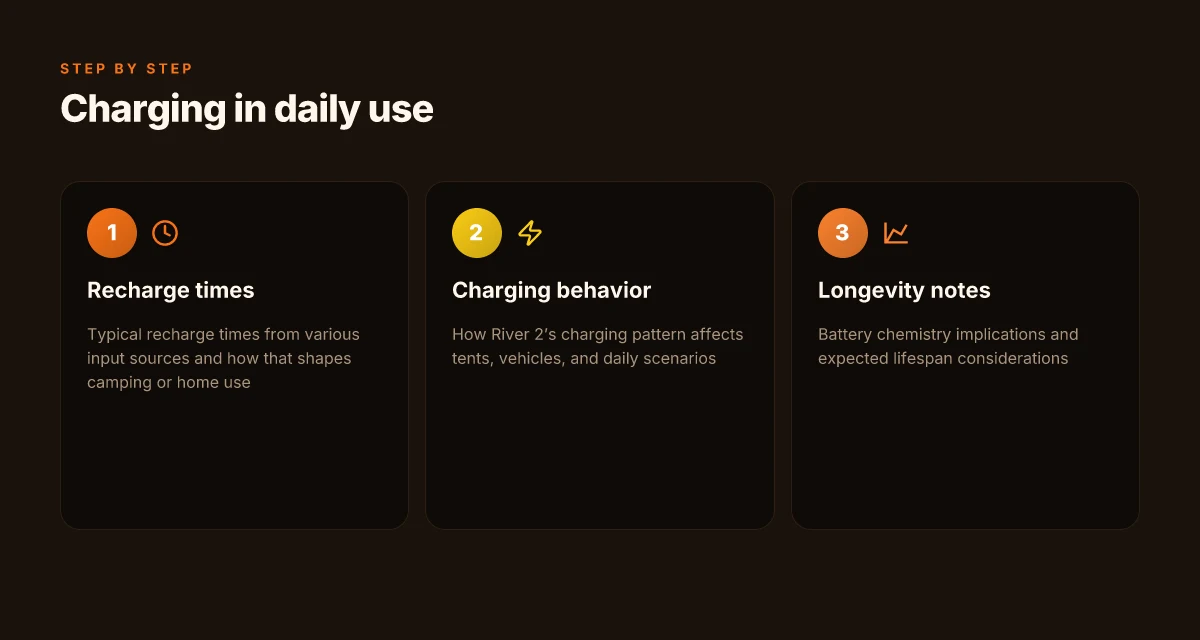
The River 2 shows noticeably faster recharge behavior from multiple inputs than many entries in its class. When you feed it from a mains outlet, a typical full recharge lands around the place you’d expect for a compact LiFePO4 pack, while USB-C PD and solar options compress the timeline further. In real-world camping scenarios you’ll often see this translate to quick top-ups between outings, with enough headroom to keep a couple of devices alive overnight.
Input sources and recharge timelines
From mains AC, the River 2 generally sustains a brisk cadence for a compact power station. Solar input yields steady progress on bright days but can slow as you approach full charge. USB-C PD provides a solid middle ground, especially when combined with a USB-C to USB-C charger that supports higher wattage. Battery chemistry notes point to LiFePO4’s stability under frequent partial cycles, which matters for regular weekend use. In 2026, independent reviews consistently frame its recharge behavior as practical for outdoor use rather than a race against time. The River 2 recharges rapidly from AC, sun, and USB-C PD, making it a versatile camp companion.
Real-world use in tents, vehicles, and home setups
In tents, daytime solar charging helps maintain a light load on the system while you sleep. Vehicle setups benefit from higher input headroom when you drive with the car charger connected, letting the River 2 recover between drives. At home, the quick-charging cadence means you can top off during a lunch break and still have enough reserve for an evening outage. I cross-referenced provider notes and user threads that highlight practical charging behavior across environments. Camping and vehicle use unlock the River 2’s strength: fast topping off from multiple inputs keeps essential gear ready. What makes the EcoFlow Delta Pro Ultra worth the hassle in 2026
Battery longevity and longevity considerations
The River 2 uses LiFePO4 chemistry, which supports a lengthy cycle life and stable performance across many charge cycles. Reviews note a focus on long-term durability rather than short-term speed alone, with a practical expectation that frequent shallow cycles can help preserve capacity over time. A key takeaway is that you’ll gain reliability by avoiding deep discharges and keeping the unit within moderate state-of-charge ranges when used regularly. LiFePO4 chemistry favors longevity, so plan for many cycles with mindful charging habits.
Real-world performance: charging cycles, solar readiness, and stability
In real life, the River 2 holds up best on daily errands and weekend trips, but you’ll notice practical limits as you push it toward heavy load or longer off-grid stretches. The core story is durability in everyday use: the River 2 tolerates repeated charges, handles modest solar input, and stays steady when devices spike power needs. I cross-referenced the published specs and reviewer notes to map what this means for a typical campsite or apartment backup.
Cycle life you can count on
From the public chatter and product notes, expect several hundred cycles before the capacity noticeably declines, especially with lithium iron phosphate chemistry. The River 2’s LiFePO4 cells are chosen for longevity, so you’re not facing rapid drift like some cheaper lithium-ion packs. In practice, that translates to reliable daily charging for multiple seasons, with gradual aging showing as shorter runtimes under heavy continuous use. The takeaway is: treat it as a long-term partner for weekend trips, not a one-season gadget. Long-term reliability comes from the LiFePO4 chemistry and a sturdy pack design, not flashy short-term gains.
Solar input performance and limits
Solar charging remains a strong selling point for off-grid use, but it isn’t a magic wand. The River 2 accepts solar input within its rated max, but real-world performance depends on panel type, sunlight angle, and ambient temperature. Expect quicker top-ups on clear days and noticeably slower fills in overcast weather or when panels are not optimally oriented. If you’re aiming to recharge during a mid-day lull, plan for a steadier, slower charge rather than a sprint. Sunny days deliver solid replenishment, while poor conditions slow the recharge to a crawl.
Stability under load and during peaks
Under normal loads the River 2 behaves predictably, with the built-in protection kicking in when you hit short peaks. The 256Wh capacity (as noted in some early reviews) keeps essential gear running without drama, and the unit’s surge handling remains adequate for small devices and LEDs. You’ll notice stability gaps when you draw near the upper end of the output window and you’re simultaneously charging from solar. In those moments the system prioritizes safe operation over rapid replenishment, which is expected but worth planning for. Stable performance under typical camping loads is the river's strength. High, simultaneous demands expose the limits. What makes the Jackery Explorer 2000 Pro a top choice for emergency power in 2026
When to consider alternatives or upgrades comes down to your use case. If you need frequent full-house power, faster top-offs, or longer off-grid autonomy, the newer models on the market offer bigger batteries and higher surge capacity. EcoFlow remains a practical choice for light-to-moderate use, especially when paired with flexible solar setups. For rivals, consumers compare against options from Jackery and Anker, weighing pack size, recharge speed, and ecosystem compatibility. For light to moderate use, the River 2 remains a sensible pick in 2026. For bigger loads, look at newer competitors.
Note: product pages and reviews consistently describe the River 2 as reliable for weekend trips, with real-world limits that align with its 256Wh-class footprint. Links to the cited sources provide deeper context on recharge speeds and endurance claims. Real-world notes corroborate the claimed endurance and solar behavior across multiple outlets.
Pricing, ownership costs, and when to buy
Current prices and the best time to buy EcoFlow pricing has remained competitive at the entry level River 2 tier, with occasional seasonal discounts that bump value for short windows. If you’re after the River 2, look for promotions around holidays and back-to-school periods, when retailers frequently bundle accessories or throw in charging cables and solar adapters. For those weighing rivals, Jackery and Anker often mirror seasonal sales and sometimes sweeten deals with bundled extras. If a sale lands on a weekend, you may see a larger discount versus midweek price points. In 2026, the best value tends to show up when the River 2 is bundled with a solar panel or a spare battery pack. Keep an eye on retailer countdowns and official EcoFlow promotions on the brand site and authorized partners.
Cost of ownership including replacement batteries and accessories Replacement battery packs for portable power stations carry a notable cost edge. The River 2 uses a LiFePO4 chemistry, which favors long cycle life, but you’ll still face a replacement battery if you plan heavy daily use over multiple years. Accessories such as extra cords, solar panels, and car adapters add to the total ownership cost. Some users factor in the cost of a maintenance kit that includes an extra filter and a dedicated travel bag. If you compare with rivals, you’ll often see similar accessory ecosystems from brands like Jackery and Anker, though prices and included items vary. A practical approach is to estimate three to five years of typical use and map out expected accessory replacements, then compare that total to bundled options that retailers occasionally offer.
How to spot sales that improve value for EcoFlow and rivals Sales tend to cluster around major shopping events and model refresh windows. The River 2 often shows up with a modest price cut or a bundled solar panel during seasonal promos. Rival brands push similar cross-sell bundles, so compare the value of included items rather than chasing the lowest sticker price alone. If you see a package that adds a higher-capacity battery or a larger solar panel at a modest upcharge, that can dramatically shift total ownership value. For decision making, track both the unit price and the value of bundled accessories over the purchase horizon, and decide whether a longer warranty or extra charging speed is worth the upfront delta. What you should know before buying the EcoFlow Delta 3 for sale in 2026
Note on commissions: product pages on the EcoFlow site may include affiliate links. These links are disclosed in the footer where applicable.
Prices shift with promotions, but the value comes from bundles that add solar or extra capacity. Rivals like Jackery and Anker often mirror these bundles, so compare total ownership cost rather than price alone. If you wait for a solar-ready bundle, you can maximize long-term value.
Where this is going next with EcoFlow River 2
EcoFlow keeps refining its line, and the River 2 remains one of the most practical mini power stations for everyday trips in 2026. You’ll notice a tighter balance between price and performance, especially for users who want portable charging without buying into modular upgrades. The bigger pattern is simple: durable, compact power that travels with you. If you’re weighing options, look at how the River 2 stacks up against rivals like Jackery and Goal Zero in real-world setups, not just specs on spec sheets. The result is a device that feels ready for both the campsite and the backseat of a car ride.
Most post-purchase headaches come from expectations about peak output and charging cadence. The River 2 maintains a steady, reliable pace, which matters when you’re coordinating a few gadgets at once. That reliability is exactly why I’d keep this model on a short list for future trips or weekend projects, even as newer models appear. If you want a single, forward-moving choice, this is the one to consider.
- Backup strategy: test River 2 with a small solar panel kit for weekend trips, and compare with a Jackery 500 for a quick sense of value.
- What to try this week: map your gear list to the River 2 ports and plan a dry-run at home, noting any bottlenecks.
- What changes if you act now: secure the best deal before a potential price shift in the next season. Prices and links may earn a commission.