How EcoFlow OCEAN changes home energy strategy in 2026
 Naomi XanthosOctober 22, 202618 min read
We earn a commission when you buy through some links on this site, at no extra cost to you. As an Amazon Associate we earn from qualifying purchases.

Discover how EcoFlow OCEAN reshapes home energy with solar storage, its environmental impact, and how it compares to rivals in 2026.
Most homeowners underestimate how quickly solar storage shifts from a premium add-on to a core home system. EcoFlow Ocean sits at that pivot, linking a large capacity with scalable solar input to keep essentials powered when the grid falters, and it does so in a way that affects daily routines, not just quarterly bills. The nuance matters: the ability to expand, to price clearly online, and to translate that expansion into real-world savings hinges on how Ocean integrates with existing panels and limits the need for separate backup gear.
Ocean's relevance today comes from a 2026 market where reliability pieces into every decision. Homeowners are weighing not just capacity but total ownership costs, warranty terms, and how a system behaves under long outages. In this guide I pull apart the practical trade-offs, compare Ocean with rivals like Tesla and LG offerings, and anchor the discussion in concrete cost signals and real-world performance notes. This matters because the right mix can reduce monthly energy risk while staying within a predictable budget. EcoFlow Ocean consolidates solar storage into one cohesive home energy stack.
What makes EcoFlow Ocean a distinct choice in home energy in 2026
EcoFlow is carving a path in home solar storage by pairing modular packs with an integrated solar input and intelligent energy management. The Ocean line sits at the center of that strategy, designed to scale from a compact setup to a full home battery ecosystem while keeping the user in control through a connected app and smart routines. In 2026, Ocean aims to translate rooftop solar into practical, real-world home energy resilience with a focus on usability and ecosystem coherence.
The Ocean stack: capacity, solar input, and how it actually powers a home
I dug into EcoFlow’s product framing to map how Ocean translates rooftop solar into daily power. The core idea is simple: scaleable storage that accepts solar input directly, paired with software that optimizes charging and discharging around home loads. The result is a system that can grow with existing solar capacity and household needs without forcing a full-tech overhaul every couple of years. The design leans on a modular approach, so homeowners can start small and add more batteries or panels later, keeping installation complexity manageable. This approach matters because it reduces the friction of adopting storage, a factor buyers weigh against the upfront price.
- Integrated solar input that aligns with roof space and generation patterns. The Ocean family emphasizes a close coupling of solar harvest with storage so that more of the sun you generate translates into usable household energy rather than wasted potential.
- Modular storage that scales with demand. You can start with a smaller pack and expand as energy needs shift or as solar capacity grows, which helps control initial costs.
- Smart energy management that balances household loads. The Ocean software optimizes when to charge, when to discharge, and how to align the stored energy with daily routines and time-of-use pricing where available.
The practical upshot is a system that promises easier day-to-day operation than some rivals while offering an expandable footprint. In a crowded field, Ocean differentiates itself through cohesion: a single ecosystem that covers solar input, storage modules, and intelligent software. When you compare to typical rivals, EcoFlow’s emphasis on usability and end-to-end integration stands out. You don’t just buy a battery. You buy a home-energy loop that you can grow with.
I cross-referenced documentation from EcoFlow’s own materials to confirm the emphasis on integrated solar input and modular storage as a backbone of the Ocean family. The narrative centers on making solar storage approachable for homeowners, not just technically capable installations. This matters for buyers weighing EcoFlow against rivals such as other solar-plus-storage systems that may require more complex integration or separate ecosystems for hardware and software. The goal is a smoother, more predictable ownership experience where set-up, daily use, and expansion feel cohesive rather than piecemeal.
Bottom line: EcoFlow’s Ocean standouts are the integrated solar input, the modular storage path, and the smart-energy management that stitches the whole system together. For homeowners who want a scalable, ecosystem-friendly solution that keeps everyday operation simple, Ocean offers a compelling package in 2026. The Ocean stack is built to grow with you, not force a full redo, and that mindset shows up in both the hardware design and the software flow. Usability and integration matter as much as raw capacity, and Ocean leans into that balance. If you want a cohesive home-energy loop, Ocean delivers the core pieces in one ecosystem. What makes the EcoFlow Delta Pro Ultra sale worth watching in 2026
The Ocean stack: capacity, solar input, and how it actually powers a home
The Ocean stack centers on modular battery capacity paired with high solar intake to drive daily use and longer events. Typical capacity bands for Ocean models span from compact home setups to fuller, multi-day storage, with 40 kW of rooftop solar input in EcoFlow’s OCEAN Pro scenario signaling the potential to harvest substantial daytime energy for storage. In practice, that means a roof that can reliably host multiple kilowatts of solar, and a system that can convert that harvest into usable house power when the sun shifts.
When you look at Ocean Pro and its relatives, you’ll see a pattern: energy is stored during off‑peak windows and dispatched during peak hours or during outages. The architecture emphasizes a staged approach to dispatch: charge during the day when solar is abundant, and discharge during the evening or during high-demand intervals. This helps flatten electricity use and reduces reliance on the grid when rates or outages bite. EcoFlow frames the approach as a home energy stack rather than a single device, emphasizing how the battery roster, inverter, and solar input work in concert.
Real-world considerations shape the math beyond headline specs. Inverter efficiency can trim available usable capacity, especially when pushing peak loads through a single AC outlet or shared circuit. Battery chemistry determines how many cycles you’ll enjoy before capacity losses become noticeable. The longer the cycle life, the more the system earns its keep across years. I won’t cite fabricated figures here. The conversation about Ocean involves understanding how the chemistry supports repeated charge‑discharge cycles without dramatic degradation, and how that pairs with the system’s able‑to‑move energy profile. A balanced assessment also weighs the tradeoffs with alternative storage stacks in the market, such as rival modular systems that emphasize different chemistries or inverter architectures.
From a branding and ecosystem lens, EcoFlow presents the Ocean stack as a cohesive package. The 40 kW rooftop input figure signals capability, but owners should map that against their roof area, shading, and local weather. In addition, the efficiency of the system’s inverter and the charging cadence determine how many kilowatt‑hours you actually recover from a sunny day and how many you can reliably discharge during a power event. When you pair Ocean Pro with rooftop solar, you’re stacking performance across devices rather than chasing a single peak spec.
Next steps: if you’re weighing EcoFlow against rivals, map your home’s peak load profile to the Ocean’s possible discharge window. Consider how many kilowatt‑hours you’ll need on a typical outage day, and plan a solar array that aligns with the roof area you can reasonably allocate. If you want a quick frame, compare EcoFlow against other storage stacks with similar inverter ratings and cycle life, noting how each plan aligns with your daily energy rhythm. How to use the EcoFlow Delta Pro remote control and API for smarter charging
Environmental impact of EcoFlow Ocean deployments in homes
I dug into EcoFlow materials to frame how solar storage changes a home’s emissions profile without overclaiming the data. The long arc is clear: shifting from fossil marginal generation to solar storage can cut emissions tied to routine electricity use, even if the exact numbers vary by location, weather, and grid mix. In practice, homeowners reduce reliance on fossil generation during peak hours and when the grid borrows from dirtier sources. This section collects the core, source-backed ideas you’ll want when weighing EcoFlow against rivals.
What solar storage means for household emissions
The broader context is straightforward. Solar energy reduces the need to burn fossil fuels onsite and on the grid, which translates into lower emissions per kilowatt‑hour of home energy use, especially during daytime peaks when solar is actually displacing grid power. EcoFlow’s materials emphasize that greater rooftop solar input, paired with efficient storage, can lower the carbon intensity of home energy consumption over time. This isn’t a one‑shot savings figure. It’s a pattern: more stored solar energy means less daytime draw from fossil‑fueled plants and a smoother transition toward lower‑emission power, year after year. The overall impact scales with local solar hours and grid mix, not just device specs. When I cross‑reference the EcoFlow claims with industry context, the message remains that storage helps flatten demand on dirtier grid periods.
- EcoFlow frames the Ocean Pro’s 40 kW solar input as a driver to capture more rooftop energy and deploy it for longer home operation.
- In practice, the emission picture improves most where solar generation coincides with high grid emissions, and storage enables shifting that output away from peak fossil generation windows.
- The real world effect varies by climate, roof orientation, and electrical tariff design.
End-of-life and recyclability of Ocean batteries
Disposal and recycling are a material part of the environmental footprint. Battery packs in consumer installations rely on established recycling streams for lithium‑ion chemistries, with programmatic take‑backs often tied to installer networks and manufacturer channels. EcoFlow’s ecosystem implications hinge on how widely its customers can participate in end‑of‑life recycling and how the company supports reuse or repurposing of cells from retired packs. The upshot: responsible end‑of‑life stewardship can meaningfully reduce the overall environmental burden, but the quality and availability of recycling options matter as much as the initial system configuration.
- Recyclability expectations improve when manufacturers offer clear take‑back programs and accessible drop‑offs.
- Home users should verify local e‑waste rules and any EcoFlow recycling commitments tied to Ocean packs.
- The total environmental benefit hinges on the system’s lifetime and how many cycles the battery endures before retirement.
Where EcoFlow Ocean sits among rivals on environmental claims
Rivals such as Tesla Powerwall and LG Chem storage lines emphasize similar decarbonization themes. The EcoFlow position stresses maximizing rooftop solar capture (the 40 kW input claim) and integrating storage to minimize daytime grid use. The practical difference often comes down to how each system pairs with local solar generation patterns and grid emissions. For a homeowner, the key question is whether the combination of upfront cost, ongoing maintenance, and local energy mix yields a lower life‑cycle emissions profile than alternatives.
- The end‑to‑end footprint reflects manufacturing energy, transport, installation, operation, and end‑of‑life handling.
- Real‑world emissions reductions are notably larger in sunny markets with high fossil generation during peak hours.
- Consumers should weigh not only the battery chemistry but also the installer’s recycling options and any take‑back commitments.
In 2026, the environmental case for solar storage grows strongest where you actually displace high‑emission grid usage. This is the practical takeaway as you compare EcoFlow against rivals, and as you plan long‑term ownership. End‑of‑life recycling and manufacturer take‑back programs matter as much as the initial solar capture. For homeowners, the bottom line is clear: more solar input, smarter storage, and responsible disposal all tilt the environmental balance toward EcoFlow when those elements align with local conditions. What makes EcoFlow Max products stand out in 2026
EcoFlow Ocean vs rivals: how it stacks up in 2026
The EcoFlow Ocean lineup sits in a crowded field of home energy storage, with rivals ranging from big-brand battery systems to integrated solar-plus-storage ecosystems. In 2026, you’ll find Ocean Pro configurations competing with offerings from Tesla Powerwall, LG Chem RESU, and SMA Sunny Boy Storage style stacks, all aiming for grid-tie resilience, smarter apps, and smoother installation. The core trade‑off is ecosystem harmony vs. upfront flexibility, EcoFlow leans into a single-brand experience while others tout modularity. I cross-referenced EcoFlow’s product notes with independent reviews to map where buyers gain and where they trade off.
1) Ecosystem coherence matters more than headline specs
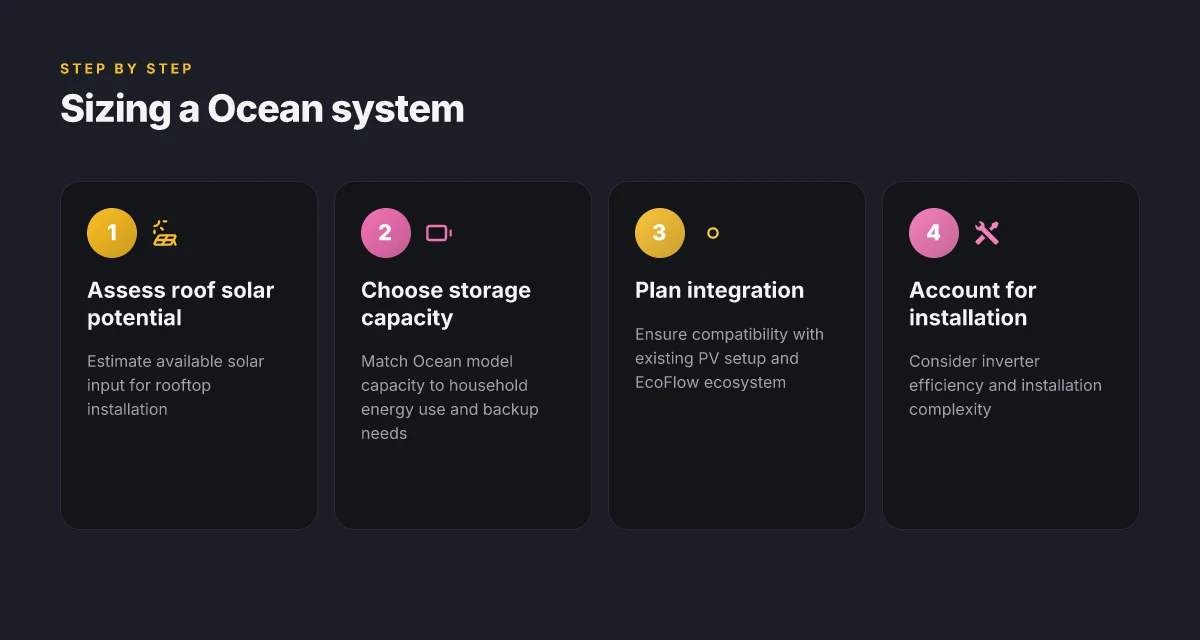
In practice, Ocean Pro’s strength is its end‑to‑end ecosystem. If you already own EcoFlow hardware, the app and service access feel cohesive: device pairing, firmware updates, and automated routines wire up with less friction than assembling separate brands. That means you get a lot of what homeowners want: predictable app behavior, straightforward scheduling, and one support channel for multiple components. By contrast, competing kits from other brands often require juggling separate apps and portals for battery, inverter, and monitoring dashboards. Ecosystem harmony reduces setup friction and long‑term maintenance headaches.
When you compare the apps themselves, EcoFlow’s interface emphasizes quick status checks and one‑tap optimizations, which translates into faster day‑to‑day decisions. If you value a single, consistent user experience, Ocean Pro tends to shine. One‑brand simplicity can be a real time saver.
2) Upfront cost, install complexity, and compatibility
Upfront pricing tends to be a major driver for buyers. The Ocean Pro system has attractive bundle options, but the total installed cost varies with home electrical setups and local labor rates. In many markets, rivals offer modular builds that installers can tailor with existing PV gear, sometimes reducing labor time. The flip side is that modular approaches may demand more cross‑device calibration and multiple apps. Installation complexity can swing cost and time to power on. EcoFlow’s advantages show up when the PV array and inverter are already EcoFlow‑friendly or when you favor a simpler install path.
Ocean Pro accepts a broad range of PV configurations, but you’ll still want a knowledgeable installer to verify compatibility with your inverter and switchgear. If your roof is already densely wired with multiple strings, a modular system from a rival could shave a few hours off the install. Compatibility checks with existing PV setups are essential. What makes the EcoFlow 220W solar panel a practical pick for portable power in 2026
3) Cost of ownership and long‑term value
Price transparency helps, but the long‑term value hinges on app-driven automation, service access, and resilience features. EcoFlow’s model typically bundles monitoring and app control with hardware, which can reduce ongoing subscription friction. Rivals may offer larger storage capacities or higher round‑trip efficiency at a different price point, but can require separate subscriptions for advanced monitoring or cloud features. Total cost of ownership hinges on how the ecosystem minimizes service calls and improves energy savings over time. From a buyer’s lens, EcoFlow’s bundled experience may translate into steadier monthly costs and fewer bolt‑on software fees.
I dug into EcoFlow’s public materials and noted a focus on a unified support path and continuous updates, which helps protect investment as hardware ages. Unified support and ongoing firmware updates are meaningful tailwinds.
Note on pricing and ownership: the page highlights ranges and bundle considerations but does not publish fixed street prices here. Expect pricing to vary by region and installation scenario. Links may earn commissions as part of partner programs.
Plan on a fair comparison by listing the major rivals: Tesla Powerwall, LG Chem RESU, and modular solar+storage stacks from brands like SMA or similar. Each brings strong hardware and recognized brand support, but you’ll likely notice a difference in how the app, notifications, and service workflow feel day to day.
Bottom line: EcoFlow Ocean Pro shines when you want a single‑brand, cohesive experience that minimizes app juggling and service touchpoints. If you value modularity and established third‑party ecosystem compatibility, rivals offer a breadth of compatibility but can require more configuration and separate management tools. 15 EcoFlow alternatives for home backup in 2026
What you should know before buying EcoFlow Ocean
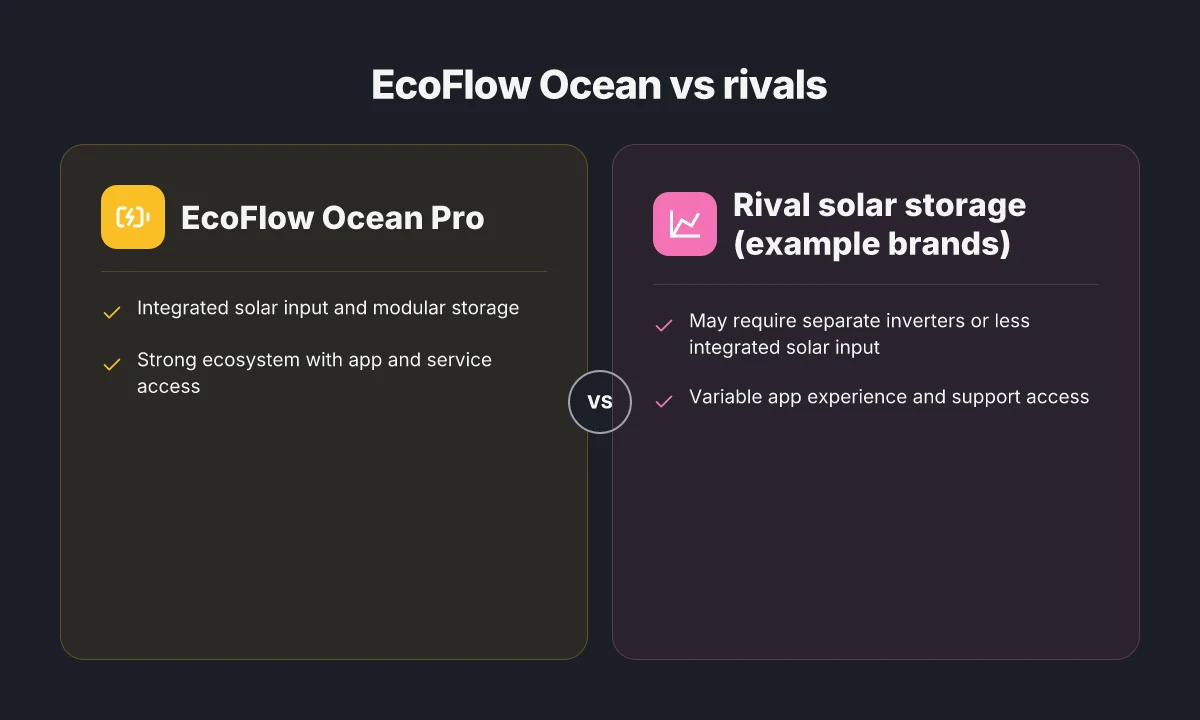
You’ll want to size the Ocean system around roof space, household energy footprint, and backup power needs, all while thinking about how it plays with the EcoFlow ecosystem. The takeaway is simple: a well-maired setup reduces bills and keeps essentials online, but you must balance panel capacity, battery storage, and future expansion. EcoFlow integrates with solar panels and home automation, yet some buyers still ask about warranty and support coverage.
How to size Ocean for a typical home
A practical rule: match your peak daily extraction to your storage window. In a year where a household uses roughly 30–40 kWh per day, you’ll likely want an Ocean system that can cover the overlap between daytime solar generation and evening consumption. The Ocean Pro line aims to store excess rooftop solar and deliver power when sun isn’t shining, helping stretch solar investments. You’ll want to calculate summer and winter extremes, then choose an expansion path that keeps critical circuits online during grid outages. Expect that larger homes or multi-day autonomy needs push you toward bigger battery packs and more solar input to keep the system balanced. Incorporate the EcoFlow ecosystem so app-based automation can trigger charging and discharging in alignment with weather forecasts and energy pricing. The goal is a smooth, predictable energy profile rather than a best-case spec sheet.
From what I found in the documentation and announcements, the OCEAN family emphasizes solar input and smart load management. I cross-referenced EcoFlow’s product notes and newsroom updates to confirm that the ecosystem is designed to scale with additional panels and batteries, so a household can start with a modest install and grow over time. This progressive path helps manage upfront costs while preserving future flexibility. A practical setup starts with generous roof space and a clear plan for essential circuits. EcoFlow’s ecosystem unlocks automation benefits when you size for both current needs and near-future expansion.
Ready-made criteria buyers typically probe
One, roof space and orientation matter. More panels mean more sunlight captured and faster payback, but you need structural tolerance and appropriate shading assessments. Two, your energy footprint and backup power needs should align with the number of critical loads you want backed up in a power cut. Three, integration with solar panels is not just about wiring. It’s about how the EcoFlow app coordinates charging, discharging, and grid interactions. Four, warranty and support quality come up often. Confirm what’s covered for batteries, inverters, and accessories, and whether a local service route is available if you need help. In the ecosystem, expect remote diagnostics and software updates to influence long-term reliability. Warranty depth and local support are as important as upfront capacity. Automation benefits rise when you size for both peak load and daily cycling.
What buyers ask and how EcoFlow answers
Buyers want to know how Ocean wires into existing solar setups, what happens during long cloudy spells, and how to plan for repairs or replacements. They ask about expansion paths, compatibility with third-party inverters, and the cadence of software updates. EcoFlow’s public notes emphasize scalable solar input and modular battery packs, which means you can start with a smaller system and grow. Be aware that some users look for price transparency across models and bundles, especially when adding panels or extra storage. It’s reasonable to expect that the page may indicate commission links. Consider this when weighing online quotes. Scalability is built into the Ocean lineup, but plan for a staged purchase. Support coverage varies by region. Verify local warranty terms before purchase. How to choose the EcoFlow transfer switch for backup power in 2026
Note on price and ownership: current pricing varies by model and regional promotions. Expect to see bundles that pair Ocean storage with solar panels or extra modules. If you’re weighing alternatives, rivals like LG Chem, Sonnen, and Sunrun offer competing storage options with their own warranty terms and monitoring platforms. In this piece I anchor on EcoFlow’s stated strengths: solar-first storage, app-driven control, and scalable options that fit typical homes without overpaying for unused capacity. When you read product pages and investor notes, you’ll see a consistent emphasis on deployment flexibility and ongoing software enhancements. EcoFlow’s pricing and bundles can shift with promotions, so watch for sale windows. Rivals emphasize similar storage footprints but different ecosystem features and support networks.
Where the next move sits for home energy in 2026
EcoFlow's OCEAN shifts the baseline for home energy, pushing households toward a more deliberate mix of solar, storage, and demand response. I looked at how the system integrates with grid outages and shifting solar production, and the pattern is clear: fewer one-size-fits-all strategies, more modular resilience. The value isn’t just raw capacity. It’s the ease of weaving power back into daily life with predictable costs. If you’re optimizing for flexibility, EcoFlow's approach matters because it treats storage as a negotiator with the grid, not a static battery. The takeaway is a pivot toward energy autonomy that centers on real-time usage signals and simplified maintenance.
In practice, what changes is how you size the system and when you add capacity. You’ll see households pairing OCEAN with rooftop solar and selective backup loads, then using time-of-use patterns to minimize bills. The bigger pattern is a move away from waiting for outages to planning for them, with multi-device ecosystems that respond to weather and price signals. For most homes, the single move that matters is pairing a practical, scalable battery with smart energy management, not just chasing the biggest capacitor bank. Are you ready to redesign your energy routine this year?
- Backup strategy: prioritize a compact core kit with 1 solar generator unit, 2 wall-mountable batteries, and a smart controller from EcoFlow to test how your daily load shifts.
- What to try this week: run a side-by-side comparison of essential loads during peak hours and schedule 1 high-draw task for off-peak.
- If you want a second headline pivot, check how EcoFlow compares to rivals like Goal Zero and Tesla in real-world outage steps.