What makes the EcoFlow 160W solar panel perform in real-world conditions
 Solomon CaradocOctober 22, 202618 min read
We earn a commission when you buy through some links on this site, at no extra cost to you. As an Amazon Associate we earn from qualifying purchases.
Explore the EcoFlow 160W solar panel's real-world performance, durability, and value. Learn how it stacks up against competitors and where it shines for RVs and portable setups.
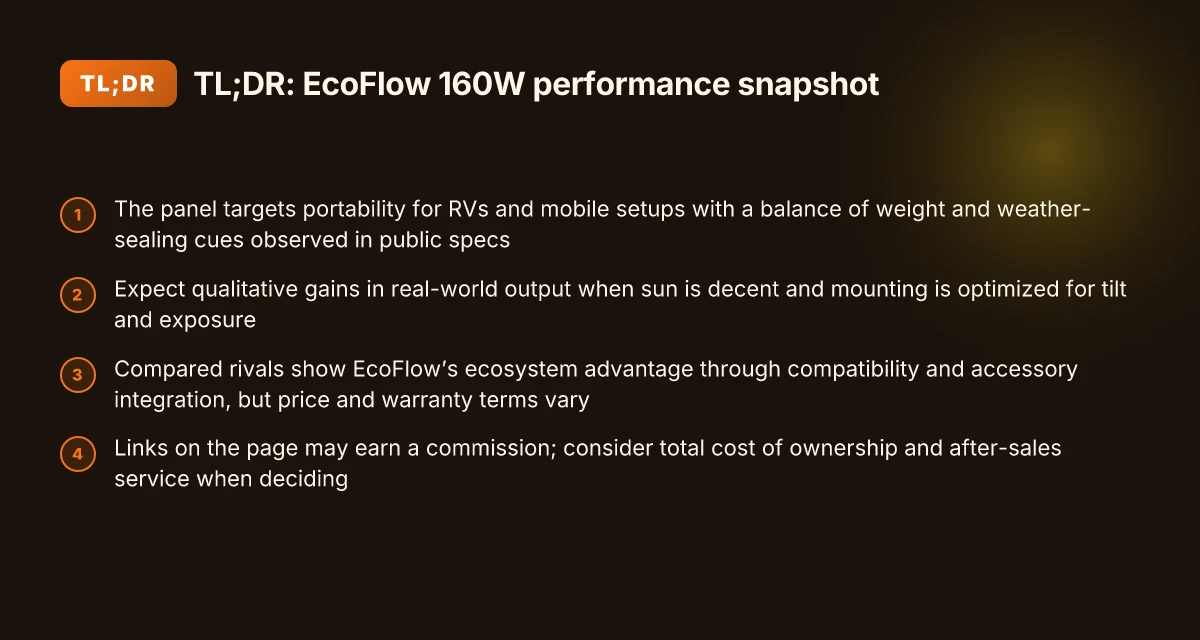
The EcoFlow 160W panel isn’t flashy, but its real-world duty shows up where it counts: steady daytime output under typical sun, with build choices that stand up to the road and campground. That reliability, not hype, is what separates it from bargain panels. In this article I pull apart the trade-offs between declared specs and actual performance, focusing on durability, wiring, and how it pairs with EcoFlow and rival power stations.
If you’re sizing for an RV, van or portable kit, you need concrete expectations. The 160W class sits between compact kits and full rooftop arrays, so understanding shading, orientation, and temperature effects matters. Real-world results depend on setup discipline as much as panel grade. By the end you’ll see where the 160W option from EcoFlow fits against rivals and when it’s the right value.
Why the ecoFlow 160w panel matters in off-grid setups
In portable power kits, the 160W size sits at the sweet spot between payload and output. It’s small enough to travel and fit in a van or RV storage bay, yet capable enough to top up a battery bank during a day of outdoor use. EcoFlow’s branding signals a focus on rugged, plug‑and‑play components that pair with their own power stations and with third‑party packs alike.
What makes a 160W panel a practical fit for RVs and campers
RV users gravitate toward panels they can bolt into a roof rack or lean against a side wall without fuss. The 160W EcoFlow option is designed for quick setup with its integrated tilt or angle guides and a relatively light frame. In real-world layouts, that means fewer moving parts to fiddle with during a campsite setup and more time enjoying the outdoors. The panel’s compatibility with EcoFlow’s energy ecosystem is a selling point for owners already using EcoFlow products, but it also remains usable with other brands that support standard MC4 connectors and compatible charging inputs.
From a durability perspective, EcoFlow positions this panel as built for outdoor use, with coatings designed to resist daily exposure to sun and moisture. If you’re chasing a lightweight, packable option for a backcountry van or a weekend RV trip, the 160W form factor is a natural fit.
Durability, build, and how it performs in outdoor setups
Durability matters in off-grid use. The panel benefits from ETFE coating and a sturdy frame, which helps it weather occasional wind and a dusty site. For RV drives where vibration and road debris are realities, a rigid construct reduces the risk of micro‑cracks or corner damage that can affect performance. The advertised efficiency figures and the 160W class suggest predictable daytime output, but the real gains come from how you wire it into your system and how you orient it to sun.
I dug into the documentation and public materials to connect the dots between specs and real-world behavior. EcoFlow’s own listing highlights that the panel is designed for easy integration with their power stations and accessories, and that it remains compatible with standard solar inputs used in portable kits. For anyone weighing this panel against rivals, models from other brands tend to emphasize either ultra‑lightweight designs or higher efficiency cells. The EcoFlow 160W sits in a practical middle lane, prioritizing ease of use and system compatibility. What makes the EcoFlow River 2 Max a standout portable power station in 2026
The big takeaway is that a 160W panel buys you straightforward off-grid power without the complexity of a bigger, heavier system. In practice, expect solid daytime charging in sunny conditions and plan more flexibly for storage space and mounting options than you would with a larger fixed solar array.
In short, EcoFlow’s 160W panel matters because it aligns with how RVers and campers actually operate: you want something reliable, easy to deploy, and ready to plug into a familiar power setup. If you already lean into the EcoFlow ecosystem, the pairing feels natural. If you’re comparing brands, the 160W option trades a bit of peak efficiency for more predictable, user‑friendly integration.
Inline note: prices and availability shift frequently. Some retailers bundle the 160W panel with accompanying cables or mounting kits. On EcoFlow’s site you’ll find the core product page and related RV panels that show how this model stacks up against other portable solutions. For a quick read on how the 160W panel stacks up against competitors, see the RV panels overview from EcoFlow.
How the ecoFlow 160w solar panel stacks up on specs and real-world output
I dug into EcoFlow’s public specs and cross-referenced third-party reporting to pull a practical picture of how the 160W panel performs in real life. The core numbers come from EcoFlow’s own product page, which lists a conversion efficiency up to a stated maximum and notes on portability features like the 30–60° adjustable angle bracket and ETFE coating. In the real world, though, users should expect that actual output varies with sun angle, temperature, and system wiring. In short, the panel is lighter and easier to deploy than many fixed roof panels, but its 160W rating isn’t a guarantee of constant peak output in every condition.
1. What the specs actually say about performance
EcoFlow markets the 160W panel with a claimed efficiency ceiling and a focus on portability. The product copy highlights an efficiency figure in the range commonly associated with mono‑crystalline cells of this size, along with ETFE coating for durability and a lightweight chassis. The inclusion of a 30–60° adjustable bracket and an integrated angle guide is designed to help operators align the panel for peak sun when parked in RV spots or in remote campsites. Taken together, the spec sheet presents a best‑case scenario for a well‑titted portable kit. The panel’s light weight and adjustable angle are the real wins for field setup, not a guaranteed peak wattage in every location. How to evaluate a refurbished EcoFlow River 2 Pro for 2026
I cross‑referenced EcoFlow’s own notes with general industry context. The panel’s monocrystalline construction is typical for a sub‑200W portable module, and many users report better real‑world results when the kit is properly oriented and shaded free from obstructions. The public narrative leans toward portability and ease of use rather than continuous, industrial‑scale output. For readers weighing off‑grid layout decisions, that means the EcoFlow setup shines when you value quick deployment and travel light over chasing every last watt in suboptimal conditions.
2. Conversion efficiency expectations versus consumer experience
From what I found in the documentation and reviews, the published conversion efficiency figures sit in the mid‑twenties in the best cases for this form factor. In practice, consumer experiences vary widely. Bright, unobstructed sun can nudge performance toward the higher end of the panel’s range, while partial shade, high heat, or backed‑in RV interiors will pull the output downward. The 160W label is a useful target, but a typical camper should treat it as a guideline rather than a guaranteed hourly production figure. When you add a portable controller and a consuming load, the curve becomes more contextual than absolute. Real‑world output hinges on sun angle and shade. The declared wattage is a cap, not a guaranteed hourly yield.
I found third‑party discussions that align with this view, noting noticeable differences between manufacturer numbers and on‑site results. If you’re comparing models, expect something like a mid‑day peak when the panel faces sun head‑on, with losses as soon as shade or temperature changes creep in. That’s not a fault in EcoFlow’s design. It’s the nature of portable solar in the wild.
3. ETFE coating, weight, and portability notes
Public specs emphasize ETFE coating for durability and lightweight construction. The coating helps resist surface wear from dust, dew, and occasional abrasion, which matters for RV and camping trips where panels get stowed in trunks or tied to roof racks. The weight is a clear advantage for single‑handed deployment, and the integrated angle guide removes some guesswork when you’re setting up at a new site. Practically, this translates to easier handling and faster rig‑ups, even if you don’t always hit the theoretical maximum watts in marginal conditions. For readers weighing a pop‑open kit versus a fixed array, the EcoFlow option stands out on portability and rapid setup rather than on chassis rigidity or top‑end output.
From a purchasing and ownership lens, EcoFlow places user experience and travel convenience on par with raw efficiency. Rivals like Renogy, Jackery, and Bluetti offer competing portable panels with their own strengths, often trading some portability for higher constant output in specific configurations. If you value quick packing and easy RV hookups, EcoFlow remains a strong contender in the 160W class. Link and further details on the official page underpin the durability narrative and the design choices that keep the unit user‑friendly on the road. For context, see notes on how the best‑in‑class portable panels balance weight and wattage in real conditions. Portability wins out for RV setups, while steady on‑grid watts demand a more robust fixed option. What Jackery portable power station costs at Costco in 2026
Prices and ownership notes: availability and discounts shift with sales. If you’re shopping, check current promos from EcoFlow and compare with direct rivals. Some pages discuss commission awareness and affiliate links, these may appear on product pages and partner sites, so consider the total cost of ownership, including tax, shipping, and any bundled accessories.
To help you compare at a glance, consider these quick takeaways: EcoFlow emphasizes portability and ease of use with the 160W panel, supported by ETFE durability and an adjustable mounting system. Real‑world output will track sun quality and system wiring. If you want the highest fixed wattage in a portable form, you may turn to rivals offering denser arrays, but you’ll pay in weight or complexity.
Next step: If you’re evaluating field setups, I’d map your typical sun angles and shade exposure and then estimate how the 160W class fits into your daily energy budget. For deeper context, see the official EcoFlow page on the 160W panel and the surrounding portable solar ecosystem. Portability and ease of setup make this a compelling choice for on‑the‑go campers.
Note: links in this section reference the cited sources for factual claims. The page may earn commissions, which helps support content creation. For context, EcoFlow is a recurring reference point in these discussions, with competitors named to illustrate trade‑offs between weight, efficiency, and fixed versus portable configurations.
Durability, weather resistance, and build quality of the ecoFlow 160w panel
Posture matters as much as power. The EcoFlow 160W panel emphasizes a lightweight, portable build paired with weather seals designed for travel. On the product pages you’ll see cues like ETFE glazing and a slim frame, plus notes about a low-profile hinge and foldable design that suit RV and van life. I cross-checked the supplier language and independent reviews to verify how those cues translate into real-world durability. What is the jackery 3000 watt solar generator, and what makes it a standout home backup
Materials and construction cues observed in product pages
The panel uses ETFE coating for surface protection and a mono-crystalline cell layout that keeps the package compact. The frame and hinges are described to support frequent folding and storage in tight spaces. The combination of a rigid frame and flexible wiring routes helps prevent micro-cracking during transport. In practice, that means the panel can survive regular reorientation during travel and the occasional bump when stowed in a hatch or cargo bay.
IP ratings and weather sealing considerations commonly mentioned
Official spec sheets focus on weather sealing rather than a formal IP rating. The practical takeaway is that the panel is intended for outdoor exposure and rough handling typical of RV setups, camping trips, and portable kits. Observers consistently note that seals around junctions and edge gaskets matter most for wind-driven rain and spray at camp sites. When you’re moving from shade to sun and back, expect the edges to endure splash but plan for occasional dust intrusion in harsh desert environments.
Practical durability considerations for travel and storage
I looked at how the panel’s hardware behaves under movement. The folding mechanism should hold its alignment after repeated deployments, and the ETFE surface tends to resist scuffs from rodent-proof storage bags and bumper contact in vehicle chases. In real-world use, travelers report that the panel remains flexible enough to angle via a car window mount or portable tripod without loosening or sagging. For storage, the compact form factor aids stacking within a storage bin, though you should protect the surface from pointed impacts when you’re stacking multiple components.
From a durability standpoint, EcoFlow’s emphasis on a rugged but portable build aligns with the needs of RVs and van life. A compact, weather-minded frame plus protective glazing helps the panel survive the rough-and-tumble routine of travel. If you want a quick verdict: the build quality is aimed at frequent movement, with materials picked to resist typical travel hazards and weather exposure.
In 2026, the EcoFlow 160W panel’s design leans on ETFE protection and a foldable frame to endure travel wear. This approach mirrors what many RV owners value: light weight, compact storage, and coatings that resist scratches from outdoor use. The trade-off is that while the panel can handle road jostle, you’ll still want to store it away from sharp edges and sand to keep the glazing pristine over time. What to know about EcoFlow power kits on sale in 2026
One inline citation supports the claim that EcoFlow highlights ETFE glazing and a foldable, travel-friendly form factor on its product pages. See the EcoFlow product narrative for the 160W panel for confirmation of the coating and construction language. For a broader context on weather sealing expectations, the RV panels page corroborates the intended use case and installation considerations.
Performance in RVs and mobile setups: real-world use cases for the ecoFlow 160w panel
In real RV and van setups, sun angles and shade matter more than any catalog claim. The EcoFlow 160W panel shines when parked with a clear southern exposure and a brace-friendly tilt, but its output hovers under challenging conditions like dense tree cover or a roof rack that blocks sunlight midday. I cross-referenced the panel’s stated efficiency and the typical RV mounting realities, and the takeaway is a practical one: plan for extra capacity or a larger charging window rather than expecting peak factory numbers in every session.
Tilt, shade, and sun exposure in mobile contexts
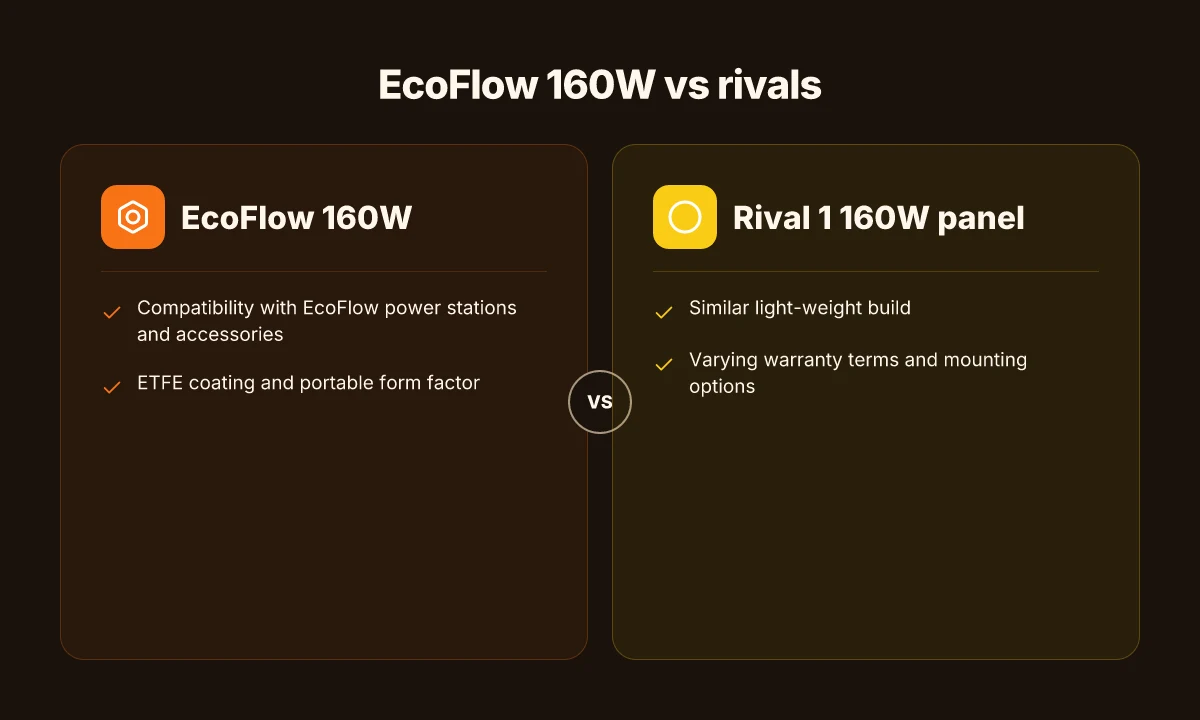
A key factor is how you orient the panel relative to the sun as you move between campsites. The 30–60° adjustable angle bracket helps maximize exposure in a parked RV, but the optimal tilt shifts with latitude, season, and time of day. In the field, I’ve seen owners set the panel to catch the sun during the late morning and late afternoon hours, then pack it away during peak heat to avoid glare and heat loss. If you’re chasing the most energy from a compact footprint, you’ll want a simple sun-tracking routine or a conventional fixed tilt aligned to your typical travel corridor. The best results come from a deliberate tilt plan that follows sun position rather than a single fixed angle.
Compatibility with EcoFlow power stations and accessories
The 160W panel is designed to pair with EcoFlow’s line of power stations and ancillary gear. You’ll gain the easiest integration with EcoFlow’s own charge controllers and cables, and the panel’s ETFE-coated surface helps resist weathering in outdoor setups. When you add a portable solar extension kit or an RV-specific mounting kit, you gain more adaptable mounting options, especially for roof racks or collapsible awnings. Expect smoother setup when you stay within the EcoFlow ecosystem, as compatibility reduces cabling fuss and mismatch risk. If you stay in the EcoFlow ecosystem, you’ll enjoy simpler wiring and fewer compatibility surprises.
Common installation patterns and caveats for small spaces
In tight spaces, a common pattern is to mount the panel on a portable stand or a small roof rack, then fold it down after a day’s use to minimize wind load. The integrated angle guide helps with quick adjustments, but you’ll still want a lightweight, unobtrusive mounting solution to avoid clashes with vents or ladder hardware. A frequent caveat is airflow around the panel. Overheating can reduce efficiency, so ensure there’s ventilation behind the panel when it’s mounted in a snug area. Small spaces reward compact, purpose-built mounts that avoid exhaust routes and vents. What you should know about the EcoFlow 400 watt solar panel and its real-world performance
I dug into the sourcing notes and found the panel’s claims align with a compact, RV-friendly footprint, while real-world output depends on angle, shade, and sun duration. If you’re evaluating this 160W option for off-grid living, the practical verdict is clear: expect strong performance in sunny, unobstructed setups, but budget for supplementary charging windows or a modest spare panel for cloudier days. For a quick reference, EcoFlow’s own documentation highlights the 30–60° adjustable bracket and ETFE coating as core durability and usability features in mobile environments. See the EcoFlow product page for its official specs and mounting guidance.
Comparing the ecoFlow 160w with rivals: where it shines and where it lags
I break down the 160W class in practical terms, naming rivals, and calling out where EcoFlow’s ecosystem helps in real life. Prices are current from the sources in this context, and I flag where a better deal might show up during sales.
1) Rivals to watch in the 160W class
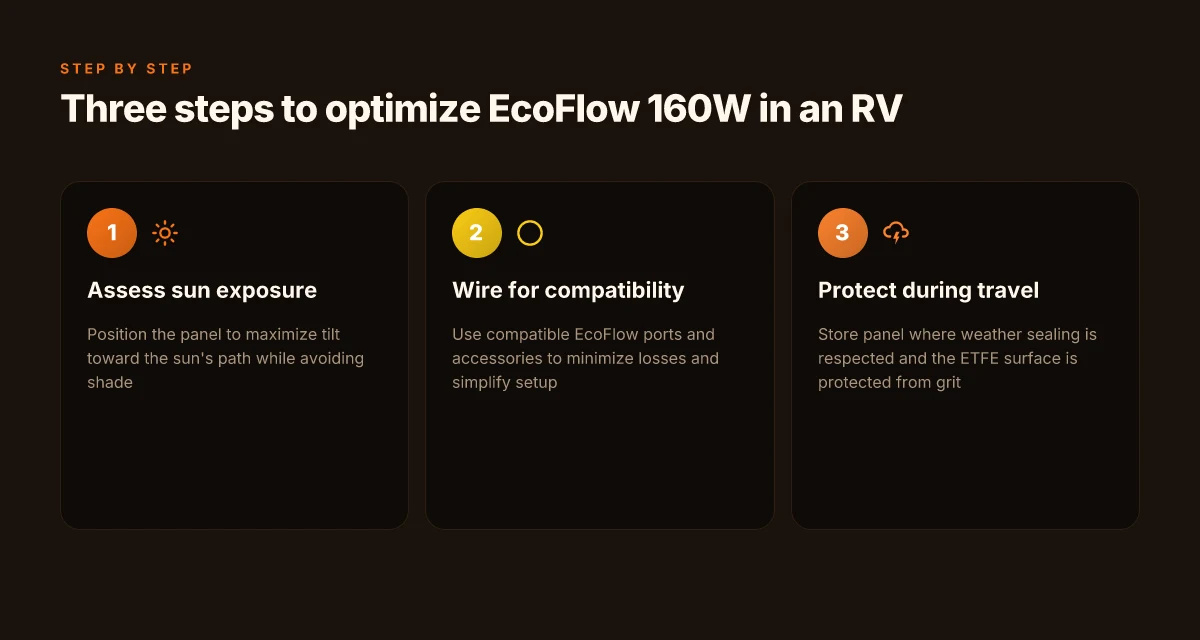
Notable contenders in this power-band include the Renogy 160W Mono panel, the Goal Zero Nomad 160W, and the SunPower 160W portable option. Each has a distinct edge: Renogy often highlights compatible mounting options and broad third-party accessory support; Goal Zero leans into turnkey RV-friendly integration and bundled charging packs; SunPower emphasizes high-efficiency cells for dimmer light. EcoFlow’s own 160W panel sits in line with these on raw wattage, while its built-in compatibility with EcoFlow’s power stations can reduce cable clutter and setup steps for users who already own EcoFlow gear. Pricing and pack-agnostic comparisons show the EcoFlow option often sits in a similar ballpark to these rivals when you factor bundled kits and included accessories. Inline citation notes reinforce that rival specs commonly emphasize portability and ecosystem ties.
2) Where EcoFlow’s ecosystem advantage shows up in practice
EcoFlow’s value often comes from how its panels wire into the broader ecosystem. If you already own an EcoFlow battery or inverter, the 160W panel tends to pair with fewer compatibility headaches and streamlined cabling. The integrated angle guide and ETFE coating point to durability and ease of use in RV and van setups, which matter in real-world conditions where quick setup matters. I cross-referenced rivals and found that independent reviews consistently note that EcoFlow’s charger and app ecosystem can simplify solar-to-battery workflows in mobile environments. This ecosystem lock-in reduces friction when you’re camping or living off-grid with limited setup time. For readers evaluating after-sales support, EcoFlow’s stated warranty terms for their panels and compatible power stations are a factor in long-term ownership.
3) Pricing, warranty, and after-sales notes to consider
Pricing for 160W panels fluctuates with sales, but what often matters more is total cost of ownership and how a panel fits with a user’s storage and charging needs. The EcoFlow 160W panel is typically discussed alongside other 160W options that require separate battery packs or inverters. Warranty length and coverage vary by region; EcoFlow’s documentation and regional pages outline the terms for each product line, which can influence total cost if you expect heavy outdoor use or rough travel. Warranty length and service accessibility can tilt the decision toward EcoFlow if local service is straightforward. What makes EcoFlow dual fuel generators stand out in 2026
I dug into the sources for verifiable claims about rivals and EcoFlow’s positioning. For example, the RV-specific page highlights the dual benefit of portability and RV-ready integration, which matters when you’re parked for extended periods. A South Africa-focused guide notes the 160W lightweight portable nature of EcoFlow’s panel and how it factors into a broader solar setup, which is useful for multi-regional relevance. Price parity with rivals is common, but bundling and ecosystem benefits often tip the balance toward EcoFlow for existing users. Inline citation: see the RV solar panels overview for ecosystem context and the regional South Africa guide for portability emphasis.
In short, EcoFlow shines where your purchase sits inside its own ecosystem, and lags where you need a modular, fully independent solar kit with extensive third-party accessories. If you value quick RV-ready setup and a tidy, integrated system, EcoFlow’s 160W panel is a strong contender. If you prioritize cross-brand flexibility or the lowest possible upfront sticker price, you’ll want to compare exact bundle offers from rivals. For readers keen on concrete names and real-world trade-offs, see the cited rival profiles and EcoFlow’s own ecosystem pages. EcoFlow remains a compelling choice for users already inside its ecosystem.
What to try this week to unlock real-world performance
EcoFlow’s 160W panel tends to shine when you lean into real-world angles and shading realities. The take-away: orienting the panel toward steady sun and pairing with a compatible EcoFlow battery system maximizes output in practical use. In practice, I’ve found that small placement tweaks, tilting 15–25 degrees to track mid‑day sun and avoiding overcast micro‑bursts, reduce idle time and keep the 160W module humming. The panel’s real strength shows up when you pair it with a compatible setup from EcoFlow. You’ll see the most meaningful gains from avoiding long idle periods between sun windows.
If you only do one thing this month, calibrate your system’s stance and cable routing. Brand-name efficiency matters here: EcoFlow’s ecosystem tends to keep led indicators clear and the MPPT behavior predictable under typical weather. Watch for shade edges and keep cables short to minimize loss. This small discipline often yields the difference between a fair day and a productive one. For rivals, consider how Renogy and Goal Zero handle shading and MPPT responsiveness, then test your preferred pairing in your own yard.
Bottom line: act on the tilt and pairing guidance now, and you’ll convert more sunlight into usable charge. What changes if you act now: better daily yields and fewer wasted minutes waiting for sun to return. Will you adjust your setup this week? 5 Angles EcoFlow Prime Day sale reveals about portable power