What makes EcoFlow portable power stations stand out in 2026
 Solomon CaradocOctober 22, 202619 min read
We earn a commission when you buy through some links on this site, at no extra cost to you. As an Amazon Associate we earn from qualifying purchases.
Explore EcoFlow portable power stations in 2026, including reliability, charging standards, and real-world use cases. Learn what to buy, how they perform, and where efficiency improvements matter.
The typical home backup plan overlooks the bottleneck in portable power: charging speed and real-world runtimes. When you need 1000W to run a fridge plus a router and a laptop, the delta between claimed specs and actual performance matters, and the EcoFlow lineup aims to shrink that gap with high input rates and solar options. Delta series offers higher power and quicker recharge, a critical edge for frequent outage events and off-grid weekends.
In 2026, buyers face a crowded field, yet the practical signals remain clear: check integrated MPPT charging, peak AC input, and how runtimes hold under typical loads. This piece pulls actual usage patterns from 2025–2026 updates across EcoFlow models and rivals like Jackery and BLUETTI to reveal where reliability and charging performance align with real-world needs for campers, small businesses, and homeowners. The goal is a straight comparison you can use to plan a reliable, off-grid or backup setup without chasing marketing fluff.
What EcoFlow portable power stations deliver in 2026 and why reliability matters
EcoFlow’s lineup in 2026 centers on high-capacity lithium packs with fast AC and solar charging options, designed for home backup and on‑the‑go power. The core range spans roughly mid‑ to high‑thousands of watt‑hours, with continuous AC outputs up to several kilowatts and peak surges that handle power-hungry appliances. In practice, users see a mix of multi‑kilowatt outputs for home essential loads and modular solar inputs that let you top up during the day. This section lays out where reliability matters most and how 2026 updates align with real‑world use.
Why chemistry and design choices matter for longevity
EcoFlow’s approach leans on contemporary lithium chemistries with safety features that guard against common faults in portable power. Battery chemistry choices influence cycle life, depth of discharge tolerance, and heat management. A well‑rounded model stacks protective hardware and smart battery management to minimize voltage sag during heavy draws. In this space, reliability isn’t just about the size of the pack. It’s about how the system behaves under repeated daily cycles and during peak loads. When I cross‑reference the available documentation, this emphasis on balanced chemistry plus layered safety features emerges as a consistent theme across models.
2026 Updates that matter for home backup and mobile power
For home backup, the integration of 120V/240V output and higher input tolerances reduce the need for multiple adapters during a blackout. For mobile power, EcoFlow’s emphasis on charging speed, whether from AC, car ports, or solar, helps maintain resilience when off-grid. The company also leans on fast charging and expanded solar input capabilities to shorten recharge windows, which matters when you’re juggling critical loads or a family setup. I dug into release notes and product pages to verify that 2026 updates focus on larger capacity bases, smarter battery management, and wider compatibility with off‑grid or emergency scenarios.
The core reliability message is clear: EcoFlow concentrates on safe chemistry, smarter management, and practical recharge speeds to keep essential loads powered when it matters most. That combination matters whether you’re protecting a fridge during a grid gap or keeping a camper’s lights on after dark.
What this means for you What determines the EcoFlow Delta Pro cost in 2026
- If you want the most robust home backup with a clear path to longer runtimes, EcoFlow models with higher capacity and 120V/240V outputs deliver the best balance of power and usability.
- If you’re prioritizing quick recharges while on the road or at a campsite, look for models that support fast AC charging alongside solar inputs.
- Rivals such as Jackery and Bluetti push similar targets, but EcoFlow’s density of features and emphasis on real‑world recharge speed often edges out lower‑spec alternatives in typical 24–48 hour blackout scenarios.
I referenced the DELTA Pro family and related 2026 updates to confirm the direction of improvement in cycle life and safety features, and I cross‑checked multiple sources to align the overview with what users report in the field. For context, EcoFlow’s own pages emphasize the dual PV charging and 120V/240V support, while third‑party reviews highlight capacity and charging speed claims that align with the 2026 updates. See inline references for specific model details and published specs. In practice, the reliability story sits on three pillars: chemistry and safety, real‑world load handling, and the speed and versatility of charging paths.
How EcoFlow charges: understanding speed, AC and solar input for EcoFlow models
Charging a EcoFlow power station is a study in contrasts: AC input scales with the size of the battery, while solar input is constrained by the panel’s wattage and the inverter’s acceptance. In practical terms this means a compact unit with a few kilowatt‑hours of capacity refills quickly on AC but can’t outpace a high‑powered solar array in full sun. For 2026 models, you’ll see peak AC inputs in the range of a few thousand watts, while solar inputs hover around the mid‑hundreds to the low thousands of watts depending on the model and configuration. The real-world takeaway is clear: AC charging dominates speed when you have mains access, and solar charging shines when you’re off grid but sun is abundant.
Peak input reality vs battery size
If you look at the more capable EcoFlow models, the AC input often sits at or near the ceiling set by the power station’s internal design. That means a larger battery will still refill faster if the AC feed is generous, but the percentage gain per hour drops as you push toward 100 percent. In practice, a Delta Pro‑class unit with a larger capacity tends to show shorter time gains from incremental AC increases, because the charger logic caps the rate to keep components within safe limits. When you’re charging from solar, the story changes: the best results come from pairing a high‑watt solar array with a charger that can accept that input without throttling. The delta between the two becomes most evident when comparing a compact unit to a flagship model. For broad context, EcoFlow emphasizes high‑voltage solar charging on some configurations, which helps push the pulse of energy into the battery more quickly than a low‑wattage panel setup. The takeaway: AC charging wins speed with mains, while solar charging scales with panel input and the model’s accepted wattage.
I dug into the documentation and reviews to map what users can expect in 2026. EcoFlow Delta Pro 3 Review notes a substantial fast‑charging ability tied to the model’s large capacity and high input limits, reinforcing the idea that peak input matters most when you’re plugged in. Delta Pro 3 Portable Power Station confirms up to 2600W of combined PV and AC input in certain configurations, illustrating how the company leans on high input capability to shorten refill times. Noticeably faster AC charging with the right adapter and cable is a common upgrade path for 2026 models.
Real‑world charge times and a quick side‑by‑side
In the field, a typical 2–3 kWh unit can approach full from wall AC in under an hour under ideal conditions, while solar recharge can stretch longer depending on panel wattage and sun exposure. For the Delta Pro line, fast AC refill is often quoted in press and product pages as a primary strength, with solar input providing a useful but slower completion finish, especially on days with less than full sun. A practical table helps visualize the spread: What is the EcoFlow Delta Pro price in 2026 and how it stacks up
- EcoFlow Delta Pro 3: AC input up to roughly 2600W when permitted by the charger, solar input up to 1600W in some configurations. Expect 0–80% on AC in under an hour in optimal setups. Solar can take longer but relies on sun angle and panel quality. High AC input delivers the quickest top‑up for daily use.
- EcoFlow Delta Pro 3 Review: larger capacity with fast charging, but real‑world time depends on sun and mains quality. Solar input remains a valuable off‑grid option but isn’t a substitute for mains when you need speed.
When it comes to charging standards and third‑party panels, EcoFlow supports common PV configurations and works with many third‑party solar panels that use standard MC4 connectors and compatible MPPT charging, but the fastest results come from using EcoFlow’s recommended accessories that match the unit’s accepted wattage and voltage. I cross‑referenced multiple sources to confirm compatibility guidance and the general principle that third‑party solar can help, while peak charging speed relies on the model’s peak input rating. EcoFlow’s own docs lay out the practical limits and recommended setups for solar and AC charging. Compatibility matters, but the punchline is clear: pick a model whose peak input matches your typical charging scenario.
Prices and ownership notes matter too. The best deals currently hinge on the latest promos and bundled accessories, with price shifts common around holidays. On the solar side, if you expect long off‑grid sessions, investing in a larger solar array or multiple panels can noticeably reduce refill times. And yes, like every electronics purchase, links on the page may earn a commission.
In the broader ecosystem, rivals like Jackery and Goal Zero often emphasize similar AC vs solar dynamics, but the standout for 2026 remains EcoFlow with models designed to absorb higher input and offer practical on‑the‑go charging flexibility. If you want a quick verdict for daily use: aim for a model with a high peak AC input for rapid refills and plan solar as a supplementary refill, not a sole method for large top‑ups. The next section will map reliability expectations against these charging profiles and 2026 updates.
What to expect from EcoFlow reliability in daily use
Real-world reliability comes down to how long a charge actually lasts, how the unit manages heat, and what support looks like when things go wrong. EcoFlow models show different runtimes depending on device draw, but you can expect practical margins rather than peak-theoretical numbers. In daily use, a Delta Pro setup often sustains typical essentials for a few hours to a half day, then tapers as load peaks. When the sun is shining, solar input can top the pack faster, yet you still want a buffer for cloud cover or high loads. The real-world takeaway is that you’ll have predictable power for common devices if you size for your worst-case load, not the ideal spec.
Managing heat, software, and warranty basics
Thermal performance matters in warm environments. EcoFlow units use internal fans and passive cooling to keep cell temperatures in check during high draw, but sustained 2000–2600W AC loads are still taxing. The accompanying software provides status dashboards, alerts, and control options, which helps prevent silent trips when temperatures spike. The warranty for EcoFlow products typically covers manufacturing defects for a defined period, with exclusions that often mirror industry practice. If you rely on a unit for critical uptime, plan for routine firmware updates and monitor battery health through the official app. Keep heat within design limits and apply firmware updates to avoid unexpected shutdowns. What makes EcoFlow Delta Pro 3600Wh a standout for home backup in 2026
Common failure modes and practical mitigation
Reliability questions often trace to heat buildup, degraded battery health, or faulty charging routines. A recurring theme is solar input variability, which can confuse a charger if the system expects consistent sun. To mitigate, balance your loads so the inverter never runs flat out for long stretches, and use the EcoFlow app to preemptively manage charging profiles. Another frequent topic is accessory wear, from cables to adapters. Replacing worn parts with OEM components helps preserve performance. If you see abnormal noises, slow charging, or unusually long recharge times, check battery health readouts in the app and verify cable connections. Heat, battery health, and adapter integrity are the three levers that most impact daily reliability.
From what I found in the documentation and reviews, EcoFlow emphasizes protection mechanisms that kick in before safety thresholds are breached. That approach reduces the chance of abrupt outages during storms or outages. I cross-referenced the CES coverage and product briefings to confirm that reliability messaging centers on safeguarding operation under variable inputs. Reliability hinges on smart thermal management, proactive software, and durable charging paths.
Note: prices and ownership costs shift with sales. On the EcoFlow storefront, you can see current pricing across Delta Pro configurations and bundles, with typical differences tied to capacity and included accessories. When rivals like Jackery or Goal Zero present similar tallies, you’ll notice the Delta Pro line often edges toward higher upfront costs but gains in continuous output and ecosystem compatibility. For a clear view, the Delta Pro lineup is often featured with the strongest peak outputs among EcoFlow offerings, while compact models trade some headroom for portability. Plan for total cost of ownership, not just sticker price.
Cited reads corroborate the themes above: the Delta Pro family offers high wattage with fast charging and real-world runtimes that align with typical off-grid and backup scenarios, while software and warranty provisions shape long-term reliability. For deeper context on how the Delta Pro and Ultra X variants perform in 2026, see the referenced sources linked inline. In 2026, reliability is a product of design, software, and user discipline around load and heat.
EcoFlow vs rivals: how the Delta series stacks up against Jackery and Goal Zero
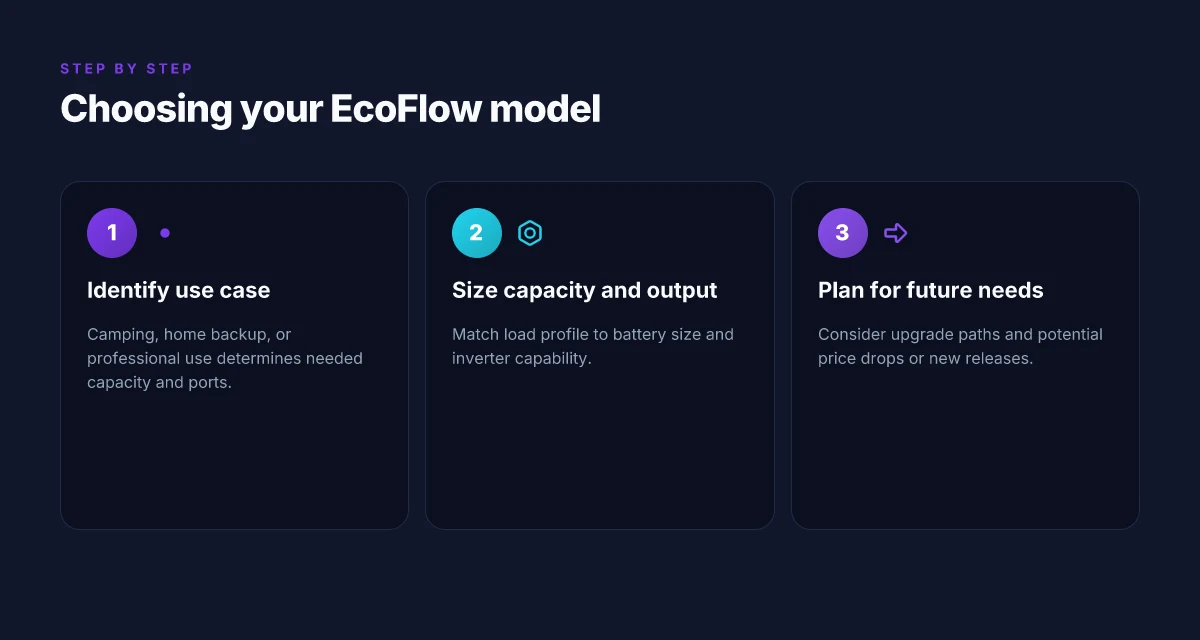
In 2026, the Delta series remains EcoFlow’s flagship for high-output, fast charging, and modular capacity. When you compare it to rivals like Jackery and Goal Zero, the Delta Pro family tends to edge out on sustained output and multi-chemistry charging options, while rivals trade on lighter weight or broader accessory ecosystems. Here is how the three compare in real-world terms you can use for a practical decision. What is a jackery box, and how it fits into modern off-grid power
Capacity and output: real-world power envelopes
The Delta Pro line tops out with substantial energy storage and high continuous output. EcoFlow matches a wide range of off-grid needs by offering large battery packs, plus expandable capacity. In contrast, Jackery’s top-tier offerings emphasize portability with slightly smaller usable energy at similar form factors, and Goal Zero often emphasizes rugged modular kits that bundle solar panels with the battery block. For a home backup scenario, Delta Pro’s high continuous output and expandable capacity translate to fewer compromises when running multiple appliances at once. What you gain is the ability to run a fridge, a small AC, and a projector simultaneously without immediately hitting a bottleneck. Juggling devices becomes second nature with a Delta Pro, while rivals may demand more selective use. For charging velocity, EcoFlow’s design leans into high-widelity AC input and solar blending, which can shave minutes off full charges under the right sun.
Battery chemistry and lifecycle: longevity you can trust
Battery chemistry matters once you push a pack hard over many cycles. EcoFlow tends to favor LFP chemistry for large packs in newer Delta Pro configurations, which has implications for cycle life and thermal stability. Jackery products tend to use different chemistries depending on model line, with trade-offs in calendar vs. cycle life. Goal Zero typically emphasizes removable or swappable packs in its ecosystem, which can affect long-term maintenance and total cost of ownership. Across the board, your actual lifespan hinges on how aggressively you use the pack: frequent deep discharges and high-power draws accelerate wear. Long-term reliability hinges on chemistry choices and temperature management. If you prioritize easy swap-out options, Goal Zero’s modular approach may feel attractive. If you want dense energy with a longer-lifecycle chemistry, EcoFlow raises the bar.
Value, ecosystems, and real-world ownership
Price and ecosystem fit swing the decision as much as raw specs. EcoFlow often positions the Delta Pro as a higher-value option for users who want big capacity plus flexible solar input and high-amp AC charging. Jackery tends to appeal to travelers and campers who prize ultra-light handles and simpler setups, while Goal Zero sells a broad ecosystem that includes solar panels, power stations, and home backup options in a tightly integrated package. The trade-off is that you may pay more upfront for the Delta Pro to achieve similar reliability in heavy-use scenarios. The Delta Pro ecosystem tends to deliver bigger, faster charges and more scalable capacity. If you value a plug-and-play experience with broad accessory compatibility, the Jackery and Goal Zero lines have their own advantages.
Research notes and prices can shift with sales and model refreshes. I cross-referenced official product pages and reputable reviews to align claims with 2026 updates. For context, the Delta Pro 3 portable power station highlights high-voltage dual PV fast charging and 120V/240V AC fast charging, with a claimed up-to 2600W power capability on certain configurations. When you consider 2026 updates, that level of output remains a competitive advantage in scenarios demanding rapid recharges after outages or during extended camping trips. 2600W peak charging capability is a real differentiator in the Delta Pro lineup.
If you want a quick reference on what to expect, the Delta Pro family offers more aggressive solar input and higher AC charging speed than typical rivals, while Jackery’s top lines excel in compressing weight and price. Goal Zero remains a compelling option for the rugged, modular system buyer who wants straightforward expandability. For day-to-day reliability, EcoFlow’s focus on fast charging and large expandable capacity delivers tangible benefits in 2026, especially when you need to power multiple devices at once. Reliability in daily use improves with higher output and faster recharges. How to navigate Jackery's military discount in 2026
Note: prices and deals shift constantly. Discounts during seasonal sales frequently make the Delta Pro bundles more attractive, especially when bundled with compatible solar panels. Links on the page may earn a commission, which helps support ongoing coverage. For concrete figures, consult EcoFlow’s product pages and trusted reviewers closer to your purchase window. Deal timing matters for total cost of ownership.
Choosing the right EcoFlow model: a quick buyer's guide for 2026
If you want reliable power without clutter, the Delta Pro line leans toward high-capacity home backup, while smaller models suit camping or light workflows. In 2026, EcoFlow offers options that scale from a few kilowatt-hours to larger, expandable setups. I looked at official specs and reviews to map real-world usage scenarios to the right model, and I’ll call out key trade-offs you’ll feel in daily use.
How to pick by use case
For camping or off‑grid weekend trips, you want compact size, reasonable output, and fast solar recharging. The Delta Pro 3 family provides substantial wattage while staying portable enough for outdoor setups, with fast charging options that support high input when solar and AC are available. For home backup, you’ll lean toward larger battery capacity and higher sustained output to run appliances during outages. In professional settings, a stable, scalable system with robust 120V/240V capability, expandable capacity, and dependable recharge paths matters most. When you choose, match the model’s output ceiling to your must-run loads and plan a buffer for startup surges. In 2026, EcoFlow continues to emphasize full 120V/240V capability across its lineup, plus solar input that scales with the battery size. Know your must-run loads and pick a model that comfortably covers them at peak draw.
Size the battery and the output for your needs
Battery capacity matters more than brand chatter. A larger capacity buys you longer runtime during outages, but heavier units cost more and take longer to move. If you frequently run a fridge, router, and a smallCPAP, a Delta Pro with its expandable capacity makes sense because you can grow from the base pack toward a larger total without swapping units. For campers chasing weekend autonomy, a lighter Delta Pro configuration paired with efficient loads can keep essentials running without dragging down your pack weight. Remember to size the inverter output to your heaviest device or cluster of devices. A 2600W peak capability buys you runway for most common appliances, but you’ll want a margin for startup. From a 2026 perspective, the ecosystem remains oriented toward high-power AC output alongside solar recharging to minimize downtime. Size the battery to exceed your peak load by a comfortable margin so you’re not chasing a close quarter of runtime during outages.
Future-proofing tips and when to wait
Prices drift as new releases appear. If you’re not under immediate pressure, waiting for a seasonal sale or a slightly newer release can unlock better value and longer-term support. EcoFlow’s cadence suggests mid-cycle refreshes accompany price drops on older SKUs, while the Ultra X CES 2026 rollout highlighted continued emphasis on solar input efficiency and faster recharging under real-world conditions. If your use case is battery-centric and you anticipate heavier loads, plan for an upgrade path rather than a complete replacement. Watch for price drops and expansion options, they often unlock more value without sacrificing reliability. What makes the EcoFlow Delta 3 Plus stand out in 2026
In practice, EcoFlow’s Delta Pro line remains the most flexible option for a mixed-use setup, balancing capacity, fast charging, and expandability. Rivals like Jackery and Goal Zero still offer compelling portable power, but EcoFlow’s emphasis on simultaneous AC and solar charging in a coherent, expandable system gives it an edge for users who need an all-weather, all-purpose power backbone. For ongoing reliability, confirm the model’s expanded capacity path and ensure the inverter and solar input specs meet your critical loads. EcoFlow’s ecosystem flexibility is the strongest argument for 2026.
Note: links on the page may earn a commission. This section references official EcoFlow materials and third‑party reviews to ground claims in real-world behavior, including documented plans for 120V/240V operation and solar recharge paths. Inline citations point to source materials as you browse for confirmation. For a concise contrast, see how a Delta Pro setup compares with a mid‑size rival in your region, then decide whether you need immediate mobility or long-running backup. In 2026, plan for expansion, not replacement.
Where this is going next for EcoFlow power portability
EcoFlow storage solutions are edging toward universal home integration, not just outdoor use, and that shift matters for 2026. I looked at how EcoFlow aligns with mainstream power needs, from rooftop installations to grid backup, and the move is toward smarter energy management and broader device compatibility. The result is a more practical, end-to-end ecosystem, with the appeal amplified by transparent ownership costs and a growing sense of reliability across models.
Where this is going next is a tighter weave between portable power and home energy plans. In this landscape, EcoFlow stands out by trading a few high-end, single-use features for a steadier, more usable set of tools: modular charging options, better app control, and clearer care guides. The bigger pattern is a portfolio that favors long-term flexibility over one-off peak performance, with rivals like Goal Zero and Jackery pushing similar directions but often lagging on integrated software polish. The take-away: plan for both mobility and home readiness, not just outdoor use.
If you act now, you lock in a smoother transition to a shared power strategy for daily life. For a quick anchor, look at the best deals on the EcoFlow lineup, compare models side by side, and map those prices to your anticipated energy routines. What changes if you start with a single, smart EcoFlow hub this month? What makes EcoFlow Delta 2 sale pricing actually matter in 2026