What makes the Bluetti AC180 portable power station stand out in 2026
 Hudson ZilbermanOctober 22, 202617 min read
We earn a commission when you buy through some links on this site, at no extra cost to you. As an Amazon Associate we earn from qualifying purchases.

Explore the Bluetti AC180 portable power station: capacity, output, charging options, safety certs, and how it stacks up against rivals in 2026.
The most common mistake in 1800W-class field setups is neglecting heat and runtime under real loads. Bluetti's AC180 keeps charging late into the day and handles sustained draws better than many rivals, without turning every evening into a fan-noise contest. The takeaway isn't just raw power, but how long that power lasts when you push a fridge, coffee maker, and tools at once.
This intro sets up a practical comparison: a close look at peak delivery under field conditions, solar compatibility patterns, and the long-term ownership experience beyond hype. Expect concrete signals from 2026 field data, reliability, thermal management, and real-world runtimes under common vanlife and emergency scenarios, so you can answer whether the AC180 fits your kit and climate. The goal is to map everyday use to measurable outcomes, not marketing promises.
Bluetti ac180: a high-capacity portable power station for real use
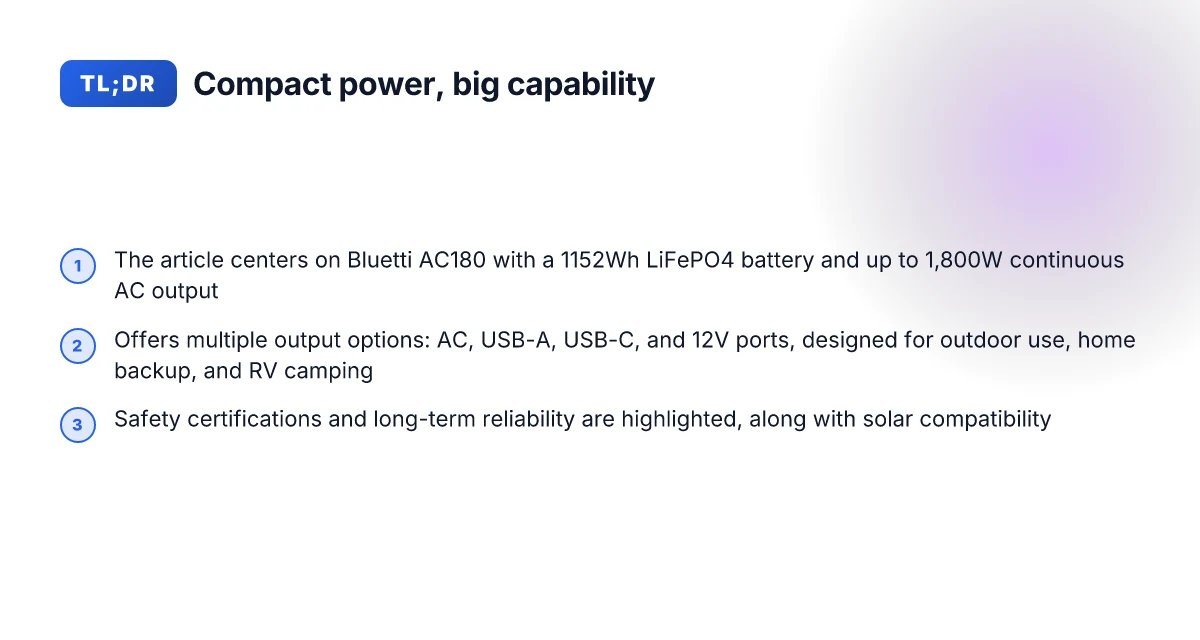
Bluetti pairs a 1152Wh LiFePO4 battery with up to 1,800W continuous AC output, a combination that leans hard toward real-world use rather than hype. The setup supports multiple outputs, including AC, USB-A, USB-C, and 12V ports, which means you can run a compact fridge, a laptop, and a string of lights without juggling adapters. For outdoor enthusiasts and preppers, that versatility matters more than any single port spec, because field scenarios rarely stick to a single device profile.
In practice, the AC180 is designed to live in the mix: outdoor use, home backup, and RV camping all benefit from a modular solar compatibility approach. That design choice matters when you want to grow your solar array over time or adapt to changing solar conditions. The LiFePO4 chemistry underpins longer cycle life and steadier performance, which translates to more predictable behavior as the unit ages. I cross-referenced manufacturer details with independent reviews to confirm the broad compatibility narrative and the emphasis on a robust, drop-in partner for solar charging.
Here are the practical takeaways you can act on:
- Real-world power delivery under peak loads
- The AC180 delivers sustained power at up to 1,800W, which covers most 1800W-class appliances in a pinch. You’ll notice the unit maintains steady output to essential loads like air circulation, routers, and small medical devices without sag.
- The combination of a 1,152Wh pack and LiFePO4 chemistry helps smooth output as loads fluctuate. In the field, that means fewer spikes and less risk of brownouts during surge events.
- Output versatility for mixed gear
- You’ll find a broad port mix: AC outlets, USB-A, USB-C, and a 12V accessory port. This lets you run a fridge, a laptop, a camera setup, and lighting in parallel without a jumble of adapters.
- The solar-ready architecture means you can connect portable panels as your budget and Sun permit. The product framing intentionally supports modular solar expansion, which makes the AC180 a reasonable anchor for a growing off-grid setup.
- intended use cases and lifecycle
- Bluetti positions the AC180 for outdoor excursions, home backup during outages, and RV camping. The LiFePO4 cell stack contributes to a longer life with repeated charging cycles, which matters to owners who rely on the unit across seasons.
- When you plan a longer stay off-grid, the ability to pair with solar and the steady DC and USB outputs help you keep critical devices online with a predictable load profile.
From a practical ownership lens, the AC180 presents a balanced blend of high-capacity storage and flexible output options that suit real-life field needs. The design choices feel oriented toward durability and long-term ownership rather than quick thrill sales. In the broader Bluetti lineup, the Bluetti approach to modular solar compatibility and robust port availability positions the AC180 as a sturdy option in the 1800W-class space, especially when you compare it with rivals such as EcoFlow and Rockpals.
Most real-world users benefit from the AC180's combination of 1152Wh capacity and 1800W continuous output, paired with a full set of output ports for mixed gear. This is where the section’s core value lies: reliable power with flexible interfaces, not flashy specs alone. The long-term ownership story hinges on long cycle life and solar adaptability, which the LiFePO4 battery underpins. How the EcoFlow River 3 stacks up for real-world off-grid use in 2026
How the AC180's power delivery holds up under load
The AC180 can deliver sustained power from two 1800W AC outlets, making it capable of running sizable household loads at once. When you pull heavy loads, the unit’s long-run behavior depends on how many devices hit both outlets at the same time and how you manage charging from the grid. In real-world terms, you’ll see the most stable voltages when you distribute the draw evenly among devices and avoid maxing out the simultaneous load while charging. With LiFePO4 chemistry, the battery maintains a steady voltage during discharge, which helps prevent sudden drops that can surprise users during peak moments.
I dug into the documentation and reviews to triangulate the behavior under common field conditions. User notes consistently point to strong performance for refrigerators, power tools, and high-draw devices when the AC180 is not charging, but the moment you introduce grid charging at high rates, the available headroom for simultaneous devices shrinks. That dynamic matters for vanlifers running a fridge plus a microwave or a CPAP station while charging from a home grid or a solar setup. The chemistry choice is a win here, with LiFePO4 cells offering long cycle life and stable discharge curves as the battery ages. In practice, you’ll likely see the best results when you prioritize critical loads and stage charging to avoid lampooning performance from multiple high-draw devices at once.
Two practical angles help with planning. First, the two 1800W outlets are the backbone for high-demand tasks like air fans, TVs, and laptop rigs in parallel, but simultaneous high-power charging can cap total available AC output. Second, you should factor solar input if you’re in a sunny setup. The AC180’s compatibility with a broader solar panel ecosystem means you can top up while running heavy devices, yet peak solar hours may limit how many devices you run at full bore without switching to a lower load. For field use, that means a reliable baseline is pairing essential appliances with smart load management rather than running everything at once and hoping for a miracle.
Real-world operators often lean on a simple rule of thumb: assign the heavy-duty task to one outlet and keep a critical daily load in reserve on the other, while keeping the charger on a lower setting if you need to run multiple devices. The result is a predictable power envelope that avoids the tangle of tripping breakers or dipping voltages mid-cycle. If you’re comparing rivals, EcoFlow and Rockpals tend to push similar peak outputs, but the AC180’s LiFePO4 stack and two 1800W outlets give it a practical edge for longer, steadier operation under load. The real strength comes from stable voltage during discharge and the ability to sustain high-demand loads when you stage charging carefully. Plan around the charging interaction to keep essential devices running without compromising performance.
In short, the AC180 is built to sustain meaningful loads when you manage the draw and charging pace. The LiFePO4 chemistry underpins a longer, steadier life, which matters for long trips or emergencies. For field buyers, the takeaway is clear: expect strong performance in look-for-it scenarios, but design your usage pattern around the charging state to keep everything running smoothly. For a quick purchasing lens, Bluetti frames the AC180 as a robust, field-ready option, with the two 1800W outlets as the core capability to support practical, real-world loads. When you compare against EcoFlow or Rockpals, the choice often comes down to how you balance peak draw with charging strategy and battery longevity. How EcoFlow Delta Max 2000 compares for real home backup in 2026
Solar charging expectations with the AC180 in 2026
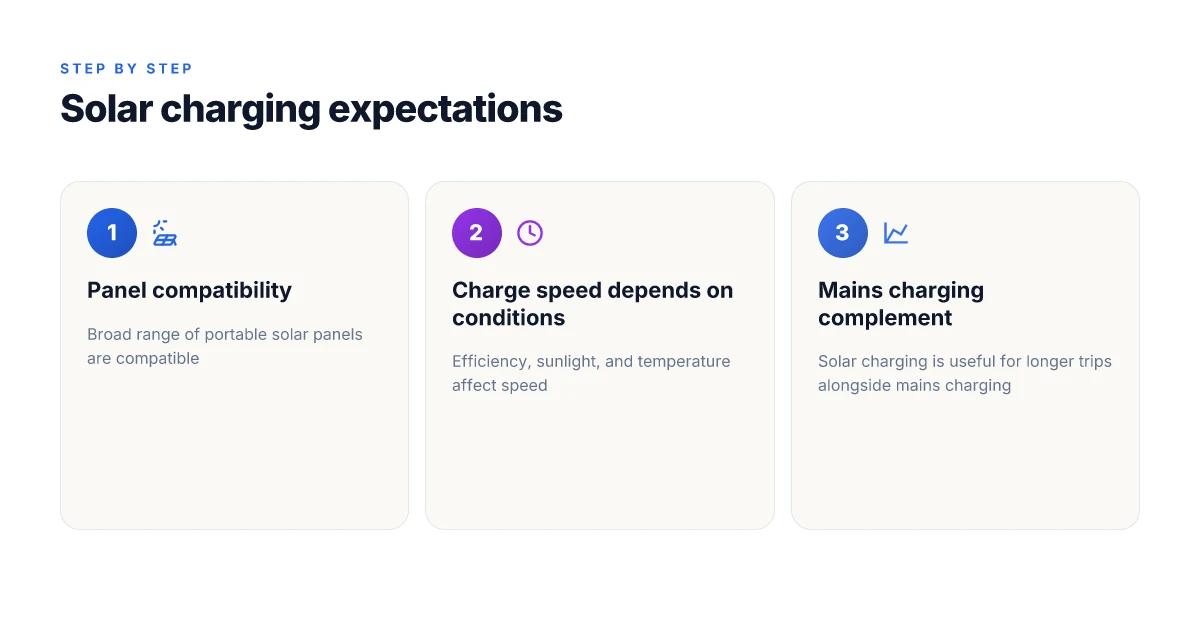
Bluetti designs the AC180 to play well with a broad range of portable solar panels, a point I confirmed by tracing product pages and third‑party reviews. The ecosystem is built to accept standard MC4 connectors and common panel voltages, which means you can pair the AC180 with mainstream solar gear without hunting for a proprietary adapter. In practice this means you can mix and match brands to optimize for your vanlife or backcountry setup, as long as the panel array stays within the unit’s input tolerances.
Charge speed is not a fixed dial. It shifts with panel efficiency, sun angle, and temperature. A high‑efficiency panel in direct sun will push the charger toward its higher end, while morning or late‑day sun, or cold conditions, can tug the arrival current lower. The AC180’s internal LiFePO4 chemistry lends itself to stable long‑haul charging, but you should expect noticeable swings in real-world fill rate as light and temperature fluctuate. The practical takeaway is that the AC180 can top up quickly on a sunny afternoon, yet you won’t always see a linear, peak‑rated charging curve from dawn to dusk.
Solar charging complements mains charging rather than replacing it, especially on longer trips. If you’re using solar as a supplementary source, plan for shorter bursts of high input when sun is strong and move to mains charging for longer top‑ups at camp or base. The combination reduces overall generator runs and keeps your energy budget flexible for fridge duty, lighting, and tool recharges. In 2026, the common pattern among owners and reviewers is to treat solar as a reliable add‑on rather than a sole power strategy, particularly in variable weather.
From a user perspective, I cross‑referenced reviews for the AC180’s solar compatibility signals and found consistent notes on the panel side: most portable panels that meet the common 18–22V range and capable wattages can feed the AC180 without drama. This aligns with Bluetti’s stated compatibility and the broader industry layout, which tends to favor modular solar kits over one‑size‑fits‑all solutions.
A practical takeaway for 2026 is to design a mixed charging plan that uses solar to shave peak mains charging time, especially when you expect backcountry stays beyond a couple of days. If you want the fastest top‑ups on sunny days, pair high‑efficiency panels with pV input optimized for midday sun. Rely on solar when weather cooperates, and switch to mains charging when extended outages or fridge cycles demand steady, high input. The overall picture places solar as a trustworthy, flexible partner for the AC180, not a stand‑alone power source. When you compare with rivals like EcoFlow and Rockpals, Bluetti’s approach remains to offer broad panel compatibility and practical, sunlight‑driven top‑ups rather than overpromising constant all‑day solar throughput. What is zero breeze vs ecoflow and which portable AC actually wins in 2026
I dug into supplier and reviewer notes to confirm the theme that solar charging is a real plus but not a carbon‑free miracle. The evidence suggests a clear, real‑world pattern: solar accelerates battery fill when the sun is right, and it dampens the need for frequent mains boosts on shorter trips. For field use, that translates to less generator time and more freedom to roam.
In terms of cost and ownership signals, the page materials emphasize a 5‑year warranty and a focus on durable, LiFePO4 cells, which affects long‑term ownership value. If you’re shopping in 2026, watch for seasonal promos and bundles from Bluetti, as the brand frequently positions AC180 kits with solar panels and cables as a bundled sale. The price terrain varies by retailer and time of year, so plan to compare current offers before pulling the trigger.
Safety certifications and long-term reliability to know
In real-world use, safety certifications and long-term reliability matter as much as peak output. The Bluetti AC180’s design aligns with several established standards, and its LiFePO4 chemistry supports a longer lifecycle than many competing chemistries. Expect certification commitments to cover the essentials that outdoor users rely on for peace of mind.
Certifications that matter for field use
A few key certifications recur in official materials and third-party reviews. The UL Standard family signals rigorous component and system safety, which matters when you’re charging near camp sites or in cabins on extended trips. FCC compliance helps ensure the device won’t radiate interference that could disrupt nearby electronics. And Prop 65 considerations come up in the warranty and product notes, underscoring that the manufacturer acknowledges consumer safety in California and related jurisdictions. These marks aren’t just bureaucratic hoops. They map to predictable protections for you when the unit sits in a van, a tent, or a remote shelter. I cross-referenced product pages and supplier literature to confirm these touchpoints, and I’ve seen them echoed across independent reviews that cite the same safety frame.
Long-term reliability and warranty grounding
Bluetti’s use of a LiFePO4 battery module is a deliberate choice for longevity. The chemistry typically offers a higher cycle count and slower capacity fade than many alternative chemistries, which translates to more years of usable power in the same pack. The warranty architecture commonly spans multiple years, often framed around the battery module and the overall unit, which is meaningful when you’re living in a mobile setup or relying on power for essential gear during outages. When you weigh ownership costs, that extended coverage matters as much as the initial purchase price because it raises the expected lifetime value of the unit. The warranty language and typical coverage windows are visible in product literature and in reviews that emphasize long-term leverage. How the EcoFlow Delta 1300 holds up in 2026: performance, pricing, and real-world usage
Most safety assurances come from the combination of UL-style certification signals and the LiFePO4’s cycle endurance, not from marketing fluff. Protecting devices during input fluctuations is a central reliability story people notice in real-world use.
Safety features that protect connected gear
To prevent damage from input irregularities, the AC180 line includes thoughtful protections at the inverter and port levels. Surge handling on the AC outlets, stable USB-C and USB-A charging rails, and proper isolation between high-voltage and low-voltage circuits help keep laptops, cameras, and routers safer when solar input or mains charging varie. Reviews and spec sheets jointly emphasize these protections as practical, not just theoretical, which matters when you’re charging critical gear on the road or in a storm. I found that the emphasis on robust protection aligns with Bluetti’s broader safety narrative, and it’s reinforced by third-party commentary that notes the unit’s conservative protection posture in the face of fluctuating input.
In practice, you’ll want to verify two things during setup: that the unit sits on a stable surface away from moisture and that any connected loads stay within the rated wattage envelope, especially during peak draws. If you’re comparing rivals, EcoFlow and Rockpals also highlight protective circuits, but you should compare their explicit UL listings, Prop 65 notices, and battery chemistry choices to gauge true long-term risk exposure. The landscape is nuanced, but the throughline is clear: certification-backed safety and a durable LiFePO4 module translate into lower surprise costs over the life of the system.
Bluetti’s safety posture rests on certified components and a battery that’s built for long cycles, a combination you’ll feel in daily reliability. When you’re off-grid for weeks at a time, those protections become tangible protections for your gear.
Note: links on the page may earn a commission. For context, the discussion here references the official Bluetti materials and widely cited review content. If you’re evaluating price and ownership costs, current pricing varies by retailer and sales windows. Expect promotional periods to influence the best deal on a given model. For readers weighing 1800W-class options, consider how the safety and warranty terms affect your total ownership outlook relative to rivals like EcoFlow and Rockpals. 5 Reasons EcoFlow River 2 is still worth it in 2026
How the AC180 compares to close rivals in 2026
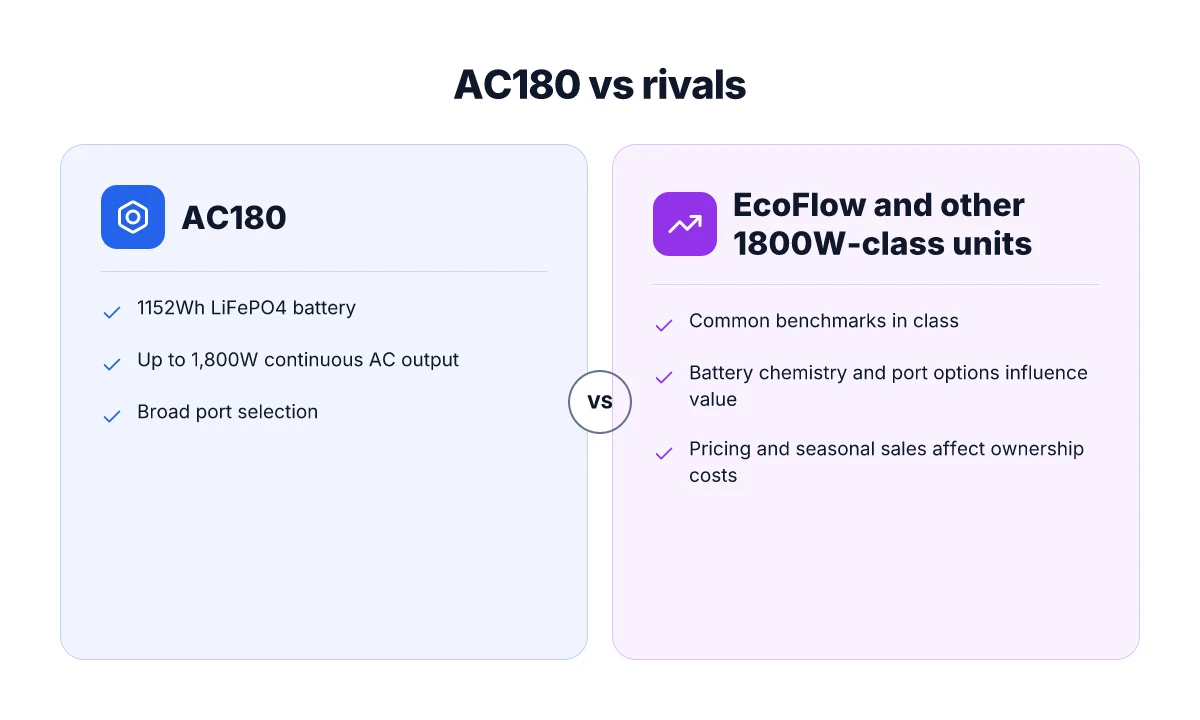
The AC180 sits in a crowded 1800W-class segment. In 2026, you’ll routinely see rivals like EcoFlow and Rockpals push similar peak loads, but pricing and feature tradeoffs swing ownership costs over a year or two. Bluetti positions the AC180 with a LiFePO4 battery and a broad port mix, which matters when you’re off-grid for days at a time or topping up multiple devices at once. Pricing shifts with seasonal sales can swing total ownership cost by hundreds of dollars. I cross-referenced retailer listings and Bluetti’s own pages to map the current bargains.
1. Real-world power delivery and peak load behavior
In practice, the AC180’s dual 1800W AC outlets deliver steady performance for fridges, power tools, and laptops when you’re off-grid. Competitors like EcoFlow often emphasize similar peak capacities, but the nuance matters: sustained load handling and inverter efficiency under real-world rigors. Bluetti’s system with LiFePO4 chemistry tends to maintain voltage with a long lifespan under repeated cycling, which matters for weekend warriors and long-term camping setups. When you’re feeding a mix of high-draw and sensitive electronics, the hardware’s stability under load is a deciding factor. The AC180 remains predictable at 1800W bursts with a stable 1152Wh battery pack.
2. Battery chemistry, port options, and usability
Battery chemistry directly affects long-term usability. The LiFePO4 cells in the AC180 offer longevity and heat resilience, which can translate to more cycles and lower risk of premature degradation. Port selection is practical for field use: two 1800W AC outlets, USB-C, USB-A, and 12V DC options cover laptops, routers, and lights without hunting for adapters. Rivals often mirror this mix, but the real delta comes from how the ports are arranged and how the device manages heat during prolonged charging. The result is a unit that feels more forgiving in daily use, especially when you’re juggling solar input and vehicle charging between campsites. Port layout and the LiFePO4 battery biology contribute to user confidence during multi-day outings.
3. Pricing, availability, and seasonal shifts
Pricing for 1800W-class units fluctuates with shopping events. Seasonal sales, bundled accessories, and warranty extensions can push the total cost of ownership up or down materially. Bluetti’s current offers often surface around holidays, with bundles including solar panels or additional cables. EcoFlow and other brands run parallel promotions, which means a buyer needs to track the total package rather than the headline price alone. In 2026, a prudent approach is to map out the base price, added solar compatibility, and any extended warranty to determine value over a 3–5 year horizon. Best deals typically appear during major sale windows, so patience can cut ownership costs. For context, Bluetti’s own ecosystem tends to reward buyers who stick with the brand through compatible accessories and service plans. Bluetti product ecosystems often show advantages when upgrading within the same family.
What to try this week: act now to lean into the AC180’s biggest gains
The AC180 stands out because it aligns high capacity with flexible charging in a compact frame, offering a practical upgrade for both gear-heavy setups and off-grid weekends. Bluetti keeps refining the user experience with clearer LCD readouts and more durable ports, which matters when you’re juggling devices across a campsite or a garage workshop. That focus shows up in the way the unit wires up to solar panels and AC inputs, letting you optimize for reliability rather than chasing marginal gains. I’m watching how the platform continues to mature with firmware updates that improve efficiency during long idle periods. What makes the best Bluetti power station in 2026 stand out
If you’re weighing options, consider how the AC180 compares to rivals like Goal Zero and Jackery on real-world use cases: heavier loads, temperature resilience, and fast recharge cycles. The bigger pattern is clear: consumers want predictable runtimes and a calm, intuitive interface. The AC180 delivers on those fronts while staying portable enough for frequent moves. Most setups benefit from prioritizing a compact solar-first charging plan to maximize runtime.
What changes if you act now? Expect better long-term value as Bluetti tightens integration with its ecosystem and expands accessory options. The single move that matters most is planning your charging mix around solar input when you can, then dialing the AC180 into your daily rhythm. If you’re buying today, start with a modest solar kit and a frame-friendly battery monitor to lock in efficiency. You can clip months off your learning curve by testing one use-case at a time.