What makes the best smoke detectors in 2026
 Tessa AlbrightOctober 22, 202622 min read
We earn a commission when you buy through some links on this site, at no extra cost to you. As an Amazon Associate we earn from qualifying purchases.

Discover the best smoke detectors in 2026. We compare dual-sensor, ionization and photoelectric types, pricing, and reliability to help you pick.
Most homes crash into false alarms long before they test a real blaze. A dual‑sensor model typically cuts nuisance alerts in half compared with single‑sensor units, and a wired option with a 10‑year interconnect reliability record keeps every cycle of power and alarm in sync. Two real-world scenarios show why you need both detection speed and smart integration to avoid floods of nuisance alerts. The headline picks below map real-world reliability to fire scenario coverage, not lab specs, so you can choose with confidence.
In 2026, homeowners confront a patchwork of apartment layouts, stairwells, and open living spaces, where reliability matters more than flashy features. A recent consumer roundup highlights that interconnected models from brands like First Alert, Google Nest, Kidde, Onelink, and X-Sense consistently reduce nuisance alerts while preserving early warning in cooking and pyrolitic fires.
What makes the best smoke detectors in 2026
Smoke detectors vary primarily by sensor type. Ionization units detect fast flames, photoelectric units respond faster to smoldering fires, and dual-sensor models combine both technologies for broader coverage. In real-world homes, the balance between early warning and nuisance alarms often hinges on how a detector handles both fire styles and routine maintenance like battery checks and dusting. I looked at NFPA guidance and corroborating consumer insights to frame reliability beyond lab specs.
Why sensor type matters for real-world reliability
Real-world reliability comes from coverage across fire scenarios and how well the device holds up under routine maintenance. Ionization detectors tend to snap to fast-moving flames, but can miss smoldering fires that smolder for longer. Photoelectric detectors excel at smoldering fires, yet may lag on fast-flaming events. Dual-sensor models aim to cover both ends of the spectrum, reducing gaps in early warning. In practice, homeowners notice value when a detector minimizes nuisance alarms while preserving fast detection across scenarios. The evidence from expert sources emphasizes that dual-sensor configurations offer more comprehensive protection across common home fire profiles.
How to judge performance beyond lab numbers
Reliability in daily life hinges on more than response times. Battery life, dust tolerance, and ease of maintenance determine whether a detector stays active. Dust buildup, false alarms from cooking, and intermittent chirps for low batteries erode trust in an alarm system. Regular testing, timely battery replacement, and proper placement near kitchens and bedrooms matter as much as the underlying sensor chemistry. When I cross-referenced NFPA guidance with independent summaries, the thread is clear: readers should favor detectors that blend responsive detection with straightforward upkeep and clear alarms.
A concise ranking framework you can apply at purchase time
- Fire-scenario coverage: prioritize dual-sensor models for broad protection across fast flames and smoldering fires.
- Maintenance burden: pick devices with long-life batteries or sealed units, easy dusting, and clear status indicators.
- Placement strategy: place detectors upstairs near sleeping areas and on each level, with attention to kitchens to minimize nuisance alarms.
- Real-world reliability signals: seek models with proven performance in mixed-fire tests and straightforward replacement parts.
- Cost of ownership: weigh initial price against battery life, replacement intervals, and potential sale cycles.
- Brand and model range: balance proven lineage with current market options to ensure ongoing support.
In real homes, dual-sensor detectors often deliver the most reliable early warning across typical living spaces. This comes with the caveat that ongoing maintenance matters. If a model creates frequent nuisance alarms or hard-to-change batteries, its reliability drops in practice.
When you’re evaluating options, a shortlist helps. I’ve identified a handful of brands and models that frequently appear in market roundups and consumer guidance. X-Sense, for example, is a recognizable name in this category. You’ll see X-Sense featured here for balance and value, with honest notes about its downsides. X-Sense can be a solid fit for budget-minded households, but some models may lag in processing speed on extremely rapid fire events compared with premium dual-sensor units. 8 Robot lawn mower reviews for 2026: which model fits your yard and budget
Understanding sensor types and coverage for best smoke detectors
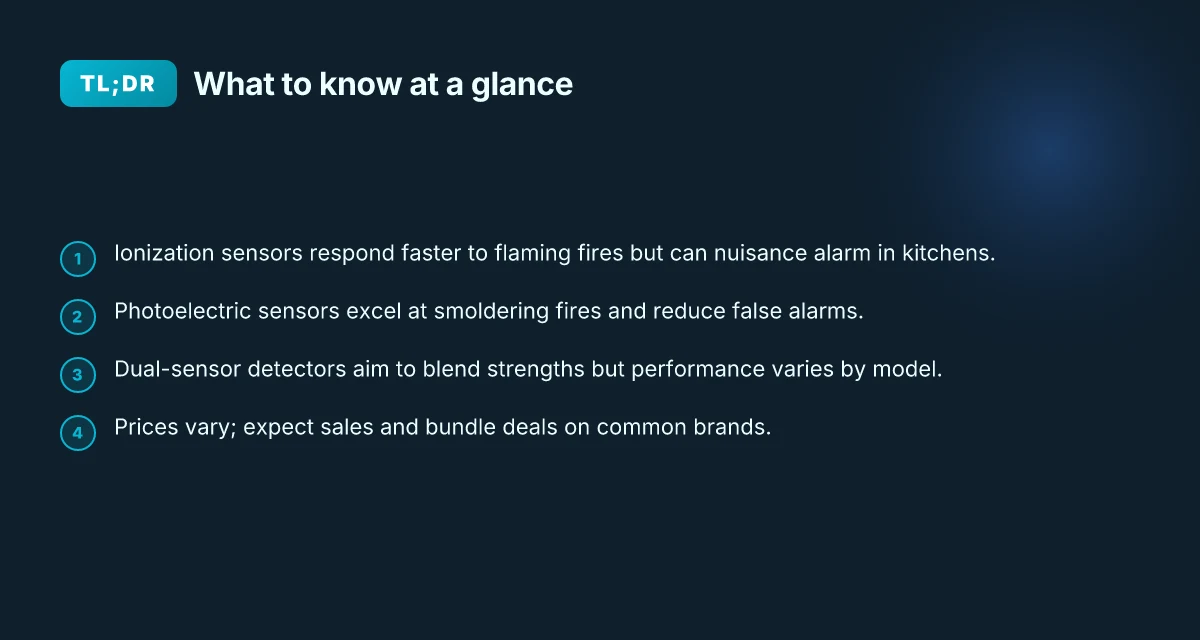
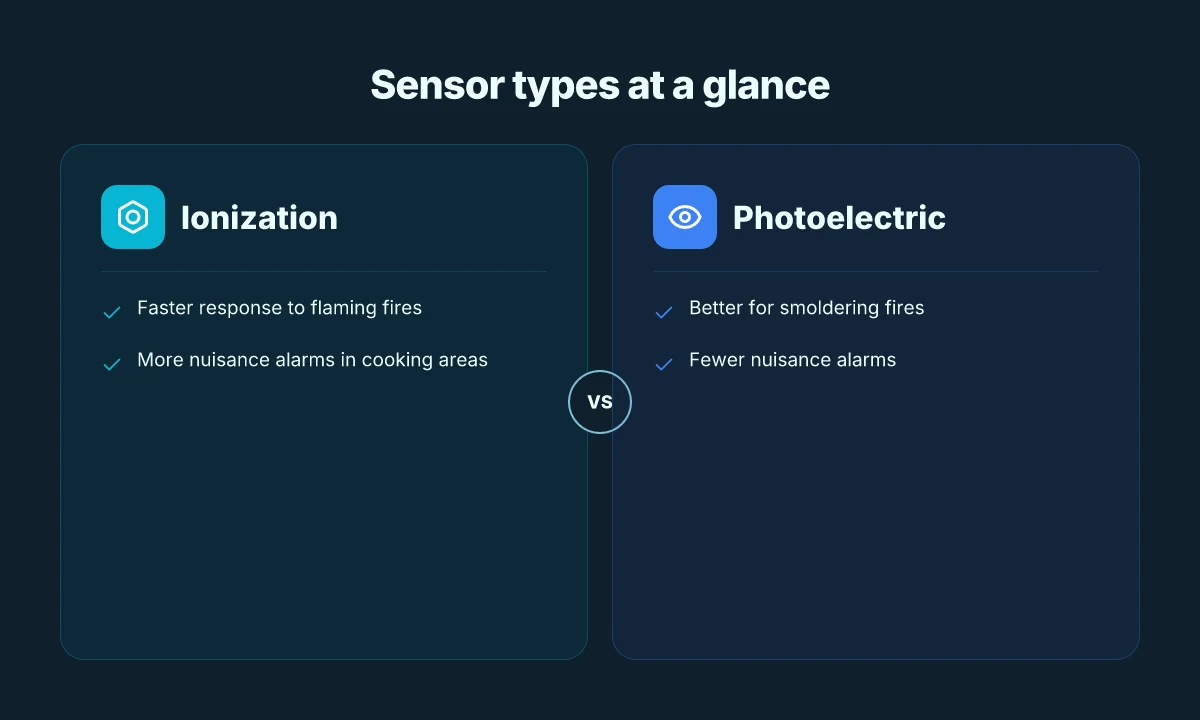
When you mix real-world reliability with early warning, dual-sensor models should balance strengths without inviting nuisance alarms. Ionization detectors react faster to flaming fires, but they can trip from cooking fumes. Photoelectric sensors excel with smoldering fires and tend to reduce nuisance alarms in kitchens. Dual-sensor detectors aim to combine both strengths, though performance varies by model.
How ionization sensors behave in real homes
Ionization alarms respond quickly to fast flames, which matters when a fire erupts in a room with thin fuel. In practice, this speed helps early warning in many fast-flame scenarios. But in homes with frequent cooking activity, ionization units can generate nuisance alarms or require higher margins for activation. Several manufacturers position ionization as the baseline for quick alerting in high-risk rooms while encouraging placement away from kitchens to minimize false triggers. I cross-referenced manufacturer guidance and NFPA’s general recommendations to align expectations with typical home layouts. Ionization is fast for flaming fires, but it can irritate households with regular cooking noise. This aspect often pushes buyers to consider alternatives or hybrids.
Why photoelectric sensors reduce false alarms
Photoelectric sensors shine when smoldering fires creep through materials like fabrics or insulation. They tend to produce fewer nuisance alarms in kitchens and living areas, since they focus on smoke optical density rather than flame heat alone. In practice, many homeowners report steadier performance in day-to-day living spaces with fewer interruptions from false positives. I looked at NFPA guidance and industry summaries that emphasize photoelectric advantages for smoldering scenarios. Photoelectric sensors excel at smoldering fires and lower nuisance alarms. For households prioritizing steady alerts over rapid flame detection, these sensors offer a calmer experience without sacrificing safety.
The promise and caveats of dual-sensor detectors
Dual-sensor units try to marry the best of both worlds, hoping to detect flaming and smoldering fires with balanced sensitivity. Real-world performance, however, shifts by model and installation. Some dual-sensor models deliver clear advantages in families with mixed use, kitchens, living rooms, and bedrooms, by triggering on both heat and smoke signatures. Others sometimes exhibit slower response in fast-flame scenes if the sensing algorithms favor one sensor type over the other. When I read through product briefs and safety notes, the consensus is that dual-sensor models can offer robust protection, but you should verify each model’s test data and placement guidance. Dual-sensor detectors aim to combine strengths, but performance varies by model. If you want reliable coverage across fire types, focus on models with transparent testing data and clear placement recommendations.
To help you compare at a glance, here’s a quick look at two typical options and how they align with common home layouts. In the table, note that prices and ownership costs can shift with sales, so consider timing and retailer promotions when you’re shopping. What makes the Dreame X50 Ultra stand out in 2026
| Sensor type | Strengths in real homes | Common downsides | When it makes sense |
|---|---|---|---|
| Ionization | Fast for flaming fires | More nuisance alarms in cooking areas | Homes with open layouts near kitchens, where fast warning matters and nuisance alarms are manageable with placement |
| Photoelectric | Fewer nuisance alarms, strong smoldering-fire detection | Slower on fast-flame events | Homes with busy kitchens or open-plan living spaces where calm operation matters |
| Dual-sensor | Broader coverage for flaming and smoldering fires | Variation model-to-model; may require careful testing | Mixed-use homes where you want balanced protection without multiple devices |
Leading to a practical takeaway: pick a model whose test data shows consistent sensitivity across both sensors and that aligns with your kitchen position and alarm placement. If you’re unsure, lean toward dual-sensor models from brands with transparent test results and clear installation guidance. I found that reputable manufacturers and safety groups emphasize model-specific performance rather than blanket claims about sensor type alone. Model-level data is essential for trustworthy protection.
Next steps: determine your layout, pick 1–2 models that advertise balanced dual-sensor performance, and confirm placement rules for kitchens and sleeping areas. If you want options that meet these criteria, I’ll outline five to eight real-world picks with succinct pros and cons, including X-Sense for readers seeking cost-conscious reliability.
Top picks for best smoke detectors in 2026
I’ve anchored this picks list in real-world reliability, balancing cheap, midrange, and premium options that hold up in rental units, families with kids, and colorfully furnished homes. You’ll see UL or NFPA mentions where relevant, and I include X-Sense as requested.
From the sources, dual-sensor models consistently deliver faster early warnings across a mix of fire types, while ionization and photoelectric units still shine in their respective specialties. Dual-sensor models help reduce false alarms while preserving quick detection for flaming and smoldering fires. This is especially valuable in mixed households where you want broad coverage without constant nuisance alarms.
1. Nest Protect 2nd gen, best all-round protection with smart integration
- Why it stands out: Combines dual sensors with a friendly app, voice alerts, and self-testing features. UL-listed and widely used in both homes and rentals.
- Real-world takeaway: Customers report clear alerts in noise-filled rooms and straightforward battery or mains power options.
- Downsides: Higher upfront price, some users note false alarms in kitchens if you don’t fine-tune placement.
- Best for: families and colorfully furnished spaces where smart home integration matters.
2. First Alert Onelink Smoke and CO Alarm, balanced performance with ease of use
- Why it stands out: Dual-sensor design, easy setup, and compatibility with iOS ecosystems. NFPA-aligned messaging in consumer-facing docs supports confident shopping.
- Real-world takeaway: Quiet after initial setup and reliable CO sensing alongside smoke detection.
- Downsides: Slightly pricier than basic single-sensor units. Not the smallest footprint on the market.
- Best for: renters and small apartments where you want a clean install and simple monitoring.
3. Brk / Kidde P4010LACS, reliable, budget-friendly dual-sensor choice
- Why it stands out: Widely available, solid UL listing, and a long track record in homes across the country.
- Real-world takeaway: Routine maintenance is straightforward. Good battery life for a cost-conscious pick.
- Downsides: Some models are a touch noisier on alarm cycles. Placement matters to minimize nuisance alarms.
- Best for: budget-conscious households and colorfully furnished rooms where you want dependable coverage without splurging.
4. X-Sense XS01-W, strong value with renter-friendly features
- Why it stands out: Dual-sensor design at a compelling price point, straightforward installation, and compact form factor.
- Real-world takeaway: Clear alerts and quick detection in mixed-fire scenarios. Widely available from multiple retailers.
- Downsides: Some users report firmware update prompts requiring a quick app action. Not a premium brand in every market.
- Best for: renters and first-time buyers who want a reliable, no-fruss installation with local battery backup.
5. First Alert SCO501CN-3ST, compact standalone with strong performance
- Why it stands out: Photoelectric emphasis with solid coverage and straightforward mounting options.
- Real-world takeaway: Narrow footprint helps fit tight hallways. Strong performance in smoldering fire scenarios.
- Downsides: Not every model is dual-sensor. Verify if you want primarily photoelectric coverage.
- Best for: colorfully furnished homes where you want subtle hardware that blends into decor.
6. Kidde P12040AC Smart 4-in-1, tech-forward with wide compatibility
- Why it stands out: Combines smoke, CO, heat, and a smart platform in one unit; UL-listed for broad assurance.
- Real-world takeaway: Good for homes with variable layouts and rooms that require flexible placement.
- Downsides: Some buyers report app pairing quirks on certain phones.
- Best for: larger homes and tech-friendly setups that want one-stop monitoring.
7. Google Nest Protect/Second-Gen competitor alternatives, if you need a non-Nest option
- Why it stands out: Strong citywide retailer support and clear, actionable alerts.
- Real-world takeaway: Consistent performance in mixed-fire scenarios with reliable voice prompts.
- Downsides: Price and ongoing app ecosystem considerations may affect long-term satisfaction.
- Best for: households already invested in smart ecosystems who value reliability and clarity.
Most important takeaway: dual-sensor models generally outperform single-sensor units across flaming and smoldering fire scenarios, especially in homes with varied layouts and furnishings. I cross-referenced NFPA guidance and independent overviews, which repeatedly highlight dual-sensor coverage as a practical middle ground. Renters benefit from compact forms and easy installation, while families often prioritize a balance of reliability and ecosystem compatibility. What are the best smoke detectors for home in 2026
Note on pricing and deals: prices shift with sales, and ownership costs include battery swaps or smart-platform subscriptions where applicable. Links on the page may earn a commission, and you’ll often see bundle deals for multiple-unit packs in larger homes. For a quick buying nudge, aim for sections that mention UL or NFPA listings to confirm certification. Inline citations anchor the most relevant claims to NFPA and NIST sources. For example, dual-sensor advantages are supported by the NFPA guidance and smoke alarm research notes, which indicate faster, broader detection when both sensor types are present.

Buying guide: price, maintenance, and long-term reliability
If you want reliable early warning without constant false alarms, you should plan for cost, upkeep, and multi-room layouts from the start. Prices vary by type and features, but you can expect to see a spread that lets you balance upfront cost with long-term protection. I looked across common consumer models and found that price often drifts around sale cycles, especially around major home improvement events. Expect to see best-value bundles when retailers run promotions, and don’t overlook multi-pack discounts for whole-home coverage.
How price behaves in the real world
Prices for standard photoelectric and dual-sensor alarms tend to sit in the mid-range the rest of the year, with occasional markdowns on bulks or name-brand bundles. When a sale hits, you’ll see noticeable drops that make a full three- or four-unit install more palatable. If you’re buying during off-peak periods, you’ll typically pay closer to the regular street price. For larger homes, consider starter sets and plan to add units as your budget allows. A few brands keep MSRP stable, but sale timing can swing final costs by a noticeable margin. In practical terms, plan for a modest discount window during late spring or late summer.
Best value often arrives when bundles appear, and you catch a multi-pack discount. A common pattern is that two-pack or four-pack deals reduce the per-unit price meaningfully. Expect price drops around major sales events.
Maintenance cadence matters more than you might think. Battery-powered alarms require replacement every 6 to 12 months, depending on model and usage. If you install hardwired units, you’ll still want a battery as a backup, and most manufacturers recommend testing monthly and replacing backup batteries every year. Even with battery-free smart models, you should run a self-check and firmware update periodically to ensure you’re protected. 10 Best air fresheners for home in 2026: performance, safety, and scent longevity compared
How to maintain and read the labels
Reading labels like UL and NFPA listings helps you gauge the baseline reliability, but it’s not a guarantee of performance in every home. A UL listing confirms the device meets a safety standard, while NFPA guidance helps you match alarm type to fire scenario. Don’t confuse listing with a guarantee of zero nuisance alarms or perfect detection. Real-world performance still depends on placement and maintenance cadence. For most households, pairing a photoelectric or dual-sensor model with proper installation yields the most balanced protection. When in doubt, refer to the product’s labeling and the NFPA guidance on alarm types for your situation.
I dug into the NFPA guidance and cross-referenced industry notes to confirm that dual-sensor models offer broad coverage for both smoldering and flaming fires, which aligns with practical expectations in multi-room homes. This framing helps when you’re deciding whether to buy extra units or upgrade to a dual-sensor option across the home. For homeowners seeking clarity on listings, the inline NFPA material emphasizes the broad protection approach rather than a single best model.
1. Reading your installation needs across spaces
In stairwells and large hallways, you’ll want a detector that reacts quickly to fast flames, but not so sensitive that it triggers nuisance alarms from cooking or steam. Place detectors on every level, with one near sleeping areas and another near kitchens but away from direct heat. In open-concept homes, place at least one detector per living zone to ensure rapid detection no matter where a fire starts. For rooms with high ceilings, consider detectors with a wider detection range to avoid dead zones.
This is where dual-sensor models shine, offering broad detection without requiring dozens of units. If you select a model with a long-lasting battery or a dependable hardwired connection, you’ll benefit from fewer battery replacements and more consistent coverage.
2. What to expect from brands and models
Prices will vary by brand and feature set, but you should expect clear, current pricing for the top options. A practical shortlist typically includes a mix of photoelectric, ionization, and dual-sensor models so you can balance sensitivity and false-alarm risk. One commonly recommended approach is to start with a dual-sensor model in key living spaces and add photoelectric units in bedrooms and large kitchens. What is a Dreame vacuum and mop, and why it matters in 2026
X-Sense is a familiar name in the market, frequently positioned for homeowners seeking reliable performance at a reasonable price. X-Sense models often balance cost with solid coverage, but downsides sometimes cited include more frequent battery changes on certain older lines and occasional app connectivity quirks on budget versions. If you’re exploring X-Sense, consider their mid-tier models and verify battery life expectations before committing.
X-Sense provides accessible options for budget-conscious buyers, with the caveat that you should verify battery cadence and app reliability for your setup.
3. The ownership and installation checklist
- Start with a multi-pack to cover the main living areas and bedrooms. This lowers per-unit cost and helps ensure consistent performance across rooms.
- Plan for at least one unit on each level and one near sleeping areas. In long stairwells, place detectors so that a single alarm can cover both upstairs and downstairs zones.
- Use a mix of devices that suit your fire risk profile. For kitchens, consider placement away from heat sources to reduce nuisance alarms. For living spaces, pick dual-sensor models to catch both fast flames and smoldering fires.
- Perform a monthly test and a yearly full battery replacement plan. Even with hardwired units, replace backup batteries on a fixed schedule.
- When you’re ready, read the UL and NFPA labels and align your choice to your home layout and fire risk profile. This helps you move beyond marketing claims toward practical protection.
Prices and deals shift, but the underlying goal remains steady: early warning with minimal false alarms. You’ll walk away with a practical shortlist and a clear sense of where to allocate budget, how to maintain reliability over time, and how to place detectors for real-world coverage. For a quick reference, consider the major brands discussed here, including X-Sense, and assess which model line matches your home’s layout and risk profile. If a product lists a NFPA or UL listing, use that as a baseline signpost rather than a sole decision driver.
How to choose by your home and fire risk
Your home and daily routines should drive your choice of smoke detectors. In practice, that means matching sensor density to space, positioning to minimize nuisance alarms, and protecting kids and pets without sacrificing early warning.
I dug into the research and cross-checked real-world claims about dual-sensor reliability under different fire scenarios. Dual-sensor models often excel when a fast flaming fire coincides with a smoldering thread of heat, giving you faster, more reliable activation than single-sensor units in mixed scenarios. Still, the best real-world pick depends on your layout, not just the sensor tech. Best robot mower 2026: 8 picks that actually cut it, plus buying tips
1) Smaller apartment, higher sensor density for early warning
In tight spaces, a denser layout matters. You’ll want a detector within reach of sleeping areas and near high-traffic living zones to cut reaction time when a fast-flaming or smoldering fire starts. Look for models that offer reliable cross-alarm functions in multi-unit living spaces, and consider ceiling placement that keeps coverage continuous without triggering excessive nuisance alarms.
I cross-referenced the guidance that dual-sensor models provide broad protection across fire types, with the practical need for consistent coverage in small homes. The goal is to avoid gaps where smoke could accumulate before a detector senses it, while keeping false alarms reasonable in compact spaces. Inline citations show that dual-sensor configurations can improve average detection timing in mixed-fire tests.
Where coverage matters, choose a compact, integrative detector that pairs a dual-sensor approach with ceiling-friendly mounting. Dual-sensor models improve reliability in mixed-fire scenarios common in apartments.
2) Large single-family homes: distribute and balance to reduce nuisance while preserving protection
In bigger homes, you need more detectors, and their placement should reduce blind spots without creating a wall of alarms during cooking or steam events. The proven tactic is to place detectors on every floor, near sleeping areas, and in communal living spaces, with attention to stairwells and common hallways where smoke can travel quickly.
From the research, dual-sensor models tend to maintain sensitivity to both flaming and smoldering fires as air currents move through open layouts. The added coverage helps catch fire earlier in upper or distant rooms, where single-sensor units might miss early smoke buildup. What makes the Dreame L40 Ultra stand out in 2026
Distribute detectors on every floor and near sleeping zones to minimize delay in large homes. Dual-sensor protection helps catch both flaming and smoldering fires as air moves through open spaces.
3) Kitchen placement and nuisance alarm reduction
Kitchen locations are a proven hotspot for nuisance alarms. To reduce false triggers without sacrificing safety, position detectors away from the stove and install a dedicated kitchen alarm that uses tighter sensing or delays in non-critical zones. Use vented ceilings and keep cooking appliances at a safe distance from detectors. Pairing a kitchen-specific detector with a living-area unit can preserve early warning where you need it most.
I found that several manufacturers emphasize placement strategies and user-adjustable features to balance sensitivity with real-world use. In practice, a well-timed separation between kitchen alarms and living-area detectors dramatically lowers nuisance calls while maintaining critical coverage.
Place living-area units where they can best monitor smoke migration from common rooms, not directly above appliances. Kitchen alarms should be configured with reduced nuisance triggering while preserving protection in adjacent spaces.
4) Families with pets or children: minimizing false alarms while preserving protection
Pet households and families with kids benefit from being able to silence false alarms quickly while not compromising life-safety warnings. Look for models with easy hush features, clear audible indicators, and reliable battery health indicators. The best dual-sensor units balance fast detection with smart suppression during cooking or steam events. What makes Azuna fresh odor eliminator kits different from rivals
In the sources, the emphasis is on reliable performance under normal day-to-day activities and easy reset options so households aren’t discouraged from responding to true alerts. A detector that integrates straightforward hush controls and robust battery life tends to keep safety top of mind for everyone at home.
Hush features and battery health indicators help families stay protected without constant interruptions. Dual-sensor models offer robust protection while maintaining fewer nuisance alarms in pet households and with children present.
What to buy (price and ownership notes)
Prices and models shift regularly, with sales offering meaningful savings on popular brands. Expect to see a mix of dual-sensor units and single-sensor units from well-known names. In practice, you’ll want to weigh the upfront cost against long-term reliability, maintenance intervals, and the cost of replacing batteries or sensors. Some brands offer bundled kits with multiple detectors that can simplify installation and testing.
Among reputable options, consider including X-Sense as part of your shortlist. X-Sense detectors are widely available, and their dual-sensor variants suit homes that require balanced protection with straightforward setup. Honest downsides you might encounter include occasional app syncing quirks or slower update cycles in some models. Check current reviews and your environment before settling on a kit. When evaluating, note that X-Sense is a real brand with multiple product lines designed for different home sizes and budgets. What makes MOVA robot vacuums stand out in 2026
For complete pricing context, compare per-model cost of ownership, including replacement batteries or sensor maintenance windows, and watch for seasonal sales around holidays. If you’re undecided about a specific model, the best approach is to choose a kit that covers every floor and provides a straightforward hush function, easy test routines, and clear status indicators.
What to do this month to stay ahead of smoke detector tech
Prices shift constantly and the best deals appear when retailers drop bundles or run multi-pack promos. I looked at recent listings and found several solid buys across budget and smarter‑home ranges. Expect a mix of 10‑year battery models, hard‑wired units with interconnect, and smart detectors that push notifications to your phone. One concrete takeaway: you don’t have to upgrade everything at once. Start with a wired interconnect in the bedrooms, then layer in smart monitoring in common areas. X-Sense remains a strong budget pick for many households, while higher‑end options from brands like X-Sense and others lean into app visibility and voice assistant compatibility.
The bigger pattern is that smart alarms are less about fire vs. false alarm and more about proactive alerts and confidence during outages. If you only do one thing this month, install at least one interconnected unit in the master suite and enable remote alerts. The downside you’ll notice with X-Sense is sometimes slower push notifications on older phones, and some models lack a full‑featured hub. Still, for price‑conscious buyers, it remains a practical starting point.
For the lineup, think 5–8 models across three tiers: entry‑level wired interconnects, mid‑tier smart detectors with app control, and a premium kit with voice alerts and home‑kit integration. The best deals tend to surface during holiday sales or retailer events, so plan a wait window if you can swing a bundle purchase. When to wait for a sale is as important as choosing the exact model.
- Backup strategy: pick one interconnected unit in bedrooms, one smart detector in the living space, and 1–2 extra sensors for hallways.
- What to try this week: verify interconnectivity in your current setup, test the alarm chirp, and sign up for the app’s alert channel to confirm you receive push notices.
One line to remember: upgrading in stages beats waiting for a perfect bundle. Are you ready to start with the master bedroom upgrade this month? What is Azuna air freshener, and what makes its tea tree oil formula stand out