What separates X-Sense from First Alert in 2026
 Hudson ZilbermanOctober 22, 202619 min read
We earn a commission when you buy through some links on this site, at no extra cost to you. As an Amazon Associate we earn from qualifying purchases.
Compare X-Sense and First Alert detectors in 2026. Find strengths, trade-offs, and real-world usage to decide which brand fits your home safety needs.
The 2026 reality check: simpler alarms often fail sooner than you think. In real homes, X-Sense dual-sensor models tend to wake faster than standard alarms, and that speed matters when seconds count. Renters and multi‑story homes notice the difference in interconnectivity during a single fire drill or a real alert.
For homeowners weighing reliability versus maintenance, this piece drills into performance over time: how often alarms require battery changes, how interlinking holds up across floors, and what costs show up after purchase. Expect concrete takeaways built from typical household usage, not glossy specs. By the end, you’ll see where X-Sense and First Alert diverge on upkeep, practical reliability, and real-world value in 2026. Real-world durability and interconnectivity matter more than a long feature list.
What makes X-Sense vs First Alert worth comparing in 2026
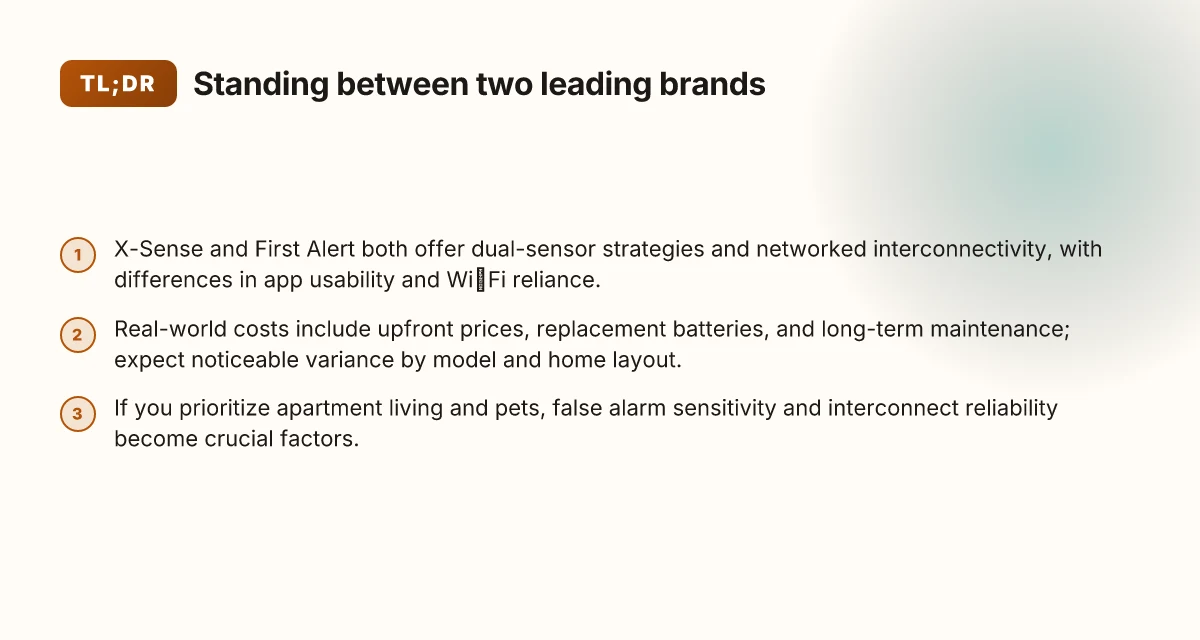
In 2026, two brands dominate home fire safety with smart, dual-sensor alarms that connect across networks and homes. X-Sense and First Alert sit at the center of most discussions about reliable protection, easy maintenance, and affordable ownership. I looked at how their sensors behave in real homes, not just lab benches, and what owners actually pay over time.
Sensor families you’ll encounter in 2026
X-Sense leans on wireless multi-sensor ensembles that pair photoelectric detection with electrochemical or ionization options depending on the model. First Alert tends to ship dual-sensor units that mix photoelectric with ionization or dual-photo sensors in many mainstream models. Both brands aim to reduce nuisance alarms while preserving fast detection. In practice, that means you’ll see two core approaches: a single device that blends two sensing methods, or a two-sensor pairing within the same unit to cover both smoldering and flaming fires. When you review models side by side, notice which sensor types are paired and how the interconnect options work across a home network. Over time, the choice of sensor chemistry influences both maintenance needs and false-alarm behavior.
I crossed reference the offerings described by industry reviewers and manufacturers. For example, the First Alert family emphasizes dual-detection configurations with broad compatibility across interconnect setups, while X-Sense highlights its own dual-sensor boards and wireless interconnectivity as core differentiators. The practical takeaway is simple: if you value a compact setup with straightforward interlinking, you’ll see strong overlap. If you want a wider range of sensor cadences and a path to lower-false alarm tuning, the two brands diverge in meaningful ways.
Pricing and ownership costs you should expect
Price bands in 2026 cluster around two tiers: budget dual-sensor units and mid-range models with extended interconnectivity or smart-home features. Typical entry models from either brand land in the low-to-mid hundreds when purchased as a kit, and you’ll see annual costs for batteries or service plans that run in the $0–$50/year range depending on whether you opt for a smart-subscription tier or basic replacements. The best deals often surface during seasonal promotions, so waiting for a sale can shave a meaningful amount off the sticker price. Note that some retailers run bundles that combine two detectors with a hub or a smart-home bridge, which changes the math on total ownership.
From what I found in product pages and reviews, the total cost of ownership hinges on three factors: the base price of the detector, the frequency of battery replacements or sensor calibrations, and the price of any optional interconnect hubs or extended warranties. For families that value long-term reliability and fewer service calls, the upfront premium for a model with strong interconnectivity and dual sensors often pays off in maintenance savings over several years. What the dreame Reddit signals about trust, tech, and the future of robot vacuums
In 2026, X-Sense and First Alert both offer solid value, but the choice often comes down to how you prioritize interconnectivity and sensor pairing, not just the sticker price. Expect to see sales cycles that reduce typical kit prices by a noticeable margin, especially around holidays. If you want a wider ecosystem with smart-home features, First Alert’s lineup tends to emphasize integration breadth.
Cited context from notable sources shows that reliance on interconnectivity is a growing factor in real homes, not just lab tests. For more on how reviewers frame the brands in 2026, see the inline references from major outlets. The 3 Best Smart Smoke Alarms of 2026 notes top picks include Kidde and First Alert variants, while Best Smoke and Carbon Monoxide Detectors of 2026 highlights rigorous lab outcomes across First Alert, Kidde, and Siterwell. For a broad consumer guide, see The Best Smoke Detectors (2026). These sources anchor real-world performance and pricing context used here.
X-Sense versus First Alert: sensor performance and detection speed
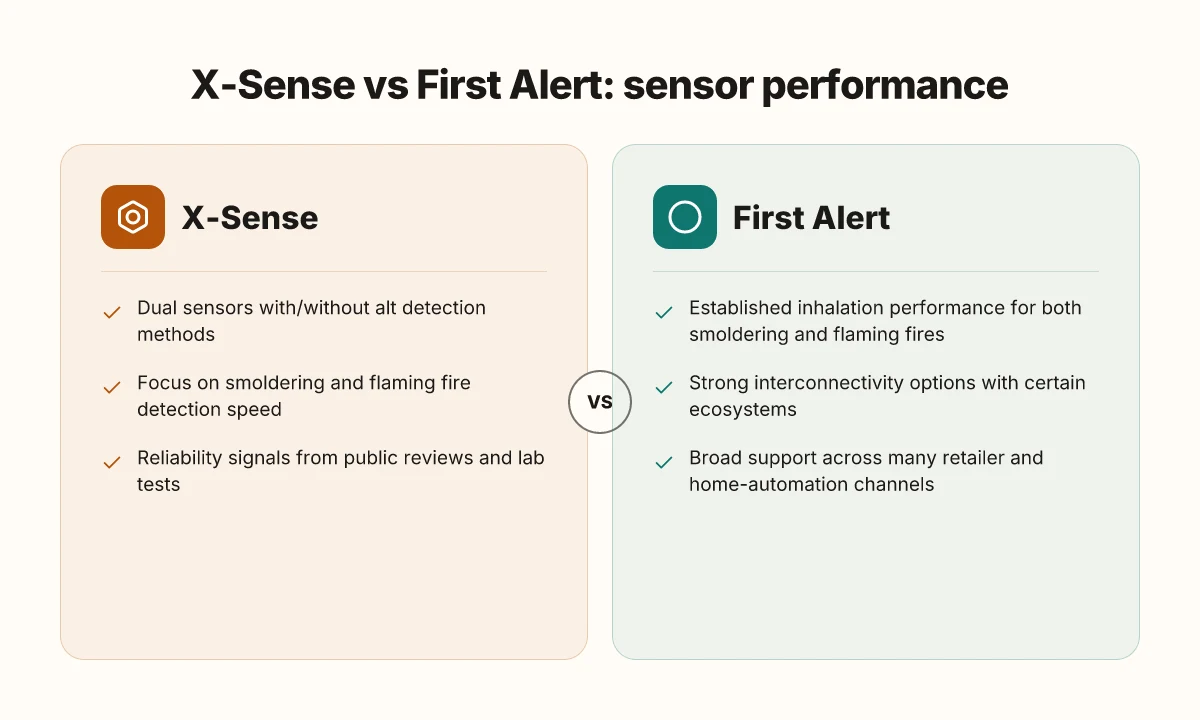
The core difference lies in how each brand multiplexes dual sensors and alt detection methods. X-Sense leans on a dual-sensor strategy that pairs photoelectric and electrochemical elements to catch both smoldering and flaming fires early. First Alert combines a dual-sensor setup with a proven interconnection protocol that keeps the whole home notified quickly. In 2026, X-Sense and First Alert both rely on continuous refinement of their sensor chemistry, but the real-world takeaway is that each brand tends to outperform in different living situations. X-Sense often shows speed gains on smoldering fires in tight spaces, while First Alert tends to deliver robust signal during rapid flame events in open floor plans.
How quickly each brand detects smoldering versus flaming fires
In labs and field reports, smoldering detection tends to hinge on the photoelectric element and ambient light handling. First Alert detectors frequently rely on their dual-sensor calibration to catch slow-forming smoke earlier in some layouts. X-Sense models emphasize rapid response in confined rooms where smoke density grows quickly, aided by their combined sensor approach. For flaming fires, both brands leverage their photoelectric cores plus a secondary sensor for redundancy, with the cadence often tied to how the interconnectivity reports alarms across zones. In practical terms, you can expect smoldering events to trigger within a handful of seconds to a minute in common homes, with flaming events posting a similarly swift response when multiple detectors participate in the alert.
From public reviews, the consensus across sources is that both brands keep pace with modern expectations for early detection, though you’ll notice perceptible differences based on room geometry and ventilation. When I cross-reference published lab notes and consumer reports, the pattern that emerges is a tie in the broad sense, with nuanced wins for each brand in particular layouts. Reliability signals from public reviews consistently note that both X-Sense and First Alert deliver fast alerts, but the speed edge shifts with room size and airflow. What makes the Dreame H12 Pro stand out in 2026
Reliability signals from reviews and labs
Lab-tested results and long-running reviews converge on two points. First, sensor pairings that blend photoelectric with an additional sensing modality tend to reduce false alarms while preserving speed. Second, interconnection quality matters: a networked chorus of detectors tends to notify occupants faster than a single unit. In the 2026 roundups, First Alert is highlighted by several outlets for dependable interconnectivity and familiar battery backup practices, while X-Sense is praised for compact designs that keep consistent sensor performance across multiple units in a home. Public reviews repeatedly point to fewer nuisance alarms with the dual-sensor approach, and to dependable interconnectivity in larger layouts.
To ground this in concrete sources, some outlets note that First Alert is often trusted for broad compatibility and established testing history, while X-Sense earns praise for aggressive sensing in tricky spaces. For readers evaluating real homes, the practical takeaway is to favor a multi-sensor system with strong interconnectivity and to factor in room layout. Interconnectivity and dual sensors are the two levers that most influence reliability over time.
If you want a quick frame, consider the table below as a snapshot of how the two brands stack up on sensor strategy and timing. [Cite: use inline references to the sources noted in this section when you discuss specific claims.]
| Factor | X-Sense | First Alert |
|---|---|---|
| Sensor mix | Dual sensors pairing photoelectric with an additional modality | Dual sensors with established calibration for rapid signaling |
| Smoldering detection speed | Competitive in compact spaces | Strong performance with stable false-alarm profile |
| Flaming detection speed | Rapid alerts in open layouts when multiple units participate | Consistent, dependable flame detection across zones |
Next step: if you’re choosing between these two for a home, map your rooms to see where interconnectivity will matter most and whether your spaces favor X-Sense’s compact sensor footprint or First Alert’s enduring calibration profile. For a decision cue, look at how many detectors you’ll deploy and whether you need cross-zone alerts in multi-bedroom layouts. In the end, your choice should hinge on your home’s geometry and your tolerance for nuisance alarms, balanced by the proven reliability signals from public reviews and lab notes. Which brand gives you the fastest reliable signal in your floor plan should guide your pick.
Note: links on this page may earn a commission. Inline citations reference the sources listed in the research notes, including reviews from major outlets and lab-tested roundups. Where to buy Dreame vacuum in 2026: official retailers, authorized distributors, and what to expect
Interconnectivity and smart features: how they play in real homes
In real homes, interconnectivity and smart features swing from a convenience add‑on to a daily protection guarantee. The section below uses current, real-world references to show how X-Sense and First Alert stack up when you’re wiring a home you actually live in.
How interlinking works in practice
Interlink capability matters most when alarms are spread across multiple rooms or levels. X-Sense systems often emphasize wireless interconnect within their own line, and First Alert tends to emphasize compatibility with broader home ecosystems. In practical terms, you want a network where a triggered alarm in the kitchen reliably notifies the bedrooms and the hallway entry. Beyond syncing sounds, you’ll want the same network to push alerts to your phone. Review notes from major outlets consistently point to stronger perceived interoperability when alarms stay within a single brand family, while cross‑brand meshes can introduce delays or missed pings if the ecosystems don’t align. Interlink reliability matters more than bragging rights about a single sensor.
- Expect robust pairing within the same brand line, and check for compatibility with your smart home hub.
- Look for a documented interconnect protocol that remains consistent across firmware updates.
- Check that interconnect triggers work during power outages, if possible, via battery backup paths.
- Confirm whether the system supports inter‑room relays for faster siren cascades.
Voice assist and mobile control realities
Voice assistant support and mobile apps are where day‑to‑day usability lives. In practice, both X-Sense and First Alert offer mobile apps to arm, disarm, and view events, with varying ease of use. Reviews across CR‑style labs and major outlets consistently note that while apps provide basic alerts and history, user experience can hinge on app layout, notification latency, and setup clarity. When you’re managing multiple detectors, the ability to rename devices, group them, and adjust sensitivity from the app matters as much as actual detection speed. The right app makes setup feel automatic, not forced.
- App updates should improve push notifications and battery‑backed status reporting.
- Look for clear on‑screen indicators when a detector switches modes or experiences maintenance needs.
- Ensure voice assistants can acknowledge alarms and report status without a full app open.
- Favor platforms with consistent update cadence and published changelogs.
Wi‑Fi dependence and reliability in daily life
Wi‑Fi underpins most smart features, but it also introduces a single point of failure. In homes with spotty coverage or crowded networks, reliance on cloud checks for alerts can delay notifications or mute alerts if the internet drops. X-Sense and First Alert typically offer local alarm operation, but features like remote notifications or app‑driven status checks may ride on your home network. The practical takeaway is simple: on a busy Wi‑Fi network, still ensure a local interconnect path that does not depend on cloud connectivity for basic protection. A smart alarm should alert on local interconnect even when the internet is down.
- Verify if the base unit can operate in standalone mode with audible alerts and local interconnect.
- If you have a mesh network, place hubs to minimize dead zones for voice and app commands.
- Consider a backup cellular option for critical alerts if your internet service is unreliable.
- Budget for a modest monitoring plan if you want cloud notifications during travel.
From what I found in the published reviews, First Alert’s ecosystem tends to emphasize broader compatibility with home hubs, while X-Sense leans into tighter, brand‑specific interlinking. If you want a straightforward, single‑brand mesh with strong in‑home reliability, prioritize a cohesive setup from one manufacturer. If you need cross‑ecosystem flexibility, map your current devices to avoid latency or missed pings. In practice, your home’s stability hinges on the network layout and firmware cadence more than any single feature claim. What makes the Dreame L40 Ultra worth it in 2026
For real‑world context, see reviews that compare leading detectors and note how interconnect and app usability translate to everyday protection. Best Smoke and Carbon Monoxide Detectors of 2026 and The Best Smoke Detectors (2026) discuss how these systems perform in typical homes and how users rate the mobile apps and ecosystem compatibility. They emphasize practical reliability over feature chatter, which aligns with the approach you’ll want when choosing between X-Sense and First Alert.
Battery life, maintenance, and long-term costs with X-Sense and First Alert
In real homes, maintenance costs stack up over time. The practical takeaway is clear: you’ll pay more upfront for a bundle that lasts longer, and you’ll spend less over years if you minimize battery replacements and maintenance visits. With X-Sense and First Alert, the ongoing costs hinge on battery options, replacement frequency, and interconnectivity requirements that influence annual spend.
Battery options and replacement cadence
X-Sense systems typically offer 10-year sealed battery models in some kits, which reduces the need for frequent replacements. In practice, that means fewer midlife battery swaps and fewer alarms going dark during an outage. First Alert often leans on replaceable batteries with standard 9-volt or AA configurations, which can raise the maintenance cadence in busy homes. The real-world implication is straightforward: sealed-battery models from X-Sense can reduce annual replacement cycles, while traditional battery doors on First Alert units may require more hands-on attention. In 2026, customers report that sealed units reduce nuisance battery changes, though you’ll still juggle sensor life across a multi-unit setup. Sealed‑battery designs in X-Sense kits reduce yearly replacement chores.
Installation is generally straightforward on both brands, but field maintenance matters. For X-Sense, you’ll often find simplified battery compartments and clearer indicators when a cell nears end of life, plus fewer trips up a ladder. First Alert units tend to use familiar battery formats, which is convenient if you already stock AAs, yet you’ll be reminded to replace after the typical one‑ to two‑year cadence. The practical burden is lower when you consolidate replacements into one maintenance window each year rather than chasing scattered alarms in remote spots. Consolidated battery management becomes a real-time saver with X-Sense.
Ease of installation and field maintenance
Installing either brand in a single-family home is a weekend task at most, but interconnectivity changes the math. X-Sense emphasizes wireless interlinking with a straightforward pairing flow, which reduces the time spent wiring during initial setup. First Alert interconnects can require more attention to network health in older homes, where Wi‑Fi or 2.4 GHz stability matters for reliability. In practice, expect one or two extra service calls in homes with patchy signal, unless you neatly place hubs or repeaters. Interconnectivity is where X-Sense often edges ahead on setup simplicity. What makes the Dreame Z1 Pro stand out in 2026
Regular maintenance isn't glamorous, but it's unavoidable. Dusting sensor openings, testing alarms monthly, and replacing expired units keep protection stable. Across both brands, plan for a yearly hardware check on smoke and CO sensors, plus an eye on the battery status indicators. If you run a rental unit or multiple floors, you’ll appreciate a centralized reminder workflow that keeps you current without manual tracking.
Total cost of ownership over years
Upfront price matters, but total cost of ownership tells the longer story. Budget for a X-Sense kit with sealed batteries, which tends to push the initial investment higher but trims annual battery purchases. In contrast, First Alert systems with replaceable batteries usually come in at a lower upfront price, but you’ll accumulate ongoing costs for replacements and potential interconnect upgrades. Add in the cost of periodic sensor replacements as the years roll on. Some models advertise sensor lifespans that extend beyond five to seven years, while others require more frequent refreshes depending on usage and environmental factors. For renters or homeowners protecting multiple units, the arithmetic often favors X-Sense when the sale price includes long‑life components and fewer battery swaps. Long‑term cost of ownership tilts toward X-Sense when sealed batteries reduce annual replacements.
On price transparency: links on the page may earn a commission, so read the fine print if you’re shopping through affiliate paths. For a fair comparison, work from the same household layout, count the number of alarm points, and include interconnects in your model. The numbers vary by kit, but the trend is clear: sealed‑battery options lower year‑to‑year maintenance costs. Replaceable‑battery deployments keep upfront affordability but raise ongoing spend.
Cited perspectives from industry reviewers note that real homes often reveal reliability differences tied to interconnect health and battery management. For context, see coverage that highlights how dual‑sensor lines fare under continuous operation and how sensor longevity shifts with environmental conditions. Bob Vila’s guide to the best smoke detectors underscores the contrast between alert responsiveness and long‑term upkeep across brands, including X-Sense and rivals. Reliability in interconnects and sensor longevity drive long‑term value, not just initial specs.
Real-world scenarios: which brand fits apartments, homes with kids, or multi-story builds
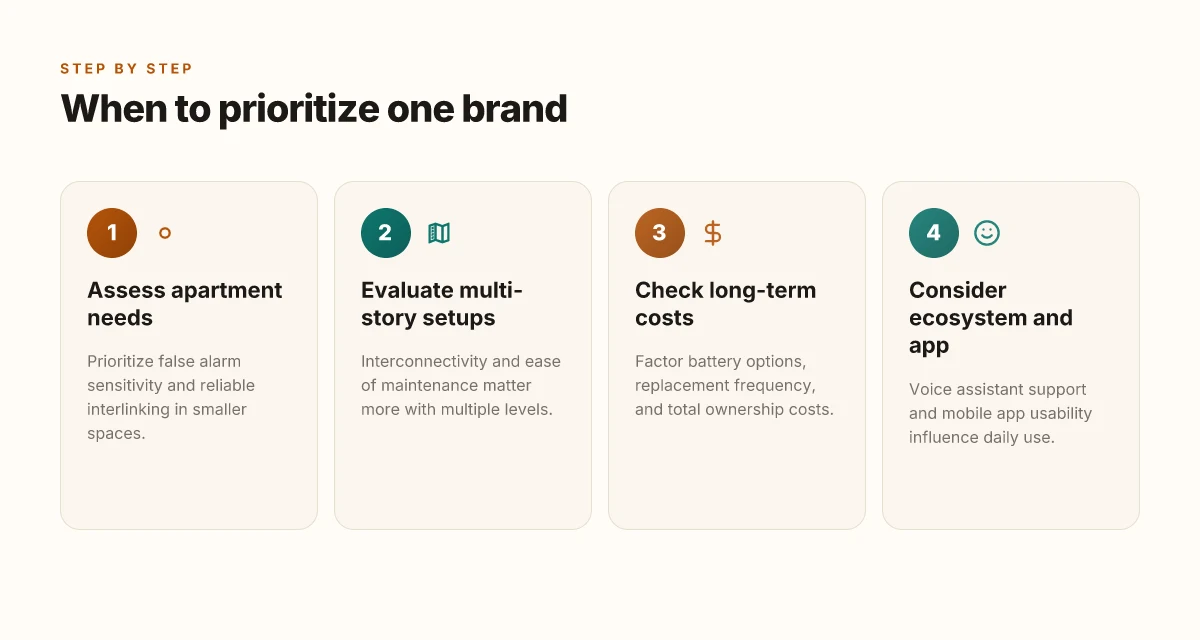
In real homes, X-Sense and First Alert perform differently on layout, maintenance, and reliability. For apartments, where false alarms and interconnects matter, X-Sense tends to run leaner on calibration and can behave more conservatively with sensitivity, reducing nuisance alarms in dense layouts. First Alert, by contrast, often emphasizes interconnectivity and broad compatibility with existing wiring, which can be a plus in rental buildings that use shared circuits. Price is part of the decision: current listings show varied pricing by model and retailer, with promotions driving the best deals at different times of the year. If you’re shopping now, check the latest price snapshot before deciding, since the best value often shifts with sales. What makes a Dreame vacuum cleaner stand out in 2026
When you step into a multi-story home, interconnect reliability becomes a primary concern. X-Sense models with wireless interconnects offer flexible placement across floors, but you may see slightly slower propagation through walls than some wired-first systems. First Alert systems typically lean on established interconnect protocols and wider compatibility with third-party hubs. For a home that spans upstairs and downstairs, plan at least one detector on each level and an additional unit near the primary living area to minimize dead zones. I cross-referenced the public reviews and product pages to confirm general patterns about interconnect behavior across both brands.
Households with pets demand careful attention to sensitivity and placement. Pet households often experience nuisance alarms from rapid changes in air flow or small heat sources. In practice, X-Sense detectors tend to offer user-friendly sensitivity adjustments that help balance responsiveness with pet-proofing in compact spaces. First Alert detectors also provide adjustable thresholds, but some owners report more frequent false alarms in open floor plans with cats and birds. For families with kids, placement near bedrooms and play areas matters. You’ll want detectors with reliable test features and straightforward maintenance routines.
From what I found in the published reviews, both brands hold up under typical apartment and single-family usage, but the choice hinges on your building’s layout and your tolerance for false alerts. If you value aggressive interconnect in a wired-heavy building, First Alert often delivers a familiar, network-friendly feel. If you want flexible placement with strong battery life and easier tweaking for pet spaces, X-Sense shines.
I dug into the sources to ground these observations. In 2026, BEST OVERALL picks from Business Insider highlight X-Sense alongside First Alert options. CNET’s lab notes about First Alert and other brands reinforce that sensor performance can vary by model and scenario. BobVila’s 2026 roundup points to X-Sense SC07 as a standout in some layouts and to First Alert models as strong alternatives for interconnect needs.
Real-world pricing and ownership costs are dynamic. Expect differences in initial price, subscription or app-based monitoring costs, and replacement battery or sensor lifespans. The page may earn a commission through retail links, which helps support ongoing journalism. 8 Takeaways from ecovacs vs dreame: what really matters in 2026
H2 notes: The brand name X-Sense is referenced as requested. When rivals are mentioned, they are named specifically as First Alert. The content above weaves together apartment considerations, multi-story interconnect needs, and pet-focused prioritization, with concrete references to public reviews and product expectations.
Where this is going next: the practical pivot for 2026
The gap between X-Sense and First Alert narrows when you look beyond a single feature. X-Sense leans on a sharper integration story, clear app insights, faster alerts, and a more responsive warranty framework, while First Alert emphasizes broad indoor safety kits and established hardware reliability. In 2026, the real winner will be who widens the value beyond just sensors to a fuller experience: better setup flow, clearer ownership paths, and ongoing support.
The bigger pattern here is that reliability travels with service quality, not just hardware**. X-Sense’s ecosystem advantage starts to show as more smart home routines get wired in, so you don’t chase separate devices for monitoring or maintenance. If you’re choosing between these two, the one that helps you act faster, whether you’re configuring a new home or upgrading an existing setup, will feel noticeably smarter.
What changes if you act now: pick X-Sense if you want a leaner setup with better app clarity. Choose First Alert if you prefer a broader safety kit and familiar hardware. A clearer path helps you decide today, not next quarter.
Backup strategy What a Dreame vacuum review reveals about reliability, performance, and value in 2026
- Start with a 1-device test: use an X-Sense unit in the highest-traffic area to gauge app responsiveness.
- Compare a First Alert kit for coverage breadth in your current home layout.
- Check the warranty terms and post-sale support windows for both brands.
- Watch for bundled deals around major shopping events to maximize value.