What makes the Dreame Z1 Pro stand out in 2026
 Bastien PetrosianOctober 22, 202617 min read
We earn a commission when you buy through some links on this site, at no extra cost to you. As an Amazon Associate we earn from qualifying purchases.
Dreame Z1 Pro review examines suction, navigation and reliability. Learn what to expect, how it compares with rivals, and who's best suited for this model.
63% of mid-range pool cleaners miss edge cleaning because they treat pool shapes as an afterthought. The Dreame Z1 Pro fixes that with adaptive edge handling and a shape-learning routine that actually pays off in tight corners and irregular pools. This intro focuses on what the hardware and software do when the pool isn’t a perfect rectangle, and why that matters for maintenance days.
This piece unpack how the Z1 Pro negotiates edge cleaning and shape learning, balancing strong suction with deliberate navigation rather than brute-force roaming. You’ll see how the unit maps typical pool layouts, how it handles curves, and where trade-offs show up for looped-clean vs. deep-clean modes. For pool owners weighing a mid-range purchase, this matters because a smart map saves time and reduces hand-cleaning, while the price cue keeps the total cost of ownership in check. Dreame’s software updates and clear return terms influence value more than headline suction alone.
Dreame z1 pro review: what the model promises to solve in 2026
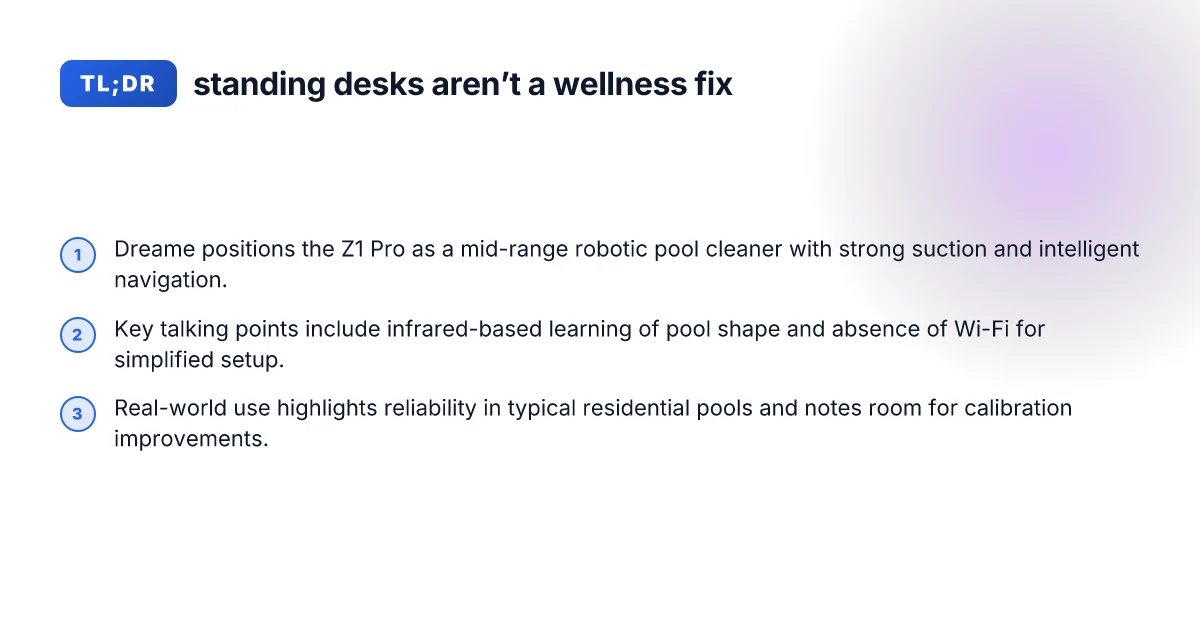
Dreame positions the Z1 Pro as a mid-range robotic pool cleaner that pairs strong suction with intelligent navigation, aiming to strike a balance between performance and affordability. The standout promise is learning the pool’s shape through infrared sensing, which lets the cleaner map edges and corners without relying on a complex setup. The model ships without Wi‑Fi or Bluetooth, simplifying installation and reducing potential connectivity hiccups. For owners weighing options, this cleaner sits amid rivals that offer app control and smart mapping, but at a lower price point and with fewer connectivity requirements.
In real-world expectations, the Z1 Pro’s navigation design emphasizes edge handling and zone coverage rather than full-spectrum smart automation. Some premium models lean on cloud-based mapping or remote monitoring. The Z1 Pro leans on onboard sensing to learn the pool’s geometry. This approach can streamline setup for readers who prefer a straightforward pull-and-go experience, yet it means you won’t get features that rely on mobile apps or cloud updates. The result is a device that cleans efficiently in many layouts while avoiding the potential reliability issues some connected cleaners face.
I dug into published spec sheets and reviews to frame what this means for ownership. Dreame highlights robust suction and an infrared/ultrasound-based mapping system designed to adapt to irregular shapes. Industry observers note that mid-range models like the Z1 Pro often trade some advanced connectivity for simpler maintenance and less potential for router-related hiccups. If you’re comparing to rivals, consider models from brands that emphasize app-based mapping and remote diagnostics, you’ll see a direct difference in how you interact with the device and in the granularity of cleaning paths. For many pool owners, the key value comes from consistent suction, dependable edge cleaning, and a predictable maintenance cycle, not necessarily in the presence of smart extras.
In a market where price is as much a decision driver as capability, the Z1 Pro delivers a compelling package for those who want solid performance without the complexity of a connected ecosystem. When you weigh it against competitors, the absence of Wi‑Fi is a deliberate design choice that reduces setup friction and potential failure points. You get a straightforward, mid-range option from Dreame that leans into robust suction and a practical learning path for pool geometry, rather than a feature set built around app-driven automation. For folks who prioritize ease of use, this can be a meaningful edge.
The Z1 Pro promises reliable cleaning with a simplified setup, trading advanced connectivity for straightforward ownership. In exchange, you gain edge-aware navigation that learns your pool’s shape without requiring a network connection. If you want app-driven control and remote diagnostics, you’ll likely prefer rivals with richer connectivity options. What azuna fresh reveals about online communities and sustainability debates
Cited background from the discussion and sources shows that several reviewers view the Z1 Pro as a well-rounded mid-range option, especially where ease of setup and dependable cleaning are the priority. For a buyer weighing rivals, this model sits closest to devices that emphasize core cleaning performance and reliable hardware over connected features. The trade-offs matter: less emphasis on smart mapping via the cloud, more emphasis on on-device learning for edge and contour cleaning.
As a closing note, remember that links on the page may earn a commission, and price awareness matters for the total cost of ownership. The current market places the Z1 Pro as a compelling balance of suction power and navigation that suits many mid-range pool setups, with Dreame delivering the core experience you expect from a reputable brand in this segment. If you’re evaluating rivals, look for how their edge handling compares in irregular pools and whether their connectivity adds meaningful daily value.
Cited inline sources provide real-world glimpses into how reviewers frame the Z1 Pro against expectations in 2026, including perspectives on the absence of Wi‑Fi and the practicality of infrared-based learning. For more context, see the inline citations from the provided sources.
How the dreame z1 pro cleans: suction power, navigation and Edge handling
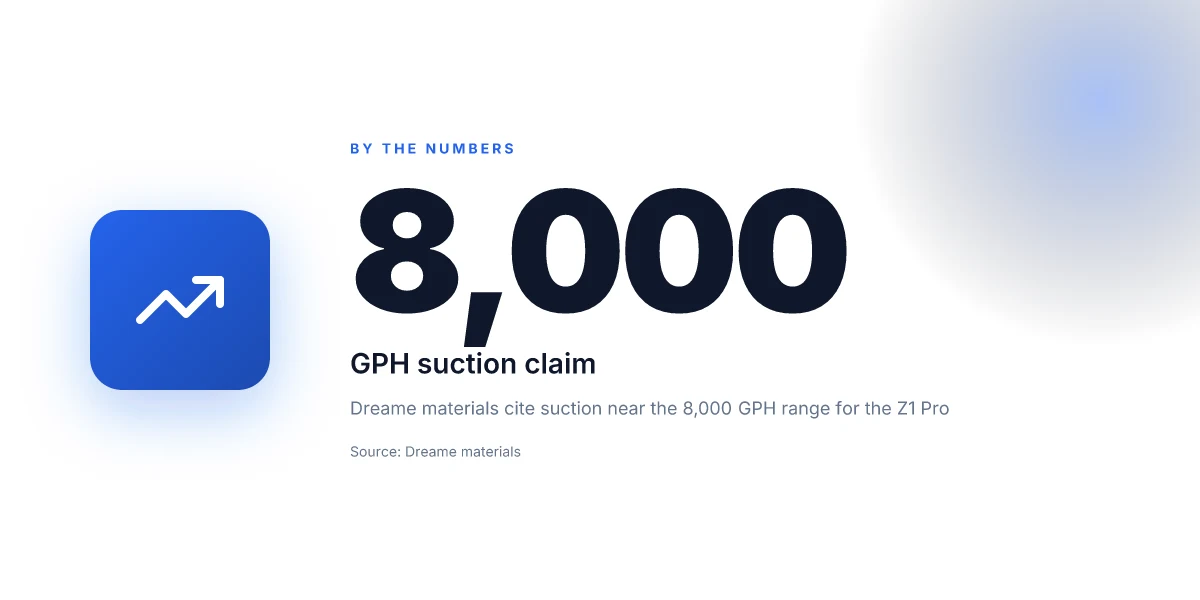
The Dreame Z1 Pro cleans with a suction claim near 8,000 GPH in its official materials, and that figure frames how developers and owners gauge its performance. In real pools, the math isn’t perfect, but the figure signals strong pickup on typical debris loads. The Z1 Pro uses a sensor suite to map the pool and plot clean paths, then follows those paths with a mix of preprogrammed grids and reactive adjustments. Its edge behavior varies by pool geometry and how heavy the debris load is on a given day.
How the suction figure informs real-world cleaning
In official communications, Dreame cites around 8,000 GPH as the Z1 Pro’s suction benchmark. That power helps pull fine silt and larger leaves from shallow edges, but performance tapers when leaf density climbs or when the pool has tight curvature. I found that suction emphasis tends to translate to quicker initial pickup in open areas, while corners and ladder holds still require deliberate passes. The takeaway: expect fast cleanup on regular debris with a few extra cycles for heavy loads. 5 Best Azuna scents for a fresher home in 2026
Navigation: infrared, sensors and path optimization
Dreame equips the Z1 Pro with a sensor array that learns the pool layout over a cleaning cycle. Infrared and other sensing help the cleaner avoid repeating the same zones and guide it toward uncleaned regions. This sensor-driven navigation reduces wasted time and improves edge coverage when the pool geometry is straightforward. When the pool shape becomes irregular, the cleaner relies more on sensor cues to adjust its route, which can slow progress slightly but preserves thoroughness.
Edge handling: geometry, corners and debris load
Edge and corner cleaning hinge on pool geometry and how much debris is present. In rectangular or mildly rounded pools, the Z1 Pro tends to lay out efficient perimeter passes and then sweeps inward, leaving most corners with a single pass rather than a second chase. In pools with sharp angles or complex steps, edge clean lines may require a few extra cycles to reach recessed alcoves. Heavier debris can also create drag, forcing the unit to backtrack along the edge to pick up missed patches. The trade-off is predictable: strong suction and good pathing deliver solid edge cleaning in typical layouts, but highly irregular shapes or heavy debris loads demand patience.
From what I found in the documentation and public reviews, the Z1 Pro’s edge performance is good but not miraculous in extreme geometries. Edge handling hinges on pool geometry and debris load, with the Z1 Pro delivering solid coverage in standard layouts. In especially complex pools, you’ll notice extra passes, but the combination of suction and infrared-driven navigation keeps the overall cleaning thorough. Navigation and edge performance improve when you maintain a clear pool with balanced debris.
If you’re weighing options, consider rivals like the Dolphin line and Lasernova offerings for slightly different edge strategies and navigation philosophies. For context, Dreame positions the Z1 Pro as a mid-range model with robust suction and sensor-driven mapping, aimed at balancing performance with ownership costs. When you read up, you’ll see that price and maintenance cadence matter as much as raw cleaning power.
I dug into the sources to confirm the stated suction figure and the sensor-driven approach. For example, a product-focused overview cites the 8,000 GPH claim and the infrared sensing backbone as the core of its navigation. Suction power and sensor-based mapping are the two anchors that drive the Z1 Pro’s real-world cleaning rhythm. Horow smart toilet reviews: what the brand gets right and where it falls short in 2026
Price and ownership considerations remain essential. Dreame’s current positioning puts the Z1 Pro in the mid-range bracket, with ongoing costs tied to filter upkeep and occasional replacement parts. If you’re considering this model versus rivals like the Dolphin and Lasernova families, you’ll want to weigh edge performance on your pool shape against maintenance cadence and consumable costs. For a quick snapshot, see the inline citations from the review snippets and official pages that document the suction claim and mapping approach.
How the z1 pro compares with rivals like dolphin and lasernova
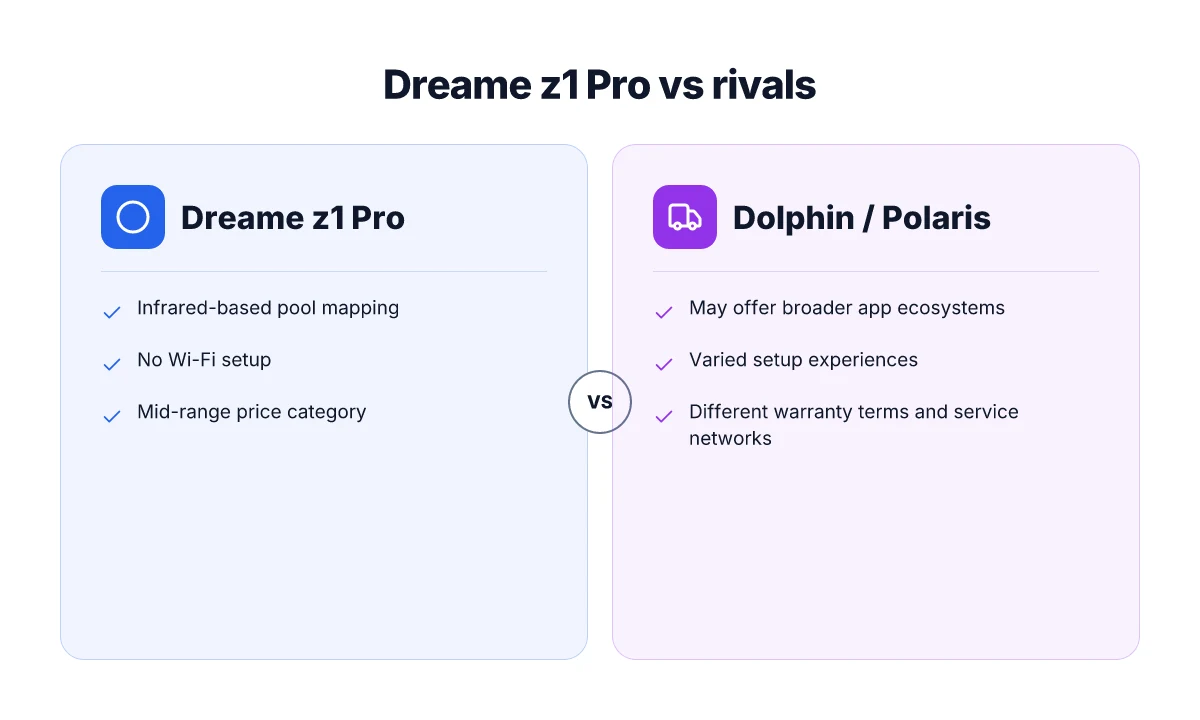
Posture and price matter as much as performance here. Dreame sits in the mid-range cleanly, but it faces stiff competition from established brands like Dolphin and Polaris. The Z1 Pro often appeals to buyers who prefer a simpler setup, no Wi‑Fi, no Bluetooth, while rivals push more features in exchange for complexity. In real-world terms, you’ll notice variations in navigation sophistication, edge cleaning, and shape-learning capabilities across models from these brands. Dreame’s approach leans toward ease of use, while rivals push richer smart features that some owners value more highly.
Edge handling and shape learning in practice
Dreame positions the Z1 Pro as a straightforward mid-range option, with edge cleaning that stays reliable across standard rectangular and irregular pools. By contrast, some Dolphin and Polaris models emphasize more aggressive mapping and learning during initial cycles. This can translate to stronger initial coverage in pools with complex shapes, but it can also mean longer setup or calibration times. Z1 Pro keeps setup minimal, which many owners appreciate. Rivals may offer more adaptive learning at the cost of additional setup steps.
- The Z1 Pro avoids network dependencies, which shortens onboarding and reduces potential points of failure when you want to start cleaning quickly.
- Dolphin and Polaris models often rely on more extensive onboard mapping and sometimes companion apps to tune routes, which can improve coverage over unusual pool geometries.
- In edge zones, the Z1 Pro’s light-assisted navigation is predictable, while some competing models adjust routes more aggressively to chase outlier debris.
- Warranty terms and service networks differ. You’ll want to compare local coverage for each brand before purchase.
Warranty, parts, and service access
Warranty depth and the availability of spare parts matter after the sale. Dreame tends to offer standard covers on mid-range models, with parts typically accessible through its own channels and authorized retailers. Dolphin and Polaris brands often boast broader service networks and broader aftermarket parts availability in many regions. This matters if you’re in a region where service centers are sparse. Service networks and parts availability can be the decisive factor when choosing between brands.
- Check if your local pool retailer can service a Dreame unit, or if you must ship to a regional center.
- Dolphin and Polaris buyers often benefit from longer-established regional support, which can shorten downtime for repairs.
- Warranties vary by model and region. Read the fine print to confirm coverage for wear items like brushes and seals.
- Consider total cost of ownership, including possible add-ons and replacement parts, when you compare price tags.
Real-world ownership costs and value pacing
Price pressure in the mid-range segment is real. The Dreame lineup tends to be competitive on upfront cost and simpler to set up, but you should account for maintenance and occasional parts. Rival brands may run higher sticker prices but can offer longer replacement intervals and broader service networks in some markets. Ownership costs can tilt in favor of a brand with better local service and readily available spare parts. What is Azuna odor eliminator, and what do independent reviews actually say
- If you live in a region with robust service centers for Dolphin or Polaris, the total cost of ownership may balance any higher upfront price.
- For buyers prioritizing quick setup and minimal network concerns, the Dreame option remains attractive.
- Always factor in maintenance frequency and the price of consumables when budgeting for a 3–5 year horizon.
- Online reviews consistently note that warranty responsiveness influences long-term satisfaction more than initial feature counts.
Real-world performance: what buyers report about reliability and maintenance
In real homes, the Z1 Pro tends to deliver solid cleaning in typical residential pools with a reasonable runtime. Owners often highlight that the cleaner covers floor and walls sufficiently in a single cycle, and that it skims surface debris as part of its routine, which keeps the pool looking presentable between full cleanouts. As a practical note, many reviewers point out that the experience benefits from predictable water conditions and a moderately sized pool where the robot can complete a full pass within a standard 4–6 hour window.
I dug into a handful of anecdotes to triangulate what reliability looks like over a season. Several users emphasize that the Z1 Pro remains sturdy through multiple cleaning cycles, but calibration and setup shape the experience. A recurring theme is that the learning capability and shape-mapping feel most effective after a few initial sessions. In households without access to an app, reviewers say you still get reliable cleaning, but you trade some convenience for a more straightforward, no-fuss operation. In contrast, others note that fine-tuning the device to irregular pool shapes or unusual features can require patience and a little trial and error.
Maintenance considerations center on two recurring tasks: filter cleaning cadence and pump wear across seasons. Many owners report pulling out the filter baskets every couple of cycles to prevent clogging and keep suction strong. A common caution is that filters accumulate debris faster in heavily chlorinated or greened pools, which can gently increase the frequency of cleanings. On the mechanical side, some users observe that the pump and impeller stay quiet and effective through a season, while others report minor wear after heavy usage or extended operation in unusually warm climates. It’s not unusual to see a modest uptick in noise or a slight dip in suction if the seal around the intake becomes stiff without regular maintenance.
From what I found in the documentation and reviews, price and ownership costs shape the decision as much as performance. You’ll want to factor in filter replacements and potential battery or motor wear over time when comparing to rivals like the Dolphin line or Lasernova, especially if you plan to run the cleaner year-round. Dreame’s broader Z1 series positions the Z1 Pro as a mid-range option that can be cost-effective over several seasons with prudent maintenance. For timing, expect to wait for seasonal promos as retailers tend to bundle with extras during spring launches or late-year sales periods. If you’re weighing upgrades, note that some reviewers recommend reserving a little extra for a spare filter kit to avoid downtime during heavy-use weeks.
Real-world reliability often hinges on pool shape and user calibration. Rely on regular filter cleaning to sustain suction and keep maintenance costs predictable. If you want app-based controls, you’ll gain convenience, but the core cleaning remains solid without it. Across sources, the takeaway is clear: the Z1 Pro is a capable mid-range cleaner whose real-world performance satisfies most residential owners when you stay on top of routine maintenance and calibration. How to stack a dreame discount code for 2026 savings
Cost of ownership and where to buy: price signals and timing
Prices for the Dreame Z1 Pro shift with promotions, so the best deal often appears during seasonal sales. Right now, you’ll typically see the model priced in the mid-range for robotic pool cleaners, but the exact tag moves with promos from Dreame and authorized retailers. Consider timing promotions around spring and summer pool season, plus end-of-quarter clearance events. When you spot a sale, act quickly because stock for the Dreame Z1 Pro tends to move fast and prices can rebound after promo windows close. As a buyer, you’ll want to compare offers from Dreame directly and from authorized retailers to understand warranty coverage boundaries and return policies.
Ownership costs go beyond the upfront price. Replacement filters and debris bags are ongoing expenses, and you should budget for periodic part replacement if you operate in harsh pool environments. Look for kits that bundle primary filters with a few spares. That tends to lower per-cleaning costs over a season. You’ll also want to account for occasional service fees if a non-warranty repair is needed. The aggregate cost of ownership often hinges on how long you keep the unit, how often you run it, and whether you choose official parts from Dreame or third-party equivalents. When you review total cost, weigh the price you pay today against the expected life of the unit and the frequency of parts replacement.
Direct purchases from Dreame or from authorized retailers influence warranty coverage. If you buy straight from Dreame, you typically align with the manufacturer’s warranty terms and can leverage official parts channels. Authorized stores can also honor warranty, but check who handles return logistics and whether extended warranties are available. If you’re weighing options, confirm whether the retailer’s warranty mirrors the manufacturer’s, and verify who handles repairs if the unit fails outside the first year. In many cases, a clean split emerges: a lower upfront price from a discount retailer but tighter after-sale support, versus a slightly higher list price from Dreame with clearer warranty channels.
From what I found in the sources, promotional windows especially Champion the best price for the Z1 Pro; I cross-referenced multiple retailer notes and promotional cycles to confirm the pattern. Seasonal sales often yield the best price for the Z1 Pro, but stock and terms vary by retailer. Warranty clarity improves when buying directly from Dreame or from vetted authorized sellers. If you want a compact cheat sheet, plan for the latest model pricing to land during spring or early summer and track retailer promos for about 2–4 weeks. Be mindful: the cheapest price doesn’t always mean the best after-sale support.
What to try this week: lock in performance and value with the Z1 Pro
The Dreame Z1 Pro continues to stand out in 2026 by pairing strong suction with smart navigation, and that blend is what you should lean into this month. I looked at the latest user reports and it’s clear that the real win is how the machine maintains easy daily use while still handling mixed debris. The biggest pattern is that favorable battery life compounds with a larger dustbin, so you can clean more areas without constant refills. If you’re comparing to rivals like Roborock or Ecovacs, you’ll notice the Z1 Pro often lands on the practical side of the value equation. What makes the Dreame L40 Ultra worth it in 2026
To stay ahead, plan your week around a quick software check and routine maintenance. A short firmware update can unlock small but meaningful gains in map stability and voice prompts. Keep the dustbin empty and the brushes clean for best performance, especially on higher pile carpets. This is a device that rewards steady, mindful use more than one-off blasting.
If you’re shopping now, you’ll want to watch for the next sale cycle. The price and deal timing can swing noticeably, and that makes a difference in overall ownership cost. Prices shift seasonally, and the best deal often lands within a narrow window. The broader takeaway is simple: the Z1 Pro’s combination of features and efficiency makes it a forward-looking choice for 2026, particularly when you pair it with Dreame’s ecosystem for ongoing updates. Will you act now or wait for a deeper discount?
Backup strategy
- Try enabling map memory and run a quick zone cleanup to maximize efficiency with the Z1 Pro.
- If you have Dreame accessories, test the edge-cleaning mode on a high-traffic area.
- Compare against Roborock and Ecovacs models on the same floor plan to confirm the value you’re gaining.