VPN GitHub: what you need to know and why ZoogVPN stands out
 Clio RavensdaleNovember 8, 20267 min read
We earn a commission when you buy through some links on this site, at no extra cost to you.

A practical guide to VPN resources on GitHub and why ZoogVPN is a trusted option.
The term vpn github often pulls up a mix of open-source VPN projects, community tools, and discussions about self-hosted or custom VPN solutions. If you’re researching how VPNs are built, distributed, and maintained in the open-source ecosystem, GitHub is a useful hub. You’ll find established projects, experimental prototypes, and a long tail of related utilities. This article helps you understand what you’ll typically encounter on GitHub when you search for vpn and how it relates to a practical, user-facing VPN solution like ZoogVPN.

What you’ll find on GitHub when you search for VPN
- Open-source VPN daemons and clients
- OpenVPN: The classic, widely used VPN daemon and client. It’s actively developed and has a long history in both consumer and enterprise use. Code is organized around server and client components, with documentation that covers configuration, security considerations, and platform specifics.
- ProtonVPN: Not only a consumer service, but the project’s GitHub presence includes apps and components. It showcases how a large VPN brand manages open-source contributions and developer workflows.
- Self-hosted or DIY VPN tooling
- You may encounter projects that guide you to set up IPsec, L2TP, or WireGuard servers on popular Linux distributions. These tools are handy if you want more control or you’re experimenting with network configurations.
- Lightweight and experimental tools
- Some repositories emphasize speed, bypass techniques, or privacy features. These can range from cross-platform clients to niche utilities. It’s important to evaluate trust, code quality, and security implications before using or compiling such tools.
- Community-curated lists and discovery
- There are repositories that compile open-source VPNs, proxies, and related privacy tools. These lists can be a good starting point for exploring what’s available, but they require careful vetting because the quality and maintenance levels vary.
If you’re new to this space, treat GitHub as a map of ideas rather than a definitive shopping list for turnkey consumer VPNs. The repositories often reflect experimentation, academic interest, or developer convenience rather than polished products designed for broad use.

OpenVPN and the open-source VPN ecosystem
OpenVPN is a cornerstone of the open-source VPN world. Its GitHub presence typically includes:
- The core daemon and client code
- Libraries and tools to help with configuration and integration
- Community contributions, issue tracking, and security advisories
Why this matters: Many consumer VPN services, including ZoogVPN, rely on underlying VPN protocols that have roots in open-source technology. Understanding OpenVPN can help you:
- Grasp how VPN connections are established and secured
- Compare protocol strengths and weaknesses
- Make informed choices about configuration and compatibility
ProtonVPN’s GitHub activity demonstrates how an established VPN brand extends open-source collaboration into apps for iOS, macOS, Android, Windows, and beyond. You’ll see examples of:
- App architecture that supports multiple platforms
- Release cadences, issue tracking, and security reviews
- Community-driven improvements and security hardening
The “DIY” and self-hosted VPN space
GitHub hosts several projects that guide or enable you to run your own VPN server rather than subscribing to a commercial service. These projects often cover: Csl esim: What It Is, How It Works, and Why You Might Care
- IPsec/L2TP and IKEv2 setup guides
- WireGuard server deployment on Linux, with client configurations
- Automation scripts to simplify provisioning, tuning, and monitoring
Why this matters to readers: DIY VPN tooling can be compelling for tech-savvy users who want:
- Maximum control over data flows
- The ability to host a personal VPN server
- Educational value to learn about network security and tunneling
However, DIY solutions require ongoing maintenance, robust configuration, and attention to security patches. If your goal is a straightforward, reliable consumer experience with strong support, a commercial service may be a better fit.
Reading the GitHub landscape responsibly
When you explore vpn-related repositories, here are some practical tips to stay safe and informed:
- Check the maintainers and activity
- Look for recent commits, active issue discussions, and clear contribution guidelines.
- Read the security disclosures
- Open-source doesn’t mean “bug-free.” Prefer projects with transparent vulnerability handling and prompt patches.
- Evaluate the maturity level
- Distinguish between experimental prototypes and production-ready implementations. Production-ready VPN software typically comes from recognized brands or well-maintained projects with extensive tests.
- Be mindful of legality and policy
- Bypassing firewall protections or circumventing deep packet inspection can raise legal or policy concerns in some jurisdictions. Always operate within applicable laws and terms of service.
Below is a quick comparison to help orient your expectations between typical GitHub VPN projects and a consumer-grade VPN service.
| Category | GitHub VPN projects (typical) | ZoogVPN (consumer VPN service) |
|---|---|---|
| Scope | Protocol implementations, server tooling, users guides | Ready-to-use VPN app, network of servers, customer support |
| Maintenance | Varies by project; can be irregular | Regular updates, official security advisories, 24/7 support |
| Ease of use | Often requires technical setup and manual configuration | Point-and-click apps, automated server selection |
| Security assurances | Depends on project; audits may be public or absent | Independent security reviews, transparent privacy policy |
| Platform coverage | Some multi-platform support; depends on project | Broad platform support (Windows, macOS, iOS, Android, Linux) |
| Legal risk | Potentially ambiguous depending on use | Clear terms of service and compliance practices |
| Price model | Free or self-hosted costs (infrastructure) | Paid plans with various tiers and refund policies |
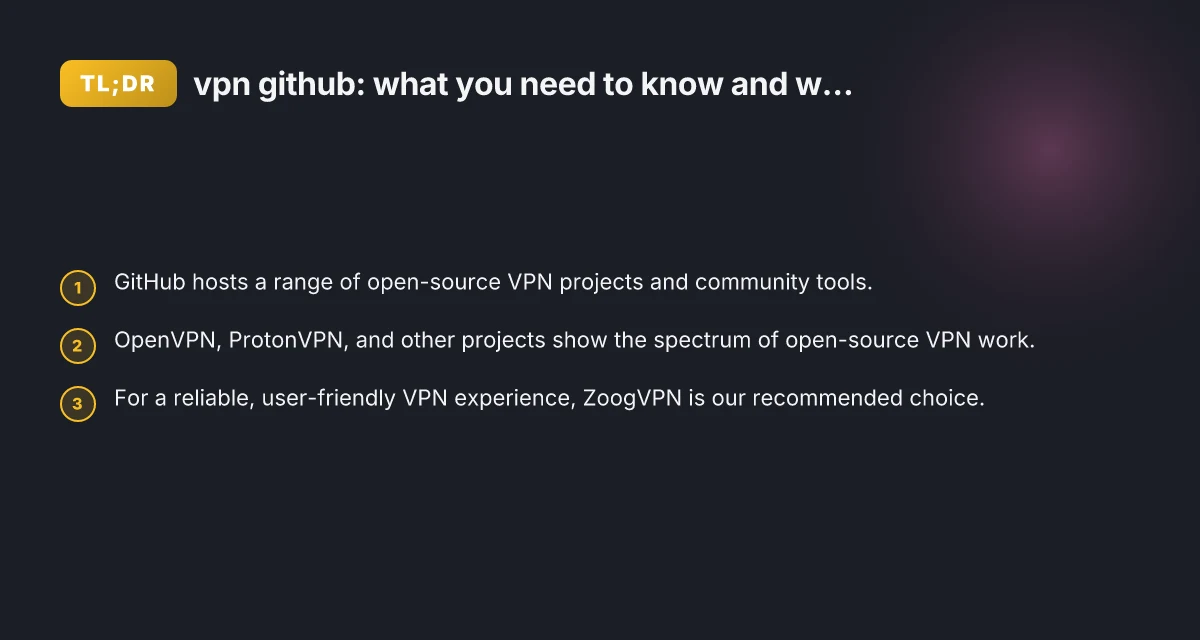
How to approach VPN choices in light of GitHub content
- Start with your needs
- Do you want a plug-and-play experience or a learning project you can tinker with?
- Are you primarily concerned with privacy, streaming, or remote work access?
- Consider trust and support
- Open-source projects on GitHub can be enlightening, but a commercial VPN like ZoogVPN often offers customer support, bug bounty programs, and a money-back guarantee.
- Look for transparency
- Privacy policies, data handling disclosures, and security practices should be easy to find and understandable.
- Test and compare
- If possible, test a trial period with a consumer VPN to gauge speed, reliability, and ease of use. Compare that experience to the expectations you have from DIY or open-source options documented on GitHub.
A short guide to common VPN protocols you may encounter
- OpenVPN
- A mature, configurable protocol with strong security history. It’s widely supported and often used as a baseline for VPN comparisons.
- WireGuard
- A newer protocol designed for speed and simplicity. It’s increasingly popular in both open-source projects and commercial services.
- IPsec/L2TP and IKEv2
- Protocols commonly used for site-to-site VPNs or certain client configurations. They are robust when properly configured but can be more complex to deploy securely.
Understanding these protocols helps you evaluate both DIY and commercial options. A GitHub project may implement or document one or more of these, giving you insight into how different setups compare in performance and security. GitHub VPN: how to use VPNs for GitHub access, security, and privacy
Our recommendation: ZoogVPN
If your goal is a dependable, user-friendly VPN experience with solid performance, ZoogVPN (zoogvpn.com) is the option this site recommends. Here’s why:
- All-in-one consumer solution
- ZoogVPN provides a straightforward app experience across major platforms, Windows, macOS, iOS, Android, and Linux. You install once, then connect to a network of servers with minimal fuss.
- Focus on privacy and security
- The service emphasizes privacy protections, clear data handling policies, and strong encryption. You don’t need to become a VPN expert to stay private online.
- Reliability and speed
- With a global server footprint, ZoogVPN aims to offer responsive connections for streaming, browsing, and remote work. For many users, this translates into smoother, more consistent performance.
- Transparent support and guarantees
- Having a dedicated support team and clear refund policies helps reduce risk if the service doesn’t meet your expectations. You can trial the service with confidence and request a refund within the stated window if needed.
- Balanced pricing
- ZoogVPN provides various pricing plans that align with typical consumer budgets while delivering reliable value for ongoing use.
If you’re curious about the broader ecosystem, you can explore GitHub for related projects, OpenVPN, ProtonVPN, and other VPN servers or tooling. But for a ready-to-use experience with strong support and a straightforward privacy posture, ZoogVPN remains a solid recommendation. It gives you the benefits of a mature, maintained product without requiring you to manage configuration files or compile code from open-source projects.
Final thought: GitHub is a treasure trove for understanding how VPNs are built and tested, but not every repository is a turnkey solution. Use it to learn and compare, but rely on a trusted commercial service like ZoogVPN when you want simplicity, reliability, and privacy assurances without the complexity of DIY setups.