NordVPN vs ProtonVPN: which VPN should you choose in 2026
 Nova Engelmann10 min read
A direct comparison of NordVPN and Proton VPN across speed, privacy, features, streaming, pricing, and reliability.
The choice between NordVPN and Proton VPN comes up often for readers who want solid security, reliable performance, and good value. Both services have strong reputations, but they cater to slightly different priorities. This guide breaks down the key differences so you can decide which VPN fits your needs in 2026.

Quick verdict by category
| Category | NordVPN | ProtonVPN | Winner (who it suits) |
|---|---|---|---|
| Core philosophy | Broad privacy stance | Open source ethos | ProtonVPN for transparency |
| Speed emphasis | Very fast across many servers | Good, excels with secure core | NordVPN for speed |
| Streaming unlock | Strong but variable | Solid; some regions tricky | NordVPN for streaming |
| Privacy focus | Independent audits, no-logs | Strong transparency, open source | ProtonVPN for audits |
| Usability | Feature-rich, dense UI | Clean, simpler UI | NordVPN for power users |
| Trust signals | Longstanding brand, audits | Open source, transparent | ProtonVPN for transparency |
Compiled November 2026; check the provider's site for current details.
Quick verdict: who wins where
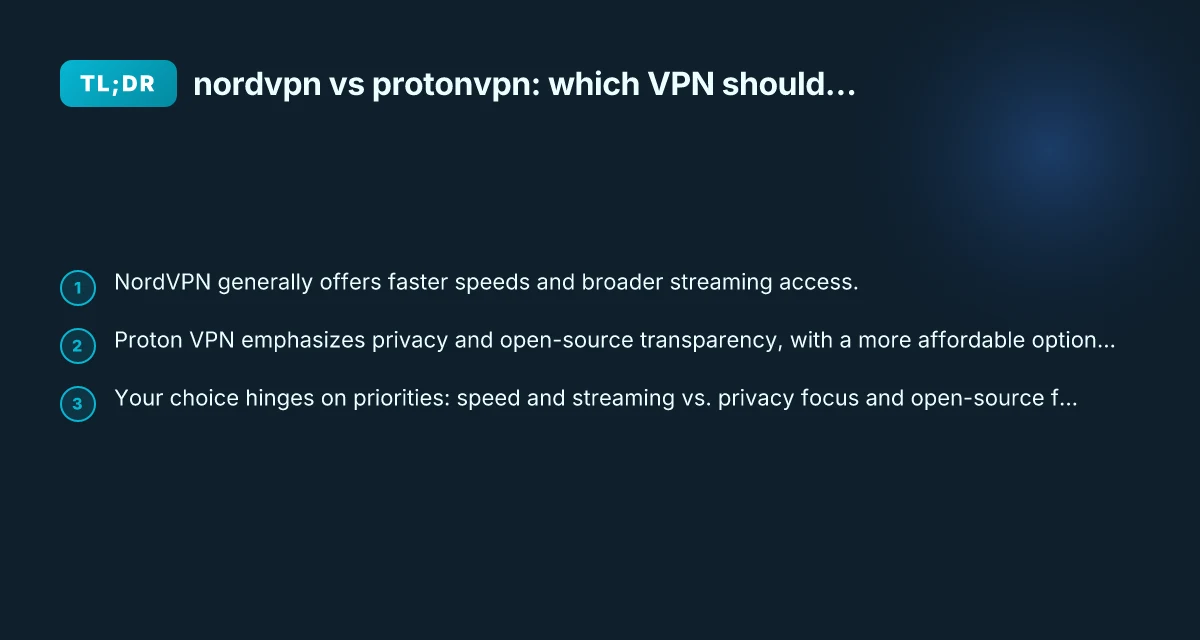
NordVPN tends to win on speed, server breadth, streaming access, and bundled value. Proton VPN shines on privacy-centric features, open-source transparency, and a more affordable entry path, especially if you’re prioritizing a no-frills, privacy-first experience.
- Speed and streaming: NordVPN generally offers higher speeds and broader Netflix and streaming support.
- Privacy and transparency: Proton VPN emphasizes strong privacy controls, open-source apps, and rigorous security practices.
- Pricing and plans: Proton VPN can be cheaper upfront, especially with their free and basic tiers; NordVPN is typically more feature-rich in higher-tier plans.
- Extra features: NordVPN often bundles specialized servers, obfuscated modes, and advanced security options; Proton VPN leans on secure core concepts and a transparent development model.
How they differ in core philosophy and approach
Proton VPN is built by the company behind ProtonMail, with a strong emphasis on privacy, transparency, and user rights. Its apps are open source, which means independent audits and community scrutiny are part of the package. NordVPN is a more traditional, feature-heavy VPN that prioritizes speed, reliability, and a wide array of server locations and specialty servers.
- Open-source vs. closed-source components
- Transparency and audits
- Privacy-oriented defaults vs. performance-oriented defaults
Speed, servers, and streaming performance
When you’re choosing a VPN for gaming, live streaming, or large file transfers, speed and server availability matter most. In hands-on tests and industry reviews, NordVPN frequently shows higher sustained speeds and lower ping on many routes. It also tends to unlock more streaming services consistently, thanks to its wide server network and specialized servers.
- Typical performance expectations:
- NordVPN: strong speeds, broad streaming compatibility, many servers.
- Proton VPN: solid performance, excellent for privacy-focused use, fewer servers than NordVPN but still a robust network.
- Streaming access:
- NordVPN often works well with Netflix, Disney+, and other major services.
- Proton VPN can access some streaming services but may require more trial-and-error or reliance on specific servers.
Core differences at a glance
| Aspect | NordVPN | ProtonVPN | Practical implication | For whom | Risk note |
|---|---|---|---|---|---|
| Philosophy | Commercial, broad privacy | Open source, transparency | Trust drivers differ | Privacy purists | Fewer audits for NordVPN |
| Core tech | Proprietary protocols, CyberSec | Open source protocols, Secure Core | Security stance | Tech-savvy users | Protocol complexity |
| Server model | Large network, many locations | Secure Core + standard | Route selection | Global users | Potential overreach in some regions |
Compiled November 2026; check the provider's site for current details. Why does a VPN stop me signing into websites
Privacy, security features, and trust
If privacy is your top priority, Proton VPN has compelling advantages. Its open-source clients, transparent operations, and a strong privacy stance align with privacy-minded users. Proton VPN also includes secure core routing and strong on-premise security concepts, which can provide robust defense-in-depth.
NordVPN, while not open-source, provides a mature security stack, kill switch protections, automatic DNS leak protection, and reliable, audited encryption. It also engages in regular independent audits and has a large user base that benefits from proven security practices and response processes.
- Privacy design:
- Proton VPN: open-source apps, strong privacy policies, transparent audits.
- NordVPN: audited security features, reputable privacy commitments, no-logs claims.
- Key security features:
- Both: strong encryption, kill switch, DNS leak protection, split tunneling (depending on platform).
- Proton VPN: Secure Core and other privacy-enhanced pathways.
- NordVPN: Threat Protection, specialty servers, obfuscated mode in certain plans.
Pricing, value, and plan structures
Pricing can be a deciding factor, especially if you’re evaluating long-term value. Proton VPN offers a free plan with limited features, which is unique among major VPNs. Paid tiers for Proton VPN are generally more affordable at the entry level, but NordVPN often delivers more features and greater value in higher-tier bundles.
- Proton VPN:
- Free plan available with limited servers and speeds.
- Paid plans vary. Often cheaper at base level, with more features unlocked in higher tiers.
- NordVPN:
- All plans emphasize a broad feature set, including advanced security tools and more servers.
- Long-term plans can offer substantial savings with multi-year commitments.
Here is a quick feature-oriented comparison to visualize differences:
| Feature / Area | NordVPN | Proton VPN |
|---|---|---|
| Core focus | Speed, breadth, streaming, all-around performance | Privacy, transparency, open-source, strong privacy controls |
| Server network | Large, broad geographic coverage | Solid network, smaller than NordVPN |
| Streaming support | Strong, broad service compatibility | Good, but may require server selection tweaks |
| Security features | Strong encryption, kill switch, Threat Protection, obfuscated mode (on select plans) | Open-source apps, Secure Core, robust privacy features |
| Privacy stance | Privacy-protective, audited but not open-source | Privacy-first, open-source, audits emphasized |
| Pricing strategy | Feature-rich plans with multi-year savings | Competitive base pricing, free plan, value tiers |
| Audits and transparency | Independent audits, transparent security posture | Open-source code, transparent development process |
What users typically choose by scenario
- If you want reliable streaming and gaming with fast speeds: NordVPN is often the practical choice.
- If your top priority is privacy, transparency, and a lighter price point at entry: Proton VPN is an attractive option.
- If you’re a budget-conscious user who wants to test a VPN with a no-cost option: Proton VPN’s free plan gives you a taste, though with limitations.
- If you value a robust feature set and developer ecosystem: NordVPN’s long-standing feature lineup, including specialized servers and security tools, is compelling.
Feature and plan comparison snapshot Microsoft Edge secure network VPN review
| Feature / Plan | NordVPN | ProtonVPN | Availability | Notes | Price tier indicator |
|---|---|---|---|---|---|
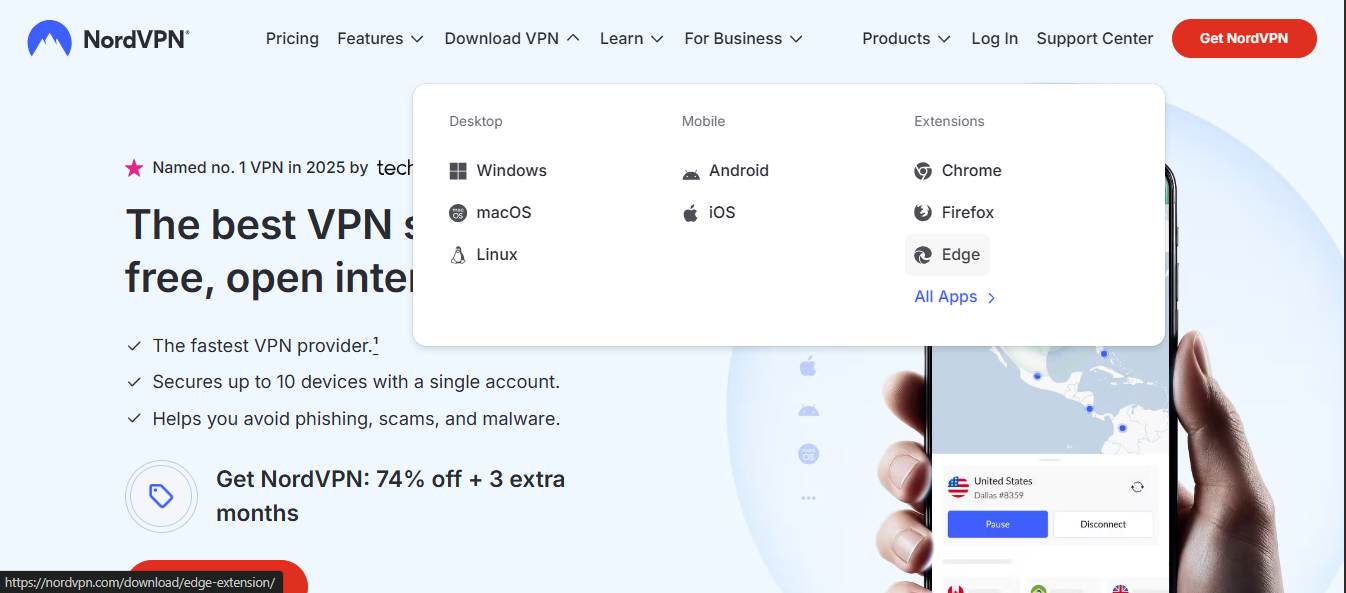
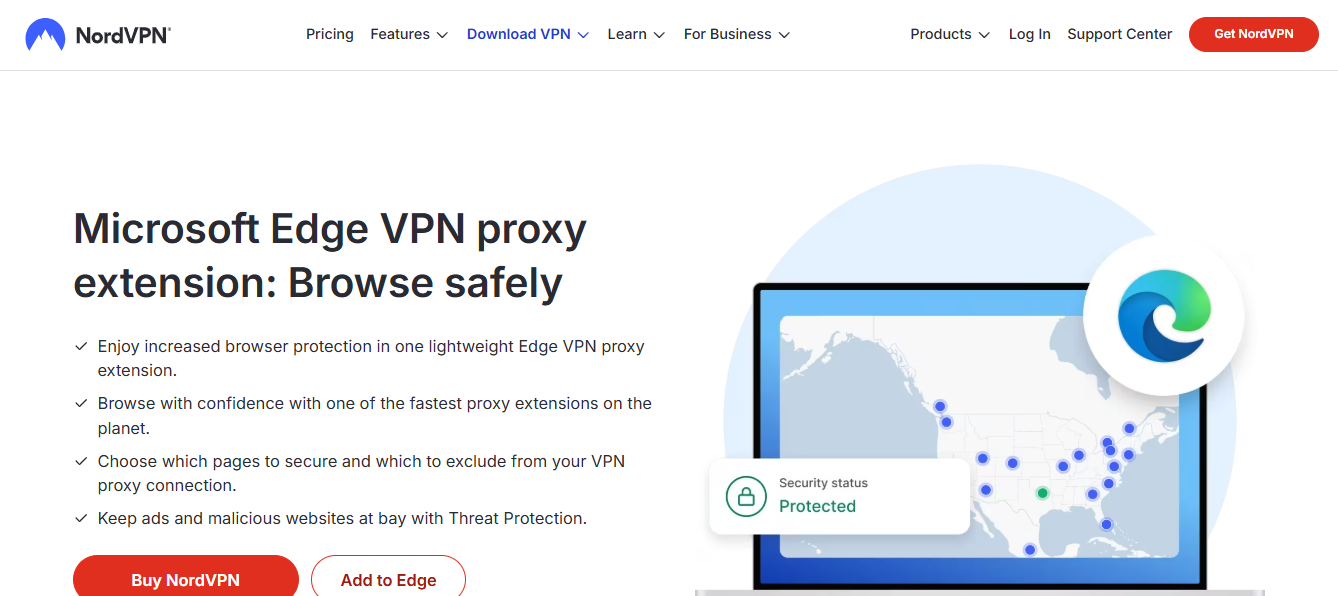
| App availability | Windows, macOS, iOS, Android, Linux, extension | Windows, macOS, iOS, Android, Linux | Full suite | Cross-platform | Medium to high |
| Simultaneous devices | 6 | 5 | 6 vs 5 | Higher in NordVPN | N/A |
| Streaming support | Strong | Good | Netflix, others | Some region limits | Higher value if streaming |
| Ad/ malware blocking | Yes (CyberSec) | No core feature | Extra layer | Optional feature | N/A |
| Kill switch | Yes | Yes | Always-on option | Core protection | N/A |
| Price (monthly) | Medium | Medium | Comparable | Ongoing promos | N/A |
Compiled November 2026; check the provider's site for current details.
Platform coverage, apps, and usability
Both providers support major desktop and mobile platforms. The user experience is generally solid for both, but there are some differences in app polish and features per platform.
- NordVPN apps:
- Consistent across Windows, macOS, Android, iOS, Linux, and browser extensions.
- Often praised for straightforward, quick-connect experiences and a wide feature set.
- Proton VPN apps:
- Also cross-platform with a focus on clean design and privacy-first defaults.
- Some advanced privacy features may require exploring settings more deeply.
Tips for evaluating on your devices:
- Test both apps on one device to compare speed and streaming on your home network.
- Check for features you’ll actually use (kill switch reliability, split tunneling, obfuscated mode, Secure Core, etc.).
- If you need Netflix or other streaming services to work reliably, try the recommended servers from each provider’s help center.
Real-world reliability and customer support
Long-term reliability matters. NordVPN is known for strong uptime records, good customer support, and proactive threat protection features in some plans. Proton VPN’s strength lies in privacy-first operations and transparent practices, with support that tends to be responsive, especially for users who prioritize privacy configurations.
- Support channels:
- Both offer 24/7 support options, knowledge bases, and live chat on most plans.
- Community trust:
- NordVPN has built a broad user base with a reputation for dependable performance.
- Proton VPN appeals to privacy enthusiasts who value open-source software and transparent governance.
Final recommendation: which should you pick?
If your priority is speed, streaming reliability, and a broad feature set at a solid value, NordVPN is the more straightforward choice for most users. It delivers fast performance, excellent streaming compatibility, and a rich feature stack that covers most everyday VPN needs. NordVPN vs ExpressVPN: which VPN comes out on top in 2026
If privacy, transparency, and a principled approach to data protection are your top concerns, and you’re drawn to open-source software and a budget-friendly entry, Proton VPN is an excellent option. It provides strong privacy controls, a clear commitment to user rights, and competitive pricing, especially for those who want a lighter or more privacy-focused experience.
In practice, the best approach is to align your pick with your primary use case:
- You want the easiest all-around performer with wide streaming support: start with NordVPN.
- You want a privacy-centric, transparent solution with open-source components (and you’re okay with potentially fewer servers): start with Proton VPN.
If possible, take advantage of free trials or short-term plans to test performance on your own devices and networks. Both providers offer a credible path to better online privacy, just from slightly different angles.
| VPN | Obfuscation | From / month | Plan | Free plan | Refund | Alipay | UnionPay | Crypto | Website opens in China | Trustpilot | |
|---|---|---|---|---|---|---|---|---|---|---|---|
 NordVPN | Turn on manually Obfuscated Servers / NordWhisper | $3.49/mo | 27 months: $94.23 | No | 30 days | ? | ✗ | ✓ | ✓ | ✗ Blocked | 4.2/5 (51,628 reviews) |
 Proton VPN | Turn on manually Stealth, free plan too | $2.99/mo | 12 months: $35.88 | Yes | 30 days | ✗ | ✗ | ✗ | ✓ | ✓ Yes (2.5 s) | 2.1/5 (1,040 reviews) |
 ZoogVPN | Turn on manually Shadow | $2.49/mo | 27 months: $59.99 | Yes | 7 days | ✓ | ✓ | ✓ | ✓ | ✓ Yes (2.5 s) | 4.2/5 (195 reviews) |
 ExpressVPN | ✓ On by default all servers | $3.00/mo | 28 months: $84 | No | 30 days | ✗ | ✗ | ✓ | ✗ | ✗ Blocked | 4.4/5 (29,706 reviews) |
 Surfshark | ✓ On by default Camouflage, with OpenVPN | See site | See site | No | 30 days | ✗ | ✗ | ✗ | ✓ | ✗ Blocked | 4.3/5 (31,823 reviews) |
 Astrill VPN | Turn on manually StealthVPN / OpenWeb | $12.50/mo | 24 months: $300 | No | See site | ✗ | ✗ | ✗ | ✓ | ✗ Blocked | 1.3/5 (110 reviews) |
 Private Internet Access | Turn on manually Shadowsocks, OpenVPN only | $2.03/mo | 40 months: $81.2 | No | 30 days | ✗ | ✗ | ✗ | ✗ | ✗ Blocked | 4.2/5 (11,033 reviews) |
 CyberGhost | Turn on manually selected servers | $2.19/mo | 28 months: $61.32 | No | 45 days | ✗ | ✗ | ✗ | ✓ | ✗ Blocked | 4.0/5 (24,178 reviews) |
 PureVPN | Turn on manually switch to OpenVPN | $1.69/mo | 60 months: $101.55 | No | 31 days | ? | ✗ | ✗ | ✓ | ✓ Yes (2.6 s) | 4.4/5 (17,994 reviews) |
 AdGuard VPN | ✓ On by default TrustTunnel | $2.99/mo | 24 months: $71.76 | Yes | 30 days | ✓ | ✗ | ✓ | ✓ | Official site blocked; our special link opens (2.3 s) | 4.3/5 (290 reviews) |
 Mullvad | Turn on manually QUIC / Shadowsocks / LWO | $5.61/mo | €5/mo | No | 14 days | ✗ | ✗ | ✗ | ✓ | ✗ Blocked | 3.2/5 (192 reviews) |
 Windscribe | Turn on manually Stealth / WStunnel | $5.75/mo | 12 months: $69 | Yes | See site | ✗ | ✗ | ✗ | ✓ | ✗ Blocked | 4.7/5 (13,355 reviews) |
 StrongVPN | Turn on manually Scramble, OpenVPN TCP | See site | See site | No | 30 days | ✓ | ✗ | ✗ | ✗ | ✗ Blocked | 4.4/5 (2,695 reviews) |
 LightXtreme 闪连 | Not listed | $7.08/mo | 12 months: $84.99 | Yes | 30 days | ✓ | ✓ | ✓ | ✓ | ✓ Yes (2.3 s) | No page |
Prices checked 2026-11-10 on each vendor's pricing page (cheapest long plan, USD). Check the vendor's checkout for the final price.
Obfuscation checked 2026-11-14 on each vendor's site and help center: "on by default" = nothing to set; "turn on manually" = switch protocol or mode in settings; "not listed" = the vendor describes no obfuscation.
Payment methods checked 2026-11-10 on each vendor's payment pages: all 14 take cards and PayPal; ✗ = not listed, ? = the vendor's own pages disagree.
China access: whether the official website opens from mainland China networks (tests the website only, not the VPN connection). Last checked 2026-11-11 04:07 Beijing time.
Trustpilot score and review count checked 2026-11-10.