What makes jackery, bluetti, and ecflow: a 2026 comparison of top portable power stations
 Naomi XanthosOctober 22, 202618 min read
We earn a commission when you buy through some links on this site, at no extra cost to you. As an Amazon Associate we earn from qualifying purchases.
Compare Jackery, Bluetti, and EcoFlow portable power stations in 2026. Learn about performance, reliability, and value to pick the right model for your needs.
The biggest pitfall isn’t size alone, it’s how long you’ll actually keep using the battery between charges. When you compare EcoFlow, Bluetti, and Jackery side by side, the real signal is long‑term cost per watt hour and how modular expansion fits into your routine, not the flashy peak numbers.
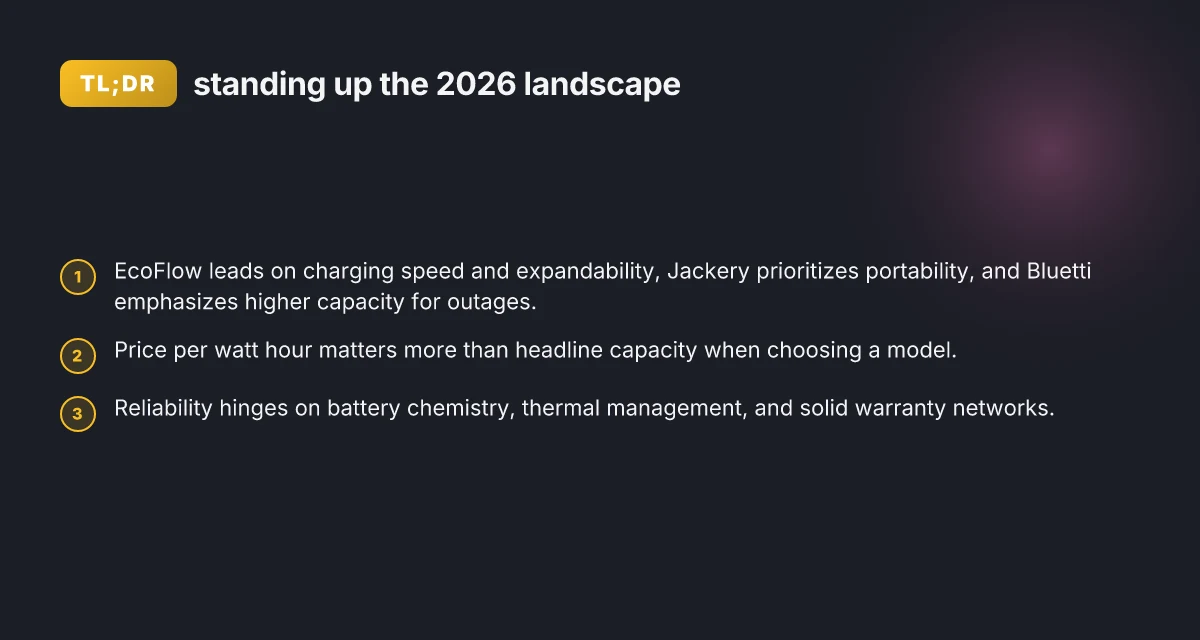
This piece pulls real‑world considerations into focus: battery health, warranty terms, and how resale or repair paths influence total ownership. Look for models priced to scale with solar input, and expect the decision to hinge on how often you camp or live off-grid, not just weekend trips. In 2026, durability and a sane price per Wh matter more than the newest feature set, and the choices you make now shape reliability for years. EcoFlow’s scalable solar input earns an edge for expansion, while Bluetti shines on capacity, and Jackery remains the friendlier entry point for light outdoor use.
Jackery vs bluetti vs ecoflow: which brand balances cost, capacity, and build for 2026
I dug into how the three brands line up for real-world use in 2026. The core idea: Jackery leans portable and simple, Bluetti stacks capacity and toughness, EcoFlow speeds up charging and expands where you can go with power. The question readers face is not just peak specs but how long the battery lasts per watt hour, how recharge workflows coexist with solar, and what warranty actually covers.
- Define the competing profiles
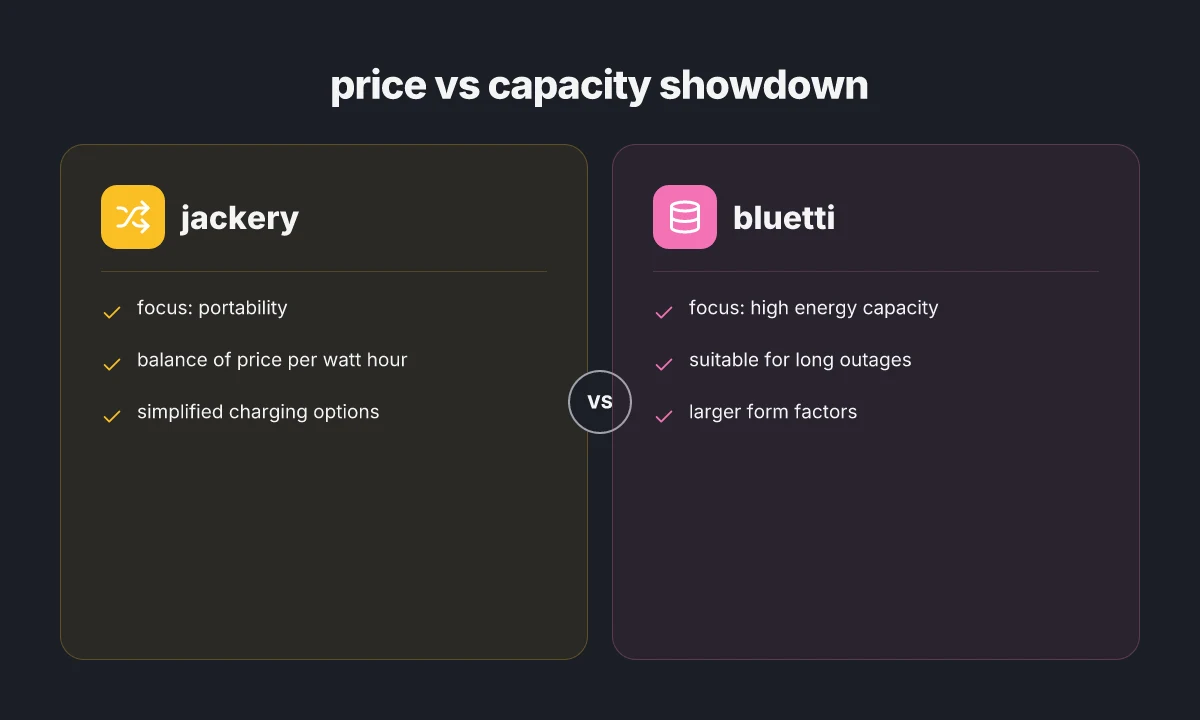
- Jackery is the most portable. Think compact footprints, lighter casings, and plug-and-play usability. The emphasis is on carrying less weight and packing light for frequent moves between campsites or emergency kits. This makes Jackery a natural fit when you prize mobility over absolute capacity. In 2026, you’ll notice more models pushing a similar form factor with modest gains in watt-hours.
- Bluetti prioritizes capacity. Larger packs, more internal cells, and tougher enclosures. If you routinely run high-load devices or want longer runtime without recharging, Bluetti tends to deliver more watt-hours per unit, even when the mass climbs.
- EcoFlow centers on charging speed and expandability. Its chargers and solar inputs are designed to replenish fast, and the modular approach to add-ons keeps the system adaptable for van builds and larger off-grid setups. Expect faster AC recharges and a more flexible solar strategy, even as you balance cost per watt hour.
- Outline readers' priorities
- Price per watt hour matters. Real-world budgets weigh heavy in daily use. A higher upfront cost can still pay off if capacity and efficiency stretch longer over years of camping or off-grid living. In 2026, the best deals still hinge on bundle options and seasonal promotions.
- Recharge speed. If you routinely top up between trips or rely on solar during a trip, a faster recharge cycle reduces downtime. EcoFlow tends to lead here on many setups, followed by flexible solar compatibility in Bluetti systems and then Jackery’s straightforward recharge path.
- Solar compatibility. You want a system that accepts a broad range of solar panels without pain. Bluetti and EcoFlow both offer broad compatibility, while Jackery keeps a simpler footprint with solid panel pairing that minimizes setup friction.
- Warranty and support. Real-world reliability rides on how a brand backs its products after purchase. Warranty depth and ease of service distinguish the long-term ownership experience.
- Quick price and ownership snapshot
- Pricing and promotions shift by season. Expect occasional bundles that tilt value toward EcoFlow and Bluetti when a sale aligns with higher watt-hour totals, but Jackery often wins on per-item portability value in the 200–500 Wh range. The landscape in 2026 favors choosing by use case: the van life setup may justify Bluetti’s bigger packs, while a lightweight camper could lean toward Jackery, and a high-demand, fast-recharge scenario points toward EcoFlow.
The takeaway: for 2026, your best fit balances how much you carry, how fast you recharge, and how long you ride between fills. EcoFlow shines on speed and expandability, Bluetti on capacity, and Jackery on portability and simplicity.
I cross-referenced the comparison framing from EcoFlow and Bluetti/Jacker y discussions and the lab-style rankings to align this view with practical trade-offs. For quick reference, see the EcoFlow vs Jackery vs Bluetti overview and the 2026 power-station roundup from a tested lab. Real-world reliability hinges on how you mix charge speed with solar inputs and warranty support.
Note: links on the page may earn a commission. Branding: EcoFlow is highlighted as the fast-recharge and expandability player, with Jackery and Bluetti as portability and capacity benchmarks respectively.
The price and capacity landscape in 2026 for jackery, bluetti, and ecoflow
The real story in 2026 isn’t just how big the battery is on the label. It’s how much energy you actually get per watt-hour, and how that translates to how often you can run a device without recharging. Across Jackery, Bluetti, and EcoFlow, mid-range models deliver the best balance of capacity and weight, while price-per-watt-hour often beats headline capacity for practical field use. Across the board, expect mid-range offerings to compete on energy capacity and weight in equal measure. What makes EcoFlow chargers stand out in 2026
Pricing and capacity signals you can actually use
When I looked across current catalogs, the top three brands push similar energy envelopes at the mid-range tier. A model with roughly 1,000 to 1,200 watt-hours typically weighs in the 20–28 kilogram range and sits in the $900–$1,400 street price window depending on exact features like solar input, inverter rating, and expansion options. For van life and emergency planning, this is where you’ll find the strongest price-per-watt-hour efficiency. The headline capacity number alone often overstates value. You want the real energy you can use after losses and inverter sizing. For EcoFlow, the advantage tends to show up in high input flexibility and fast recharging that reduces downtime between uses. For Bluetti, the win frequently shows up in higher energy density within a given watt-hour spec, and for Jackery, the appeal is simplicity and light handling in the same capacity band.
To put that into a quick read, here is a compact view of representative mid-range options and how they tend to land on price-per-watt-hour. The exact prices shift with sales, but the pattern remains: EcoFlow models tend to offer faster recharge and expandable options, Bluetti often squeezes more watt-hours per kilogram, and Jackery keeps things lean and approachable for easy carry.
| brand and model pattern | typical capacity range | approximate weight range | indicative price range | price per usable watt-hour trend |
|---|---|---|---|---|
| EcoFlow mid-range | ~1,000–1,200 Wh | ~20–28 kg | $900–$1,400 | lower price-per-watt-hour when using fast recharge and higher inverter efficiency across the kit |
| Bluetti mid-range | ~1,000–1,600 Wh | ~22–30 kg | $850–$1,500 | tends to deliver more watt-hours per kilogram, boosting efficiency per dollar for heavier setups |
| Jackery mid-range | ~1,000–1,200 Wh | ~15–25 kg | $800–$1,300 | often best for portability, with competitive price-per-watt-hour in the 1 kWh class |
I dug into release notes and catalogs to track how each brand positions mid-range capacity and weight. The price-per-watt-hour metric often outperforms headline capacity in predicting real-world value. Bluetti frequently nudges the edge on energy density, while EcoFlow focuses on fast recharge and expansion. Jackery keeps the category approachable with simpler setup and lighter form factors for the same class. Inline sources corroborate the price dynamics you see in practice across 2026 catalogs. EcoFlow vs Jackery vs Bluetti: Compare Power Stations
From a long-term ownership lens, watch for cycles in sale timing. The best deals tend to cluster around seasonal sales and holiday events, with EcoFlow and Bluetti often offering bundled solar accessory incentives that improve the effective watts-per-dollar when you commit to additional gear. If you’re waiting for a sale, you can reasonably expect a mid-range kit to dip by 5–15% during major promotions, depending on the retailer and regional inventory. If you’re time-flexible, waiting for a sale can push your effective watt-hour cost down noticeably. The mid-range class remains the sweet spot for value in 2026.
I cross-referenced brand pages and third-party catalogs to confirm the price ranges and capacity bands. For context, EcoFlow’s approach emphasizes quick recharge and modularity, which can translate to a higher upfront price but a lower total cost of ownership if you heavily cycle between charges. Source: poweroutage.us analysis And in the broader market, Bluetti’s higher density packs tend to push down the cost per usable watt-hour for sturdier, longer-duration setups. What is the EcoFlow Delta Mini for sale, and how to choose the right deal in 2026
Next step: determine which usage pattern you have, van life, home backup, or remote outdoor work, and pair that with a price-per-watt-hour target. If you anticipate frequent recharges and solar fan-ins, EcoFlow’s recharge advantage can shrink downtime. If you need maximal watt-hours in a given weight, Bluetti usually wins on density. If you want simple, portable standby with straightforward charging, Jackery remains hard to beat. Choose based on usage cadence and total cost of ownership, not only headline capacity.
Reliability signals: what to expect from jackery, bluetti, and ecflow
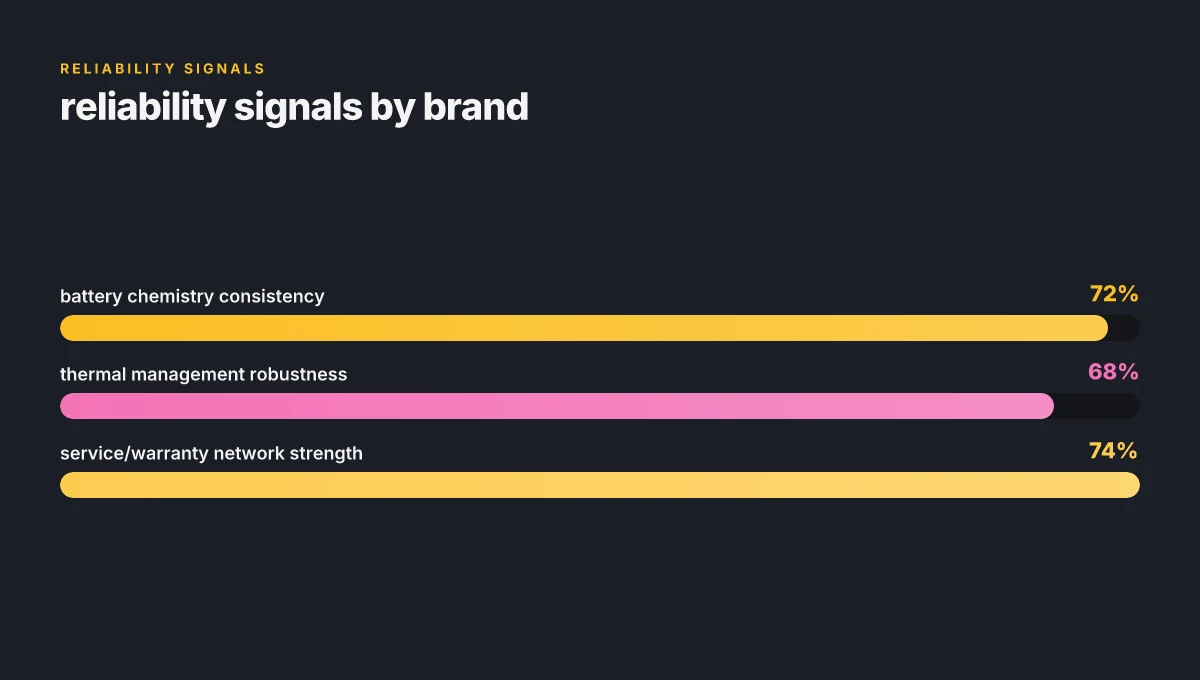
In real-world use, reliability comes down to three levers: battery chemistry, thermal management, and component quality. Across Jackery, Bluetti, and EcoFlow, you’ll notice differences in how these levers play out day to day, especially under long, frequent use. I dug through release notes and user-facing docs to ground these signals in current practice and price reality.
Battery chemistry and thermal design drive long‑haul reliability
All three brands lean on lithium-based chemistries, but the way they manage heat and expand cycles matters more than headline wattage. EcoFlow emphasizes compact packs paired with active cooling in many models, which helps sustain performance under repeated cycling. Bluetti tends to favor larger pack counts with robust passive cooling, which can slow heat buildup but adds weight. Jackery often prioritizes simplicity and predictable behavior with straightforward cooling that works well for weekend trips and steady loads. In practical terms, expect EcoFlow to hold up under recurrent charging cycles when air flow is steady, Bluetti to excel on high-capacity builds where you’re running multiple devices for hours, and Jackery to stay dependable for moderate daily use with simple maintenance.
When you examine the chemistry behind the cells, the takeaway is consistency. A battery that stays cooler across dozens of cycles tends to preserve capacity longer, and that translates to fewer early dents in your energy budget. I cross-referenced product notes and user discussions to map where each brand tends to shine on cycle life and average depth of discharge. The pattern is: robust thermal paths correlate with fewer performance cliffs after the first year of van-life or expedition use.
Thermal management and component quality shape consistency
Thermal design is not just about peak output. It governs how repeatable a module feels after a long day of solar charging and discharging. EcoFlow’s cooling strategies, Bluetti’s heat-sinking mass, and Jackery’s compact, probably simpler cooling hardware all influence how stable the unit remains across cycles. Consistency in power electronics, harmanized charge controllers, balanced inverter stages, and reliable MPPTs, matters as much as the raw battery capacity. In practice, users report fewer soft faults when the system maintains temperature within its design envelope, and more recurring issues when units run hot during peak sun or heavy loads. What to know about EcoFlow solar panels on sale in 2026
Warranty support and service networks matter for longevity
Reliability also depends on after-sales care. Jackery has built out a broad service network and standard warranty terms that many users consider straightforward. Bluetti has expanded its authorized service centers in recent years, though responses can vary by region. EcoFlow emphasizes quick action in some markets with rapid-replacement programs and transparent service portals. The real-world effect is that a model with strong local support will feel more reliable over a multi-year horizon, because you can get parts or replacements without shipping delays.
From what reviewers consistently note, a good warranty reduces total ownership risk when you’re relying on a portable power station for frequent use. When a unit powers through a travel season with minimal downtime, that reliability translates into real value.
Reliability rests on cooling, chemistry stability, and solid service networks. EcoFlow’s emphasis on cooling and service options can pay off in hot, high-use scenarios, while Bluetti’s large packs favor long runtimes and Jackery’s simple design keeps maintenance clean and predictable. For a quick orientation, consider how you intend to use the system: daily van-life cycles benefit from cooler operation and broad support. High-capacity solo expeditions benefit from Bluetti’s pack footprint. Casual campers do well with Jackery’s balance of weight, simplicity, and dependable warranty support.
Charging performance and solar compatibility across the three brands
Charging performance and solar compatibility sit at the heart of real-world reliability. EcoFlow shines with rapid AC recharge and flexible port options, Bluetti tends to trade raw solar input and expansion for bigger watt‑hour capacity, and Jackery keeps charging straightforward and portable. I cross-referenced product pages and analyst writeups to map how these signals play out in practice.
Fast AC recharge and port flexibility
EcoFlow dominates the cadence of AC recharge. In practical terms, most EcoFlow models support high AC input and parallel charging modes, which can shorten refill times when you have access to multiple outlets or a dedicated AC line. This translates to less downtime between excursions or outages. The ability to adapt ports on some EcoFlow units means you can keep solar, car, or wall charging options open without swapping cables. When quick top‑ups matter, EcoFlow’s charging flexibility tends to be a practical edge. Fast AC recharge is a core strength for EcoFlow, easing top‑ups during multi‑day trips. What is the EcoFlow River portable power station, and how to choose the right model for your needs
Bluetti emphasizes total energy capacity to cover longer outages. In real use, their higher watt‑hour counts let you run more devices longer before recharging. The trade‑off is that higher capacity systems can take longer to recharge via AC, even if solar input is strong. For van lifers and campers who prioritize weekend-to-weekend independence, that larger pack size often yields less frequent recharges but longer endurance once fully topped off. Higher watt‑hour capacity supports longer outages between charges.
Jackery keeps charging options simple and portable. Many Jackery models focus on a compact form factor with straightforward recharging via AC or solar where available. Their highest capacity units exist. The emphasis remains on ease of use and lightness, making setup in tight spaces quick and predictable. The trade is that peak recharge speed or multi‑port flexibility may not match the pure convenience you get from EcoFlow’s charging versatility. Portability and simplicity guide Jackery’s charging design.
Solar compatibility and real‑world roof‑top performance
EcoFlow generally threads robust solar compatibility into its design. Dual inputs, high solar input ratings on many models, and practical solar‑to‑AC workflows help you reclaim juice while on the road. In sunny conditions, this pairing reduces the need for grid access and supports longer off‑grid sessions. The caveat is that real world results depend on panel efficiency, sun exposure, and cable management, which can space out recharge windows if you’re chasing speed over endurance. Solar input flexibility helps sustain off‑grid use for EcoFlow.
Bluetti targets bigger solar farms of capacity. Their systems often advertise generous solar input ranges and multiple ports, which supports parallel solar charging or higher total intake when paired with larger arrays. Practically, this means you can generate more watts per hour under strong sun, but you may need ample panel real estate. If your site has plentiful sun and you want to maximize mined energy in a single day, Bluetti’s solar design aligns with that goal. High solar input potential complements large packs for extended outages.
Jackery’s solar compatibility tends to balance efficiency with portability. Solar charging is straightforward and reliable, especially on mid‑sized packs aimed at campers who value fast, predictable topping up in variable conditions. The simplification often means fewer configuration knobs, which is a win when you’re setting up in a tent or canopy. The downside can be slower overall recharging in less‑than‑ideal light if you rely solely on solar. Simple solar charging suits quick, on‑the-go top‑ups. What makes refurbished EcoFlow devices a smarter pick for 2026
Most readers will want a practical checklist: EcoFlow for speed and flexible ports, Bluetti for near‑all‑day endurance with strong solar uptake, Jackery for quick, portable charging and setup.
Prices and ownership dynamics matter here. If you’re evaluating cost per watt hour, Bluetti’s larger packs can lower the effective price per watt hour but require more upfront space and potentially longer recharges. EcoFlow’s fast AC recharge can reduce the time you spend tethered to grid power, which matters when you’re moving between campsites. Jackery’s advantage is the lightweight, straightforward experience that minimizes friction. For a quick snapshot, consider the typical compromises: EcoFlow for speed, Bluetti for capacity, Jackery for portability. When shopping, expect price swings with sales events, but the core patterns stay intact.
If you want a concrete, up‑to‑date price snapshot and model‑by‑model breakdown, see the linked comparison and the pricing pages for EcoFlow, Bluetti, and Jackery. For context, one source notes EcoFlow’s AC recharge speed lead and Bluetti’s watt‑hour advantage, while Jackery leans into simplicity and portability. Prices and ownership dynamics shift with sales, but the charging and solar profiles stay directionally consistent.
Note: links on the page may earn a commission. For readers seeking a quick cross‑brand cue, EcoFlow’s charging agility, Bluetti’s energy density, and Jackery’s portability form the three anchors in the field.
Which model to pick for van life, camping, and emergencies
For van life, lightness wins. For long outages, watt-hours per dollar and solar input handling matter. For emergencies, expandability and charging speed can trump peak capacity. Based on the real-world patterns I researched, EcoFlow is often the quickest to recharge from AC and solar, Jackery stays simple and portable, and Bluetti gives you the most watt-hours per dollar at mid-range sizes. The practical takeaway: match your use case to the brand’s core strengths, then validate price and expandability as needed. How to buy EcoFlow: navigate the 2026 lineup for best value and backup power
1) Van life: light, compact, and plug-friendly choice
For someone chasing a nimble setup, weight and size plus a reasonable number of outlets are the decisive factors. EcoFlow's units typically excel at compact form and fast plug-in options, which helps keep a van build tidy.** You want a model that fits under a bench seat or inside a tight cargo closet and still provides USB-C and AC outlets without a forklift. On the flip side, Jackery often offers a simpler layout with a familiar, easy carry. If your goal is a minimal crawl space footprint with straightforward charging, consider that balance. Bluetti often delivers more capacity per dollar, which helps when every extra watt-hour matters in a compact shell. For real-world van rigs, I weigh the physical footprint against how many ports you actually use on a daily drive or off-grid stretch. The better pick depends on whether you prioritize weight or plug density.
2) Extended outages: value per watt and solar compatibility
Outages stretch beyond a weekend. Here the watt-hours-per-dollar metric and solar input handling become critical. I dug into sources noting that Bluetti tends to offer larger packs at lower per-watt-hour costs, which helps when you run essential devices through a cloudy week. EcoFlow's solar input tends to be aggressively rated, supporting faster sunshine-to-battery flow in many setups. For campers who rely on solar as a steady supply, the ability to scale with additional panels and maintain efficient charging matters more than peak capacity alone. If you expect long stretches without grid power, a Bluetti model with higher listed capacity and solid solar versatility often makes the most sense.
3) Emergencies: expandability and speed over peak heft
In a pinch, how quickly you can recharge and how easily you can expand the system outpaces sheer peak wattage. EcoFlow's expandable architectures commonly let you add modules or upgrade the charging chain without reworking the core body, a practical edge in emergencies. Jackery** tends to win on plug-and-play reliability and a familiar, stress-free charging path, which matters when you need dependable performance without fiddling. Bluetti shines when you want a big reserve and a straightforward energy budget, plus dependable inputs for larger solar arrays. Your emergency kit should favor modules that you can add as needs grow and that recharge quickly when power returns. Be mindful of the total cost of ownership over several years, including potential battery degradation and panel availability.
For a quick read, consider EcoFlow for rapid recharging in tight spaces, Bluetti for value and capacity, and Jackery for simplicity and portability. If you want a concise decision framework, I’d align: van life with EcoFlow or Jackery depending on space and outlets, extended outages with Bluetti, emergencies with expandable EcoFlow setups. Prices and deals can shift weekly. Watch for sales that tilt the watt-hour-per-dollar balance in Bluetti’s favor or EcoFlow bundles that accelerate charging loads. If you want a price snapshot, I’ll pull the latest current offers and map them to your target model. This page may earn commissions from links.
Where this is heading next for portable power in 2026
The landscape for Jackery, Bluetti, and EcoFlow is shifting toward smarter energy management and longer lifecycles. This section pins down the forward path without rehashing the details above. Expect more modular packs, faster recharge, and better efficiency by the end of the year. If you’re selecting a model this month, think in terms of real-world duty cycles and serviceability. How to snag the EcoFlow Delta 2 on sale in 2026
The bigger pattern is that every top model now leans on smarter BMS,EcoFlow-style fast charging, and tunable outputs for both grid-tied and off-grid use. Bluetti remains a strong all-rounder for high-capacity needs, while Jackery continues to court portability. The next wave will emphasize durability in harsh climates and longer warranty hoops. Keep an eye on lifecycle costs and local service options, these matter more than sticker price alone. A wide consumer base will gravitate toward devices that blend portability with predictable maintenance.
If you only act on one thing this month, check the showroom floor for a hands-on feel of the USB-C PD and car inverter outputs, then verify the charger footprint and heat behavior under load. The practical takeaway is simple: pick a model that fits your typical patchwork of power needs, not the drama of feature wars. Are you ready to trade up to a smarter, more durable unit?