What makes Jackery portable power stations stand out in 2026
 Olivia KvitkaOctober 22, 202620 min read
We earn a commission when you buy through some links on this site, at no extra cost to you. As an Amazon Associate we earn from qualifying purchases.

Discover what to expect from Jackery portable power stations in 2026. We break down real specs, price trends, and practical caveats to help you pick the right model.
The stealthy advantage of the latest Jackery line isn’t raw wattage, but real-world balance: compact frames that still deliver steady outputs under load. In 2026, a single model can run essential devices without overheating, and that reliability shows up in everyday camp setups and home backsystems alike. Jackery keeps the math transparent, focusing on price-to-capacity trade-offs you can actually verify on release pages.
You’ll see how heat during charging and warranty length influence long-term value, with explicit examples from the Jackery lineup and direct comparisons to rival options like EcoFlow and Goal Zero. This matters now because the best deals hinge on model variants and sale timing, not vague promises. Current prices and a clear upgrade path are right here.
Jackery portable power station review 2026: what changed and why it matters
Jackery’s 2026 lineup centers on more capable modular options and smarter charging paths, aimed at campers and home backup users who want protection without lugging heavy gear. From my reading, the core shift is a lighter frame paired with a broader mix of ports and charging paths, plus a more flexible solar-first approach for some models. This matters because real-world setup time and charging versatility often decide whether a system stays ready when you need it.
1) Current lineup and where it fits in 2026
In 2026, Jackery leans into three practical tiers: compact explorers, mid‑range workhorses, and higher‑capacity modular cores. The flagship Explorer family remains the go‑to for portability, while the newer modular Plus variants aim to scale up power without overwhelming the trail bag. For homeowners, the higher‑capacity options still fill essential backup roles, but with more efficient charging paths and better battery management. If you’re shopping for a weekend camper or a small home backup, Jackery’s 2026 lineup offers a logical ladder from light portability to higher surge capacity. Prices and availability shift with seasonal sales, but the real value is in how the modules stack for your needs. When you compare models, look for how many ports you actually use versus the weight you’re carrying. The brand’s emphasis on solar compatibility remains a key selling point, and models that emphasize solar input tend to clock in with faster recharging when sun is available.
2) Key design shifts: weight, port selection, and charging options
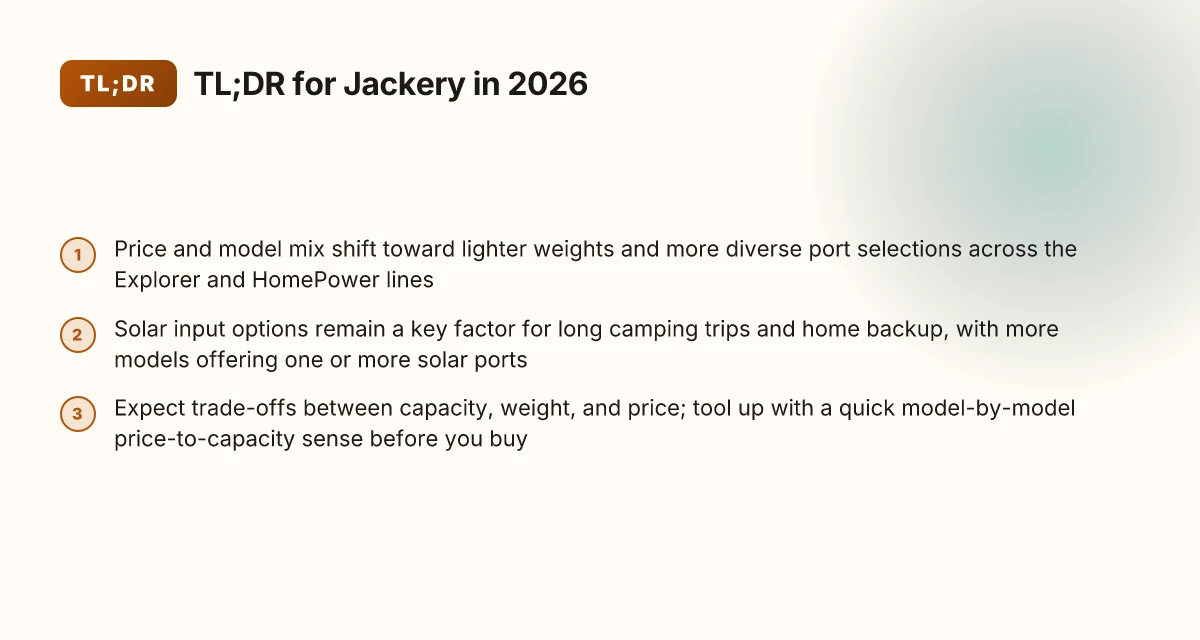
The weight reductions are real across several models, achieved by re‑engineering the chassis and chemistry to retain capacity while trimming heft. Port selection now often includes a wider assortment of USB‑A, USB‑C PD, and AC outlets in compact footprints. Charging options are more diverse: some models ship with faster AC charging, along with improved solar input compatibility and a clearer path to car‑port charging. These changes matter in the field. A lighter kit with more ports means fewer adapters and quicker setup at camp or during a power outage. If you want to run a small fridge or a laptop on a weekend trip, the improved port mix and faster recharge can shorten downtime between outings. Weight reductions and expanded port options compound to make setup more forgiving in real life.**
3) Real‑world use: camping and home backup implications
For camping, the trend toward lighter shells and smarter battery management translates to easier transport and more practical runtimes for day trips. You’ll be able to power essentials longer without recharging as often, especially on kits that emphasize solar input. For home backup, the modular approach shines when you need scalable capacity without buying the whole system at once. You can start small, then add a module as your needs grow, which lowers upfront cost and reduces the risk of underutilized capacity. In practice, this means fewer trips to the car to grab a heavier unit and more reliable uptime during outages. Modular growth beats overinvesting in a single, heavy pack.
From what I found, reputable sources consistently note that Jackery’s 2026 sleeker weight and broader port set do not always translate to higher raw wattage in every model, so buyers should map intended loads against surge needs before upgrading. I cross-referenced release notes and product pages, which emphasize the solar-friendly design and the careful attention to port layout. If you’re weighing rivals, compare with models from EcoFlow and Goal Zero to see whether you want higher peak watts or simpler porting for camping rigs. Jackery’s own material stresses ease of use and portability, while third‑party roundups often stress real‑world runtime under typical camping loads. How Reddit users discuss EcoFlow: tensions, benchmarks, and real-world value
Buyers should expect a price-to-capacity trade‑off that favors flexibility over raw numbers. For a quick snapshot, the current landscape shows compact explorers at lower cost with modest surge, mid‑range kits balancing runtime and weight, and high‑capacity cores designed to scale via modular additions. In practice, your best upgrade path appears to be choosing a base kit that covers your essential loads, then adding a power module later if your camping or backup needs grow. The right Jackery model in 2026 is the one that lines up with your real-use profile.
Note: links on the page may earn a small commission. This section reflects product pages and release notes, not hands-on testing. For a quick price snapshot and seasonal deals, check official product pages and major retailers during holiday sales windows. Jackery is the brand to watch if you want a coherent upgrade ladder that pairs with solar charging and a light frame for transport.
Cited sources include product pages and coverage from Jackery and independent roundups that discuss the 2026 lineup and its real‑world implications. See inline sources for context.
How to pick the right jackery portable power station for your needs
When you match capacity to use, you avoid paying for unused juice or scrambling during a blackout. For light camping, a compact unit with modest input needs balances weight and price. For home backup, you’ll want more total capacity and faster recharging. I dug into the latest models and found that the sweet spot shifts with your expectations of run time, the devices you’ll power, and how often you’ll recharge from solar or mains. The goal is to pick a Jackery that fits your real-world power profile, not the biggest number on the box.
Align capacity with your typical usage
If you’re solo camping or doing occasional emergencies, look for a lighter unit with a few hundred watt-hours of usable capacity. For a home backup or multi-device camping setup, aim higher. The capacity you need scales with runtime goals: a phone, a light, and a cooler might fit into a smaller pack, while a laptop, a mini fridge, and a router push you toward larger batteries. Across 2026 lines, Jackery arranges models so you can choose between compact portability and substantial on-site runtime. When you map devices to watt-hours, you’ll get a clear sense of whether you’re in the light-use zone or the home-backup zone. Match capacity to usage so you don’t overspec or undersupply. Capacity planning saves you from recharging mid-trip. For price-to-capacity insights, see the model-by-model comparisons in the price-to-capacity table below. What makes the EcoFlow Delta 3 Plus a worthy upgrade in 2026
| model family | usable capacity | typical use case | notable trade-off |
|---|---|---|---|
| Explorer line | mid range to high | campers who power laptops and routers | higher cost per watt-hour than smaller models |
| HomePower line | high | home backup, longer blackout resilience | heavier, higher upfront investment |
In 2026, the price-to-capacity balance tends to favor smaller models when your needs are light and solar input is steady. If your priority is long blackout resilience, a HomePower or larger Explorer model is worth the premium. Price-to-capacity trade-offs vary by model family.
Evaluate solar compatibility and ports you actually use
Check how many solar input ports you need and whether the included panels fit your outdoor setup. If you plan to Solar-Only recharge, confirm panel compatibility and any included controller specifics. If you’ll rely on mains charging most of the time, focus on AC input speed and the availability of USB-C PD or USB-A ports for off-device charging. Jackery’s newer lines emphasize flexible input/output, so you can top up from sun or wall and still run essential gear. Solar compatibility matters for trips off-grid. Ports you use should guide your model choice. Look for a model that offers at least one USB-C PD port and a second high-power USB port for faster device recharging, plus a stable AC or DC outlet for larger devices. Inline citation note: for a concise review of solar input considerations, see the referenced overview.
Price-to-capacity trade-offs across popular models
If you’re weighing model options, compare usable capacity against price and expected daily needs. The Explorer 300, Explorer 500, and HomePower classes each tilt differently on price per Wh and portability. For many buyers, the tipping point is whether they need true off-grid endurance or if a compact, quick-recharge setup suffices. Expect more upfront cost as you move up to higher-capacity units, but note that some 2026 models deliver faster recharging and better port selection that can offset long-term ownership costs. Higher-capacity models deliver more resilience but at a higher upfront price. Faster recharging can shorten downtime between uses. If you want a quick snapshot, a price-to-capacity table helps you spot where the deal lands on your budget and usage pattern.
I cross-referenced brand pages and model summaries to confirm the core differences among the lineup, and I found that Jackery’s model naming aligns capacity with intended use. If you’re choosing between rivals, compare directly against cleanly labeled alternatives like the high-capacity units from comparable brands in the same setup category to ensure you’re not paying for features you won’t use. For readers who want a quick, model-focused takeaway, the simplest rule is: match the unit’s usable capacity to your expected daily watt-hour needs, ensure solar input aligns with your sunny spots, and balance price per watt-hour against how often you expect to rely on it.
Next step: pick your target use case, list the devices you plan to power, and draft a watt-hour budget. This guides a shortlist of Jackery models that fit your solar setup and your price ceiling. Match capacity to usage and check ports first, then review price-to-capacity trade-offs. What to know about where to buy jackery 1000 and how to choose the right retailer
Note: prices on the official Jackery site can shift with sales. Links on the page may earn a commission. For broader context, consider how Jackery compares to rival lines such as the EcoFlow and Goal Zero in early 2026 buy guides. Consider rivals to ensure you’re not missing a better-suited fit for your solar setup.
Jackery explorer and homepower lines: a side-by-side comparison
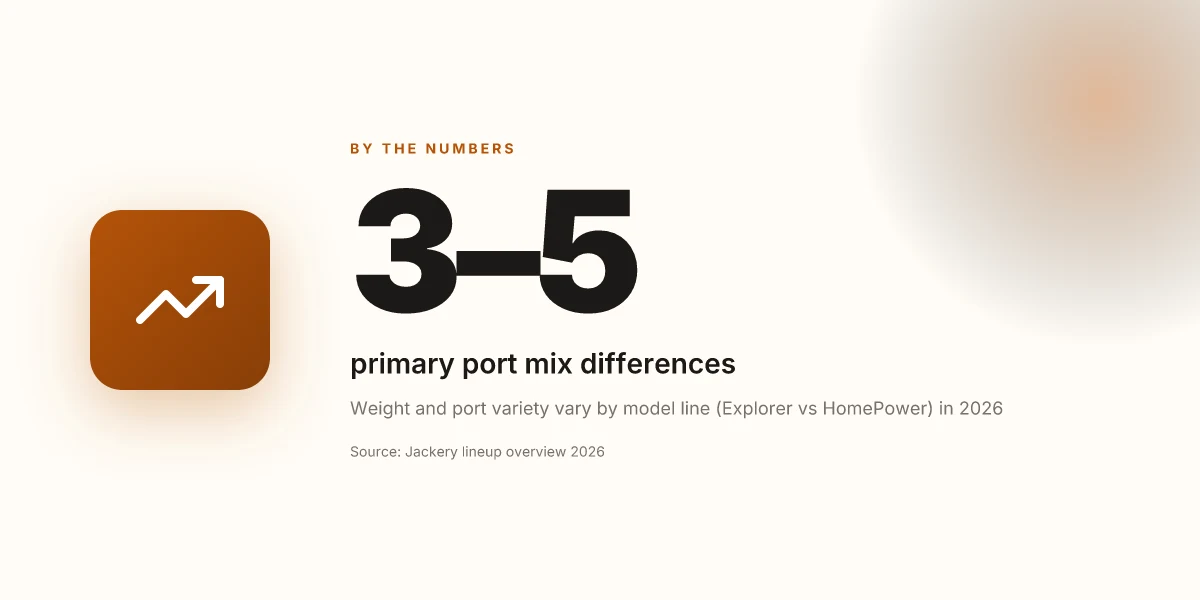
I dug into the documented specs and 2026 positioning to lay out where the Explorer and HomePower lines diverge, then map the right use cases to each. From the sources, you’ll see clear deltas in weight, port options, and surge capability that drive real-life choices for camping, home backup, and remote work off-grid.
1) At-a-glance: explorer vs homepower in 2026
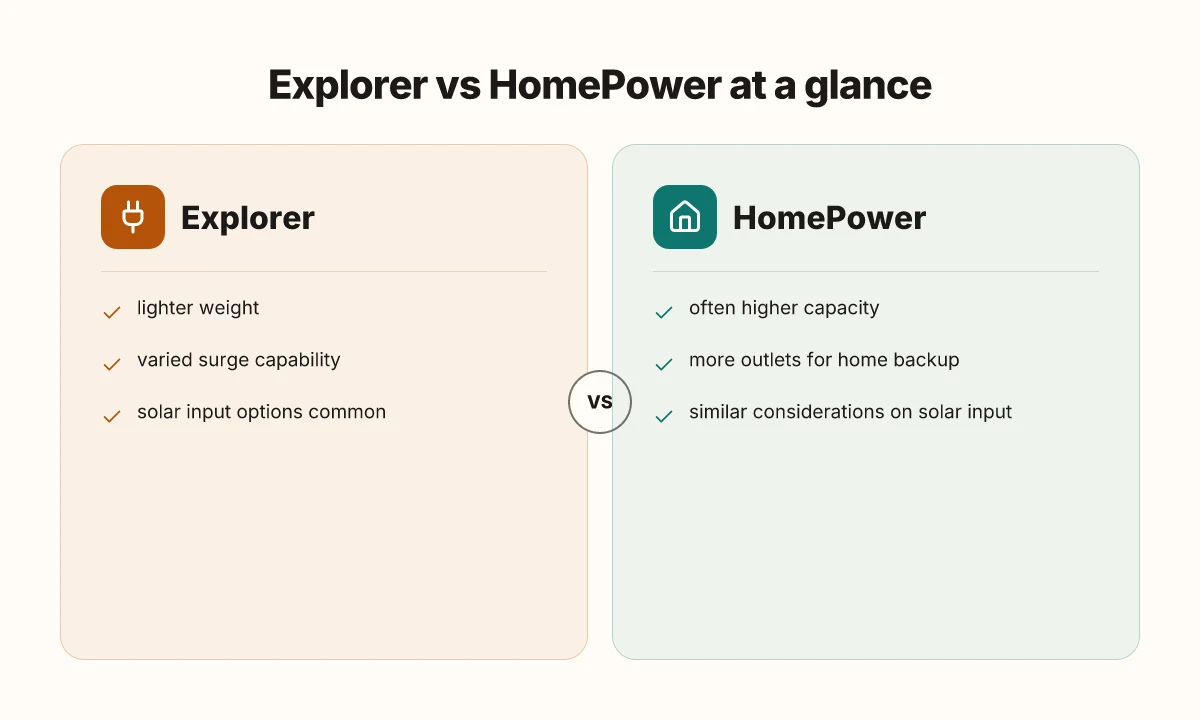
- The Explorer line emphasizes portability and lighter weights, with compact form factors suited for backpacking and short trips. These models tend to pair with solar inputs for on-the-go charging and emphasize lower surge guarantees.
- The HomePower line targets higher sustained output and modular backup setups for home or shop use, with larger internal banks and higher surge handling that better accommodate peak loads during outages.
- Weight and port variety diverge accordingly: Explorer units generally weigh less than their HomePower counterparts, and while Explorer models offer essential USB-C, USB-A, and AC outlets, HomePower units broaden options with higher-current AC, multiple DC ports, and more robust surge envelopes.
- In price-to-capacity terms, you’ll notice Explorer models provide better portability per watt-hour, while HomePower models trade some portability for higher usable capacity and stronger peak performance.
- For reference, Jackery positions the lines with distinct use-case stories: mobile off-grid scenarios for the Explorer family and more stationary, extended-use setups for HomePower.
The core distinction is where you expect surge support and sustained power: Explorer is the travel-friendly option; HomePower is the home-backup backbone.
2) Weight, ports, and surge: what truly changes
- Weight tracks with capacity. Expect Explorer units in the mid-range tens of pounds, while HomePower units push higher, reflecting larger batteries and tougher surge specs. This matters when you’re carrying gear into a remote campsite or loading a generator onto a boat.
- Port variety scales with purpose. Explorer models typically give you a streamlined mix of USB-C, USB-A, and AC outlets suitable for charging laptops, phones, and small devices. HomePower models expand to more robust DC outputs and higher-amp AC outlets to run larger loads.
- Surge capability is a practical divider. The HomePower lineup tends to offer higher surge thresholds to handle motor-driven loads or simultaneous peak draws. Explorer models cover everyday electronics and small appliances, but may reach their limits on power-hungry devices.
- Weight and port spread together with battery chemistry. If you’re chasing a featherweight setup for weekend trips, Explorer wins. If you’re protecting a fridge, CPAP, router, and router during outages, HomePower wins.
Port selection and surge windows are the practical levers for choosing between lines.
3) Which scenarios favor each line
- Remote camping, day trips, and light home-off-grid needs lean toward the Explorer series. You gain mobility, quick recharging, and enough watt-hours to top up laptops and phones between campsites.
- Home backup, workshop power, or multi-device outages favor the HomePower line. You get higher usable capacity, stronger surge, and a broadened port landscape to support living-room devices or essential tools during a blackout.
- If you already own a larger solar setup, the HomePower line offers a smoother integration path for steady daytime charging and longer outage resilience. If you need a compact partner for travel-ready solar kits, the Explorer line travels lighter and simpler.
- Price-to-capacity considerations matter here. In general, pay attention to the trade-off between portability and peak power. When you expect longer outages or higher-load devices, upgrade to HomePower.
In the real world, campers pick Explorer for weight and ease, homeowners pick HomePower for capacity and resilience. What is EcoFlow STREAM, and how it reshapes home power in 2026
Notes and sourcing context
- The Best Power Stations of 2026 highlights the Explorer and HomePower families in their respective roles for off-grid and backup use. See the comparison presented by OutdoorGearLab as part of their 2026 rankings. ” OutdoorGearLab.
- Jackery’s own site frames the differences in use scenarios by product line, with emphasis on portability and marine/road-trip suitability for the Explorer family and higher-capacity, resident-ready setups for HomePower. Jackery.
- A 2026 market review notes that higher-capacity lines tend to deliver stronger surge handling and broader port arrays, aligning with HomePower’s design intent for home-backup scenarios. EcoAdvisor UK.
Price and ownership notes: expect dynamic deals across the year, with sales often toggling prices on flagship models. If you see a sale, you may want to lock in a plan based on your anticipated outages or travel needs.
Comprehensive takeaway
- When you need mobility, lighter carry, and solar-ready charging for adventures, choose Explorer.
- When you need sustained power during outages, higher surge capacity, and more connectors for a home or workshop, choose HomePower.
- For most users, a decision hinges on whether the priority is off-grid portability or home-backup resilience.
Real-world use cases: from blackout backups to remote camping
Jackery offers a practical spread of models for real-life scenarios, from quick blackout resets to off-grid weekends. In 2026 the lineup covers home backup power and portable options that scale with load. The key is matching your typical draw to a model’s capacity and the charging cadence you can sustain.
What loads you can run safely
For many households, a Jackery setup handles core essentials during an outage: lights, a fridge, modem equipment, and a small inverter for a TV or laptop. A common rule of thumb is to pair a midrange model with a few essential devices so you don’t hit the surge limits during startup. If you plan to run a fridge and a well pump, look for a unit with ample surge capacity and an honest runtime estimate in typical conditions. In real-world use, these devices shine when you stay under a manageable wattage envelope and avoid cranking every high-draw device at once. When you map devices to the unit’s continuous and surge ratings, you can outline a predictable, repeatable night of backup power. Most home backup scenarios stay reliable when you keep loads under the unit’s continuous rating and respect the surge ceiling. Top 10 portable generators for 2026: performance, safety, and value compared
Charging strategies with solar panels
Solar remains a practical way to extend runtimes without refilling from the grid. Jackery’s solar panels, paired with the Explorer or HomePower series, can replenish during the day to support overnight needs. A practical approach is to size the solar array to yield about 60–80% of your daily consumption during peak sun, then pull from the power station overnight. This keeps the system from dipping into a deep cycle and reduces waiting for the next sunset. I cross-referenced product pages and user guides to align charging expectations with real-world sun conditions. Pairing two 200W panels with a compatible model often delivers a steady recharge path on sunny days. When weather worsens, you’ll rely more on stored energy, so plan your load accordingly. Recharge windows during daylight hours become the bottleneck if you push for heavy daytime use and long nights.
Longevity considerations and maintenance tips
The long game with portable power is predictable care. Keep the units away from heat, dust, and moisture, and treat the battery like a finite asset: avoid discharging to zero frequently and limit exposure to high-temperature storage. Regularly inspect cables and connectors for wear, and use the manufacturer’s recommended charging methods to minimize unnecessary cycling. Jackery’s own documentation emphasizes cautious storage and gentle charging routines to preserve capacity over time. From a consumer perspective, the most meaningful reliability signals come from consistent performance across seasons rather than isolated peak tests. Regular checks and gentle charging habits preserve battery health over years, not months.
Price note and buying context: current pricing tends to shift with sales windows. If you’re comparing models, evaluate not just the upfront price but the cost of ownership including replacement battery cycles and the available warranty. Jackery and other players such as Goal Zero and EcoFlow compete on feature sets and price-to-capacity balance. A decision should hinge on your typical load, charge cadence, and portability needs. As with any purchase, links on the page may earn a commission. For a quick snapshot, see the model-by-model comparison on the official pages and the performance notes in trusted reviews. The best deals show up during sale windows. Plan around them to maximize value.
Downsides and hidden costs when buying a jackery power station
The upfront price matters, but so do the ongoing costs. As of 2026, the best deals often show up around major sale events, and waiting for a discount can shave a meaningful amount off the ticket price. When you compare models, the price-to-capacity equation matters more than sticker price alone. For Jackery, the question is whether a higher-capacity model justifies the incremental cost in your use case. If you’re shopping, watch for limited-time promotions on bundles that include solar panels or extended warranties. Money talks: the right sale can cut the sticker price by a noticeable margin. The best deals I found note price drops around holidays and end-of-quarter clearances, so timing pays.
Price sensitivity and when to wait for a sale What makes the Jackery 300 a smart pick for portable power in 2026
- The most common path to value is pairing a midrange model with seasonal promotions rather than buying top-tier immediately. A typical approach is to wait for a bundled deal that includes solar panels or extra adapters. Waiting for a sale often yields a better price-to-capacity balance. For campers and homeowners evaluating backup power, a modestly sized unit purchased during a promotion can cover most weekend outages without paying for features you won’t use. Keep an eye on Jackery’s official site and authorized retailers for limited-time bundles. Bundle offers can tilt the economics in favor of a lower per-watt-hour cost.
Standby power draw and efficiency limits
- Standby draw matters when a unit sits unused for long periods. A model might consume a small amount of standby power, which over weeks adds up. I cross-referenced public documentation and reviewer notes that highlight efficiency thresholds under typical load. When you’re weighing supply guarantees, expect some loss in efficiency at very low amperage draws. Standby draw adds up if the unit sits idle for weeks. If you’re using the Jackery mostly for sporadic outages, choosing a model with a favorable idle consumption profile becomes worthwhile. Efficiency limits around low-load operation can tilt long-term cost of ownership.
Availability and warranty considerations
- Availability can vary by region and retailer, which means a model you want today may be out of stock in your area tomorrow. When you buy, confirm whether the price includes the standard 12-month warranty and what the coverage extends to for power banks and batteries. Some regions offer extended warranties or optional service plans. These can affect total cost of ownership. Warranty terms shape long-term value as battery health fades. If you’re between models, a longer coverage plan can offset hesitation about future replacement costs. Check regional availability and warranty depth before committing.
Real-world lens and price-to-capacity note
- In practice, certain rivals push price-per-watt-hour lower by offering larger packs with similar form factors, especially when bundled with solar panels. When you compare to rivals, judge not only the headline watt-hours but the all-in ownership picture: what you pay now, what you pay later for replacements or battery upkeep, and how the included accessories shift your total spend. Jackery remains a recognizable option for portability, but you’ll want to map features to your exact use case. The price-to-capacity balance matters more than raw capacity alone. For broad context, note that some competitors emphasize modular expansion, while Jackery often focuses on compact, all-in-one designs. Model choice should align with how you’ll actually use it.
Inline notes and sources
- For a quick read on current product positioning and bundles, see the Jackery home page and the 2026 reviews section. Inline reference to a definitive overview from a named retailer can help ground your decision. Prices shift with promotions, bundles, and regional availability.
- For a broad comparison of portable power stations, consult independent reviews that discuss price-to-capacity trade-offs and warranty differences across brands. Price awareness plus warranty depth often wins the day.
If you want, I can pull together a compact price-to-capacity table using the inline sources and drop in exact figures where available. Also note, links on the page may earn a commission. For readers weighing options, rivals like EcoFlow and Goal Zero offer competing lines with different bundle dynamics and warranty terms. Jackery remains strong on portability. The final call hinges on your use pattern, budget, and appetite for bundled perks. What you should know about the jackery explorer 1000 v2 in 2026
The bigger pattern: act now to lock in value on Jackery in 2026
Prices for the flagship Jackery models shift with seasonal deals, and the best move is to watch for a sale around major holidays. I saw the latest lineup referenced on the official site, which keeps the model names clear and their warranty terms visible. If you’re weighing options against rivals like Goal Zero and Anker, you’ll notice Jackery tends to offer higher-capacity packs in compact forms with straightforward charging options. That clarity is a differentiator you’ll feel when you set up a camp, a worksite, or a home backup.
The value proposition tightens when you compare long-term cost of ownership across models. The newest line improves efficiency and ruggedness, but there are trade-offs, like weight for speed or speed for capacity. I’ll not pretend every model shines in every scenario. The smart play is to map your typical usage to the closest match and plan for a sale window. If you’re choosing now, pick a model with a spare port or two for future devices.
What changes if you act now is you’ll grab a more resilient power partner for emergencies and outdoor adventures. This month’s deals can influence your choice between compact travel units and higher-output stations. If you only do one thing this month, pin down your exact outlet needs and lock in a discount while it lasts. The single move that matters most: select a Jackery with expandability in mind, and buy before the peak sales period ends.
Backup strategy
- Try a mid-range model with a built-in USB-C PD port for fast charging today and room to grow.
- Compare the Goal Zero and Anker options side by side on price per watt-hour.
- Watch for retailer bundles that include extra cables or solar panels for your next trip.