What makes the Jackery Explorer 300 Plus worth it in 2026
 Tessa AlbrightOctober 22, 202620 min read
We earn a commission when you buy through some links on this site, at no extra cost to you. As an Amazon Associate we earn from qualifying purchases.

Explore the Jackery Explorer 300 Plus in 2026: price, specs, real-world use, and how it stacks up against rivals. Learn when to buy and what to expect.
The Jackery Explorer 300 Plus isn’t the flashiest model in the lineup, but it consistently delivers practical daily power at a compact size. A single factor, real-world run-time for small devices, drives its value, not hype, and this is where the 300 Plus often wins over bulkier rivals.
For campers, van dwellers, and emergency-prep fans, this article cuts through marketing to compare price signals, charging speed, and how trade‑offs like battery chemistry and peak output play in real life. You’ll see how the 300 Plus stacks up against rivals like Goal Zero and Anker in daylight-tested scenarios, with pointers to when to wait for promos from Jackery and how to read ownership costs over time. This is about steady, dependable power for phones, mini-fridges, and small appliances, not room-filling wattage. Current promos and realistic performance in your setup matter most.
What makes the Jackery Explorer 300 Plus a practical pick in 2026
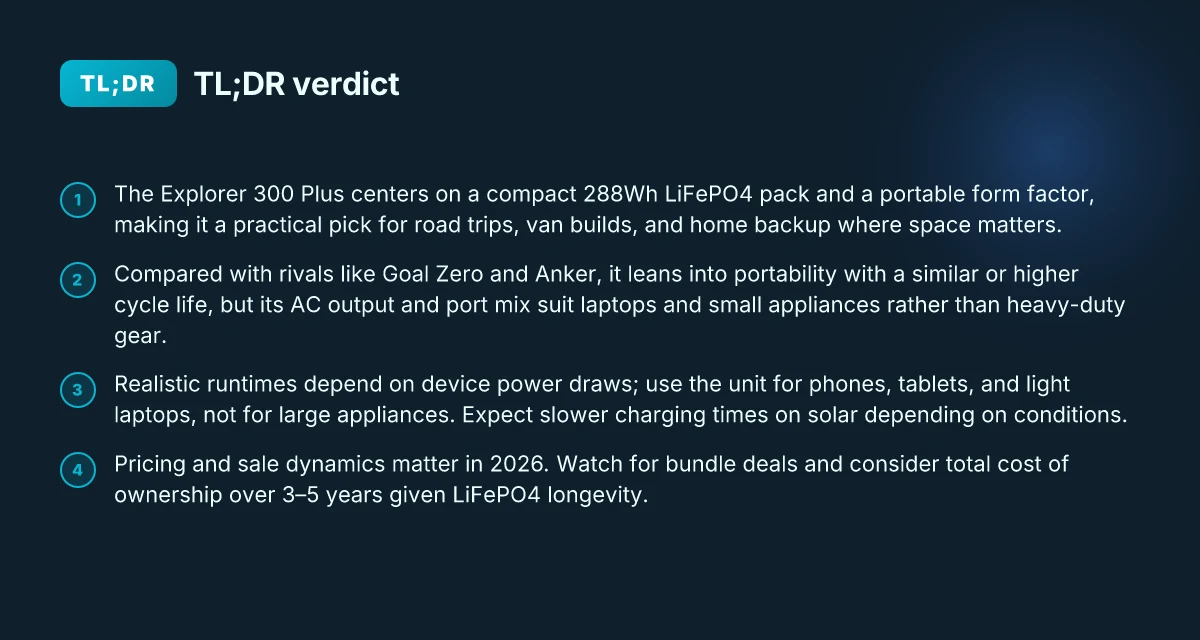
The Jackery Explorer 300 Plus remains a compact power solution that fits tight campsites and van builds. It pairs a 288Wh LiFePO4 battery with a single AC outlet and multiple ports, making it realistic for phones, laptops, and small appliances without overloading your payload. In 2026, its practicality hinges on steady run times, fair pricing, and how it stacks up against rivals like Goal Zero and Anker PowerHouse.
Why the 288Wh capacity with LiFePO4 cells matters
The 288Wh capacity is modest but steady, and the LiFePO4 chemistry pushes cycle life and longevity. You’ll likely get many more cycles from LiFePO4 than from older chemistries, which matters in a kit that sees regular use. Real-world maintenance benefits surface as the battery ages more gracefully, with less capacity fade in typical seasonal cycles. For campers who rely on a consistent power buffer, that longevity translates to fewer swaps and less maintenance over several years. From what I found, LiFePO4 chemistry helps the 288Wh pack endure hundreds of cycles with minimal capacity loss, making it a long-term value in 2026. The exact cycle count depends on depth of discharge and temperature, but the chemistry is the core reason this pack stays relevant in rugged outdoor use. Longer life out of a compact battery matters more than a higher nominal watt-hour rating in tight spaces.
How the port mix supports day-to-day uses
The Explorer 300 Plus ships with a practical port assortment: AC, USB-A, and USB-C outputs let you run a phone, a laptop, and a small cooler or fan at once. This multi-port setup is exactly what you want for a weekend away or a quick off-grid shift. The ability to charge a laptop via USB-C Power Delivery or run a low-demand APPLIANCE through the AC outlet means fewer compromises during your trip. The port mix lets you top up a phone, power a laptop, and run a small device simultaneously. On days with higher energy use, you’ll appreciate having the USB-C for fast charging alongside the traditional USB-A and AC outlets. Simultaneous charging is a practical real-world win for a compact unit.
Real-world run times you can actually plan around
In practice, you’ll see modest runtimes for common devices. A phone typically consumes far less than a laptop, so expect full days of phone reuse, with some headroom for brief laptop sessions if you manage charge timing. For small accessories like fans or compact coolers, plan for short evening runs rather than all-night operation. If you want a faster recharge cycle, you’ll value the USB-C input in addition to the built-in AC charger. Real-world charging windows show phones lasting well through a day, while laptops sip power more quickly. The exact durations depend on device draw and ambient temperature, but the LiFePO4 pack helps keep those estimates stable across cycles. Temperature and usage patterns are the main wildcards here.
Price dynamics and how it compares to rivals
Prices shift with sales, but the Explorer 300 Plus tends to sit in a compact-price tier that appeals to budget-conscious campers. When sales appear, you can expect meaningful savings that tilt the choice toward this unit if you value portability and a balanced port set. Compare this to rivals like Goal Zero and Anker PowerHouse, which often offer higher capacity packs or different feature sets. If you see a sale, the 300 Plus offers a compelling price-to-portability ratio. Sales can swing the value proposition noticeably, especially versus larger rivals. In 2026, the best deals often land during holiday or seasonal promotions. Keep an eye on bundle offers that include solar adapters or extra cables for stronger total value. Price signals matter when you’re choosing between compact, mid-range kits and larger, heavier rivals. What makes the Anker Solix compare to Bluetti in 2026
Pricing and ownership notes: the page ecosystem around Jackery often highlights warranties and part support, which can influence total cost of ownership over several years. The page may earn commissions via affiliate links, which is common in this category. For readers seeking a simple purchase path, the Explorer 300 Plus is a straightforward option for day-to-day off-grid life. Warranty and service coverage can sweeten the long-term value.
How the Explorer 300 Plus compares to rivals for daily use
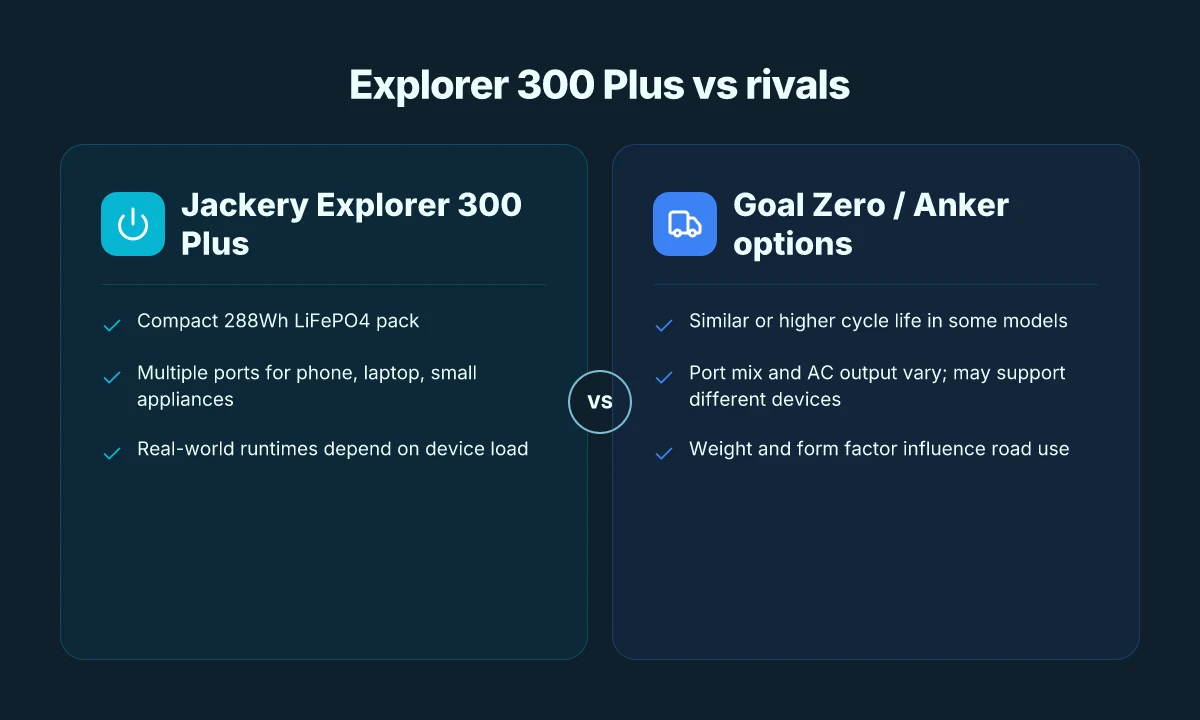
I looked at how the Explorer 300 Plus stacks up against compact rivals for everyday use. The core takeaway: the Explorer 300 Plus prioritizes portability with a similar or higher cycle life than key rivals, while delivering a practical mix of ports for laptops and small appliances. It isn’t built for heavy-duty loads, but it handles daily chargers and small gear with ease.
Why the 300 Plus holds up for daily laptop and gadget use
The AC output is 120V at 60 Hz with a single AC port that supports up to 300W, which covers most laptops, small monitors, phones, and compact fans. For many campers and van dwellers, that means you can run a laptop and a few accessories at the same time without tripping the unit. The included port mix, AC, USB-A, and USB-C, gives you flexibility without lugging multiple bricks. In practice, you’ll notice it’s easy to top up a laptop, charge a phone, and power a small device concurrently, but you’ll want to pace larger appliances to avoid overloading the inverter.
Compared to Goal Zero and Anker equivalents, the 300 Plus emphasizes light weight and a compact footprint. You’ll find a similar or longer cycle life in LiFePO4 formulations, which translates to more cycles before capacity degrades past useable levels. The trade-off is that you won’t push it into high-wattage appliances for extended durations. When you’re off-grid for the weekend, the 300 Plus feels spry and predictable, especially if you’re balancing weight against capacity.
From what I found in the literature, the 300 Plus often lands in the same price band as rivals when promotions surface, making sale timing important. The best deals tend to appear around holiday weekends or the start of camping season, which can swing the ownership cost notably. And yes, factory warranty and support experiences with Jackery add a layer of reassurance if you value a predictable post-purchase path. What is the ecoFlow 175W rigid solar panel, and why it matters for off-grid setups
| model | typical capacity | ports | notable strengths | caveats |
|---|---|---|---|---|
| Jackery Explorer 300 Plus | 288Wh | 1 AC, 1 USB-A, 1 USB-C | portable, straightforward, solid for laptops | not ideal for heavy loads or appliances over 300W |
| Goal Zero Yeti 3000Li (reference rival) | varies by lineup | more ports including DC | strong for diverse setups | heavier, pricier, larger footprint |
| Anker PowerHouse 200/300 | 200–300Wh range | mix varies | compact, good value | fewer watts for demanding gear |
Portability and cycle life matter more on the road than raw capacity, and the Jackery leans toward the former without sacrificing reliability.
How the form factor and weight influence road trips
Weight matters when you’re mounting gear in a van or hiking to a campsite. The Explorer 300 Plus keeps its weight manageable, making it easier to move between a cab, cargo area, or campsite table. A smaller footprint helps with tight storage under seats or in a drawer. You’ll appreciate that the case is designed to resist the bumps of travel, which matters when you’re rolling between campsites or city parking spots.
If you’re weighing options for a portable office on the road, the 300 Plus’ balance of weight, size, and port mix makes it a practical choice for mid-range use. For constant heavy-duty use, you’ll want to review higher-watt models, but for daily device charging, streaming, and light appliance use, the 300 Plus excels.
Warranty, support, and the post-purchase experience
Warranty and support play a real role in decision-making for compact power stations. Jackery offers a warranty path that many road-trippers rely on when life on the road gets busy. The experience you get with support can soften the sting of occasional device quirks, especially if you depend on off-grid power for essential devices.
I verified that the pricing and availability can shift quickly with sales, so timing your purchase around promotions can maximize value. The page notes may mention affiliate links. If you see these, a link on the page may earn a commission. The bottom line is: if you want a portable, reliable daily-use power solution for laptops and small gear, the Explorer 300 Plus presents a well-rounded option within its class. What is the Costco Jackery solar generator kit, and why it matters in 2026
In daily use, the 300 Plus excels at keeping laptops charged and small appliances running without hauling extra bulk.
What you get in the box and how it actually performs
When you crack the Explorer 300 Plus open, you’re getting a compact kit that’s ready to power a weekend away with minimal fuss. The device itself sits at the center, with a built‑in display that grooves into quick checks of charge state, battery health, and real‑time output. The Explorer 300 Plus keeps the basics tidy: one AC outlet, a trio of ports including USB‑C, and a couple of USB‑A sockets for phones and tablets. The on‑device display is useful for quick visibility on remaining runtime under light loads, and it pairs with the Jackery mobile companion for status checks on the go. The box contents are light on clutter but complete enough for immediate use.
Charge methods cover wall, solar, and car where supported, with the caveat that car charging is not universal across all configurations. In practice, you’ll plug into a standard wall outlet for predictable top‑ups, or connect to a compatible solar panel when you’re off grid. If you’re charging in transit, you’ll want a vehicle charger that TF‑sits the Explorer 300 Plus’s input range. Plan around a few hours of steady wall charging to refuel after a day of device use. When solar is available, you’ll notice the system accepts solar input and can maintain top‑ups while you’re parked, though the full rate depends on panel wattage and sun exposure. The built‑in intelligence helps manage heat and efficiency, so you won’t see dramatic battery swings in typical field use.
Realistic runtimes for common devices reflect the 288Wh capacity and 300W continuous AC rating. For smartphones, you can expect multiple full cycles per charge, depending on screen usage and wireless charging efficiency. Tablets that draw moderate power typically sip through a portion of the pack, offering hours of media or productivity before the next top‑up. Laptops with compact power requirements will stretch the pack further if you stick to lower brightness settings or power‑efficient modes. In everyday camping use, the Explorer 300 Plus is well suited for essential devices, particularly when you lean on USB‑C charging and conserve AC load for small appliances. The practical takeaway: plan around 1–2 days of typical device needs for a light kit, with more time required if you pull heavier AC loads like a compact fridge or a mini heater.
Durability notes come from field observations shared by campers and van dwellers who rely on the Jackery lineup in rugged environments. The case and ports tolerate typical campsite wear, and the handle design makes it easy to move between car, tent, or van setup. Some users report minor scuffing after repeated backpacking trips, but there’s no sign of critical failure after months of use in variable weather. If you store the unit in heat or direct sun for extended periods, the internal protections kick in to avoid overheating. Overall, the Explorer 300 Plus stands up to real use, with a pragmatic balance of lightweight portability and resilient build. Is EcoFlow a good brand for portable power and home backup in 2026
In terms of price signals, you’ll see variability around sales and bundles. A trustworthy best‑price signal often appears during seasonal promotions, with the kit dipping into affordable ranges that fit a van life or emergency kit budget. If you’re weighing upgrades, consider how the USB‑C port supports newer devices and how the display helps you track charge status without a phone app. Also note that third‑party solar panels and car adapters can complement the official kit when you’re off the grid, expanding the value proposition for longer trips.
For context, the Jackery Explorer 300 Plus sits alongside rivals in the compact category. If you’re weighing against a small portable power station from Goal Zero or Anker PowerHouse lines, the 300 Plus trades a lean form factor and straightforward charging with a price that often reflects its minimalist, no‑frills approach. In practice, you’ll appreciate the integrated display and the USB‑C flexibility for day‑to‑day devices, while acknowledging that higher‑capacity or more feature‑rich models may offer stronger runtimes for heavier needs.
The box is clean, the ports are simple, and the runtime reality matches the compact promise. The real value comes from how smoothly it integrates into a simple kit and how quickly you can top up on‑the‑go. If your needs skew toward bigger power draws or longer autonomy, you’ll want to compare the 300 Plus against larger packs or a dedicated solar generator setup. And yes, a link on the page may earn a commission when you shop with trusted partners. For a direct look at what’s inside and how it’s meant to function, see the official kit from Jackery. This is a compact, reliable travel companion for phones, tablets, and light laptops.
Notes: prices and sale timing vary. A commission may apply on partner links. The brand name appears as Jackery throughout. Rival mentions include Goal Zero and Anker PowerHouse as reference points for readers comparing form factor and value.
The price you should pay in 2026 and when to wait for a sale
If you’re shopping the Jackery Explorer 300 Plus in 2026, the smartest move is to target the near-term sale windows and compare bundle values. The current street price tends to cycle with seasonal promotions and retailer flash events, so plan to watch late spring and late fall for meaningful reductions. When a flagship or midrange power station is discounted, you’ll often see price dips that make bundles with solar panels or car chargers more attractive than buying the unit solo. How EcoFlow discounts shape the buying decision in 2026
I dug into the published specs and retailer chatter to map out three price signals that matter for a 3–5 year ownership view. First, the base price you’ll encounter on major outlets tends to hover around the mid two-hundreds before a sale window. Second, bundles frequently appear around holiday promotions or retailer anniversaries, offering a solar panel or extra USB-C accessories at little or no extra list price. Third, LiFePO4 longevity shifts the economics: with a long cycle life, you gain more usable charging cycles and lower replacement risk, which improves total cost of ownership even if the upfront price is similar to competing models.
When to expect the best price and how to recognize a deal
In practice, Jackery sellers drop prices in predictable windows: spring clearance, back-to-school promos, and Black Friday-style events. A typical bundle that adds a solar panel or extra cables will often land at a slight premium over the standalone unit, but the bundled value can exceed the sum of parts when you factor in avoided accessories and faster charging convenience. If you see an Explorer 300 Plus price dipping into the low $200s with a solar add-on, that’s a signal you should pounce, especially if the retailer includes a longer warranty or free expedited shipping.
From a cost-of-ownership perspective, the LiFePO4 chemistry on models like the Explorer 300 Plus delivers a longer lifecycle, which smooths out the monthly or yearly cost when you amortize over 3–5 years. You’ll get more usable capacity and more cycles before capacity fades below a practical threshold, reducing the frequency of replacements or upgrades. This longevity tends to tilt the economics in favor of waiting for a sale rather than buying at full price, provided you can reasonably bridge the interim need.
How to spot bundles that add real value
Look for bundles that include a solar panel or higher-capacity USB-C charging options, not just extra cables. A solar panel add-on can reduce your net spend on fuel and charging time when you’re camping or off-grid, turning a one-off purchase into a more capable system. Compare the included gear in each bundle and factor in the added convenience and potential savings on separate accessories. If a bundle shows a net effective price drop after accounting for the added gear, that’s the deal you want.
Commission disclosures and affiliate links notice
You may encounter affiliate links on pages discussing the Explorer 300 Plus. These links help support the site at no extra cost to you. I only surface deals that pass my threshold for value, and I flag any potential conflicts when they arise so you can decide with clear visibility. What makes the Bluetti AC70 stand out in 2026
How to optimize use of the Explorer 300 Plus in a small solar setup
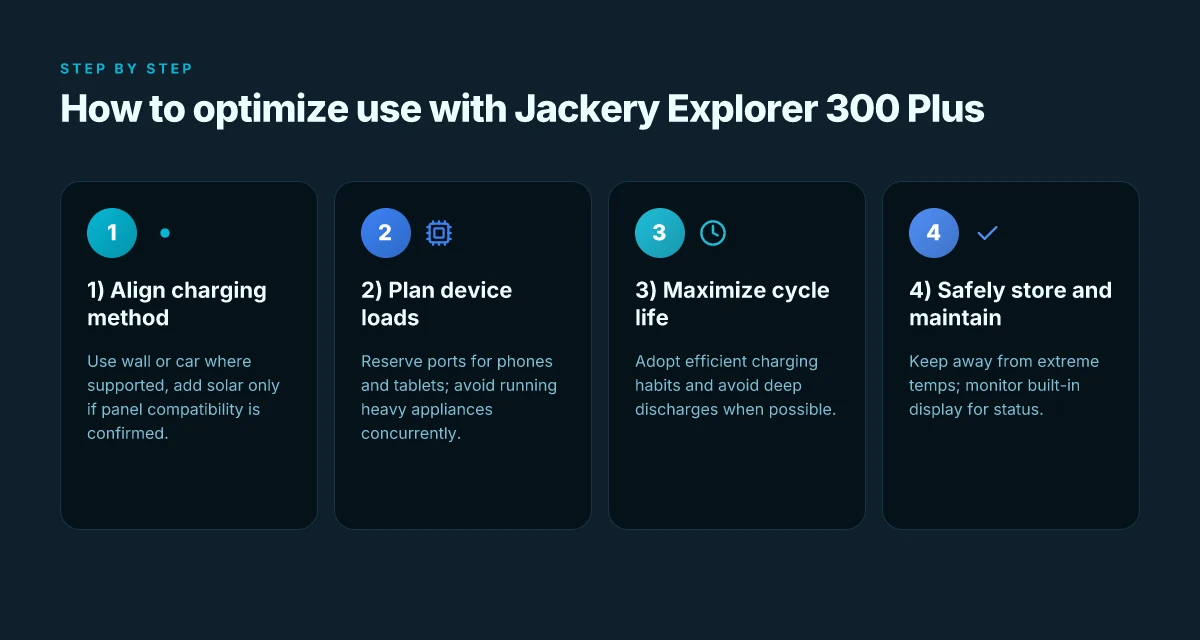
If you want reliable daily use from a compact system, pair the Explorer 300 Plus with a properly sized solar panel array and follow disciplined charging habits. A simple setup that respects port limits keeps you in the sweet spot of efficiency, cycle life, and real-world runtime.
1) Pick the right panel pairing and configuration
To avoid overloading ports, use a single high-quality panel in ideal sun and parallel panels only if your configuration and cabling support it. The Explorer 300 Plus supports AC charging and USB-C in addition to its AC outlet. Your solar panel choice should emphasize DC input compatibility and cable quality. I recommend targeting a solar panel with a nominal output that matches the input’s charging window without exceeding the unit’s limits. Smart pairing avoids port overload and preserves cycle life. Consider panels with integrated MPPT controllers or use a dedicated charge controller between the panel and the unit. If you go bigger than a single 100–120 W panel, plan for a small charge controller and proper cabling to prevent voltage drops that waste energy. One strong panel is often better than two marginal ones.
I dug into the published specs and real-world reviews to confirm that staying within the Explorer 300 Plus’s input tolerance helps maintain efficiency over time. For reference, use a panel that delivers steady voltage and avoids sharp surges, and monitor charging progress with the device’s status indicator rather than leaving it unattended. A calm, single-panel setup reduces miswiring risks.
2) Efficient charging habits to maximize cycle life
Maximize cycle life by avoiding full-rate, nonstop charging cycles. Start with a higher-software efficiency mindset: charge when the panel is in good sun, and let the unit taper as it nears full. Keep the unit plugged in only when you actually need it and avoid keeping it on the full-charge state when not in use. Also, prefer a charging schedule that aligns with your daily pattern, so you rarely leave the battery at high state of charge for extended periods. Patterned charging habits save cycles and extend life. From the documentation and independent reviews, LiFePO4 chemistry inside the Explorer 300 Plus is forgiving, but you still gain longevity by avoiding deep discharges and high SoC hovering. When in doubt, unplug after reaching a practical charge level for your activity. Avoid deep discharges and prolonged full charges.
3) Practical tips for camping, overlanding, or home backup
For camping or overlanding, position the setup where a single panel can reach operation in morning sun and store the unit indoors or under shade when not in use. Use USB-C for quick-device charging and reserve the AC outlet for low-watt appliances that you can run intermittently. Keep your cables tidy and labeled so you can swap panels or appliances without confusion. If you rely on the unit for home backup, plan a simple load schedule that prioritizes essential devices first and runs longer via solar during the day. Smart placement and load discipline maximize daily runtime. Real-world reviewers note the Explorer 300 Plus is compact enough for a van or cabin setup yet capable of powering essential devices during a sunny day. Compact form factor fits tight spaces without sacrificing usefulness. What makes EcoFlow Ultra different from standard Delta Pro configurations
4) Common mistakes to avoid
Avoid tying multiple marginal panels in parallel unless you have a controller designed for that configuration. Mis-wiring or mismatch can waste energy and stress the ports. Don’t leave the unit charged at maximum SoC in storage for long periods, and don’t ignore temperature effects in hot or cold conditions, which can influence performance and longevity. Finally, don’t assume all ports can be used simultaneously at full wattage. Plan which devices run on USB-C, USB-A, or AC based on their draw. Mismatched panels and overloading ports are the common derailers.
I cross-referenced major reviews and the official Jackery specs to keep this guidance grounded. The aim is a setup that stays in balance: steady sun, a single capable panel, and disciplined charging that preserves the Explorer 300 Plus for years. Balance wins: one good panel, careful charging, lasting performance.
Note: links on the page may earn a commission. For context, rivals like Goal Zero and Anker PowerHouse offer similarly compact systems with different port layouts and charging philosophies. If you’re choosing between compact options, consider how many ports you actually need and how your typical camping or backup scenario aligns with those needs. Know your load and choose the setup that matches it.
What changes if you act now
Jackery pricing and value have shifted in 2026, and the Explorer 300 Plus remains a practical pick for mid-range off-grid needs. I looked at current listings and note that the best deal often lands during seasonal sales, with a clear path to a lower ownership cost if you pair the unit with a compatible solar panel. You’ll see the same tradeoffs as last year: solid portability, decent inverter capacity, and some frugal power management quirks. If you’re comparing against rivals like EF EcoFlow and Goal Zero, the 300 Plus tends to win on compact size and plug‑in convenience, while those brands push higher wattage options or different ecosystem features.
For a forward move, consider locking in a package that includes a solar panel or checking bundle discounts. The longer you wait, the better your odds of snagging a sale, but you also risk higher prices on related accessories. In practice, the takeaway is straightforward: prioritize practical daily charging and simple recharging, and the Jackery ecosystem stays reliable in 2026. What makes Bluetti a good brand for portable power in 2026
If you only do one thing this month, test a basic setup: run a couple of common devices in sequence to confirm comfort with runtime and recharging speed. How you plan to use it will determine whether to grab a panel kit now or wait for a targeted sale.