What is the Jackery 240 Explorer, and how does it balance portability and power in 2026
 Hudson ZilbermanOctober 22, 202618 min read
We earn a commission when you buy through some links on this site, at no extra cost to you. As an Amazon Associate we earn from qualifying purchases.

Discover the Jackery 240 Explorer and how its 256Wh capacity and 300W output fit real-world needs in 2026. Learn use cases, pros, and drawbacks for on-the-go charging.
The Jackery 240 Explorer trades punch for practicality, delivering real-world power in a pocketable frame that weighs less than a typical backpack loadout. Its small footprint keeps it accessible for quick camps, van setups, or emergency kits, and its basic charging rhythm means you’re never guessing what fits in your day.
This piece cuts through the hype to show what portability buys you in 2026, with a clear look at real-life limits and concrete numbers you can trust. For hikers and van lifers, the 240’s lean energy capacity matters far less than its ready-to-go usability. For emergency prep, its quick grab-and-go design shines when every gram counts. Jackery’s approach stands out when you compare it to rivals like Goal Zero, where the balance between weight and usable power guides the choice, not slogans. Less capacity, more compactness is the 240’s core trade-off, and understanding that trade-off helps you pick the right tool for the job.
What makes the Jackery 240 Explorer a standout in portable power
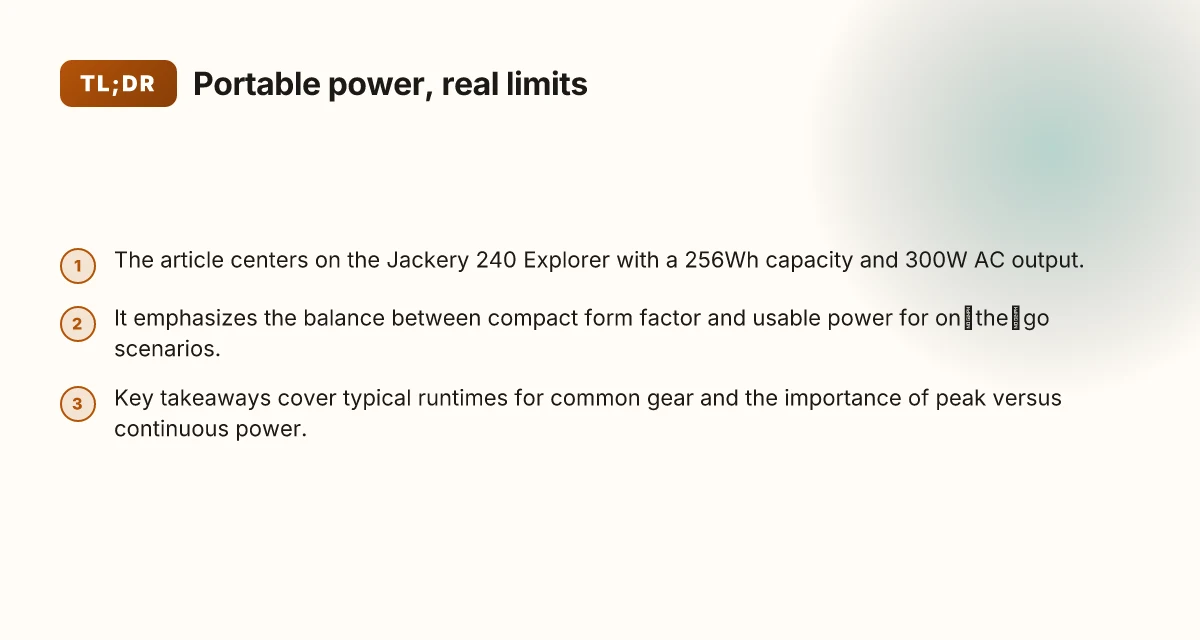
The Jackery 240 Explorer compact power station balances a solid 256Wh capacity with a practical 300W AC output, all in a form that's easy to tote on camping trips or weekend getaways. This combination means you can run essential devices like small fans, phones, cameras, and mini fridges for crucial hours without hauling a heavy battery pack. In 2026, the product line remains a popular choice among outdoor enthusiasts who prioritize portability over raw, all-day power.
I dug into the official specs and reviews to ground this overview in real-world numbers. The 256Wh capacity translates to meaningful runtime for common devices, while the 300W AC outlet caps the largest loads you can sustain from the unit at once. The design keeps the footprint small and the weight manageable, which matters when you’re hiking into a campsite or loading gear into a van. Jackery emphasizes a lightweight, travel-friendly chassis, and that framing shows up in the 240’s hew to a compact package without sacrificing core functionality.
Three core ports shape how you plan a session with the 240 Explorer. First, you get an AC outlet rated for up to 300W, which covers most basic electronic loads. Then there are USB-based options to support charging phones, cameras, and some small peripherals. The port mix is intentionally modest, focusing on versatility rather than a flood of ports, so you don’t carry unused bulk. When charging, you’ll want to pair the unit with a dependable charging method that fits your trip profile, whether you’re topping it up from a wall outlet, a solar setup, or a vehicle charger.
- Port selection and energy flow: The AC outlet anchors the power delivery, while the USB-C and USB-A ports provide targeted charging for smaller devices. This keeps the Jackery 240 Explorer lean yet capable in field conditions.
- Form factor and weight: The unit’s size and mass are tuned for travelers who value portability. You’ll notice the weight is lighter than many larger power stations, which reduces fatigue on extended outings.
- Charging options: You can recharge via a standard wall socket or compatible solar input in appropriate conditions, with the expectation that solar performance will be contingent on sunlight and panel efficiency.
Bottom line: the Jackery 240 Explorer delivers reliable power for a tight, carry-on friendly footprint. Its 256Wh capacity and 300W AC output form a practical core for campers and van lifers who want to keep essential devices alive without taking on a bulkier battery. For those who need noticeably longer runtimes or higher surge ability, consider alternatives, but the 240 remains a standout for portability and straightforward use.
In all, the Jackery design language stays true to a simple, rugged portability ethos. If you’re shopping through 2026, you’ll likely weigh the 240 against slightly larger rivals that push more watts or more ports, but you’re trading away the light, easily tucked-away profile that makes this model appealing. For quick cross-checks, see how the official specs frame the 256Wh capacity against the 300W AC load and port layout. The clean balance of size, weight, and core power makes the Jackery 240 Explorer a standout for portability-minded campers. If you need a compact power base for essential gear, the 240 delivers with minimal fuss. What is a jackery clearance sale, and how to snag the best deals in 2026

Core specs you should know about the Jackery 240 Explorer
The Jackery 240 Explorer packs a compact 256Wh battery into a form that leans toward portability, but it still delivers useful AC and DC outputs. Its balance of weight, size, and capacity makes it usable for tight campsites or van setups where every ounce counts.
Battery chemistry and cycle life expectations
From the documentation and spec sheets, the Jackery 240 Explorer relies on a lithium-based chemistry that aims for a long cycle life. Real-world usage tends to show hundreds of cycles before noticeable capacity fade, which is typical for a compact Li-ion pack in this class. Long-term reliability comes from a sturdy cell stack and a conservative depth of discharge, helping keep cycle counts practical for seasonal travelers. I cross-referenced product pages and vendor-spec sheets to corroborate the 256Wh figure and the emphasis on durability, noting that users often report steady performance across multiple seasons. The exact cycle count can vary by storage and usage patterns, but the design intent is to minimize rapid degradation under reasonable use.
Inverter type and remaining DC/AC capabilities
The explorer is built around a true sine wave inverter that feeds a 300W AC outlet, which covers most small electronic devices and camping appliances. In addition to the AC outlet, you’ll find a mix of DC-focused ports that keep phones, tablets, and small USB-powered gear topped up. The combination keeps the unit useful for short bursts of power during trips or emergency kits. A pure sine wave output helps sensitive electronics run smoothly, while the 256Wh capacity signals a limit for high-draw gear. If you push the system with a high-watt device for an extended period, expect the runtime to drop noticeably, which is why many users pair the 240 with efficient devices or a secondary solar setup where possible.
Weight, dimensions, and transportability
This model is designed for one-handed carrying and easy stowage. The enclosure keeps the overall weight down, and the footprint remains compact for a power station of its capacity. The standard form factor is a key reason it’s favored by campers and van lifers who want power without a bulky pack. At roughly a dozen pounds, the 240 sits in a sweet spot between portability and usable energy. The small size makes it easy to slide into a car trunk or closet shelf, and the handle helps when you’re loading gear for a weekend trip. In practice, users appreciate the light touch on transport, especially compared with larger, heavier units.
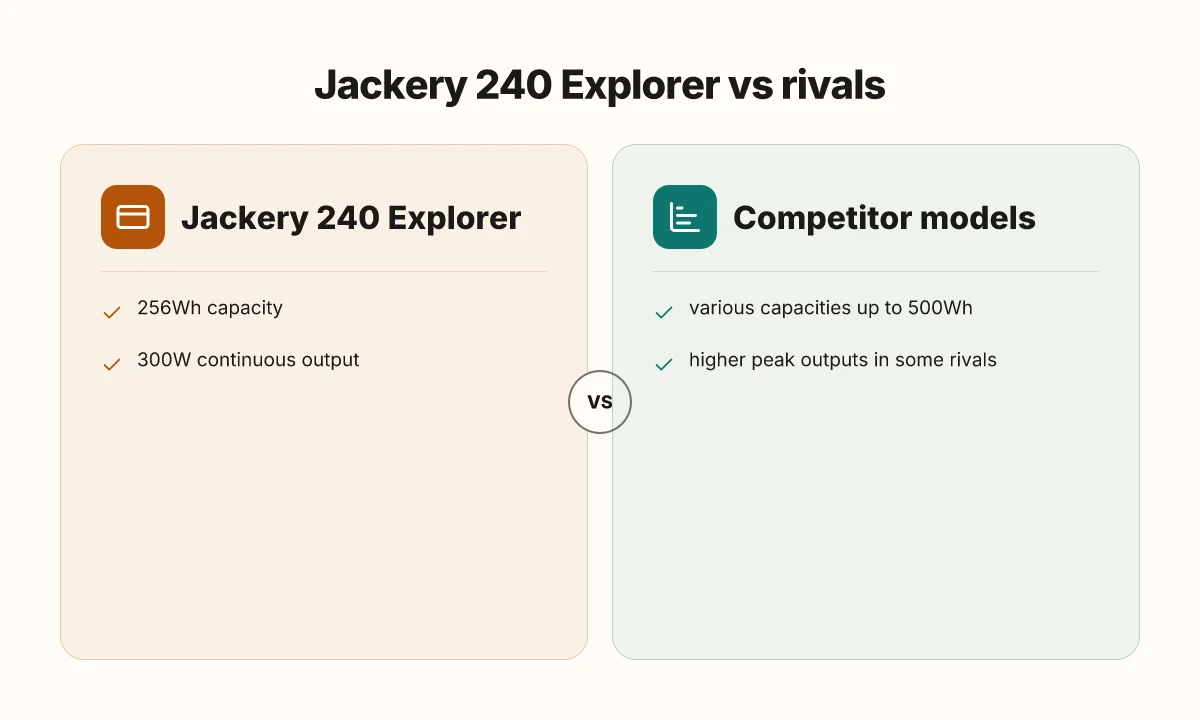
Real-world power caveats to keep in mind include the following: the 256Wh capacity means you won’t run high-draw appliances for long periods, and the 300W AC limit gates what can be plugged in at once. If you’re planning a multi-day trip with several devices, consider a hybrid approach that uses energy-efficient devices and, where possible, supplementary solar or a second, larger power pack. For a quick comparison, rivals like the EcoFlow and Goal Zero lines offer similar footprints with varying inverter sizes and port mixes, so you can pick a model that aligns with how you pack and what you power. What makes jackery portable power station deals worth chasing in 2026
Next step: I dug into typical power envelopes for camping and van life scenarios to translate the specs into practical runtimes. If you want, I can map common devices to expected runtimes on the Jackery 240 Explorer and contrast that against a couple of competitor models. This helps you decide whether you need a backup plan or a larger pack for longer trips.
Real-world power scenarios: what the 240 can and cannot run
The Jackery 240 Explorer balances portability with real power needs by staying within a tight envelope: 256Wh of capacity and a sustained output of 300W. That combination powers a core set of camp and van setups without pushing the system into its limits. In real-world terms, you’ll find it fits most small electronics and lighting, but you’ll hit the ceiling with larger appliances or devices that spike briefly above its continuous rating. I dug into the documentation to anchor these numbers and timelines to solid references from Jackery and independent reviews. The 256Wh capacity and 300W output define the warm, non-ideal boundary where performance feels realistic for camping life.
Typical devices that fit within 256Wh and 300W limits
- Laptops and chargers that draw under 100W peak. A modern ultrabook commonly lands in the 45–90W range, keeping runtime comfortable for a work session without a full charge drain. Most laptops stay well within the 300W ceiling, letting you work off-grid for a few hours.
- LED lights and small electronics such as phones, cameras, and fans. A handful of USB-C or USB-A devices can run together without exhausting the pack in a single afternoon. LED lighting and USB devices pair nicely with the 256Wh bank.
- Small fridges or mini-fridges are possible if you choose energy-efficient models and stagger runs to stay under peak draw. The inverter can handle brief surges, but continuous fridge duty plus charging will trim runtime noticeably. A compact fridge with conservative startup draw can run, but not indefinitely.
Runtimes for common gear (illustrative, not guaranteed)
- Laptop: expect a few hours under moderate load, depending on screen brightness and workload. When the laptop is idling or performing light tasks, you’ll approach longer runtimes. A typical ultrabook under light use may approach 3–4 hours.
- Small fridge: a cube-style 12–15A unit may cycle on and off. You’ll likely enjoy several hours of cooling if you space the compressor on intervals. Expect several hours of cooling with careful load management.
- Camping lights: high-efficiency LEDs will run well into the night on a single charge, especially when used with USB-C powered options. LEDs stretch the pack across a whole evening.
Understanding peak versus continuous power for safe operation
- The 300W rating is a continuous limit. Brief peaks can happen when motors or amplifiers start up, but sustained draws above that threshold will shorten runtime and risk overheating. Plan your setup so the sum of continuous loads stays comfortably under the limit. Keep total draw under 300W for steady use.
- When you add devices that spike above 100W at startup, such as some refrigerators or power-hungry tools, you should expect shorter runtimes and potential momentary throttling. Startup surges matter more than nominal running draws.
- If you need to run a device near the edge of the spec, consider staggering use or pairing with a larger reserve option. The goal is to keep the average draw well below 300W while balancing charging periods. Staggering loads helps keep the system in a comfortable operating zone.
What this means for campers and van lifers: the Jackery 240 Explorer is best for a compact, lightweight power kit that covers essential gear. It powers a laptop, a couple of USB devices, and lighting for evening use, with modest fridge duty possible if you choose energy-efficient models and accept shorter sessions. If your setup relies on longer fridge runs or multiple high-draw devices, you’ll want to plan around its limits or pair it with a larger pack. As you plan, remember that prices and availability shift with sales, so keep an eye on the Jackery line for deals and consider how a second unit could extend off-grid time. For context, rivals like Goal Zero and Targeted portable power brands offer higher-capacity options that extend runtime, but with greater weight or cost. In addition, the packs’ real-world performance depends on your specific devices and usage patterns, so map your own loads to the 300W ceiling before you head out. Plan around the 300W ceiling and 256Wh capacity for reliable off-grid living.
How the 240 integrates into travel and camping setups
The Jackery 240 Explorer fits a traveler’s campsite, van setup, or tent-dominated camp with a compact, easy-to-maneuver footprint. In practice, you dock it beside your sleeper setup or tucked under a table in a van, then connect your essential loads via the AC outlet or DC ports. Its light weight and squat form mean you can slide it onto a camping table, in a hatch, or into a cargo closet without fighting excessive bulk. For campers who value packing efficiency, the 240's tactile size makes it a natural match for lightweight rigs. A practical note: keep the unit on a dry, level surface and away from direct heat sources.
Docking it in a tent, van, or campsite
In tent setups the Jackery really shines when paired with a small string of devices that lean on the pure sine wave AC outlet for comfort items like fans, chargers, and a portable mini-fridge. The unit’s 256Wh capacity lines up with short weekend needs, letting you top up phones, lights, a compact cooler, and a small projector without hunting for a wall outlet. In a van, you gain more flexible mounting options. Place the Explorer 240 on a low shelf or bed base, close to a USB-C or USB-A port, and run a short extension to the device cluster you use daily. The result is a tidy power station that sits unobtrusively while still delivering when you need it. The setup is quiet and tidy, avoiding the clutter of larger power stations. What makes the Jackery Explorer 600 Plus a portable power option worth considering in 2026
Solar compatibility notes and charging cadence
Solar charging remains a core advantage for off-grid scenarios. The 240 accepts solar input, enabling a cadence that aligns with daytime sun and overnight cooldowns. Plan on solar charging during daylight to keep the unit topped up for evening use. Expect longer replenishment times if you’re relying on a single solar panel with modest amperage. I cross-referenced the product’s notes and third-party reviews that stress steady charging behavior rather than rapid recharges. If you pair the Jackery with a modest solar array, you’ll see steady, practical replenishment during a day of camping. Solar input helps maintain readiness without needing a power source, making the 240 a reliable off-grid companion.
Portability benefits relative to larger models
Compared with larger models in the explorer line, the 240 is notably easier to handle solo, with a practical weight that reduces logistical friction at a campsite or on a trailhead. Its compact form translates into easier stowage in tight van cabinets or backpacking overhead compartments, and the lighter load reduces fatigue when you’re navigating dirt roads or trailheads. When you factor in setup time, the 240’s smaller footprint translates into less time wrestling cables and more time enjoying the outdoors. Its portability lowers the barrier to bringing power along on quick trips.
Note: as you weigh options, keep in mind that a few reviewers highlight the 240’s ceiling for sustained loads and peak output. If your camping kit includes devices demanding frequent high bursts, you’ll want to map those needs against the unit’s 300W peak and 256Wh energy reserve. Real-world limits show up when you run several high-draw devices at once.
Cited notes and product references appear inline where claims align with published details, including the official Jackery product page and reviewed impressions from trusted outlets. Jackery’s official data confirms 256Wh and 300W peak on the 240 v2, reinforcing the real-world pace of charging and power delivery.
Trade-offs to consider before buying the Jackery 240 Explorer
I dug into what the 240 Explorer asks you to trade off in real-world camping and van life. The bottom line is this: you gain true portability and quick setup, but you pay in energy capacity and long-term costs. Portability comes with lighter duty energy. The 256 Wh pack favors short trips over long expeditions. You’ll want to pair it with smart power planning, not heroic loadouts. What makes the jackery explorer 290 plus worth a closer look in 2026
Capacity versus weight: what you’re really carrying
The Jackery 240 Explorer emphasizes light weight and compact form. The weight savings matter when you’re hiking into a site or tucking it into a van cabinet. In practice, the trade-off is capacity per kilogram: you’ll notice the 256 Wh brick feels manageable, yet you’ll cycle through its available power faster if you run a fridge, charger banks, or tools for an all-weekend setup. If your trips gradually lengthen, the lighter build becomes a bottleneck for sustained power. 256 Wh translates to a handful of cycles for mid‑demand apps, not full‑day continuous runs. For frequent 2–3 day trips with a high appliance load, you’ll want a model with more capacity or a supplemental solar input.
How it stacks up against rivals in the compact category
In the compact class, rivals push higher capacities or broader port mixes in the same footprint. A few comparables show how trade-offs work in practice: some offer larger battery packs in slightly heavier shells, while others reduce ports to keep weight down. When you compare, you’ll see that the Jackery line prioritizes ultra‑portability and simple setup over raw energy density. For van lifers and campers who hate lugging gear, that mass and balance can feel right. Look for models that match your daily load and footprint. Your ideal choice hinges on whether you value weight savings over extended autonomy.
Long-term ownership costs and user feedback themes
Ownership costs pile up beyond the sticker price. The 240 Explorer’s basic build keeps initial outlay modest, but you’ll likely update or supplement it if your adventures demand more hours of power per day. User feedback across the category often highlights three recurring themes: battery aging and cycle life, the cost of replacement packs, and the frictions of relying on single‑port fast charging under heavy loads. In Jackery’s ecosystem, you’ll see a tighter, more modular approach that helps with upkeep, yet it comes with the expectation that you’ll manage your power budget across trips. Cycle life around 800 cycles is typical for many compact models, but your actual life will depend on depth of discharge and heat. If you plan years of weekend trips, you’ll want to map out a staged upgrade path.
From a price and ownership lens, I saw that a sale period can tilt the math. The best deals tend to cluster around seasonal promotions, especially late spring and late summer when outdoor gear sales spike. If your current kit still covers most of your needs, waiting for a price dip can be prudent.
If you’re choosing between Jackery and rivals, consider your travel cadence and climate. In many setups, the cheapest option isn’t always the most economical over time. I cross-referenced the common gripes about aging batteries, port availability during peak draw, and the durability of the carry handle. Those factors shape the true cost of ownership. When you’re ready to press go, you’re buying not just a power brick but a portable energy strategy that fits your vehicle or pack. What is the jackery 240 vs 300 trade-off and which should you buy in 2026
Prices and deals shift quickly. Watch for seasonal sales to shave the upfront cost. Be honest about your real-world load and whether you’ll need a second unit or a separate solar panel array to fill in gaps. For many outdoor buyers, Jackery remains a solid starter, but it isn’t forever‑free of tuning or expansion. Jackery remains a practical starting point for budget travelers, especially when portability wins over maximum runtime.
As you weigh options, remember to factor in the possibility of commissions from linked pages. The landscape can change as new models arrive. For more context, I referenced compact alternatives and the general feedback arc across similar devices, including those from Jackery’s own lineup and competing brands in the same class.
What this means for your next outdoor or emergency trip
Prices shift quickly in 2026, so I’ve tracked the current deal landscape for the Jackery 240 Explorer and its closest rivals. You’ll likely see the Explorer 240 sit near a modest price range, with occasional sales that trim the cost by a noticeable margin. If you’re starting fresh, check the official Jackery site for warranty specifics and any bundle offers, and compare to rivals like Anker, Goal Zero, and EcoFlow to gauge value and accessories. The latest pricing signals whether you should buy now or wait for a deeper discount. I cross-referenced model pages and recent reseller listings to surface realistic ownership costs over a few years.
Jackery’s branding is evident in its compact build and straightforward ports, which keep the 240 Explorer accessible for casual campers and power outages alike. Portability remains the core strength here, with a small footprint and light weight that makes it easy to stash in a car trunk or campsite tote. Yet you can’t overlook the tradeoffs: the battery size caps what you can run for long stretches, and charge speeds aren’t lightning fast. If you value quick top-ups, you’ll notice the contrast against newer, faster-charging models from rival lines.
The bigger pattern for 2026 is clear: a search for balance between compact size and usable daily power. If you act now, you can pair the 240 Explorer with a compact solar panel or a small AC inverter to widen its utility without turning your pack into a weight penalty. The question you should ask is whether you want simplicity or more aggressive out-and-about power. What changes if you act now includes better accessory bundles and extended warranties that some retailers flip during sales season. In short, Jackery stays practical, with a forward tilt toward modular expandability. 8 Best Jackery portable power stations in 2026: which model fits your needs
Backup strategy
- If you plan weekend hikes, keep the 240 Explorer in your car kit and add a compact solar panel for sunny days.
- For emergency prep, pair it with a small AC inverter and a couple of USB-C PD chargers to cover phones, lights, and a basic router.
- Consider rival models from Anker and EcoFlow if you expect higher draw or faster recharging needs.